How Many Types of Rice Are There? A Grower’s Field Guide
There are more than 40,000 varieties of rice grown around the world. That sounds overwhelming, but nearly all of them fit a few simple groups. Below, rice is broken down by grain length, color, milling, starch, and aroma.
There are more than 40,000 varieties of rice worldwide. The exact count depends on how you define a type. For everyday use, rice sorts into five simple groups: grain length, color, milling, starch, and aroma.
So How Many Types of Rice Are There, Really?
More than 40,000 named varieties grow worldwide, and the true total may run far higher. The reason is simple. Rice comes from two farmed species and about two dozen wild ones. Within the main species alone, seed banks hold over 130,000 separate samples. The International Rice Research Institute (IRRI) keeps that collection in the Philippines. By the loosest definition, the count could reach close to 500,000. Botanists, though, accept almost none as formal varieties. So the number you land on depends entirely on how you count.
Learn more: How to grow rice in a bucket
The Two Species Behind Every Grain
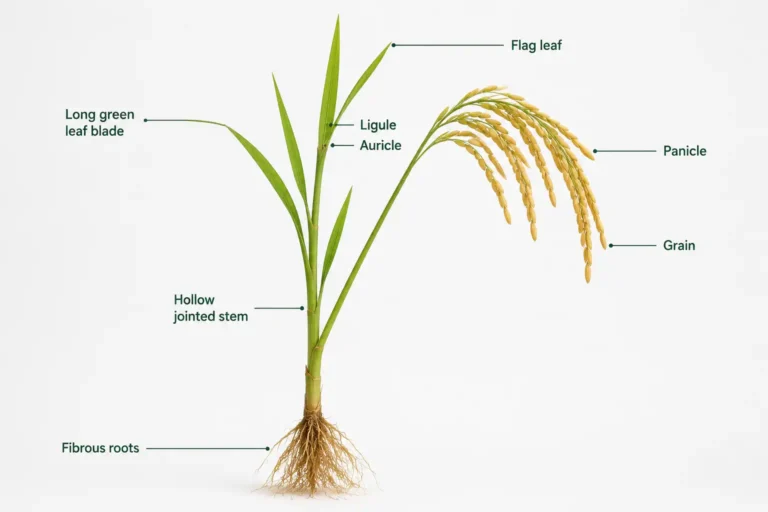
Nearly all rice on Earth belongs to one species: Oryza sativa, or Asian rice. You eat it almost every time rice hits your plate. A second farmed species, Oryza glaberrima, or African rice, grows mostly in West Africa. Breeders still tap it for hardy traits. About two dozen wild Oryza species round out the family.
Asian rice then divides into two main subspecies. Indica types run long and slender, and they favor warm, tropical ground. Japonica types run short and round, and they handle cooler climates. Researchers recognize a few more groups too, such as aus, aromatic, and tropical japonica. For the kitchen, though, indica and japonica cover what matters.
The Main Types of Rice at a Glance
Every type of rice splits along five simple lines. Learn these, and you can place any grain fast.
| Classification | Common types | What sets them apart |
|---|---|---|
| Grain length | Long, medium, short | Size and how much the grains cling |
| Color | White, brown, red, black | Pigment held in the bran layer |
| Milling | Brown, white, parboiled | How much bran stays on the grain |
| Starch | Regular, glutinous (sticky) | Amylose vs amylopectin balance |
| Aroma | Aromatic, non-aromatic | Natural scent compounds present |
Types of Rice by Grain Length
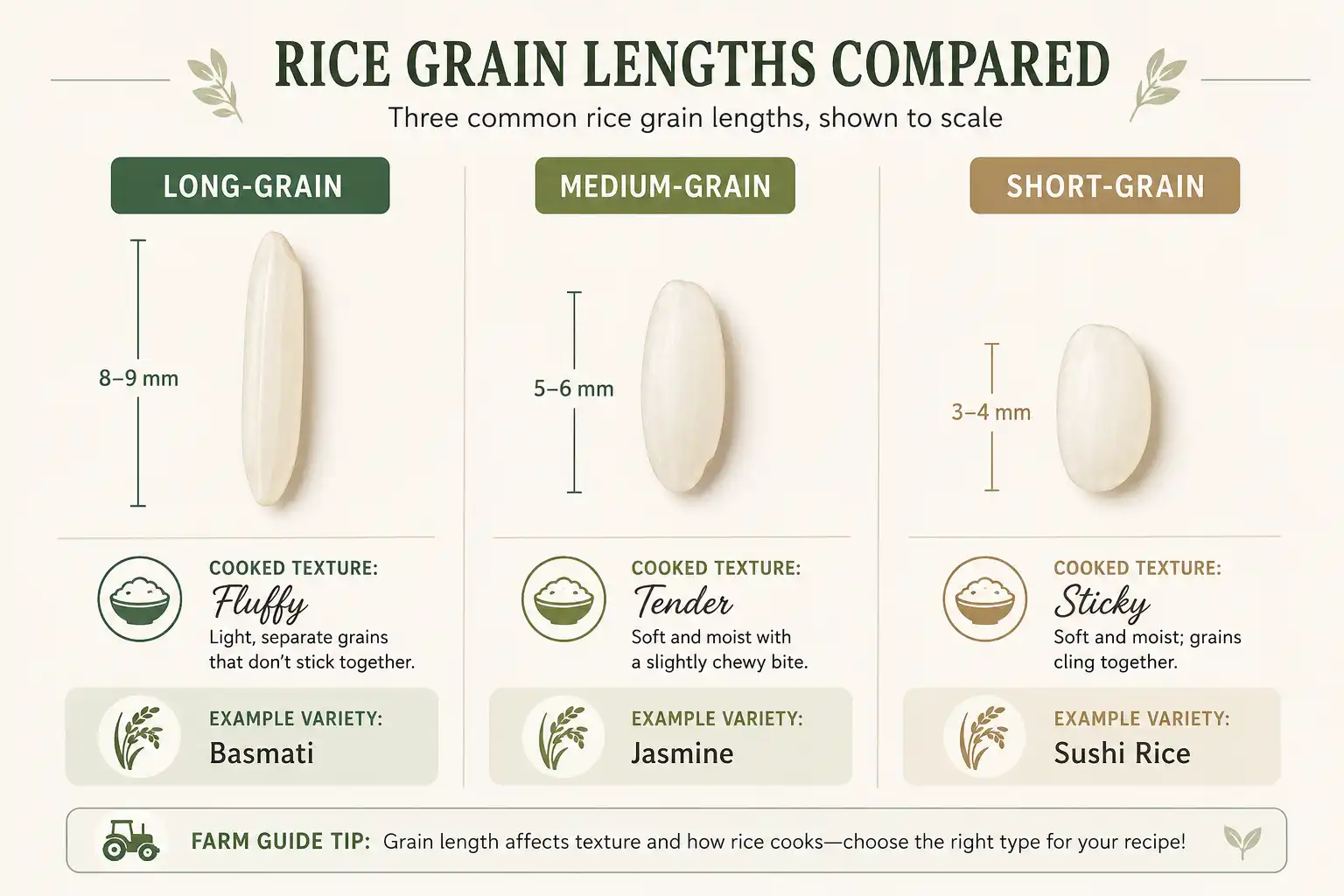
Grain length is the first split most people notice. It shapes texture, cook time, and best use. Three classes cover it: long, medium, and short. USDA sorts the US crop the exact same way.
Long-Grain Rice
Long-grain kernels run three to five times longer than they are wide. Cooked, they stay dry, light, and separate, so they almost never clump. This is the rice most American kitchens reach for. Basmati and jasmine headline the group, and you can read up on basmati’s homeland for the backstory. Plain long-grain white handles pilafs, stir-fries, and any dish that wants loose grains.
Medium-Grain Rice
Medium-grain sits between long and short in both size and feel. Cook it, and the grains turn plump, moist, and lightly clingy without going gummy. Arborio makes classic Italian risotto creamy. Calrose, a California staple, fills sushi rolls and everyday rice bowls alike. Reach for this class whenever you want a soft, slightly sticky bite.
Short-Grain Rice
Short-grain kernels look almost round, and cooked they turn soft and sticky. Their high starch makes them cling in neat clumps. That is why sushi rice and many East Asian table rices live here. Glutinous or sweet rice belongs in this group too. Not every short grain turns sticky, though. Spain’s bomba rice, the classic paella grain, stays firm and separate even as it soaks up broth. Short grain also thrives in cooler weather, which is why California grows most of the US supply.
Types of Rice by Color
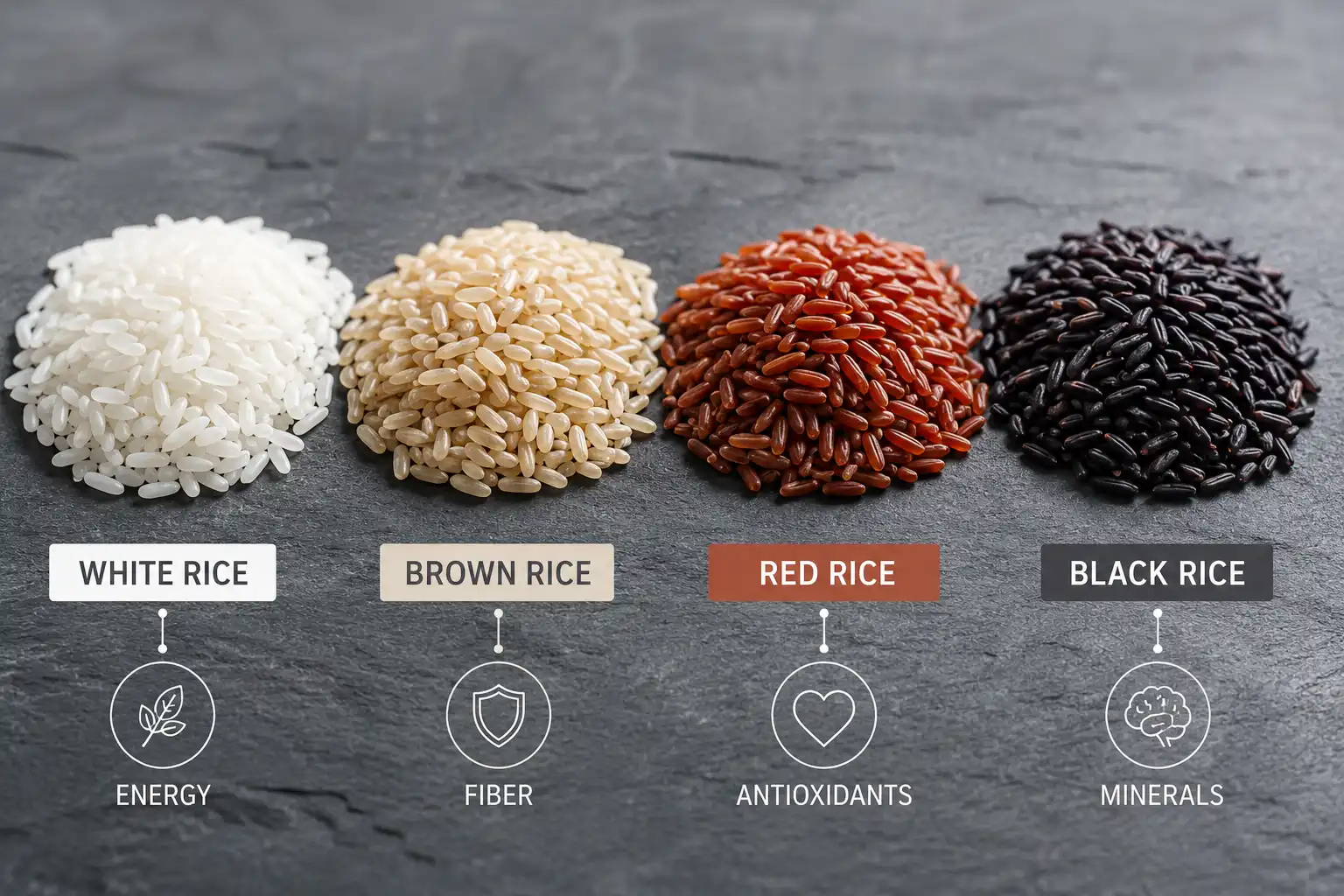
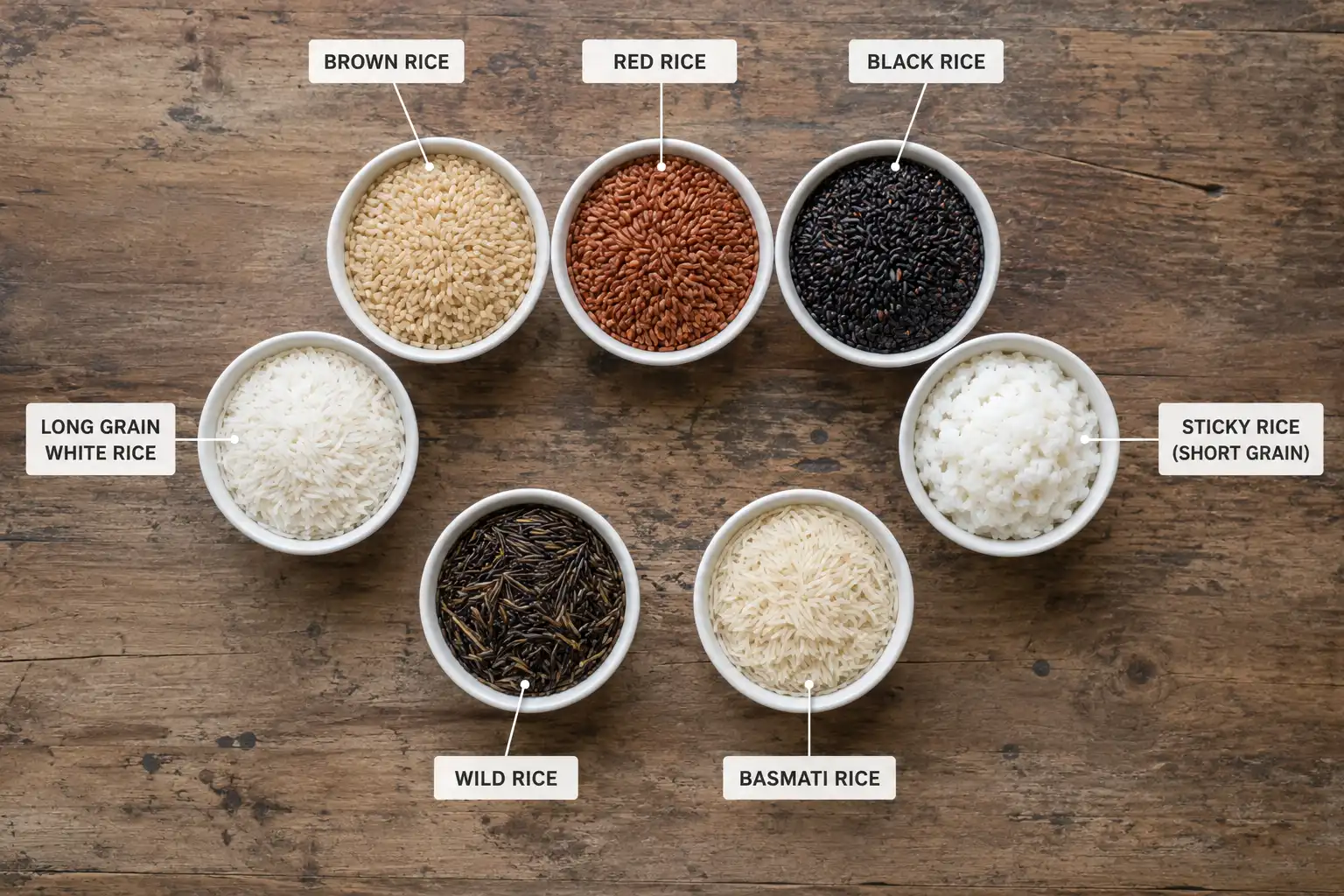
Color comes straight from the bran layer, and it hints at both flavor and nutrition. Four shades cover the field: white, brown, red, and black. Every one starts as the same grain. Milling just removes the bran to different degrees, or leaves it fully intact.
White rice loses its bran and germ in milling, which gives it a mild taste and long shelf life. Brown rice keeps the bran, so it holds more fiber and cooks slower. Red rice, common in Bhutan and France’s Camargue, draws its color from antioxidants in the bran. Black or purple rice, often sold as forbidden rice, runs deep in pigment and nutrients. The deep-purple riceberry is one modern favorite worth trying.
Types of Rice by Milling: Brown, White, and Parboiled
Milling sets how much of the grain survives, and it yields three familiar products. Brown rice is the whole grain, minus only the tough outer hull. White rice goes further, since milling strips the bran and germ for a longer shelf life. Parboiled rice takes its own route. Producers steam the grain inside the husk, then dry and mill it. That step pushes nutrients into the kernel and firms up each grain.
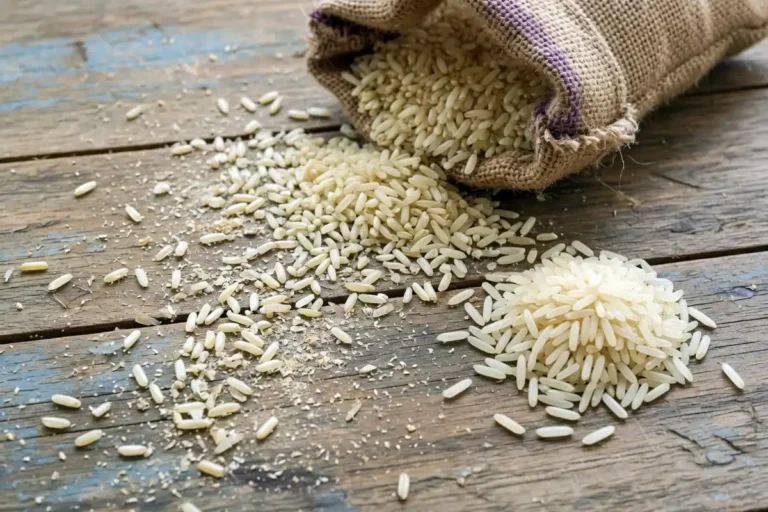
One more product falls straight off the mill. Broken grains from the mill are simply kernels that cracked during processing. They cook quickly and cost less, so many cooks favor them for porridge and fast dishes.
Sticky vs Regular: The Starch Difference
Two starches decide whether rice clumps or stays loose. Amylose keeps grains firm and separate. Amylopectin makes them soft and sticky. Regular rice carries more amylose, so it holds its shape on the plate. Glutinous rice, also called sticky or sweet rice, carries almost none, so it turns tacky and easy to mold. Despite the name, no rice contains any gluten. Cooks across Asia count on sticky rice for dumplings, desserts, and hand-shaped bites.
Aromatic Rice Types
Aromatic rice gives off a nutty, popcorn-like scent from a natural compound called 2-acetyl-1-pyrroline. Basmati leads the pack, with long grains that stay separate and perfume the whole kitchen. Jasmine rice, grown mainly in Thailand, cooks softer and a little sticky. American mills sell crossbreeds like Texmati as well. These grains cost a bit more, yet their flavor and smell easily earn it.
What About Wild Rice?
Wild rice is not true rice at all. It grows from a different genus, Zizania, a tall aquatic grass native to North America. Tribes around the Great Lakes have harvested it for centuries. The long, dark grains cook up chewy, with a smoky, nutty taste. It grows in shallow water like paddy rice, and growing wild rice rewards patience and the right pond. So we may group it with rice at dinner, yet it sits on its own branch of the grass family.
Which Types of Rice Grow in the US?
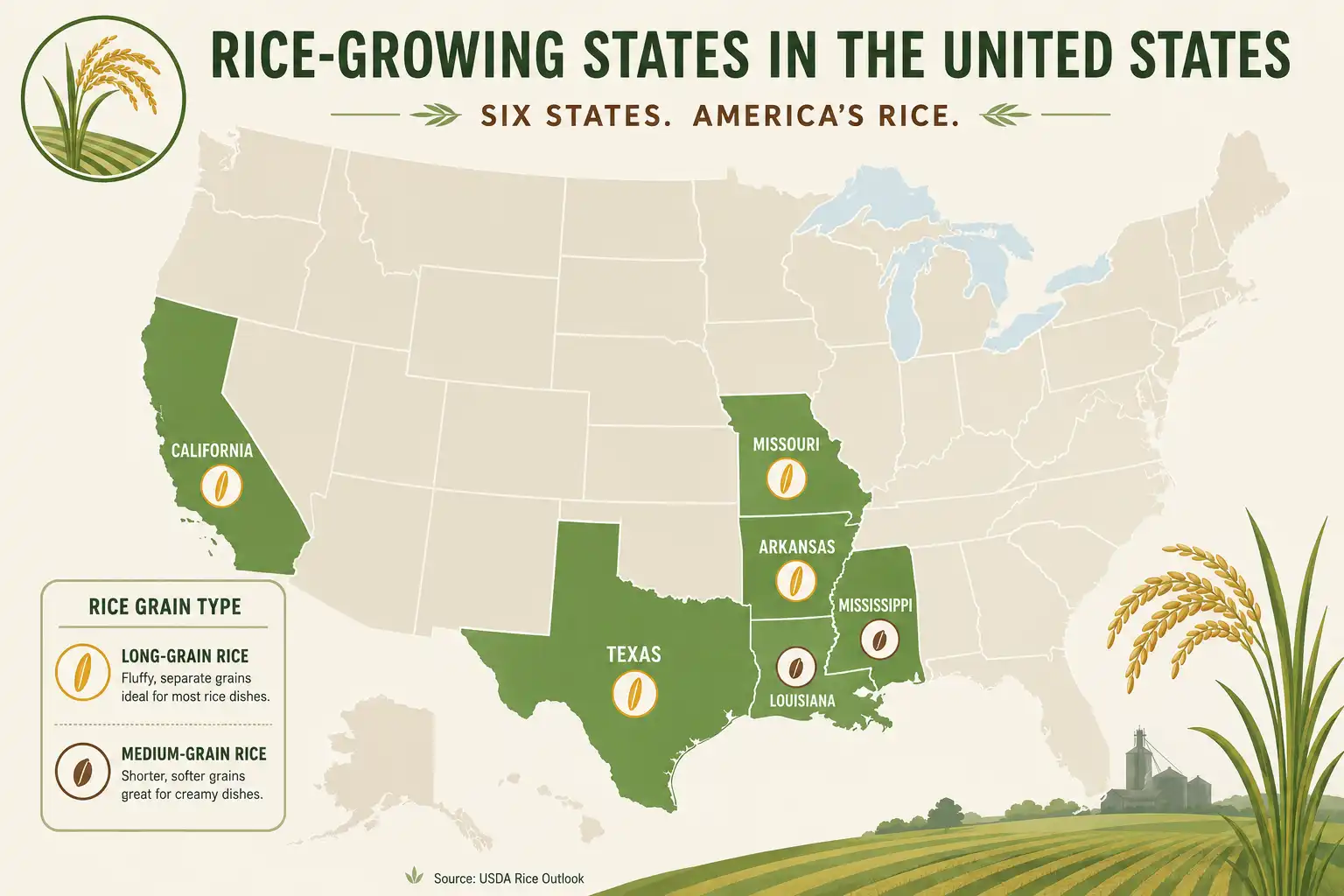
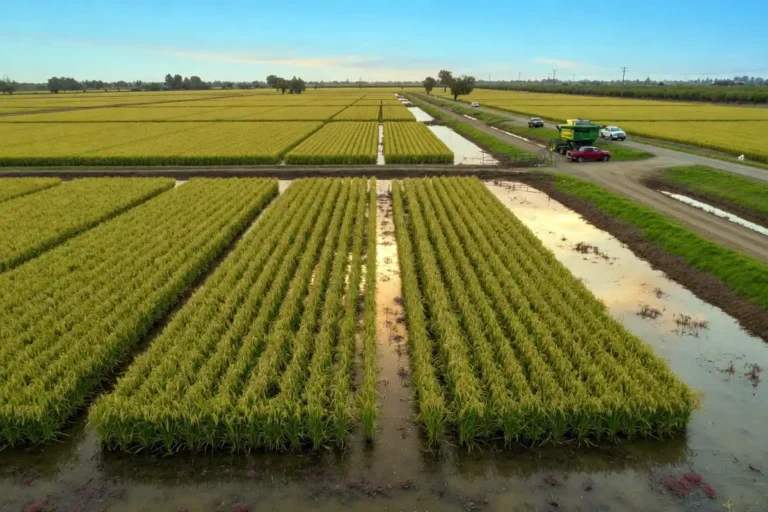
American farmers grow mostly long-grain and medium-grain rice, plus a little short grain. Six states cover nearly the entire crop: Arkansas, California, Louisiana, Mississippi, Missouri, and Texas. Arkansas leads the nation and grows most of the long-grain harvest. The Mississippi Delta produces much of the southern long grain as well. California owns the medium-grain trade, and California-grown Calrose is the classic example. Short grain is almost entirely a California crop. Aromatic types like jasmine and basmati mostly arrive as imports, since the climate suits the workhorse classes.
Bottom Line on Counting Rice Types
So pick your definition, and the count swings from 40,000 to nearly half a million. For real cooking and shopping, skip the giant number. Learn the five groups instead: grain length, color, milling, starch, and aroma. Match the type to your dish, and you will choose right every time. Do not grow rice. Its classes read the same way wheat classes do, and this simple map never fails.