How to Grow Muscadine Grapes From Planting to Harvest
Muscadine grapes are the easiest fruit crop many Southern growers will ever plant. They shrug off heat, humidity, and diseases that wipe out ordinary vines. Learning how to grow muscadine grapes comes down to a sunny site, a strong wire, and one yearly pruning.
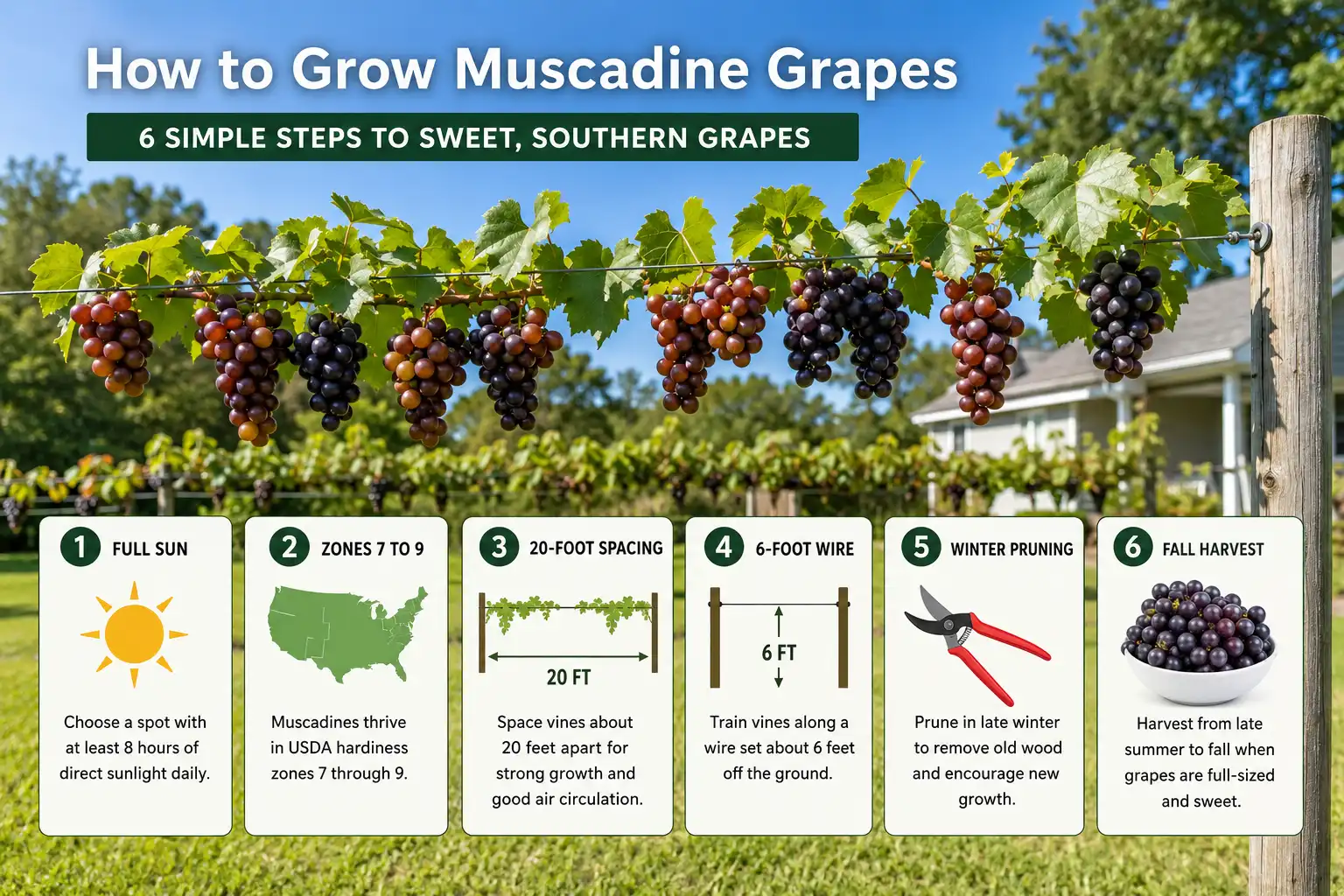
To grow muscadine grapes, plant a self-fertile vine in full sun on well-drained soil. Train it up a single wire near 6 feet, then prune it back to short spurs each winter. One healthy vine can fruit for decades.
What Are Muscadine Grapes?
Muscadine grapes (Vitis rotundifolia) are a grape variety native to the southeastern U.S., known for their thick skins, large seeds, and sweet, musky flavor. They’re popular for fresh eating, wine, and jelly making.
They evolved in hot, humid country, so they handle summer weather that ruins most other grapes. The vines carry thick-skinned berries in small, loose clusters of 3 to 40 grapes. You won’t see the tight bunches typical of table grapes.
Colors run from greenish bronze to deep purple-black. Bronze types are often called scuppernongs, after the first named variety found near the Scuppernong River in North Carolina. Growers have cultivated these vines for more than 400 years, from Florida up to Delaware.
The berries also behave differently at harvest. Each grape pops off the stem at a dry scar, and ripe fruit often drops on its own. That single trait shapes how you pick them later.
Read next: Best Time to Prune Grapes
What Does It Take to Grow Muscadine Grapes?
To grow muscadine grapes well, you need five things. Those are full sun, a warm climate, the right variety, a sturdy wire, and one hard pruning each year. Get those right and the vine does the rest.
Here’s the short checklist:
- Full sun for most of the day
- A warm zone, USDA 7 through 9
- A self-fertile variety if you plant just one vine
- A single-wire trellis about 6 feet high
- Winter pruning back to short spurs
Each piece below breaks down how to do it right, from choosing a vine to filling your first buckets.
Where Do Muscadine Grapes Grow Best?
Muscadines grow best in the warm Southeast, across USDA hardiness zones 7 through 9. They need a long, hot season to sweeten up, so they thrive from the Piedmont down through the Coastal Plain.
Here’s the honest part. Muscadines are a Southern crop, not a national one. Temperatures below about zero can kill the vines outright. If you sit in zone 7 or warmer, you’re in good shape. Gardeners on the West Coast can grow them too. The cooler summers there leave the berries small and low in sugar.
Pick your spot with drainage in mind. Muscadines tolerate many soil types, yet they die fast in ground where water stands after a hard rain. A gentle slope with full sun works best.
How Do You Choose the Right Muscadine Variety?
Choose a self-fertile variety if you have room for only one vine. It sets fruit on its own, with no pollinator needed. This one decision matters more than any other at the nursery.
Muscadines come with one of two flower types. Self-fertile (or “perfect”) vines carry both male and female parts, so a single plant fruits alone. Female vines carry only female flowers, so they need pollen from a self-fertile vine nearby. Plant a pollinator within about 25 feet, or make every third vine self-fertile. Self-fertile types also out-yield female types by 40 to 50 percent, which is a strong reason to start with them.
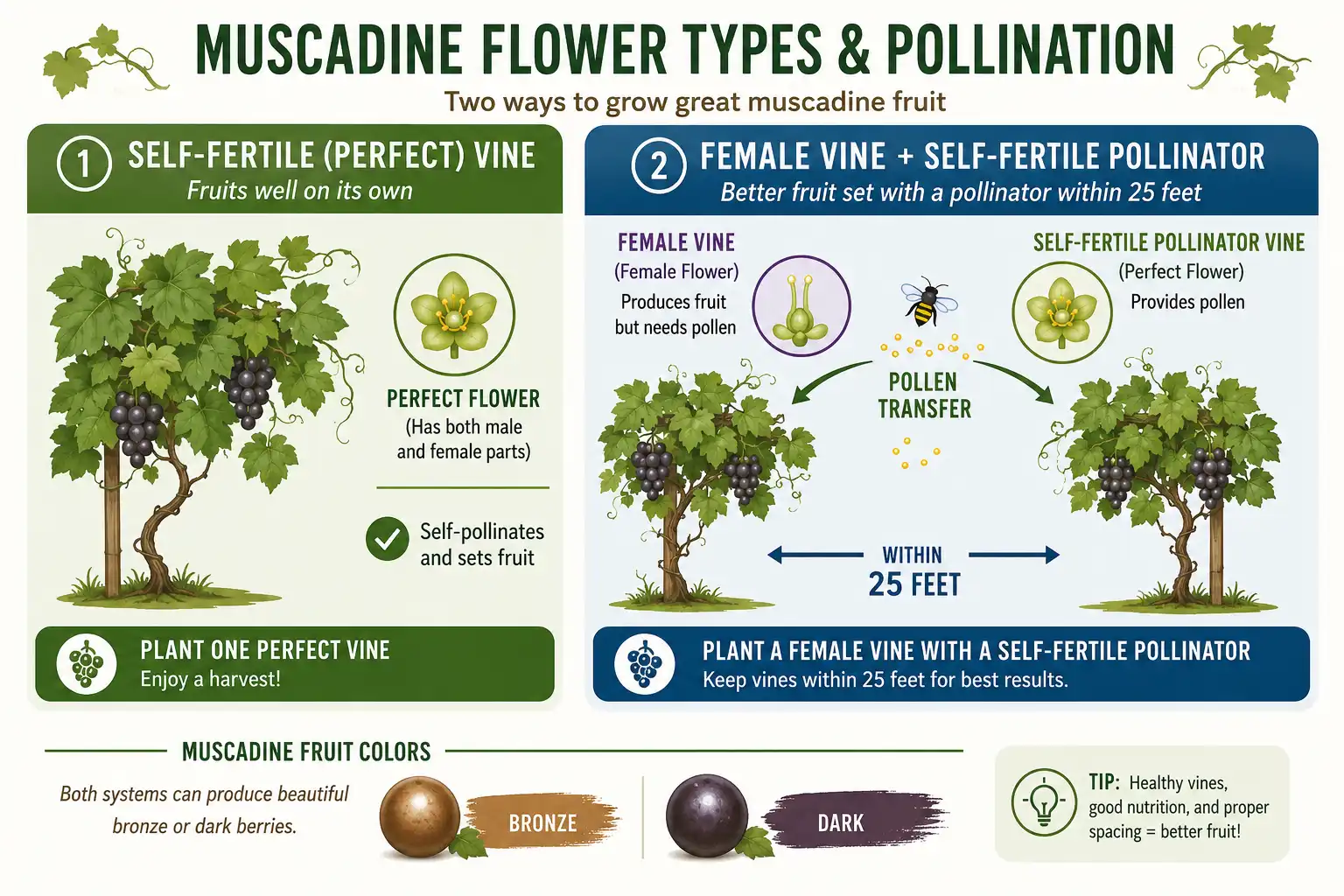
Then match the fruit to your goal:
- Fresh eating: Supreme, Nesbitt, and Tara give large, sweet berries.
- Wine and juice: Carlos and Noble are the workhorses across the South.
- Bronze scuppernong flavor: Fry is popular, though it is female and needs a pollinator.
Over 100 varieties exist today, and many modern ones beat old Scuppernong for size and sweetness. Breeders at places like the University of Georgia keep releasing better selections. If you want more vines later, most folks buy young nursery stock. Muscadines are slow to start from cuttings, so rooting your own takes patience.
When and How Do You Plant Muscadine Grapes?
Plant muscadines during the dormant season, from late winter into early spring, while the vine still has no leaves. Cool soil and mild air let the roots settle before summer heat arrives.
Follow these steps:
- Test the soil first. Muscadines do best at a soil pH between 5.8 and 6.5. Add lime the season before if your test reads low, and work it in deep.
- Pick a sunny, well-drained site. Aim for full sun most of the day. Skip any low spot that puddles.
- Space the vines 20 feet apart. Each vine will fill that much wire once it matures.
- Set the vine at nursery depth. Dig a hole wide enough for the roots, spread them out, then backfill and firm the soil.
- Water it in well. Keep the root zone moist through that first season.
A grow tube around the young trunk helps in windy or weedy ground. It also keeps string trimmers and rabbits away from tender bark.
What Kind of Trellis Do Muscadines Need?
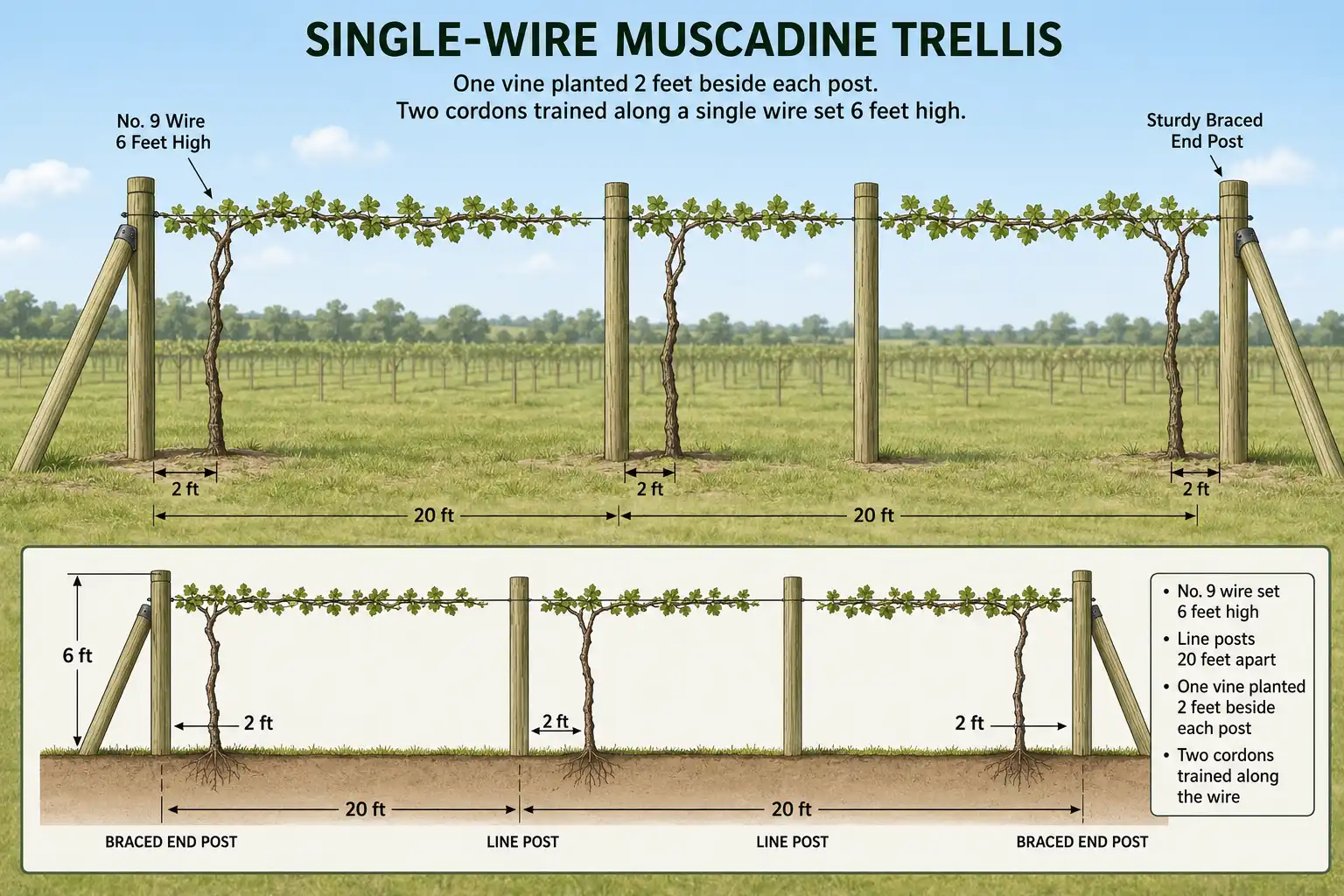
Muscadines need one strong horizontal wire about 5.5 to 6 feet above the ground. Set the posts 20 feet apart. This single-wire system is the standard across muscadine country, and it keeps pruning and picking simple.
Use a heavy No. 9 gauge wire so it won’t sag under a loaded vine. Set stout end posts and brace them well, because a mature vine gets heavy and lives for decades. Put one vine at each post, about 2 feet to the side.
Build the trellis before you plant, not after. That way the young vine has something to climb from day one. A backyard arbor or pergola works too, as long as the structure is solid and sits in full sun.
How Do You Train a Young Muscadine Vine?
Train one shoot straight up to the wire as the permanent trunk. Then run two arms along the wire in opposite directions. Those two arms, called cordons, become the frame that carries your fruit for years.
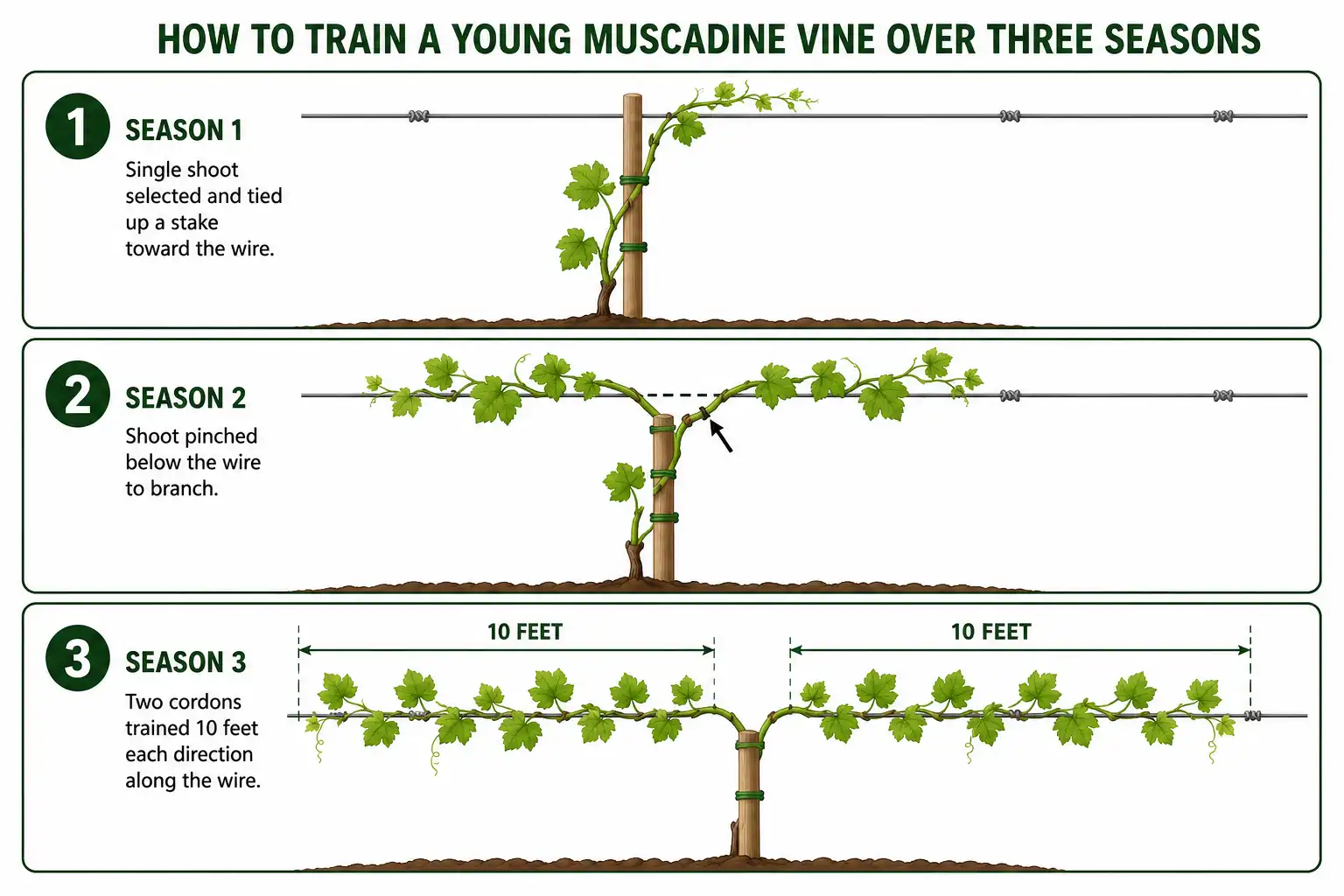
Here is the sequence over the first two or three seasons:
- Pick one strong shoot. After the vine leafs out, choose the best cane and remove the rest.
- Tie it to a stake or string. Guide that single shoot up toward the wire, and pinch off side shoots along the way.
- Stop it below the wire. When the shoot nears the top, pinch the tip about a foot under the wire to force branching.
- Select two cordons. Train one arm each direction along the wire, up to 10 feet per side.
Check the ties every week or two during the growing season. Loose ties keep the bark from cutting. By the end of year two or three, you’ll have a full trunk and two cordons ready to fruit.
How Do You Prune Muscadine Grapes?
Prune muscadines every winter while they are dormant. Cut last season’s growth back to short spurs of 2 to 3 buds. This yearly cut is the single most important job for a good crop. Muscadines fruit on new shoots that push from those spurs.
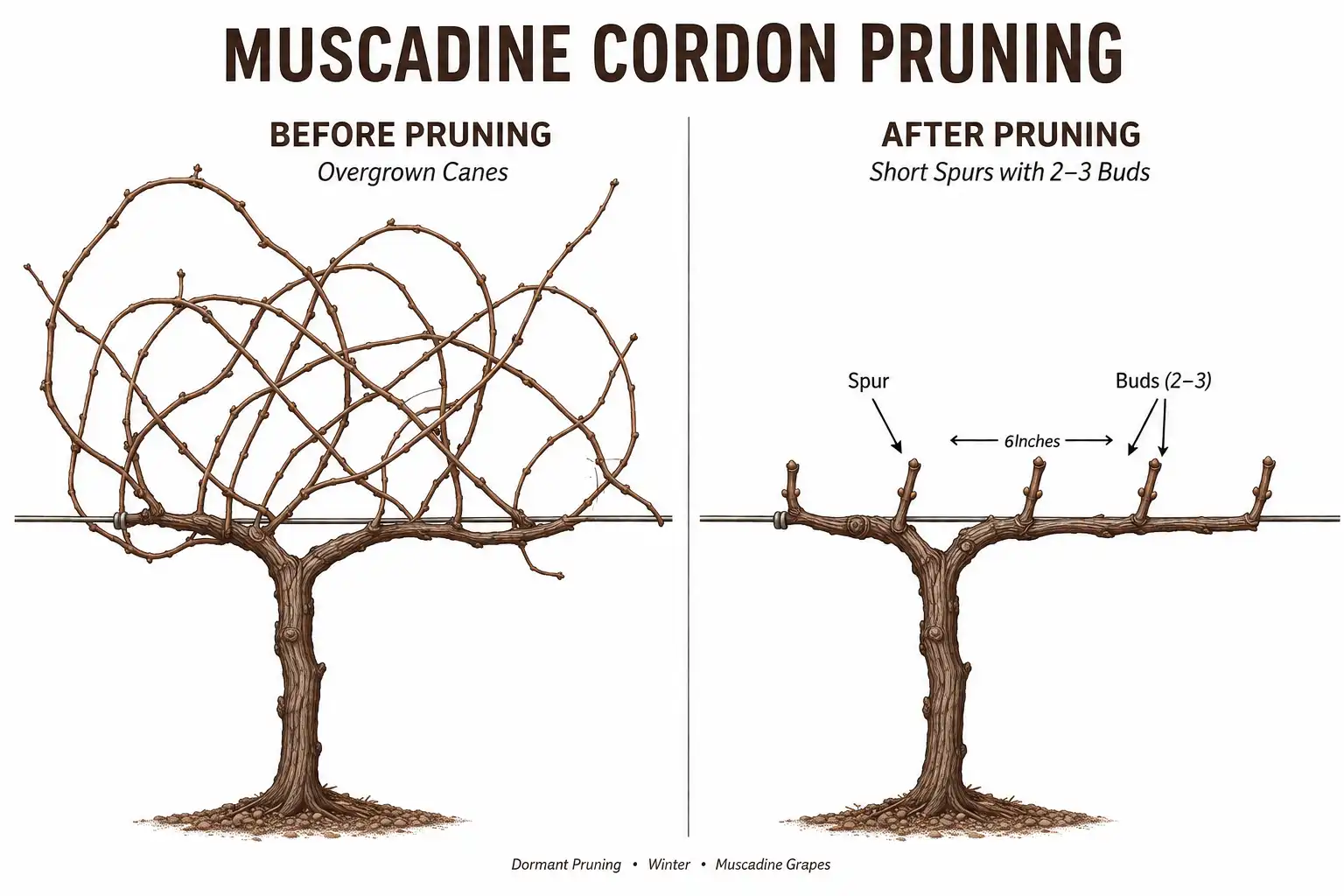
Space the spurs about 6 inches apart along each cordon. Remove roughly 90 percent of the wood that grew last year. It looks harsh, but the vine responds with vigorous fruiting shoots in spring.
Time the work from late winter up to bud break, usually January through early March in the South. The vine may drip sap from fresh cuts, and that bleeding does no harm. If you want a deeper walkthrough, the basics of pruning grapevines carry straight over to muscadines.
Skip a year and the vine turns into a tangled mess of weak wood and small fruit. So keep it on schedule.
How Do You Fertilize and Water Muscadines?
Feed young muscadines lightly. Give mature vines about 2 to 3 pounds of 10-10-10 each spring, guided by a soil test. Too much nitrogen pushes leafy growth at the expense of fruit, so hold back rather than pour it on.
Here’s a simple schedule:
- After planting: a small handful of 10-10-10 once new growth starts.
- Second year: about half a pound in early spring.
- Mature vines: 2 to 3 pounds, split between early spring and June.
Watch two nutrients that muscadines often want more of: boron and magnesium. A soil or tissue test will flag them, and a balanced blend such as 10-10-10 covers the main needs otherwise.
Water matters most in the first two years. Give new vines about 1 inch per week when rain falls short. Established muscadines handle dry spells well, though a good soak while the berries swell pays off in size. If you’re unsure on amounts, this guide on how much water grapevines need lays out the weekly targets.
Do Muscadines Have Pest and Disease Problems?
Muscadines have very few disease problems, and that is their biggest edge over regular grapes. They resist Pierce’s disease, a bacterial infection from Xylella fastidiosa that kills bunch grapes across the South. They also shrug off downy mildew, black rot, and most fungal rots that plague other vines.
Because of that resistance, most backyard growers spray little or nothing all season. A dusting of sulfur handles powdery mildew in a wet year, and that’s often the extent of it. This low-spray habit is a big reason muscadines suit home gardens so well.
A few pests still show up. Japanese beetles chew leaves, but vines usually outgrow the damage. Grape root borer is the one to watch, and mounding soil around the trunk in late summer helps break its cycle. Deer browse young shoots, so a fence pays for itself where they’re thick.
Birds are the real competition at harvest. They’ll strip ripe berries fast once color sets. Draping lightweight garden netting over the vines is the surest fix and keeps most of the flock out.
When Are Muscadine Grapes Ready to Harvest?
Muscadines ripen from late summer into fall, roughly August through October, once the berries reach full color and taste sweet. Ripening runs uneven across the vine, so you’ll pick the same vine several times over a few weeks. For the full rundown on timing by region, see when muscadines come into season.
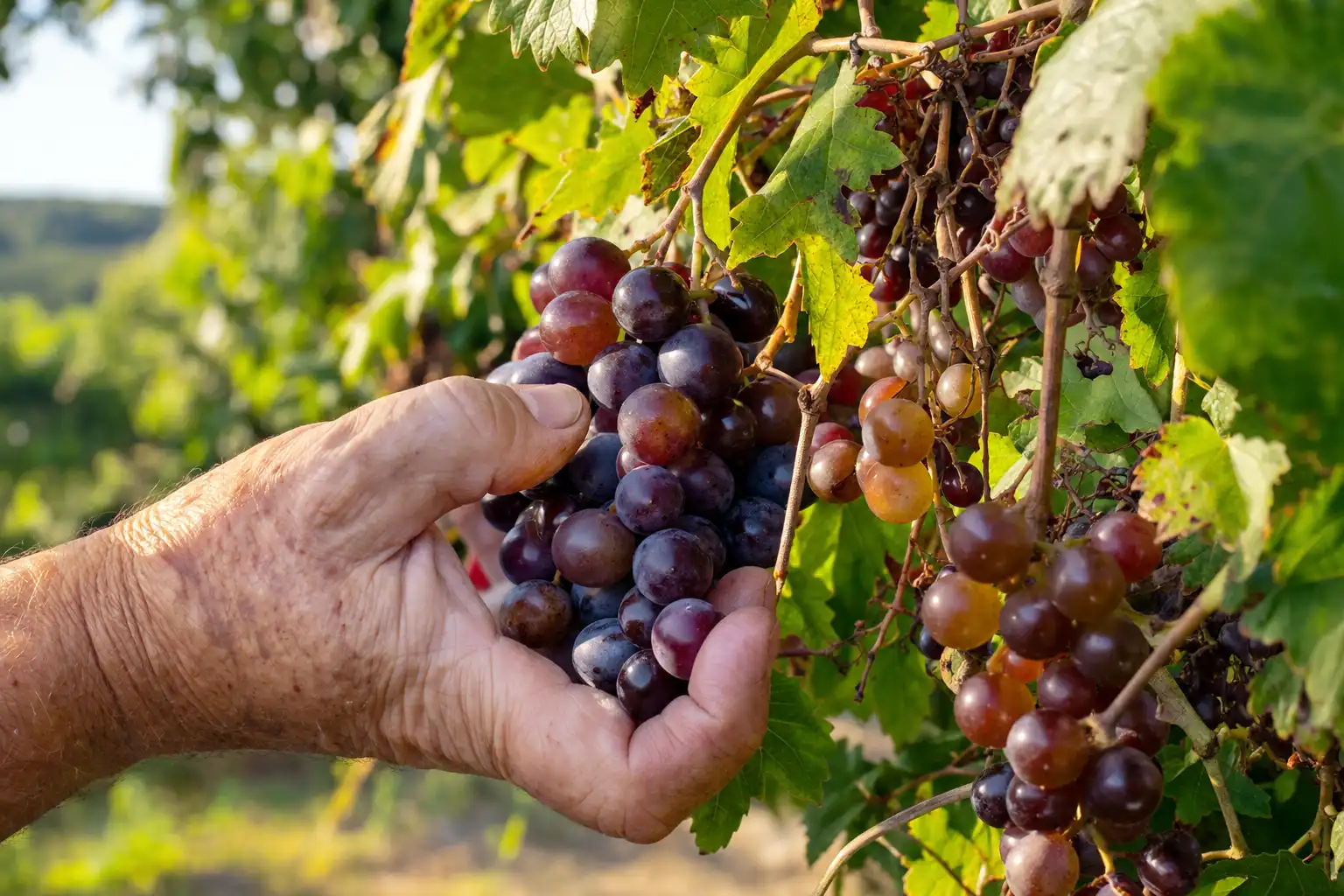
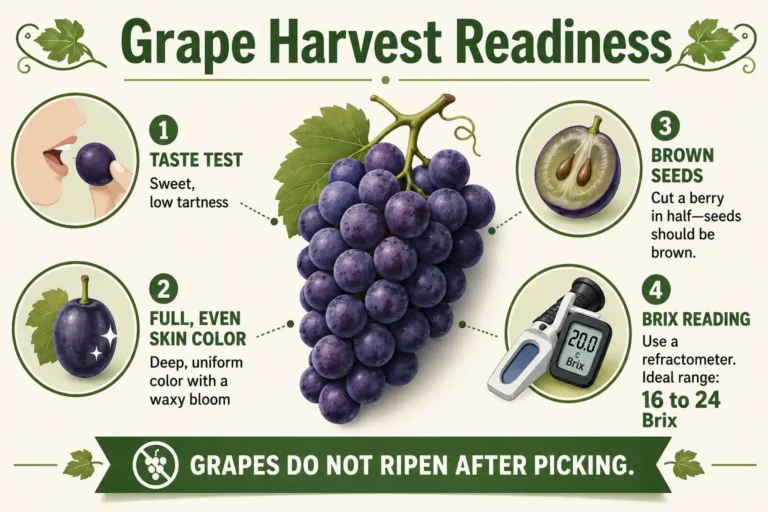
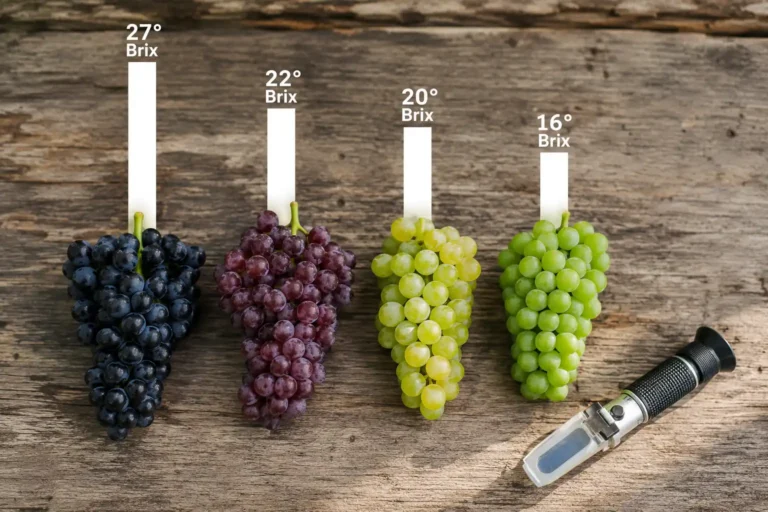
Taste is your best guide, since muscadines don’t sweeten after picking. They’re a non-climacteric fruit, meaning the sugar you get is the sugar on the vine. Pick too early and the flavor stays flat. If you want a precise read, checking sugar with a refractometer tells you when the berries hit their peak.
Harvest is simple. Cup a cluster and roll the ripe berries off by hand. You can also spread a tarp and shake the vine so the loose fruit drops. Each grape separates at a dry stem scar, which is the mark of a clean, ripe muscadine.
A mature vine, around four years old, rewards all this with 30 to 100 pounds of fruit a year. That’s a lot of grapes off a single plant.
The Payoff From a Muscadine Vine
Muscadines reward patience with decades of easy fruit. Set them in full sun, give them one strong wire, and prune them hard every winter. Do that, and the vines mostly take care of themselves.
The first real crop shows up around year three or four, and it keeps coming for 20 years or more. Once the buckets fill, you’ll have plenty for fresh eating, plus juice, jelly, and wine. For ideas on using the haul, here’s what to do with your muscadine harvest.