When to Prune Grapes: Best Time for a Bigger Harvest
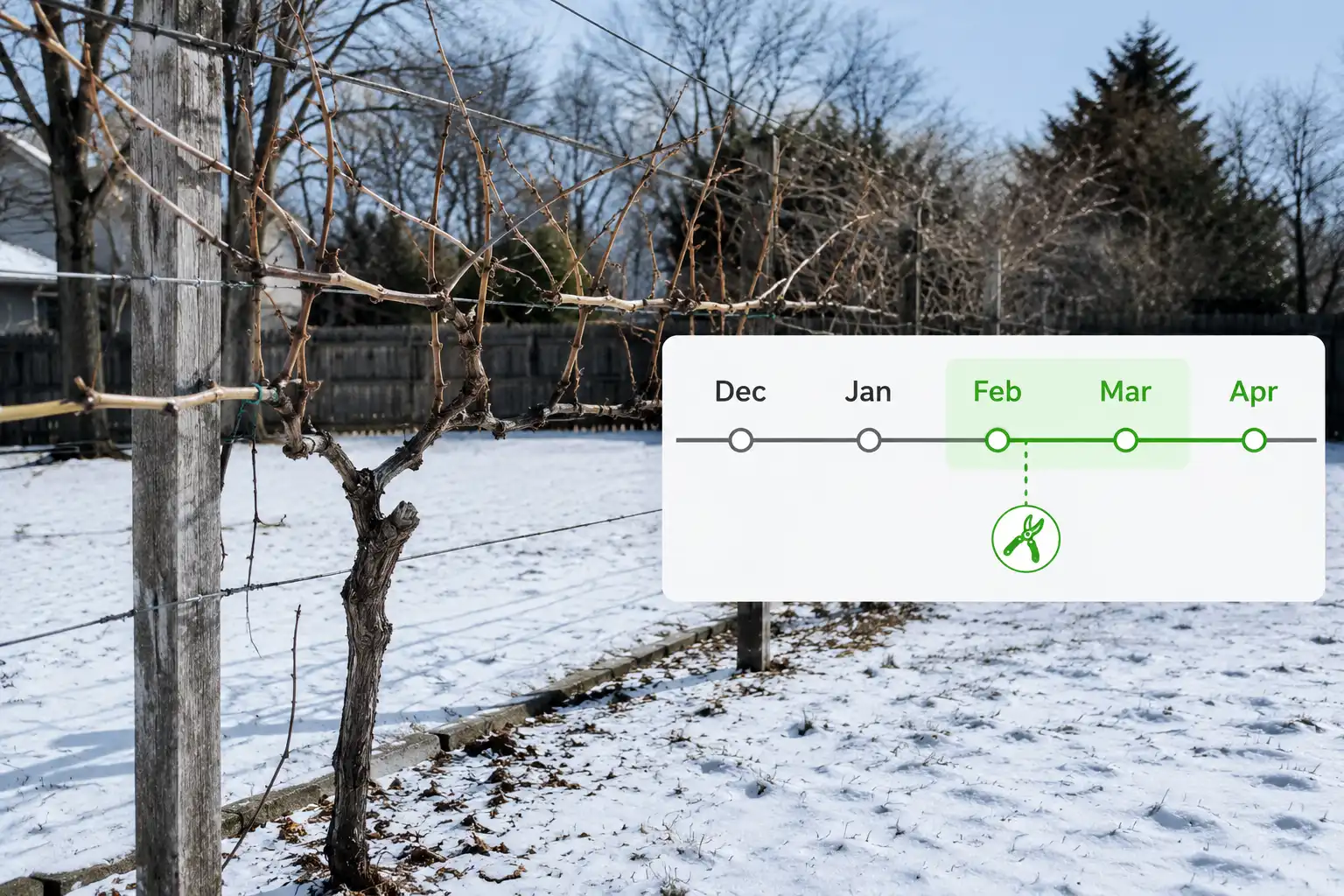
Get the timing wrong and you lose fruit, invite disease, or risk winter injury to fresh cuts. Knowing when to prune grapes is the single biggest pruning decision made each year on vines in this region.
Prune grapes during dormancy, in late winter to early spring, after the hardest cold passes but before the buds swell. In Kansas that means late February through March. Pruning late in dormancy delays bud break and dodges spring frost.
When Is the Best Time to Prune Grapes?
The best time to prune grapes is late in the dormant season. Cut after winter’s coldest stretch, but before the buds swell. For most US growers, that window runs from January through early April. Finish the job before bud swell begins.
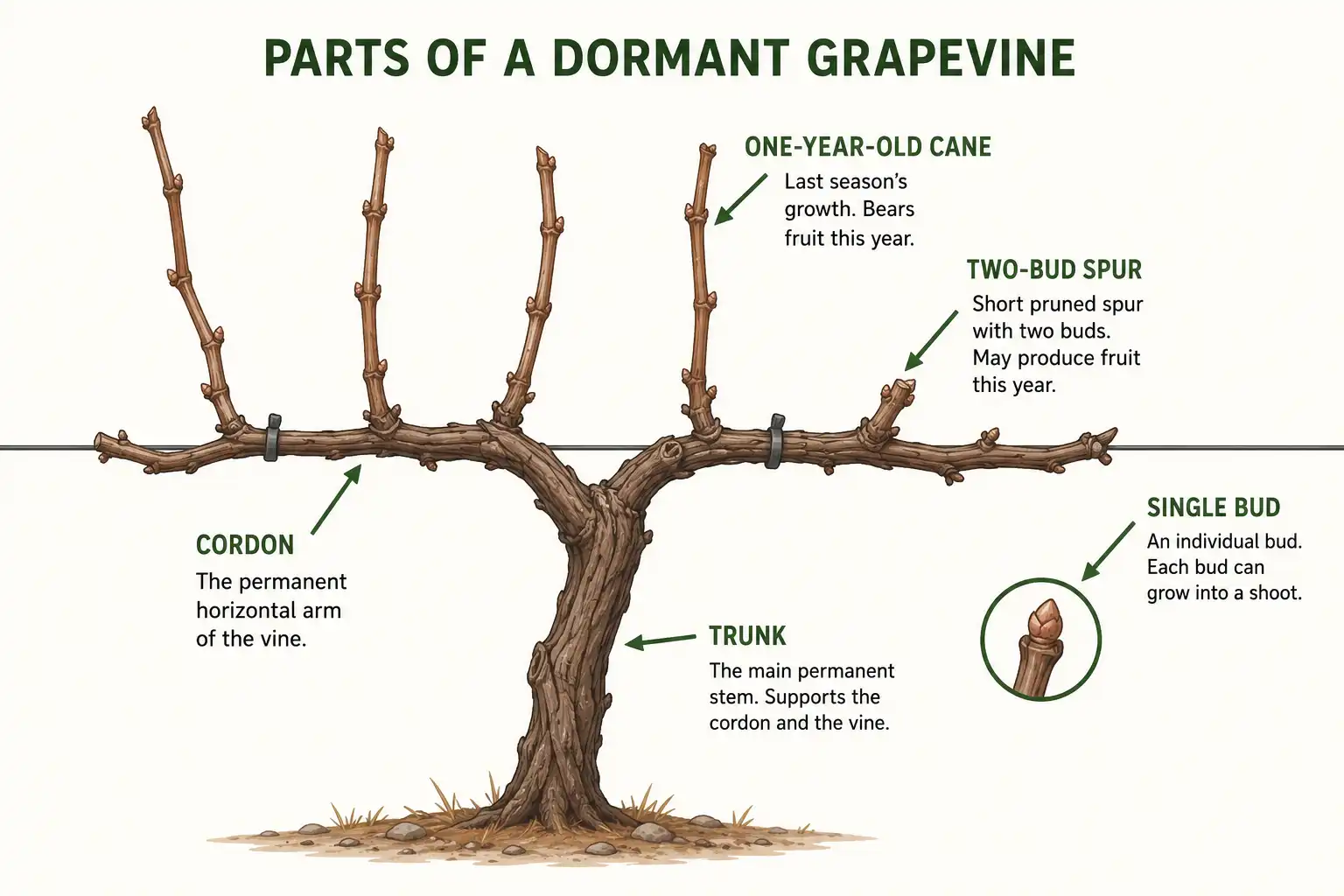
Grapes only fruit on shoots that grow from one-year-old wood. So every winter you cut hard and set up this year’s crop on last year’s canes. Extension programs like Iowa State and Oregon State recommend removing about 90% of the previous season’s growth. That sounds brutal, but vines thrive on it.
Timing inside dormancy matters because it controls three things: cold safety, disease risk, and when growth restarts in spring. Dormant pruning is one core piece of growing grapes well. It pays off long after the shears go back in the shed.
Why Late Winter Beats Fall or Early Winter
Late winter beats fall pruning because early cuts leave vines more open to freeze injury. Research summarized by eXtension shows fall pruning can raise cold-injury risk compared with waiting until later. In cold regions, you gain protection by holding off until the worst cold is behind you.
Two more reasons push the job toward late winter:
- Brittle wood. In hard cold, frozen canes snap easily and cuts tear. Warmer late-winter days make cleaner work.
- Delayed bud break. The later you prune in dormancy, the later the vine wakes up. That small delay helps your buds slip past a late spring frost.
Late pruning also lowers the odds of grapevine trunk diseases, such as Eutypa and Botryosphaeria dieback. These fungi ride on rain and enter through fresh cuts. Prune on a dry day with a dry forecast for a few days after. Dry cuts seal cleaner and stay healthier.
What Happens If You Prune Grapes Too Early?
Pruning too early exposes the fresh cuts and remaining buds to the coldest part of winter. Fall and early-winter pruning can increase freeze damage to canes and buds. Open winters with wild temperature swings make it worse. The Great Plains, January cold snaps hit hard. You want the vine to face them fully dormant and uncut. Wait it out.
What Happens If You Prune Grapes Too Late?
Prune too late and the vine “bleeds,” dripping clear sap from the cut ends. That bleeding looks alarming, but it does not harm an established vine. It simply tells you dormancy is ending and you cut it close.
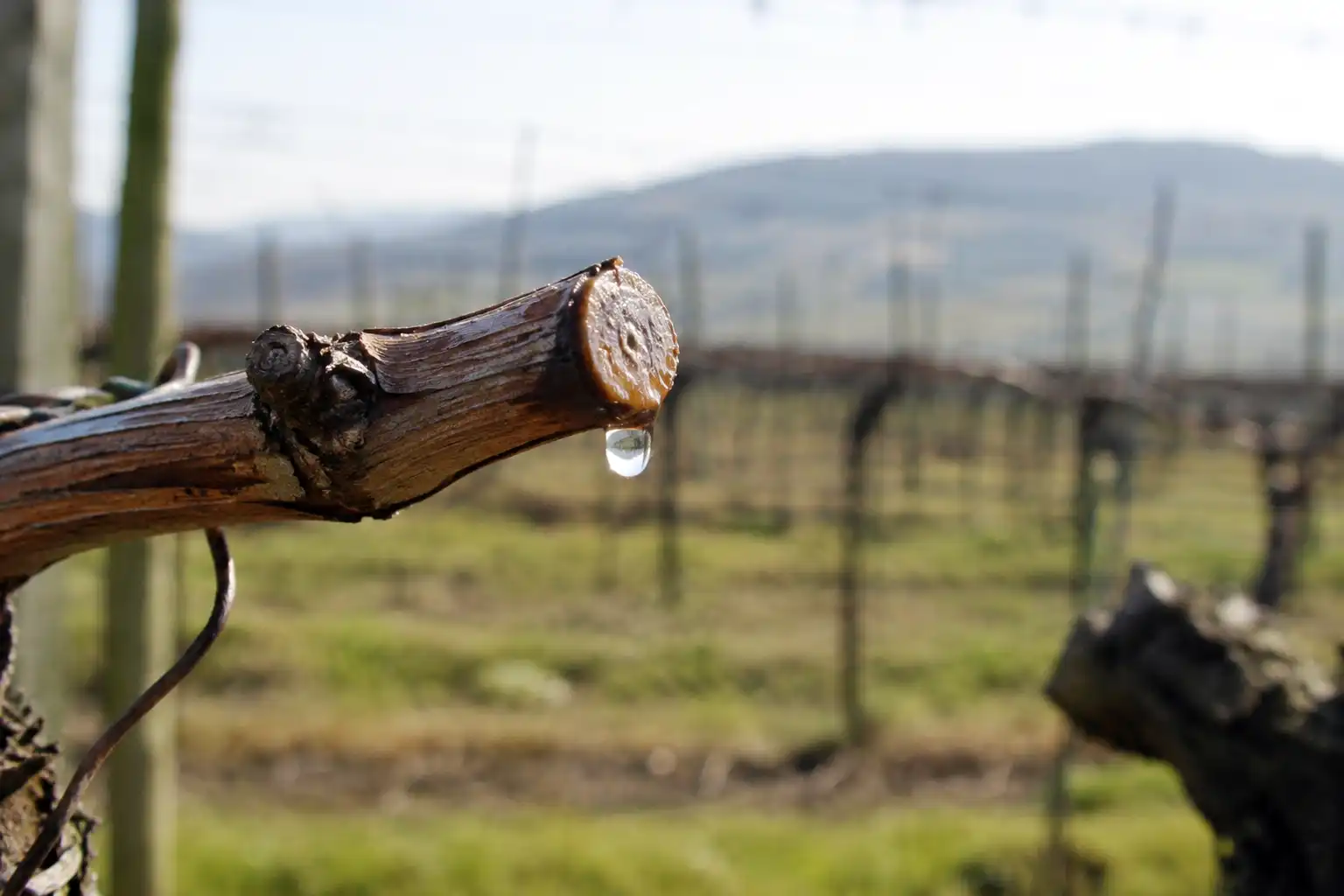
The real danger comes after bud swell. Once buds swell and push, they turn tender and knock off easily. Pulling cut canes out of the trellis then strips those swollen buds and costs you fruit. So finish before bud swell, not during it.
When to Prune Grapes in Kansas and Other Cold Zones
In Kansas and similar cold zones, prune grapes from late February through March, once the deep cold breaks. Topeka sits in USDA hardiness zone 6a, and the last hard freeze usually lands in late April. So dry, mild days in late winter. That falls well after the January lows and safely before bud swell.
Here is how the timing lines up across cold-climate zones:
| USDA zone | Typical pruning window | Why |
|---|---|---|
| Zone 4 to 5 | March into early April | Wait out extreme cold; shortest safe window |
| Zone 6 (Kansas) | Late February to March | After deep cold, before bud swell |
| Zone 7 | February | Milder winter, earlier dormancy exit |
Cold-hardy varieties still follow the same rule. Concord, Frontenac, and American hybrids all get pruned in that late-dormant window. If a late frost threatens young shoots most springs, lean toward the later end of your range. That extra week of delayed bud break can save a crop.
While you work the dormant vines, plan ahead for disease. A well-timed copper fungicide spray helps as buds begin to move. Dormant cuts and early-season sprays work together.
When to Prune Young Grapevines
Prune young grapevines in the same late-dormant window, but go light and focus on structure, not fruit. In the first two to three years, aim for a strong trunk and well-placed arms. You train more than you harvest.
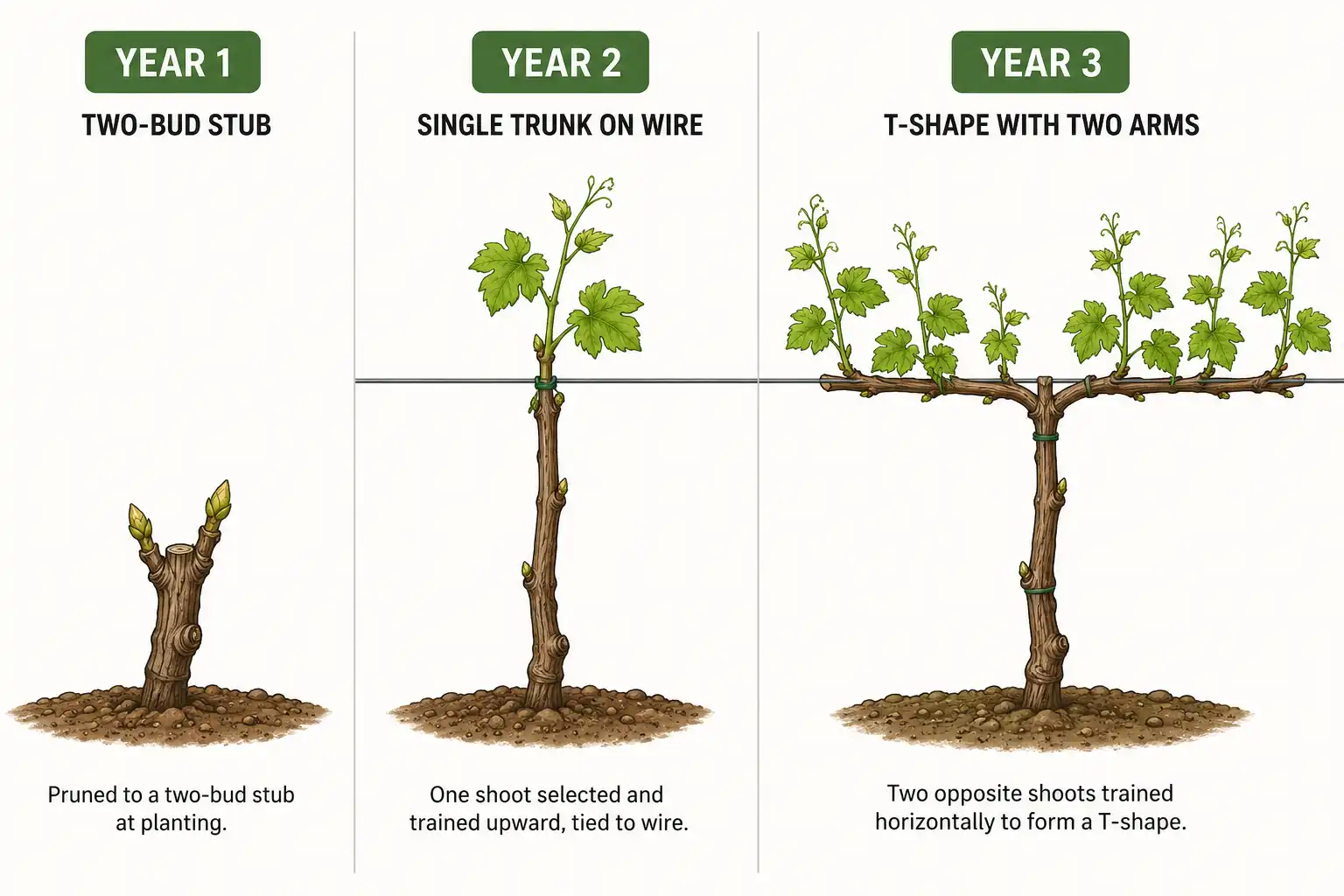
Here is the timing year by year, based on Illinois Extension guidance:
- At planting: Cut the new vine back to a single stem with two healthy buds. The same dormant window works when you are planting new grapevines, so pruning and planting line up.
- First dormant season: Select the strongest cane for your permanent trunk and tie it to the wire. Remove the rest.
- Second dormant season: Set two arms along the trellis wire and clear shoots below the wire.
Go easy those first winters. Overpruning a young vine slows it down and delays your first real crop. Once the trunk and cordons are set, you shift to the heavy annual dormant cut that mature vines want.
Do You Prune Grapes in Summer, Too?
Yes, grapes need light growing-season pruning on top of the main dormant cut. Each summer task has its own timing. Dormant pruning shapes the vine, but summer work manages the canopy for airflow, sunlight, and ripening.
Here is when each growing-season job happens:
- Suckering and shoot thinning (late spring to early summer): Once shoots are a few inches long, rub off suckers on the trunk and thin crowded shoots by hand. Iowa State notes early summer is ideal because the shoots snap off cleanly and light reaches the fruit zone.
- Shoot positioning (early summer): Tuck shoots into the trellis wires before they harden and set their direction.
- Hedging or topping (about 30 days after bloom): Trim runaway shoot tips so each shoot keeps roughly 15 to 20 leaves. This holds the canopy in balance.
- Leaf pulling near the fruit (around veraison, late summer): Remove a few leaves shading the clusters to speed ripening and dry the fruit faster after rain. Do it in stages to avoid sunburn.
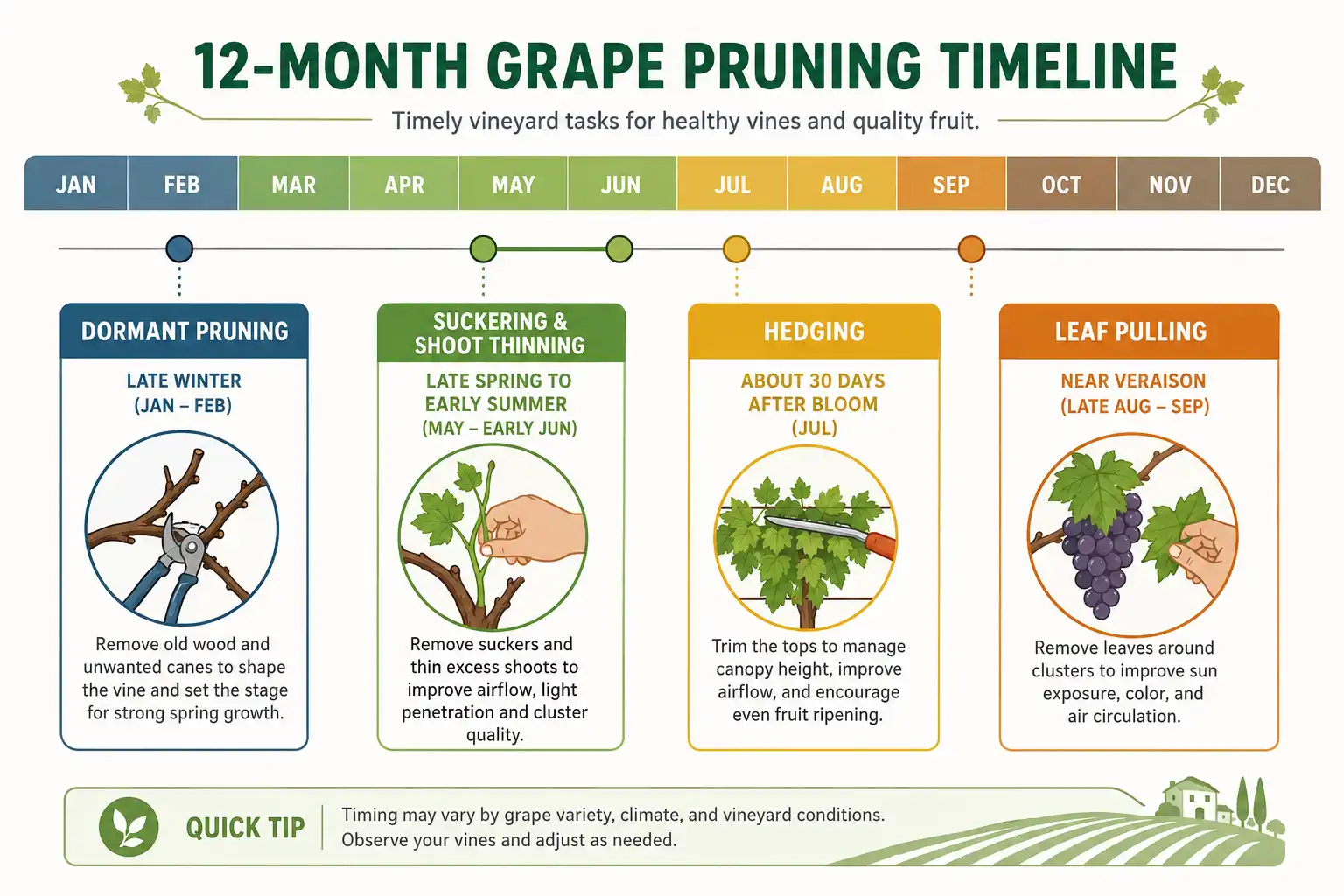
Summer pruning also pairs with steady moisture, so keep watering your vines on track as the canopy fills in. Balanced water and an open canopy carry the crop cleanly to harvest.
Watch the Buds, Not Just the Date
The buds are your real deadline, not the calendar. Dates give you a target, but a warm February or a cold March shifts everything. Read the vine.
Watch for these signals:
- Buds still tight and brown: You are clear to prune.
- Buds swelling and showing green tips: Wrap it up fast and handle canes gently.
- Green shoots pushing: You are late; prune only if you must, and avoid knocking off growth.
That last stretch of dormancy is your window. Finish before the vine wakes, and the rest of the season sets up right.
Bottom Lines
Grapes should be pruned on a dry stretch in late February or March. That lands after the worst cold and before the buds move. Cut back about 90% of last year’s canes and balance the count to the vine’s vigor. The healthiest wood is then saved for starting new vines from cuttings. After that, summer thinning and hedging handle the fine-tuning. Time the dormant cut right, and your vines reward you every fall.