Can You Grow Grapes in a Pot? Yes, Here’s How for 2026
Tight on space but still want homegrown grapes? Good news. A patio, balcony, or sunny deck is enough. You can grow grapes in a pot, and a single well-tended vine will hand you fresh fruit for years.
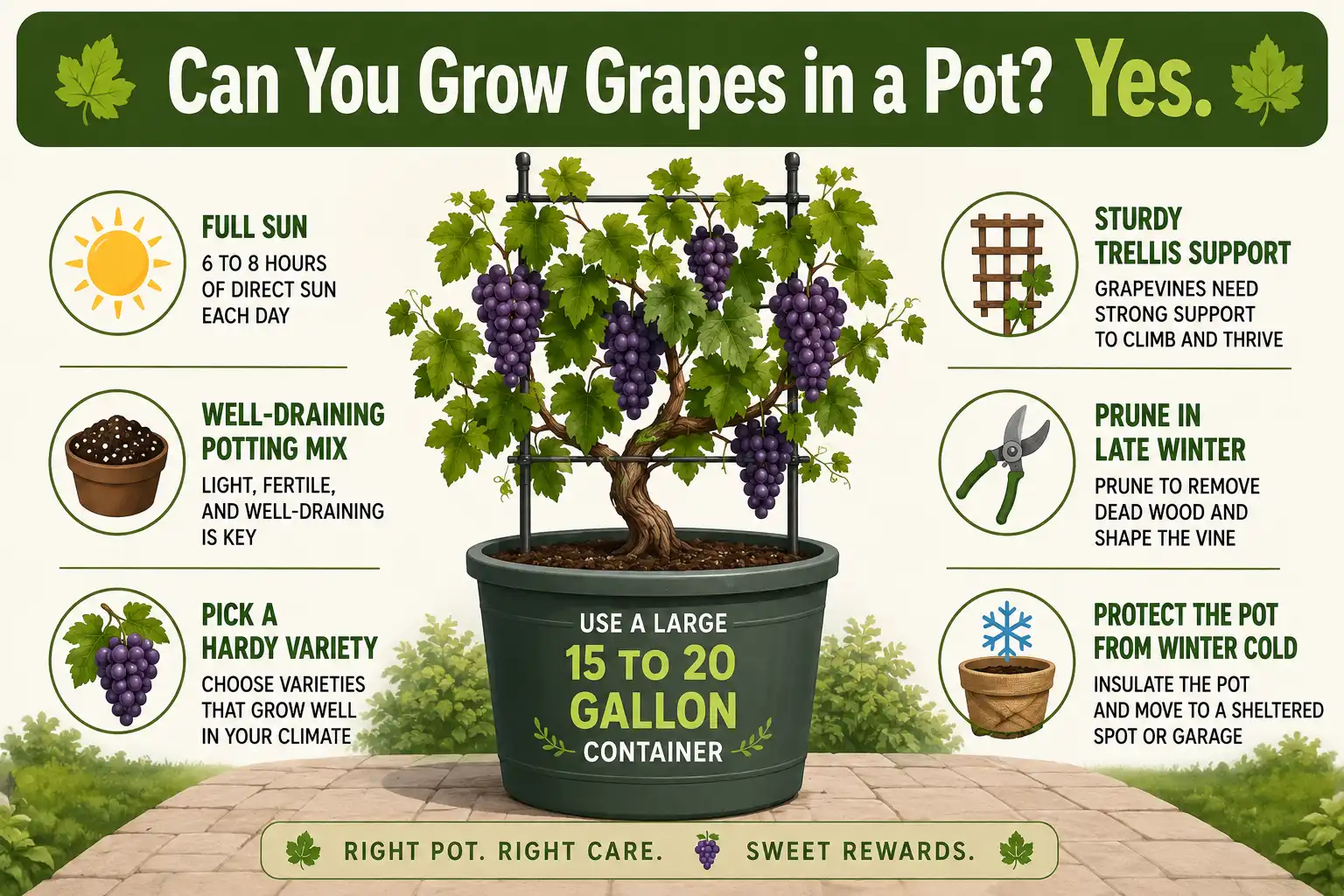
Yes, you can grow grapes in a pot. Use a 15 to 20 gallon container, full sun, well-draining potting mix, and a sturdy support. Prune hard each winter, and protect the pot from hard freezes.
Can You Grow Grapes in a Pot?
Yes, grapes grow well in pots, and they come back every year as a perennial vine. A potted vine will not match a row planted in open ground. Roots have less room, so the crop stays smaller. Still, one healthy container vine can give you several pounds of fruit once it matures.
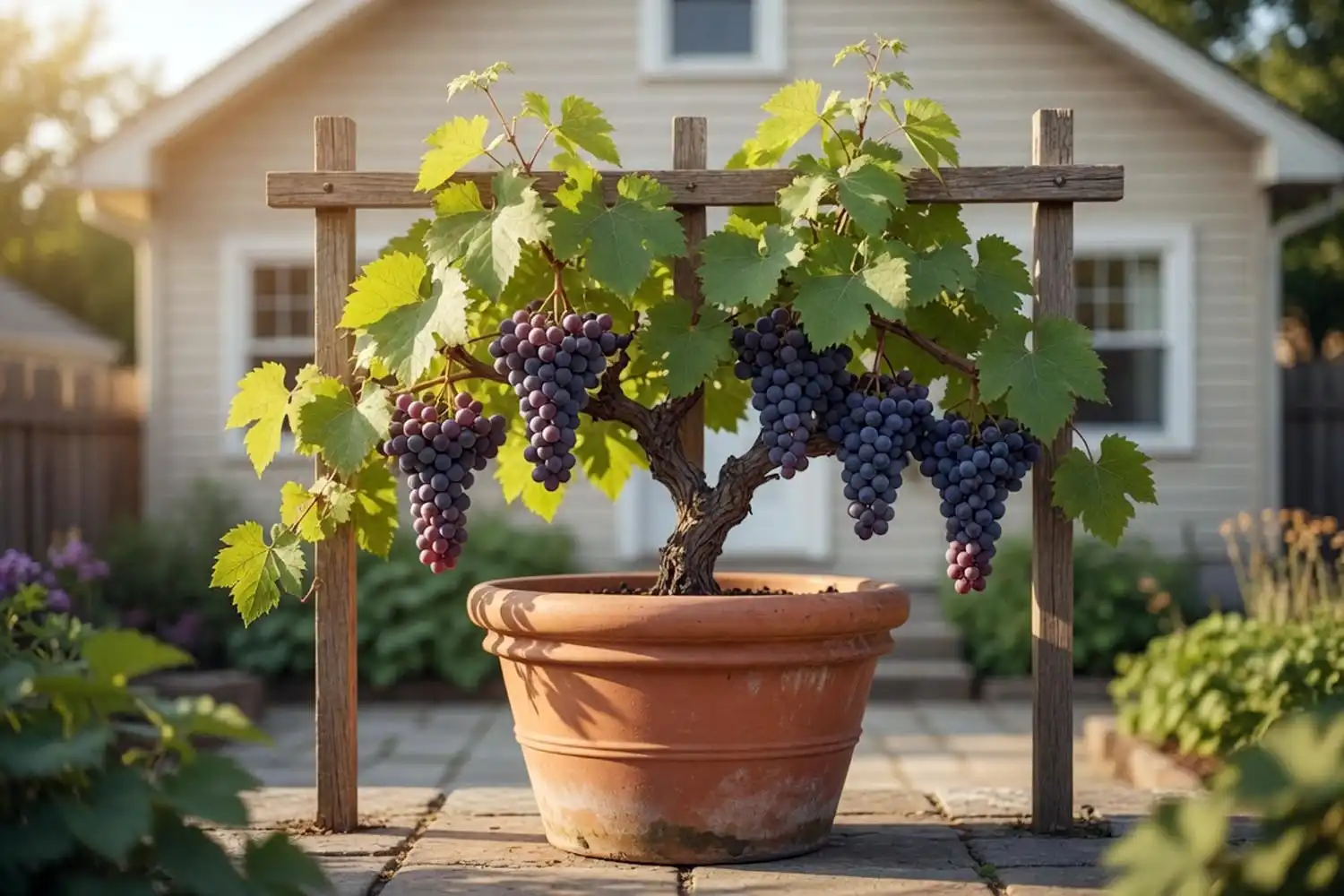
Grapes handle confined roots better than most fruit. They naturally limit how far their roots spread, which is why they take to pots so readily. Keep container-grown tomatoes on the same patio, and a grapevine fits right in next to them.
The trade-off is attention. Pots dry out faster and freeze harder than garden soil. So a container vine needs you to stay on top of water, pruning, and winter care. Get those right, and the vine is forgiving.
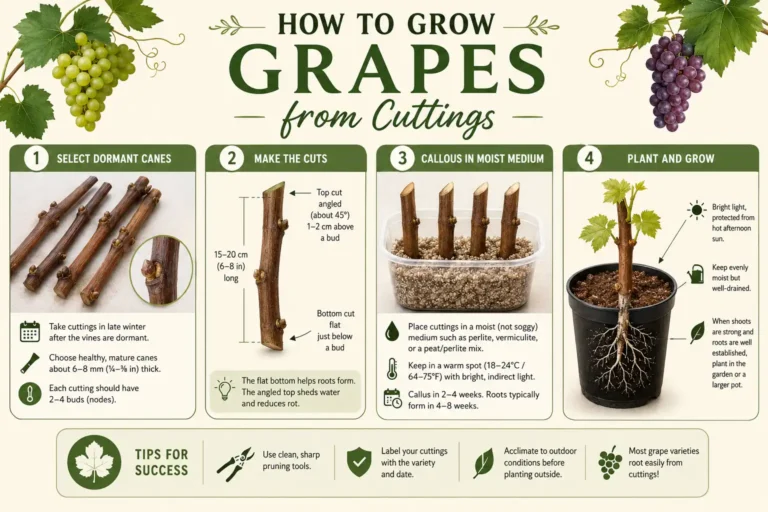
Read more: Grow Grapes From Cuttings: Step-by-Step for Beginners
What Size Pot Do Grapes Need?
Grapes need a large container, at least 15 to 20 gallons, measuring about 16 to 18 inches deep and 18 to 24 inches wide. A half whiskey barrel is a popular fit and holds enough mix for a mature vine. Bigger pots also insulate the roots better and dry out slower, which matters in summer heat and winter cold alike.
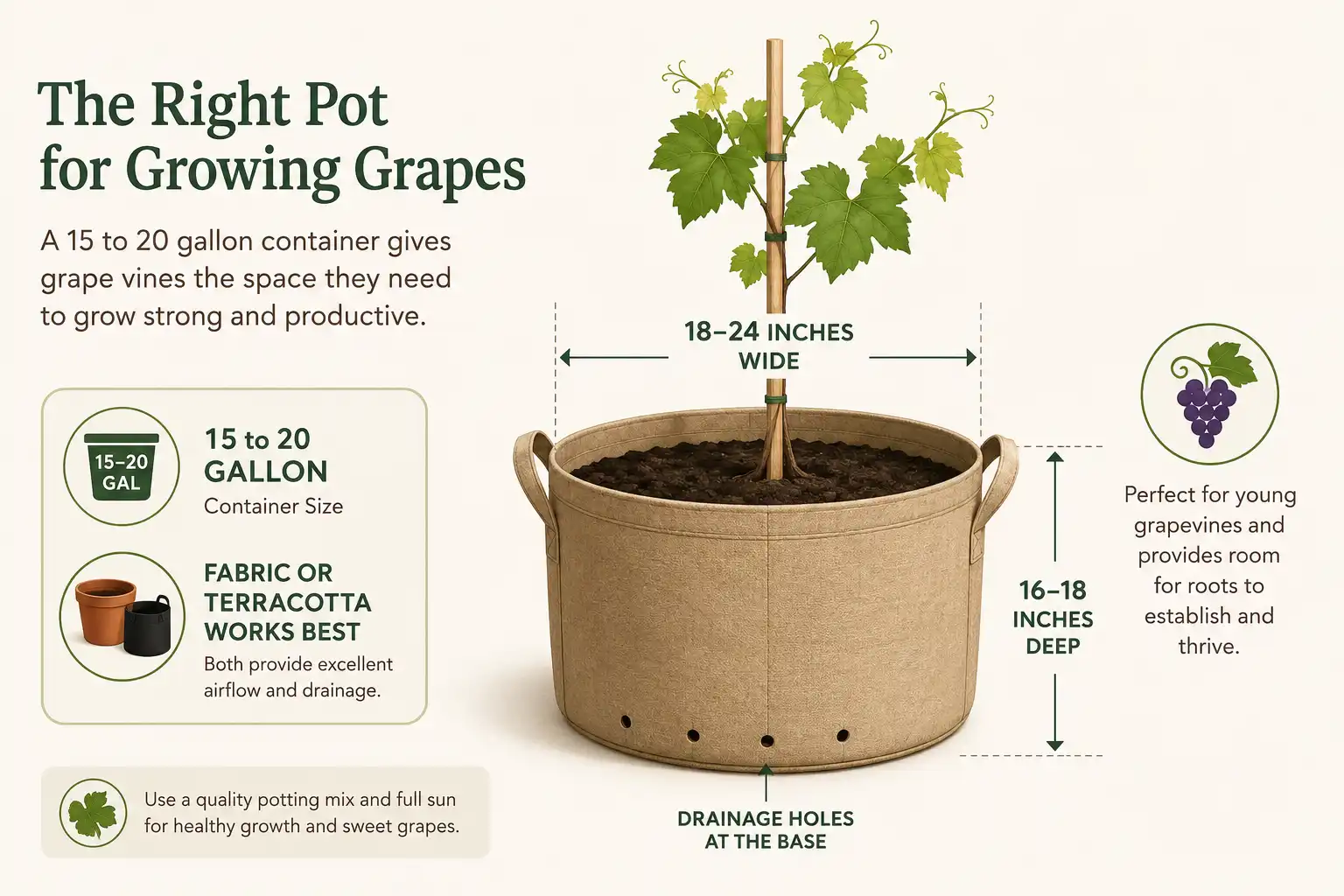
Drainage holes are not optional. A pot that holds water rots roots fast, so make sure the base drains freely. Material counts too. Terracotta, wood, and fabric pots breathe and keep the root zone steadier. Dark plastic heats up in the sun and dries the mix quickly.
You can start a young vine in a smaller pot and step it up every couple of years, or plant straight into the big container. If you have ever sized a grow bag for tomatoes, the logic is the same: more root volume means steadier moisture and a stronger plant.
Which Grape Varieties Work Best in Containers?
The best container grapes are self-fertile, disease-resistant, and hardy for your zone, with moderate vigor that stays easy to manage. Most grapes are self-fertile, so a single vine will fruit on its own. Still, check the label if you are only growing one plant.
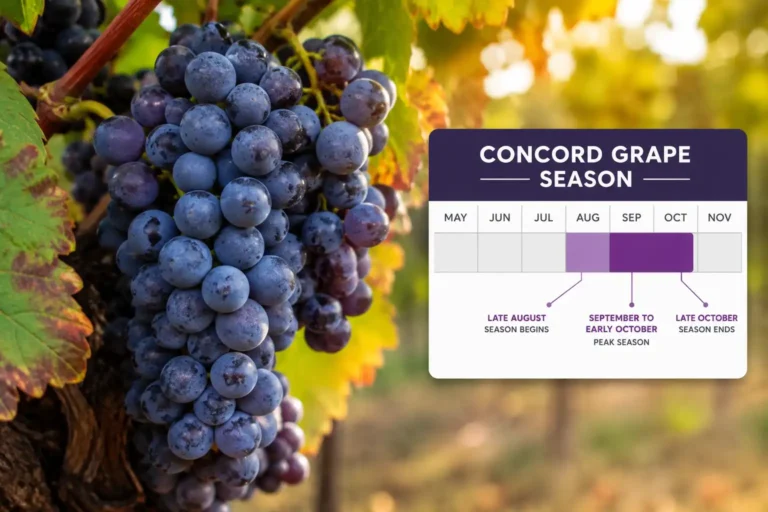
Pick by how you want to use the fruit, whether that is fresh eating, juice, or wine. For any pot, lean toward cold-hardy types, since potted roots get colder than roots in the ground. Concord is a classic American grape (Vitis labrusca) that is great for juice and fresh eating and tough down to about zone 4. Somerset Seedless is the most cold-tolerant seedless grape and tastes faintly of strawberry. Reliance and Mars Seedless are reliable seedless picks, and Mars carries good disease resistance. For juice and jelly, Valiant is about the toughest vine going. Marquette and Frontenac, both from the University of Minnesota breeding program, make solid cold-climate wine. If space is really tight, the dwarf ‘Pixie’ stays small enough for a 5 gallon pot.
European wine grapes (Vitis vinifera) like Cabernet can do fine in a warm, dry spot, but they fight more disease in humid summers. One honest note: skip the trendy grocery grapes. Patented club varieties like the big green Autumn Crisp grapes are bred for commercial vineyards, rated for warmer zones, and not sold as vines to home growers. Buy a named hardy variety from a nursery instead.
What Potting Mix and Sunlight Do Potted Grapes Need?
Potted grapes need a light, well-draining potting mix rich in compost, plus a spot with at least 6 to 8 hours of full sun. Never use plain garden soil. It compacts in a pot and drains poorly, which chokes the roots. Start with a quality potting mix, and if it feels heavy, cut it with perlite or coarse grit to open it up.
Aim for slightly acidic to neutral soil, around pH 6.0 to 6.5. Top-dress with compost every spring. The same habits that build soil fertility in the field beds keep a potted vine fed, just on a smaller scale.
Sun drives sugar. More direct light means riper, sweeter fruit, so give the pot your brightest spot. A south-facing wall reflects extra heat and helps clusters finish, which is a real edge in a shorter Kansas season.
How Do You Water and Fertilize Grapes in a Pot?
Water potted grapes whenever the top inch of mix feels dry, and feed lightly with a balanced fertilizer through the growing season. Containers dry out fast. In peak summer heat, that can mean watering every day. Even moisture is the goal, so check the pot by hand rather than guessing.
Never let the pot sit in standing water, since soggy roots rot quickly. Free drainage solves most water problems on its own. For feeding, a balanced NPK fertilizer such as 10-10-10 works well, applied in early spring and again in midsummer. Go easy on nitrogen, or you will grow a leafy vine with little fruit. The first year, compost alone is usually plenty. If the numbers on the bag still trip you up, a quick read on how NPK fertilizer works will sort it out.
Do Container Grapes Need a Trellis?
Yes, every grapevine needs support, because grapes are climbing vines that push far more top growth than a bare pot can hold up. In the first year, train the trunk up a single stake or bamboo cane. After that, give the vine a real structure: a trellis, an obelisk, a few horizontal wires, or the base of a pergola or railing.
Tie the shoots loosely with soft twine or plant ties, not bare wire that can cut into the stem. Set your support up before planting so you are not driving stakes through the root ball later. The same trellis built for tomatoes works fine for a potted grape, just sized a little sturdier for a heavier vine.
How and When Should You Prune Potted Grapes?
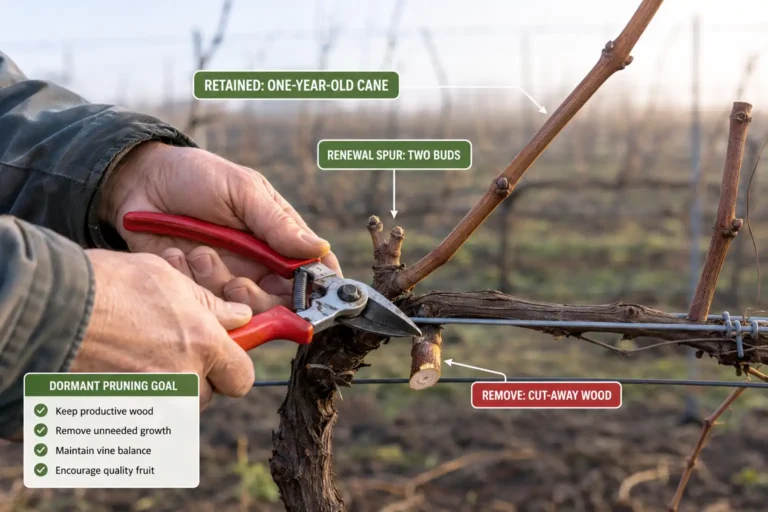
Prune potted grapes hard in late winter while the vine is dormant, cutting back 70 to 90 percent of last year’s growth before bud break. This is the step most people skip, and it is exactly why their vine grows into a tangle and barely fruits.
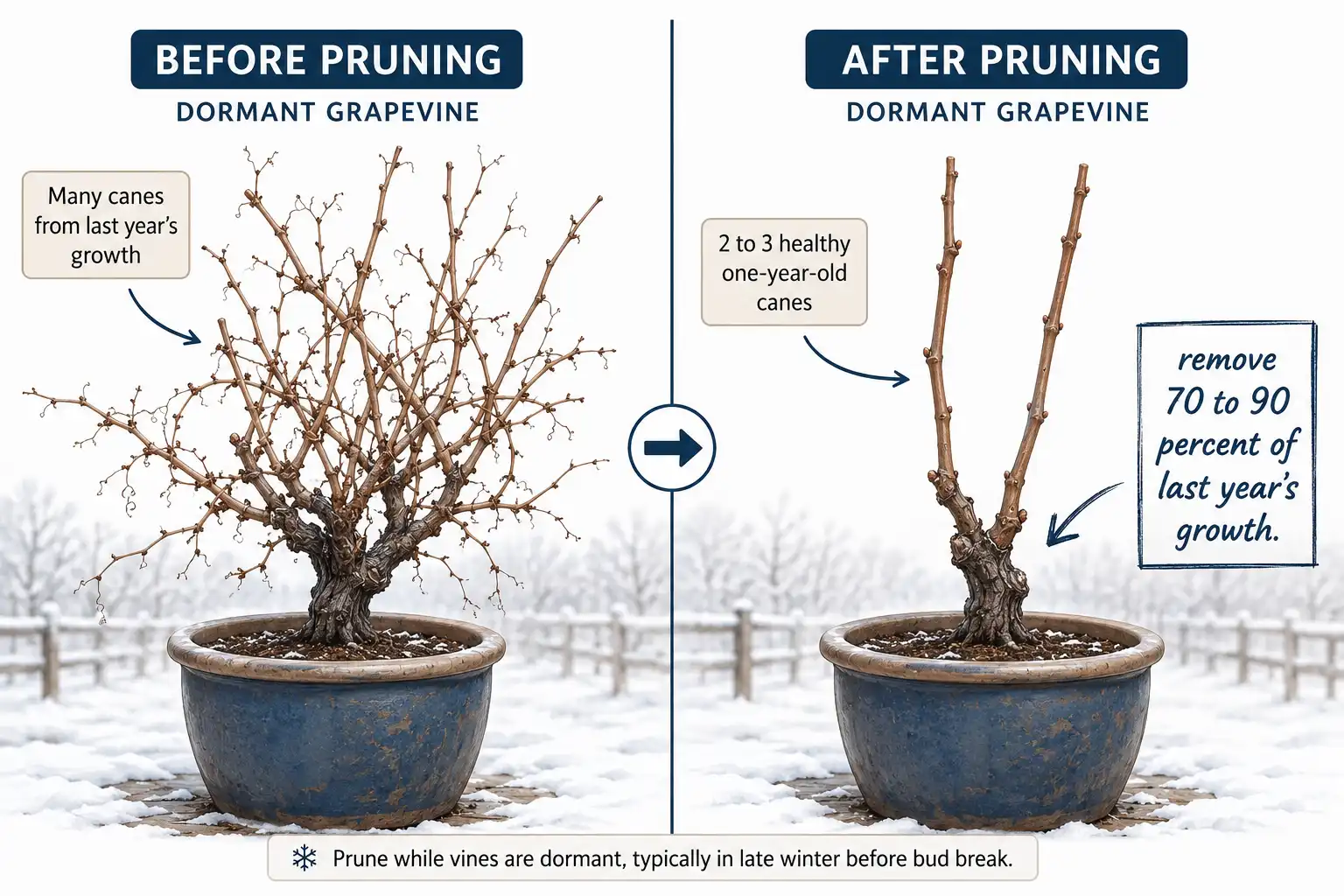
Grapes bear on new shoots that grow from one-year-old wood, meaning last season’s canes. So each winter, keep a few healthy canes from the previous year and cut everything else away. The vine then fruits on the fresh shoots those canes send out. Remove the flowers or tiny clusters the first year or two, which lets the plant build roots and a strong trunk instead of overcropping itself. A pot can only feed so much vine, so a clean, open framework beats a crowded mass every time.
How Do You Overwinter Grapes in a Container?
Overwinter potted grapes by protecting the roots once the vine drops its leaves, because container roots are far less cold-hardy than roots in the ground. This is the single biggest difference between a pot and a row. In open ground, soil buffers the root zone. In a pot, the mix can drop close to the air temperature, and single-digit cold can kill roots on a vine that would shrug off the same winter in the field.
Extension crews put it simply. A containerized plant overwinters best if it is hardy to about two zones colder than where you live. In USDA hardiness zone 6a near Topeka, a variety rated to roughly zone 4 is recommended for a pot. Even with a hardy vine, the container should still be protected.
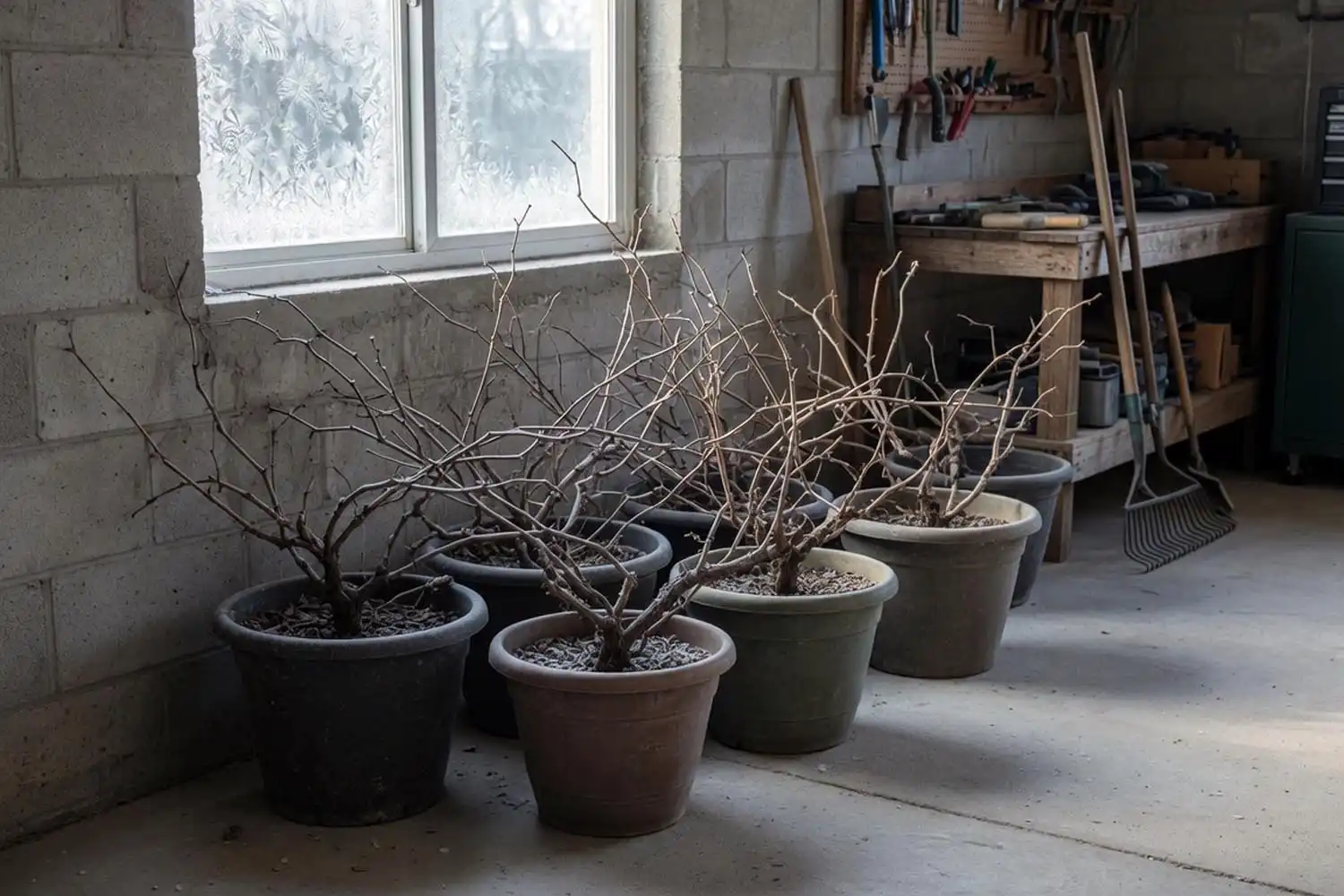
Once the leaves drop and the vine is fully dormant, move the pot into an unheated garage or shed. You want it cold but not deep-freezing, somewhere around 20 to 45°F. Skip any heated room, since the vine needs that cold rest to fruit next year. Can’t move it? Sink the pot in the ground and mulch over the top, or push several pots together against a sheltered wall and wrap the sides with bags of leaves or straw. Water once before the mix freezes, so the roots are not bone-dry going into winter. Out here on the Great Plains, wind dries a pot as much as cold harms it, so a wind-sheltered corner makes a real difference.
How Long Until Potted Grapes Fruit?
Most potted grapes give you a real crop in two to three years, sometimes sooner if you start with a larger nursery vine. The first couple of seasons go into roots, trunk, and a sound framework, not fruit. Buy a two-year-old vine, and you may see a few clusters the very next summer.
Be patient with it. A vine you let overcrop early stays weak for years afterward. Once it is established, expect a few pounds of grapes per pot in a good season.
Final Thoughts
A grape in a pot is real and rewarding once you nail four things: a big container that drains well, a hardy self-fertile variety, hard pruning every late winter, and root protection through the cold. Do that, and one vine on a sunny patio keeps handing you fruit season after season.
If this is your first try, start with Concord or a hardy seedless like Somerset. Give it your sunniest corner, keep the mix evenly moist, and get the pruners out every dormant season. The vine will reward steady habits more than any fancy gear.