Are Cotton Candy Grapes GMO? The Patent and USDA List
The candy name and the summer price tag make shoppers suspicious, so this question hits the grape aisle every August. Are cotton candy grapes GMO? The breeding paperwork behind the variety answers that plainly, and so does federal labeling law.
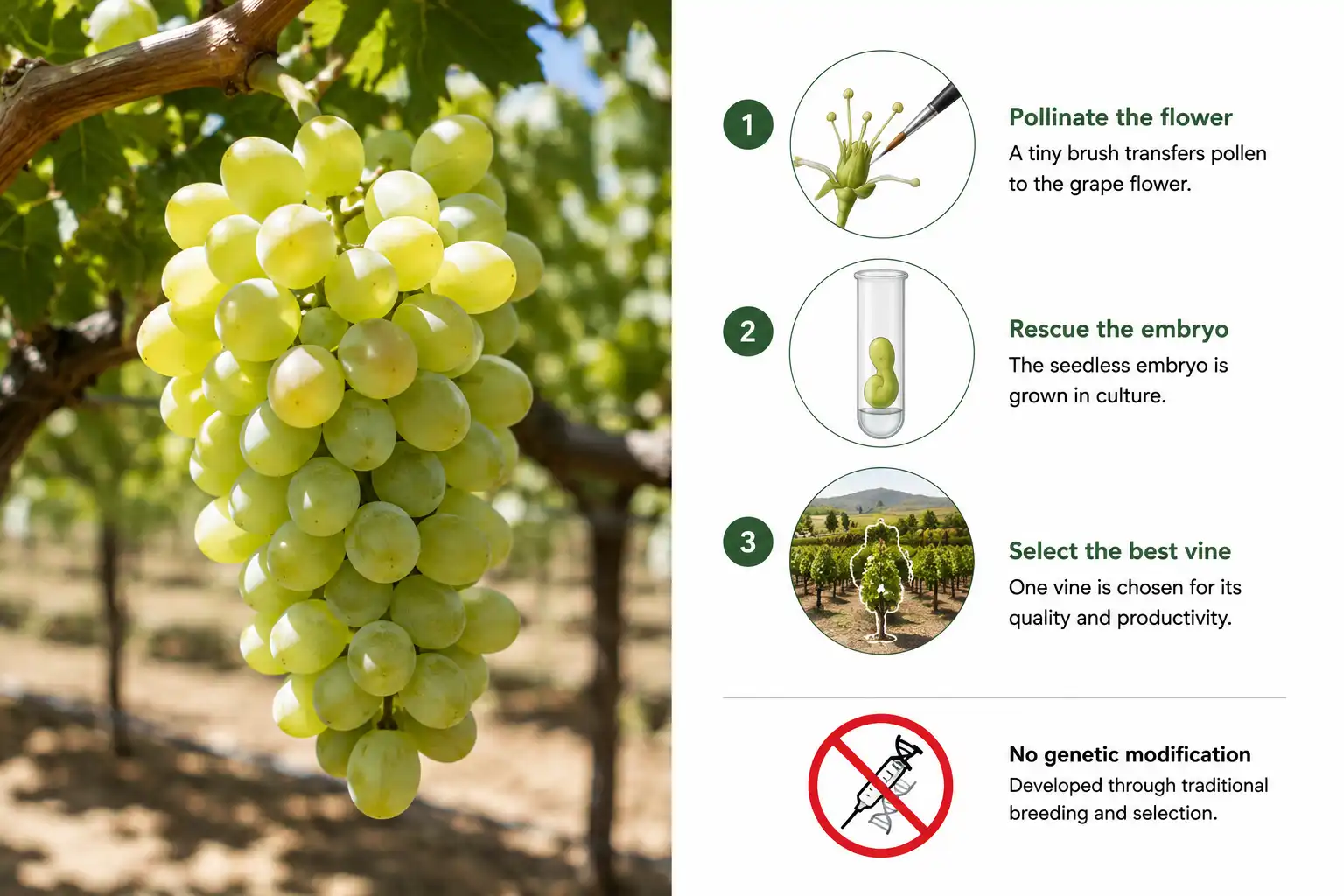
No, cotton candy grapes are not GMO. Breeders created the variety by hand pollinating two grapevines and rescuing the immature seed in culture. Grapes appear nowhere on the USDA list of bioengineered foods.
What Counts as a GMO Under Federal Rules
Federal rules set a two-part test, and ordinary crossbreeding fails both parts. Rule 7 CFR 66.1 defines a bioengineered food. It carries detectable genetic material changed through in vitro recombinant DNA methods. The change also has to be one conventional breeding cannot produce. Nature must not already offer it.
Pollen crosses clear neither hurdle. Neither do grafting, mutation breeding, or tissue culture. The USDA Agricultural Marketing Service runs this rule under the name National Bioengineered Food Disclosure Standard. Packaged foods have needed a disclosure since January 1, 2022.
That definition matters here. The loose grocery-store meaning of GMO covers almost any human tinkering, but the legal meaning does not. It points at one narrow act: moving genetic material into a plant in a way no cross could achieve.
Also know: Seedless grapes and GMO facts
Are Cotton Candy Grapes GMO or an Ordinary Cross?
They come from an ordinary cross. The patent file spells out every step, and none of those steps involve gene insertion. The trade name Cotton Candy covers a cultivar the industry calls IFG Seven. U.S. plant patent PP23399, filed in August 2011, names David Cain of International Fruit Genetics in Bakersfield, California as the inventor. Those grape patents now sit with Bloom Fresh International. That company formed after IFG merged with SNFL Group in 2023.
| Record item | What the plant patent states |
|---|---|
| Trade name | Cotton Candy, a trademark rather than a cultivar name |
| Cultivar name | IFG Seven |
| Botanical status | Vitis interspecific hybrid |
| Seed parent | A2674, an unnamed Vitis selection licensed from the University of Arkansas |
| Pollen parent | Princess, a non-patented Vitis vinifera seedless table grape |
| Cross date | May 2003, hand pollinated |
| Laboratory step | Embryo culture of the abortive seed traces |
| Field selection | One plant chosen in July 2005 near Delano, Kern County, California |
| Patent record | U.S. plant patent PP23399 |
Read that list again and notice what is missing. Nobody inserted a gene. Nobody carried DNA from one organism into another. A breeder brushed pollen onto a flower. Then he rescued an embryo that would have died. Finally he picked the best seedling out of the row. A separate piece covers how the cotton candy variety came to be made in full.
Why Grapes Never Show Up on the USDA Bioengineered List
No genetically engineered grape has ever won approval for commercial production, here or anywhere else. The list at 7 CFR 66.6 names fourteen foods:
- Alfalfa
- Apple, Arctic varieties
- Canola
- Corn
- Cotton
- Eggplant, BARI Bt Begun varieties
- Papaya, ringspot virus-resistant varieties
- Pineapple, pink flesh varieties
- Potato
- Salmon, AquAdvantage
- Soybean
- Squash, summer virus-resistant varieties
- Sugarbeet
- Sugarcane, Bt insect-resistant varieties
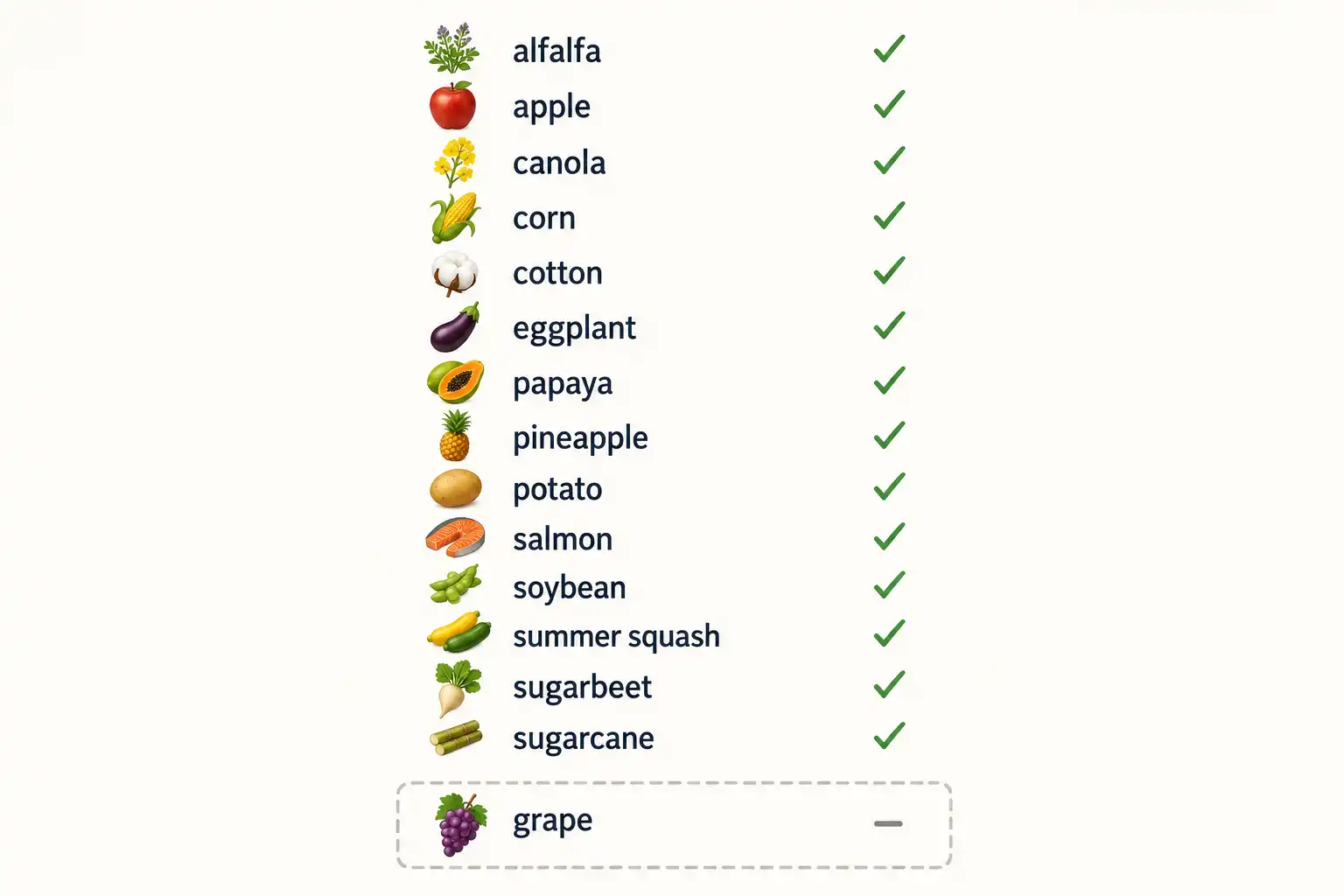
Notice the pattern. Every entry traces back to one engineered event that a government cleared for planting. Grapes hold no such entry. AMS reviews the list each year and takes public comment, so it grows as the market grows. Since the rule took effect in 2019, grapes have never made a single version of it.
That covers the entire table grape aisle, not one label. The same reasoning applies to autumn crisp grapes and the GMO question. It also covers candy snap grapes and genetic modification, since both came from that breeding program.
Has Anyone Genetically Engineered a Grape Yet?
Only in research plots, never on a store shelf. VitisGen3, a USDA-funded project spanning several universities, uses CRISPR to test candidate genes tied to powdery mildew resistance. European labs have edited MLO genes in grapevine and grown lines that shrug off Erysiphe necator in trials. None of that work has reached a commercial vineyard.
Three practical reasons hold it back. First, grapevines travel as cuttings and grafted wood, so growers already lock in proven genetics without touching DNA. Second, wine and table grape buyers sell on variety names that carry decades of goodwill. Third, regenerating a whole vine from edited tissue stays hard in the lab.
To be plain about one thing: Do not grow table grapes commercially in Kansas, and no Kansas grower can plant a licensed California variety anyway. This section rests on extension publications and the patent record, not.
Why People Assume Cotton Candy Grapes Are Engineered
Five features of this grape point people the wrong way.
| What raises the suspicion | What is actually going on |
|---|---|
| A trademark plus a patent | The Plant Patent Act of 1930 has protected crossbred fruit for almost a century. Honeycrisp apples carry a patent too. |
| A laboratory step | Embryo culture keeps an immature seed alive in a nutrient tube. It carries no DNA between organisms. |
| Candy flavor | Aroma compounds ride in from the labrusca and riparia side of the family, the same chemistry as Concord jelly. |
| Seedless berries | Seedlessness in table grapes traces to stenospermocarpy, an old natural trait, and cuttings then copy the vine. |
| Extra sweetness | Roughly 18 Brix against 16 to 17.5 for a standard green grape, which is a small gap. |
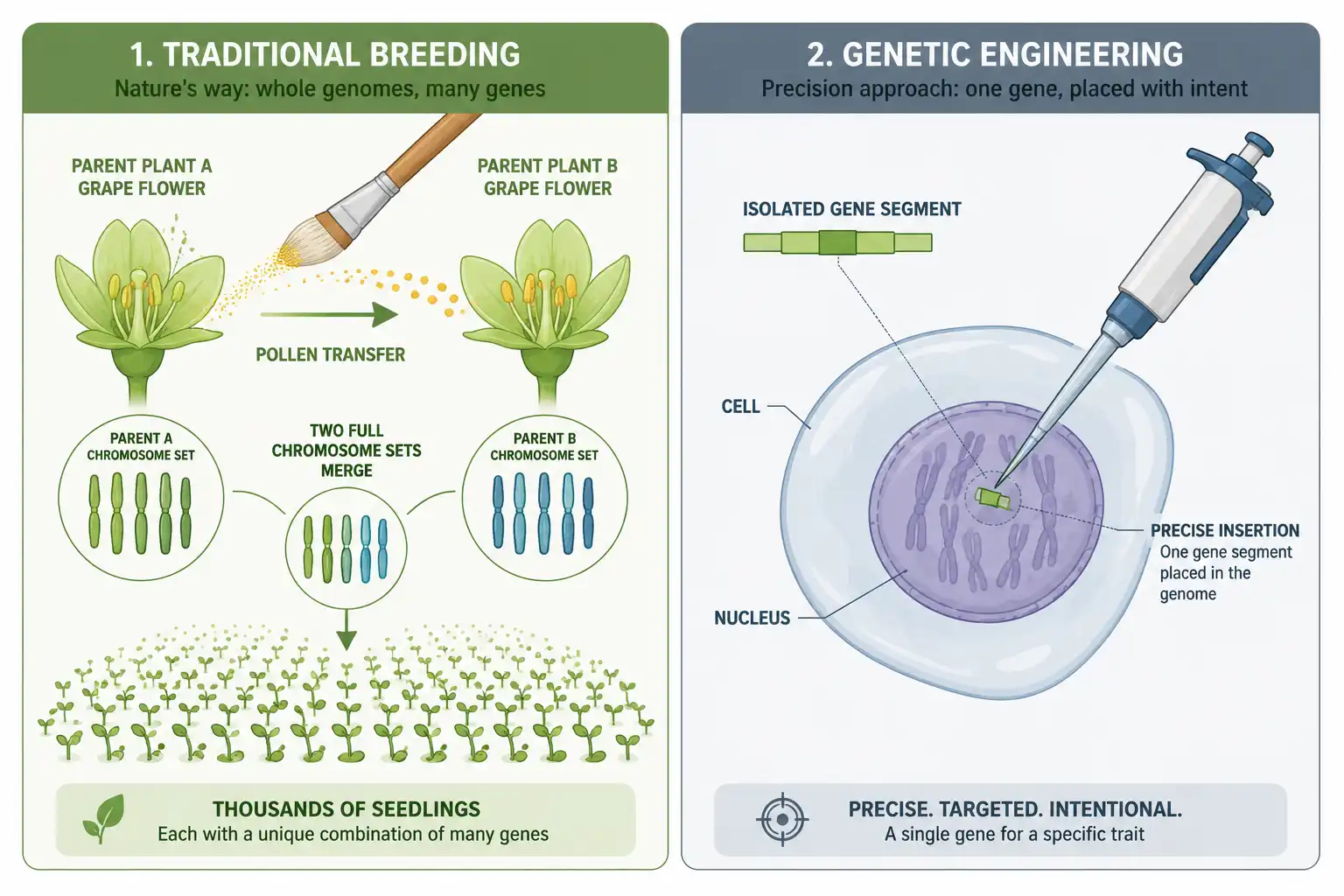
The seedless piece trips up the most people. Yet how growers produce seedless grapes is not gene work at all. The sweetness claim falls apart once you check numbers. Those are laid those out in the sugar and calorie side of cotton candy grapes. Anyone weighing the broader question of whether this cotton candy variety counts as natural can start there instead.
How to Check the GMO Status of Any Produce Yourself
Four checks settle it in under a minute, and none of them need a lab.
- Read the package for a bioengineered disclosure. Since January 1, 2022, foods with detectable modified genetic material must show that text, a symbol, or a scan code.
- Match the crop against 7 CFR 66.6. If the crop sits off that list, no disclosure applies. Grapes sit off it.
- Skip the PLU sticker rumor. A five-digit code starting with 8 never flagged GMO produce at retail, and NC State Extension says the same. The standards body has since put that prefix to other use.
- Treat a five-digit code starting with 9 as organic. Certified organic bars genetic engineering, and so does Non-GMO Project Verified.
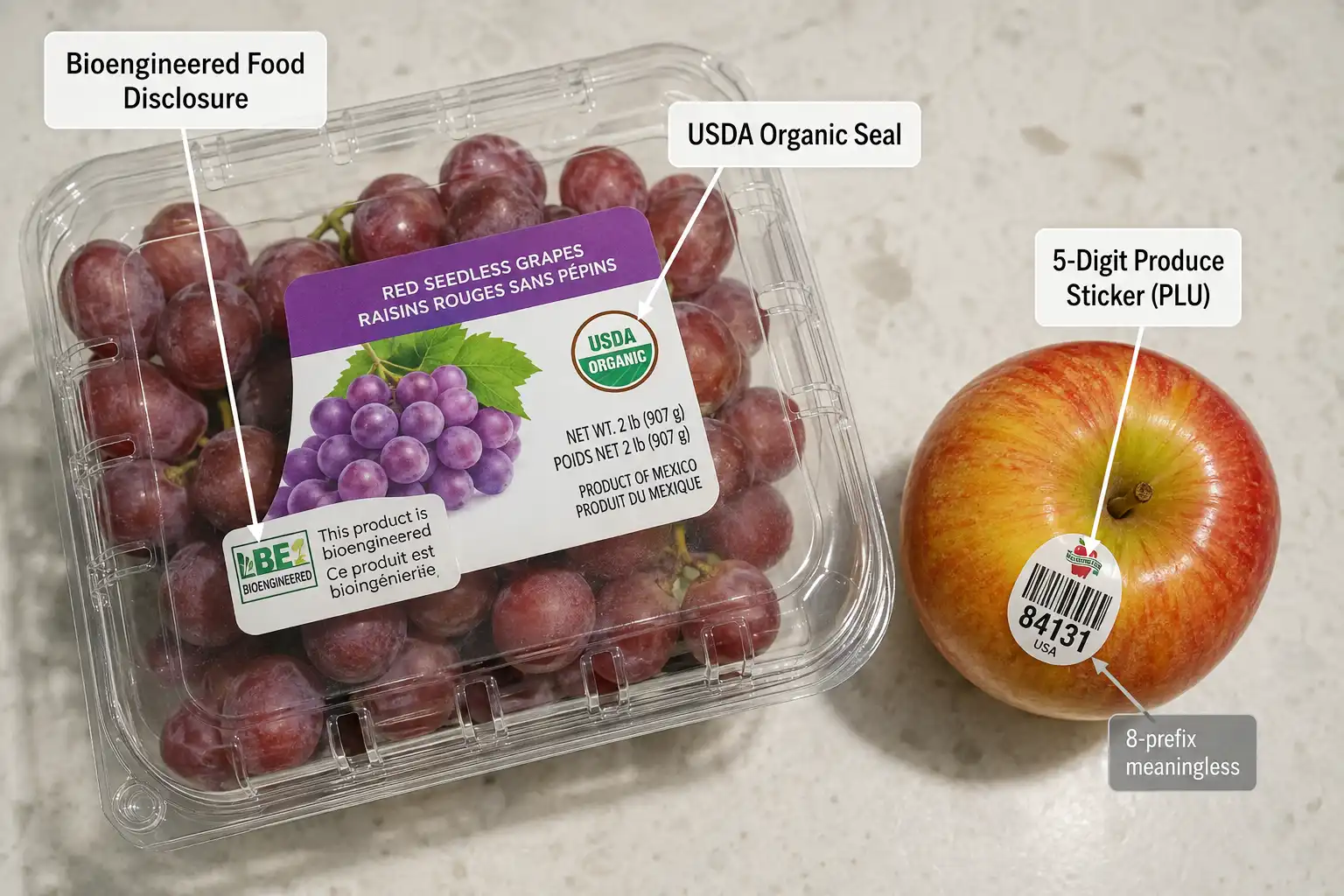
Clamshell grapes often skip stickers, so read the bag instead. Most table grape packaging now prints the grower and the variety. That makes the trail easy to follow back to a vineyard.
Does the GMO Answer Tell You Anything About Sprays?
No, and mixing those two questions causes real confusion. Conventional California table grape blocks run fungicide programs against powdery mildew and bunch rot. Organic blocks lean on sulfur and other approved materials for the same pests. Neither program has anything to do with gene insertion. So if residue worries you, read the organic seal rather than the GMO question.
Cotton candy grapes and GMO facts
Three separate records point the same direction here. A plant patent, a named parent cross, and a federal food list all describe conventional breeding. Not one of them mentions genetic engineering. Buy the grapes if the flavor suits you. Pass on them if the August price stings. Either way, the genetics behind that bag are as ordinary as a Thompson seedless.