What Type of Fruit Is Grapes? Berry, Vine, and Species Facts
Grapes are one of the most common fruits in any grocery store, yet their botanical label trips up almost everyone. So what type of fruit is grapes? They are true berries. This guide explains the classification and what it means for the fruit you grow or eat.
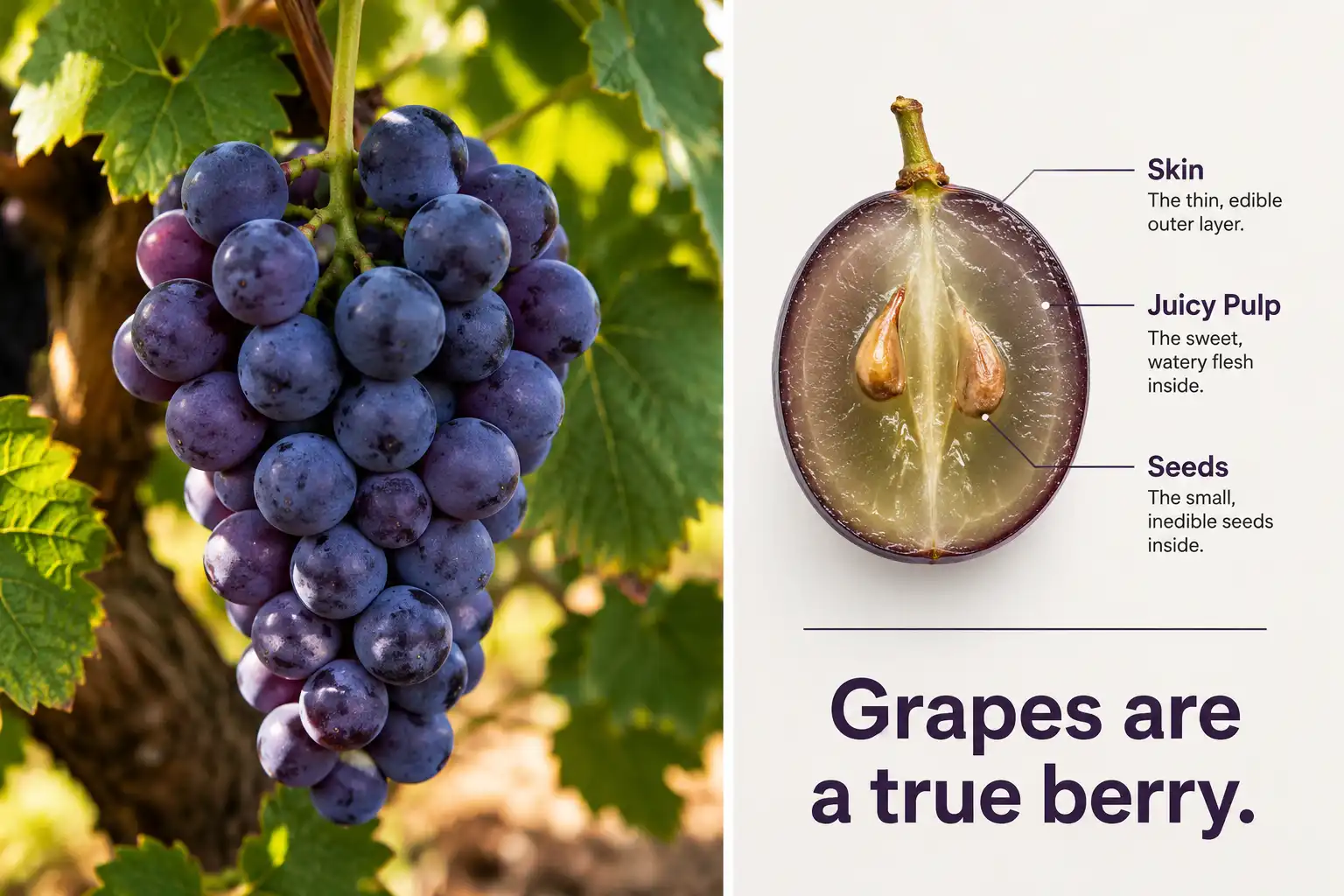
Grapes are berries. To be exact, the type of fruit grapes belong to is the true berry. That means a fleshy fruit from one flower with a single ovary, seeds set in soft pulp. Tomatoes and bananas count too.
What Type of Fruit Is Grapes?
Grapes are berries. In botany, a grape is a true berry, which is a simple fleshy fruit that grows from a single flower with one ovary. As it ripens, the whole fruit wall turns soft, and the seeds sit inside the pulp. That structure is the test, so grapes pass it cleanly. The word fruit fits too, since a berry is just one kind of fruit. Most people skip the berry label, though, because it clashes with how we talk at the store.
What Makes a Grape a True Berry?
A grape qualifies as a true berry because its entire fruit wall stays soft and holds the seeds inside. Botanists call that fruit wall the pericarp, and it has three layers. The outer skin is the exocarp. The juicy middle is the mesocarp. The thin layer around the seeds is the endocarp. In a grape, all three stay fleshy, with no hard pit.
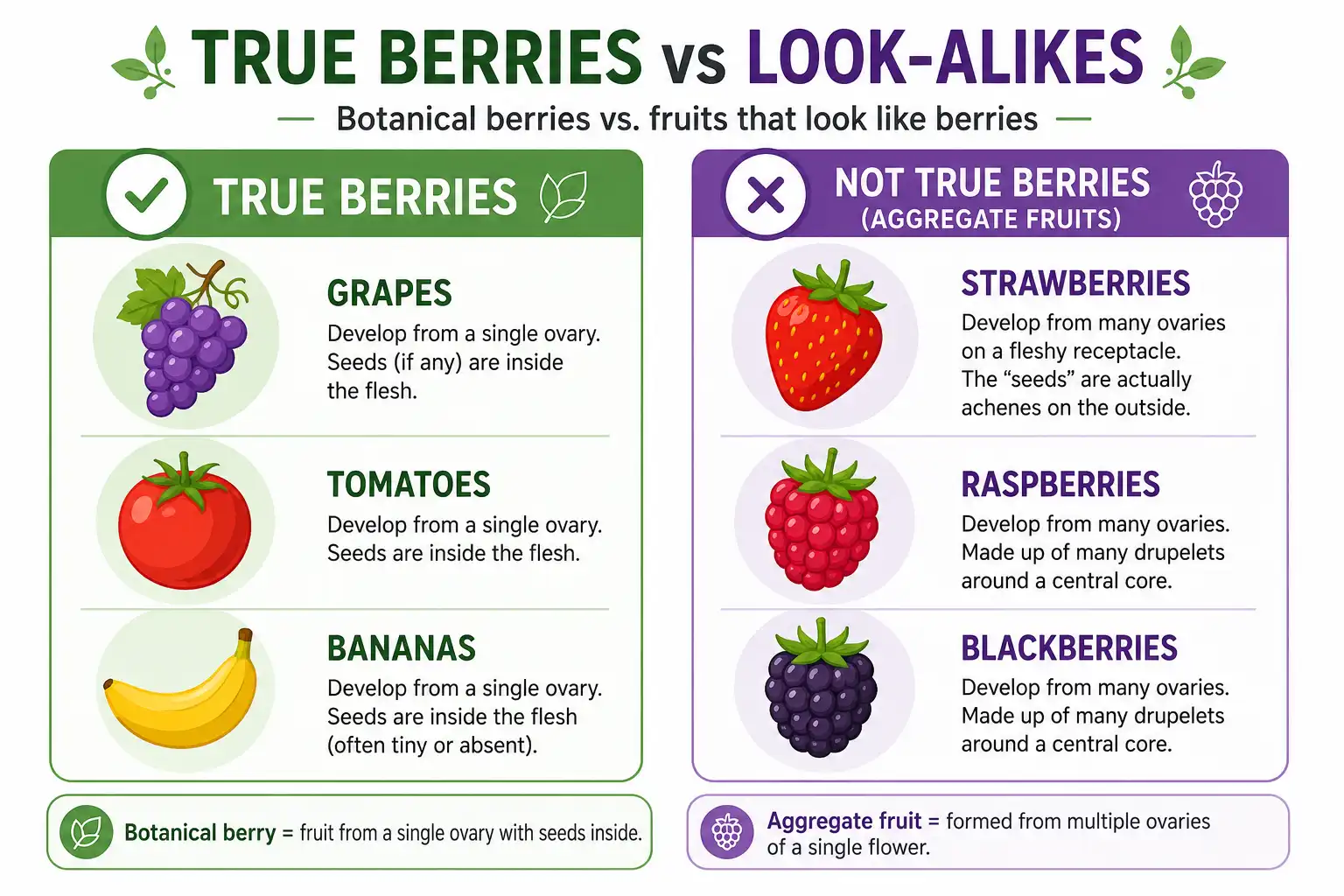
That soft, seed-in-pulp build is what sets a berry apart from other fruit types. A peach is a drupe, since it carries a hard stone around its seed. A strawberry is not a true berry at all, even with the name. It forms from many ovaries on one flower, so botanists call it an aggregate fruit. Raspberries and blackberries work the same way.
Here’s the part that throws people. Grapes, tomatoes, bananas, and eggplants are all true berries. Strawberries, raspberries, and blackberries are not. The everyday word and the botany word simply do not line up.
Are Grapes a Fruit or a Vegetable?
Grapes are a fruit, not a vegetable. A fruit develops from the fertilized ovary of a flower and carries the seeds, and a grape does exactly that. Vegetables come from other plant parts, like roots, stems, or leaves. Since a grape grows straight from the flower and holds seeds, it lands firmly in the fruit column. So this one is not a gray area.
What Plant Do Grapes Grow On?
Grapes grow on a woody, perennial climbing vine in the genus Vitis. The plant family is Vitaceae, and every Vitis species climbs with tendrils. The vine drops its leaves each fall, then pushes new shoots and flower clusters the next spring. Those clusters set the fruit. The cordons leaf out once the soil warms and the frost risk fades.
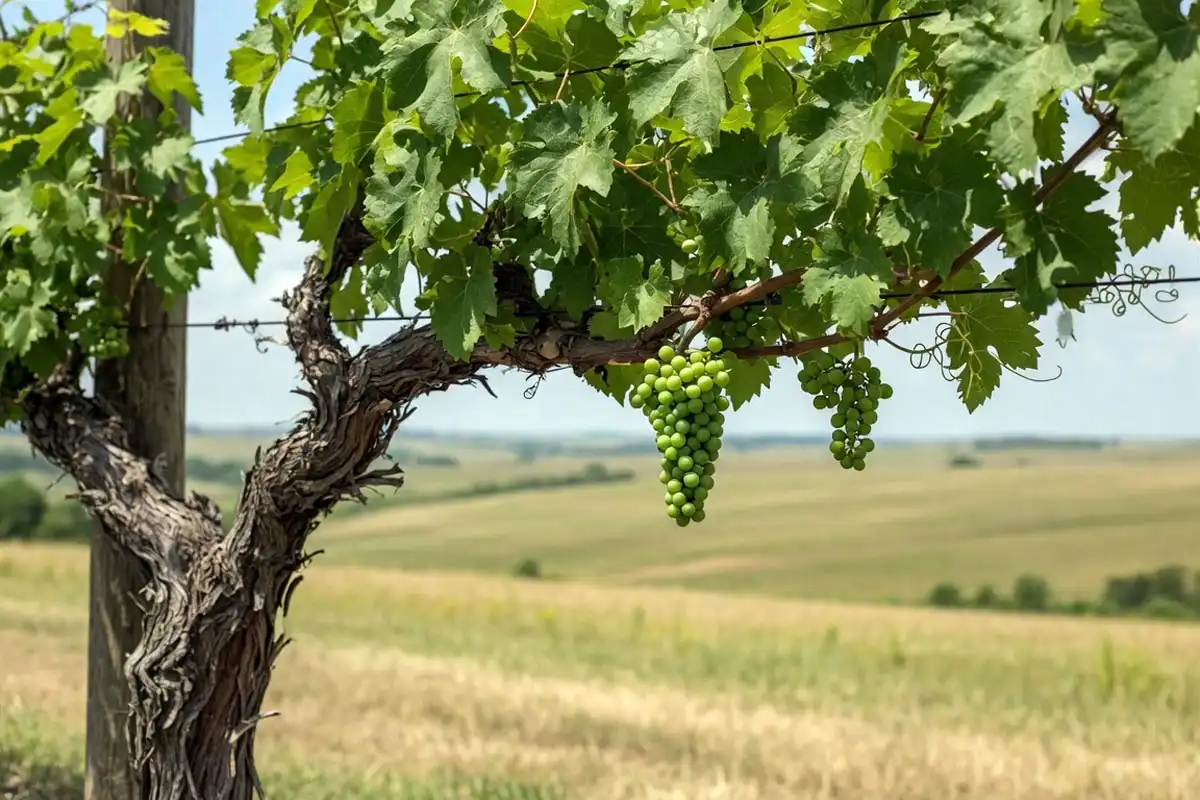
A grapevine takes a few seasons to settle in before it carries a real crop. For the full timeline, how long grapevines take to produce fruit is broken down in a separate guide. Plan for patience in the first couple of years.
What Are the Main Types of Grape Species?
Most grapes you eat or grow come from three species. Vitis vinifera is the European grape, and it covers most wine and table grapes. Vitis labrusca is the American bunch grape, and Concord is the best-known one. Vitis rotundifolia is the muscadine, native to the Southeast.
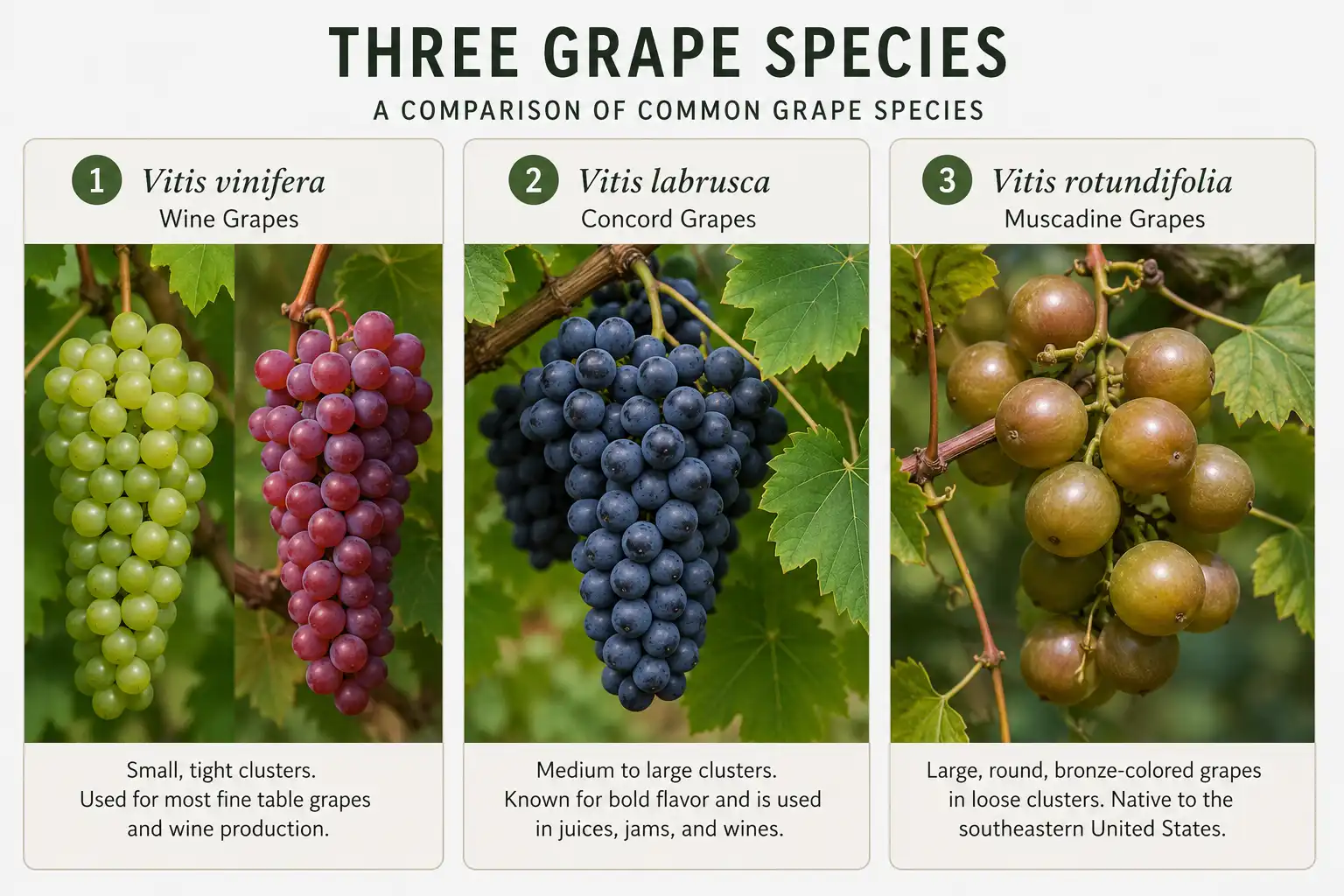
Scientists split the Vitis genus into two groups. Euvitis holds vinifera and labrusca, with 38 chromosomes. Muscadinia holds the muscadine, with 40 chromosomes. That genetic gap explains why muscadines behave so differently in the field. They resist Pierce’s disease, while vinifera grapes struggle with it in the humid South. The USDA also recognizes more than a dozen native grape species across the country, though most growers stick with these three.
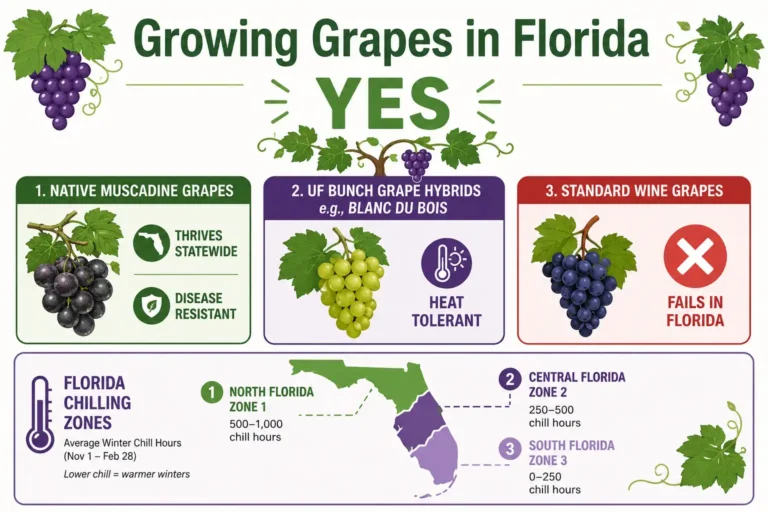
Muscadines ripen later and grow as single berries or small clusters. So if you farm in a warm, humid state, it helps to know when muscadines come into season before you plan a planting.
Do Seedless Grapes Still Count as Berries?
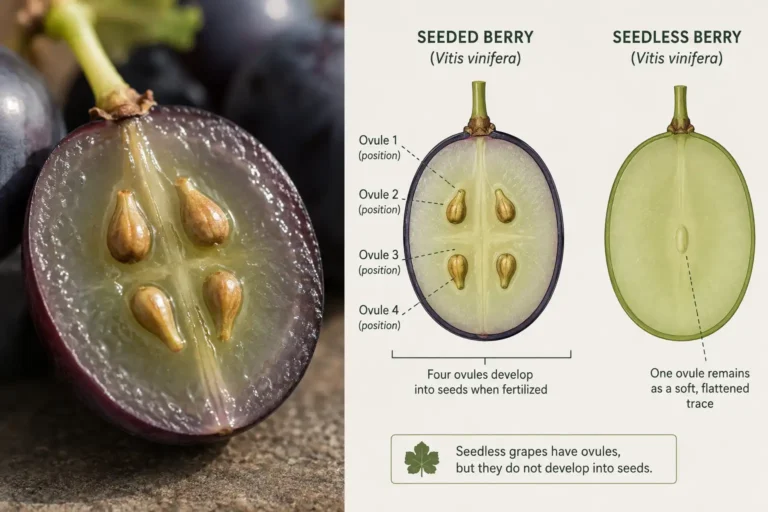
Yes, seedless grapes are still true berries. The berry label depends on how the fruit forms from the flower, not on whether mature seeds show up inside. Seedless types still grow from a single ovary with a fleshy wall, so the structure holds. The seeds just stay tiny and soft, or never harden.
Growers create these varieties through breeding and selection, not by pulling seeds out. For those interested in the process, how seedless types are bred is explained in plain terms. Either way, a seedless grape is a berry, same as a seeded one.
Do Grapes Keep Ripening After You Pick Them?
No, grapes do not keep ripening once you pick them. Grapes are non-climacteric, which means they stop building sugar the moment they leave the vine. A green, sour grape will not sweeten on your counter. So the flavor you taste at harvest is close to the flavor you keep.
That single fact shapes how the rows are worked. Wait for full color and a quick taste test before cutting a cluster. There’s no second chance to add sweetness. If you want the science on why grapes won’t sweeten once they leave the vineour guide covers it separately.
What This Means for the Grapes in Your Rows
Grapes are berries. They grow on a woody Vitis vine, form from a single flower, and hold their seeds in soft pulp. That puts them in the same botanical group as tomatoes and bananas, even if nobody says so at the dinner table. For a grower, the berry label matters less than the habits behind it. Because grapes are non-climacteric, timing the pick is everything. So it pays to learn when your grapes are ripe enough to harvest before you reach for the shears.