Are Seedless Grapes GMO? What Really Makes Them Seedless
Every bag of seedless grapes in the produce aisle raises the same suspicion. No seeds feels engineered. That reaction is why so many shoppers ask, are seedless grapes GMO, before anything goes in the cart.
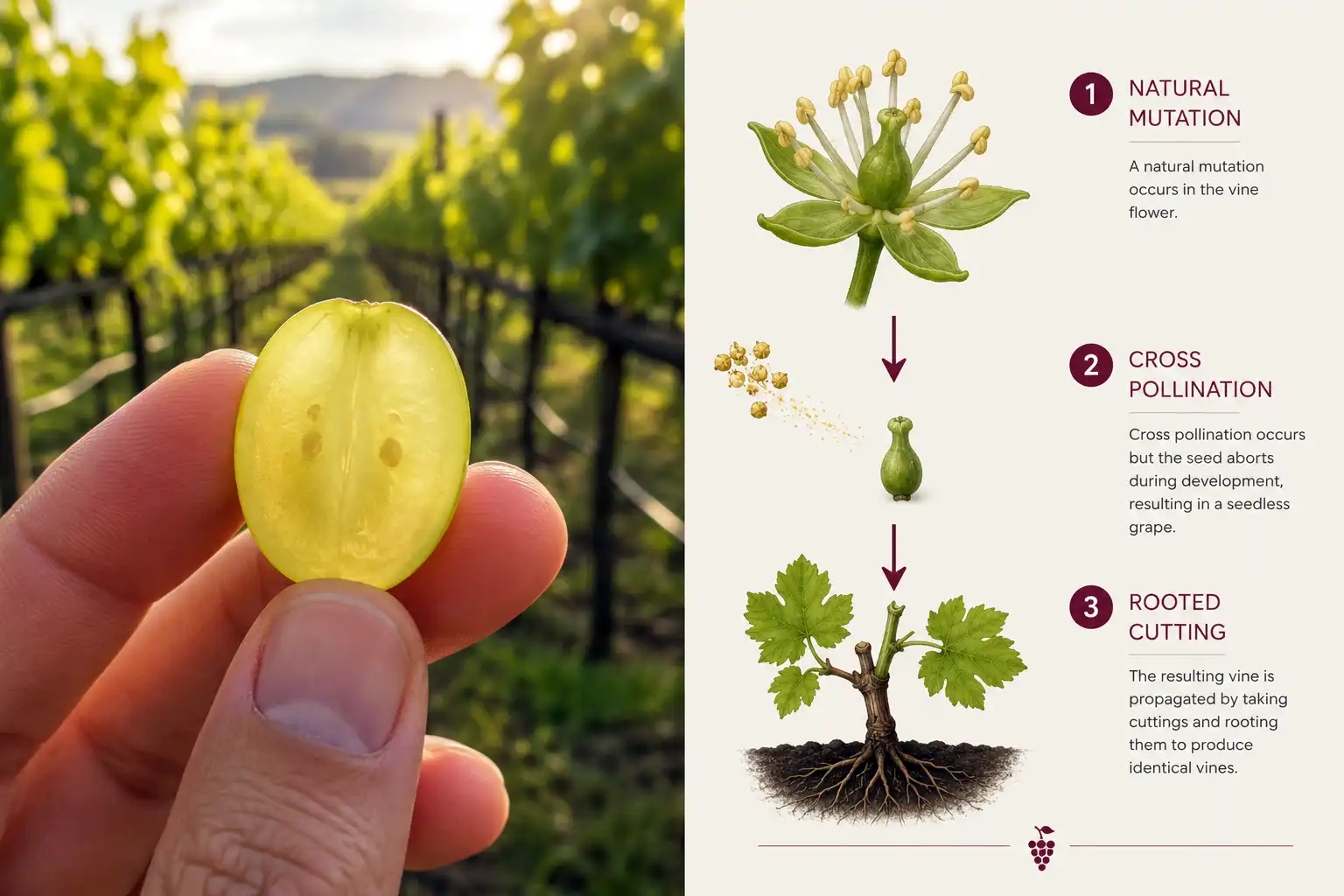
Seedless grapes are not GMO. Seedlessness came from an old natural mutation, and breeders spread it through cuttings and hand pollination. Grapes appear nowhere on the federal bioengineered food list.
Are Seedless Grapes GMO?
No, and neither is any other grape you can buy. US rules define a bioengineered food narrowly. It carries DNA changed by in vitro recombinant DNA methods. Breeding or nature could not produce the same change. Seedlessness fails that test twice over. It first appeared in nature, and breeders still reproduce it with pollen and cuttings.
The USDA Agricultural Marketing Service keeps the official List of Bioengineered Foods under 7 CFR 66.6. As of 2026, that list holds fourteen entries:
- Alfalfa
- Apple (Arctic varieties)
- Canola
- Corn
- Cotton
- Eggplant (BARI Bt Begun varieties)
- Papaya (ringspot virus resistant)
- Pineapple (pink flesh)
- Potato
- Salmon (AquAdvantage)
- Soybean
- Squash (summer, virus resistant)
- Sugarbeet
- Sugarcane (Bt insect resistant)
Grapes are absent. No genetically engineered grapevine has cleared federal review for US fruit production, either. So the labeling question never even comes up.
Learn more: The Sweetest Grapes
Why You Never See a Bioengineered Label on Grapes
Because the rule only applies to foods with detectable modified genetic material. Grapes carry none, so no disclosure applies. Some bags still show a third party non-GMO seal. That seal costs the packer money. It also certifies a trait grapes never had in the first place.
What Makes a Grape Seedless
Two separate routes make fruit seedless, and grapes almost always take one of them. Pollen still lands on the flower in nearly every seedless table grape. The seed simply quits developing partway through.
Stenospermocarpy vs Parthenocarpy
| Stenospermocarpy | Parthenocarpy | |
|---|---|---|
| Pollination | Happens normally | Never happens |
| Fertilization | Happens, then embryo aborts | None |
| What remains | Soft seed traces or rudiments | Nothing seedlike |
| Berry size | Near normal | Small |
| Grape examples | Thompson Seedless, Flame, Mars, Jupiter | Black Corinth (Zante currant) |
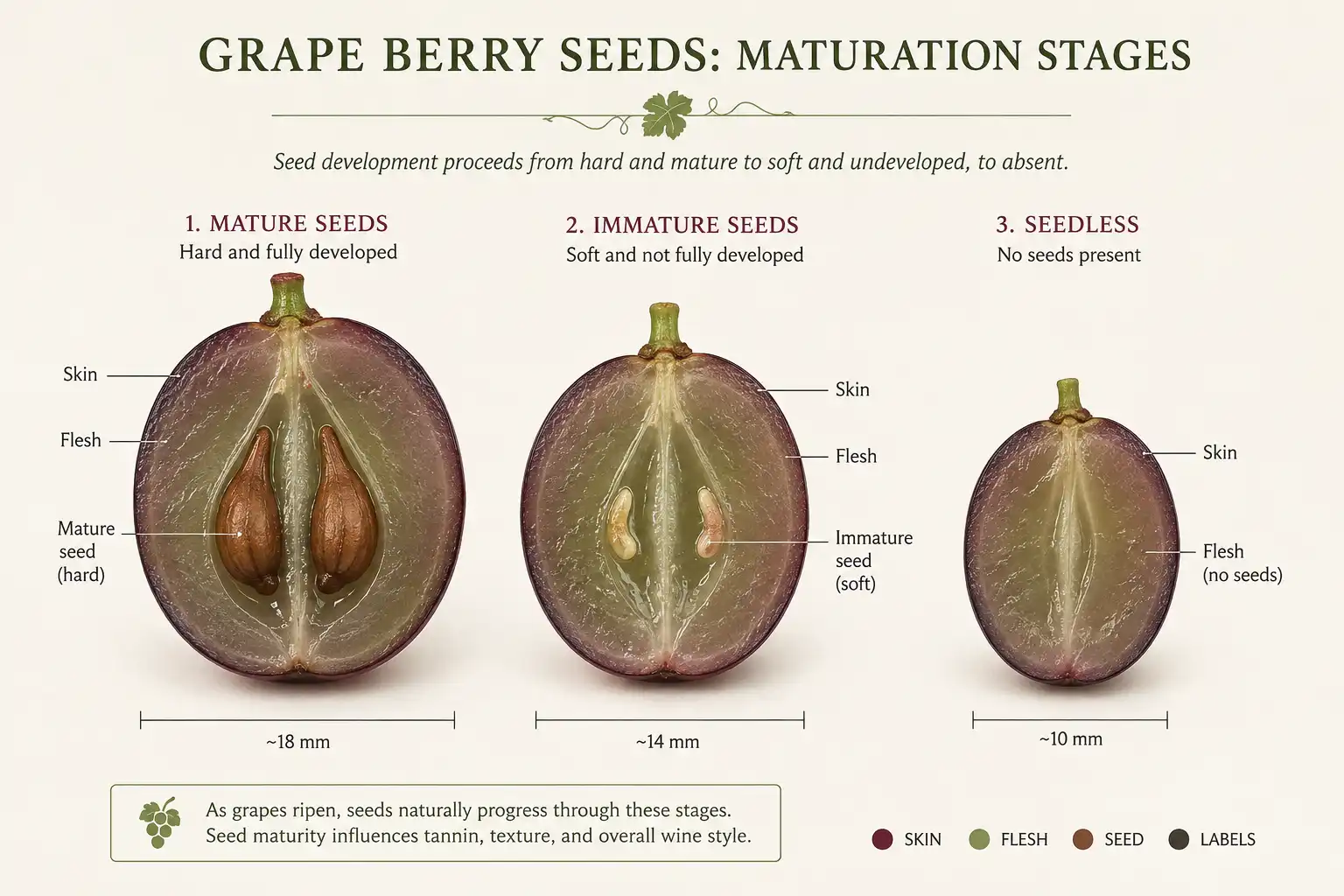
Nearly all commercial seedless table grapes fall in the first column. Size explains why. Those soft remnants still release growth signals early on, so the berry keeps filling. Parthenocarpic types stay tiny, which is why Black Corinth ends up as dried currants instead of fresh fruit. Growers lean on that same behavior when they make seedless grapes at commercial scale.
Researchers traced most of it to a single gene. A missense mutation in VviAGL11 sits behind seedlessness across a large share of table grape cultivars. That gene controls seed coat development. That is one letter changed in the vine’s own DNA. Nobody inserted it.
Why You Sometimes Feel a Tiny Crunch
Because the seed traces never fully disappear. Breeders sort them by size, and they use two terms. Larger remnants count as rudimentary seeds, while smaller ones count as seed traces. Hot seasons and heavy crop loads can push traces toward the noticeable end. Jupiter, for example, carries soft vestigial traces that most people never detect.
Where the Seedless Trait Started
Long before anyone understood genetics. The oldest stable seedless grapes belong to the ancient Central Asian Kishmish group. The white one, Sultanina, is the same vine Americans call Thompson Seedless. William Thompson planted it in Yuba County, California in the 1870s, and his name stuck to it.
That single cultivar became the backbone of the seedless world. Most modern seedless table varieties trace part of their pedigree back to it. Flame Seedless, for instance, came out of USDA crosses in the 1950s. John Weinberger led that work, and his team screened more than 100,000 seedlings.
Seeded varieties threw seedless mutations on their own too. Concord Seedless carries Concord parentage and small berries. Growers kept it because it performed, not because a lab built it.
Since those vines cannot reliably reproduce from their own seed, every one of them survives by cloning. That is why growing grapes from cuttings matters so much for this crop. Cut a dormant cane, root it, and the new vine is genetically identical to the parent.
How Breeders Create New Seedless Varieties
They cross two vines by hand, then rescue the doomed embryos in a lab. Seedless parents abort their embryos before the seed matures, so a normal cross yields almost nothing usable. The old workaround used a seeded mother and seedless pollen. It returned only 10 to 15 percent seedless offspring.
Embryo rescue fixed that bottleneck. David Ramming at the USDA-ARS station in Parlier, California pioneered the method in the early 1980s. The sequence runs like this:
- Hand pollinate a seedless mother vine with pollen from a seedless father.
- Excise immature ovules from the berry a few weeks after bloom, before the embryo aborts.
- Culture those ovules on nutrient media until embryos develop.
- Grow the embryos into rooted plantlets in vitro.
- Transplant, field test for several years, then release the best selections.
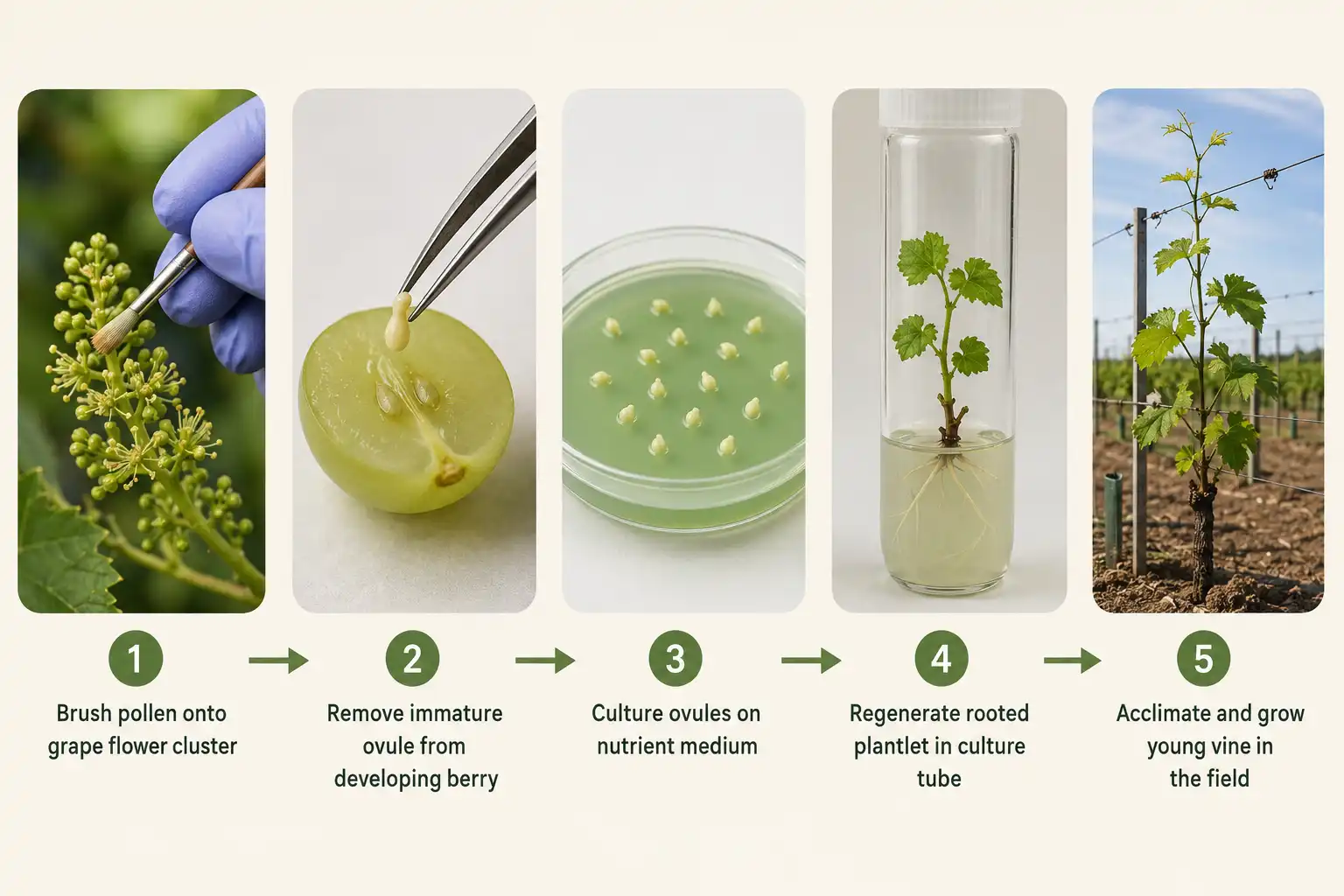
Recovery rates from seedless crosses climbed past 80 percent once media improved. Marker assisted selection tightened the pipeline further. Breeders now screen young seedlings for the VviAGL11 marker and cull the seeded ones before anyone plants them out.
Varieties from that pipeline include Thomcord, Melissa, Scarlet Royal, Sweet Scarlet, and Autumncrisp, sold as Autumn Crisp. People question that last one often. If you have wondered whether Autumn Crisp grapes came from a lab, the same breeding trail explains it. Meanwhile the University of Arkansas program under John R. Clark gave eastern and midwestern growers Mars, Reliance, Venus, and Jupiter. Cornell’s Geneva station contributed Himrod, Canadice, Marquis, and Einset.
Is Embryo Rescue the Same as Genetic Engineering?
No. Embryo rescue moves a plant, not a gene. All the DNA in that plantlet came from its two grape parents through ordinary fertilization. A petri dish appears in the process, so people assume gene splicing. Tissue culture works as a nursery, though, nothing more. Genetic engineering means inserting or editing a DNA sequence, and none of that happens here.
Why Seedless Grapes Get Mistaken for GMOs
Four things drive the confusion, and three of them sit right there in the store.
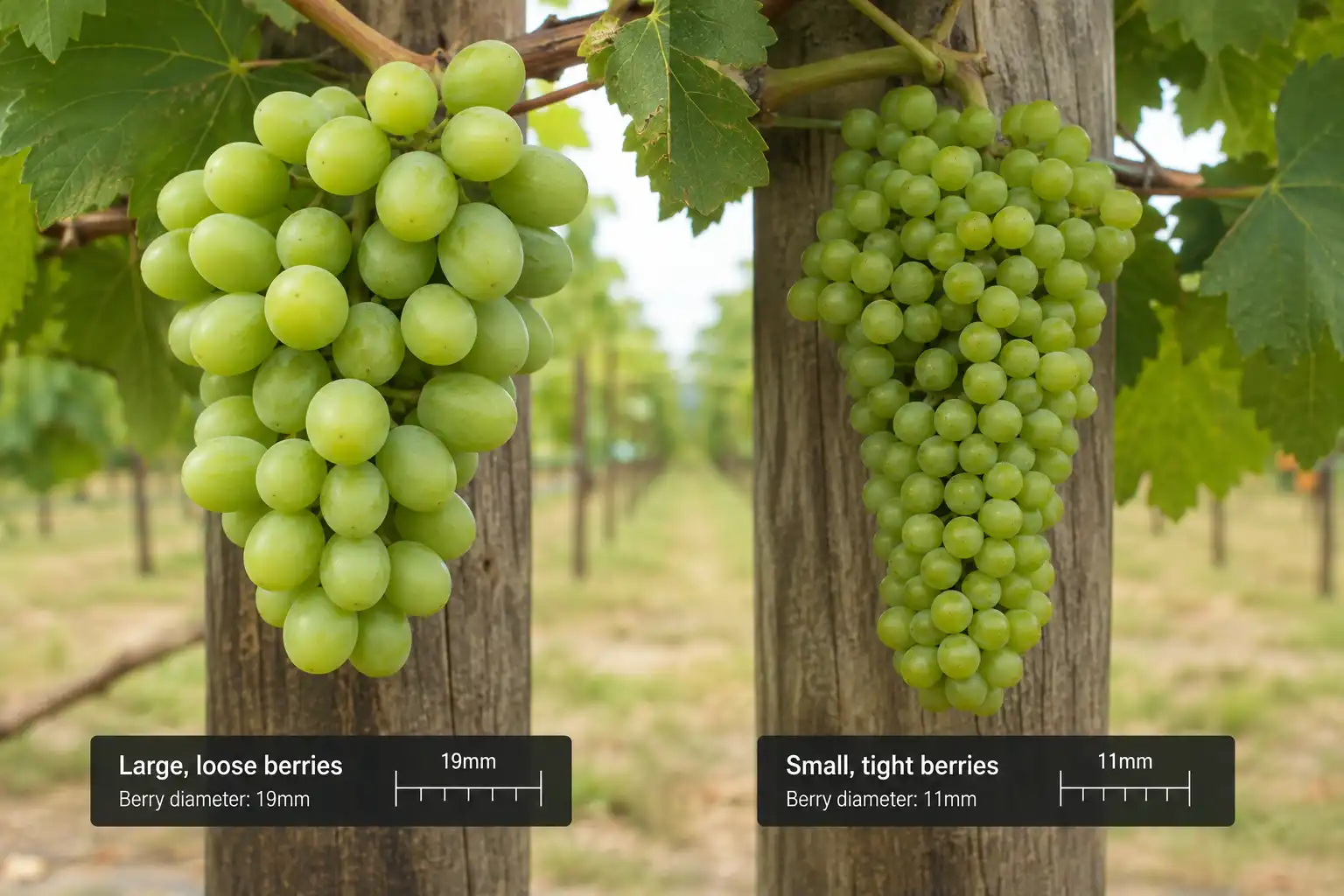
Berry size. Grape seeds produce gibberellins, and those hormones push berry growth. Seedless berries make very little on their own. Table grape growers therefore spray gibberellic acid (GA3) at bloom and again at fruit set. Treated Thompson Seedless berries can reach roughly twice the weight of untreated ones. Still, GA3 is a plant hormone applied to the outside of the cluster. It changes no DNA.
Cloning. Every vine of a named variety shares identical genetics. That word alone unsettles people. Yet grafting and cuttings have anchored viticulture for centuries.
Flavored varieties. Cotton Candy, Moon Drop, Gum Drop, and Candy Snap taste manufactured because the flavors run so far from ordinary. All of them came from conventional crossing plus embryo rescue at private breeding programs. Want the pedigree? The same trail explains how natural Cotton Candy grapes actually are. Candy Snap grapes followed it too.
Patents. New table grape varieties carry US plant patents and trademarked market names. Jupiter holds plant patent PP13309, for example. Patents cover any new plant variety, engineered or not, so a patent number proves nothing about biotechnology.
Is Gene Editing Being Used on Grapevines?
In research, yes. In your grocery cart, no. Labs have applied CRISPR-Cas9 to Thompson Seedless plantlets. The targets include susceptibility genes such as VvMLO3, VvMLO4, and VviEDR1. All of that work aims at powdery mildew, the disease caused by Erysiphe necator. The USDA funded VitisGen3 project runs related work across several universities. Other teams target Pierce’s disease.
None of it reaches shelves as of 2026. The APHIS SECURE rule at 7 CFR part 340 covers this ground. Some edited plants can skip federal oversight when breeding could have produced the same change. That is a regulatory pathway, though, not a product. When an edited grape finally does arrive, expect a disease resistance story first rather than a seedless one. Seedlessness already works fine without editing.
Are Seedless Grapes Less Healthy Than Seeded Grapes?
Slightly different, not worse. Sugar, water, potassium, and vitamin K run about the same in both types. What you skip is the seed itself. Grape seeds hold proanthocyanidins and related polyphenols, the compounds behind grape seed extract.
The skin still does most of the heavy lifting. Anthocyanins and resveratrol concentrate there, so red and black seedless types deliver plenty. If those seed compounds matter to you, eat seeded varieties such as Concord. You can also press your own juice with the seeds left in.
Seedless Grape Varieties Worth Planting in Kansas
Cold hardiness comes first here, not seedlessness. Topeka sits in USDA hardiness zone 6a. Winter lows and late spring frosts eliminate most California table grapes right away. K-State Research and Extension publication MF635 lists four seedless types that hold up across Kansas.
| Variety | Color | Hardiness | Notes |
|---|---|---|---|
| Mars | Blue | Vigorous, cold hardy | Best disease resistance of the four; sensitive to phenoxy herbicide drift |
| Reliance | Red to pink | Vigorous, winter hardy | Early mid season; excellent raisins; susceptible to common diseases |
| Jupiter | Reddish blue | Fairly hardy | Largest berries, muscat flavor, about 19.8 Brix; resists cracking |
| Venus | Blue black | Moderately cold hardy | Large berries, earliest ripening of the group |
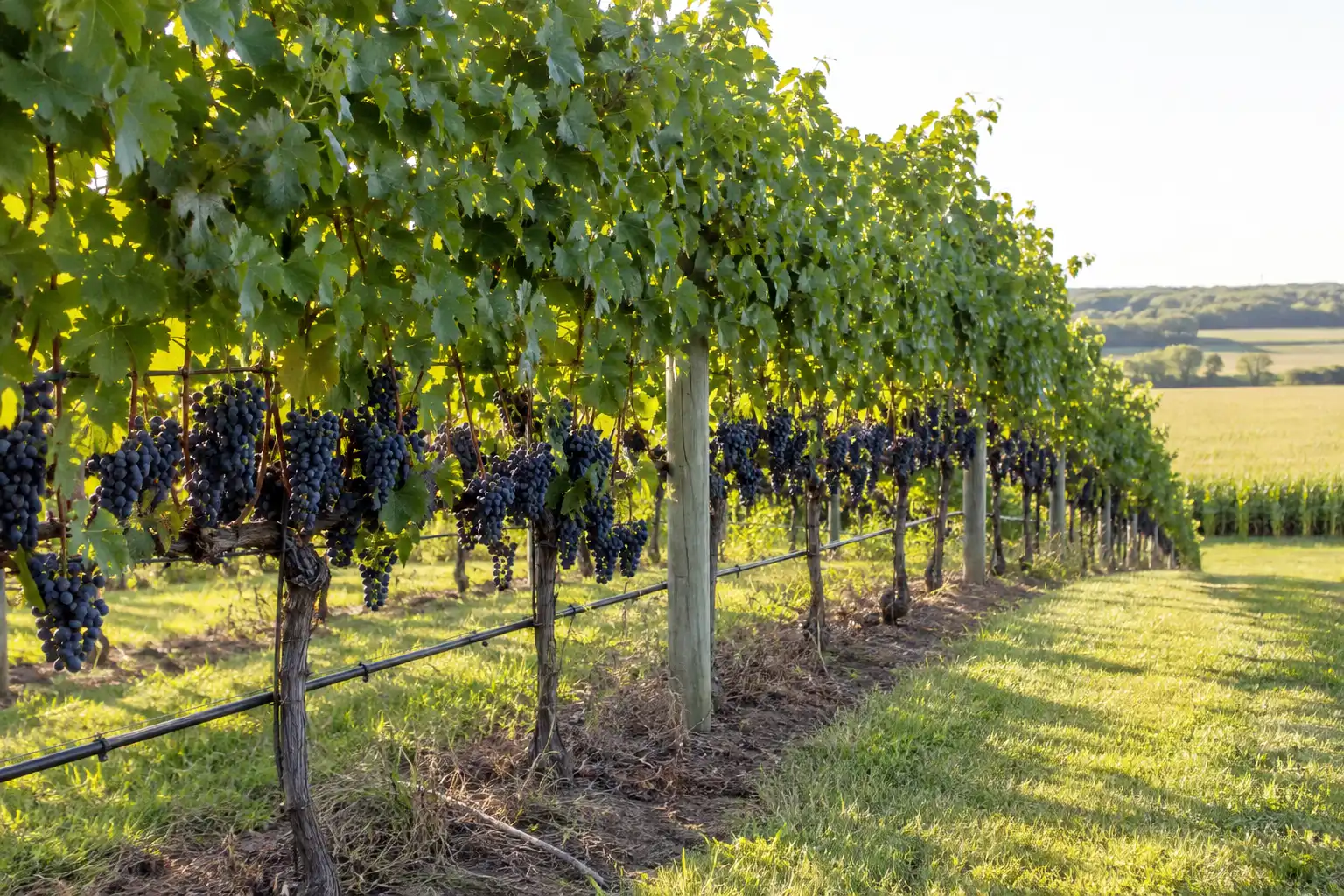
Mars goes first. Disease pressure in northeast Kansas is real, black rot especially, and Mars shrugs it off better than Reliance does. Nursery ratings commonly put Mars near minus 20°F and Reliance near minus 25°F. Both clear a normal Topeka winter with room to spare.
Watch your herbicide drift. Mars, Sunbelt, and Remaily Seedless all react badly to phenoxy products, which matters when wheat ground or pasture sits upwind. Every one of these vines also needs annual dormant pruning, typically done in late February. Set up your trellis before that first cut. Pruning grapes on a high cordon or modified Munson system beats fixing a tangled vine later.
Seedless grapes and GMO facts
Seedless grapes are one of the oldest cases of people spotting a lucky mutation and keeping it. No gene insertion appears anywhere in that chain. If a bioengineered grape ever reaches the market, USDA will add it to the list and the package will say so plainly. Until then, buy the bag and skip the worry.