What Size Pots for Tomatoes to Get the Best Harvest Possible
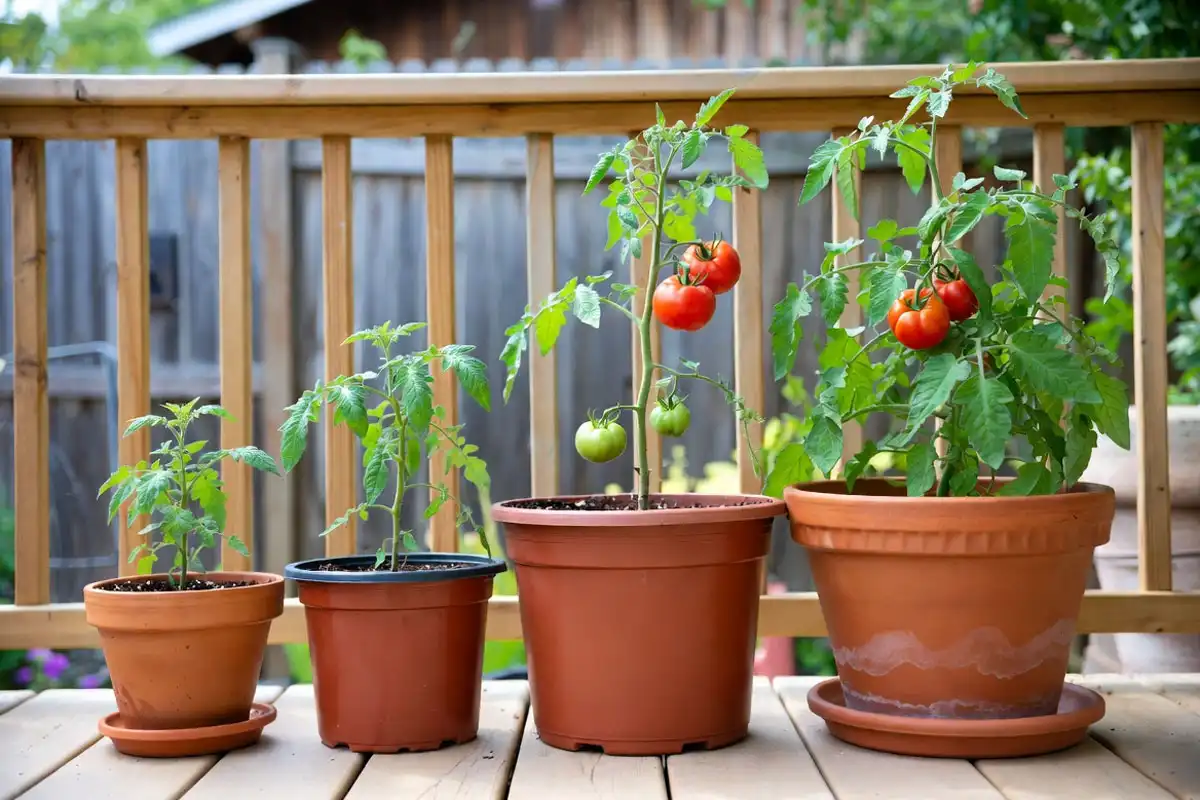
The size of pots controls how well tomatoes root, feed, and produce in containers. This guide covers the right container size for every tomato type, from compact dwarf varieties to large indeterminate plants, along with material choices, drainage needs, watering frequency, and the most common sizing mistakes that cost growers yield before the season ends.
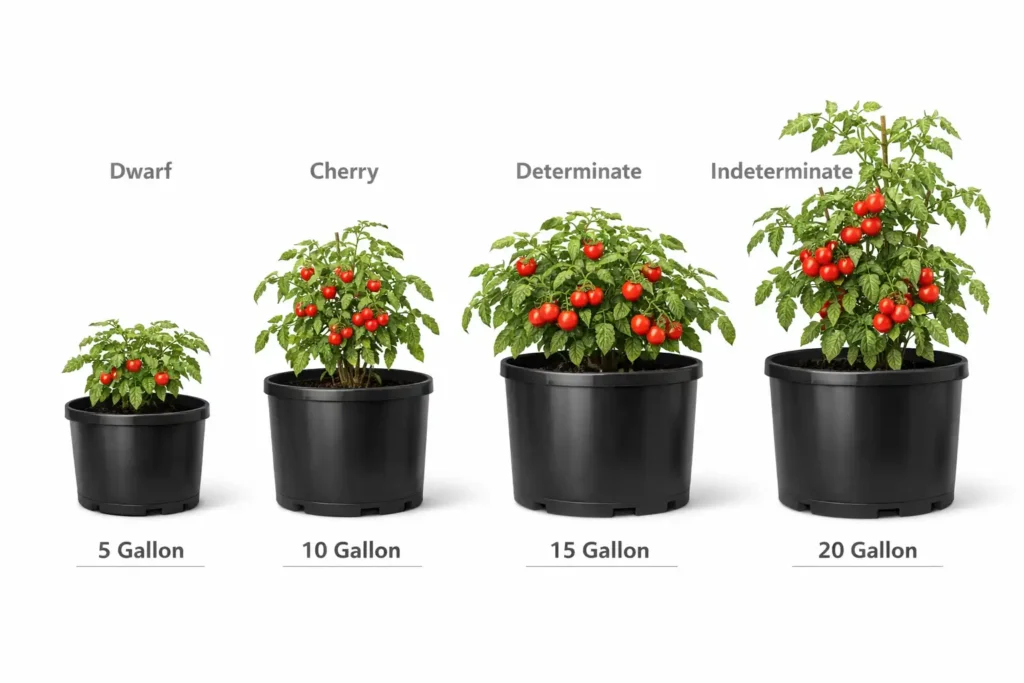
| Tomato Type | Minimum Pot Size | Preferred Pot Size |
|---|---|---|
| Dwarf / patio | 5 gallons (12 in. diameter) | 5–7 gallons |
| Cherry tomato | 5 gallons | 10 gallons (14 in. diameter) |
| Determinate | 10 gallons | 10–15 gallons (14–16 in. diameter) |
| Indeterminate | 15 gallons | 20 gallons (18–24 in. diameter) |
Know more: Grow Bag Size for Plant Tomatoes
Why Does Pot Size Matter for Tomatoes?
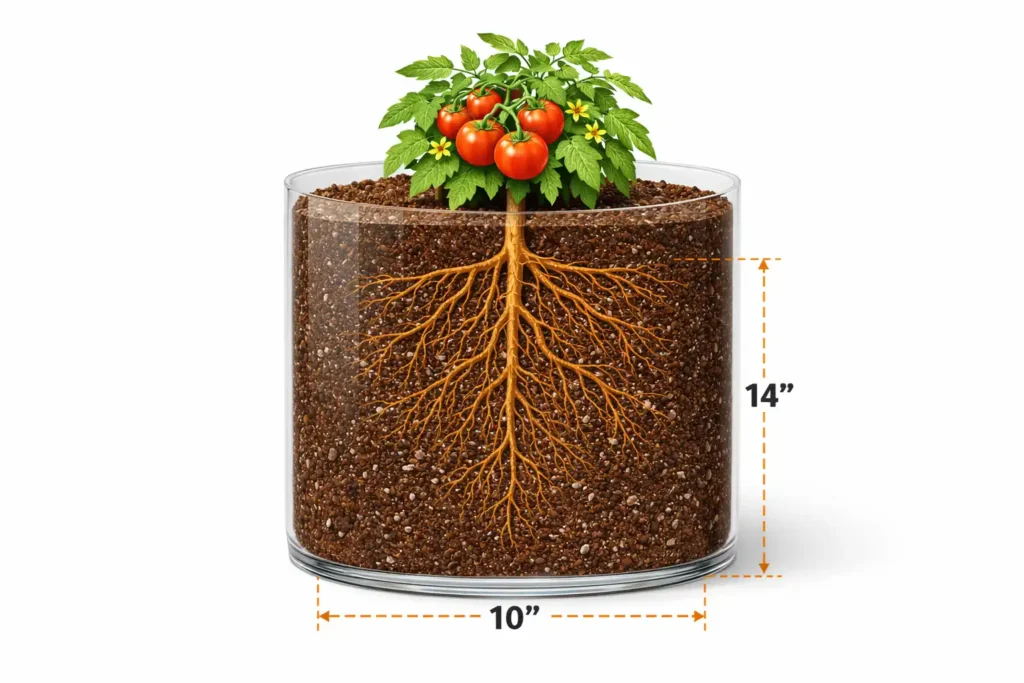
Container size directly controls root space, water retention, and fruit output. Tomato roots spread 12–18 inches deep and up to 12 inches wide in a healthy, established plant. A pot too small restricts that growth, reduces water uptake, and lowers fruit set. Undersized containers also dry out faster, stressing plants during the critical flowering and fruit development stages.
A correctly sized pot gives roots enough room to anchor the plant, access nutrients consistently, and store enough moisture between waterings.
To know more: Plant Tomatoes in Missouri and Avoid Late Frost Mistakes
What Size Pot Does Each Tomato Type Need?
Dwarf and Patio Tomatoes
Dwarf varieties, which include Tiny Tim, Tumbling Tom, and Micro Tom, grow 12–18 inches tall. A 5-gallon pot (12 inches in diameter) provides full root space for the season. These compact varieties suit window boxes, balcony rails, and small patios where space limits container size.
Cherry Tomatoes
Cherry tomatoes, including Sweet 100, Sun Gold, and Black Cherry, grow taller than dwarf types and produce fruit clusters over a long season. A 5-gallon pot supports early growth, but a 10-gallon pot (14 inches in diameter) produces stronger plants and higher yields through the full harvest period.
Determinate Tomatoes
Determinate varieties, such as Roma, Celebrity, and Rutgers, reach a set height of 3–4 feet and ripen fruit within a concentrated window. A 10-gallon pot (14–16 inches in diameter) supports full root development and stable fruiting without the need for continuous repotting.
Indeterminate Tomatoes
Indeterminate varieties, including Beefsteak, Big Boy, and Brandywine, grow continuously and produce fruit throughout the season. These plants need a 15–20 gallon pot (18–24 inches in diameter). A container smaller than 15 gallons causes root binding, heat stress at the root zone, and reduced fruit size at harvest.
For a full walkthrough on growing tomatoes in containers, including soil mixes and feeding schedules, that guide covers the complete setup process.
Does Pot Depth Matter as Much as Width?
Depth determines root anchoring, stability, and moisture reserves. Tomato roots grow deeper than they spread wide. Dwarf varieties need at least 12 inches of depth. Indeterminate tomatoes need 18–24 inches to anchor tall stems and store enough water to reduce daily stress.
Wide, shallow pots dry out faster and destabilize tall plants in wind. When choosing between two similarly sized containers, prioritize the deeper option.
What Pot Material Works Best for Tomatoes?
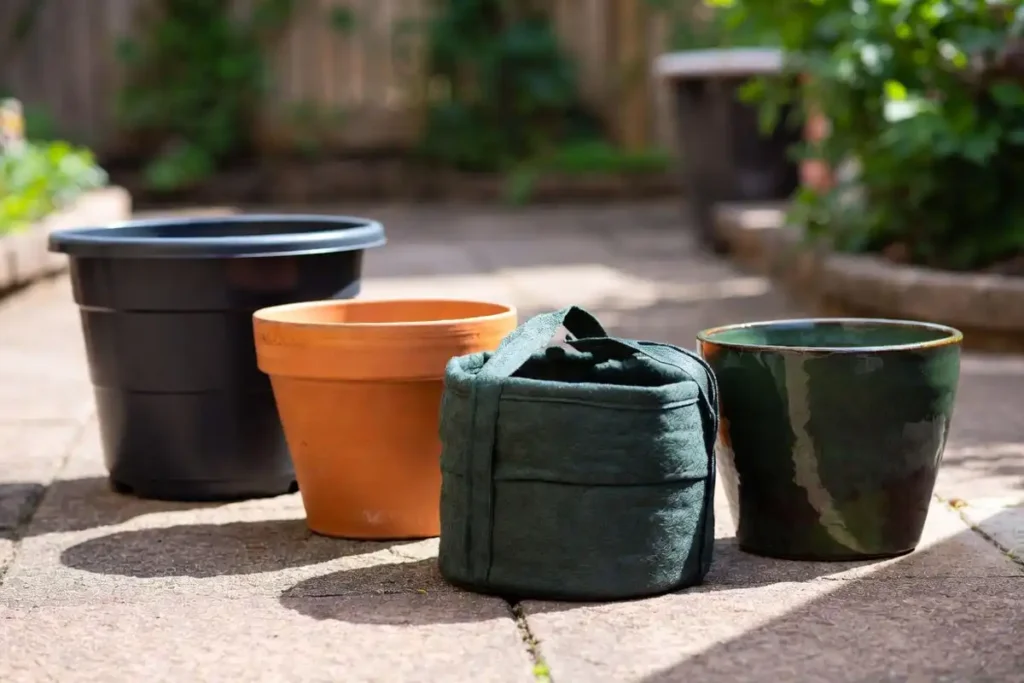
Pot material affects soil temperature, moisture retention, and plant health.
Plastic pots retain moisture longer than terracotta and weigh less, which suits rooftop and balcony growing. Black plastic absorbs heat and raises soil temperature, which benefits cool climates. In hot summers, black plastic can push root-zone temperatures above 95°F, which damages roots and reduces uptake.
Terracotta pots allow airflow through the walls and reduce overwatering risk. They dry out faster, so they require more frequent irrigation in warm weather. Terracotta suits humid climates where soggy soil creates rot problems.
Fabric grow bags provide strong drainage and air-prune roots, which prevents root circling. A 15–20 gallon fabric bag supports indeterminate tomatoes well. Fabric bags dry out faster than plastic, so daily watering in summer heat is often necessary.
Glazed ceramic pots retain moisture well and handle temperature swings better than plain terracotta. They suit patios where weight and budget allow, though they cost more and make seasonal moving difficult.
How Many Tomato Plants Fit in One Pot?
One plant per pot is the standard for tomatoes. Two plants in the same container compete for water and nutrients, which reduces yield in both. For cherry tomatoes in a 15-gallon container, some growers fit two plants with careful fertilizing, but one plant per pot consistently produces more fruit per square foot.
Correct plant spacing for crops applies to container growing too. Crowded roots and overlapping foliage both reduce air circulation and increase disease pressure.
Does Pot Color Affect Tomato Health?
Dark-colored pots absorb more solar radiation. Black and dark brown containers increase soil temperature by up to 10°F compared to white or light-colored pots. Root-zone temperatures above 95°F impair nutrient uptake and reduce flower set in tomatoes. In USDA Zones 7–10, light-colored or white containers protect root health during peak summer heat.
When Do You Move Tomatoes to a Larger Pot?
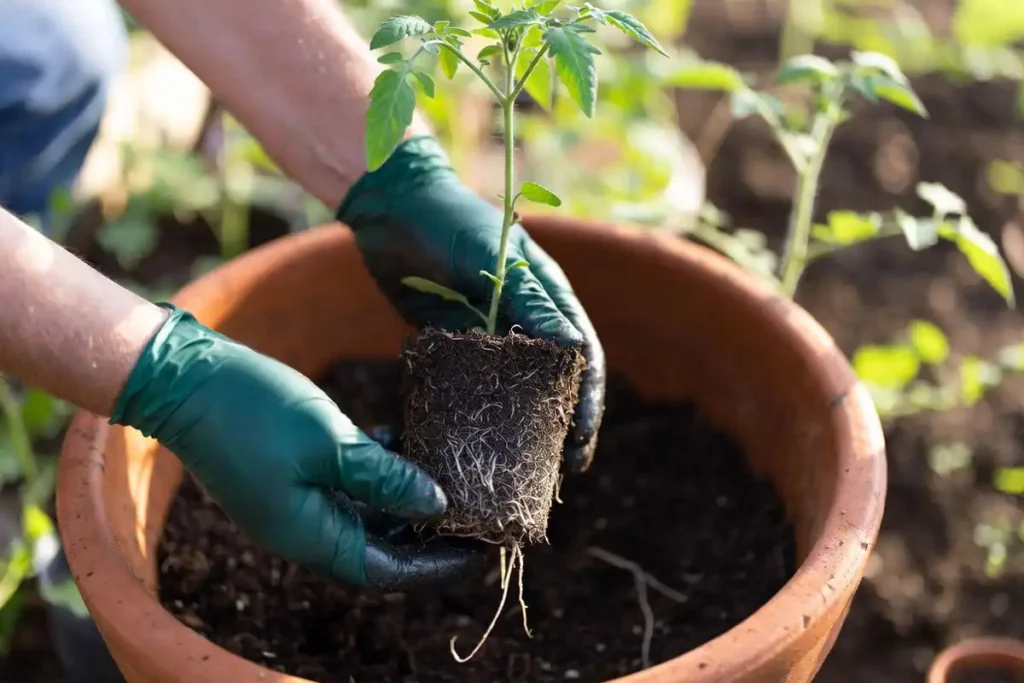
Roots pushing out through drainage holes indicate the plant needs a larger container. Wilting between waterings, despite regular irrigation, also signals root restriction. Move the plant up one size at a time. Jumping from a 1-gallon seedling pot directly to a 20-gallon container causes the excess soil to stay waterlogged around the small root ball, which promotes root rot.
For timing guidance on when to transplant tomatoes from seedling trays into their first containers, that guide covers temperature thresholds and hardening steps.
How Do You Water Tomatoes in Containers?
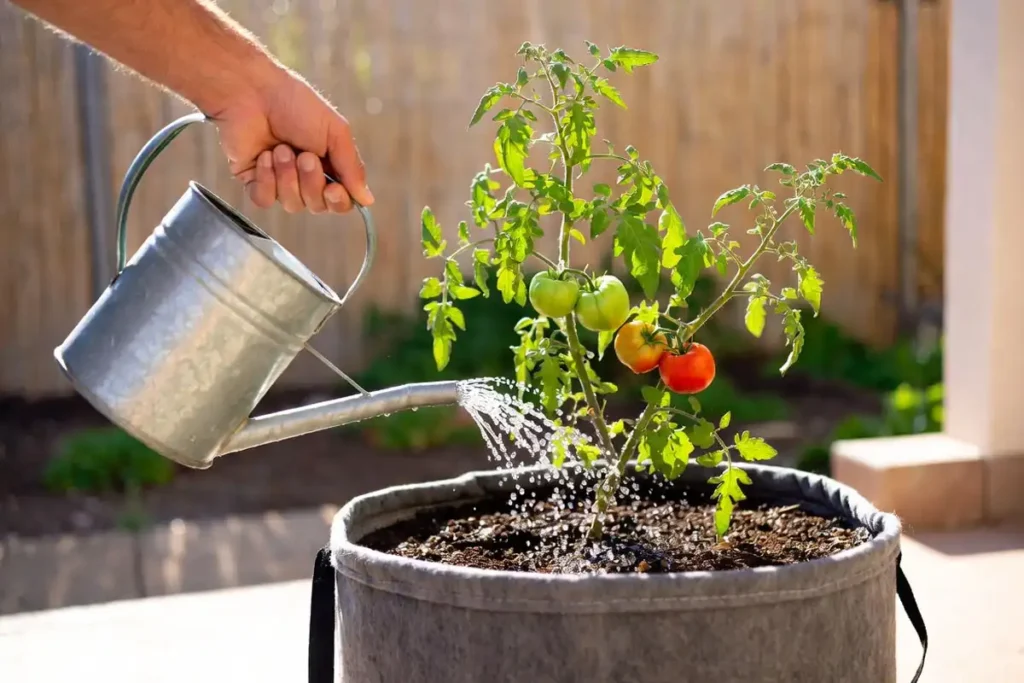
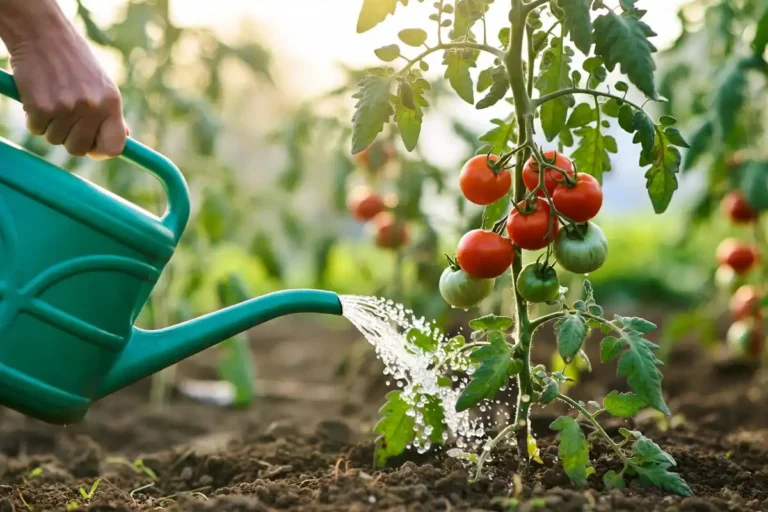
Container tomatoes dry out faster than in-ground plants. Check soil moisture 2 inches below the surface daily in summer. Water when that layer feels dry. A 10-gallon pot in 90°F heat often needs watering once or twice daily. Add a 1–2 inch layer of mulch on top of the soil to slow evaporation between irrigations.
Understanding when tomatoes need the most water by growth stage helps prevent both drought stress and blossom-end rot from uneven moisture.
How Do You Fertilize Tomatoes in Pots?
Container soil loses nutrients faster than garden beds. Frequent watering leaches minerals through the drainage holes. Apply a balanced NPK fertilizer every 2 weeks after the first fruit set. Switch to a lower-nitrogen, higher-phosphorus formula when flowers appear to support fruit development rather than leaf growth.
A detailed breakdown of NPK fertilizer ratios for crops explains how nitrogen, phosphorus, and potassium each affect plant growth at different stages.
Common Pot-Sizing Mistakes to Avoid
Starting in an oversized container. A seedling in a 20-gallon pot sits surrounded by wet soil that the small root ball cannot absorb, which causes root rot before the plant establishes. Start seedlings in a 4-inch pot, then step up to a 1-gallon, then to the final container as roots develop.
Skipping drainage holes. Waterlogged soil causes root rot in tomatoes within days. Every container needs at least one drainage hole per 6 inches of pot diameter.
Choosing a pot that is too shallow. Tall pots outperform wide, shallow ones for tomatoes. A container that is 12 inches wide and 18 inches deep outperforms one that is 18 inches wide and 8 inches deep.
Reusing cracked containers. Cracked pots fail under root pressure and wet soil weight. Inspect containers for cracks before each season and replace those showing structural damage.
Safety Notes for Container Tomato Growing
Heavy containers on balconies and elevated decks require structural weight checks. A 20-gallon pot filled with wet potting mix weighs 50–80 pounds. Before placing multiple large containers on an elevated surface, verify the load limit with a structural engineer or building manager.
Plastic containers degrade under UV exposure over several seasons. Brittle or discolored plastic signals material breakdown. Replace degraded pots rather than patching them, as cracks under load release sudden pressure.
Conclusion
Pot size sets the ceiling for how well container tomatoes perform. Dwarf types produce reliably in 5-gallon pots, cherry tomatoes perform best in 10 gallons, determinates need 10–15 gallons, and indeterminates need at least 15–20 gallons with adequate depth. Pair the right container size with proper drainage, consistent watering, and regular feeding, and container tomatoes deliver a productive harvest through the full growing season.