What Is Broken Rice? What Every Farmer Knows
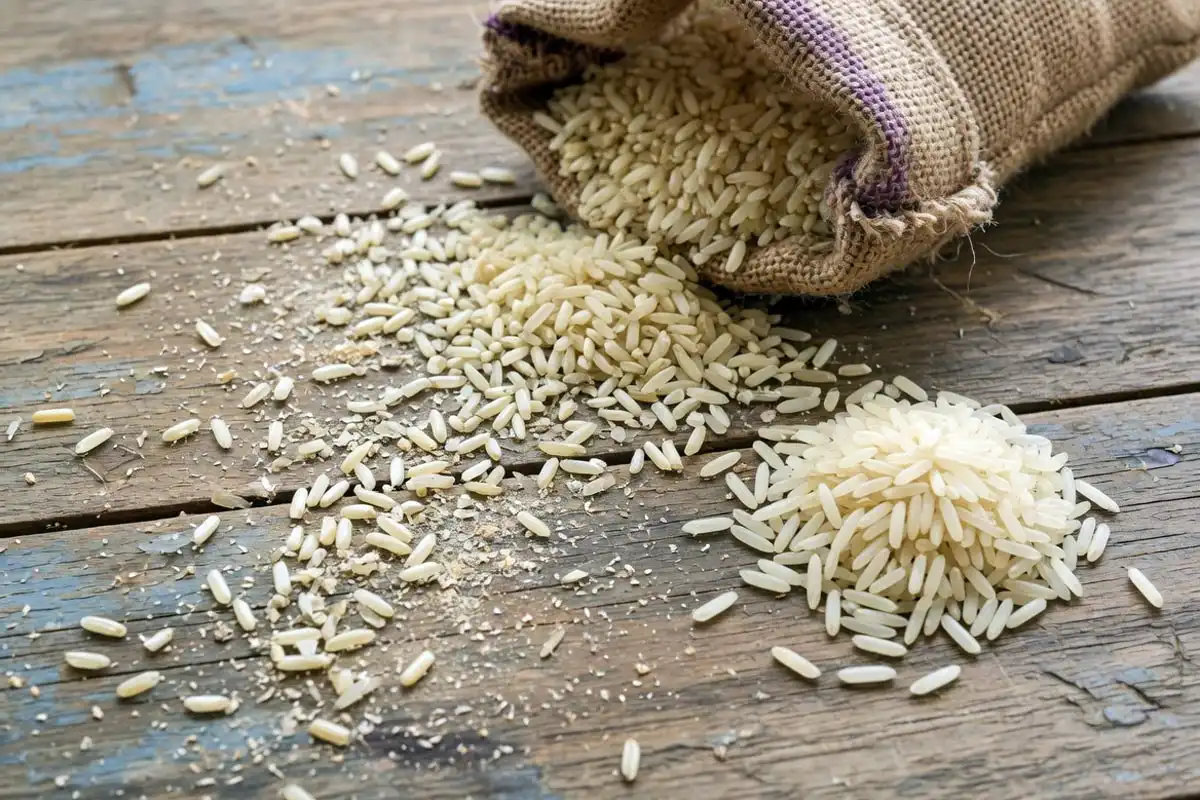
Broken rice shows up in grocery aisles, feed bills, and brewing recipes, but few folks know what it actually is. The kernels are not a different variety or a defect. They are part of the rice supply chain with their own grades, prices, and uses.
Broken rice is rice kernels that fracture during milling or handling. The pieces are shorter than whole grain rice but still edible, nutritious, and widely used in human food, brewing, baby cereal, pet food, and livestock feed across the United States and abroad.
What Broken Rice Actually Means
Broken rice is rice kernels that snapped, cracked, or fragmented somewhere between the field and the finished bag. It is not a separate variety. It is not low-grade grain by nature. The fragments come from the same plants that produce whole rice. They just did not make it through milling intact.
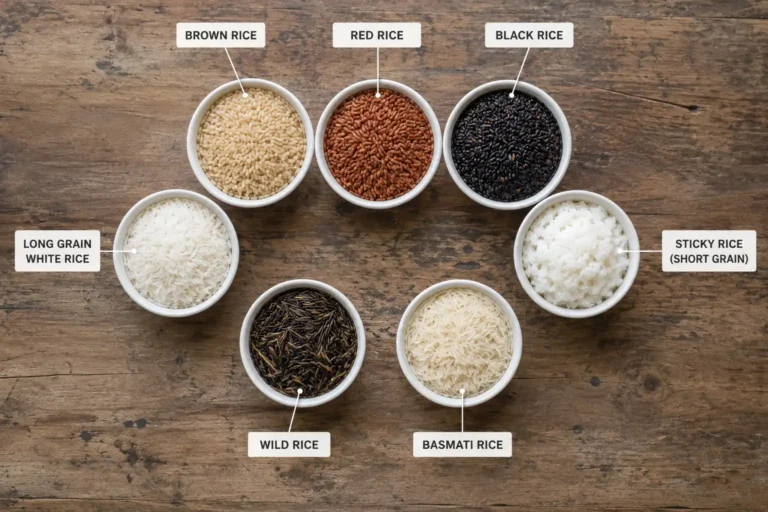
Most broken rice in the US supply chain comes from long grain and medium grain varieties. The pieces range from large fragments almost the size of a whole kernel down to fine particles that look like coarse meal. Each size class has its own USDA grade and its own end use.
How Rice Gets Broken in the First Place
Rice breaks because the kernel itself is brittle. Several factors push the breakage rate up or down.
Field and Harvest Factors
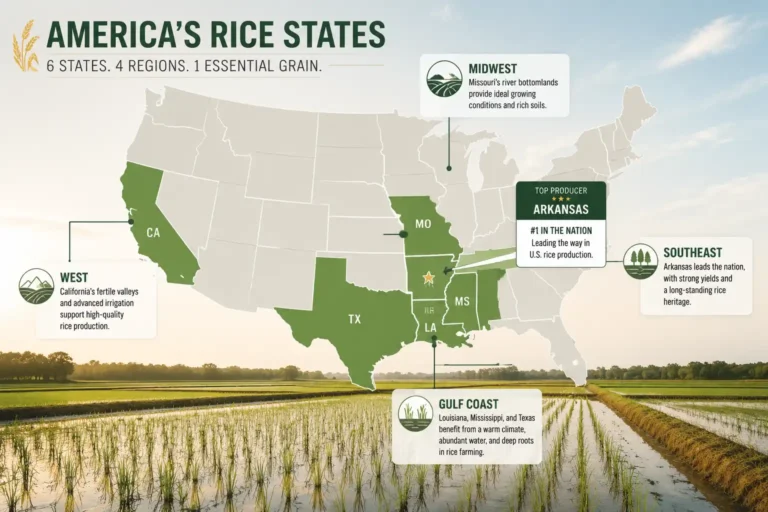
Moisture content at harvest is the biggest driver. Rice cut too dry tends to crack during threshing. Rice cut too wet picks up stress fractures during drying. Most growers in Arkansas, Louisiana, and the Sacramento Valley aim for harvest moisture between 18 and 22 percent, then dry slowly down to about 13 percent for safe storage. The same moisture discipline applies to rice grown in California commercial paddies, where heat units run higher than the Mid-South.
Sudden rewetting also causes fissures. A dry kernel that absorbs rain or heavy dew can crack on the inside before it ever reaches the mill. Drying temperature matters too. Too much heat too fast splits the grain.
What Happens at the Mill
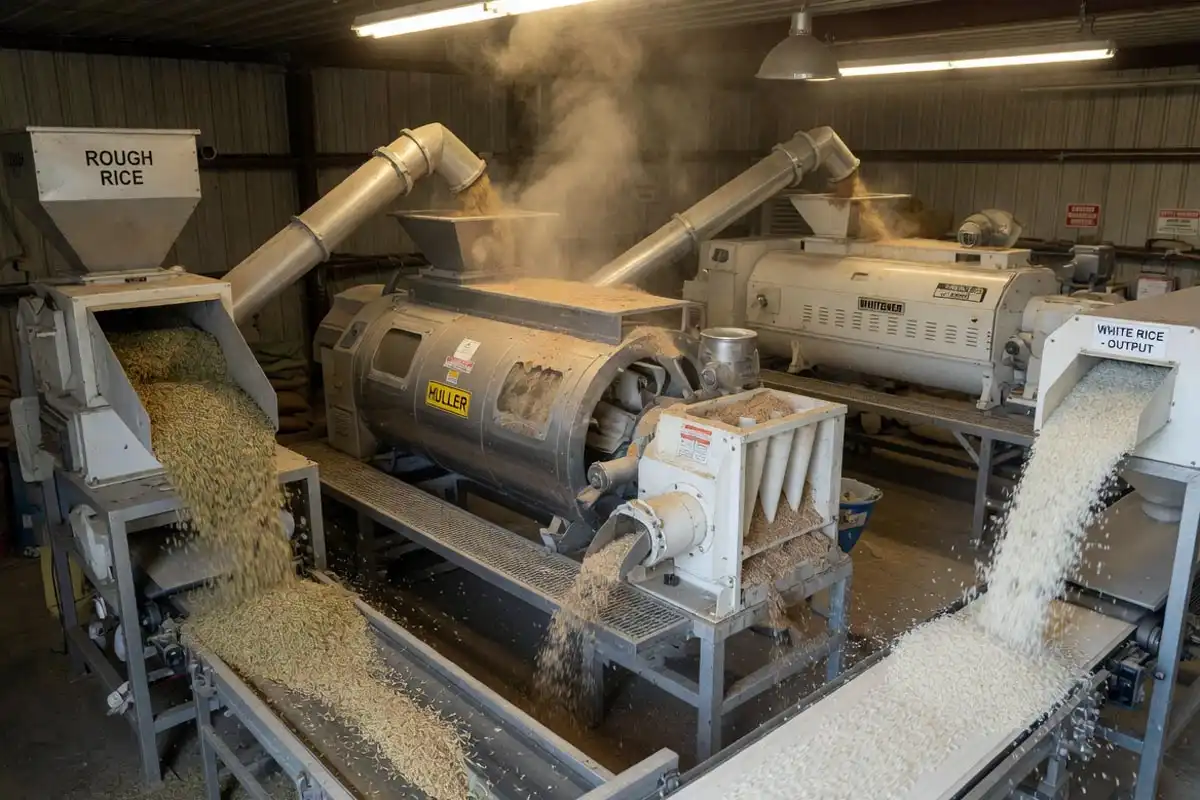
Even clean, well-dried rice breaks during milling. The huller strips the hull. The whitener scours off bran layers. Each step puts mechanical stress on the kernel, and a percentage cracks. A well-run mill keeps total broken rice below about 15 percent of throughput, but the figure swings with grain quality and equipment calibration.
How USDA Grades Broken Rice
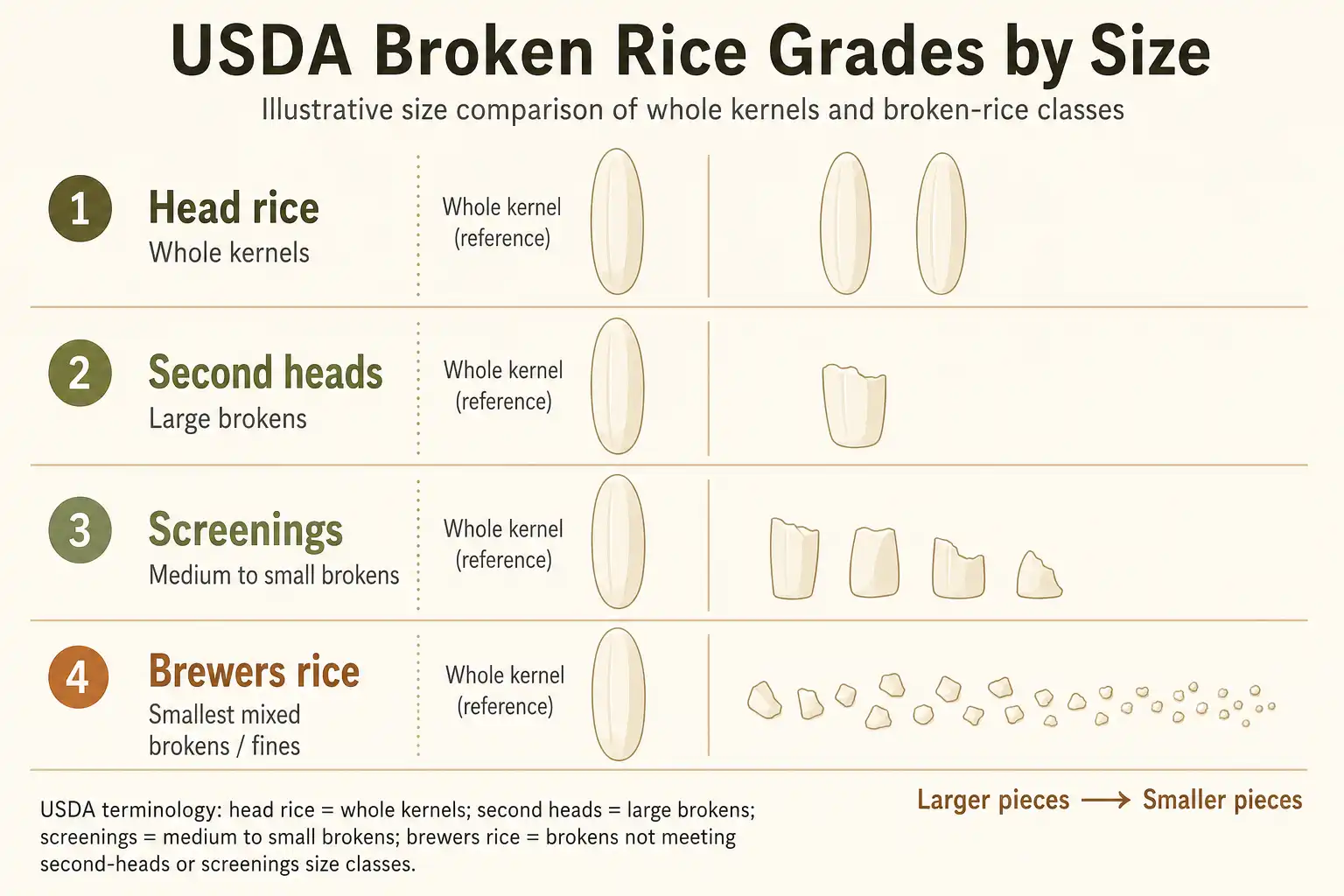
The USDA classifies broken rice by length relative to a whole kernel, and the grades drive pricing across the industry.
Head rice is rice that is three-quarters or more of the original whole kernel. It commands the top price.
Second heads are pieces between half and three-quarters of a whole kernel. These still work as table rice in some markets.
Screenings are smaller fragments, roughly one-quarter to one-half of a kernel.
Brewers rice is the smallest grade, fragments smaller than one-quarter of a kernel. Despite the name, it goes well beyond brewing.
You can read the full grading framework on the USDA Agricultural Marketing Service rice standards page. A grower selling rough rice gets paid partly on expected head rice yield once the lot is milled, so these grades matter at the farm gate, not just at the processor.
Is Broken Rice the Same Nutritionally?
Broken rice has nearly identical nutrition to whole milled rice from the same variety. The fragments still carry the same starch, protein, and trace minerals as the kernels they came from. The difference is physical, not chemical.
Very fine fragments lose a touch more surface starch during washing, which slightly reduces cooking yield. The nutritional content per gram stays essentially the same.
Where Broken Rice Ends Up
Broken rice rarely goes to waste. The milling industry has built entire supply chains around it.
Human Food Uses
Broken rice is a staple in many cuisines. In Senegal, thiéboudienne is made specifically with broken grades. In Vietnam, com tam (which literally means “broken rice”) is a beloved dish. Across India and Bangladesh, broken pieces of basmati rice show up in everyday cooking at a lower price point than whole grain.
In the US, broken rice goes into rice flour, baby cereal, breakfast cereals, snack foods, and ready-to-eat meals. It also gets pressed into rice cakes and puffed rice products.
Beer and Distilling
Brewers rice has been a fermentation ingredient for over a century. Large brewers like Anheuser-Busch use it as an adjunct alongside malted barley because it ferments cleanly and lightens the body of the beer. Some craft distillers also use broken rice in rice-based spirits, sake, and shochu.
Pet Food and Livestock Feed
A large share of US broken rice ends up in pet food. It is gentle on dog and cat digestion, easy to extrude into kibble, and inexpensive compared to whole grain inclusions. Cattle, swine, and poultry feed mills also blend in broken rice when pricing favors it over corn.
How Broken Rice Cooks Compared to Whole Rice
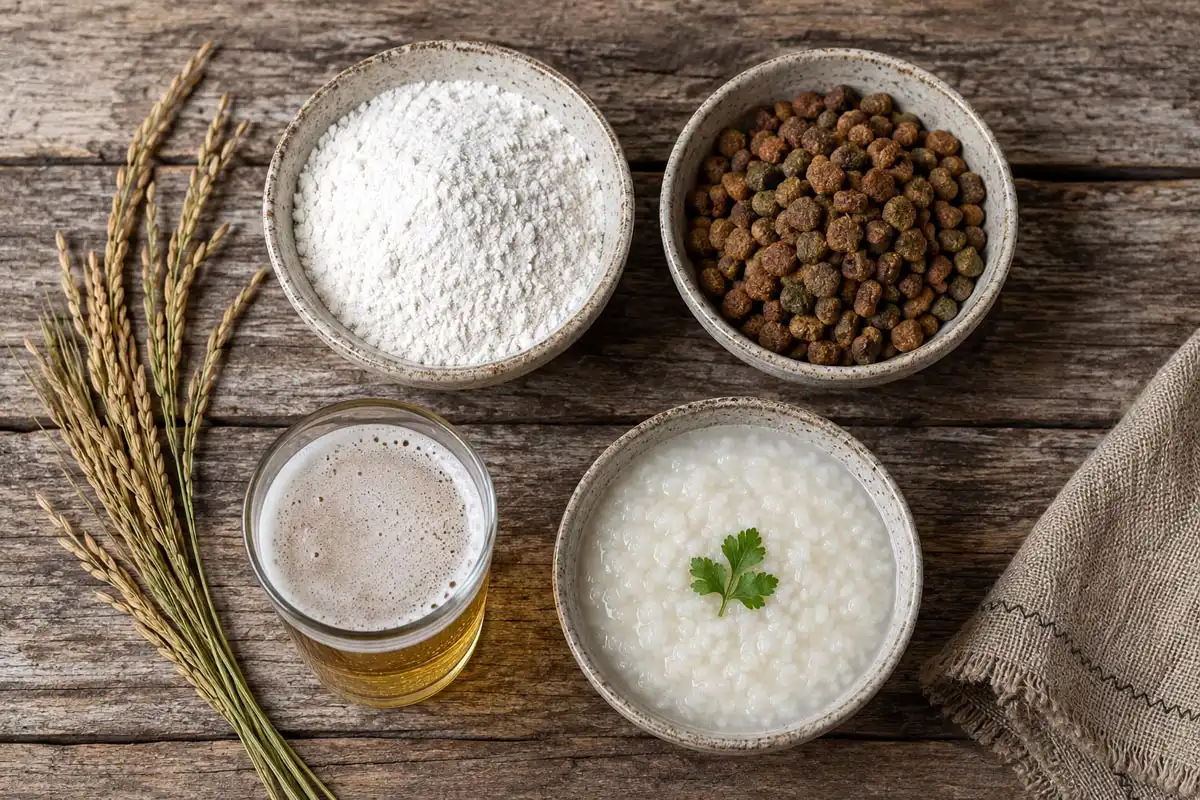
Broken rice cooks faster, absorbs more water per gram, and turns softer than whole grain rice. The cut surfaces release starch quickly, which is why broken rice works well in porridge, congee, and risotto-style dishes. It also clumps more, which some cooks prefer for hand-eaten meals.
For pilaf or fluffy steamed rice, whole kernel rice still wins. The intact kernel holds its shape and stays separate in the pot. Cooks who use a lot of medium grain Calrose rice from California will notice the broken pieces in the bag soften faster than the whole grains.
Is Broken Rice Cheaper?
Broken rice usually sells at a steep discount to head rice. In bulk markets, brewers rice can trade at 40 to 60 percent of head rice prices, depending on supply and demand. Consumer-facing broken rice in grocery stores also tends to cost less than whole grain rice of the same variety.
For farmers selling rough rice, that pricing gap is exactly why head rice yield matters so much. A small bump in head rice percentage can swing the value of a load by several dollars per hundredweight.
What Broken Rice Tells You About a Lot of Grain
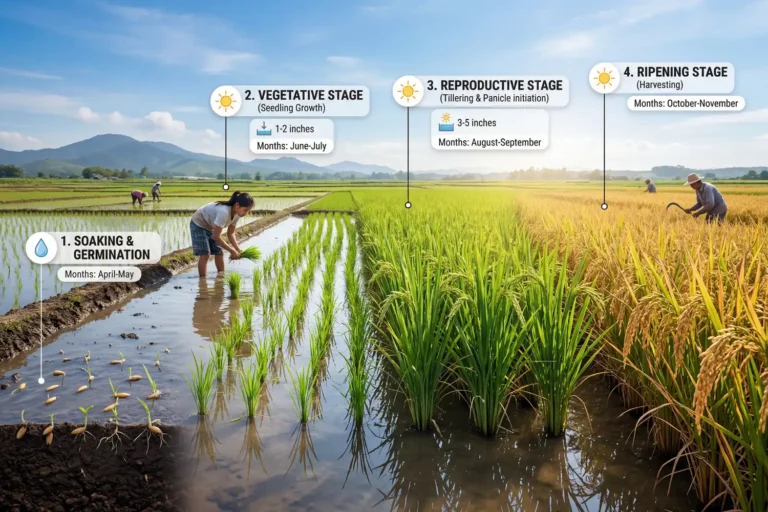
A high broken rice percentage in a milled sample is a signal worth reading. It points back to harvest moisture, drying curve, storage stress, or mill calibration. The same kernel-cracking stresses also tie back to why rice paddies are flooded during the growing season, since steady soil moisture protects kernel integrity later on. Broken rice percentage works the same way test weight does on wheat: a number that reflects everything that happened before the grain reached the buyer.
Take After Years in Kansas
Broken rice is not damaged goods. It is part of how the rice supply chain has worked for over a hundred years, and it shows up in your beer, your dog’s food, and your kid’s cereal. If you grow rice, push for head rice yield, because that is where the premium sits. If you buy rice, the broken grades give you the same nutrition for less money, and they shine in the right dishes.