What Is Rice Husk Ash? Uses, Benefits, and How to Apply It
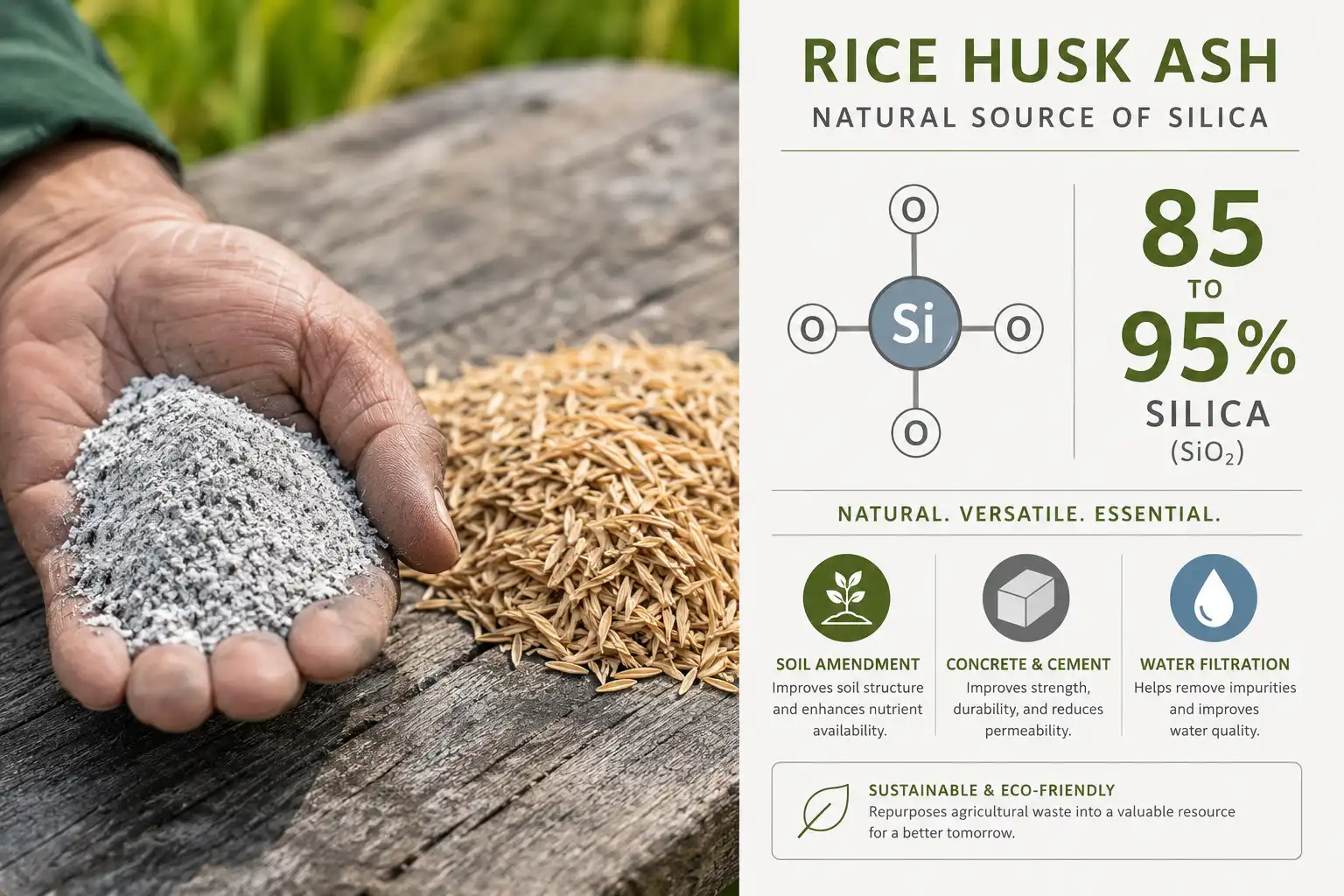
Rice husk ash shows up in soil amendments, potting mixes, and even concrete, yet most folks aren’t sure what it actually is. It’s the gray powder left after rice hulls burn.
Rice husk ash is the mineral residue left after burning rice husks, the hard outer shells removed during milling. It’s roughly 85 to 95 percent silica. Farmers use it as a soil amendment, silicon source, and compost additive.
What Is Rice Husk Ash Made Of?
Rice husk ash is mostly silica. Depending on how the husks burn, silica makes up 85 to 95 percent of the ash, and sometimes more. The rest is a small mix of potassium, calcium, magnesium, and trace minerals, plus leftover carbon.
The color tells you a lot. Fully burned ash runs light gray to white. Ash with leftover carbon looks dark gray or black. The particles are fine, porous, and light, so a large surface area packs into very little weight.
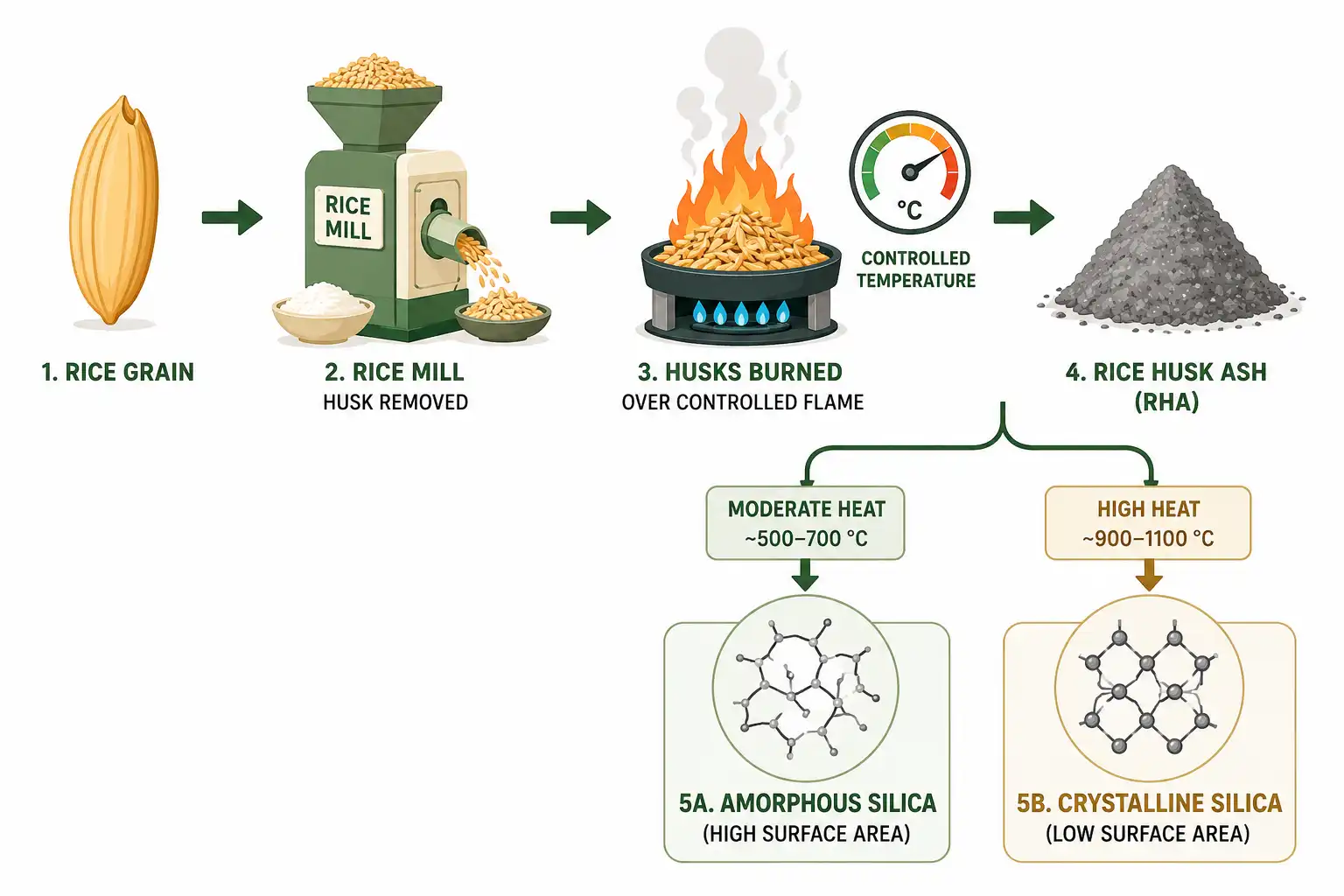
The silica itself comes in two forms. One is amorphous, which means its structure is disordered and reactive. The other is crystalline, like quartz, which stays stable but reacts far less. Burning conditions decide which form you get, and that changes how the ash behaves.
How Is Rice Husk Ash Produced?
Rice husk ash is produced by burning the husks left over after milling. Every rice grain wears a hard protective hull. Mills strip these hulls off to reach the edible grain. Husks make up close to a fifth of the harvested weight, so mills pile up huge amounts of them.
Two burning methods dominate. Open-field burning stays cheap but uncontrolled, and it usually produces crystalline silica along with uneven ash quality. Controlled incineration holds the temperature steady, so it yields cleaner ash with reactive amorphous silica.
Temperature drives the result. Moderate controlled heat, roughly 900 to 1200 degrees Fahrenheit, tends to keep the silica amorphous and reactive. Hotter fires or long slow burns push the silica toward crystalline quartz and cristobalite. Ash makers who want a premium product watch that temperature closely.
What Is Rice Husk Ash Used For?
Rice husk ash works across farming, construction, and water treatment. Its high silica content, fine texture, and low cost make it useful in more places than most people expect.
On the industrial side, concrete makers value it most. Ground amorphous ash acts as a pozzolan, so it partly replaces Portland cement and adds strength and durability. Water treatment is another good fit. The silica grabs onto heavy metals like lead, arsenic, and cadmium, which helps filter dirty water. The ash also serves as insulation, a filler, and a raw source for pure silica.
For growers, though, the value sits in the soil. So that’s where the most attention should go.
Is Rice Husk Ash Good for Soil and Plants?
Yes, used correctly, rice husk ash helps most soils. It feeds silicon into the ground, loosens heavy clay, and nudges acidic soil toward neutral. It won’t replace a full fertilizer program, but it fills gaps that standard inputs often miss.
Silicon is the headline benefit. Plants don’t treat it as an essential nutrient, yet it acts like a functional one. Silicon settles into cell walls and stiffens plant tissue. That extra strength then helps crops shrug off insects, resist fungal diseases, and hold up under drought and heat.
Some crops soak up far more silicon than others. Rice and sugarcane are hyperaccumulators, and rice tissue can run 5 to 10 percent silicon by weight. Grasses, small grains, and many vegetables also respond well. Diseases like rice blast and brown spot ease off when silicon levels stay high.
The ash does more than feed silicon. Tilled into clay, it opens up pore space and improves drainage, much like perlite. It also carries some potassium and runs alkaline, so it raises soil pH. On sour, acidic ground that’s a plus. On soil that’s already alkaline, go easy.
Because of all that, treat it as one piece of a bigger plan for building soil fertility the natural way, not a stand-alone fix. Since the ash carries little nitrogen or phosphorus, it works alongside a standard NPK program instead of replacing it.
How Do You Use Rice Husk Ash in the Garden or Field?
Start small and test first. A basic soil test tells you your current pH and nutrient levels, so you know how much ash your ground can take. Rice husk ash raises pH, and overdoing it can push soil too alkaline.
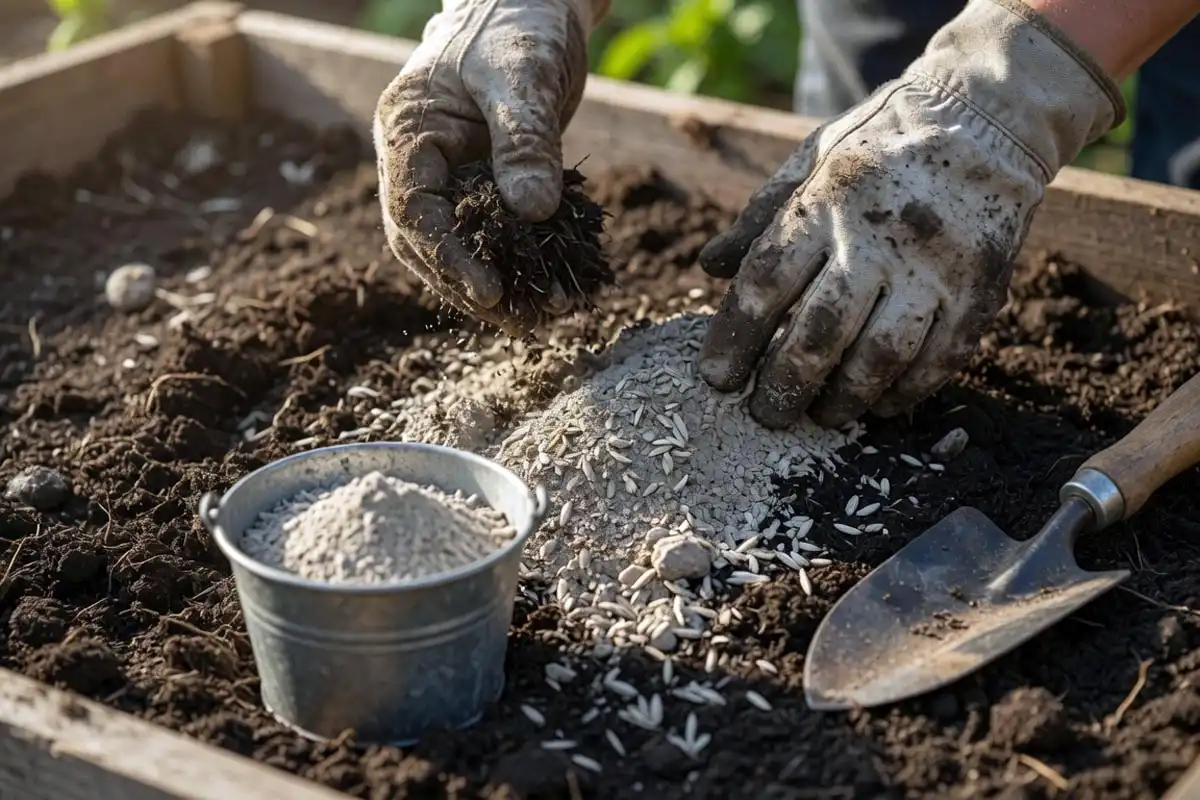
Here’s how to put it to work. For garden beds, spread a thin layer and work it into the top few inches before planting. For potting mixes, blend in a small share, maybe 10 to 20 percent by volume, to improve air flow and drainage. For compost, it can be sprinkled in while building the pile. A little ash then helps balance a wet, dense heap and holds nutrients in place, which is why it earns a spot in a farm composting routine.
Go light. A few pounds per hundred square feet is plenty for most beds. Water it in after spreading so the fine powder doesn’t blow off. Then retest your soil after a season to see how the pH has shifted.
What’s the Difference Between Rice Husk Ash, Biochar, and Raw Hulls?
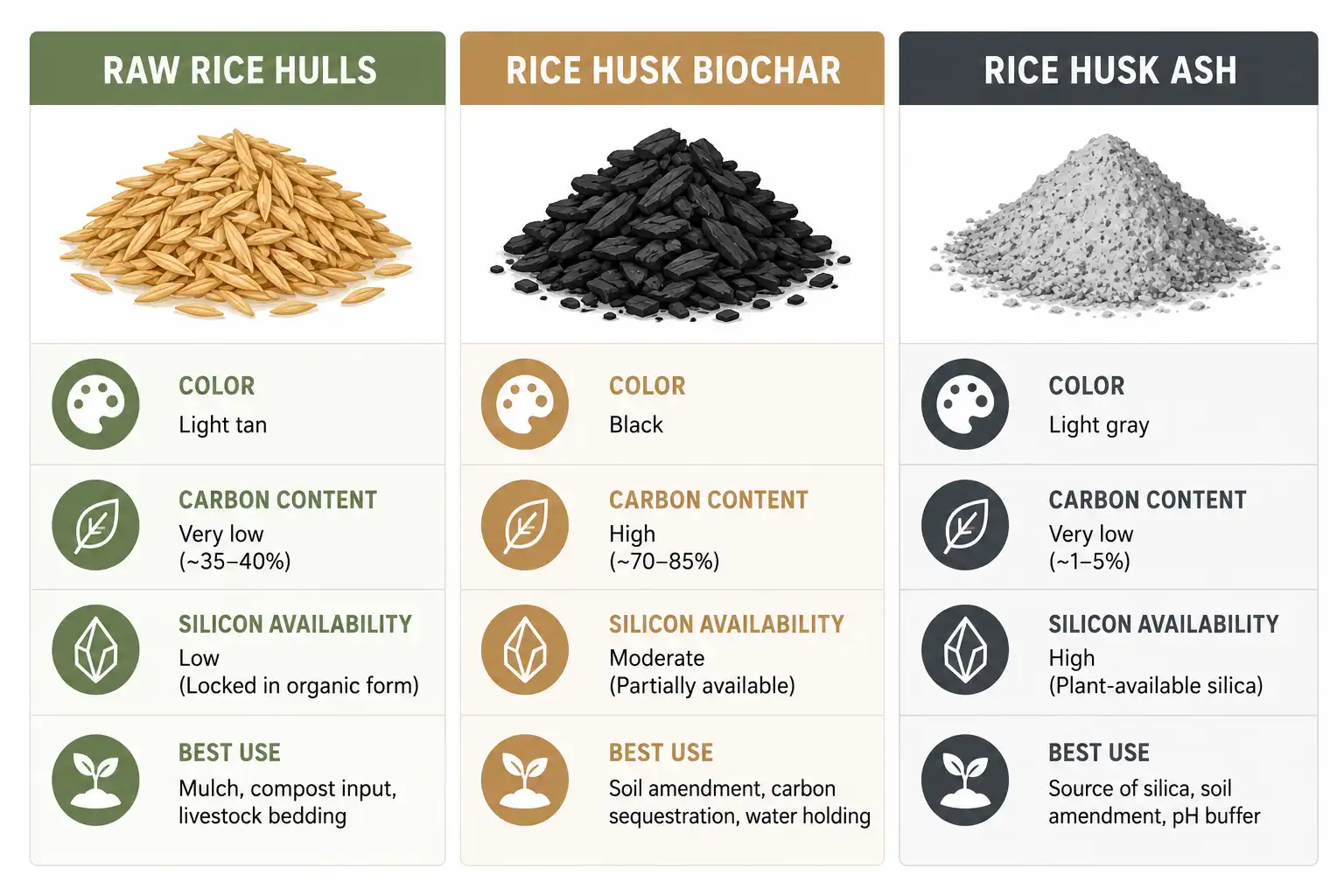
They come from the same husk but behave differently. Raw hulls stay unburned and break down slowly. Biochar is husk cooked with little oxygen, so it keeps its carbon. Ash is husk burned in open air, so the carbon burns off and silica stays behind.
Each one has a place. Raw hulls and biochar actually release more plant-available silicon than fully burned ash, since hard burning can lock some silica into less soluble forms. Biochar also stores carbon in the soil for years. Ash, by contrast, works faster on soil structure and pH. So match the form to the job.
Cycling these residues back into the ground is a core idea behind regenerative rice systems, where nothing from the crop goes to waste.
Is Rice Husk Ash Safe to Handle?
Mostly, but respect the dust. The bigger concern is crystalline silica, which forms in hot, uncontrolled burns. Breathing fine crystalline silica over time can scar the lungs, a condition called silicosis. Amorphous ash stays much gentler, though any fine powder still deserves care.
Wear a dust mask when you handle dry ash. Work with it on a calm day so it doesn’t drift. Then wet it down once it’s spread. These simple steps keep the dust out of your lungs and off your neighbor’s field.
Last Notes
Rice husk ash earns its keep as a soil builder, a silicon source, and a compost helper. It shines on acidic, heavy soils that need loosening and a small pH bump. Just test first, apply light, and treat it as one tool among many. Used that way, this rice byproduct pays off season after season.