How Grapes Are Harvested: Hand vs Machine (2026 Guide)
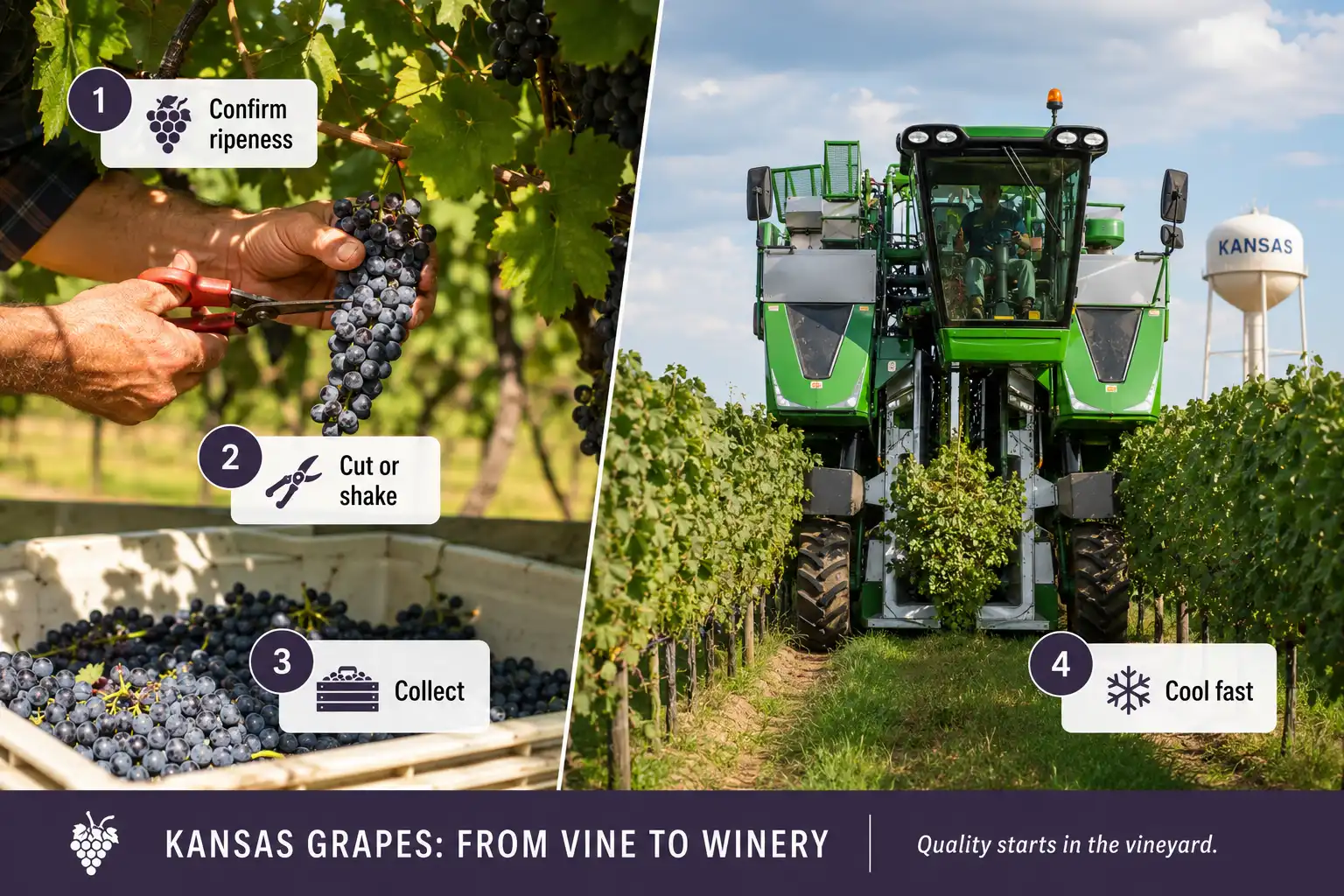
Grapes come off the vine two main ways: cut by hand or shaken loose by a machine. Both start with fully ripe fruit, since grapes stop sweetening once picked. Here is how grapes are harvested, from the first cut to the cooler.
Grapes are harvested in two ways: cut by hand with shears, or shaken off the vine by a machine onto a conveyor. Growers pick only fully ripe fruit, then cool it fast to protect quality.
How Are Grapes Harvested on Most Vineyards?
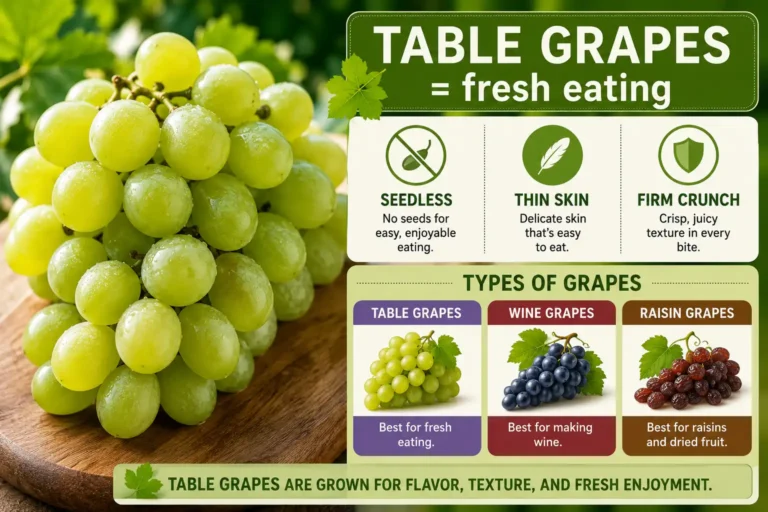
Most vineyards harvest grapes one of two ways: by hand or by machine. The right choice comes down to the crop and the scale. Small plantings and table grapes get hand-cut, one cluster at a time. Large wine and juice blocks usually run a machine down the rows.
Hand work is slow but precise. A picker sees each cluster and leaves the bad ones behind. A machine is fast and cheap, and it can clear acres in an hour. Both jobs start the same way, though. The fruit has to be fully ripe before anyone cuts or shakes a single berry.
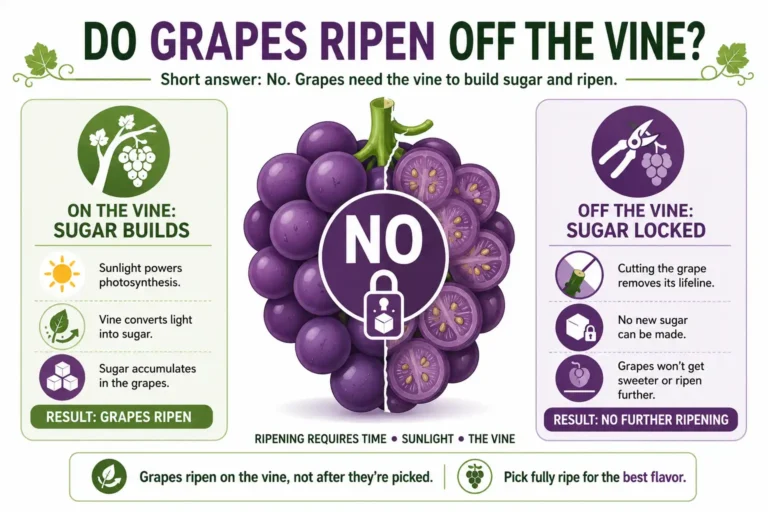
That last part matters more than folks expect. Grapes are non-climacteric, so they will not ripen off the vine once you cut them. Whatever sugar and flavor sit in the berry at harvest is what you keep. There is no fixing a green pick later.
Learn next: How to Grow Muscadine Grapes From Planting to Harvest
How Do You Know Grapes Are Ready to Pick?
Grapes are ready when sugar, taste, color, and seed color all line up, not when the calendar says so. Sugar is the main gauge. Growers measure it in degrees Brix.
Here are the rough targets to work from:
- Table grapes: about 16 to 20 Brix, sweet with a clean snap
- Juice grapes like Concord: around 16 Brix and up, with deep color and aroma
- Wine reds: roughly 22 to 26 Brix; wine whites: about 18 to 23 Brix
Numbers alone will not do it. Taste a few berries first. Ripe seeds turn brown and crunch, not green. The berry softens a touch and the color fills in. A refractometer made for grape harvest gives you a hard number to pair with your taste test.
Sampling starts a few weeks after veraison, the point when berries soften and color up. Check every week or two early, then more often as harvest closes in. For the full rundown on ripeness signs by variety, see this guide on when your grapes are ready to pick.
How Are Grapes Harvested by Hand?
Hand harvesting means a crew cuts each ripe cluster at the stem and sets it gently into a tote. It is the oldest method, and it is still the standard for table grapes and top wine fruit.
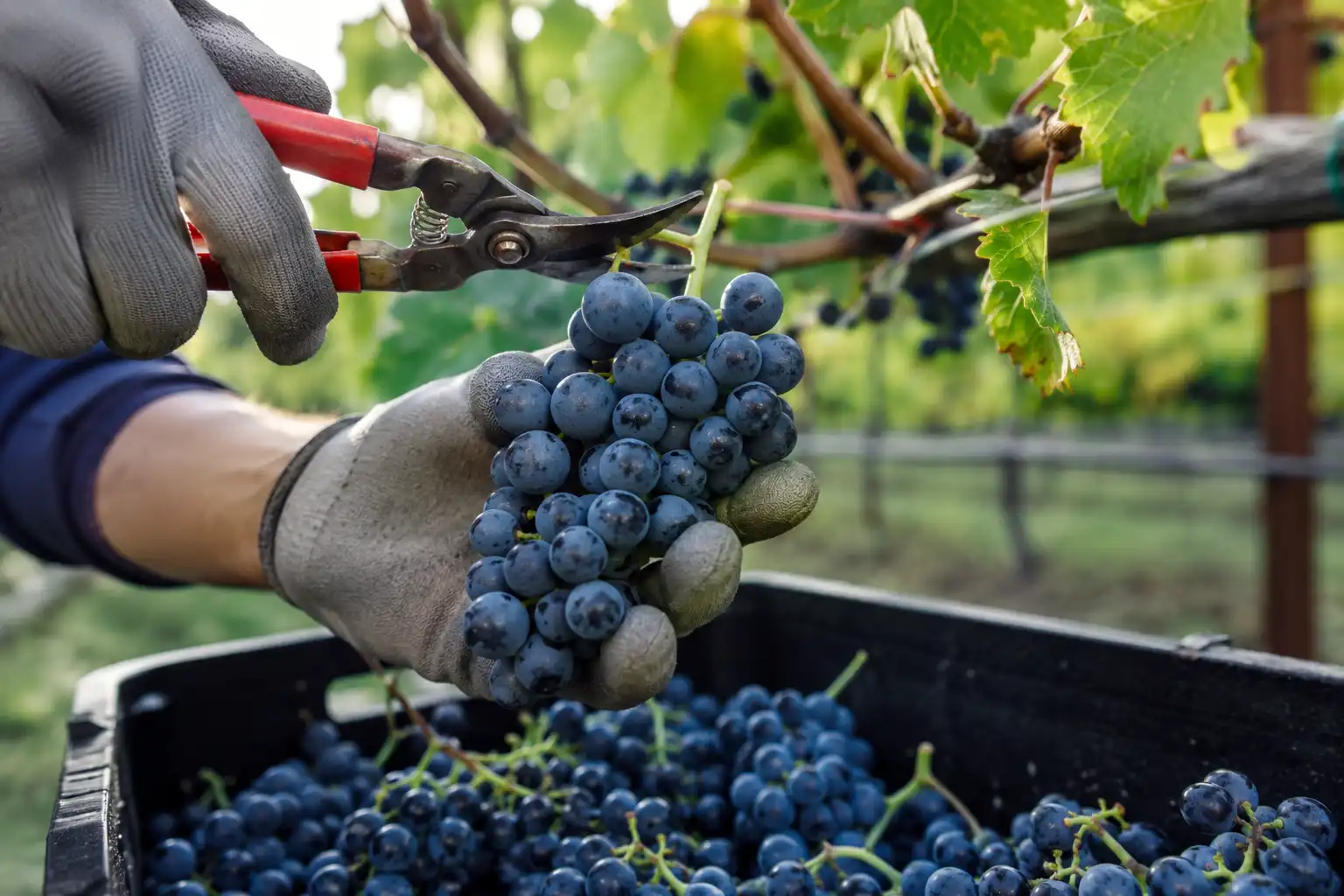
The tools are simple. Each picker carries sharp shears or a curved grape knife, plus a shallow lug or bucket. The picker grips the cluster, snips the stem, then pulls off any rotten or green berries on the spot.
Hand work has real upsides. Pickers sort as they go, so bad fruit stays in the field. Whole clusters stay intact, which matters for whole-cluster fermentation. Less trash, leaves, and stems end up in the bin. Old, gnarled vines take no beating from a machine.
The catch is cost. Hand crews run about three times more per ton than a machine. Good pickers are also hard to find at harvest. Still, for a backyard row or a few acres of table grapes, hands are the way to go.
Picking Grapes by Hand, Step by Step
- Confirm ripeness first. Check Brix, taste a few berries, and look for brown seeds.
- Start early, while the fruit is cool from the night.
- Grip the cluster in one hand and cut the stem clean with sharp shears.
- Pull off any moldy, split, or green berries before the cluster hits the lug.
- Lay clusters in a single shallow layer. Do not pack them deep, or the bottom crushes.
- Move full totes into the shade right away.
- Cool the fruit fast, then send it to the crush, cooler, or market.
How Does a Grape Harvesting Machine Work?
A grape harvesting machine straddles the whole row and shakes the vines with rows of flexible rods. The rods knock ripe berries loose onto a conveyor. Growers call it an over-the-row harvester.
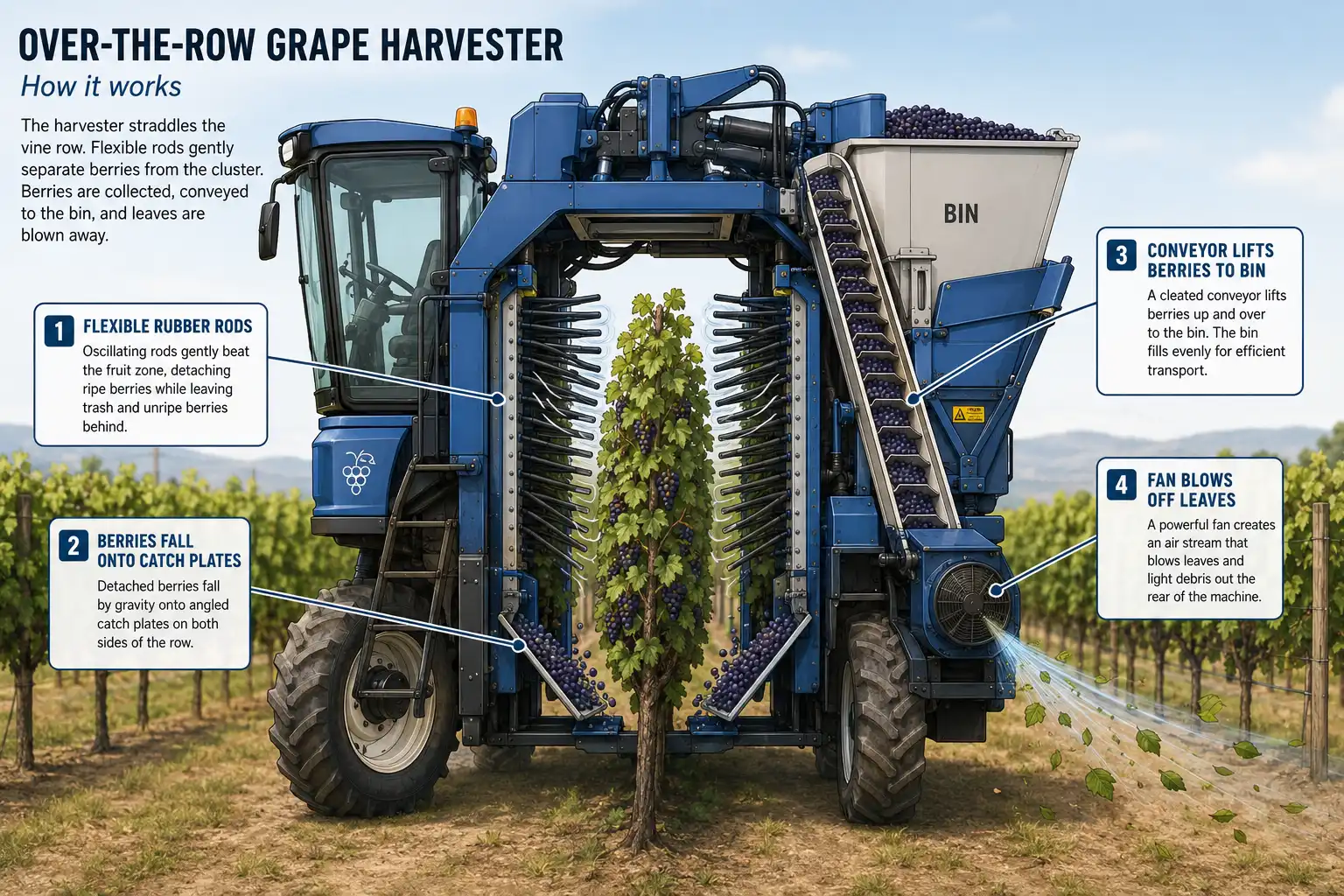
Here is the flow. The machine drives down the row on tall legs. Rubber or fiberglass rods beat the fruit zone from both sides at a set speed. Ripe berries drop onto catch plates below, then ride a conveyor up to a bin. Fans and a destemmer blow off leaves and shake out stems along the way. The full load dumps into a gondola pulled alongside.
A machine only brings back loose berries, not whole clusters. That is fine for wine and juice, where the fruit gets crushed anyway. The upsides are speed and cost. One machine clears many acres per hour, runs at night, and costs a fraction of a hand crew.
There are trade-offs, too. Machines pull in more leaves and stems, and they break some berries, which starts juice flowing early. They also struggle on steep ground and can rough up old vines. For flat wine and juice blocks, though, the math usually favors the machine.
What Is the Best Time of Day to Pick Grapes?
Early morning or night is the best time to pick grapes, because cool fruit holds its acid and resists oxidation. Warm grapes lose quality fast once they leave the vine.
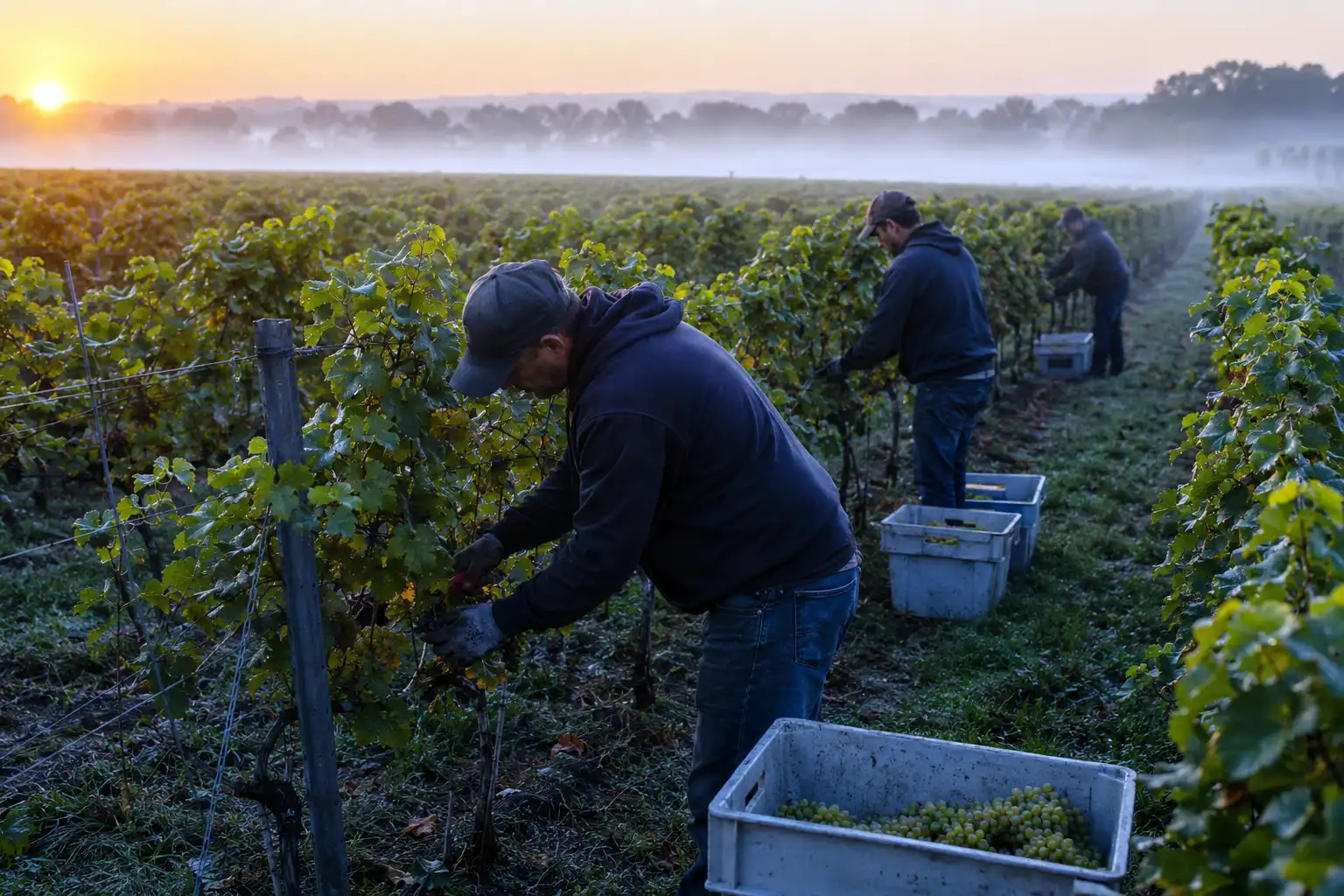
Field heat is the enemy. The hotter the fruit at pick, the quicker it breaks down in the bin. Cool berries also read about one Brix point lower than warm afternoon fruit. So morning samples keep you honest. In hot regions, machine crews often harvest wine grapes at night under lights for this exact reason.
Start at first light. The fruit should be cut before the day heats up. That way the grapes go into the cooler still cool from the night.
Hand Harvesting vs Machine Harvesting: Which Is Better?
Neither method is simply better. Hand harvesting wins on selection and gentle handling. Machine harvesting wins on speed and cost. So the right pick depends on your crop, your ground, and your budget.
Here is how they stack up:
| Factor | Hand harvest | Machine harvest |
|---|---|---|
| Speed | Slow | Very fast |
| Cost per ton | High (about 3x machine) | Low |
| Fruit selection | Picker sorts each cluster | Little to none |
| Clusters | Stay whole | Loose berries only |
| Trash (leaves, stems) | Very little | More |
| Best for | Table grapes, top wine, small plots | Wine and juice, large flat blocks |
| Slopes and old vines | Handles both | Struggles |
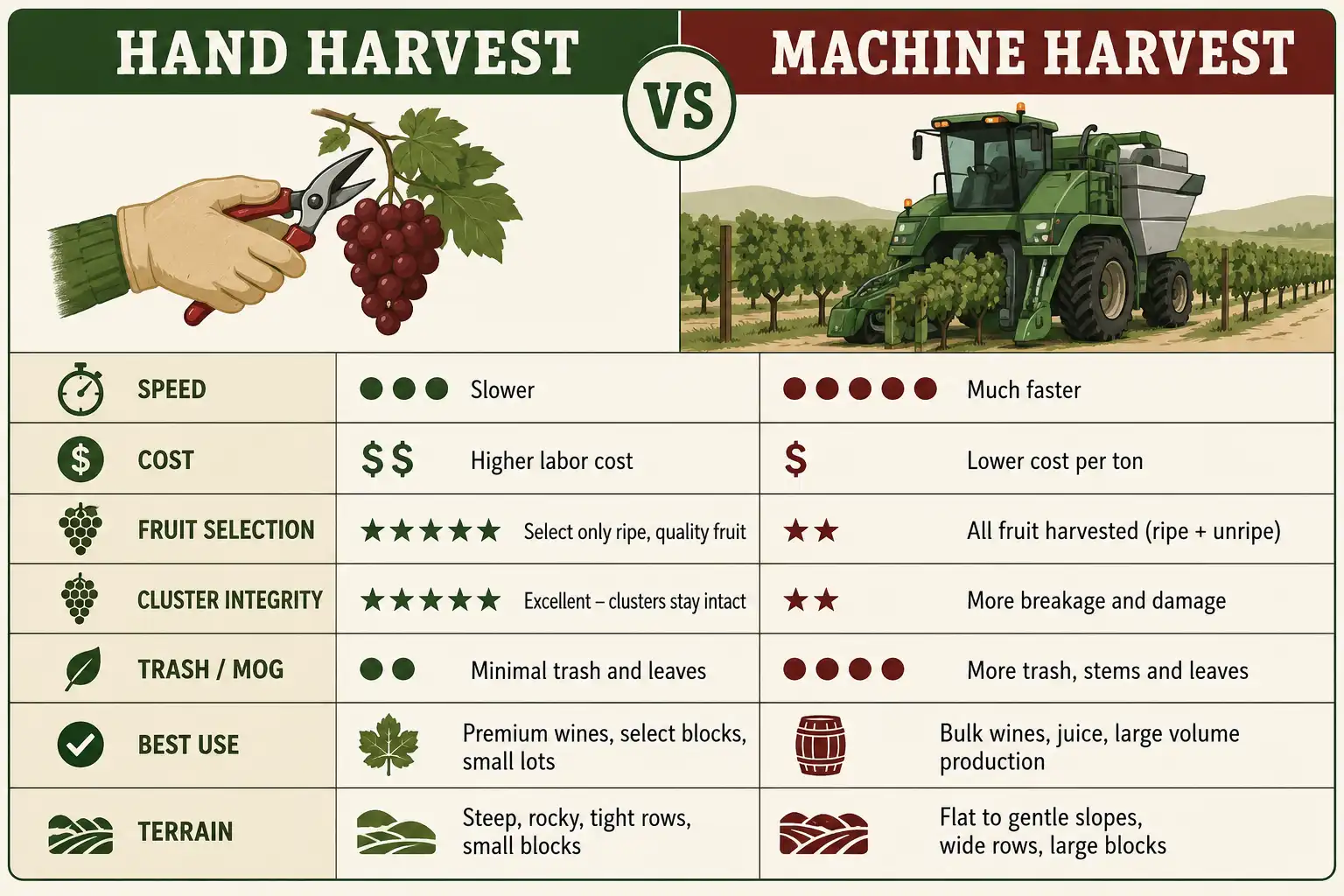
For most backyard growers and small table-grape plots, hand picking is the clear call. For a large wine or juice operation on flat Great Plains ground, a machine earns its keep.
What Do You Do With Grapes Right After Harvest?
Cool the grapes fast to pull out field heat, then move them to the crush, cooler, or market within hours. Speed here decides how long the fruit lasts.
The rule of thumb is blunt. Every hour picked fruit sits warm costs about a day of shelf life. Table grapes store best right around 30 to 32 degrees F at 90 to 95 percent humidity. Commercial packers pre-cool within a few hours. Many also add sulfur dioxide to hold off gray mold, the Botrytis rot that ruins stored fruit. The right post-harvest care is what carries table grapes to market weeks later.
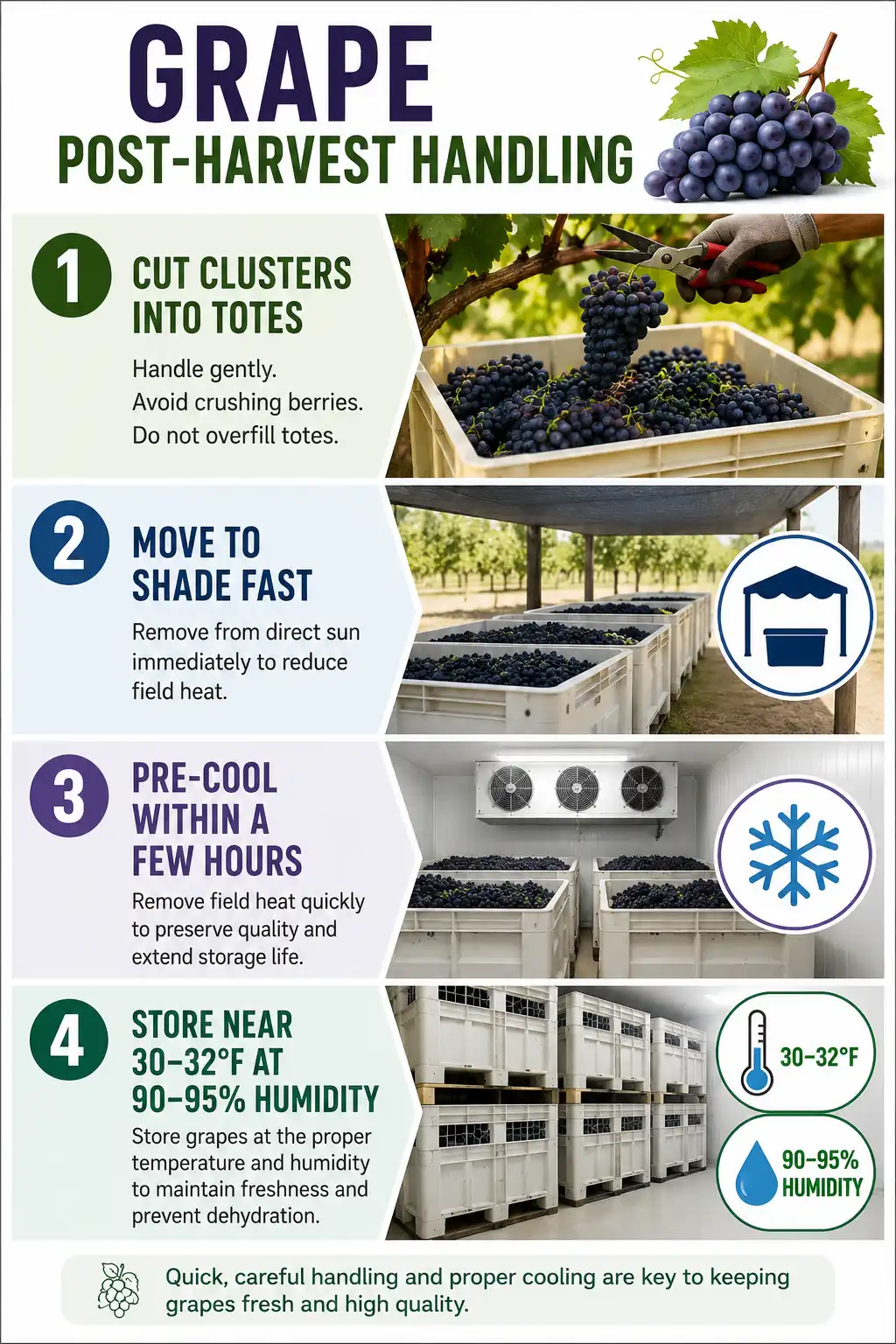
Wine grapes head straight to the crush pad. Juice grapes get pressed. If you grow more than you can eat, a Concord haul turns into juice, jelly, or raisins with little trouble. Here is what to do with a Concord crop once it is off the vine.
How Do You Protect Grapes in the Last Weeks Before Harvest?
Keep birds, wasps, and rot off the clusters in the final stretch. Otherwise you can lose the crop days before you pick. Ripe, sweet fruit draws every pest around.
Netting is the surest fix. Drape it over the rows once the fruit colors up, and the birds move on. Stay on top of disease, too. A clean canopy and good airflow slow gray mold, and timely spraying protects the fruit through ripening. full method for keeping birds off your grapes lays out the netting and scare options that work.
Bottom Lines on Grape harvesting methods
Harvest comes down to three things: pick ripe, pick cool, and cool fast. Hand-cutting at first light is the recommended approach. Sorting should happen along the way, with fruit moved into the cooler before noon. A big wine or juice block runs a machine instead, and that is the right move for the acres. Either way, the fruit will not get better after the cut. So ripe and cool wins every time.