Skip to content
crop farming
  • About
  • GuidesExpand
    • Crop Guides

      Grains & Cereals
      Corn
      Oats
      Rice
      Sorghum
      Wheat
      Root & Tuber Crops
      Carrots
      Potatoes
      Sugar Beets
      Vine Crops
      Grapes
      Legumes
      Peanuts
      Soybeans
      Sugar Crops
      Sugarcane
      Vegetables
      Lettuce
      Onions
      Tomatoes
  • Practices
  • Tools
  • Contact
Search
crop farming

Vegetables

Home » Crop Guides » Vegetables » Page 2
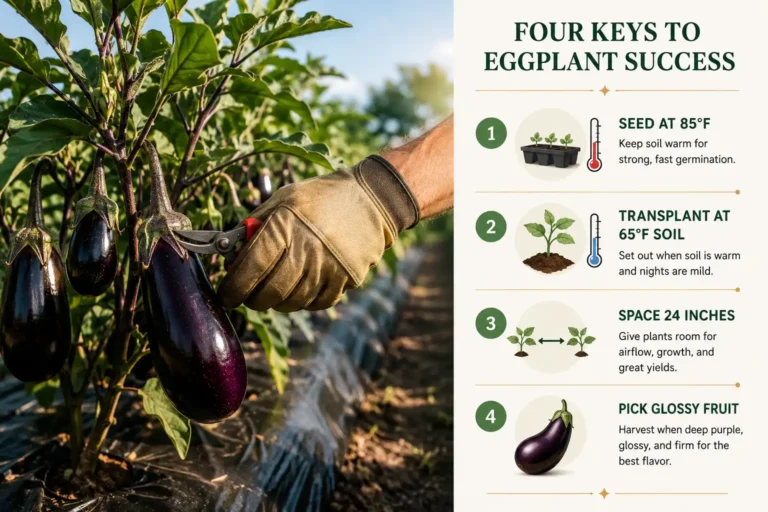
  • Glossy purple eggplants ripening on black plastic mulch beside a panel showing 85°F seed heat, 65°F transplant soil, 24 inch spacing, and glossy fruit harvest.

    How to Grow Eggplant: Soil Temps, Spacing, and Harvest Timing

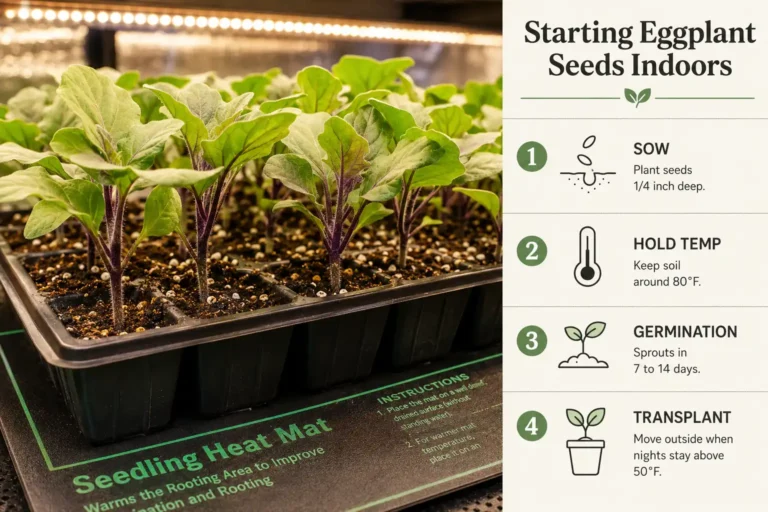
  • Eggplant seedlings on a warm heat mat beside labeled steps showing how to grow eggplant from seed at a quarter inch deep in 80 degree mix

    How to Grow Eggplant From Seed: Timing, Heat, and Transplants

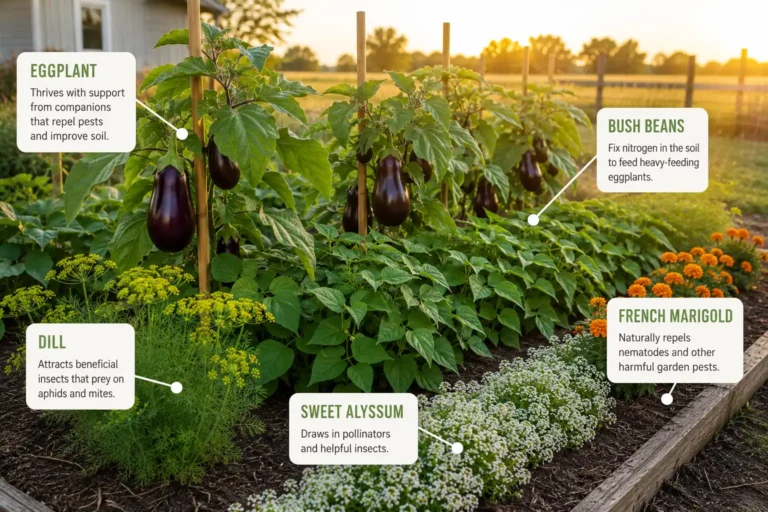
  • Eggplant row interplanted with bush beans, dill, sweet alyssum, and marigolds, with labels showing the job each companion does in the bed

    What to Plant With Eggplant: Spacing, Timing, and Traps

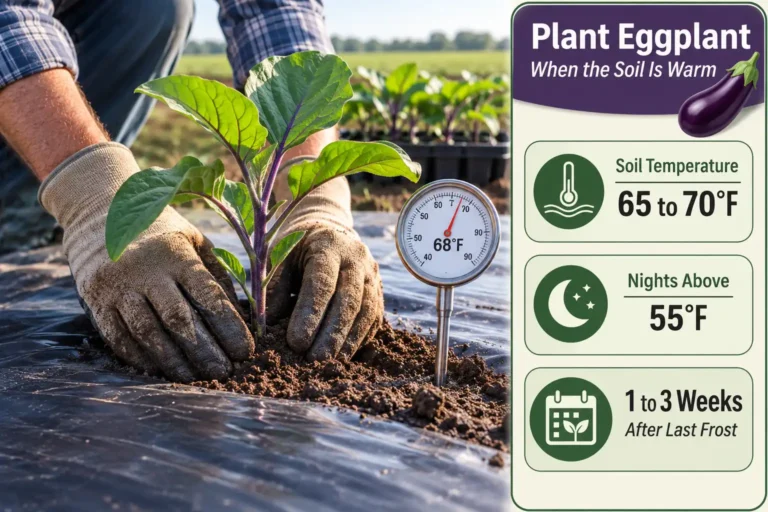
  • Eggplant goes in 1 to 3 weeks after last frost, once soil holds 65 to 70 degrees and nights stay above 55 degrees

    When to Plant Eggplant: Soil Temps, Frost Dates, and Zone Windows

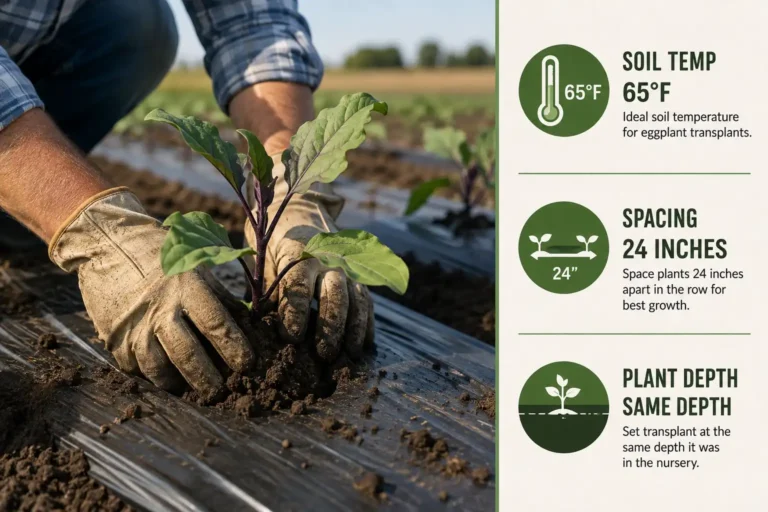
  • Eggplant transplant set into black plastic mulch at 65 degree soil temperature, 24 inch spacing, and the same depth it grew in the pot

    How to Plant Eggplant: Soil Temperature, Spacing, and Depth

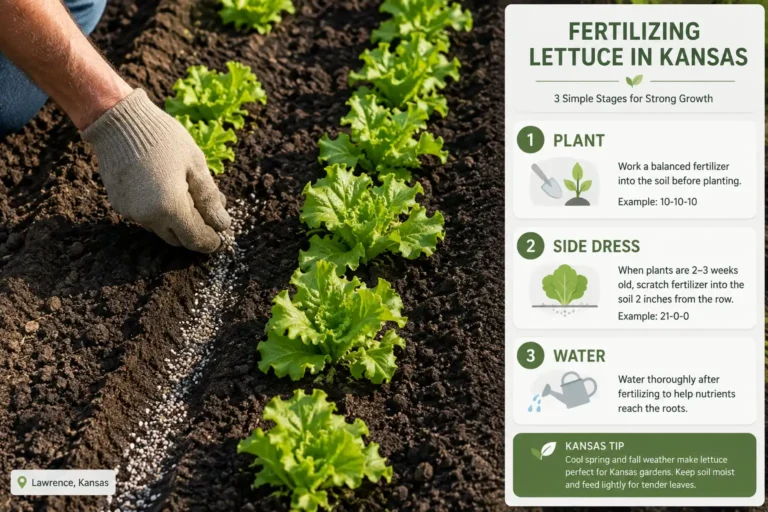
  • Balanced granular fertilizer raked into a lettuce bed before seeding, with panels marking a nitrogen sidedress at 3 to 4 inches of growth and light repeat feeding every three weeks

    How to Fertilize Lettuce: Rates, Timing, and Placement

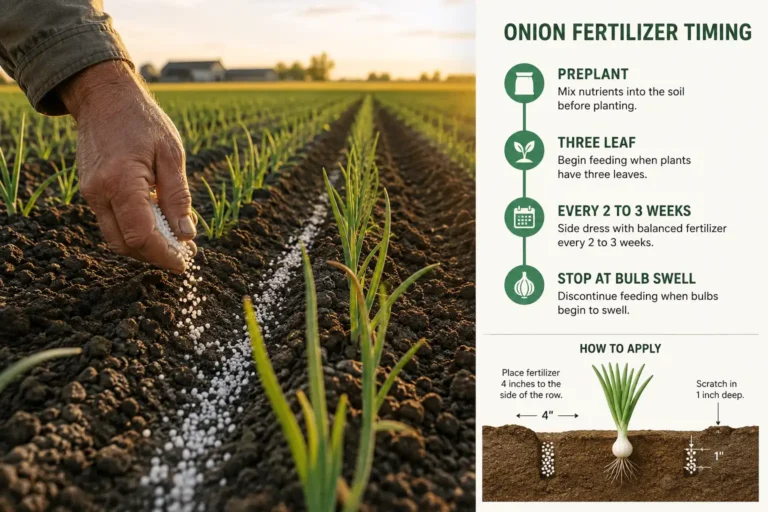
  • Granular nitrogen banded four inches beside an onion row with a season feeding timeline

    How to Fertilize Onions: Timing, Placement, and Rates

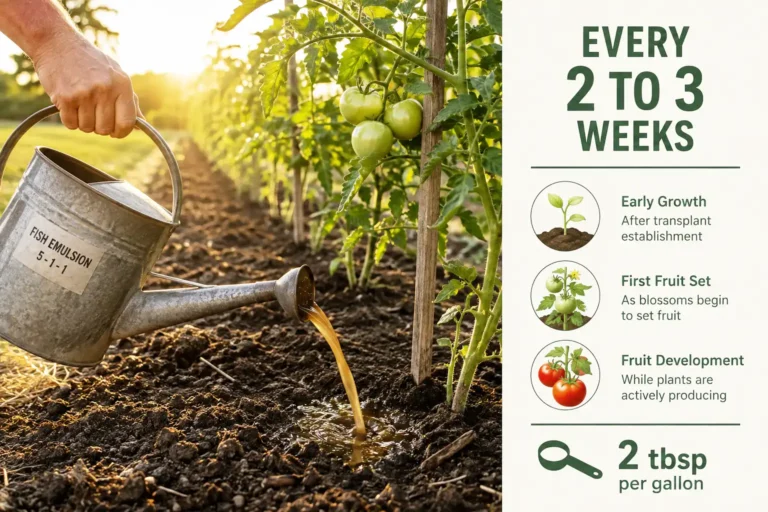
  • Fish emulsion watered into soil at a tomato plant base next to a panel showing a two to three week interval at two tablespoons per gallon.

    How Often to Use Fish Fertilizer on Tomatoes (2026 Schedule)

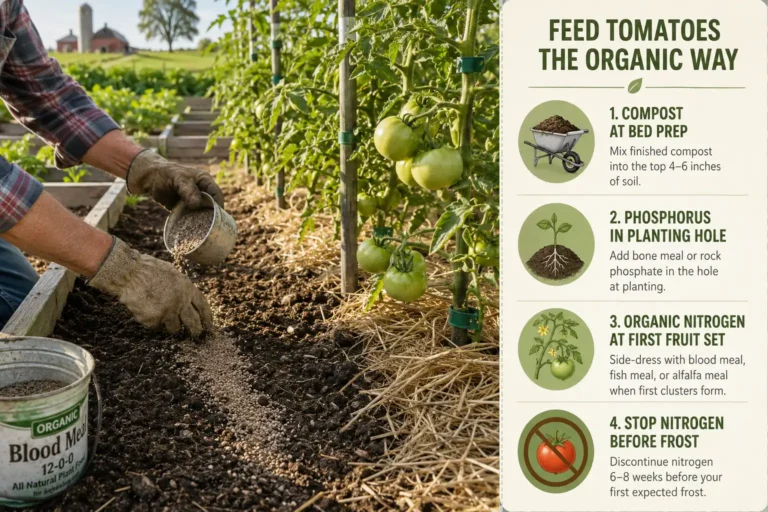
  • Compost worked into a tomato bed plus organic meal side-dressed beside the row, with the four stage natural feeding sequence from bed prep to the final nitrogen cutoff

    How to Fertilize Tomato Plants Naturally: A Full Season Plan

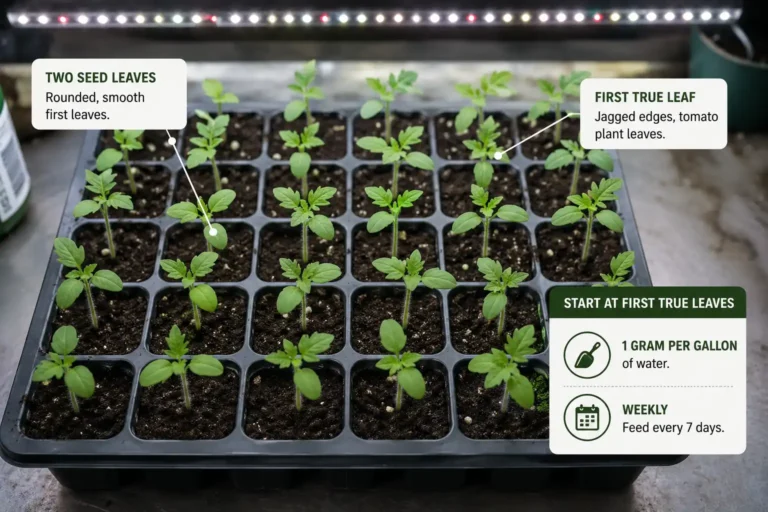
  • Tomato seedlings take their first dilute feeding once the first true leaves open, at roughly one gram of balanced soluble fertilizer per gallon, repeated weekly

    How to Fertilize Tomato Seedlings: Timing, Rates, and Strength

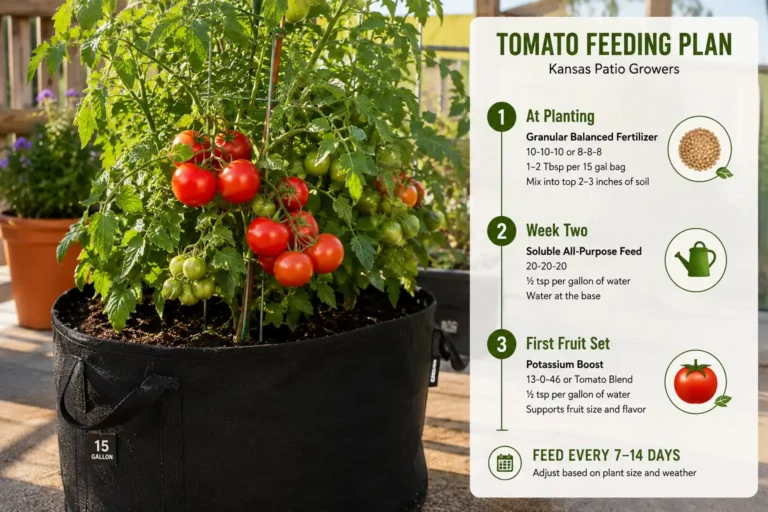
  • Container tomato fed with coated granules at planting, soluble fertilizer from week two, and a high potassium blend at first fruit set, repeating every 7 to 14 days

    How to Fertilize Tomatoes in Pots and Grow Bags

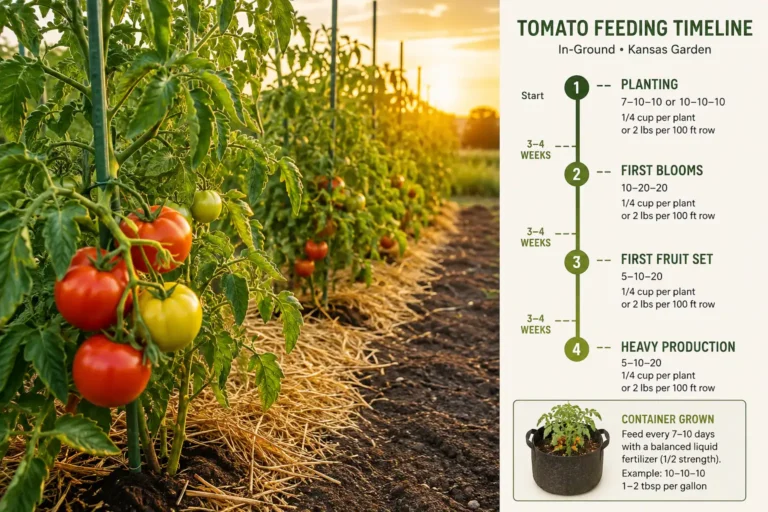
  • Tomatoes take a feeding every three to four weeks in garden soil and every one to two weeks in containers, shown on a labeled timeline from transplant to final harvest

    How Often to Fertilize Tomatoes: A Full Season Feeding Schedule

Page navigation

Previous PagePrevious 1 2 3 4 … 15 Next PageNext
Crop Farming

CropFarming.org

Grow · Harvest · Learn
Practical crop guides, planting and fertility recommendations, and equipment know-how, compiled from university extension research and USDA data.

Crop Guides

Grains & Cereals
Legumes
Root & Tuber Crops
Sugar Crops
Vegetables
Vine Crops

Crop Practices

Planting & Seeding
Soil & Fertility
Irrigation & Water
Pest & Disease
Weed Control
Harvest & Storage

Support

FAQs & Help
About Us
Contact
HTML Sitemap
XML Sitemap
Popular crop guides:
Corn Wheat Rice Oats Sorghum Soybeans Peanuts Potatoes Carrots Sugar Beets Sugarcane Tomatoes Onions Lettuce Grapes
© 2026 Crop Farming. All Rights Reserved. CropFarming.org participates in the Amazon Services LLC Associates Program. If you buy through our Amazon links, we may earn a small commission at no extra cost to you.
Policies: Affiliate Disclosure | Disclaimer | Review Policy | Privacy Policy | Cookie Policy | Newsletter Policy | Terms of Use
  • Home
  • About
  • Guides
  • Practices
  • Tools
  • Contact