How to Get Rid of Aphids on Lettuce Fast and Naturally
Aphids on lettuce show up fast, cluster on tender leaves, and turn a clean crop into a sticky mess. Learning how to get rid of aphids on lettuce keeps your heads marketable and your spring and fall plantings healthy.
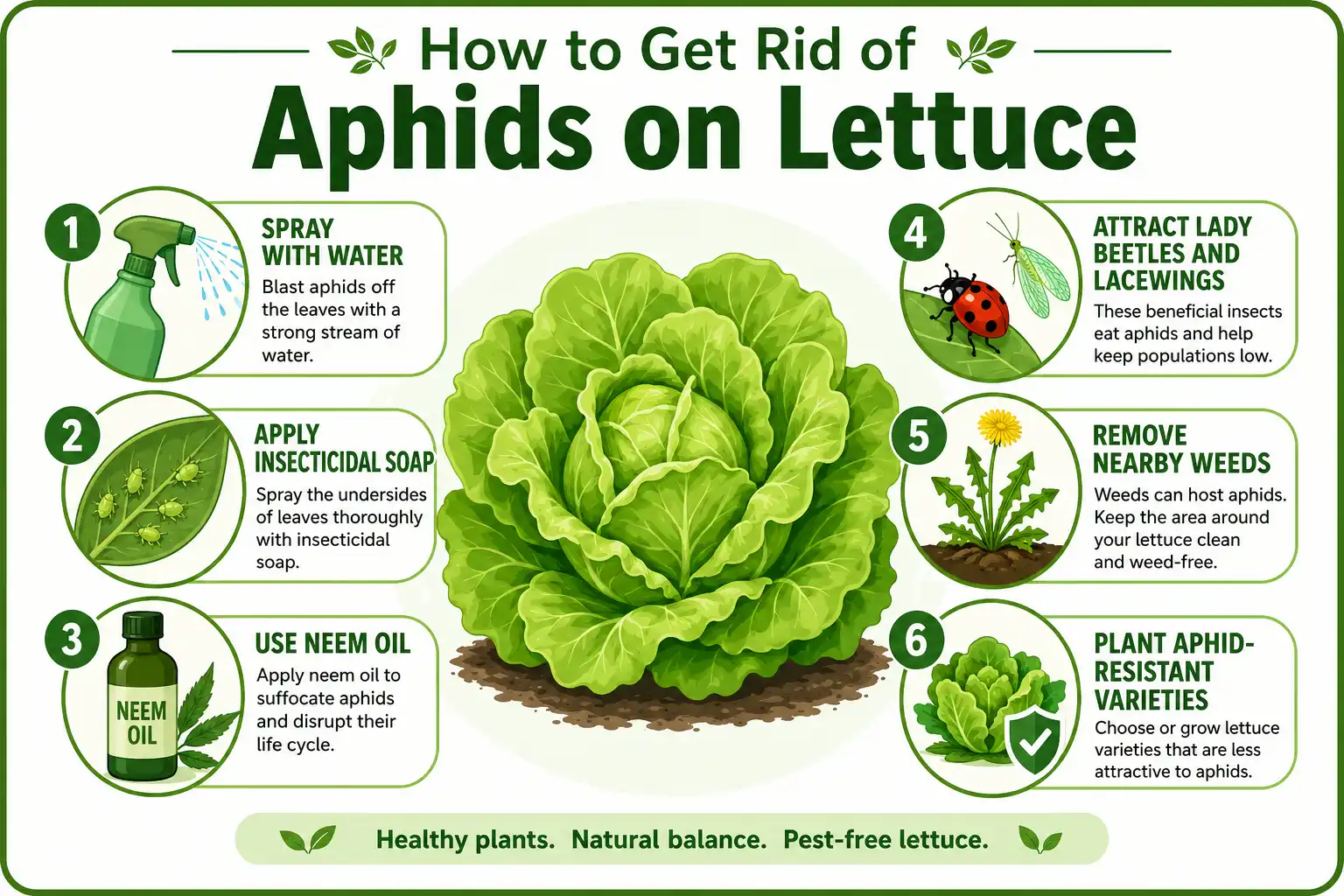
To get rid of aphids on lettuce, knock them off with a strong spray of water, then treat leaf undersides with insecticidal soap or neem oil. Repeat every few days. Pull nearby weeds and invite lady beetles.
What Do Aphids on Lettuce Look Like?
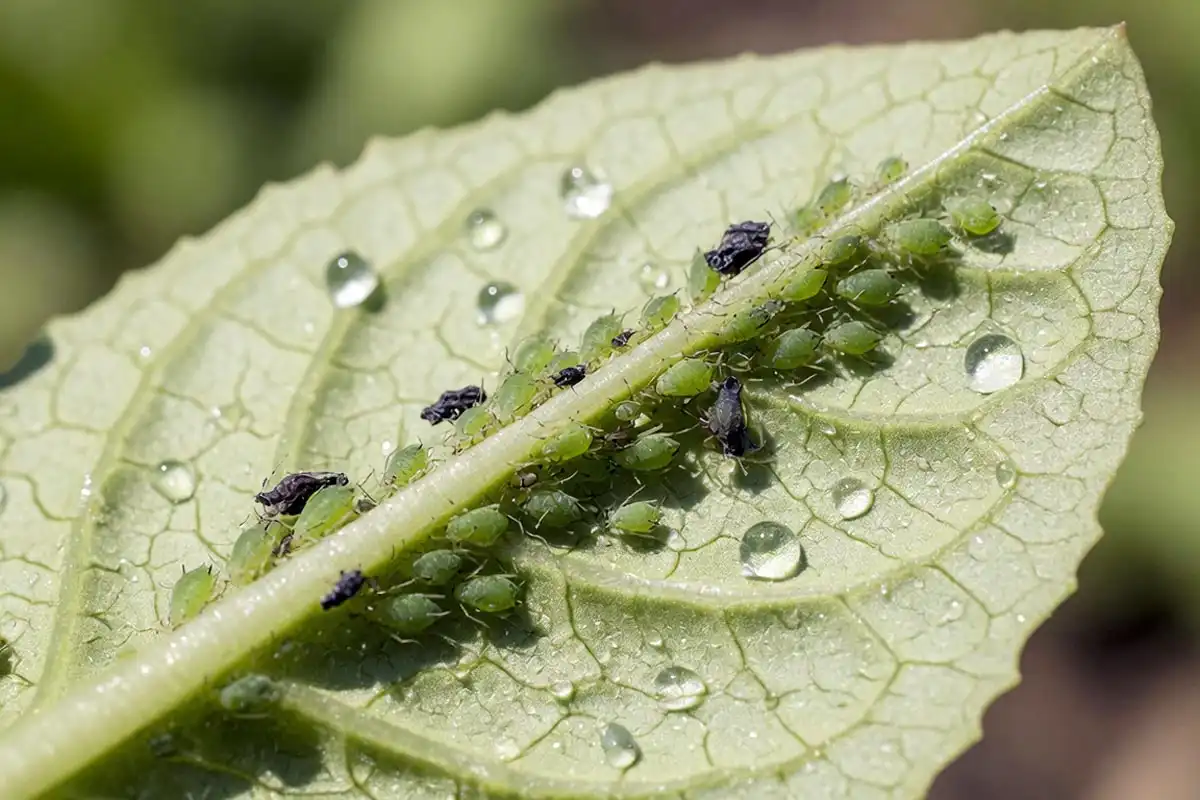
Aphids on lettuce are tiny, soft, pear-shaped insects that gather on stems and the undersides of leaves. Most run about 1/16 to 1/8 inch long. Colors range from green to yellow, pink, and gray.
A few species cause the trouble in lettuce. The green peach aphid (Myzus persicae) is pale green to yellowish and forms tight colonies on leaves. The lettuce aphid (Nasonovia ribisnigri), also called the currant-lettuce aphid, spreads through the plant instead of clustering, and it feeds deep in the heart of the head. The foxglove aphid (Aulacorthum solani) is light green with dark spots at the base of its cornicles. Below ground, the lettuce root aphid (Pemphigus bursarius) attacks roots and makes plants wilt.
You will often spot the damage before the bug. Look for curled or yellowing leaves, stunted seedlings, and a sticky film called honeydew. Black sooty mold then grows on that honeydew. When scouting, leaves should be flipped over and the center of any head that looks off checked.
Read next: How Much Does a Head of Lettuce Weigh? (Oz, Lb, and Grams by Type)
Why Are Aphids a Problem on Lettuce?
Aphids hurt lettuce three ways: they drain sap, they coat leaves in sticky honeydew, and some spread plant viruses. Each one cuts into quality and yield.
Sap feeding stunts plants, curls leaves, and yellows them. Heavy feeding can kill young seedlings outright. The honeydew they leave behind feeds sooty mold, and that grime alone makes leaves unsellable. The green peach aphid also carries viruses, including beet western yellows and alfalfa mosaic, which sit alongside many other crop diseases that move from plant to plant. The lettuce aphid does not spread much virus, but it ruins heads a different way. Because it feeds in the heart, an infested head is hard to clean and ends up unmarketable. That is why early scouting pays off. Catch them small, and you avoid the worst of it.
How Do You Get Rid of Aphids on Lettuce Naturally?
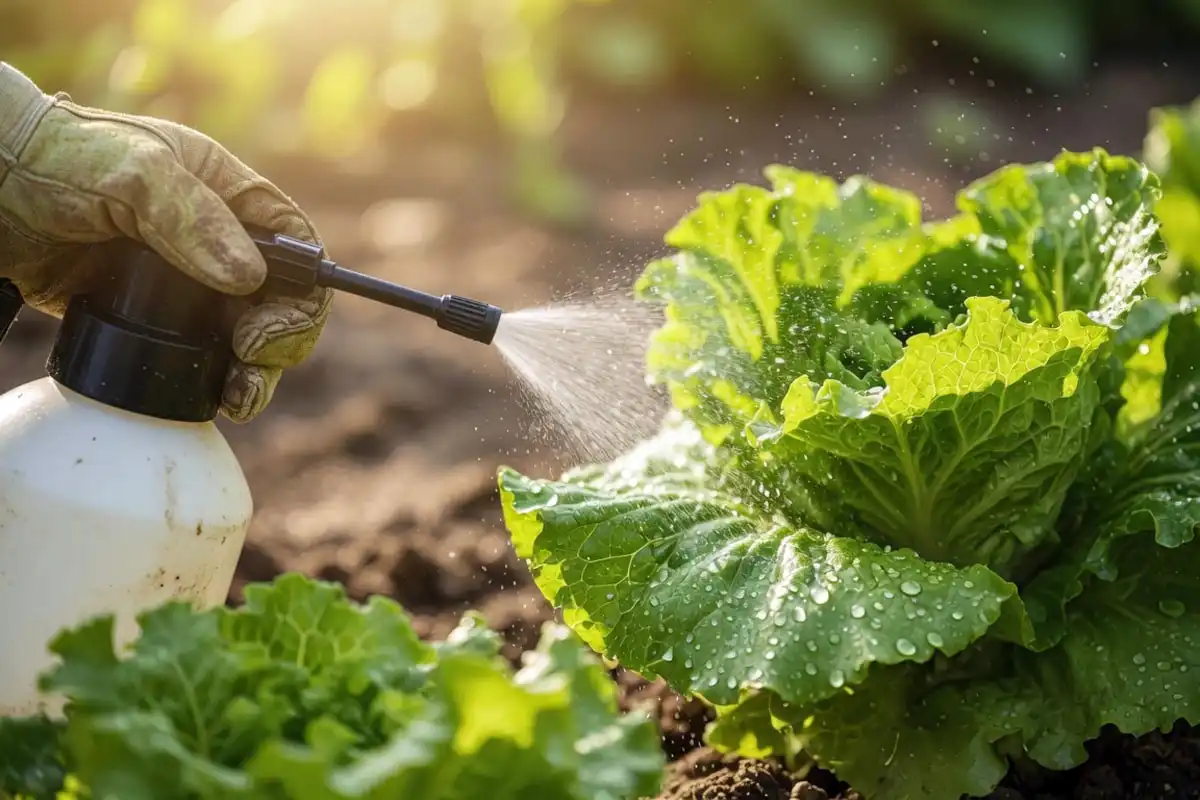
Start with the least toxic method and work up. A strong spray of water removes most aphids, and insecticidal soap or neem oil handles the rest. These steps fit the same natural pest control approach it helps to use across the farm.
Spray Them Off With Water
Blast the plants with a firm stream from the hose, hitting the undersides where aphids hide. Most knocked-off aphids cannot climb back up. The spray also rinses away honeydew and sooty mold. Do it early in the day so the leaves dry fast in the sun, which keeps fungal problems down. Repeat every couple of days until the numbers drop.
Use Insecticidal Soap
Insecticidal soap kills soft-bodied aphids by breaking down their outer coating and drying them out. Mix a 1 to 2 percent solution (about 2.5 to 5 tablespoons per gallon), and always follow the label. Coat both the tops and undersides of the leaves, since soap only works on contact and leaves no residue. Spray in the early morning or evening, never above 90°F, and skip plants that are already heat-stressed. Soap is gentle on most beneficial insects and safe right up to harvest. Repeat in about a week if aphids return. Stick with a labeled product, because plain dish soap can burn leaves and is not made for this.
Try Neem Oil
Neem oil contains azadirachtin, which makes aphids stop feeding and stops them from reproducing. It works slower than soap, so give it time. Spray thorough coverage on the undersides, and reapply per the label. Horticultural oil does a similar job by smothering the insects. Both are solid organic choices when soap alone is not enough.
Hand-Remove the Worst Spots
Pick or prune off badly infested outer leaves and toss them in the trash, not the compost pile. For smaller spots, wipe the aphids off with a soft cloth or knock them into a bucket of soapy water. On a few seedlings, this hand work clears a problem in minutes.
What Eats Aphids on Lettuce?
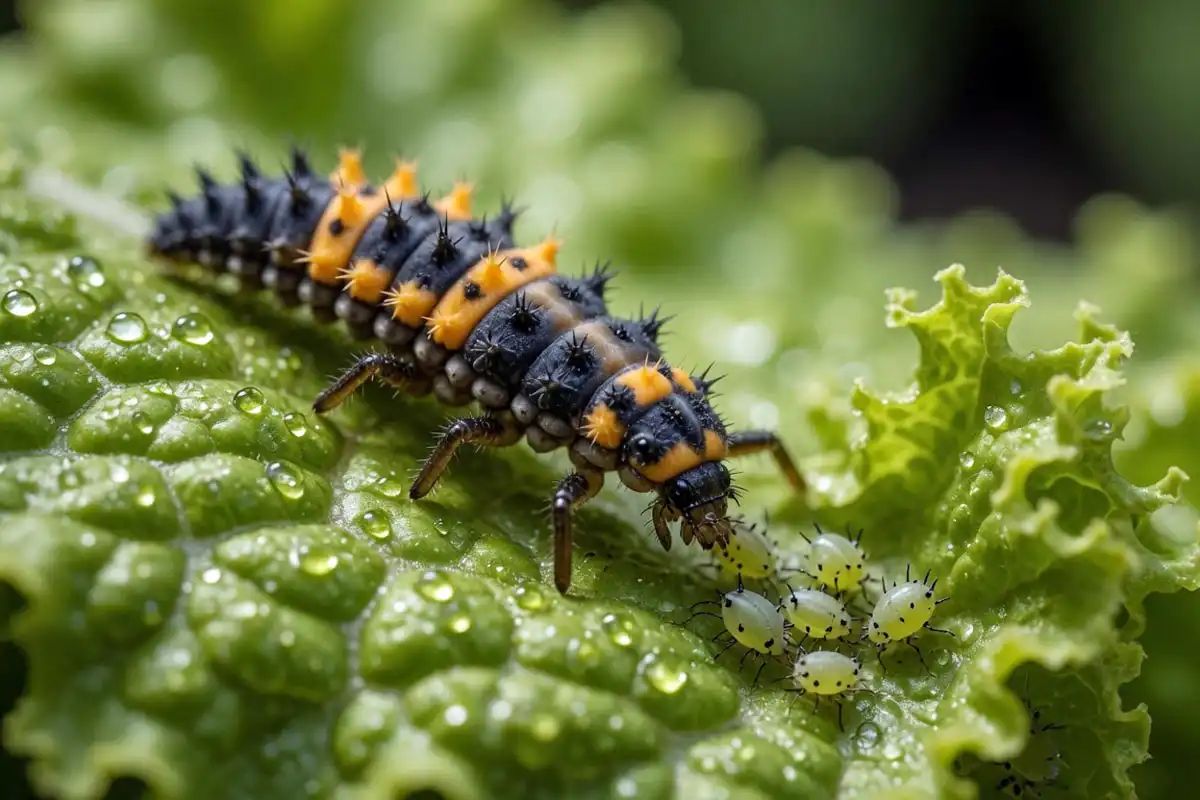
Beneficial insects are your free labor. Lady beetles, green lacewings, syrphid (hoverfly) larvae, and parasitic wasps all feed on aphids. Together they can hold a light infestation in check.
Lady beetle larvae eat far more aphids than the adults do, so leave those alligator-shaped larvae alone. Green lacewing larvae, nicknamed aphid lions, are hungry hunters too. Syrphid fly larvae matter most against the deep-feeding lettuce aphid, and you cannot buy them. They migrate in from nearby flowers, so plant some. Parasitic wasps such as Lysiphlebus testaceipes leave behind crusty, mummified aphids, a good sign they are working.
Protect this crew and it grows. Avoid broad-spectrum sprays that wipe out the good bugs. Control ants, because ants farm aphids for honeydew and chase off predators. Plant sweet alyssum, dill, yarrow, and cilantro to feed adult predators with nectar. Still, UC IPM notes that natural enemies rarely clear a heavy spring or fall outbreak on their own. So pair them with the water and soap treatments above.
How Do You Keep Aphids Off Lettuce?
Prevention beats treatment every time. Clean up weeds, cover young plants, go easy on nitrogen, and plant resistant varieties. These habits are the backbone of an integrated pest management plan.
Start with sanitation. Pull weeds like sowthistle and wild mustard that harbor aphids near the bed, and clear crop debris and culls after harvest so aphids have nowhere to wait. Next, protect young plants. Floating row cover over seedlings blocks winged aphids, and reflective or aluminum mulch confuses them so they land elsewhere. Watch your fertilizer too. Excess nitrogen pushes the soft, lush growth aphids love, so use a slow-release source instead.
Resistant seed is your strongest long-term tool. The Nr resistance gene controls the lettuce aphid biotype Nr:0, and newer U.S. varieties now add protection against the tougher Nr:1 biotype. Rijk Zwaan’s Salanova line “Hirst RZ” carries resistance to both biotypes, and more aphid-resistant iceberg types are reaching the market for 2026. Check your seed catalog for “Nasonovia resistance.” Companion planting helps as well, since planting onions near lettuce, along with garlic and chives, helps repel aphids. Above all, scout often, because aphid numbers explode in warm weather.
Can You Spray Lettuce With Insecticide for Aphids?
Yes, but save stronger insecticides for heavy infestations that soap and neem cannot handle. For most home and market beds, the gentler tools do the work.
Spray early, before aphids build to high numbers, because young plants are easiest to clear. Keep in mind the green peach aphid has developed resistance to many products, so rotating chemistries matters if you go that route. Timing is everything on lettuce. Once a head closes, sprays cannot reach the lettuce aphid feeding inside the heart, so treatment has to happen while plants are young. Systemic products like imidacloprid are effective but very toxic to pollinators, so avoid blooming plants and use them only as a last resort. Most broad sprays also kill the beneficial insects, which can make the problem worse. Reading the label and respecting the preharvest interval keeps your crop safe to eat. If you want the full rundown on when to spray pesticidesour guide covers that decision in detail elsewhere.
Can You Eat Lettuce That Had Aphids?
Yes, aphids are harmless to eat, but nobody wants them in a salad. A good wash takes care of leaf lettuce.
Separate the leaves and soak them in a bowl of cold water for several minutes. Some folks add a splash of vinegar or a spoon of salt to loosen the bugs. Swish the leaves, rinse under running water, then spin or pat them dry. Dead aphids and honeydew rinse off the outer leaves easily. The heart-feeding lettuce aphid is the tough case, so heads with a heavy interior infestation are better composted than cleaned. After washing, store harvested lettuce properly so it stays crisp.
What to Do in the Lettuce
Twice-weekly scouting, flipping leaves and checking the heart of every head, is the recommended routine. At the first sign of aphids, a water blast helps, followed by insecticidal soap on the undersides. Leave the lady beetles and lacewings alone to do their part. For next season, keep the bed weed-free, ease off the nitrogen, and order aphid-resistant seed. Catch them early and aphids stay a minor nuisance, not a lost crop.