What Is Threshing Wheat? How Grain Comes Loose From the Head
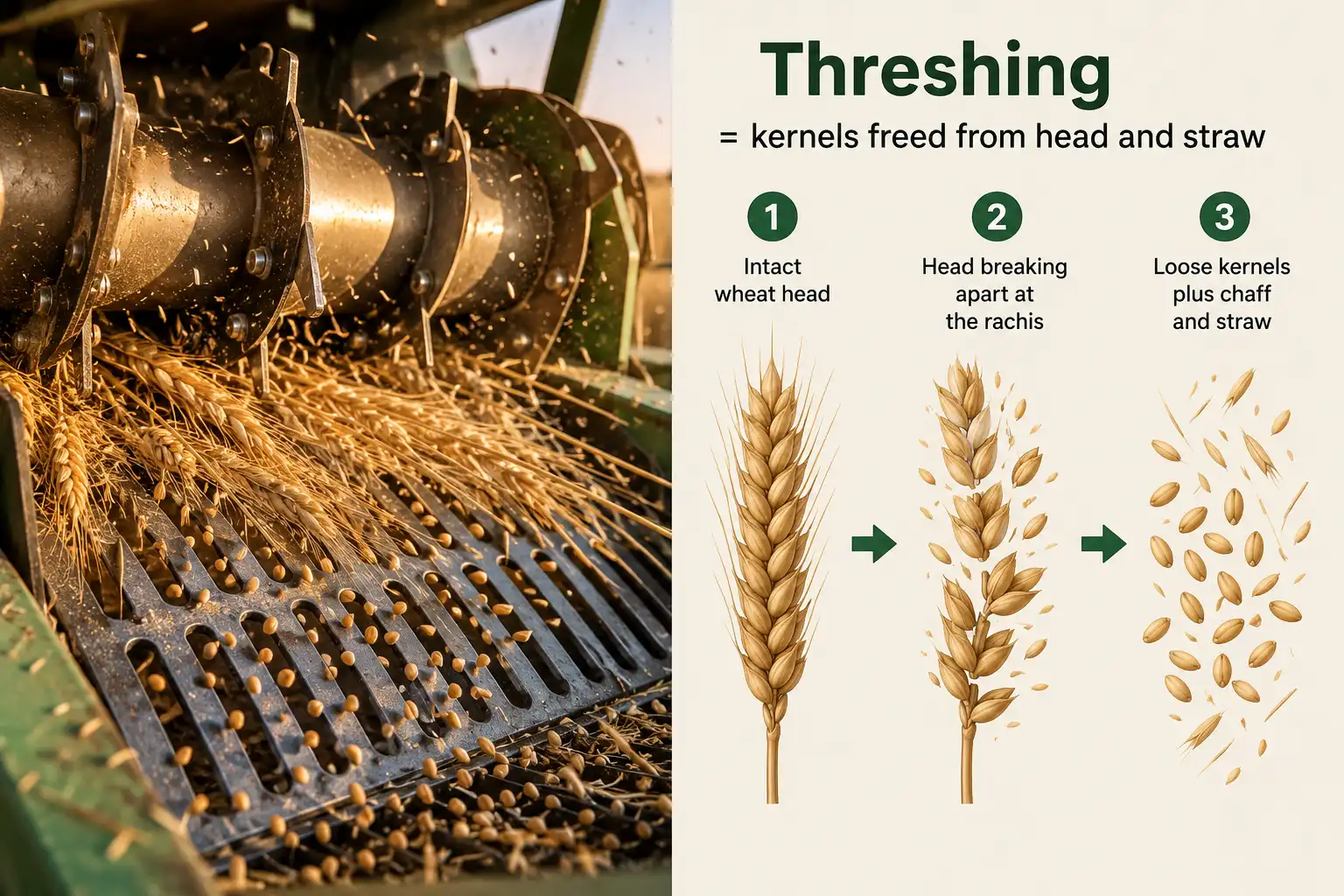
Threshing wheat is the step that turns ripe heads into clean grain in the tank. Most folks watch the combine cut the crop and stop there. Cutting is only the first job. The real separation happens inside the machine, and it decides your grain quality.
Threshing wheat means knocking the kernels loose from the head and straw. A combine does it by rubbing the crop between a spinning cylinder or rotor and a fixed concave. Speed and clearance control the result.
What Is Threshing Wheat?
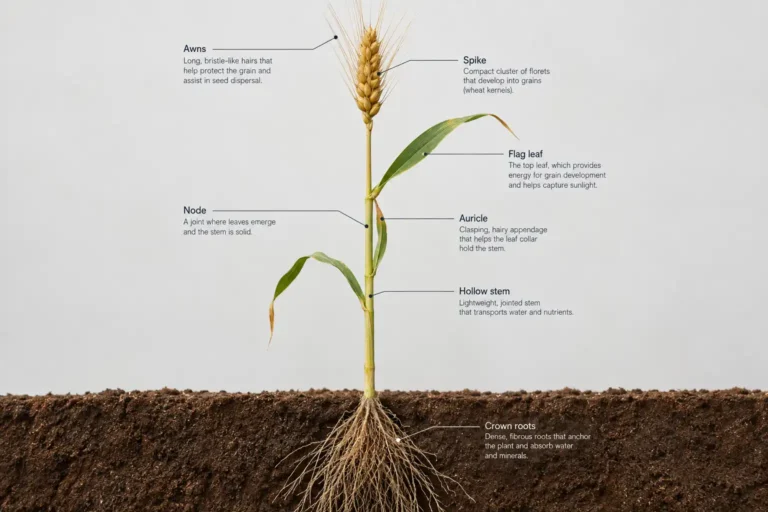
Threshing wheat is the mechanical work of freeing each kernel from the head that holds it. On a wheat plant, kernels sit in small spikelets attached to a central stem called the rachis. Thin husks called glumes wrap each kernel. Threshing breaks that grip through rubbing, impact, and pressure.
That is all it does. Threshing does not clean the grain, and it does not cut the plant. Those are separate jobs.
Two forces do the work inside a combine. The first is impact from the spinning cylinder or rotor bars striking the heads. The second is rubbing. The crop squeezes through a tight gap between the rotor and the curved, slotted concave below it. Kernels come loose, then fall through the concave slots.
Good threshing removes every kernel without cracking grain or shattering straw. Push too hard and you break kernels. Back off too far and you leave grain in the head. Every setting choice at harvest sits somewhere between those two errors.
Learn more: Wheat Harvesting Time in Kansas
Threshing, Reaping, and Winnowing Do Different Jobs
These three words describe three separate steps, and people mix them up constantly. K-State Research and Extension breaks a combine into five functions, and threshing is only one of them.
| Job | What it does | Where it happens on a combine |
|---|---|---|
| Reaping | Cuts the standing stalks | Header and cutterbar |
| Threshing | Frees kernels from heads and straw | Cylinder or rotor against the concave |
| Separating | Shakes remaining loose grain out of the straw | Straw walkers or rotor cage |
| Winnowing (cleaning) | Blows off chaff and light trash | Chaffer, sieve, and cleaning fan |
| Handling | Moves clean grain to the tank | Clean grain elevator and auger |
Before combines, farmers did each step on a different day with a different tool. A combine simply does all five in one pass, which is where the name comes from.
The order matters for troubleshooting. If the header feeds the machine unevenly, threshing suffers no matter how you set the rotor. So get the cut right first, and that starts with timing the wheat cut correctly.
What Happens Inside the Wheat Head When You Thresh It
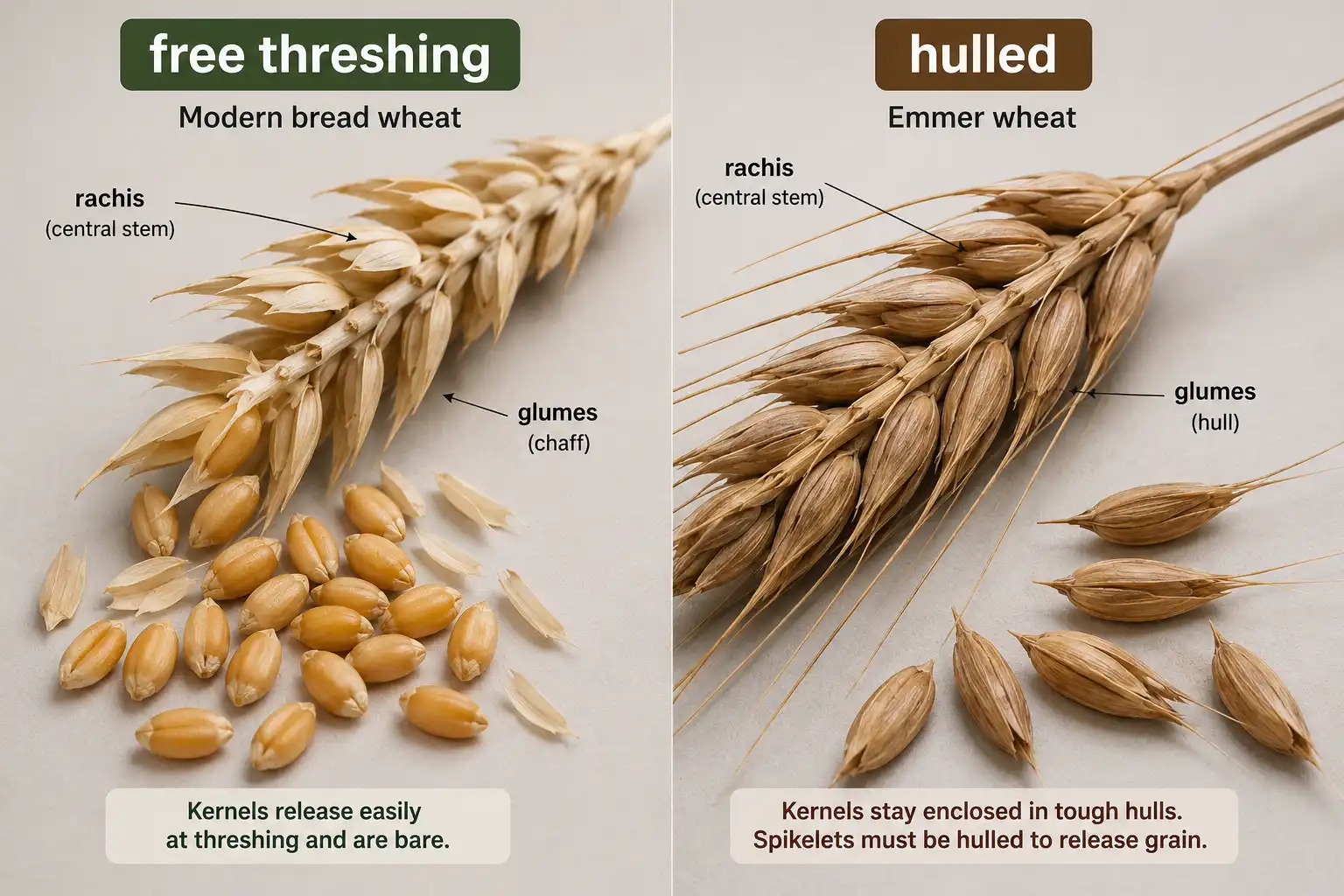
The rachis fractures and the glumes release the kernel. Modern bread wheat and durum are free-threshing, sometimes called naked wheat. Their glumes are brittle and their rachis is tough. So the chaff breaks apart and grain drops free in one pass.
Older hulled wheats behave differently. Einkorn, emmer, and spelt have tough glumes gripping the kernel and a weak rachis. When you thresh them, the head snaps into spikelets with the grain still locked inside. Those spikelets need a second machine step called dehulling.
That extra step costs weight. Research summarized by eOrganic shows dehulled spelt yields of 55 to 75 percent of hulled weight. Roughly 70 percent is realistic under good conditions. Growers of ancient grains plan around that shrink.
Oats, barley, and rice carry hulls too, which is why harvesting oats calls for different settings than wheat. If you grow a hulled small grain and expect wheat behavior at the combine, you will be disappointed.
How a Combine Threshes Wheat
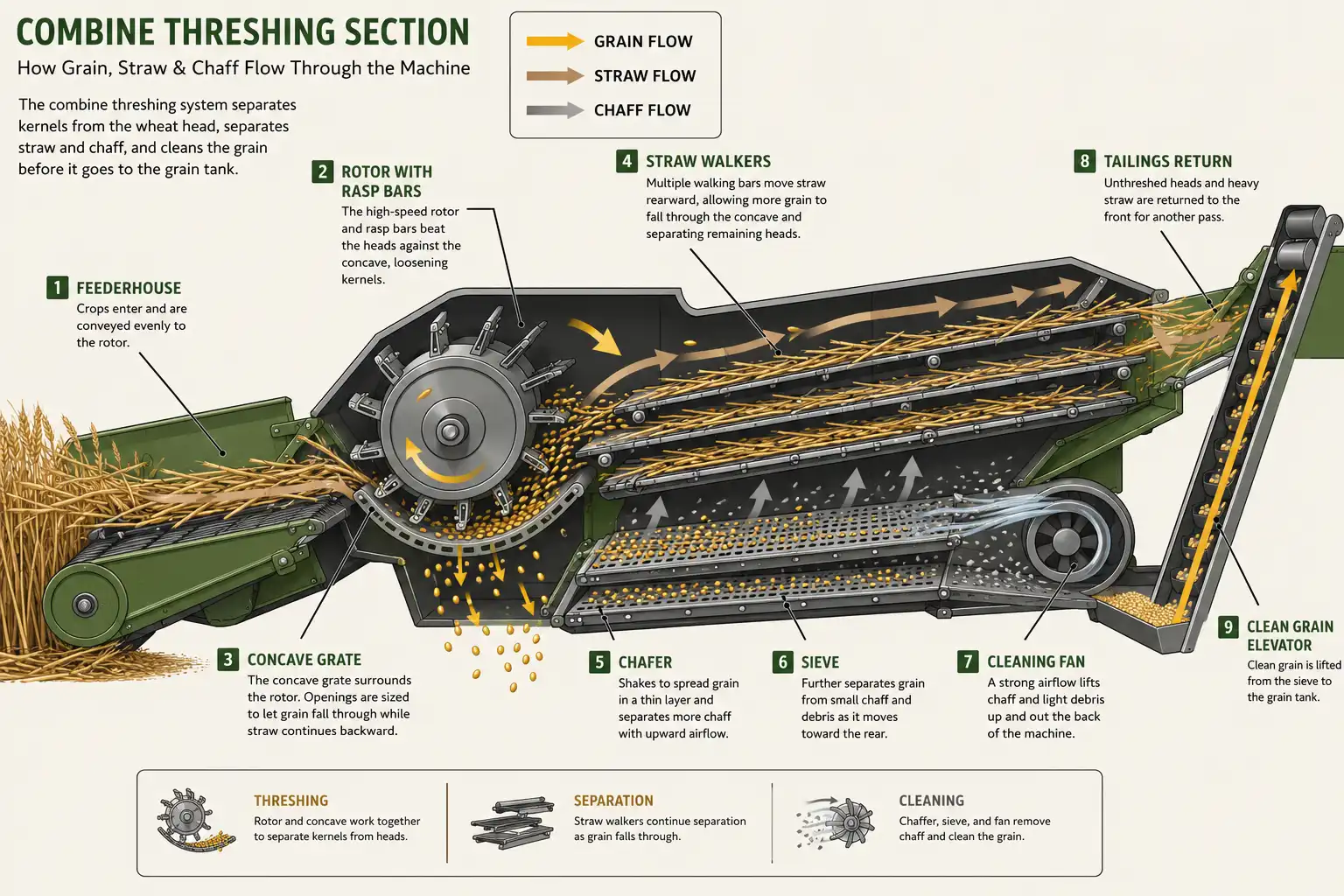
A combine threshes wheat by pulling the crop through a narrow gap between the rotor and a fixed concave. The concave is a curved grate with slots. Grain drops through those slots. Straw keeps moving rearward.
Two adjustments control everything here. Cylinder or rotor speed sets how hard the machine hits the heads, so it drives both threshing and grain damage. Concave clearance sets how much grain falls through, so it drives separation.
About 90 percent of separation should happen right at the concave, according to K-State. Only the last 10 percent belongs to the straw walkers. When you push ground speed too hard, that balance flips and grain rides out the back with the straw.
Anything the rotor misses ends up in the tailings and returns for a second pass. Heavy tailings are a signal, not a feature. They mean the first pass left work undone.
Combine Settings for Threshing Wheat
Start with your operator’s manual, then fine tune in the field. When the manual is missing, K-State publishes fallback ranges for wheat.
| Adjustment | Working range | Starting point |
|---|---|---|
| Cylinder or rotor speed | 750 to 1,350 rpm | 1,000 rpm |
| Cylinder to concave spacing | 1/8 to 1/2 inch | 1/4 inch |
| Chaffer opening | 1/4 to 3/4 inch | 5/8 inch |
| Sieve opening | 1/8 to 3/8 inch | 1/4 inch |
| Cleaning fan | Medium to high | Near the high end |
Check your clearance indicator before you trust it. Worn rasp bars and worn concaves open the real gap wider than the pointer reads. The concave also has to sit parallel side to side.
Set the cylinder no faster and no tighter than the crop actually needs. Some old hands leave an occasional kernel in the head on purpose. That tells them they have not pushed too far.
Rotary and conventional machines behave differently under load. Kansas comparison tests showed rotary crackage in wheat typically running under half the crackage of a conventional machine. Rotary losses also climb slower as feed rate rises. Both types hit acceptable numbers when you set them right.
What Moisture Does Wheat Need for Clean Threshing?
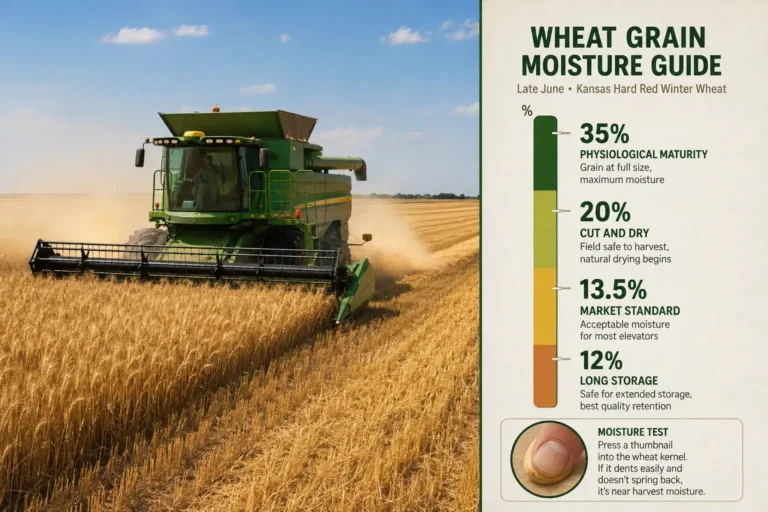
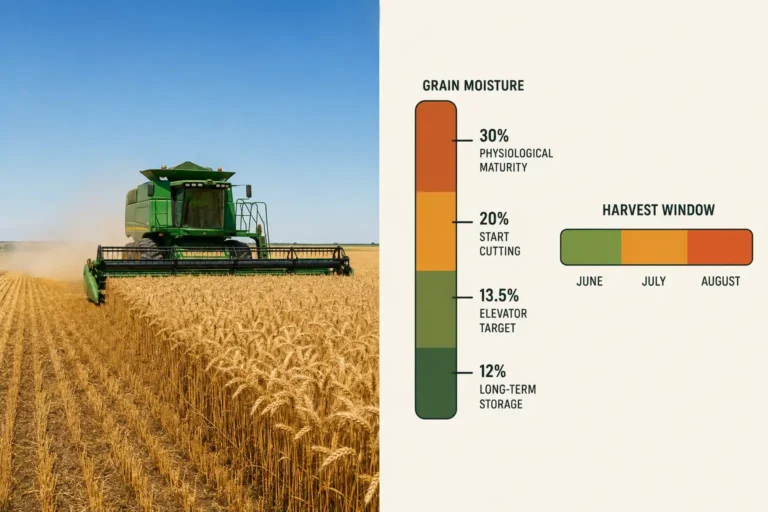
Wheat threshes cleanest in the mid teens. Below 13 percent, kernels turn brittle and crack during threshing. Above 22 percent, the seed coat takes damage. Heads also grip their grain harder, so you raise rotor speed and pay for it in quality.
The market base moisture is 13.5 percent. Deliver wetter than that and the elevator applies a shrink factor. Deliver too dry and you give away weight for free, since nobody pays you back for the missing water.
Storage moisture is a separate target. University of Minnesota Extension puts wheat at 14 percent or less for storage under six months. Past nine months, drop it to 13 percent.
Conditions shift through the day, so your settings should too. Heads that thresh hard at nine in the morning often thresh easy by two in the afternoon. Keep a reliable moisture tester in the cab and check between loads rather than guessing.. That habit pairs with knowing the wheat harvest window for your area.
How to Tell If Wheat Is Under Threshed or Over Threshed
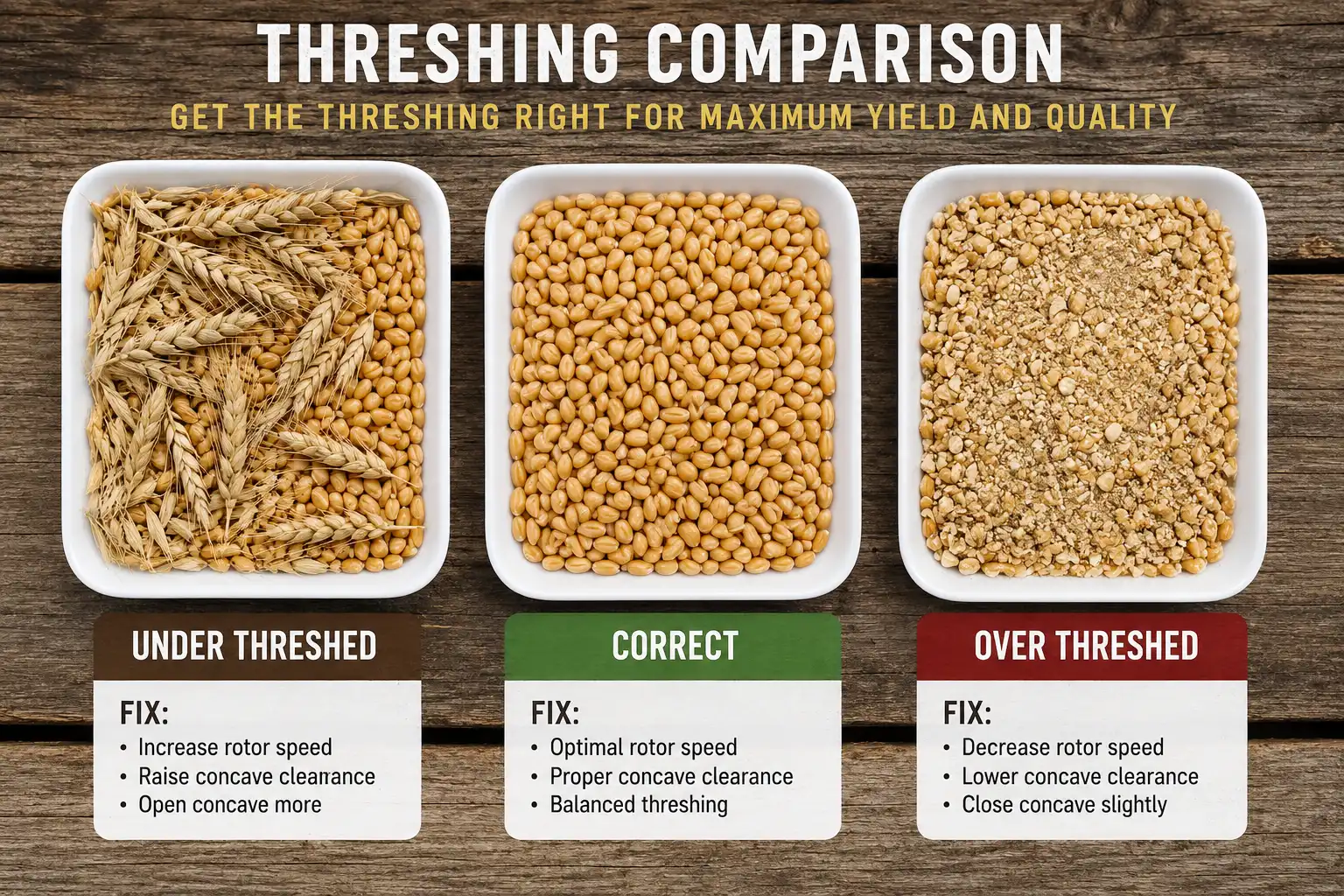
Look at the straw and the grain sample. Those two tell you everything.
| What you see | What it means | What to change |
|---|---|---|
| Whole kernels still in heads on the walkers | Under threshing | Raise cylinder speed or tighten concave clearance |
| Heavy tailings returning | Under threshing | Tighten clearance one notch first |
| Straw broken into short chopped bits | Over threshing | Slow the cylinder or open clearance |
| Cracked kernels and dust in the tank | Over threshing | Slow the cylinder before touching clearance |
| Loose kernels riding over the shoe | Broken straw overloading the shoe | Slow the cylinder, then check chaffer and fan |
Run a kill stop to check. Stop forward travel but do not let the machine clean itself out. Open the side panel by the walkers and look at the straw sitting there. Unthreshed heads mean you need more speed or less clearance.
Grain damage of 0.5 to 2 percent is achievable in wheat. Higher than that and you are giving away money. Cracked kernels generate dust, feed insects, and grow mold in the bin.
Change one thing at a time. Two changes at once tells you nothing about which one helped.
How to Check Threshing Losses Behind the Combine
Count kernels on the ground inside a one square foot frame. Bend a piece of heavy wire into that frame and keep it in the cab. Here is the routine:
- Cut a typical strip at your normal speed, then stop and back up about 20 feet.
- Drop the frame three times behind the separator discharge and average the counts.
- Drop it three times between the cutterbar and the standing wheat, then average again.
- Drop it three times in the standing wheat for your pre harvest count.
- Subtract each count from the one before it to isolate header loss and separator loss.
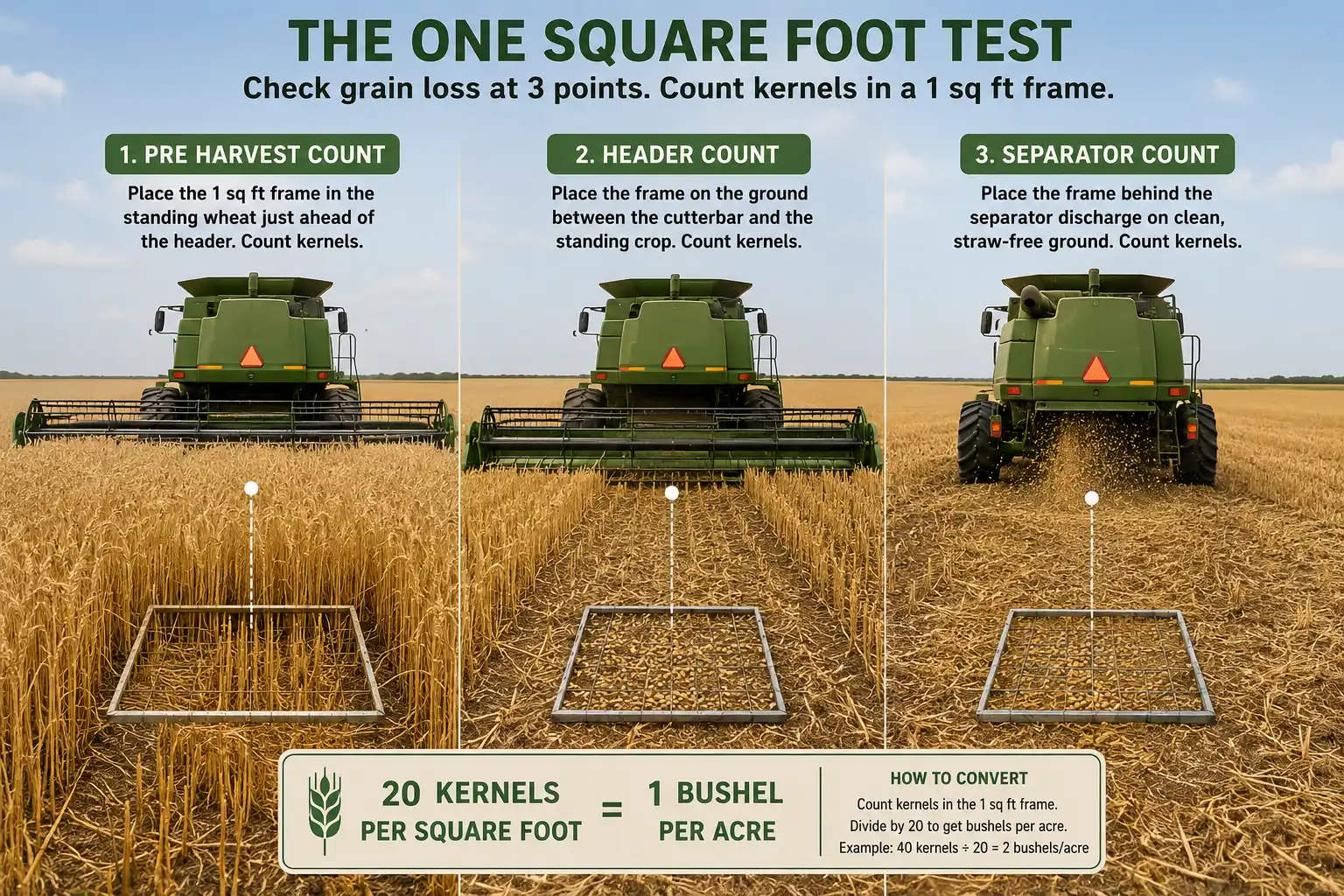
Spread evenly across the full cut, roughly 20 kernels per square foot equals one bushel per acre. Behind the separator the discharge is narrower, so the number changes with your setup.
| Setup behind the separator | Kernels per square foot equal to 1 bu/acre |
|---|---|
| No spreader | 80 |
| Bat type spreader | 65 |
| Straw chopper | 50 |
| Straw chopper plus chaff spreader | 25 |
Hold machine losses near 2 percent of yield in standing wheat. K-State notes that losses as high as 10 bushels per acre still happen across Kansas.
Read the type of loss, not just the amount. Unthreshed heads point at rotor settings. Loose kernels point at capacity. Slowing ground speed 25 percent on an overloaded combine can cut those losses in half.
How to Thresh Wheat by Hand on a Small Plot
Beat the dried heads over a tarp, then winnow the chaff away with a fan. Hand methods still work fine for a garden patch or a seed increase. Follow these steps:
- Let the crop dry completely. Damp stems will not release grain, and green material wraps around your tools.
- Cut the heads with a sickle or hand shears. Bundle them and cure under cover if rain threatens.
- Spread the heads a few inches deep on a clean tarp.
- Beat them with a flail, or hold a bundle upside down inside a clean barrel and strike the sides. Treading over the heads with your feet works too.
- Hit hard enough to knock kernels loose, but not so hard that you pulverize the straw. Broken straw makes the cleaning step much harder.
- Rake the spent straw off the top, then sweep the grain and chaff into a bucket.
How to Winnow After Threshing
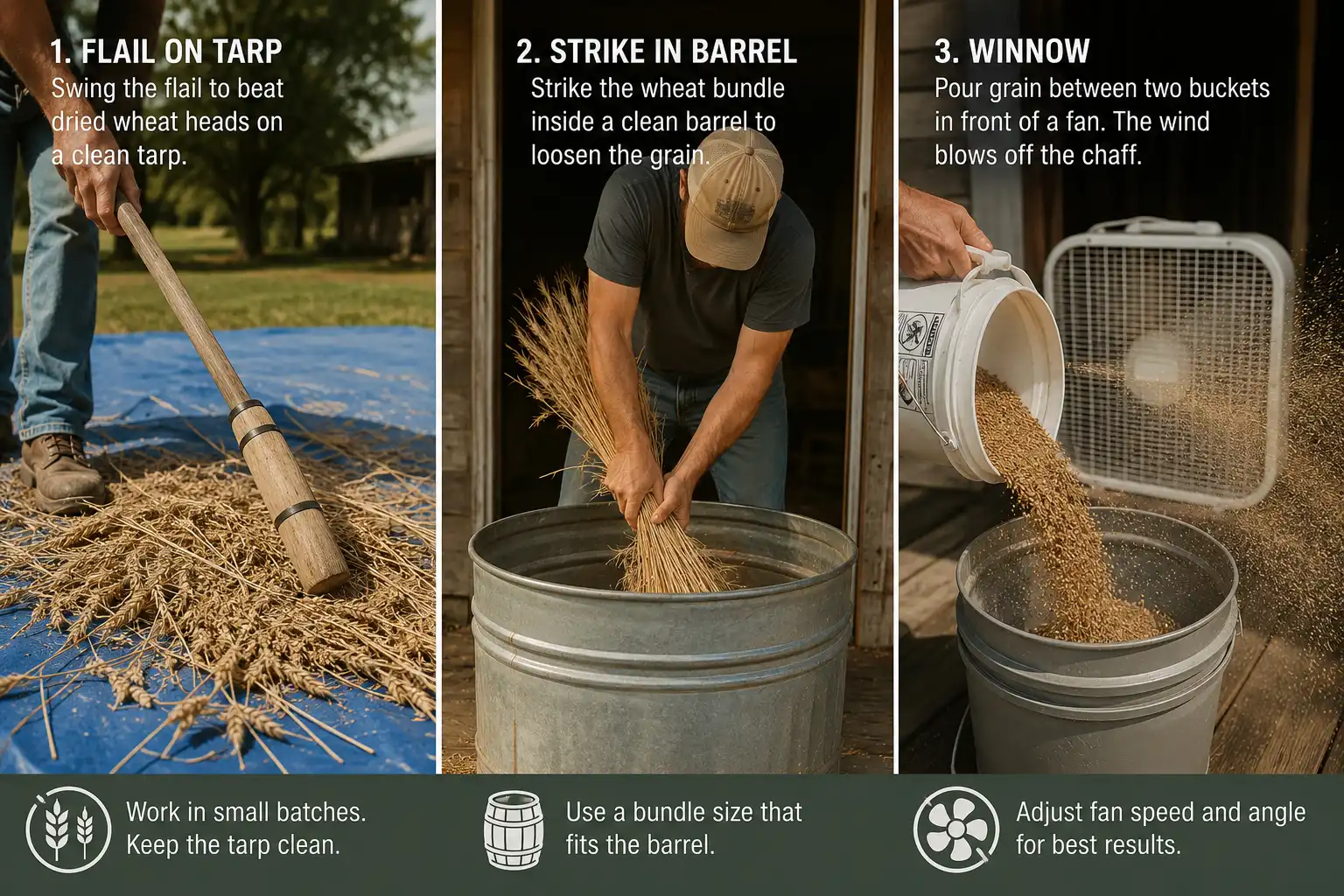
Pour the mix slowly from one bucket into another in front of a box fan set on low. Chaff blows sideways while heavy kernels drop straight down. Repeat two or three times until the sample runs clean. A steady outdoor breeze does the same work without the fan.
Scale sets the method here. A 20 by 20 foot patch threshes by hand in an afternoon. Past a quarter acre, hand work turns into a multi day chore and a small mechanical thresher starts earning its keep.
How Threshing Wheat Was Done Before Combines
Feet came first. Farmers spread heads on a swept threshing floor and walked over them. Later they drove oxen in circles across the grain, sometimes dragging a weighted sledge behind.
The flail followed. It is a heavy beater hinged to a handle, swung down onto the heads, and it stayed in daily use for centuries.
Stationary threshing machines arrived in the late 1700s and changed the calendar more than the method. Crews could now cut and stack sheaves in summer, then thresh through the winter. Custom threshing rings traveled farm to farm with a machine and a crew.
The self propelled combine ended that arrangement by folding cutting, threshing, separating, and cleaning into one trip across the field. Across the Great Plains, a job that once took a whole neighborhood now takes one operator.
What Threshing Leaves Behind
Four products come out the back and bottom of the machine. Knowing which stream is which helps you read a problem quickly.
- Clean grain goes up the elevator to the tank.
- Straw exits the rear, either windrowed for baling or chopped and spread.
- Chaff is the broken glume and husk material, light enough for the fan to blow out with the straw.
- Tailings are partly threshed heads that cycle back through the rotor.
Residue is worth managing, not just dumping. K-State research through drought years found that standing and spread wheat residue cuts evaporation, catches winter snow, and lifts the following crop.
Grain quality after threshing depends on what you do next. Cracked kernels and fines create hot spots, so handling grain after it leaves the field matters as much as the rotor setting that made them.
Bottom Lines
Threshing wheat rewards patience over horsepower. Set the rotor as slow and as open as the crop allows, then check the straw on the walkers before the monitor. In Kansas, hard red winter wheat threshes hard in morning dew and easier by mid afternoon, so combine settings typically need adjusting twice a day rather than once a season. Count kernels behind the machine at least once every field. That five minute stop pays better than any other five minutes of harvest.