When Is Wheat Harvest in Kansas? Dates, Counties, and Moisture
Kansas wheat has a narrow cutting window. Miss it and you give up test weight, yield, and grade. Wheat harvest in Kansas shifts by region, by year, and by weather.
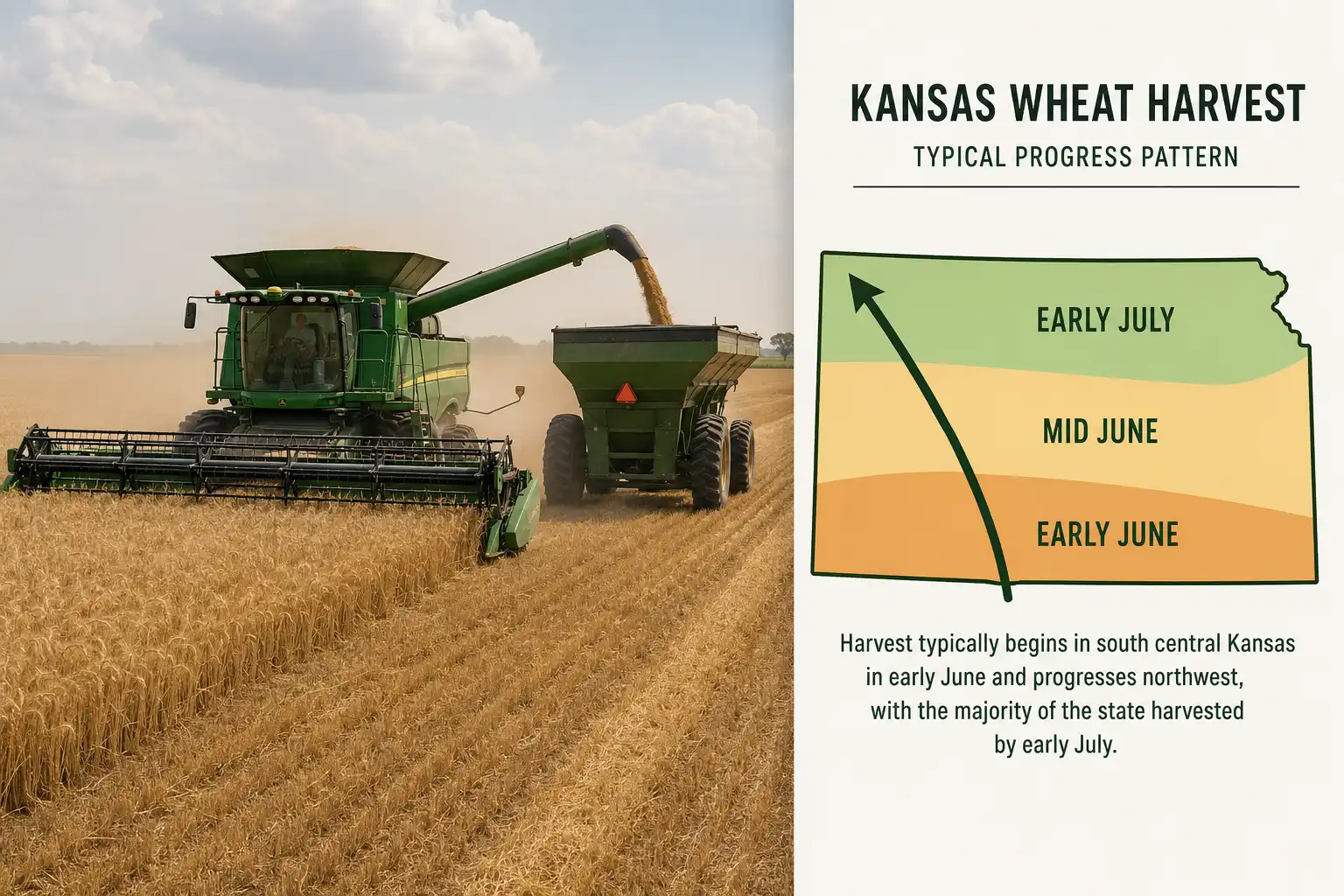
Wheat harvest in Kansas normally starts in early to mid June in south central counties and finishes by mid July. Cutting opens near the Oklahoma line, then moves north and west as fields ripen.
When Is Wheat Harvest in Kansas?
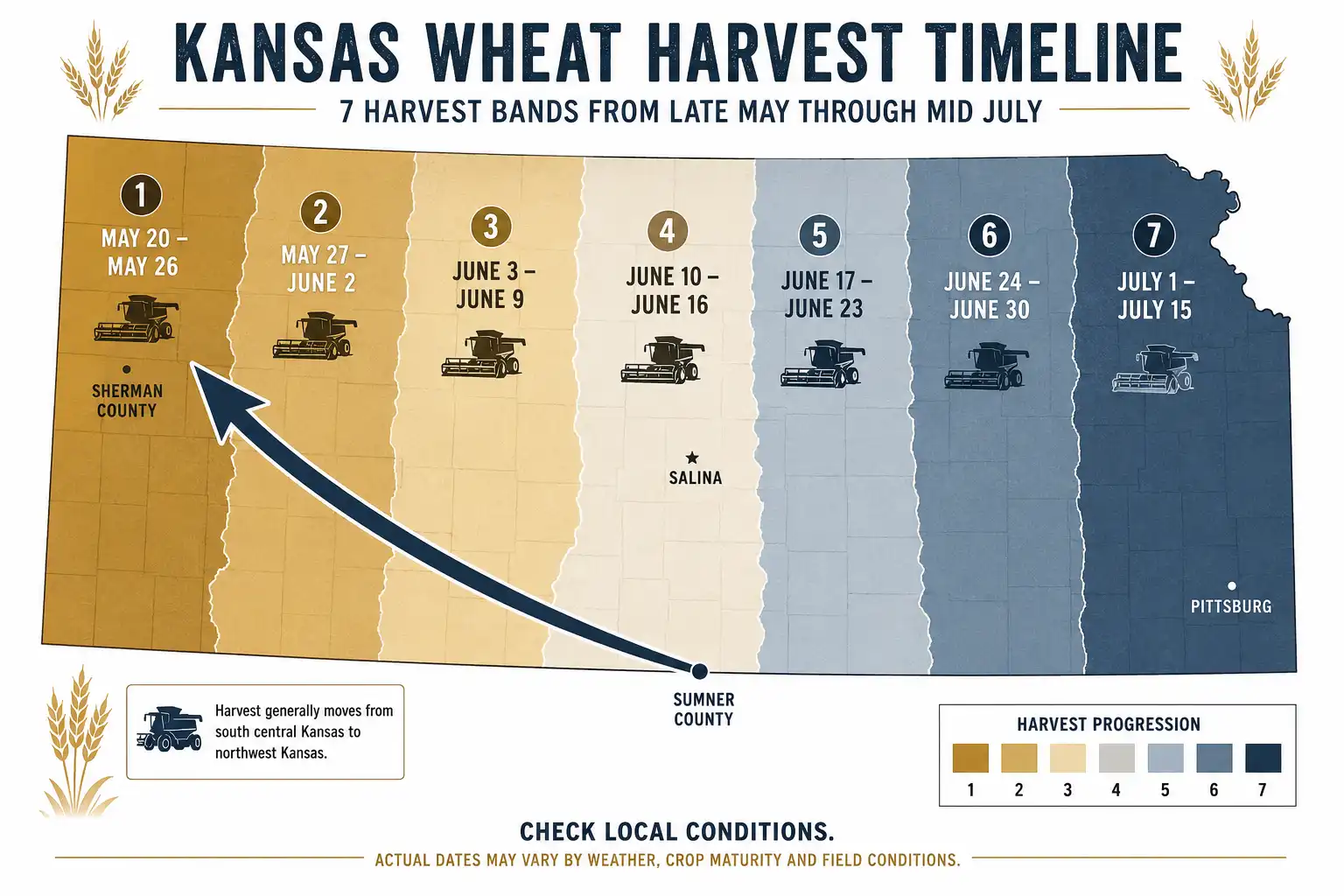
Kansas wheat harvest runs from roughly June 1 through July 15 in a normal season. Most acres come off between June 10 and July 5. South central counties cut first because they warm up earliest and sit at lower elevation.
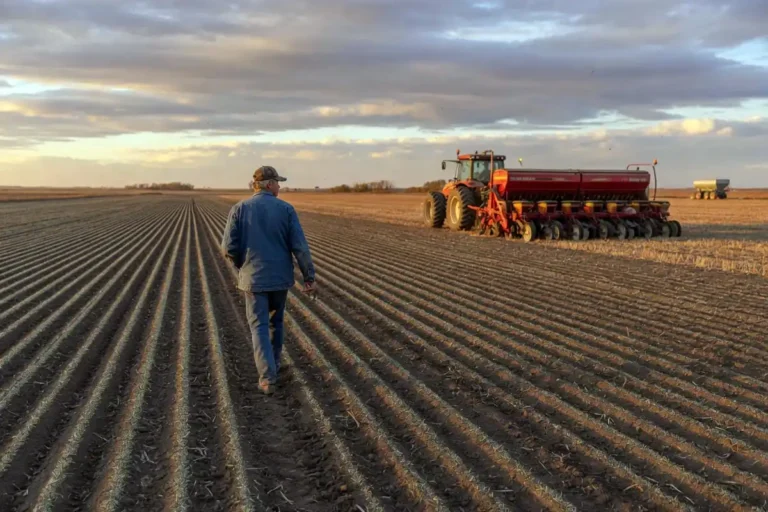
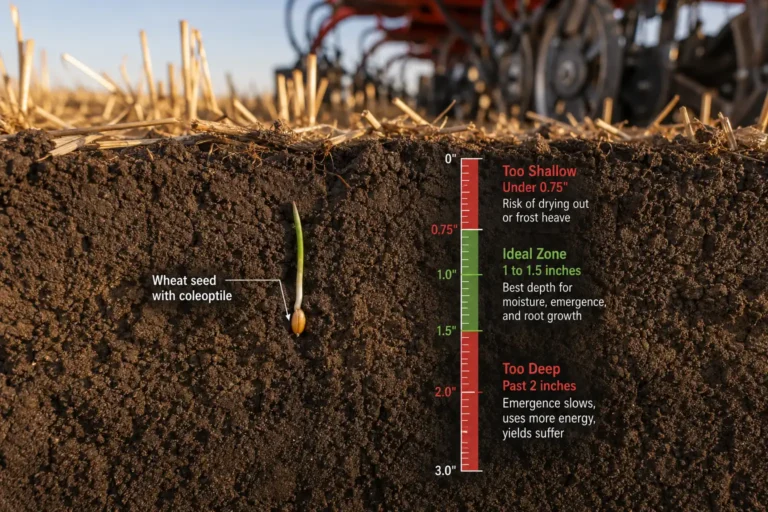
Kansas grows hard red winter wheat, drilled the previous September and October. That fall planting date sets the whole clock. For the seeding side, here is how winter wheat planting works in the fall..
Treat the table below as a typical year, not a fixed schedule.
| Region | Example counties | Typical start | Typical finish |
|---|---|---|---|
| South central | Sumner, Harper, Barber | May 28 to June 8 | Mid to late June |
| Southeast | Labette, Montgomery, Cherokee | June 1 to June 10 | Late June |
| Central | Reno, Rice, McPherson, Barton | June 8 to June 16 | Late June |
| Southwest | Meade, Ford, Finney | June 10 to June 20 | Early July |
| Northeast | Shawnee, Jackson, Nemaha | June 18 to June 28 | Early July |
| North central | Republic, Cloud, Washington | June 20 to July 1 | Early to mid July |
| Northwest | Sherman, Thomas, Sheridan | June 25 to July 8 | Mid July |
Here around Topeka, roll the last week of June into the first week of July. Sumner County beats me by about two weeks most years.
Read more: When to Cut Wheat: Timing That Protect Yield
How Does Wheat Harvest Move Across Kansas?
Harvest moves as a wave from south central Kansas toward the north and west. It advances roughly 15 to 20 miles per day when weather cooperates. Two things drive that pattern: latitude and elevation.
Southern counties accumulate heat units earlier, so their crop reaches maturity first. Elevation then bends the line. Southwest Kansas sits above 2,500 feet, and parts of the far west top 3,500 feet. That extra elevation cools nights and slows grain fill. So southwest counties cut later than south central ground at the same latitude.
Custom cutting crews follow this same wave. Many start in Texas and Oklahoma in May. They work north through Kansas in June, then finish in the Dakotas by August. If you hire a crew, book your slot against your county’s typical start date, not the state average.
What Month Is Peak Wheat Harvest in Kansas?
June is peak month for Kansas wheat harvest. In most seasons, over three quarters of state acres come off between June 10 and July 5. July handles the northwest tail and any fields delayed by rain.
That June concentration matters for logistics. Elevator lines stack up, dryer capacity gets tight, and repair parts move slowly. Because of that, the combine typically gets serviced in May. Belts, sickle sections, and concave parts should also be staged before the first field turns.
How Did the 2026 Kansas Wheat Harvest Run?
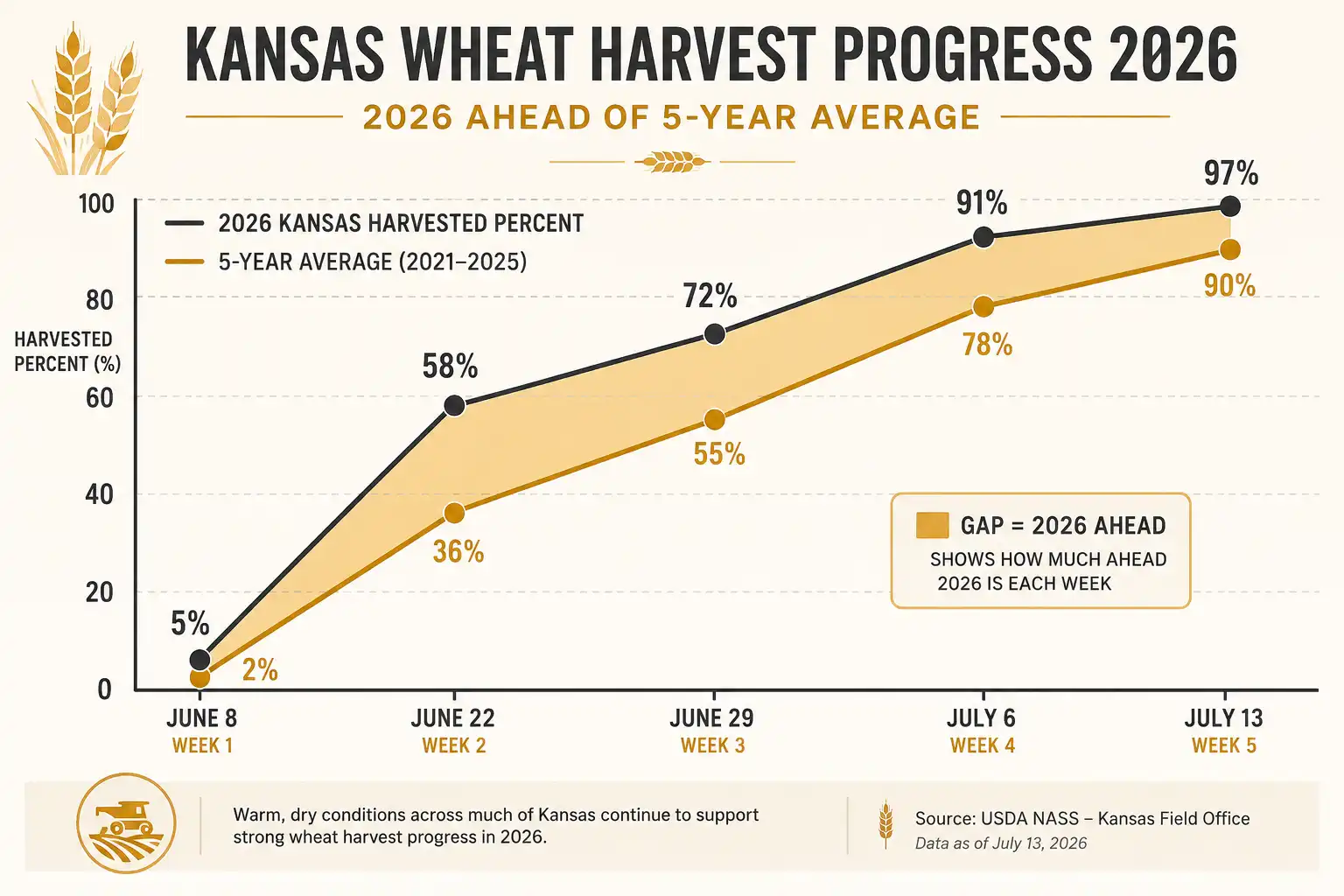
The 2026 Kansas wheat harvest opened about three weeks early and finished ahead of schedule. A warm winter broke dormancy early, and a dry, windy spring pushed the crop to maturity weeks ahead of normal. First cutting started around May 23. A Sedgwick County farmer took his first load in on May 25, and a Barton County grower began June 5.
Here is how USDA National Agricultural Statistics Service reported progress that season:
| Week ending | Kansas harvested | Five year average | Prior year |
|---|---|---|---|
| June 8 | 5% | Ahead of average | n/a |
| June 21 | 58% | 26% | n/a |
| June 28 | 72% | 52% | 48% |
| July 5 | 91% | 74% | 78% |
| July 13 | 97% | 87% | 91% |
Speed did not mean quality. Drought, a late spring freeze, and wheat streak mosaic virus cut yield potential hard. Then June thunderstorms soaked ripe wheat across much of the state, which pulled test weights down and stalled cutting. Conditions on June 21 rated 23% very poor, 32% poor, 31% fair, 14% good, and 0% excellent.
Yields swung wildly. Growers reported fields from 8 to 44 bushels per acre. Test weights ran 59 to 61 pounds, and protein landed between 11% and 13.1%. The Wheat Quality Council tour scouted 394 fields in May and pegged the state at 38.9 bushels per acre. USDA estimated 37 bushels on 5.8 million harvested acres. Both sit far below 2025, when Kansas averaged 51 bushels across 6.80 million acres.
What Moisture Should Kansas Wheat Be at Harvest?
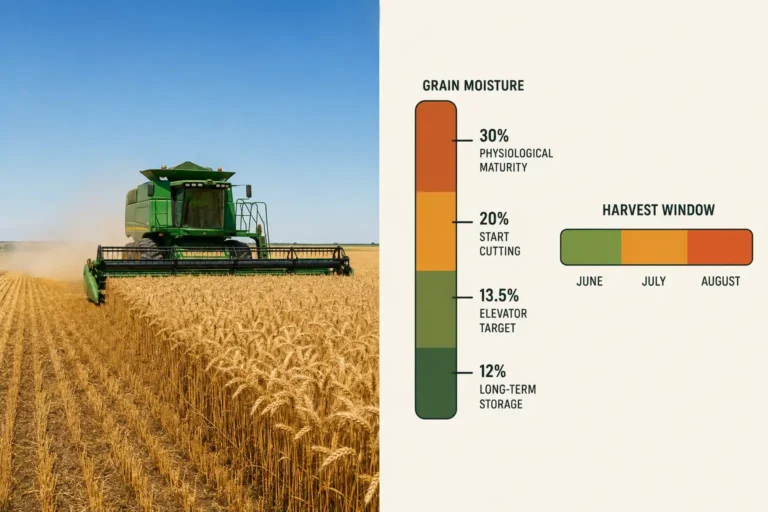
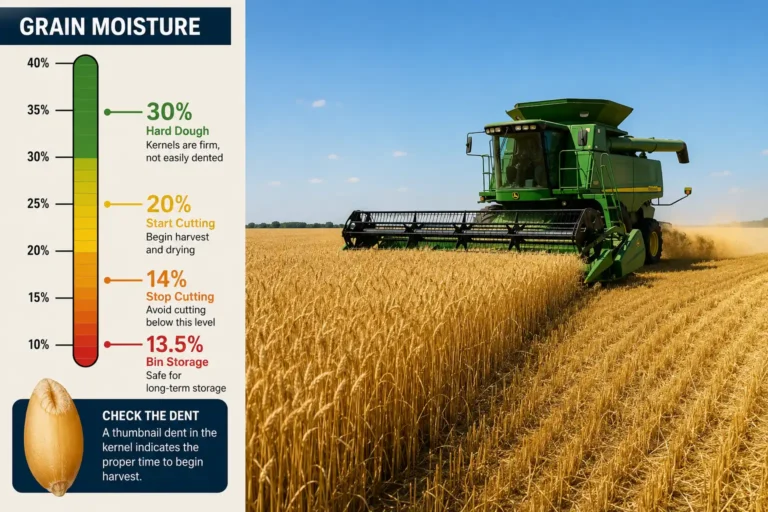
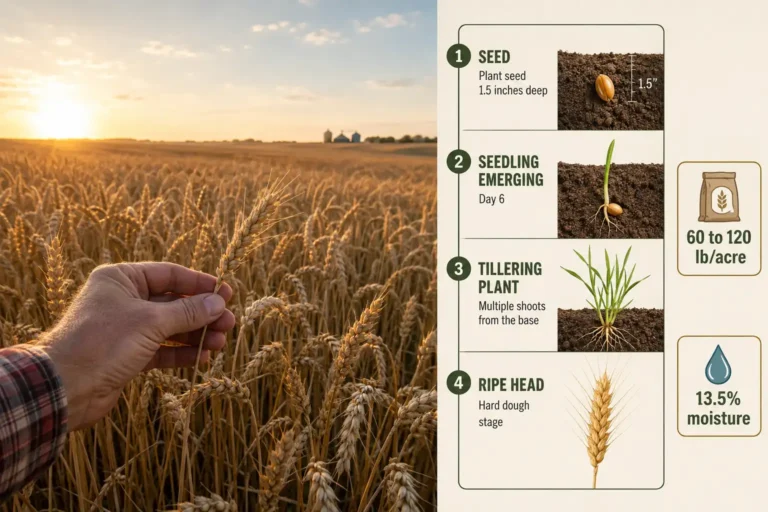
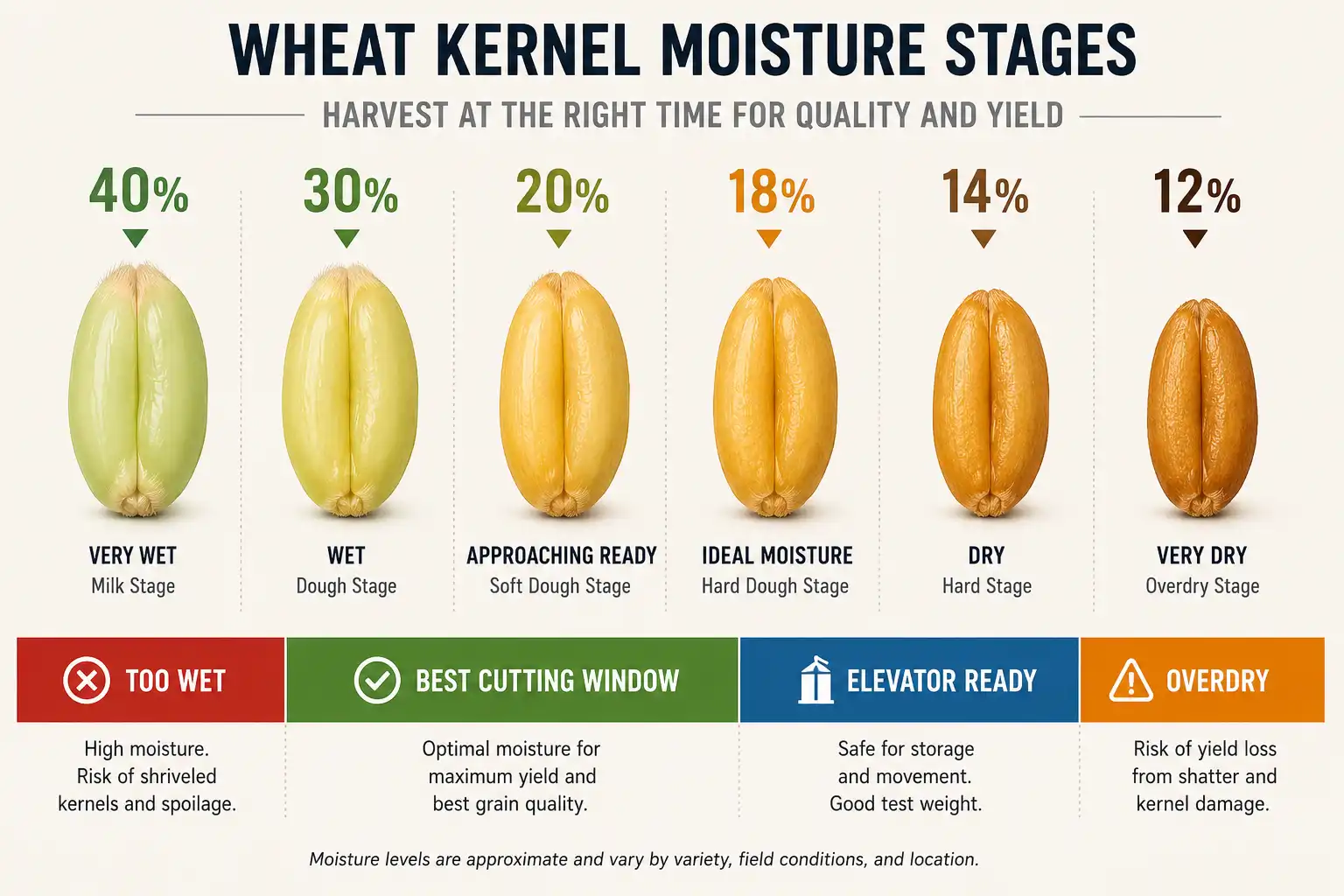
Cut Kansas wheat between 20% and 13.5% moisture. Wheat reaches physiological maturity near 40% moisture, then dries about 2.5 points per day in hot Kansas weather. So a field can go from too wet to overdry in under four days.
| Grain moisture | What it means for you |
|---|---|
| 30% to 40% | Physiologically mature but far too wet to combine |
| 18% to 20% | Best cutting window if you have drying, lowest field loss, best test weight |
| 13.5% to 14.5% | Straight to the elevator, no drying charge |
| 13.5% | Market base moisture for hard red winter wheat |
| 12.5% | Target for storing a year or more |
| Below 12% | Overdry, shatter loss climbs, and you give away weight |
Overdrying costs real money. Elevators pay by weight at a 13.5% base, and they do not pay you back for water you removed. Cut at 12% and you hand over bushels you already grew.
Check moisture yourself before you trust the elevator ticket. Pull samples from three spots per field, since hilltops run drier than draws. A reliable grain moisture tester pays for itself the first season you avoid a drying charge.
How Do You Tell Kansas Wheat Is Ready to Cut?
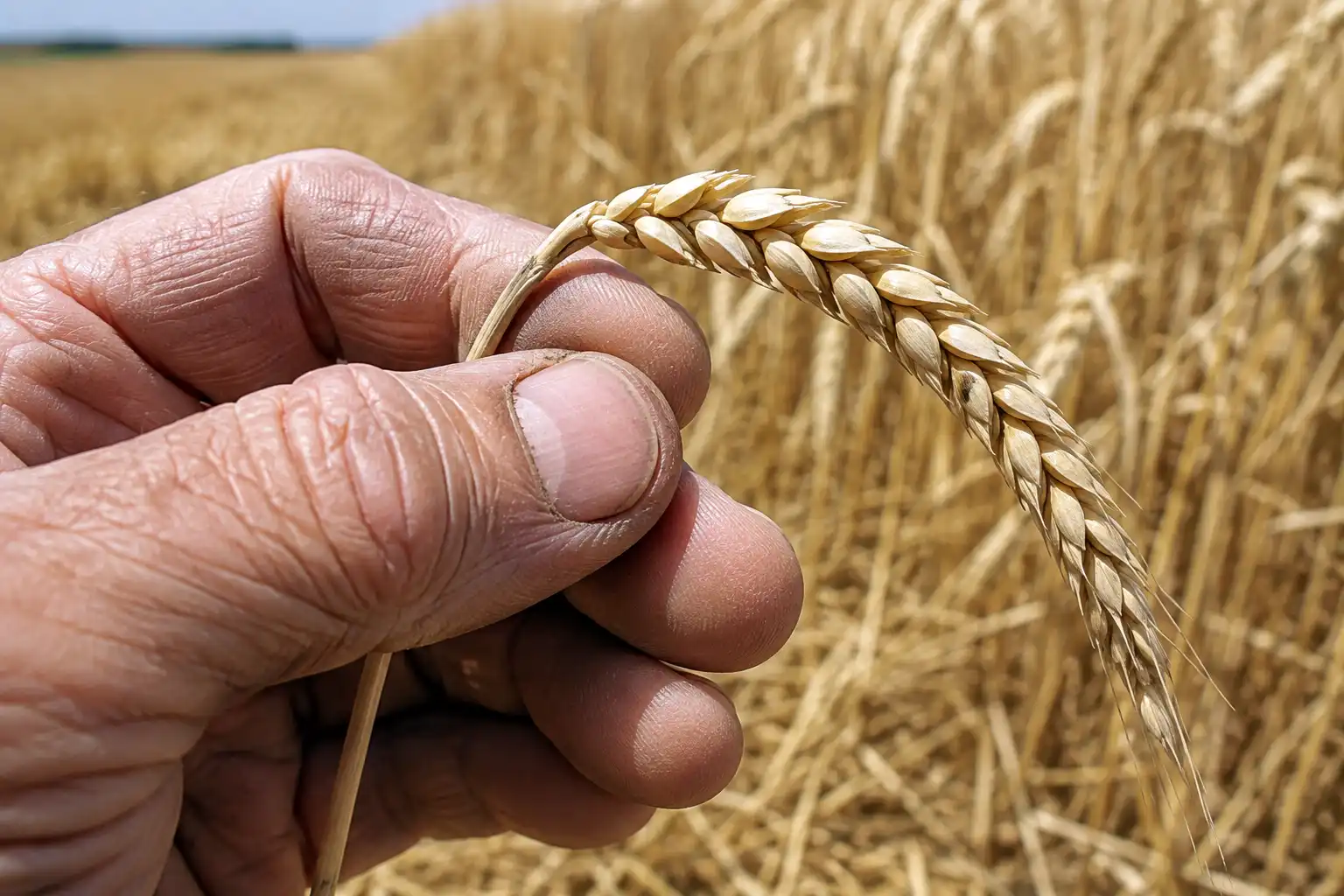
Ripe wheat shows nodding heads, straw that has turned from yellow to tan, and kernels that crack instead of denting. Run these four checks before you pull the combine out:
- Look at the heads. Mature heads bend over and hang down. Upright heads still hold moisture.
- Check the straw color. The top node should be tan, not green. Green nodes mean the plant is still moving water.
- Bite a kernel. A ready kernel cracks sharp between your teeth. A doughy or rubbery kernel is too wet.
- Test with a meter. Thumbnail checks get you close, but only a meter gives you a number you can sell against.
Walk the field, not just the edge. Field margins ripen first because they catch more sun and less competition. If you sample only the outside rounds, you will start three days early. Check the center and the low ground before committing. That habit has saved me more than one wet load. The same principle applies when cutting wheat at the right stage anywhere in the Great Plains.
What Pushes Kansas Harvest Dates Earlier or Later?
Five factors move Kansas cutting dates by two weeks in either direction. Watch these through the season and you can forecast your own start date fairly well:
- Fall drilling date. Wheat planted in mid September usually matures ahead of October seedings.
- Winter dormancy break. A warm, dry winter wakes the crop early, as it did in 2026, and shifts everything forward.
- Spring heat. High temperatures during grain fill shorten the filling period. That pulls harvest earlier but trims kernel weight.
- Late spring freeze. A freeze after jointing damages heads, delays even ripening, and leaves patchy fields.
- June rainfall. Rain on ripe wheat stops cutting cold, lowers test weight with each wetting, and raises preharvest sprouting risk.
Hail deserves its own note. A hailstorm on ripe wheat shells grain onto the ground within minutes. Once a field takes damage, cut it as soon as it dries, because standing damaged wheat only loses more.
What Happens Right After Wheat Comes Off in Kansas?
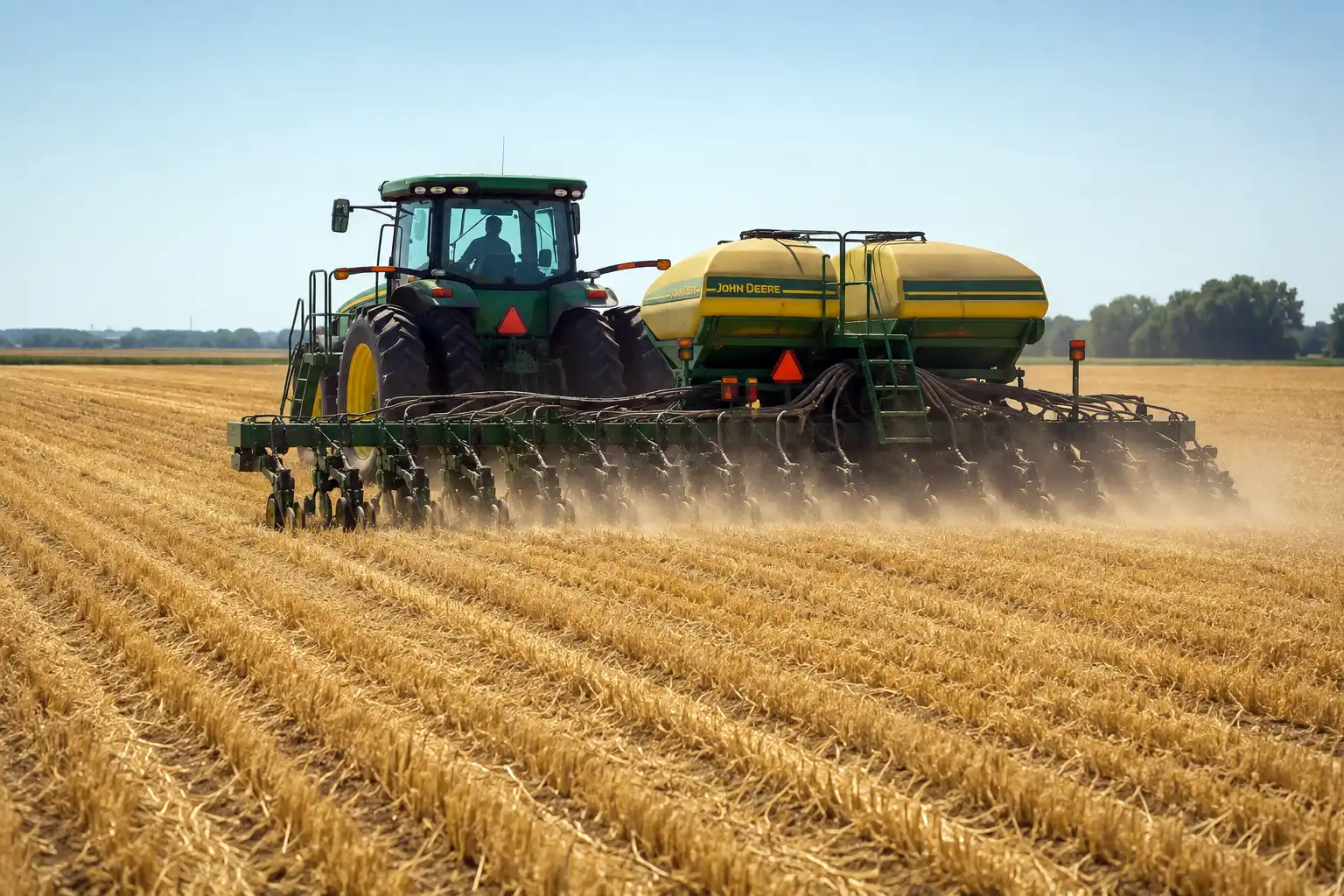
Double crop planting starts within days of the combine leaving the field. Wheat comes off early enough in Kansas to squeeze a second crop out of the same acre. That is a big reason harvest timing carries so much weight here.
Soybeans lead the list in central and eastern Kansas. Sorghum and sunflower work farther west, where moisture runs shorter. K-State Research and Extension rates double cropping as higher risk than full season planting. July and August heat can wreck germination and grain fill. Speed protects you. Every day between cutting and drilling costs stored soil moisture.
Two points decide whether the second crop works.
- Herbicide carryover. Group 2 products such as chlorsulfuron and metsulfuron can persist and injure the next crop. If you applied either, plant a sulfonylurea tolerant soybean variety.
- Planting date. Yield potential drops steadily through July. Know how late soybeans can go in before you commit seed to a field.
Some growers deliberately cut wheat at 18% to 20% and plant the same afternoon. That trade gives up a drying charge and buys soil moisture. It works in a wet June and fails in a dry one.
Wheat also clears the field long before Kansas corn harvest starts in September. That gap gives you a clean run at bin space, grain handling repairs, and fall fertility work.
Final Verdict
Start with your county’s typical opening date, then adjust for the season in front of you. South central growers plan on early June, northwest growers plan on early July, and everyone else falls between. Watch dormancy break in February and spring heat in May. Those two signals tell you which direction your date will move.
Once heads nod and the top node turns tan, pull samples and get a moisture reading. Cut at 20% if you have drying and a double crop waiting. Cut at 13.5% to 14% if you are hauling straight to town. Either way, do not sit on ripe wheat waiting for a perfect number. June storms in Kansas take more bushels than an early start ever will.