How Many Bushels of Corn Does a Semi Hold? 5 Key Facts
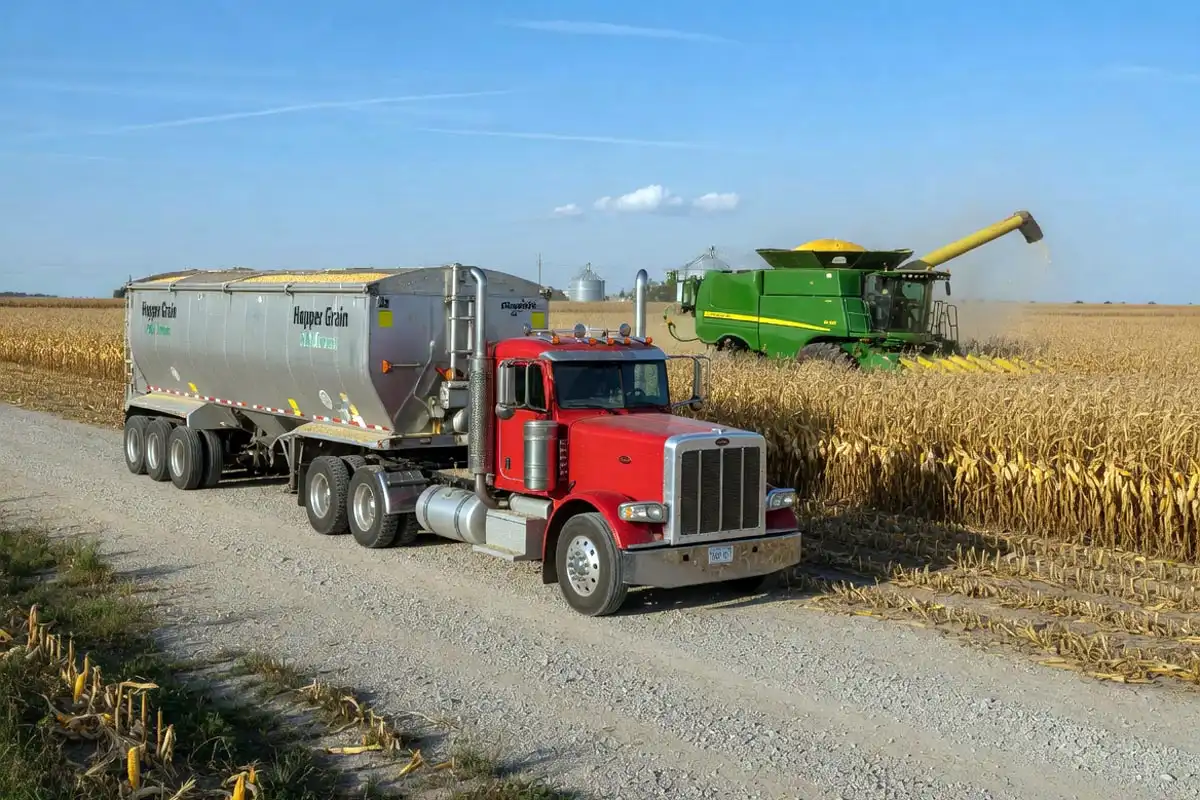
A standard semi with a hopper bottom trailer holds around 900 to 1,000 bushels of corn, depending on trailer size, moisture, and federal weight limits. This guide covers trailer volume, test weight, and road rules that shape that number, so you can load safely and plan hauls without guesswork during harvest.
A typical semi truck with a 40-foot hopper bottom trailer holds about 900 bushels of corn at the 80,000-pound federal gross weight limit. Larger 42 to 50-foot trailers reach 1,000 to 1,300 bushels by volume, but weight laws usually cap the legal load near 900 bushels.
What Is a Bushel of Corn?

A bushel of corn is a standard grain unit set at 56 pounds at 15.5 percent moisture, per USDA grain grading rules. One bushel fills about 1.2446 cubic feet of space. That weight stays fixed across states and elevators. Moisture, test weight, and foreign material can shift the real weight a load carries per bushel.
For a deeper view of the crop itself, check the corn farming guides on the site.
How Many Bushels Does a Standard Semi Hold?
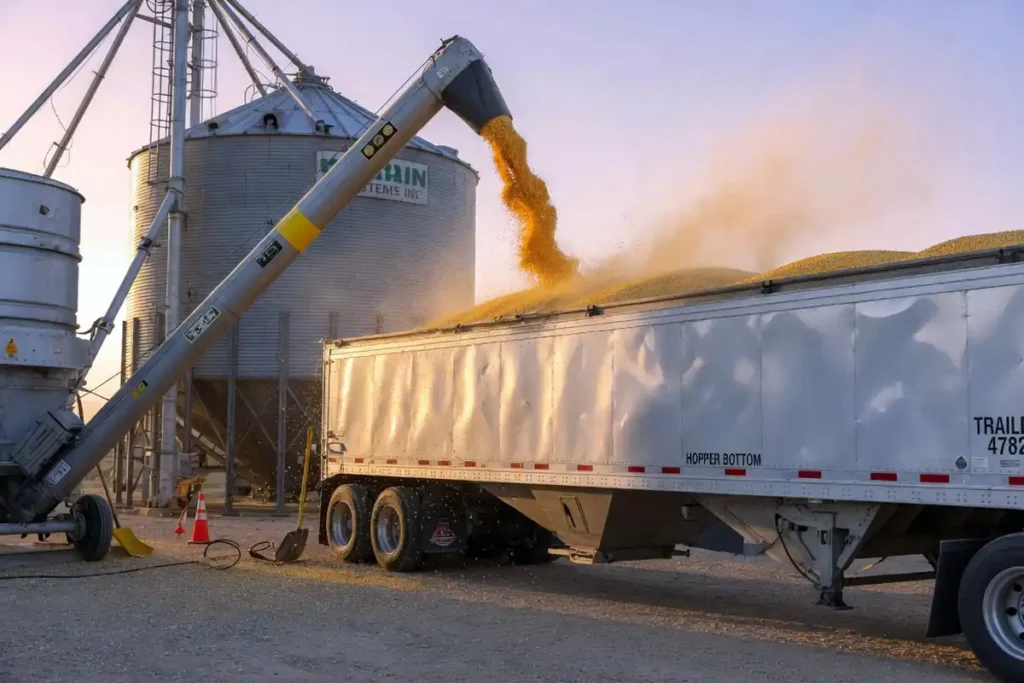
A standard semi holds 900 to 1,000 bushels of corn on most hauls. The exact number depends on trailer length, cubic feet, and the federal 80,000-pound gross vehicle weight limit. A 40-foot hopper bottom trailer rated at 1,050 cubic feet holds roughly 844 bushels by volume. Larger 42 to 50-foot hoppers hit 1,000 to 1,300 bushels by volume.
Learn more: How to Dry Corn on the Cob
Weight vs Volume: Which Limit Hits First?
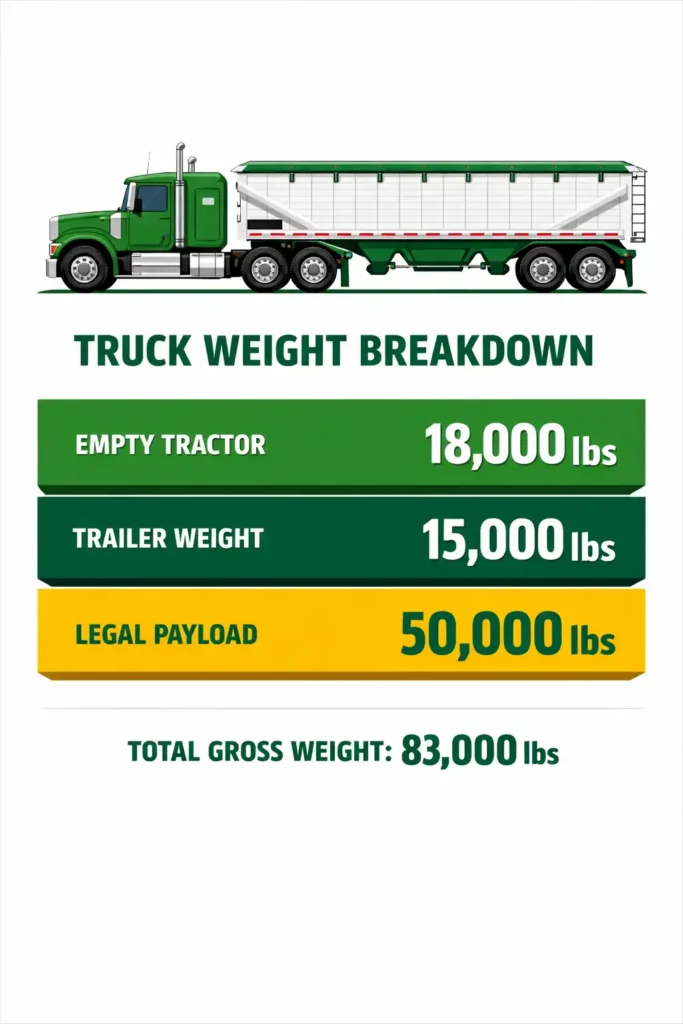
Corn is heavy, so weight almost always limits the load before volume does. The Federal Highway Administration sets 80,000 pounds as the gross weight cap for most interstate hauls. Here is how the math works:
- Empty tractor weight: 17,000 to 18,000 pounds
- Empty hopper trailer weight: 12,000 to 14,000 pounds
- Legal payload: 48,000 to 51,000 pounds
- Legal max bushels: 857 to 910 (at 56 pounds per bushel)
Volume capacity only matters when you haul light grain or oversized trailers.
Trailer Types and Bushel Capacity
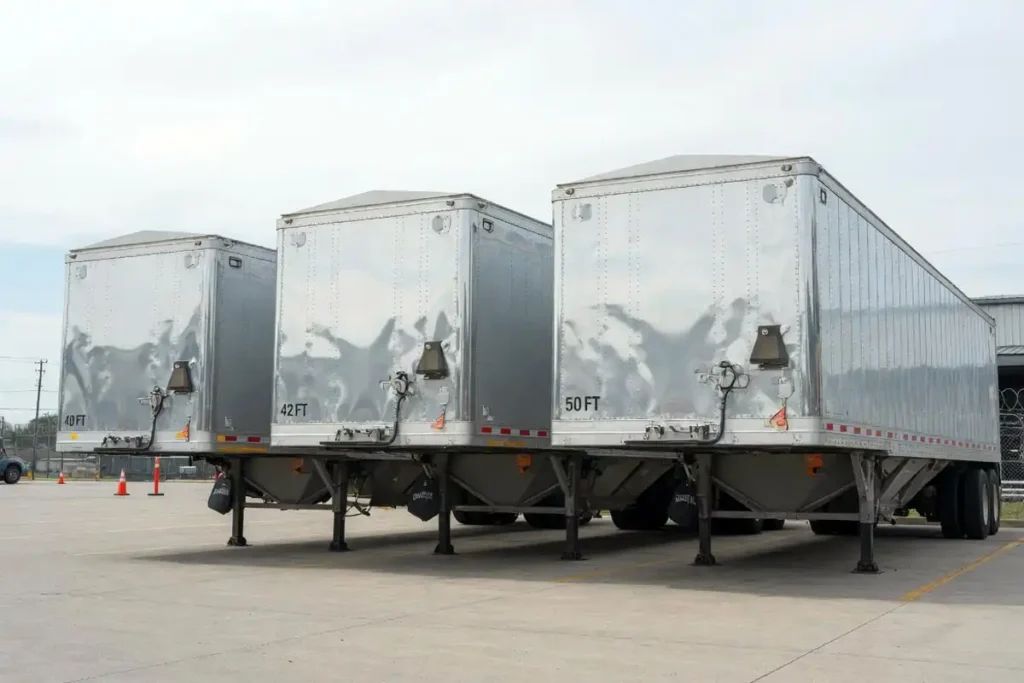
Different trailers haul different amounts of corn:
- 40-foot hopper bottom: 900 to 1,000 bushels by volume; 850 to 900 bushels legal by weight
- 42-foot hopper bottom: 1,000 to 1,100 bushels by volume
- 50-foot hopper bottom: 1,200 to 1,300 bushels by volume
- Belly dump grain trailer: 800 to 900 bushels
- Super-B train (Canada): 1,500 to 1,800 bushels
Aluminum trailers save 2,000 to 3,000 pounds over steel, which adds roughly 35 to 55 bushels of legal payload.
How to Calculate Bushel Capacity Step by Step
Step 1: Find the trailer’s cubic feet. Check the manufacturer plate, build sheet, or owner manual for the number.
Step 2: Convert cubic feet to bushels. Divide cubic feet by 1.2446. A 1,100-cubic-foot trailer holds 884 bushels by volume.
Step 3: Work out legal payload. Subtract the empty truck plus trailer weight from 80,000 pounds. If the combo weighs 30,000 pounds empty, payload equals 50,000 pounds.
Step 4: Convert payload to bushels. Divide payload pounds by 56. That gives 892 bushels.
Step 5: Take the lower number. The smaller of the two results is your safe legal load.
Factors That Change the Actual Bushel Count
Moisture percent changes the weight per bushel. Wet corn at 20 percent moisture weighs more per bushel than dry corn at 15.5 percent. Test weight matters too. Strong corn runs 56 to 58 pounds per bushel. Frost-damaged corn, light corn, or loads with foreign material weigh less. Accurate moisture readings help here, so a reliable grain moisture tester pays off on every load.
Even load packing also counts. Heaped corn can spill on rough roads or cause axle imbalance.
Common Mistakes to Avoid
- Overloading past 80,000 pounds. State fines run from $65 to several thousand dollars.
- Ignoring axle weight. A legal gross weight can still fail tandem axle limits of 34,000 pounds.
- Skipping a certified scale check. Guess loads cost hauls, fuel, and legal fees.
- Using wrong moisture numbers. Corn at 20 percent moisture sells for less per bushel after drying deductions.
- Forgetting tarp, tool, and fuel weight when working out the empty truck total.
Solid post-harvest handling steps also help keep load quality steady from field to elevator.
Safety Tips for Loading and Hauling Corn
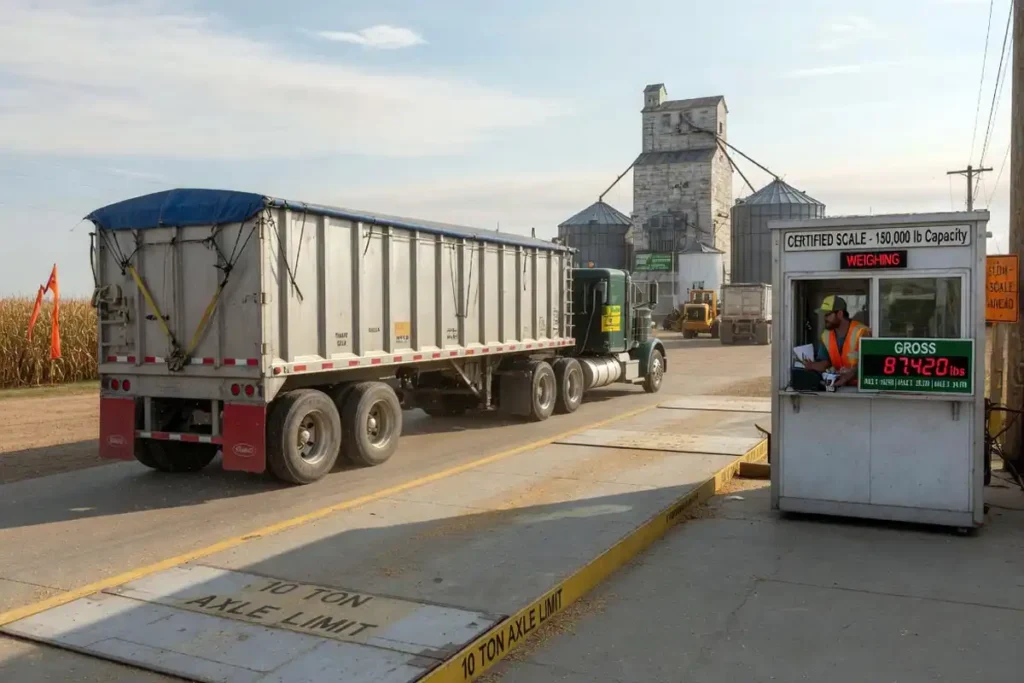
Stop at certified scales before long hauls. Tie tarps tight across the trailer to stop grain loss. Check tire pressure under full load, since underinflated tires heat up fast at legal max weight. Test brakes before downgrades. Watch axle weight on state scales; some states enforce 34,000 pounds per tandem axle and 20,000 pounds per single axle.
For storage planning after the haul, review crop storage methods so grain quality holds during long-term bin time.
FAQs about Bushels of Corn Does a Semi Hold
How many pounds of corn does a semi hold?
Can a semi legally haul 1,000 bushels of corn?
How many acres of corn fill one semi?
What does an empty grain semi weigh?
How many bushels does a grain cart hold?
Final Thoughts
A standard semi hauls 900 to 1,000 bushels of corn on most hauls, with the 80,000-pound federal weight limit setting the real ceiling, not trailer volume. Match trailer size, test weight, and moisture to your load plan. Weigh every load at a certified scale, track axle weight, and stay under legal gross. That keeps hauls safe, legal, and profitable from field to elevator.