Sugarcane Mills in the United States: Louisiana and Florid
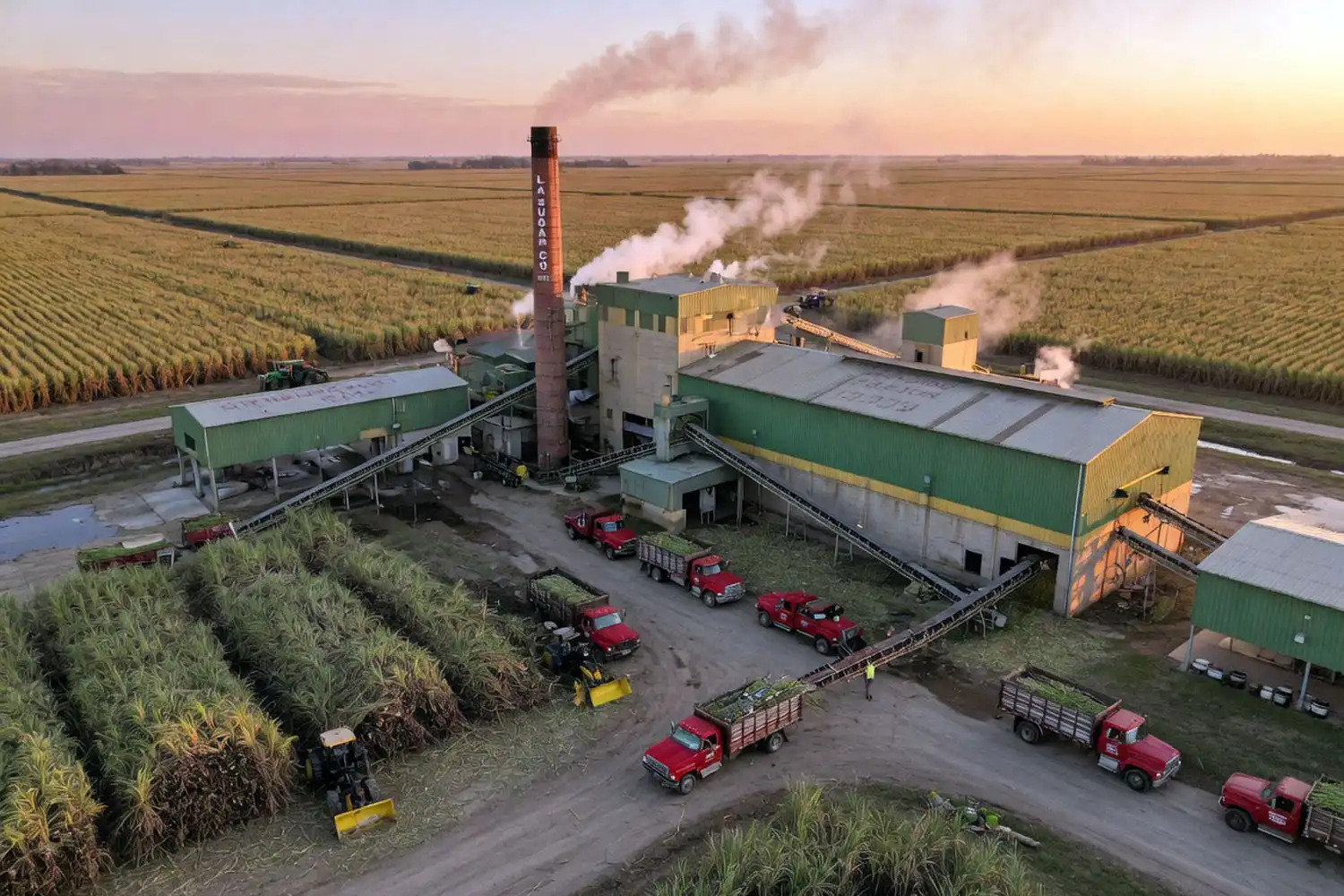
American sugar starts at the mill. Every fall, sugarcane mills in the United States fire up boilers, run cane through rollers, and turn raw juice into crystal sugar. The map of where these mills sit has shifted a lot in the past decade, and the count keeps shrinking.
Fifteen sugarcane mills operate in the United States in 2026. Eleven are located in Louisiana and four are in Florida. Hawaii closed its last mill in 2016, and Texas closed its only mill in 2024 due to long-running water shortages.
How Many Sugarcane Mills Operate in the United States?
Fifteen mills currently process sugarcane in the country. The number has fallen from more than 100 a century ago, mostly through consolidation rather than declining output. Today’s mills run bigger, faster, and more efficiently than the small plantation operations they replaced.
USDA data confirms 11 active mills in Louisiana and 4 in Florida. Together they processed about 34.4 million tons of cane in the 2025 crop year. Louisiana posted record-high production for that season, even with one fewer state in the count after Texas closed.
Know more: Sugarcane Grown in the US
Where Are US Sugarcane Mills Located?
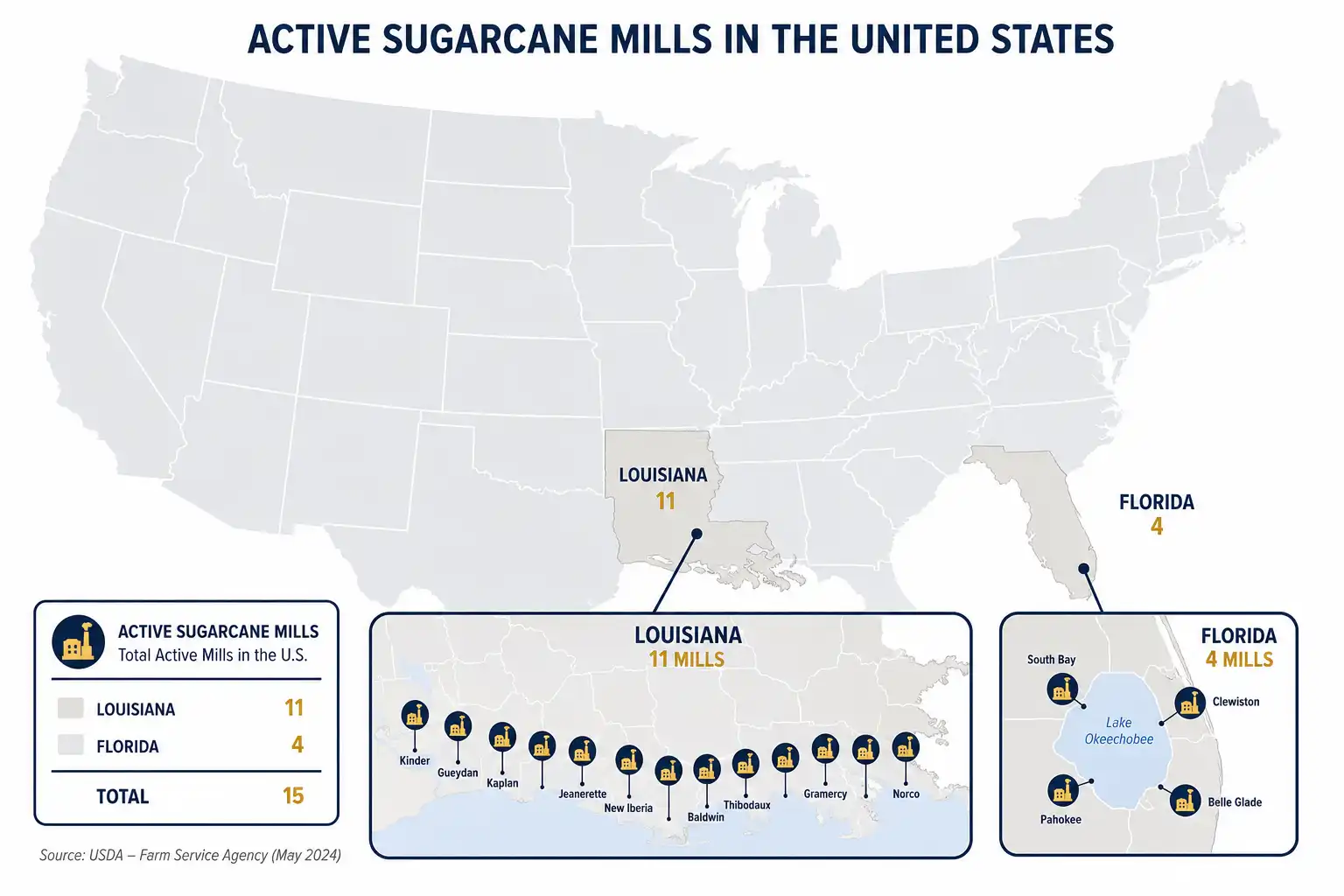
US sugarcane mills cluster in two regions. The first is southern Louisiana along the Mississippi River Delta. The second is southern Florida around Lake Okeechobee, inside the Everglades Agricultural Area. Both regions deliver what cane needs: long warm summers, mild winters, and steady water supply.
If you are new to the crop itself, the guide on what sugarcane is explains why this geography matters for a perennial grass that takes 10 to 12 months to mature.
Learn more: Health Benefits of Sugarcane
Sugarcane Mills in Louisiana
Louisiana has 11 active raw sugar factories spread across the southern part of the state, mostly south and west of Baton Rouge. The American Sugar Cane League tracks every one of them. Here is the current list:
- Alma Plantation, Lakeland (Pointe Coupee Parish)
- Cajun Sugar Co-op, New Iberia
- Cora-Texas Manufacturing, White Castle (Iberville Parish)
- Enterprise Factory (M.A. Patout & Son), Patoutville. Founded in 1825, this is the oldest working sugar mill in the country.
- Lafourche Sugars Corporation, Thibodaux
- Louisiana Sugar Cane Co-Op (LASUCA), St. Martinville
- Lula Sugar Factory, Belle Rose (part of Lula-Westfield LLC)
- Raceland Raw Sugar, Raceland
- St. Mary Sugar Co-op, Jeanerette
- Sterling Sugars, Franklin
- Westfield Sugar Factory, Paincourtville (part of Lula-Westfield LLC)
Cora-Texas in White Castle is one of the largest single mills in the state. It runs 220 employees through grinding season and houses roughly half a billion dollars of equipment, including two Brazilian-built mills with 3,000-horsepower engines turning rollers at 10 million inch-pounds of torque. The mill takes cane from a 30-mile radius.
Cane acreage in Louisiana keeps expanding into 25 parishes. Lower price volatility versus corn, rice, and soybeans is the main driver, supported by high-yielding cane varieties and the rise of custom harvesting groups.
Sugarcane Mills in Florida
Florida has 4 active sugar mills, all in Palm Beach and Hendry counties near the Everglades Agricultural Area. They process the largest single-state cane output in the country:
- Clewiston Mill (U.S. Sugar Corporation), Clewiston. The largest single sugarcane mill in the United States.
- Okeelanta Mill (Florida Crystals), South Bay. One of the largest specialty sugar facilities in the world, with strong organic and raw sugar output.
- Osceola Mill (Florida Crystals), Pahokee. Originally built in 1961 from disassembled Louisiana mill parts.
- Glades Sugar House (Sugar Cane Growers Cooperative of Florida), Belle Glade. Capacity to grind up to 26,000 tons of cane per day at full run.
Florida runs fewer mills but grinds more cane per facility than Louisiana. The state produced around 17.9 million tons of cane in 2023, more than half of the national total. Florida Crystals alone mills more than 6.5 million tons of cane each year between Okeelanta and Osceola.
Why Hawaii and Texas No Longer Have Sugar Mills
Two states fell off the US sugarcane map in the last ten years. Hawaii’s Hawaiian Commercial and Sugar Company in Maui closed in 2016 after high land and labor costs ended the business case, taking over a century of island sugar production with it.
Texas lost its only mill in February 2024. Rio Grande Valley Sugar Growers in Santa Rosa shut down permanently after years of water shortages tied to Mexico’s failure to deliver Rio Grande water under the 1944 Water Treaty. Around 500 employees lost their jobs, and Texas cane farmers lost a primary cash crop overnight. The closure is documented in detail by the USDA Economic Research Service.
How a US Sugarcane Mill Works
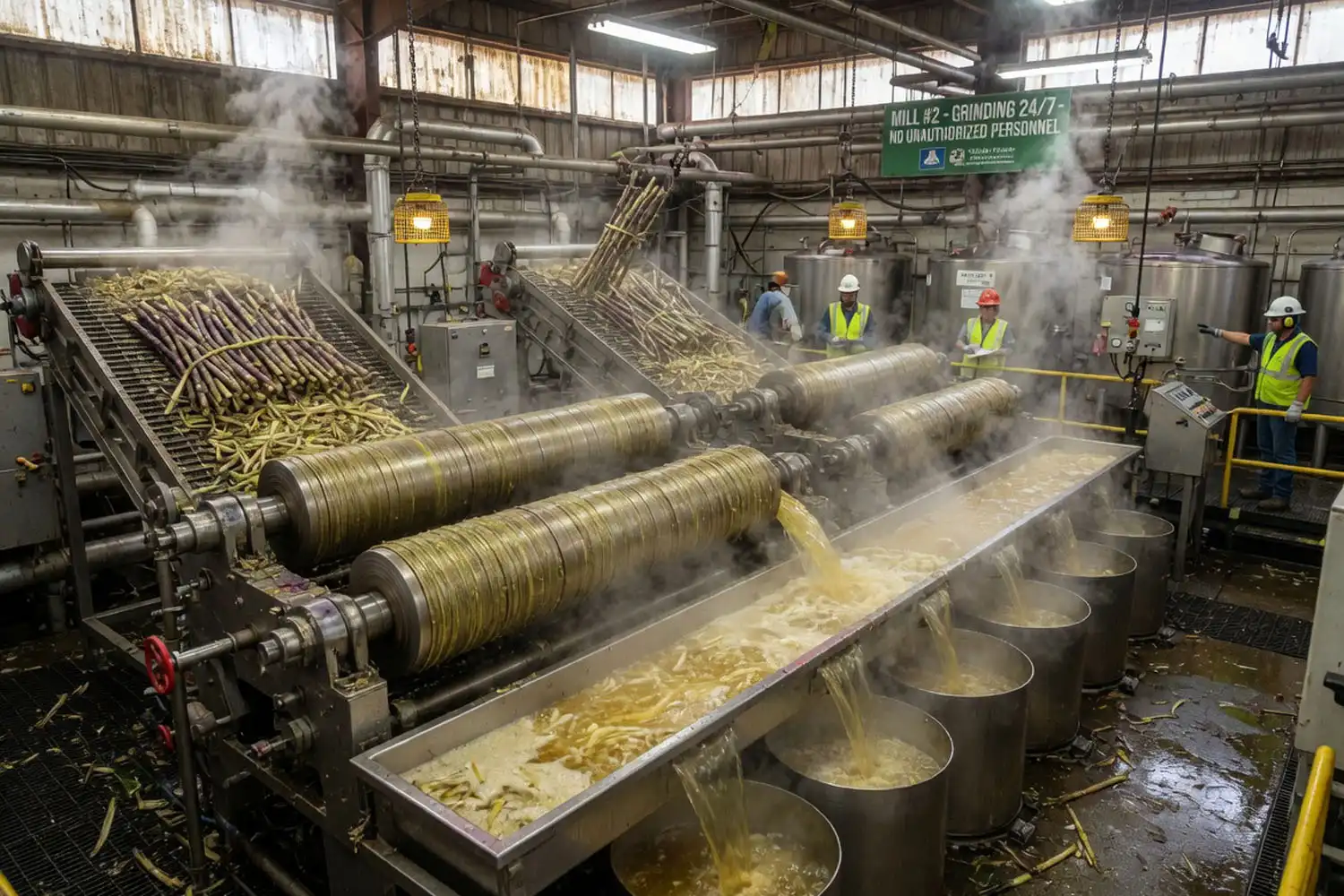
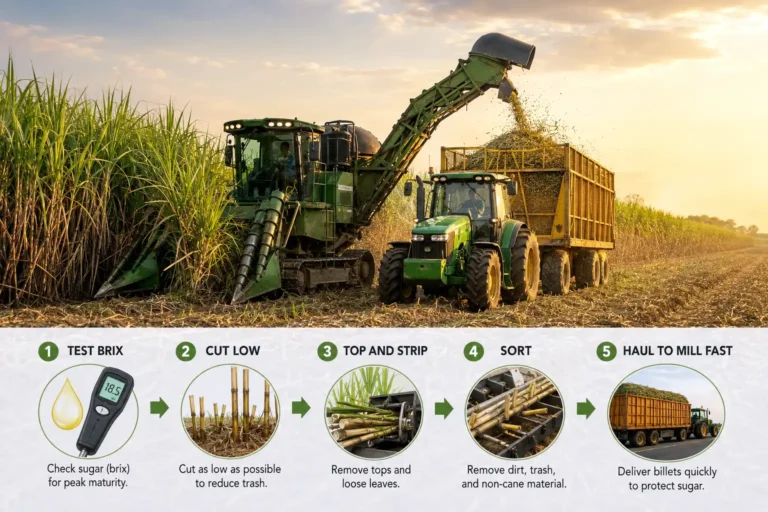
A US sugarcane mill converts standing cane into raw sugar inside a 24-hour window from cutting. Speed matters because sucrose starts breaking down fast once the stalk is severed. The basic flow at any modern American mill looks like this:
- Trucks haul cane from fields within roughly a 30-mile radius
- Heavy-duty knives and shredders break down the stalks
- Roller mills or a diffuser press out the raw juice
- A clarifier removes suspended solids
- Evaporators concentrate the juice into thick syrup
- Vacuum pans crystallize the sugar from the syrup
- Centrifuges spin the crystals away from the molasses
The leftover plant fiber, known as bagasse, fuels the mill’s own boilers. Most American mills are net energy producers because of this loop, and several sell surplus power back to the grid.
If you want the field side of this story, the guide on growing sugarcane on the farm covers what happens before the cane ever reaches the mill yard.
What Products Come Out of a Sugarcane Mill
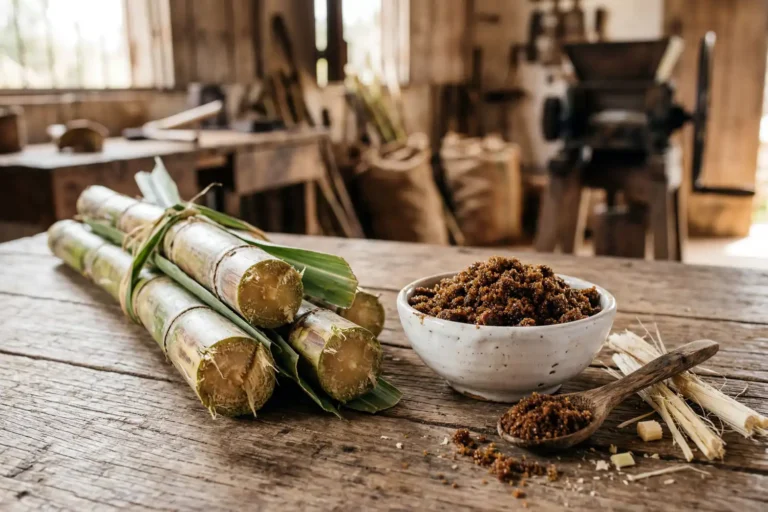
A US sugarcane mill produces three main products: raw sugar, blackstrap molasses, and bagasse. Raw sugar ships to refineries for white-sugar processing. Blackstrap molasses goes into animal feed, rum production, and food flavoring. Bagasse burns in mill boilers or sells as paper pulp, mulch, and livestock bedding.
USDA reports the US produced about 9.3 million short tons raw value of sugar in 2024. Cane mills supplied roughly 44 percent of that total. Sugarbeet processors in the northern states made up the rest, which is one reason understanding the difference between sugar beets and sugarcane matters for anyone tracking US sugar supply.
US Sugarcane Mill Output in 2026
US sugarcane mills processed approximately 34.4 million tons of cane during the 2025 grinding season, according to the March 2026 USDA crop production report. Total harvested area held near 946,000 acres across Louisiana and Florida, with average yield around 36.4 tons per acre.
Louisiana hit record production that season. State mill capacity continues to climb on the back of equipment upgrades like heavy-duty shredders, Donnelly chutes with under-feed fourth rolls, and improved welding maintenance on mill rolls. The LSU AgCenter’s Audubon Sugar Institute supports this work with custom factory simulation models for every Louisiana mill.
Hitting these yields depends heavily on field-level decisions. Proper irrigation scheduling for cane and accurate harvest timing for ripe sugarcane directly affect how much sugar a mill recovers per ton of stalk.
Economic Impact of Sugar Mills in the US
US sugarcane mills carry serious weight in their regional economies. The Louisiana industry generates around $3 billion in total economic value and supports about 17,000 jobs across growers, mill workers, transport, and equipment trades. Florida’s industry employs thousands more across Palm Beach, Hendry, and the surrounding cane belt.
When a mill closes, the damage spreads fast. The Texas closure wiped out an entire state’s cane economy in one announcement. That is why the surviving 15 mills are guarded carefully by industry groups, USDA tariff-rate quotas, and federal sugar policy.
Challenges Facing American Sugarcane Mills
US sugarcane mills face four major pressures in 2026: water access, labor cost, foreign sugar imports, and environmental compliance. Florida mills work under Everglades restoration rules. Louisiana mills deal with hurricane risk during the September-to-January grinding window. All mills compete with cheaper imported raw sugar held back only by federal trade quotas.
Even so, the mills that remain are the most efficient cane-processing facilities the country has ever had. Louisiana acreage continues to expand, which tells you the remaining mills are profitable enough to absorb more cane each year.
Where US Sugar Stands Today
Fifteen mills, two states, and roughly 34 million tons of cane a year. That is the US sugarcane mill picture in 2026. Louisiana and Florida carry the whole operation now. Hawaii is gone. Texas is gone. The mills that survive are bigger, faster, and more efficient than they have ever been, and they have to be to compete against world sugar prices. For any grower thinking about a future in cane, the location of these 15 mills sets the boundary on where the crop pencils out.