When Is Sugarcane Ready to Harvest? 7 Powerful Maturity Tests
Sugarcane is ready to harvest when stalk growth slows and the plant finishes packing sucrose into the stalk internodes, so juice quality peaks. You judge maturity by combining a simple field test (a hand refractometer Brix check) with clear crop signals like leaf drying, firm stalks, and a smaller “top to bottom” sugar gap. This guide walks you through what maturity means, when it usually happens, where timing shifts by climate and management, and how to make a clean harvest call without guessing.
Harvest sugarcane when your Brix readings level off and the stalk shows ripening signs (yellowing lower leaves, firm rind, less active growth). Many guides use juice Brix around 18% as a practical harvest target, and some field methods look for a top-to-bottom Brix ratio near 1:1 so the whole stalk is mature. Cut low, top off immature joints, and move cane fast to processing.
What does “sugarcane maturity” mean?
Sugarcane maturity means the plant shifts from building new stalk length to storing sugar in the stalk. Each internode (joint) fills with sugars while its leaf stays active, and the lower internodes usually reach “ripe” first. As more internodes mature, total soluble solids in the juice increase, and most of those soluble solids become sucrose.
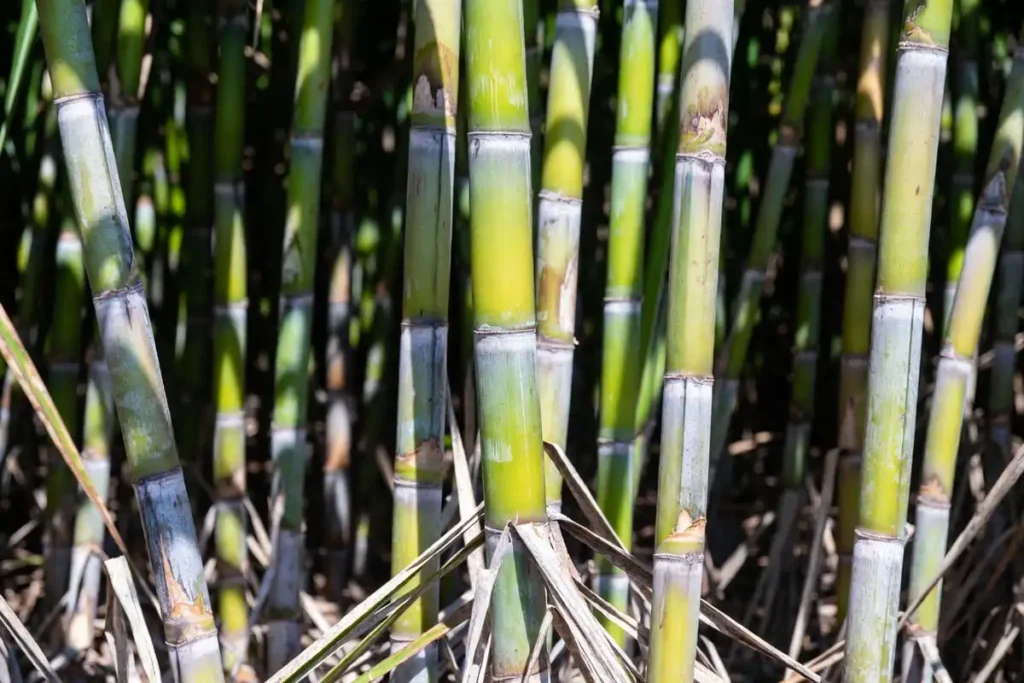
Farmers and mills describe maturity with a few core numbers:
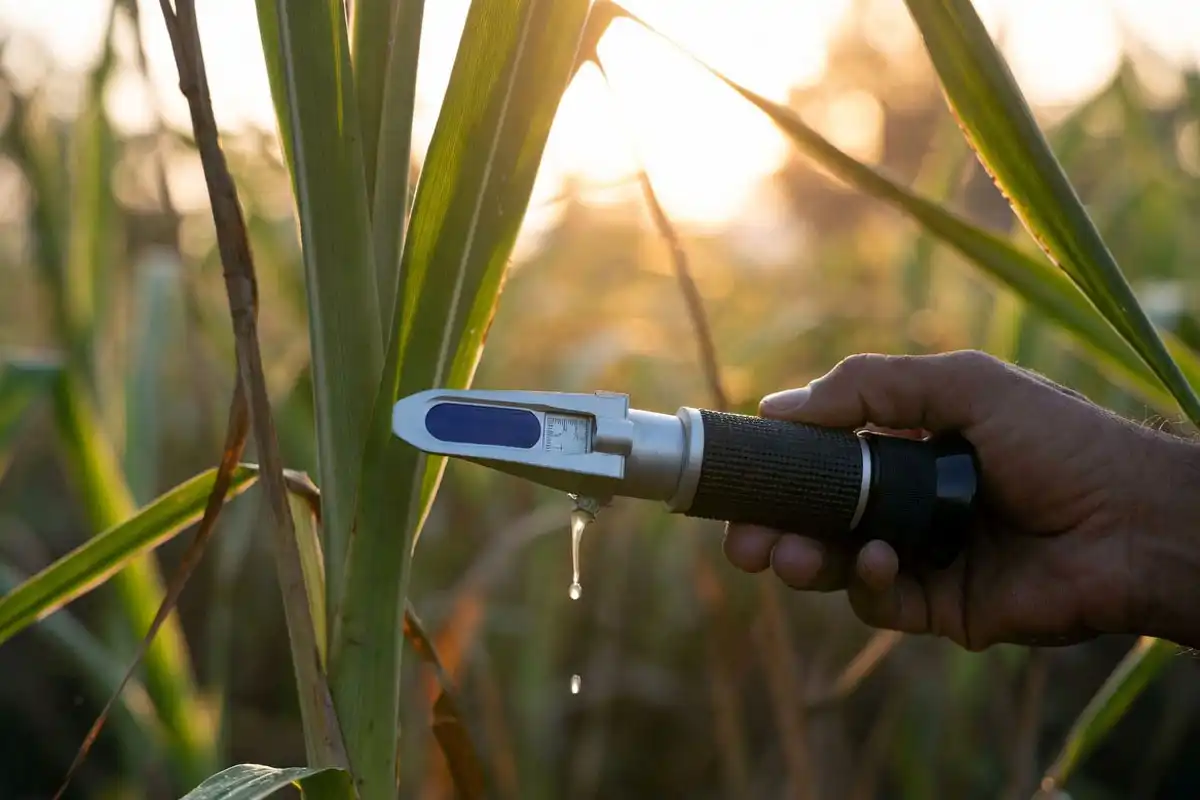
- Brix (°Brix): percent soluble solids in the juice, commonly measured in the field with a refractometer.
- Pol: a factory-style sucrose measure used with Brix.
- Purity (%): sucrose relative to total soluble solids.
If you want a simple “any-crop” harvest decision framework, this site’s harvest timing checklist helps you separate “looks ready” from “tests ready” in the field.
When is sugarcane ready to harvest?
Sugarcane reaches peak harvest maturity when sugar concentration peaks before quality starts sliding. The calendar date depends on variety, temperature, and water management, but most harvest decisions follow the same pattern: the crop ripens faster when sunshine and cool, dry weather slow stalk elongation.
Typical crop age benchmarks (use as a starting point, not a final answer)
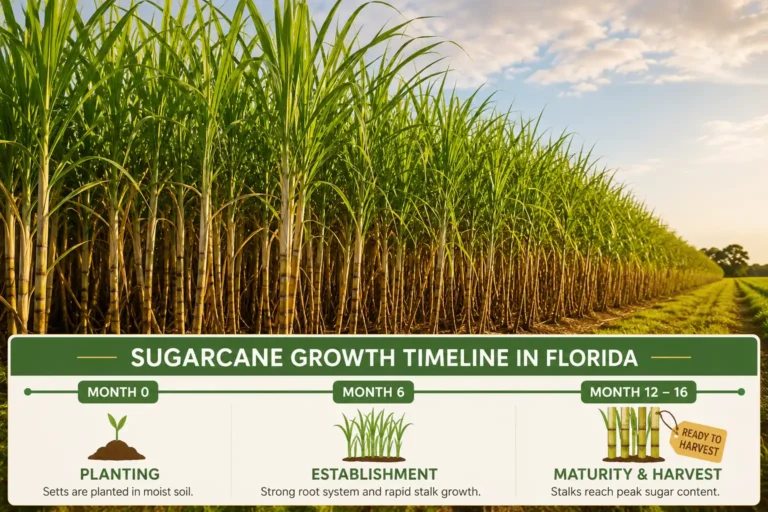
Extension-style guides commonly place harvest maturity in the 10–18 month range depending on region, crop type, and variety. One university guide notes 10–12 months in some sub-tropical systems and 18–20 months in some tropical systems, with harvest age shifting by planting season and variety class.
Planting date sets your whole harvest timeline, so read when to plant sugarcane for best yield to line up planting with your best ripening weather.
Use age to decide when to start checking. Use Brix plus crop signals to decide when to cut.
The “peak window” mindset
Your goal is not “old cane.” Your goal is “peak cane.”
- Under-mature cane carries more immature top internodes and weaker juice quality.
- Over-mature cane risks lodging, pithy stalks, and extra field losses, even if Brix looks decent.
If you want more context on how variety, water, and nutrition affect ripening, follow this sugarcane growing guide before you lock in your harvest date.
Where does harvest timing change the most?
Location shifts maturity because climate and soil change growth speed and ripening speed.
Climate and season
- Cooler, drier ripening weather pushes cane toward higher sugar because elongation slows.
- Wet spells near harvest often dilute juice and make cutting and hauling messy.
Irrigation and water stress
- Heavy late irrigation can keep cane “growing” instead of “ripening.”
- Hard drought can spike Brix but shrink stalk weight, so total sugar per acre falls.
If your field timing keeps getting thrown off by water, review guide to calculate crop water needs and match delivery method to your season (see drip vs sprinkler tradeoffs).
Fertility and nitrogen timing
Late nitrogen keeps the crop vegetative. That often delays ripening and keeps tops immature.
Variety, planting date, and flowering
Varieties differ in how fast they mature and how strong the “Brix gradient” runs from bottom to top. Field Brix testing works across locations because that gradient pattern is widely observed in sugarcane.
How do you judge sugarcane maturity in the field?
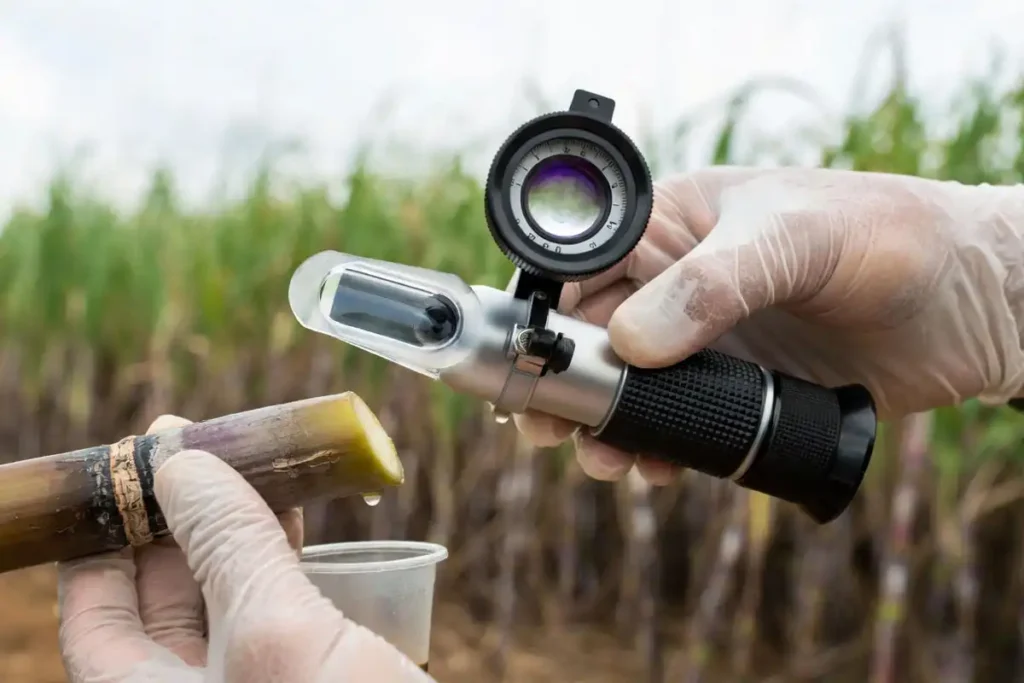
You judge maturity best by using a repeatable sampling routine, then confirming the crop with visual and physical signals.
Step 1: Gather tools and set up a simple record
- Hand refractometer (clean prism, calibrated)
- Punch or knife for juice sampling
- Clean cup, cloth, and marker
- Notebook or phone notes for field, date, variety, and readings
A Louisiana extension guide describes field Brix testing as a common practice and explains sampling juice from standing cane, often from the middle internode, to compare fields and harvest order.
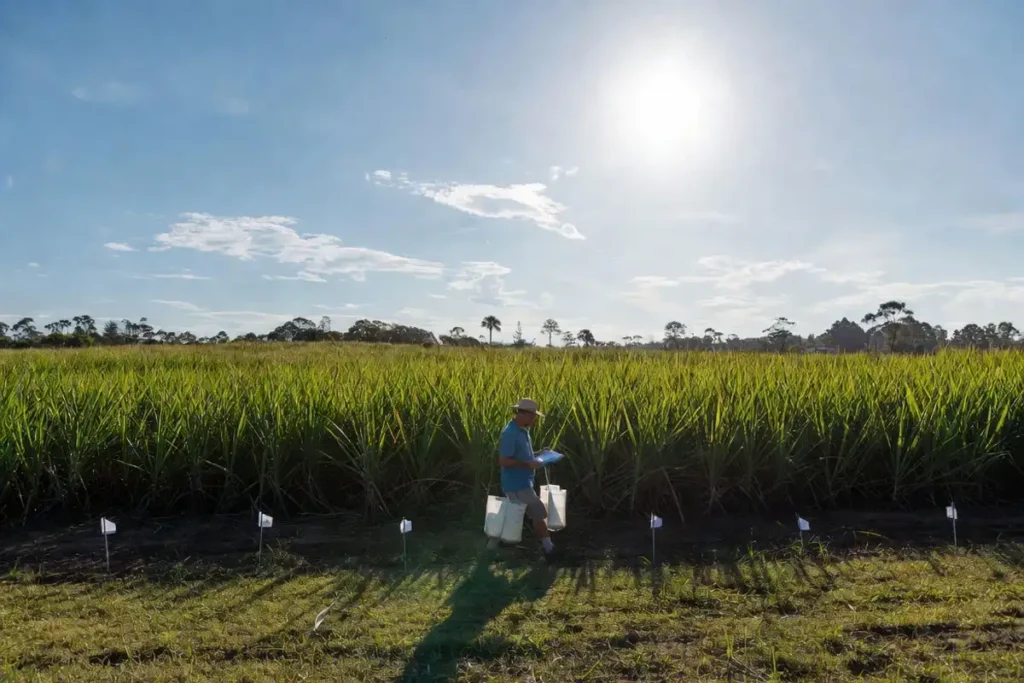
Step 2: Sample the field, not the headland
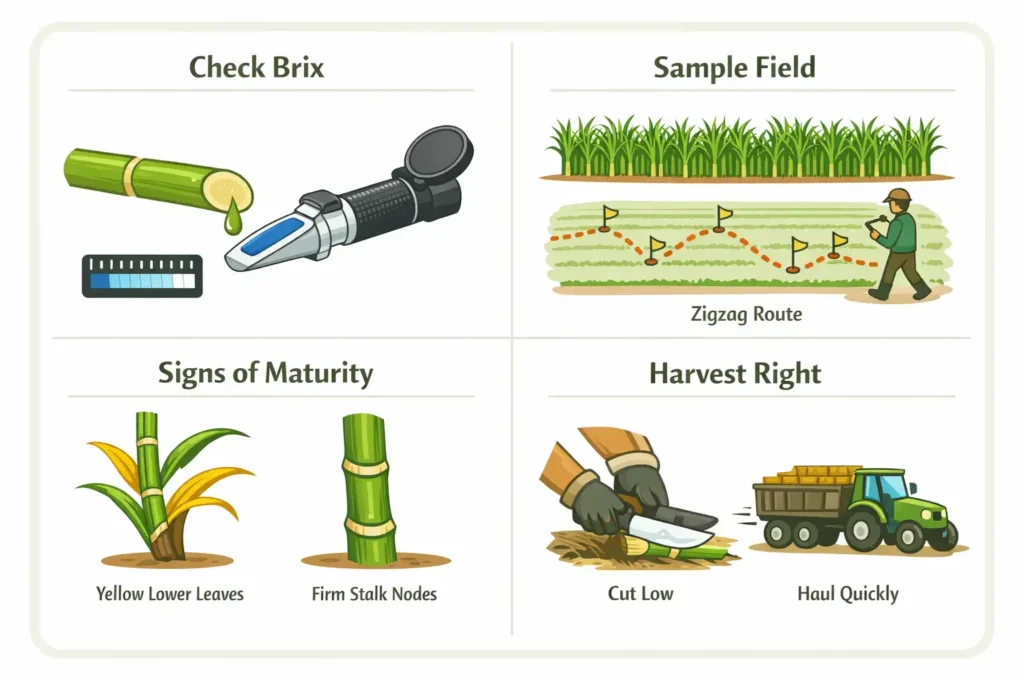
Walk a zig-zag. Pull stalks from average areas, not the best patch and not the drowned-out corner.
A practical target is 10–20 stalks spread across the block, then average the readings. (If the field is variable, sample each zone separately.)
Step 3: Take Brix readings the same way every time
Consistency beats fancy math.
- Take one sample from a mature-looking middle internode (common field method).
- Take a second sample higher on the stalk if you use a top/bottom method.
- Record readings with the time and recent weather notes.
Step 4: Use a clear harvest decision rule
Different mills and regions use different thresholds, but these are widely used guideposts:
- A FAO post-harvest guide flags juice Brix ~18% as a key parameter before industrial processing, alongside Pol and reducing sugars.
- One university guide describes 18–20% Brix as an optimum maturity indicator for harvest and uses a top-to-bottom Brix ratio near 1:1 as a “whole-stalk is mature” signal.
Field call that works in practice: Harvest when Brix stops climbing week-to-week and your top-of-stalk readings stop lagging far behind the bottom.
Step 5: Confirm with crop signals (fast checks)
Use signals to catch false readings.
A university guide lists maturity signals like:
- Leaves turning yellow and drying, especially lower leaves
- Growth slowing or stopping
- Stalk producing a sharper, “metallic” sound when tapped
- Buds swelling and eyes becoming more active late in the cycle
Add two physical checks most crews trust:
- Rind firmness: mature cane resists a thumbnail more than green cane.
- Top joint maturity: immature top joints feel soft and watery and often get topped off.
Step 6: Cut and handle cane like sugar matters
Good maturity gets wasted by sloppy harvest.
- Cut close to the ground so you keep the sugar-rich lower internodes.
- Top off immature joints so they do not drag down average juice quality.
- Move cane fast to processing or storage steps to slow quality loss.
For handling basics right after cutting, follow this site’s post-harvest handling guide.
Solutions: what to do if your cane is not mature (or you cannot wait)
If cane tests under-mature
- Delay harvest and recheck in 7–10 days using the same sampling plan.
- Stop late nitrogen applications and keep the field clean so the plant focuses on ripening.
- Tighten irrigation timing so the crop is not pushed into fresh vegetative growth.
If cane looks mature but tests low
- Recheck after 24–48 hours of stable weather. Rain and heavy irrigation can skew readings.
- Clean the refractometer prism and retake readings from the same stalk position.
If you need to harvest on a fixed schedule
Some systems use ripeners to shift maturity timing, but product choice and timing are local decisions tied to labels, regulations, and mill rules. Use extension guidance and follow label directions for any ripener or spray program.
Troubleshooting: common maturity problems and fixes
Brix jumps when sampling changes.
- Sample the same internode position each time.
- Avoid testing right after irrigation or rain.
- Keep juice and prism clean so trash does not skew the reading.
“Bottom reads high, top reads low”
That pattern signals immature tops. A top-to-bottom Brix gap is common early, then narrows as the stalk finishes ripening.
Solution: delay harvest if possible, or plan a higher top cut to remove immature joints.
“Cane tests sweet but tons are light”
Drought stress can concentrate sugar in less water while reducing stalk size. The fix is not “wait longer.”
The fix is better water planning earlier in the season.
“Harvested cane dries out fast”
A university guide notes that covering harvested cane with trash and sprinkling reduced moisture loss, and it reports moisture loss differences across varieties in one comparison.
Solution: shade piles when possible, cover to reduce sun and wind, and haul quickly.
If you need longer-term holding, use proven crop storage guide that fit your scale and climate.
Avoid mistakes that cost sugar and tonnage
- Cutting too high: you leave sugar in the field at the stalk base.
- Leaving tops on: immature top joints dilute average quality.
- Harvesting mixed maturity fields as one block: you average down quality. Zone-sample instead.
- Dirty cane delivery: leaves, roots, and soil increase milling issues and reduce recoverable sugar.
- Slow haul: quality declines as cane sits, especially in heat.
Better tools reduce injuries and improve cut quality. See the site’s roundup of harvesting tools and equipment.
Safety: protect workers and equipment during sugarcane harvest
Sugarcane harvest combines sharp tools, heavy bundles, heat stress, and rough ground.
- Wear cut-resistant gloves, eye protection, and boots with solid traction.
- Keep machetes and knives sharp so they cut clean, not slip.
- Build a “safe swing zone” so no one steps into a blade path.
- Hydrate on a schedule and plan shade breaks in hot weather.
- Watch for stinging insects, snakes, and hidden holes under trash.
- If you burn cane (where legal), treat fire control as a full plan with permits, wind checks, and suppression gear.
For a quick PPE checklist, use the site’s farm safety and PPE guide.
Final Words
Sugarcane is ready to harvest when the stalk finishes ripening from bottom to top and juice sugar reaches its peak. Age and season tell you when to start checking, but a consistent Brix routine plus clear crop signals tells you when to cut. Take clean samples, watch the top-to-bottom maturity gap, cut low, top off immature joints, and move cane quickly so field gains reach the mill.