When to Harvest Iceberg Lettuce for Firm, Crisp Heads
Iceberg lettuce rewards good timing more than almost any crop in the garden. Cut it too early and the head stays loose. Wait too long and it turns bitter or bolts. Knowing when to harvest iceberg lettuce comes down to one simple firmness check you can do by hand.
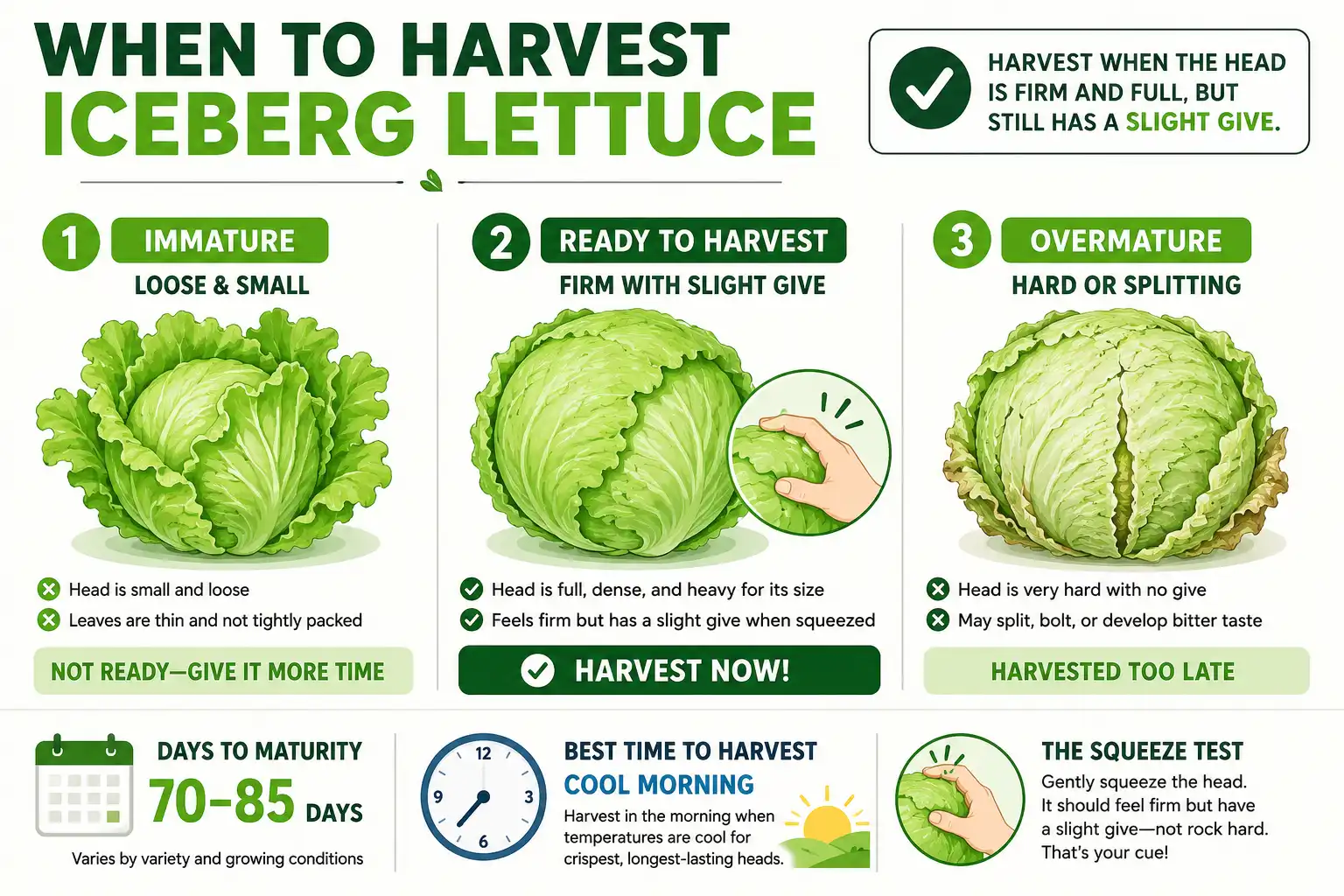
The signal for when to harvest iceberg lettuce is a firm head that gives slightly under moderate hand pressure, usually 70 to 85 days from seed. Cut it in the cool morning, before heat triggers bolting.
When Is Iceberg Lettuce Ready to Harvest?
Iceberg lettuce is ready when the head forms a tight, compact ball that gives a little under gentle hand pressure. That slight give is the signal that matters most. A head that feels rock hard sat too long. A loose, airy head still needs time.
Iceberg, the crisphead form of Lactuca sativa, fills out from the inside. The outer leaves wrap and the center tightens day by day. Heads should be checked every morning once they start to ball up. The window between perfect and past it stays short, especially when a warm spell moves in.
The Squeeze Test
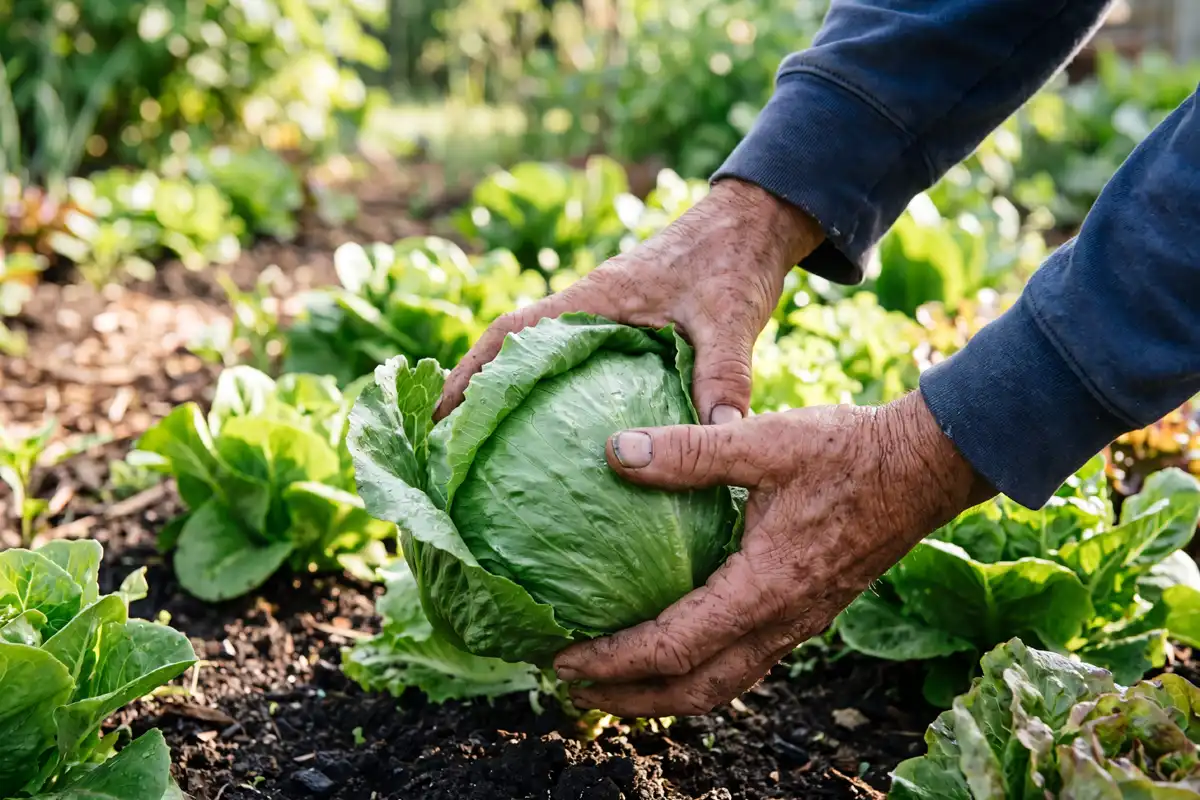
The firmness test beats the calendar every time. UC Davis postharvest research puts it plainly: a head you can press with moderate hand pressure is at its peak. A very loose head is immature. A very firm or hard head is past its prime and starts losing sweetness.
So cup the head in your hand and press gently. A ready head feels solid but yields a touch, like a slightly underinflated ball. If your fingers sink in easily, give it a few more days. If it feels like a hard ball with no give, cut it right away before it turns bitter.
Head Size and Weight
A mature iceberg head runs about the size of a softball up to a small soccer ball. Market heads usually weigh close to 2 pounds. Home garden heads vary with variety and spacing, so firmness matters more than size. A smaller head that feels solid beats a big head that stays loose.
Outer Leaf Color
Ready heads show fresh, deep green wrapper leaves with no yellowing. Yellow or limp outer leaves point to stress, heat, or an aging plant. The inner leaves stay pale and sweet, which is exactly what you want on your plate.
Days to Maturity for Iceberg Lettuce
Most iceberg varieties mature in 70 to 85 days, counted from seed emergence. If you start with transplants, subtract about 20 days, so figure 50 to 65 days from transplanting. Seed packets list a number, but treat it as a guide, not a promise.
Cool weather changes the math. Iceberg fills out faster in mild temperatures and slows down when nights stay warm. Variety matters too. Some crisphead lines are bred for quicker heading, while older types take their time. If you are still sorting out timing from the start, our notes on starting iceberg from seed and transplants lay out the full schedule. Getting that part right makes the harvest window much easier to hit.
Best Time of Day to Cut Iceberg Lettuce
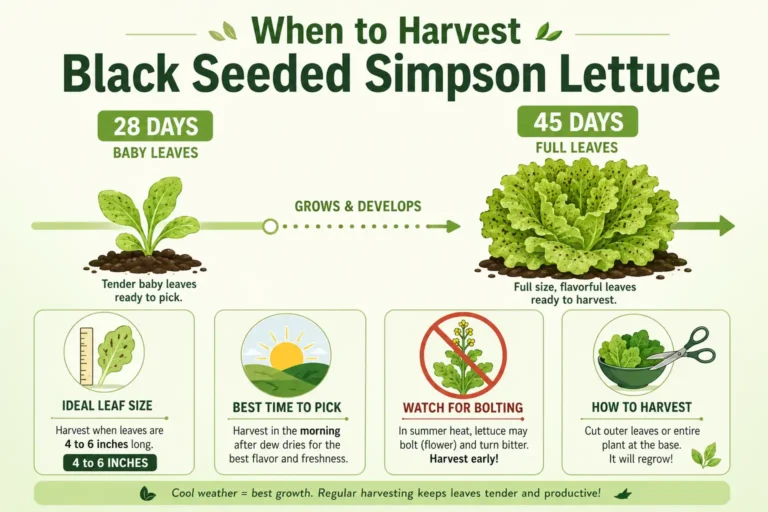
Cut iceberg lettuce early in the morning, while the heads are still cool from the night. Morning heads hold the most water, so they cut crisp and store longer. By afternoon, sun and heat pull moisture out, and the leaves go limp.
Heading out with a knife right after the dew burns off is the recommended timing. That hour or two after sunrise gives me the firmest, sweetest heads of the day. On hot days, it matters even more, because warm tissue wilts fast once cut.
Signs You Waited Too Long to Harvest
A few clear signs tell you the head sat past its prime. The head turns rock hard with no give. The flavor sharpens and turns bitter. A seed stalk may push up from the center, which means the plant has started to bolt.
Heat drives most of these problems. Once soil and air warm up, iceberg races to flower instead of holding a tight head. If your spring crop runs into a heat wave, cut a touch early rather than losing it. For summer plantings, the guide on keeping lettuce from bolting in heat covers the shade and timing tricks.
Splitting is another warning. Overmature heads crack open, especially after a heavy rain or irrigation following dry weather. Tipburn, a brown scorching along leaf edges, also shows up in stressful weather and uneven calcium uptake. Even, steady moisture helps prevent both, so keeping lettuce evenly watered through the season really pays off. Cut affected heads soon, since damaged margins break down fast.
How to Harvest Iceberg Lettuce
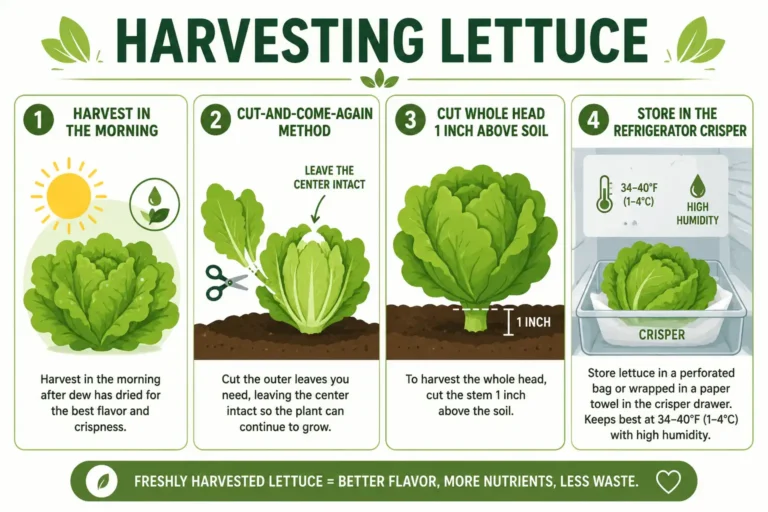
Harvest iceberg lettuce by cutting the whole head off at the base with a sharp, clean knife. Slice straight through the stem just above the soil line. Hold the head steady with your free hand so it does not tear.
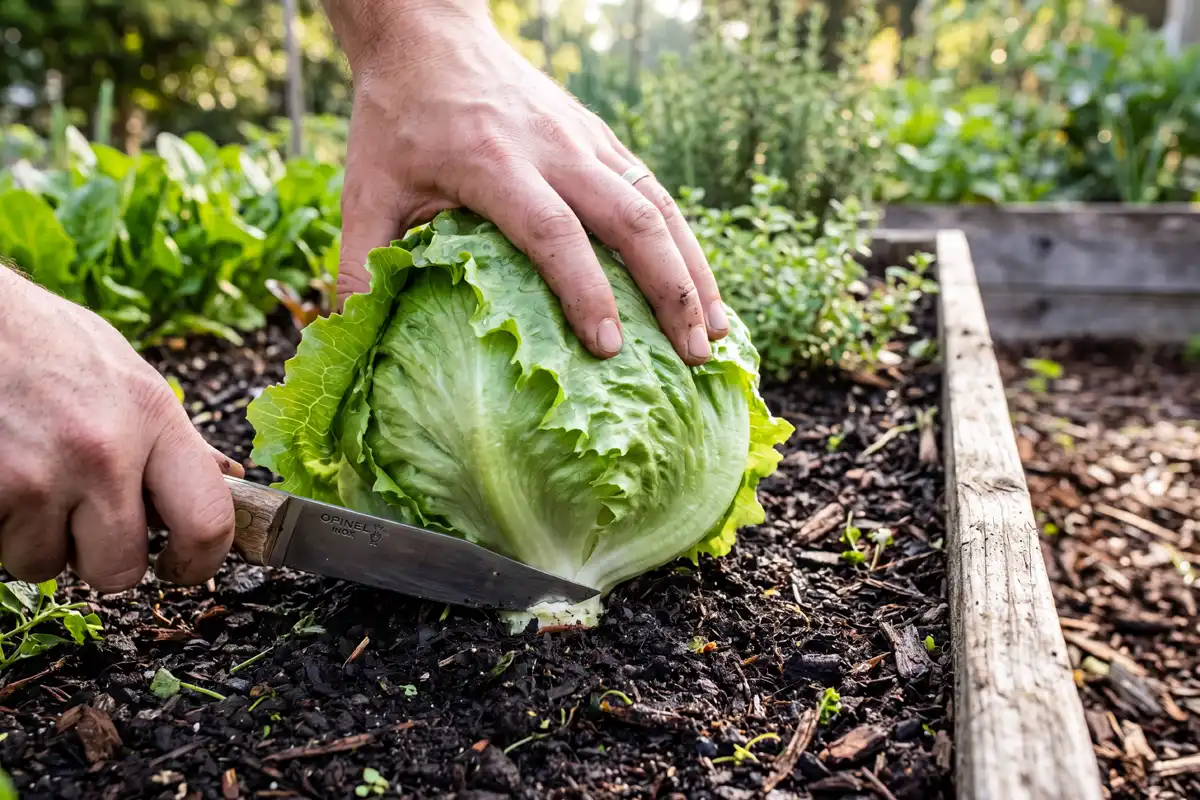
Leave two or three healthy wrapper leaves on the head. They protect the tight inner leaves during handling and storage. Then pull the leftover stem and roots out of the bed once you finish.
Iceberg is a one-and-done crop. Unlike leaf types, it will not regrow a new head after you cut it. If you want lettuce that keeps producing, leaf lettuce that regrows after each trim is the better pick for repeat harvests. For iceberg, plan staggered plantings instead, about two weeks apart, for a steady supply.
What to Do Right After Cutting
Get cut heads out of the sun and into cool storage within an hour. Iceberg loses water fast in heat, and that lost moisture never comes back. So the quicker you cool it, the crisper it stays.
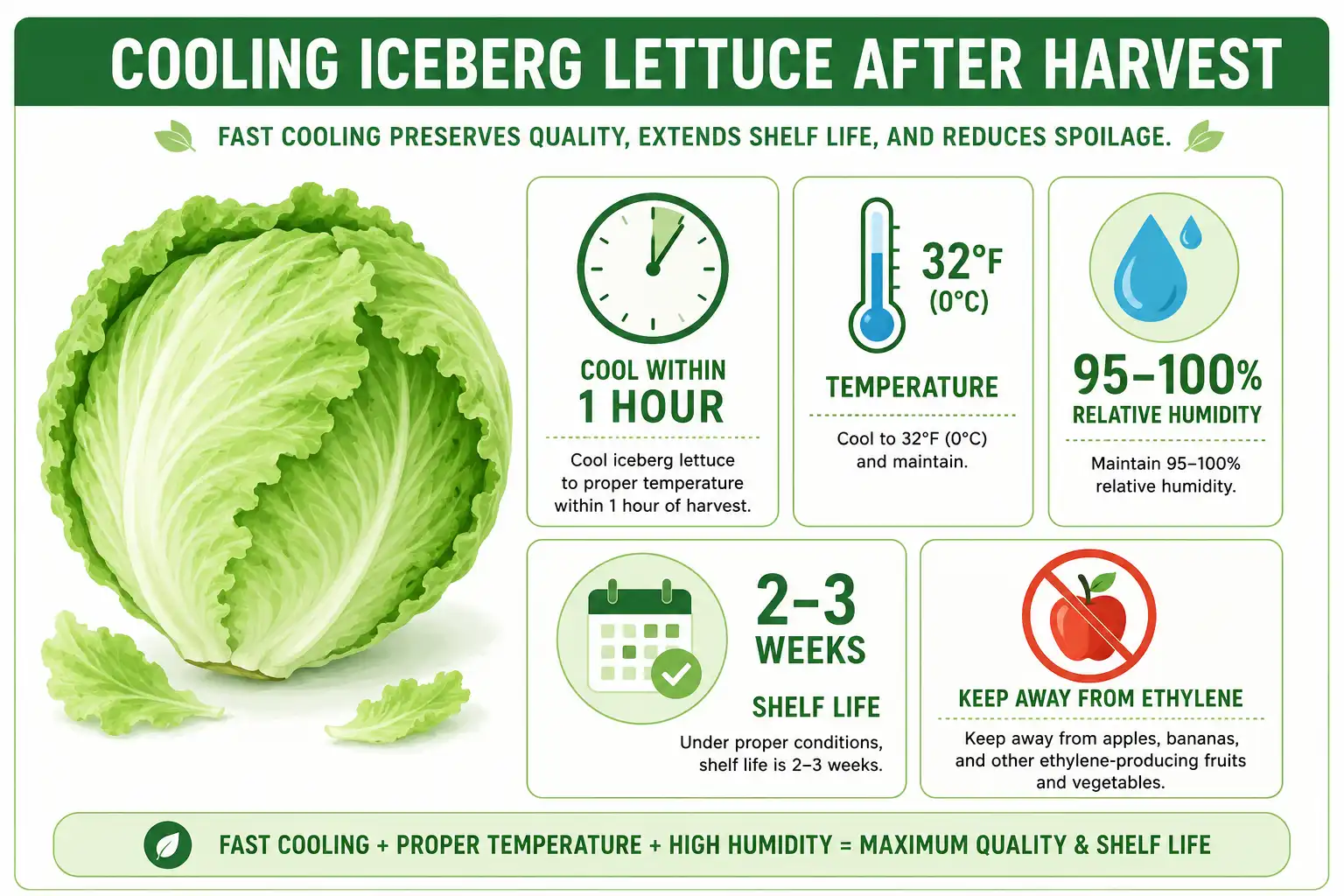
Store iceberg at 32°F with very high humidity, around 95 to 100 percent. At that temperature, solid heads hold for 2 to 3 weeks, and clean heads from some varieties last close to four. At 41°F, expect about two weeks. Keep lettuce away from apples, pears, and melons, since the ethylene they give off speeds up browning and decay.
In the home fridge, the crisper drawer works well. Wrap heads loosely or use a perforated bag to hold moisture without trapping rot. Flavor will not improve after harvest, so cut at peak firmness for the best eating.
When to Harvest Iceberg Lettuce in Kansas and the Great Plains
In Topeka, USDA hardiness zone 6a, iceberg is harvested in two windows: late spring and fall. Spring heads come off in late May and early June, right before summer heat sets in. The trick is racing the heat, because once we hit the 80s, spring iceberg bolts quickly.
Fall is the favorite window for iceberg. Start transplants in mid to late summer and set them out as the weather cools. Those heads firm up through September and October, often sweeter and tighter than the spring crop. Cool nights and shorter days suit crisphead perfectly across the Great Plains.
Timing the planting matters as much as timing the harvest. When you dial in your iceberg planting window for firm heads, the harvest lines up with cool weather and you skip the bolting rush. That single decision shapes how good your heads turn out.
Bottom Line for Your Iceberg Patch
Iceberg comes down to firmness and timing. Harvest when the head feels solid but gives a little under gentle pressure, somewhere around 70 to 85 days from seed. Cut in the cool morning, leave a few wrapper leaves, and chill the heads fast. Most of all, do not wait for a giant head. A firm, sweet iceberg you cut on time beats a hard, bitter one every season.