When to Plant Sugar Beets: 5 Soil Signals You Cannot Ignore
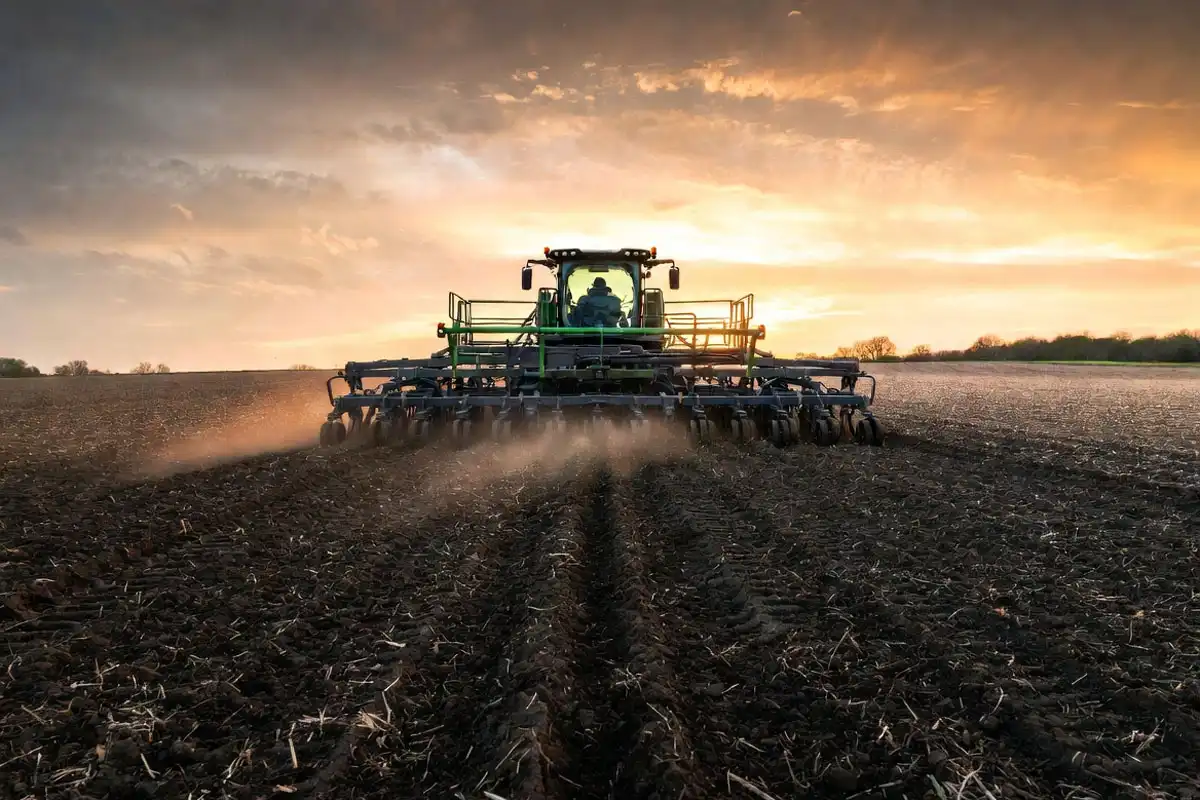
Plant sugar beets as soon as the field carries equipment and the seed zone warms into the mid 40s to low 50s°F (7 to 11°C). This guide explains how to pick that window using soil temperature, soil moisture, and spring frost patterns, then it walks through seedbed prep, planter setup, and early-season checks that protect stand and sugar yield. You will also learn what to do when cold snaps, crusting, or wind show up after planting.
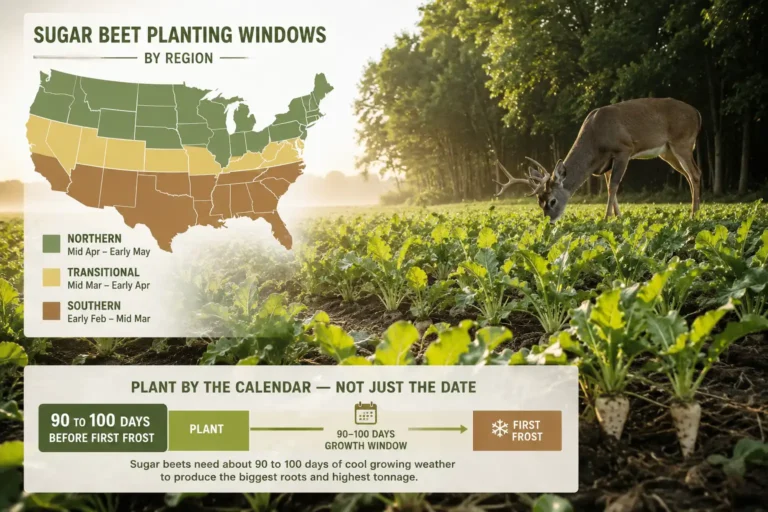
Plant sugar beets when the top 2 inches of soil average 45 to 52°F (7 to 11°C) and warm each day, and when the seedbed is firm, not sticky. In Minnesota, North Dakota, and Wisconsin, the high-yield window runs about April 20 to May 10. Delays after May 10 cut yield about 1.5 tons per acre per week.
What does planting date control in sugar beets?
Planting date controls how fast seedlings emerge, how uniform the stand becomes, and how long the crop builds yield before harvest. Early planting usually pays because the crop gets more cool-season growing time and closes rows earlier.
University of Wisconsin notes that early planting in the Upper Midwest produces the highest yield and quality, and that yields drop about 1.5 tons per acre per week when planting slips past May 10.
If you want the full crop A-to-Z overview alongside this timing guide, see the CropFarming.org page.
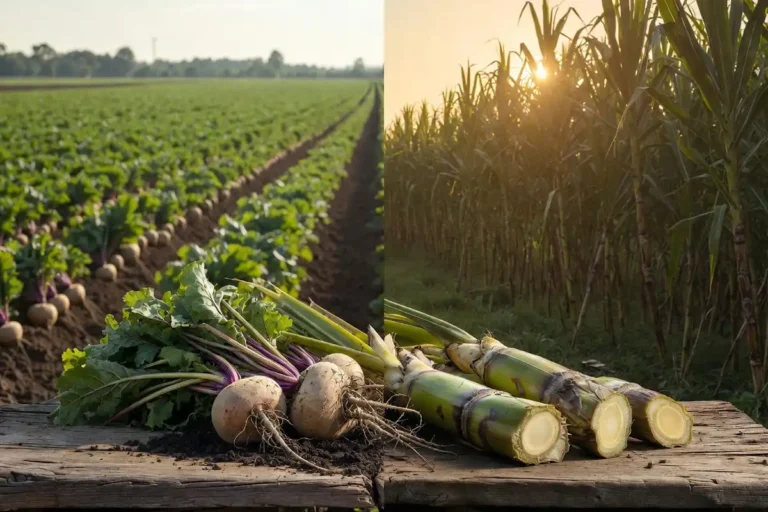
Know more: Sugar Beets vs Sugar Cane: 7 Key Facts Farmers Use to Choose
When is the best time to plant sugar beets?
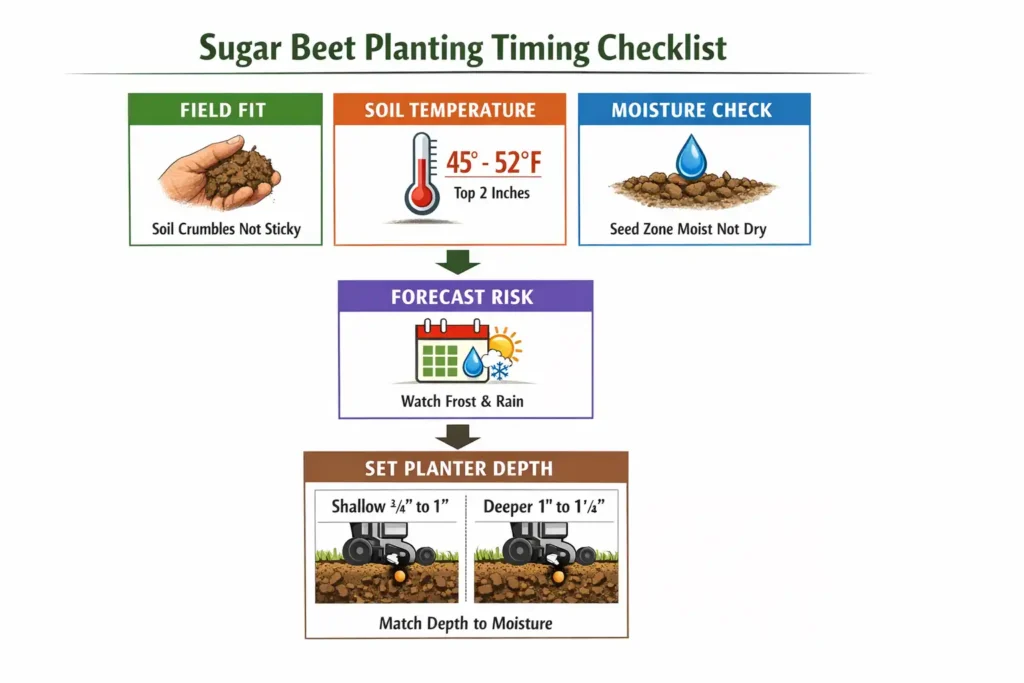
The best time is when three signals line up:
- Field fit: Soil crumbles instead of smearing. The planter closes the trench without sidewall compaction.
- Seed-zone temperature: The top 2 inches trend into the mid 40s°F and keep rising.
- Forecast risk: Cold nights can happen, but a long cold, wet stretch after planting usually hurts more than a light frost.
A reliable benchmark for the Upper Midwest
For Minnesota, North Dakota, and Wisconsin, University of Wisconsin lists an optimum planting window of April 20 to May 10, with successful planting as early as April 1 in some years and as late as June 10 for a harvestable crop.
Use this benchmark as a reference point, then adjust to your farm’s soil and weather.
To translate that into your location and season, start with a local schedule like complete crop planting calendar and then confirm it with soil temperature and field fit.
How do soil temperature and moisture change emergence?
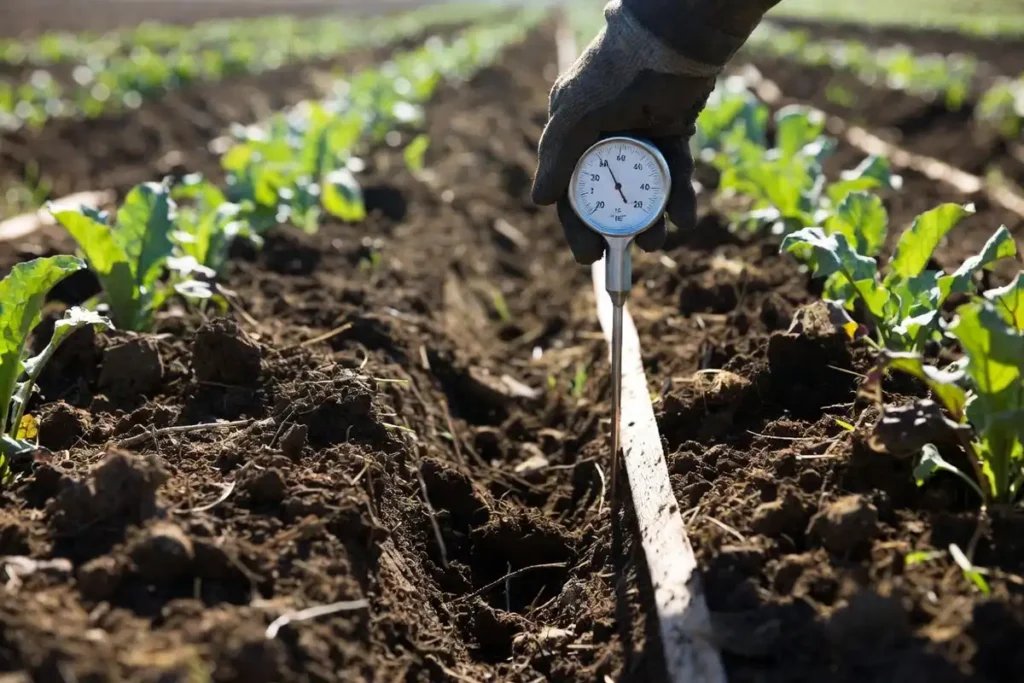
Soil temperature sets the pace. Slow emergence leaves seed exposed longer to rot, crusting, insects, and stand gaps.
North Dakota State University gives practical emergence timing by average daily soil temperature (adequate moisture):
| Soil temperature (°F) | Approx. days to emergence |
|---|---|
| 38 to 45 | 21 days or more |
| 45 to 52 | 10 to 21 days |
| 52 to 60 | 7 to 12 days |
| 60 to 70 | 5 to 7 days |
A good planting decision targets the range where emergence moves in days, not weeks.
Where do field conditions change the planting decision?
Two fields in the same county can plant a week apart and both be “right.” The difference is usually drainage, residue, and seedbed firmness.
Heavy, poorly drained ground.
Planting into tacky soil often creates sidewall compaction and open seed trenches. Those problems show up later as skips, weak roots, and uneven size at harvest.
High residue and no-till.
Residue protects against wind erosion, but it can keep soils cooler and create hairpinning if openers are not set right. If you are weighing tillage systems, this overview on the tillage vs. no-till farming helps you match the system to spring conditions.
Soil pH and fertility.
Sugar beets grow best in a moderate pH range and respond to balanced fertility. University of Wisconsin notes sugar beets do not perform well on highly acidic soils and lists best growth around pH 6.0 to 8.0.
A clean soil test keeps the planting plan honest, especially for nitrogen management and pH. Use this guide to soil testing for farming before you lock in the field.
How do you plant sugar beets for a fast, even stand?
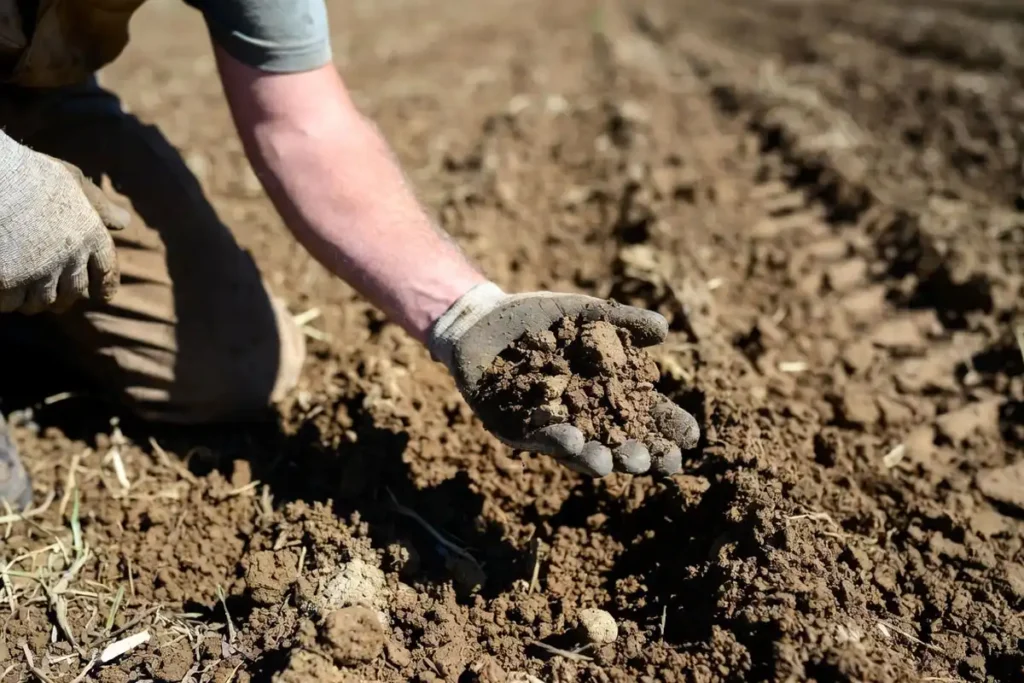
This is the start-to-finish workflow on any beet operation, big or small.
1) Set the target stand before you plant
A solid harvest stand often lands around 30,000 to 40,000 uniformly spaced plants per acre, and University of Wisconsin notes growers often establish about 60% to 70% of planted seed.
That reality drives seed spacing and seeding rate.
2) Check the field for “fit”
Do a simple test: grab a handful at planting depth and squeeze. If it forms a shiny ribbon or smears, the field is not ready. If it crumbles, the field is close.
3) Build a firm, level seedbed
Sugar beets like a level surface and firm seed zone so the seed holds depth and maintains capillary moisture. Too many spring passes dry the seed zone and loosen it.
4) Set planting depth to match temperature and moisture
Depth is not one fixed number. It is a moisture decision.
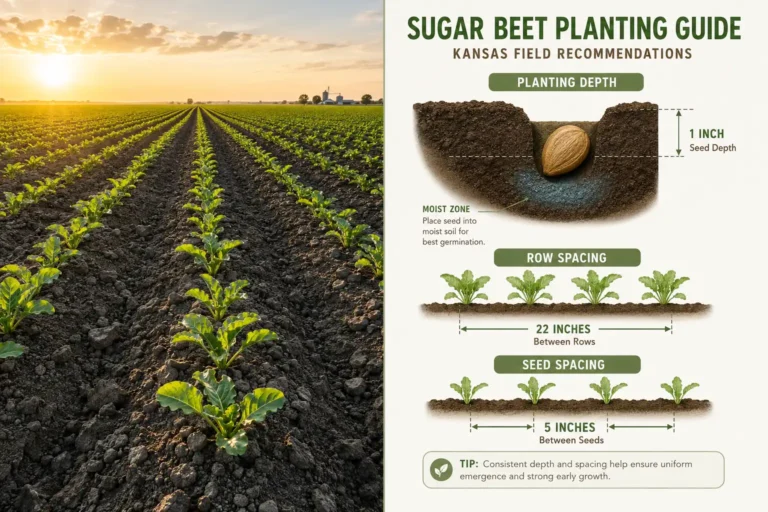
- Michigan State University calls 1 inch a standard depth and recommends 0.75 to 1 inch for early planting in cool, moist conditions. It lists 1 to 1.25 inches for warm conditions with less moisture, and 1.25 to 1.5 inches when soils are warm with marginal moisture and no rain in sight.
- North Dakota State University’s production guide lists planting seed 1 to 1.25 inches deep for strong germination and emergence.
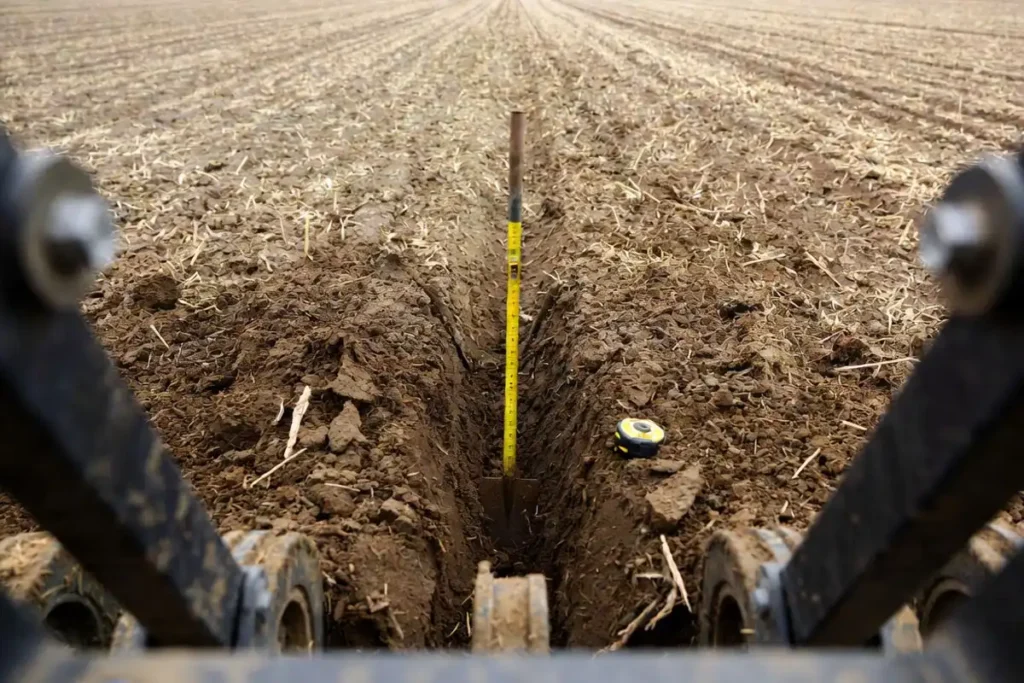
The key is consistency. Measure depth behind the planter in every field.
5) Match spacing, speed, and singulation to your row width
In Minnesota and North Dakota, NDSU lists a common “plant-to-stand” spacing of 4.5 to 5 inches in 22-inch rows, and it recommends about 4 mph for conventional planters (higher speeds depend on planter design).
If you need a refresher on spacing logic across crops, this guide on plant spacing for crops explains how spacing connects to stand and yield.
6) Do post-plant checks the same day
Walk behind the planter and confirm:
- Trenches close tight with no air pockets.
- Seeds sit on moisture, not powder.
- Residue is not hairpinned into the slot.
- Packing is firm, not compacted into a brick.
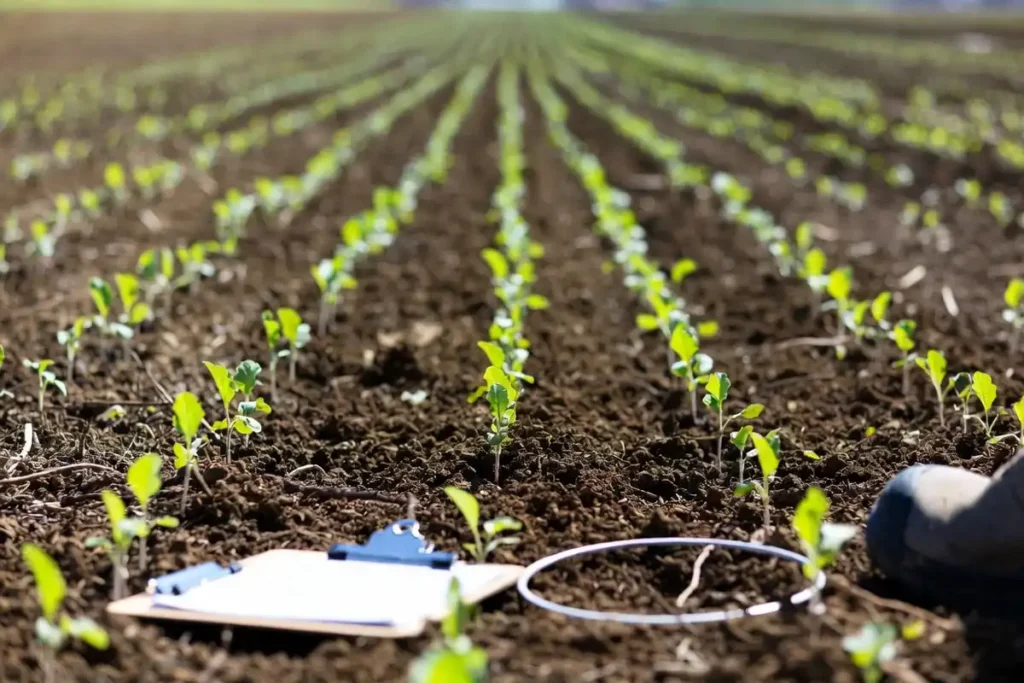
7) Scout emergence and stand counts early
Slow emergence often signals cold soil, crusting, or seed-zone disease pressure. Start scouting as soon as the first loop breaks the surface, then do stand counts once emergence finishes.
What solutions help when planting conditions are marginal?
Marginal conditions call for small adjustments, not panic.
Cold soils.
Wait for a warming trend rather than chasing a calendar date. If you plant on the edge, keep depth on the shallow side only when moisture supports it.
Dry seed zone.
Plant to moisture, even if that adds a quarter inch. On irrigated ground, some growers use a light irrigation strategy to support emergence, but the goal stays the same: moisture plus oxygen, not saturation. For planning water, use this guide on calculating water needs for crops.
Wind risk.
A little surface residue and a level seedbed help protect seedlings. Avoid a fluffy finish that blows.
Weed flush pressure.
Early planting can help sugar beets compete sooner, but beets still need clean early-season weed management. This walkthrough on basic weed control in farming helps you line up the program with crop stage.
Troubleshooting: what does each stand problem mean?
Slow, uneven emergence
Common causes include cold soil, planting too deep, crusting, or a seed slot that never closed. Compare your soil temperature to the NDSU emergence table and dig seed to confirm oxygen and moisture conditions.
Skips and doubles in the row
This usually points to speed, vacuum settings, worn parts, or seed that does not match the disk or meter. NDSU emphasizes planter maintenance and calibration before planting.
Crusting after a hard rain
Crusting is worse on loose, fine-textured seedbeds. A firm seedbed and correct packing reduce the risk. If crusting starts, act early with the lightest tool that breaks the crust without burying seedlings.
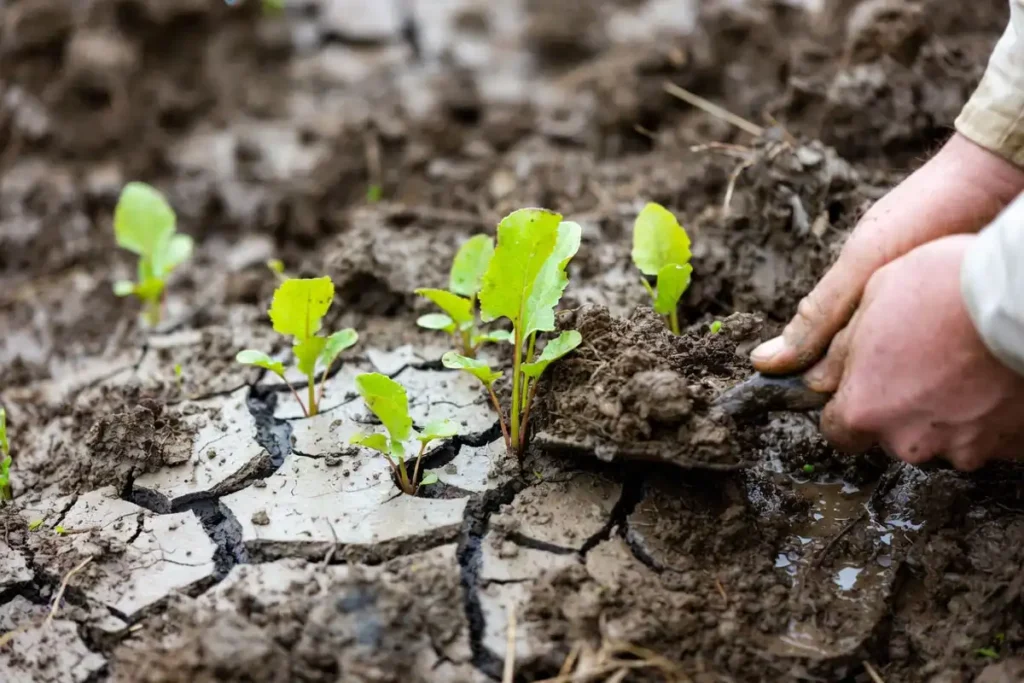
Frost worry after planting
Seedlings tolerate light frosts better than most folks expect. University of Wisconsin reports seedlings surviving temperatures in the mid 20s°F range under mild frost events.
The bigger risk is a long cold, wet spell that slows emergence into the multi-week range.
Mistakes that cut stand and yield
- Planting when the soil smears and the sidewall seals.
- Planting deeper to “be safe,” then waiting weeks for emergence.
- Running too fast and accepting poor singulation.
- Leaving seed trenches partly open.
- Making extra spring tillage passes that dry the seed zone.
- Delaying planting past the proven window without a clear reason, then rushing setup.
Safety checks during sugar beet planting
Planters and tractors can hurt people fast. Take the shortcuts out of the job.
- Shut down equipment and remove keys before clearing a plug or working near meters, chains, or closing wheels.
- Keep hands away from pinch points around row units and marker arms.
- Use high-visibility gear when moving equipment on roads.
- If you handle treated seed or crop protection products, follow the label PPE requirements and wash up before eating or smoking.
Last Words for Crop Farmers
Plant sugar beets when the field is fit, the seed zone warms into the mid 40s to low 50s°F, and the forecast supports steady emergence. Use a firm, level seedbed, then lock in consistent depth and singulation. After planting, confirm trench closure and track emergence pace so you catch crusting, skips, and cold delays early.