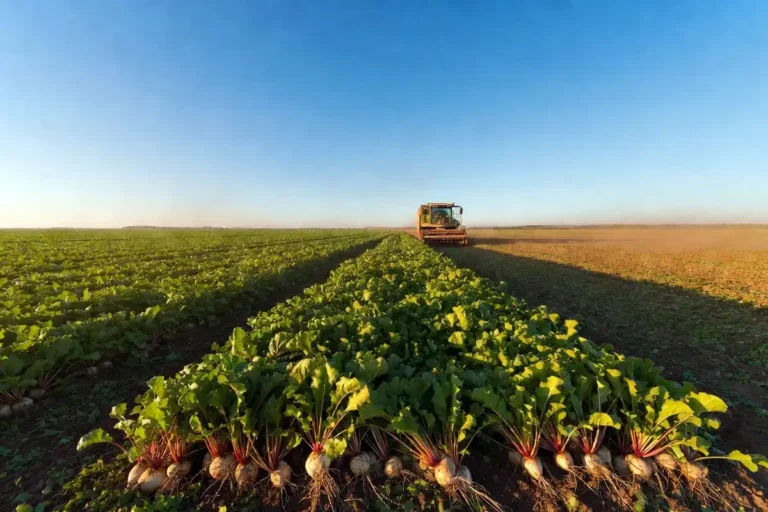
How Are Sugar Beets Harvested? A Field to Pile Guide

Those towering beet piles you see each fall start with a tightly timed field operation. If you have ever wondered how sugar beets are harvested, the short version is topping, lifting, and cooling.
Sugar beets are harvested in fall with two machines. A defoliator strips the leafy tops, then a lifter-loader pulls the roots and cleans them. Trucks haul the beets to piling stations, where cool air preserves sugar until processing.
How Are Sugar Beets Harvested, Step by Step?
Sugar beets are harvested in a set sequence: defoliate, lift, clean, load, haul, and pile. Each step protects the root and the sugar packed inside it.
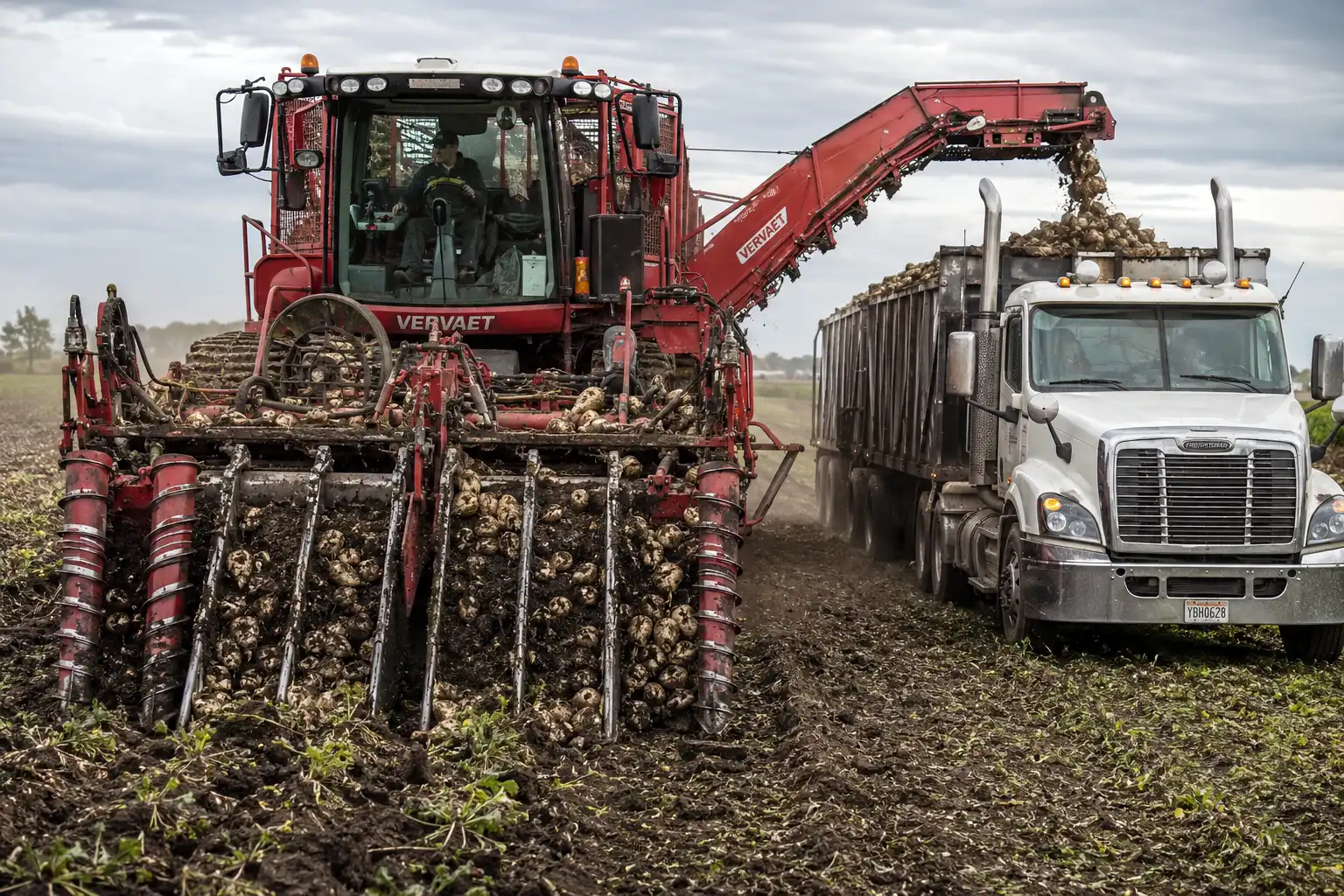
Here is the order every harvest follows:
- Defoliate the tops. Rubber flails knock off the leaves, then a scalping knife trims the crown.
- Lift the roots. Angled lifter wheels squeeze the beets up out of the soil.
- Clean the beets. Grab rolls and chains shake loose dirt back onto the field.
- Load into trucks. An elevator drops clean roots into a semi or a beet cart.
- Haul to the piling station. Trucks run the beets to a receiving yard or the factory.
- Pile and cool. Beets stack into long outdoor piles that cold air keeps fresh.
Big operations pull a defoliator and a separate harvester across the field. Some growers instead run a self-propelled machine that tops and lifts in one pass. Either way, the goal stays the same. You want clean roots, little bruising, and cool temperatures going into storage. All of this comes after a full season of growing sugar beets. So a clean, well-managed field makes the whole harvest run faster.
When Are Sugar Beets Harvested?
Sugar beets are harvested in fall. The main harvest across the northern states usually starts near the first of October. Timing follows both the calendar and the thermometer.
An early prepile harvest often begins in late August or September. It feeds the factory as it fires up. During prepile, growers lift only a few days of beets at a time. Warm roots simply do not store well. The main harvest opens near October 1. Crews then run around the clock, and it often wraps within two to three weeks.
The exact window shifts with latitude and local weather. North Dakota State University tracks sugar beet growth in heat units. That is why northern fields mature and come off in a fairly tight fall window. Here is roughly when the major regions run:
| Region | Typical main harvest window |
|---|---|
| Red River Valley (MN, ND) | Early to late October |
| Michigan (Saginaw Valley) | Late September into November |
| Nebraska, Colorado, Wyoming | Late September to October |
| Idaho, Montana | October |
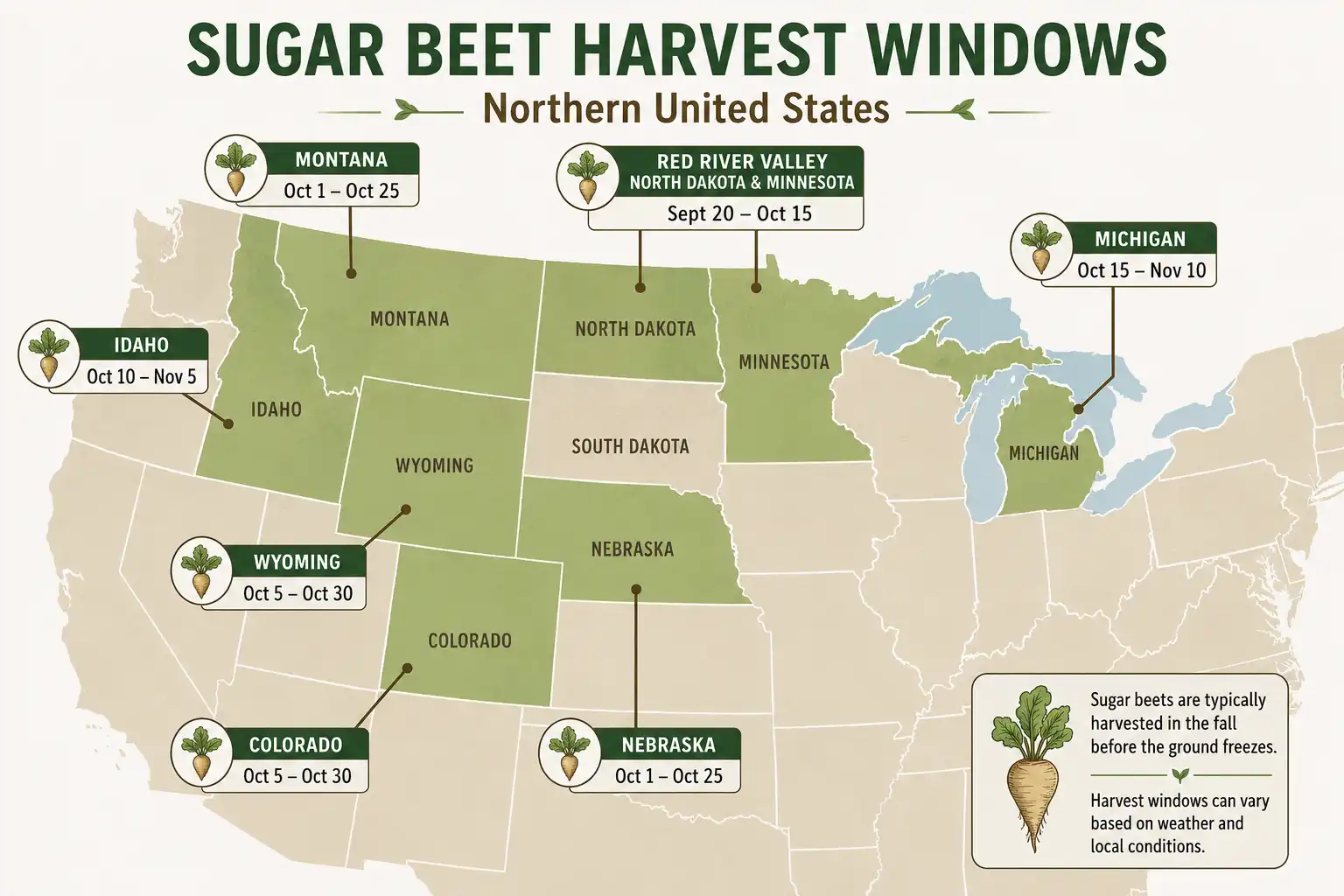
Your local cooperative sets the official start date. It can also pause harvest when the weather turns warm. The colder sugar beet growing regions farther north tend to finish first. It all traces back to planting sugar beets in spring. The season’s heat then adds up from there.
How Does Defoliation, or Topping, Work?
Defoliation removes the leafy canopy and trims the crown. It happens before the roots ever leave the ground. The defoliator always runs first.
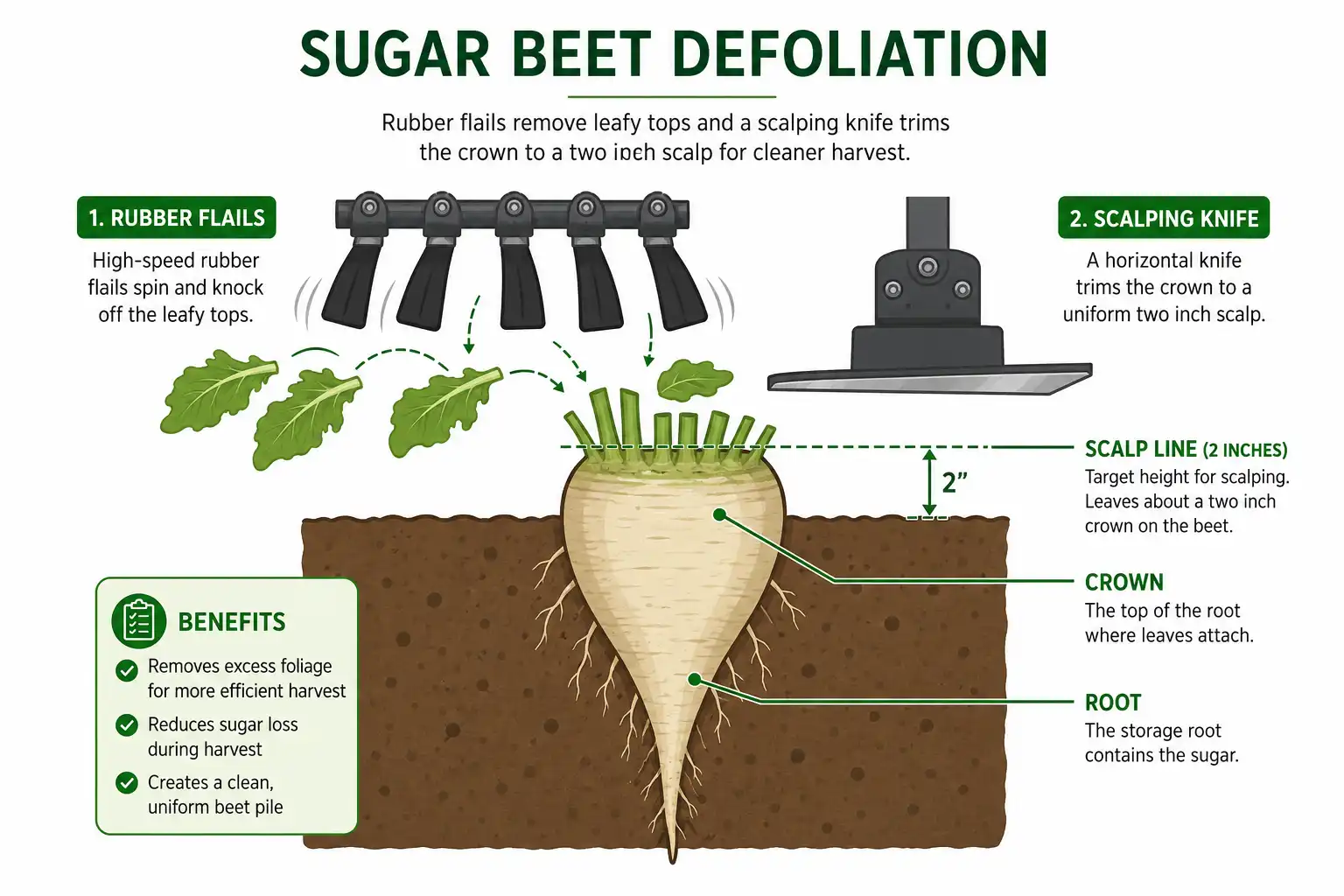
Spinning rubber flails beat off the tops and throw the leaves aside. A set of scalping knives then shaves the crown clean. Cooperatives like Southern Minnesota Beet Sugar want all green material gone. They recommend a scalp near two inches across.
A clean scalp matters for three reasons:
- It stops regrowth. A crown left too tall will try to sprout again in the pile.
- It cuts leaf trash. Loose green material clogs the air channels in a storage pile.
- It lowers impurities. Less crown means less non-sugar material for the factory to strip out.
Timing the topping is its own skill. Leave the canopy on as long as you can before lifting. The leaves shade the roots and hold heat off the crown. That protects sugar right up until the beets come out.
How Does the Harvester Lift the Beets?
The harvester lifts beets with paired lifter wheels or shares. They grip each root and squeeze it up out of the soil. It works the row right behind the defoliator.
Once the roots break free, spiral grab rolls and cleaning chains take over. They tumble the beets and drop most of the soil back on the field. A side elevator or boom then loads the clean roots into a truck alongside.
Rig size depends on the operation. A small grower might pull a two or three row lifter. Big farms on the Corn Belt fringe and across the Great Plains go bigger. They run six, eight, or twelve row harvesters. Some are self-propelled, with an onboard tank that dumps on the go.
Depth setting is where beets get saved or wasted. Run the lifter shallow enough to avoid snapping the tips. Set it deep enough that roots do not slip past the wheels. Broken and bruised beets leak sugar and rot faster in storage. That is where careful handling after lifting really pays off.
Why Does Beet Temperature Matter So Much at Harvest?
Beet temperature drives storage life. Growers chase cool roots and stop harvest when beets get too warm. Warm beets burn their own sugar.
Michigan State University research shows respiration doubles for every 15°F rise in root temperature. A hot beet in the pile keeps breathing. It spends its stored sugar and invites rot.
That is why the 55°F rule runs the show up north. American Crystal Sugar will not accept warm beets for long-term storage. Once internal root temperature climbs past 55°F on a warming day, loading stops. When afternoons heat up, crews shut down. They get going again at night or early morning, when roots are cool.
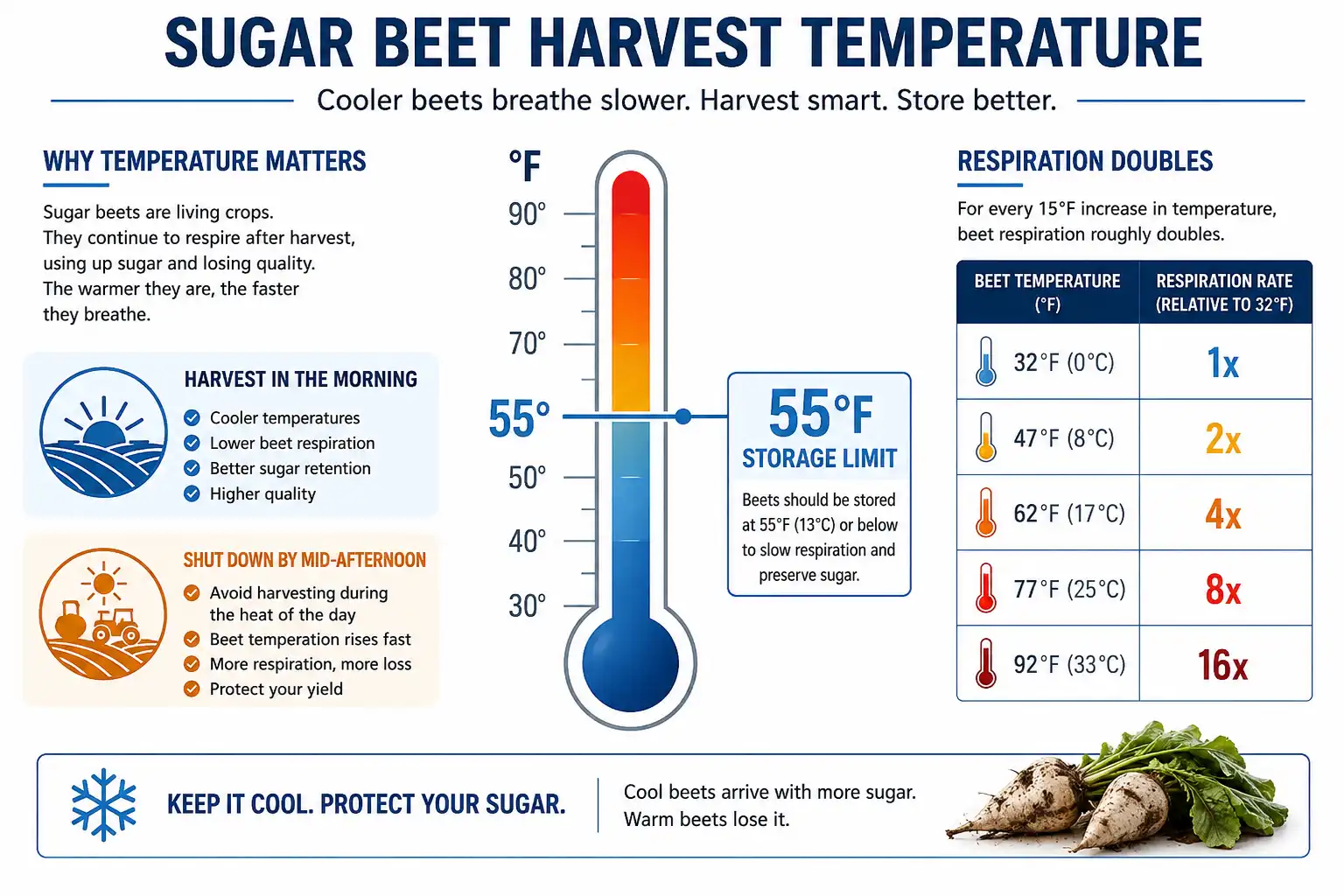
A dry, cool fall is the sweet spot for harvest. It firms the soil and keeps dirt tare low. It also pushes sugar content higher, sometimes into the upper 18 percent range. Reading root temperature is a big part of deciding when a crop is ready to harvest. Beets are one of the clearest examples of that.
What Happens to Sugar Beets After Harvest?
After harvest, beets go straight to piling stations. They wait in giant outdoor piles until the factory can slice them. Cold weather does the storing.
Trucks dump their loads over a piler. It screens off loose dirt and stacks the roots into long ridges. These piles often stand around 20 feet tall. The piling grounds sit at the factory or at outlying receiving yards.
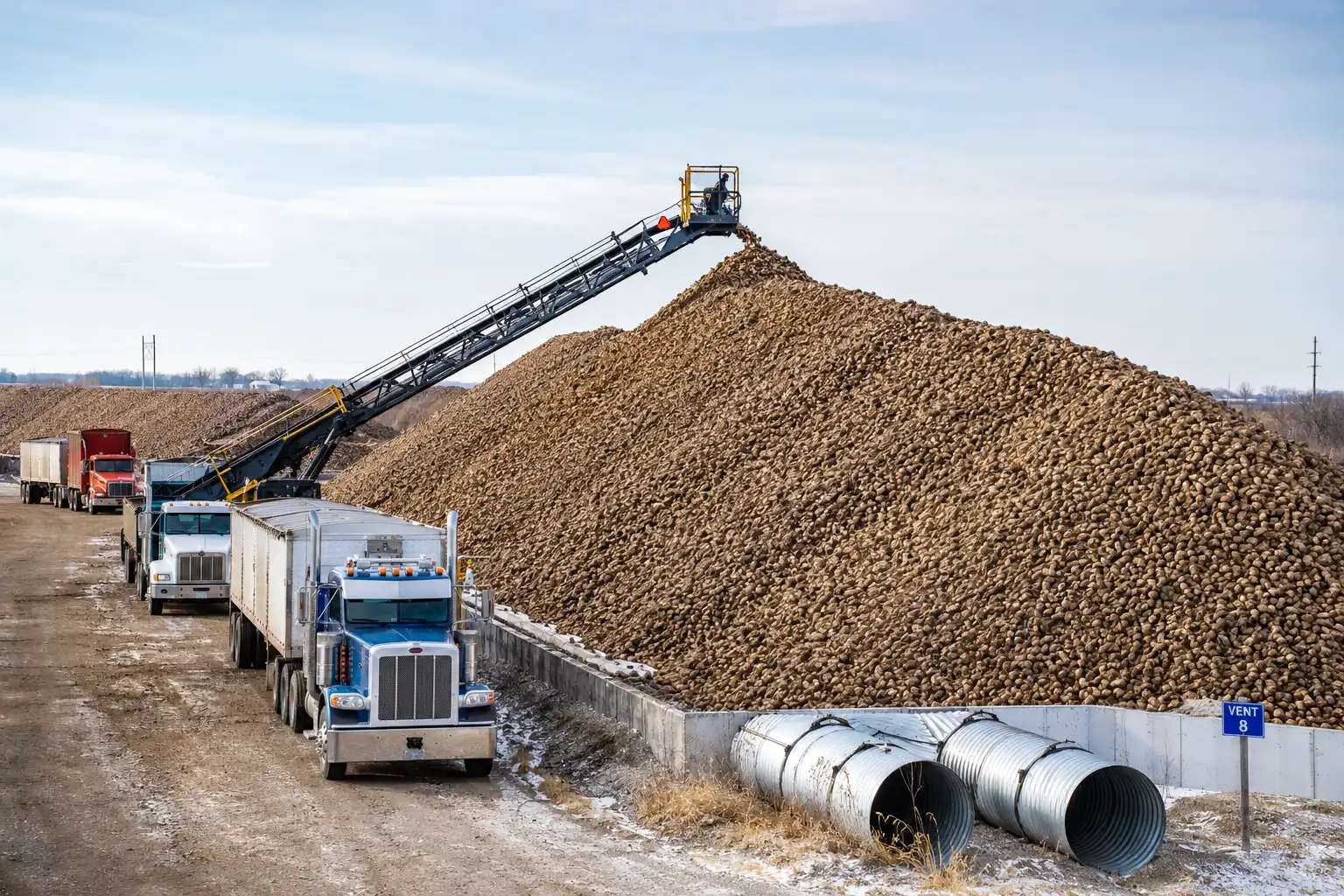
To hold quality, crews run ventilation fans through culverts under the piles. The fans pull the beets down toward freezing. The aim is to freeze them solid, then cover them with tarps. That can keep them sound into late spring. Frozen beets stop respiring almost completely.
The real danger is freeze and thaw. Beets on the outer rim can thaw and refreeze. They burn sugar fast, so pile managers watch those edges closely. Beets can sit in storage for five to six months. Then comes their turn through the factory. There the roots are sliced and soaked in hot water to pull out the sugar. The juice is boiled down into crystals. The same ideas behind long-term crop storage apply here, just at a huge scale.
What Affects Sugar Beet Harvest Quality and Payment?
Harvest quality comes down to four things: dirt tare, leaf trash, root damage, and sugar content. Each one shows up in the grower’s check. Payment ties to clean weight and sugar, not raw tonnage alone.
These four factors move quality the most:
- Dirt tare. Soil hauled in with the beets is weighed out and docked. Wet fields raise tare and slow the factory.
- Leaf trash. Loads with too much green material can be turned away, since trash blocks pile ventilation.
- Broken and bruised roots. Damaged beets leak sugar and spread rot through a whole pile.
- Sugar content. More sugar per ton means more payable product from the same load.
Clean lifting, sharp scalping, and cool roots protect all four at once. Soil condition plays a role too. A firm, well-drained field going into fall makes for a cleaner load.
Bottom Line for Your Field
Sugar beet harvest is a race against heat and rot. Beets are not a Kansas crop. But the timing and storage math match what growers watch on their own fields every fall. Top the beets clean, lift them gently, and get cool roots into the pile fast. The growers who store beets well treat every root like the sugar it holds. Get the timing and the handling right, and the factory does the rest.