How to Plant Onions and Garlic: Depth, Spacing, and Season
Onions and garlic share a bed well, but they go in at different depths, different seasons, and from different planting stock. Knowing how to plant onions and garlic correctly sets bulb size before the first leaf shows.
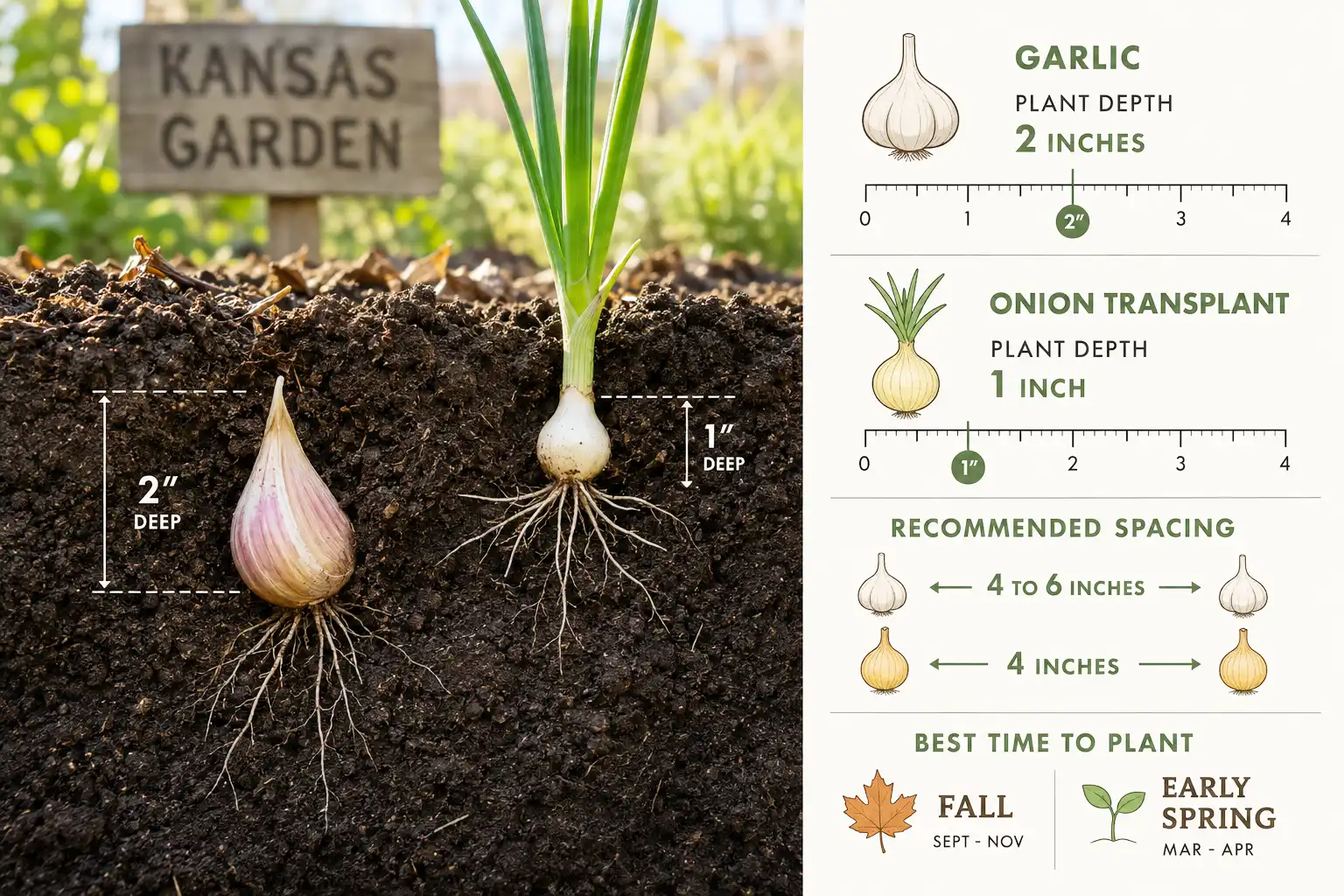
Set garlic cloves pointed end up, 2 inches deep, 4 to 6 inches apart, in fall. Set onion transplants 1 inch deep, 4 inches apart, in spring. That split is the core of how to plant onions and garlic.
Onions and Garlic Are Not Planted the Same Way
Both crops belong to the same genus, yet the planting jobs barely overlap. Garlic goes in as individual cloves and needs winter chilling to split into a segmented bulb. Onions go in as sets, transplants, or seed, and they bulb on day length instead of cold.
That difference drives everything else. Here is how the two compare side by side.
| Factor | Garlic | Onions |
|---|---|---|
| Planting stock | Individual cloves from seed bulbs | Sets, transplants, or seed |
| Main season | Mid September to late November | Early spring, once soil works |
| Depth | 2 inches, up to 3 in sandy ground | 1 to 1.5 inches for transplants |
| In row spacing | 4 to 6 inches | 4 to 5 inches for large bulbs |
| Row spacing | 8 to 12 inches | 12 to 18 inches |
| Cold requirement | Yes, needs a chilling period | No |
| Harvest | Mid July into early August | Late July into August |
Trials at K-State Research and Extension in Manhattan pinned the productive garlic window tightly. Plantings from September 24 through November 24 gave consistently good bulb size. Plantings from late December into February gave steadily smaller bulbs. If you want the county by county detail, our guide covers garlic and onion planting dates separately.
Getting the Ground Ready
Loose, well drained soil matters more than fertility for both crops. Neither one has a deep root system. Both feed in the top 12 inches, so compaction shows up directly as flat, undersized bulbs.
Work the ground 8 to 10 inches deep and break up any plow pan. Then mix in 2 to 3 inches of finished compost. On heavy clay, a raised bed should be built instead. Alliums sitting in cold wet soil rot at the base plate.
Target a pH of 6.0 to 7.0. Onions do best between 6.0 and 6.8. If your reading falls below 5.8, apply lime several months ahead so it has time to react. A current report also tells you what phosphorus and potassium you actually need. Compared to a season of small bulbs, soil testing before planting costs almost nothing.
One more check before you break ground. Look at what grew there. Skip any bed that grew onions, garlic, leeks, shallots, or chives in the last four seasons.
Choosing Planting Stock That Actually Makes Bulbs
Picking Seed Garlic
Buy seed garlic from a seed supplier or a local grower, not the grocery store. Store bulbs are often treated to suppress sprouting, and they can carry disease into clean ground.
Then pick your type:
- Hardneck throws a stiff central stalk and a curled scape. Cloves run larger and peel easier. It handles cold better, so it suits Kansas and points north.
- Softneck has no central stalk and braids well. It stores longer but takes winter damage more easily, which makes it a better fit for mild zones.
Plant only the largest cloves from each bulb. Big clove in, big bulb out. Save the small inner cloves for the kitchen. One pound of seed garlic plants roughly 30 feet of row.
Onion Sets, Transplants, or Seed
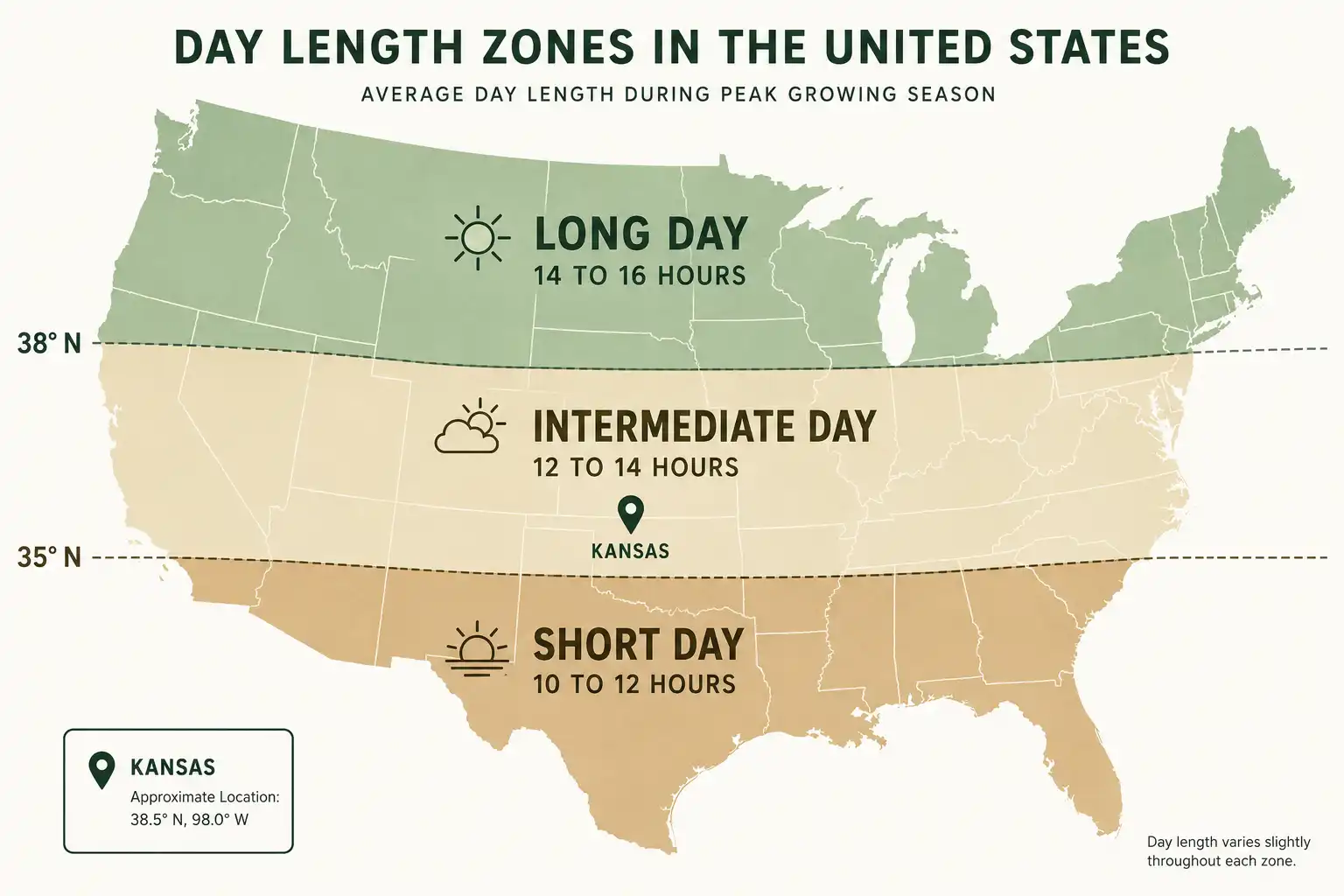
Day length triggers onion bulbing, not the calendar. Get this wrong and you grow beautiful tops with a marble underneath.
- Short day bulbs at 10 to 12 hours of daylight. Use below about 35 degrees north.
- Intermediate day bulbs at 12 to 14 hours. This is the safe choice for Kansas and most of the middle latitudes.
- Long day bulbs at 14 to 16 hours. Use above roughly 38 to 40 degrees north.
Transplants give the biggest bulbs for most growers. Sets are the easiest to handle, but sort them first. Sets under 3/4 inch across produce mature bulbs, while oversized sets bolt far more often. Use the big ones for green onions. Seed costs the least, though starting onions from seed needs 10 to 15 weeks indoors first.
How to Plant Onions and Garlic in the Same Bed
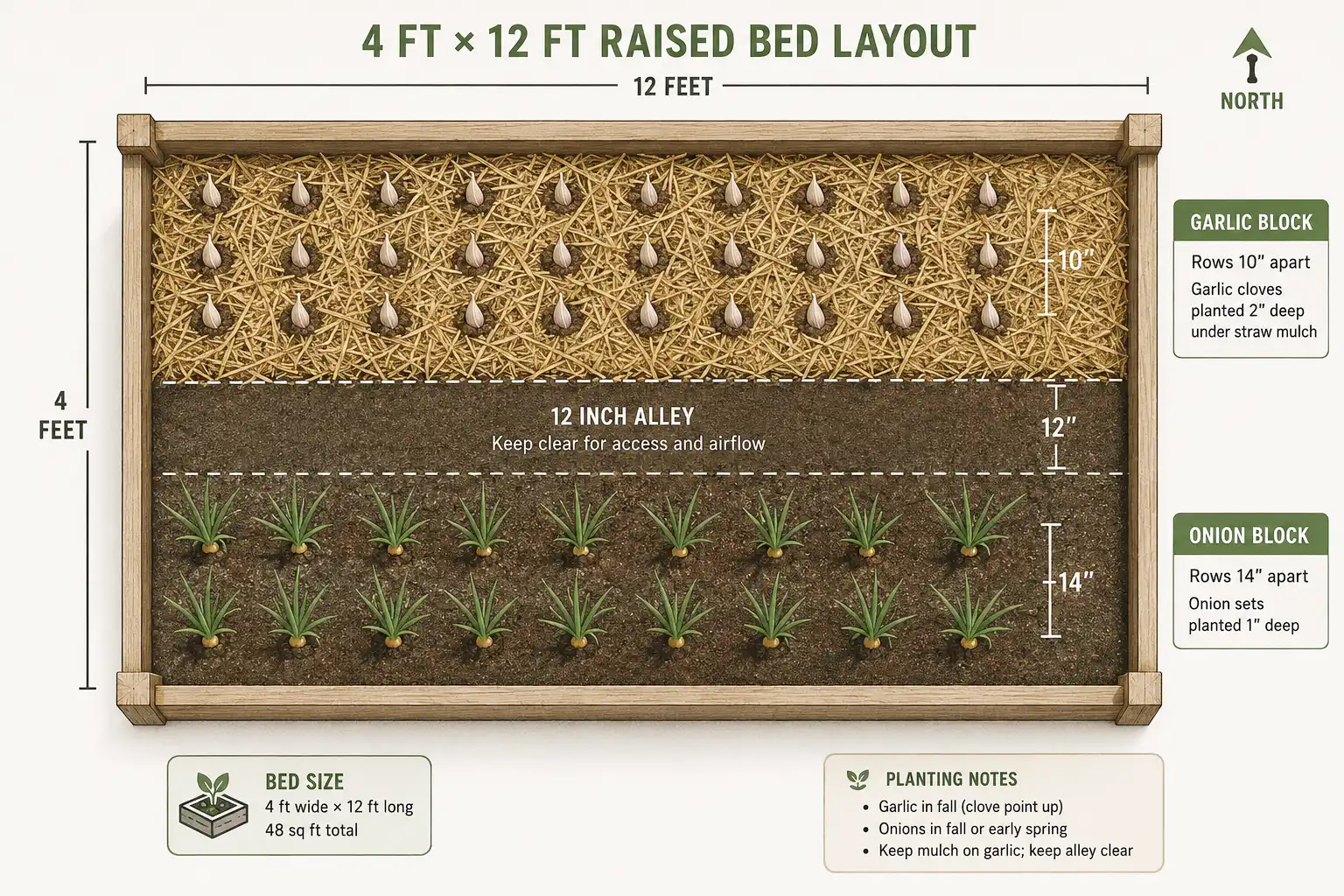
Keep them in separate blocks within the bed, not in mixed rows. The two crops go in roughly six months apart. Mixed rows mean walking on dormant garlic every time you set onions in April.
Here is the layout. Garlic takes the north end in fall. The outer rows are staked before the mulch goes down, so the block’s edges stay clearly marked. The south end stays open until spring, and the onions go there.
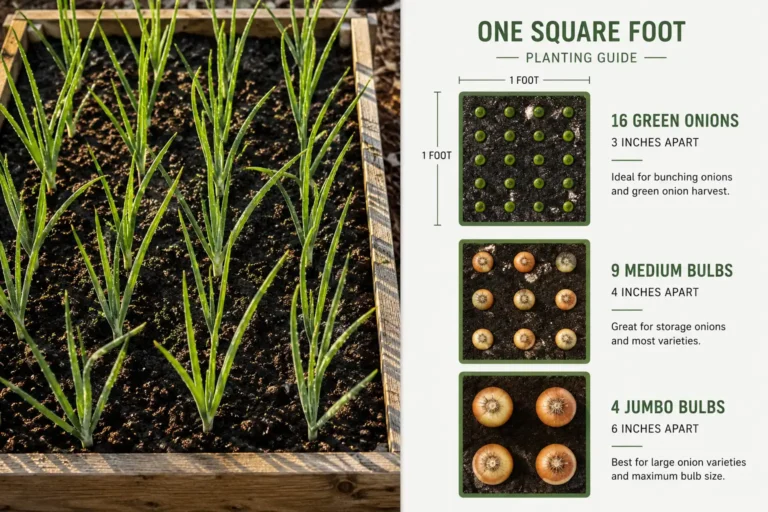
Leave a 12 inch alley between the two blocks. Both crops are shallow rooted heavy feeders, so a crowded boundary costs bulb size on each side. That alley also gives you room to hoe without slicing roots. For a tighter bed plan, our notes on onion spacing per square foot cover the density math.
Planting Garlic Step by Step
- Crack the bulbs into cloves within 48 hours of planting. Separated cloves dry out fast, so get them in the ground within five days.
- Leave the papery skin on each clove. It protects against rot.
- Sort by size. Plant the biggest cloves only.
- Open a furrow 2 inches deep. Go 3 inches in sandy or wind exposed ground.
- Set each clove pointed end up with the flat root plate down. An upside down clove still grows, but it makes a bent, undersized bulb.
- Space cloves 4 to 6 inches apart, with rows 8 to 12 inches apart.
- Cover, firm the soil, and water in.
- Mulch with 4 to 6 inches of clean straw right after planting.
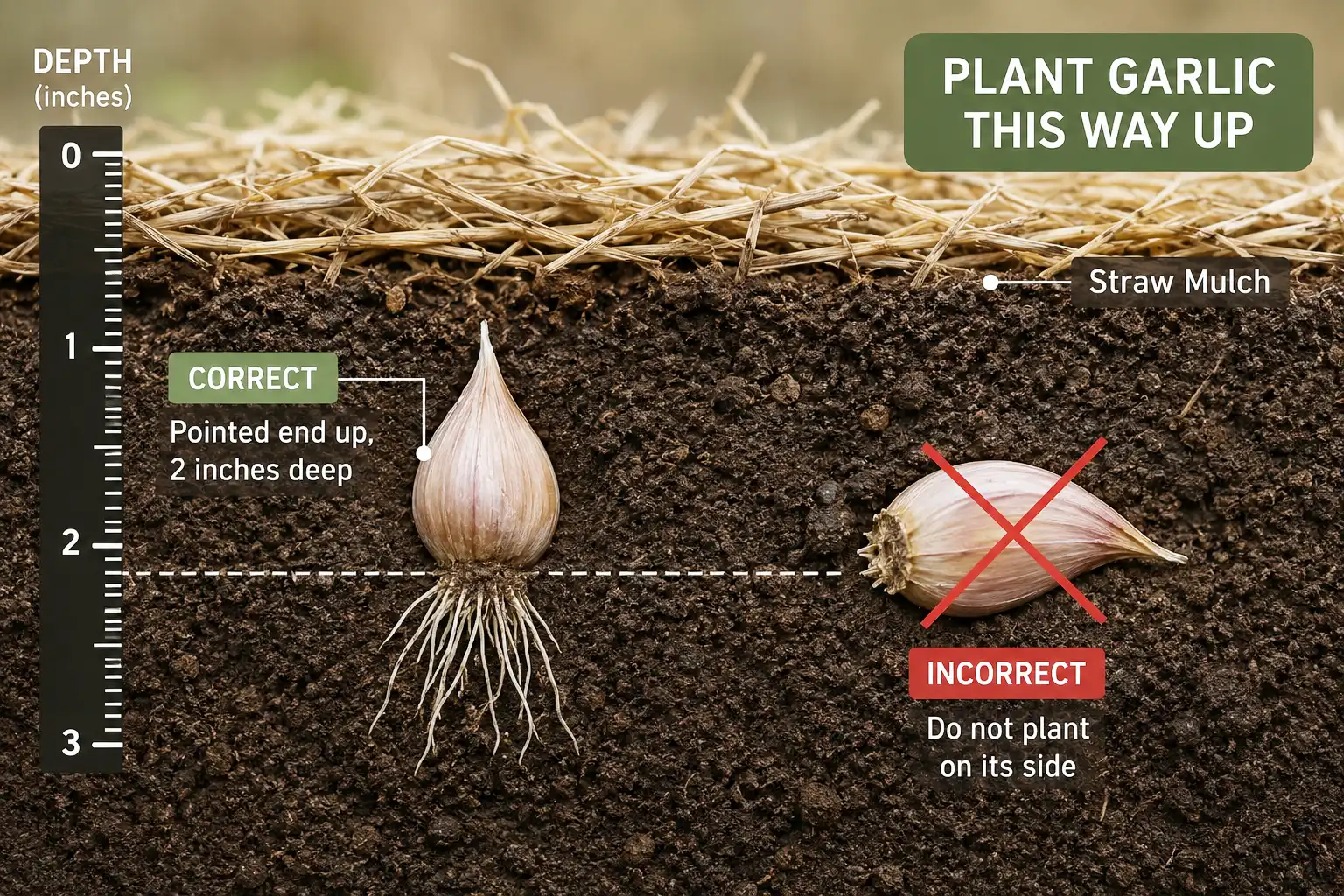
That last step is not optional here on the plains. Kansas wind dries exposed beds, and freeze thaw cycles heave shallow cloves right out of the ground by February.
Planting Onions Step by Step
Wait until the soil works without clodding, then move fast. A hard cold spell after planting can push onions into flowering instead of bulbing.
For transplants:
- Trim floppy tops back to about 4 inches so they stand up.
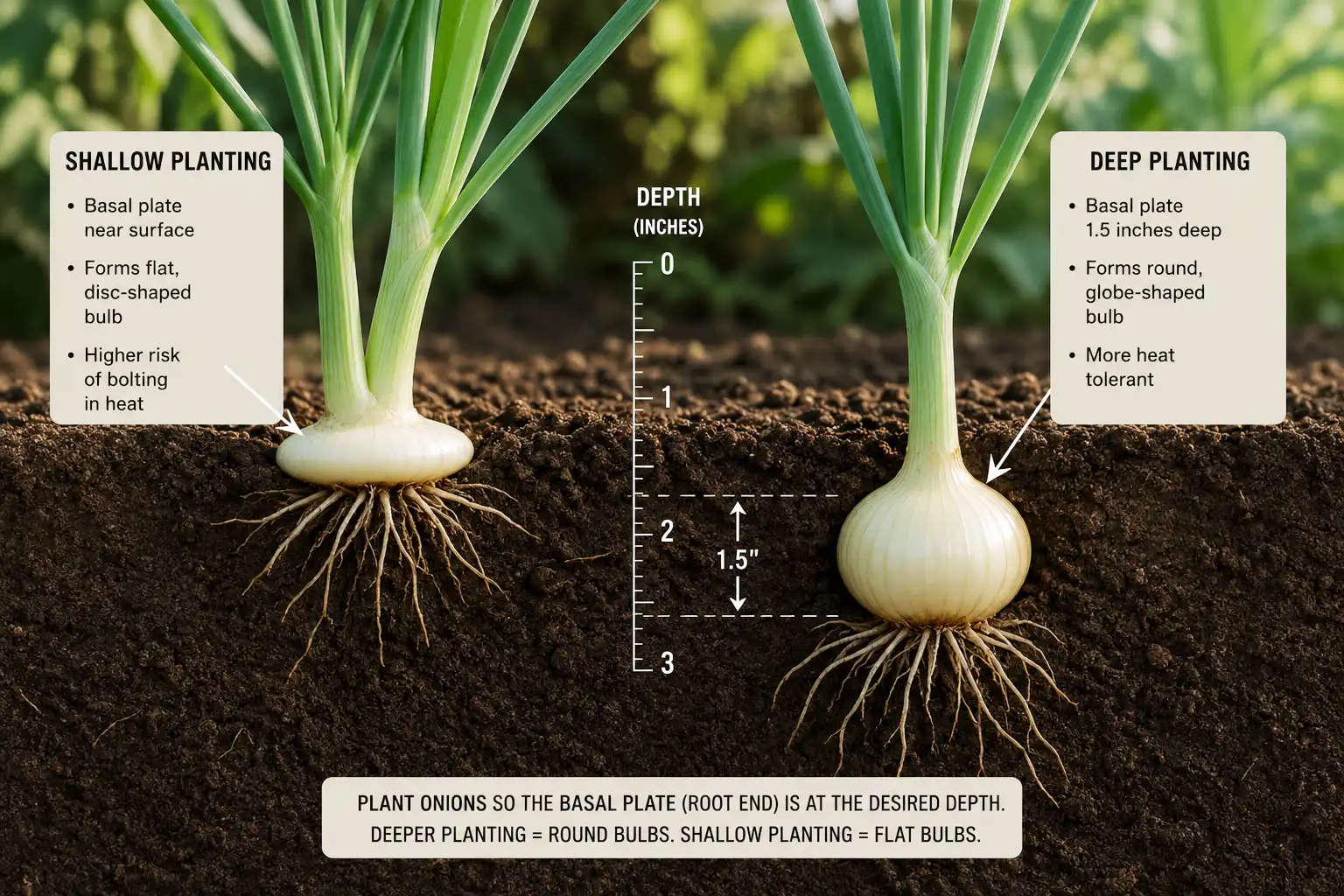
- Set plants 1 to 1.5 inches deep.
- Space 4 to 5 inches apart, with rows 12 to 18 inches apart. In beds, 6 inches on center works.
- Firm the soil around the roots and water in the same day.
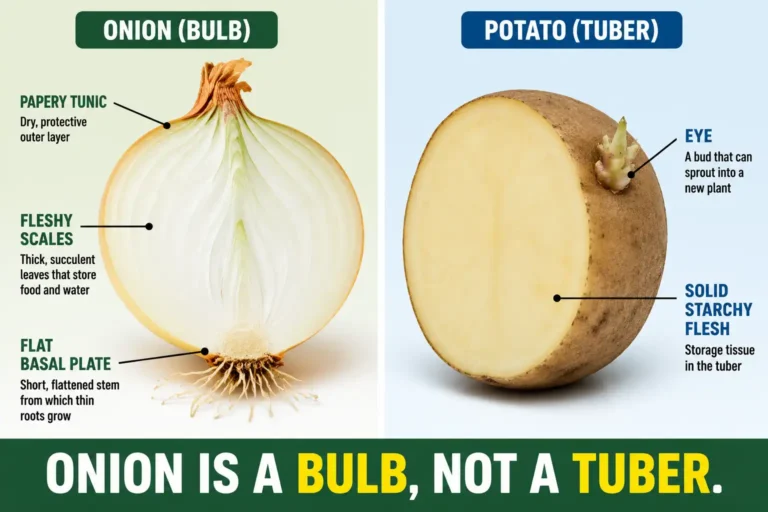
Planting depth also shapes the bulb. The basal plate is the compact stem at the bottom of the onion where roots and leaves both start. Sitting shallow, it makes a flat disc shaped bulb. Set slightly deeper, it makes a rounder globe.
For sets: plant pointed end up, 1 to 2 inches deep and 2 to 3 inches apart. Thin to 4 inches once growth starts, and eat the thinnings as scallions.
For direct seed: sow 1/4 to 1/2 inch deep and keep the row surface damp until the loops emerge.
Fertilizer at Planting Time
Feed both crops at planting, then split the rest across the season. Shallow roots cannot chase nutrients that leach past them.
Garlic runs on a fall and spring schedule:
- Work fertilizer in before planting according to your soil report.
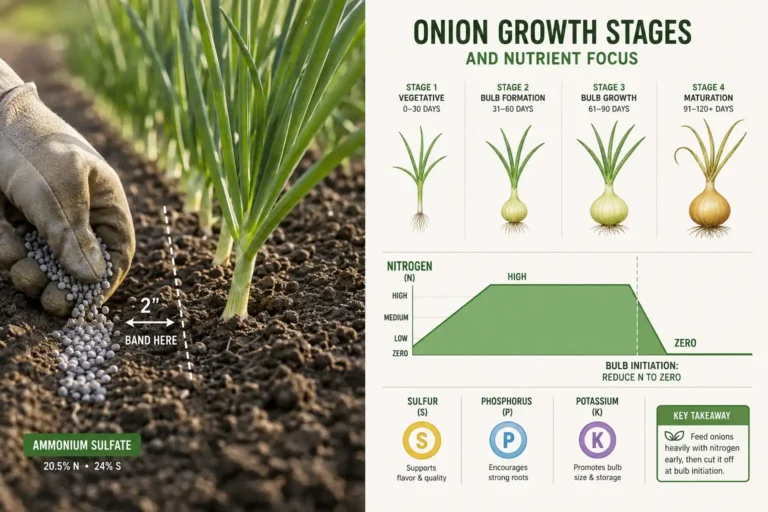
- Hold fall nitrogen near 25 pounds per acre, roughly 0.6 pound per 1,000 square feet.
- Topdress about 40 pounds of nitrogen per acre in March when growth restarts, then again around May 1.
- Stop nitrogen after the first week of May. Late nitrogen delays bulbing and shrinks the harvest.
- Use ammonium sulfate for that final topdress. The sulfur sharpens flavor.
Onions want a different approach:
- Broadcast 2.5 to 3 pounds of 10-10-10 per 100 square feet and work it into the top 2 to 3 inches before planting.
- Sidedress about 1 pound per 100 feet of row a month later, banded 3 to 4 inches off the row.
- Skip anhydrous ammonia and aqua ammonia entirely. Onions take ammonia injury easily, especially in cool soil.
Matching the grade to the crop matters more than the brand, and this breakdown of fertilizer choices for onions walks through which analyses fit each stage.
Water and Mulch After Planting
Water both crops in on planting day. Roots come off the base plate, and that plate needs soil contact immediately.
After that, plan on 1 to 2 inches of water per week during active growth. Both crops stall quickly under moisture stress, and onions split when watering swings from dry to soaked.
For fall garlic, spread the straw and then sprinkle a little loose soil across the top. Wet it down. That keeps prairie wind from carrying your mulch into the next county before the first rain settles it. Pull the mulch back gradually in March once green growth appears. Then stop irrigating roughly two weeks before harvest so the wrappers cure clean.
Rotation Rules That Keep Both Crops Clean
Never follow onions or garlic with onions or garlic. This is the single most expensive mistake in allium ground, and the reason is white rot.
White rot comes from a soil fungus that produces hard survival bodies called sclerotia. They sit dormant in soil for 20 to 40 years. Only allium root exudates wake them up, which means nothing else you plant will draw them down. As little as one sclerotium in 20 pounds of soil causes measurable loss.
So build the gap into your plan:
- Run at least a four year rotation before alliums return to a bed.
- Follow onions and garlic with corn, beans, or a grass cover crop.
- Buy tested, clean seed stock. Infected seed cloves are the main way this moves onto clean ground.
- Knock soil off tools and boots between beds.
Rotation alone will not clear infested ground, though it does keep populations from climbing. Working alliums into a longer rotation plan for your beds protects yield across every crop in the sequence.
Mistakes That Cost Bulb Size
- Grocery store garlic. Sprout inhibitors and unknown disease history both work against you.
- Wrong day length onion. A short day variety planted in Kansas bulbs too early and stays small.
- Cloves planted upside down. Check orientation as you go, not after.
- Oversized sets. Anything much over 3/4 inch tends to bolt.
- Nitrogen applied late. After early May, nitrogen pushes leaves while bulbs sit still.
- No mulch on fall garlic. Freeze thaw heaving lifts cloves out and kills them.
Can You Plant Onions and Garlic Right Next to Each Other?
Yes, and neither one changes the flavor of the other. They will not cross. What they do share is a nitrogen demand, a moisture demand, and a full set of soilborne diseases.
So treat proximity as a fertility question. Give each block its own spacing, keep the alley open, and feed on schedule. Crowd them together and both crops finish small.
Bottom Lines on Planting Onions and Garlic
Garlic goes in around mid October in USDA zone 6a. Cloves sit 2 inches deep and pointed up, with straw over the top before Thanksgiving. Onion transplants follow in late March at 1 inch deep. Both blocks share one bed, split by an open alley. That bed does not see an allium again for four years. Get depth, spacing, and rotation right, and the rest is just water and patience.