Natural Wax Coating on Sugarcane Stalks: A Farmer’s Field Guide
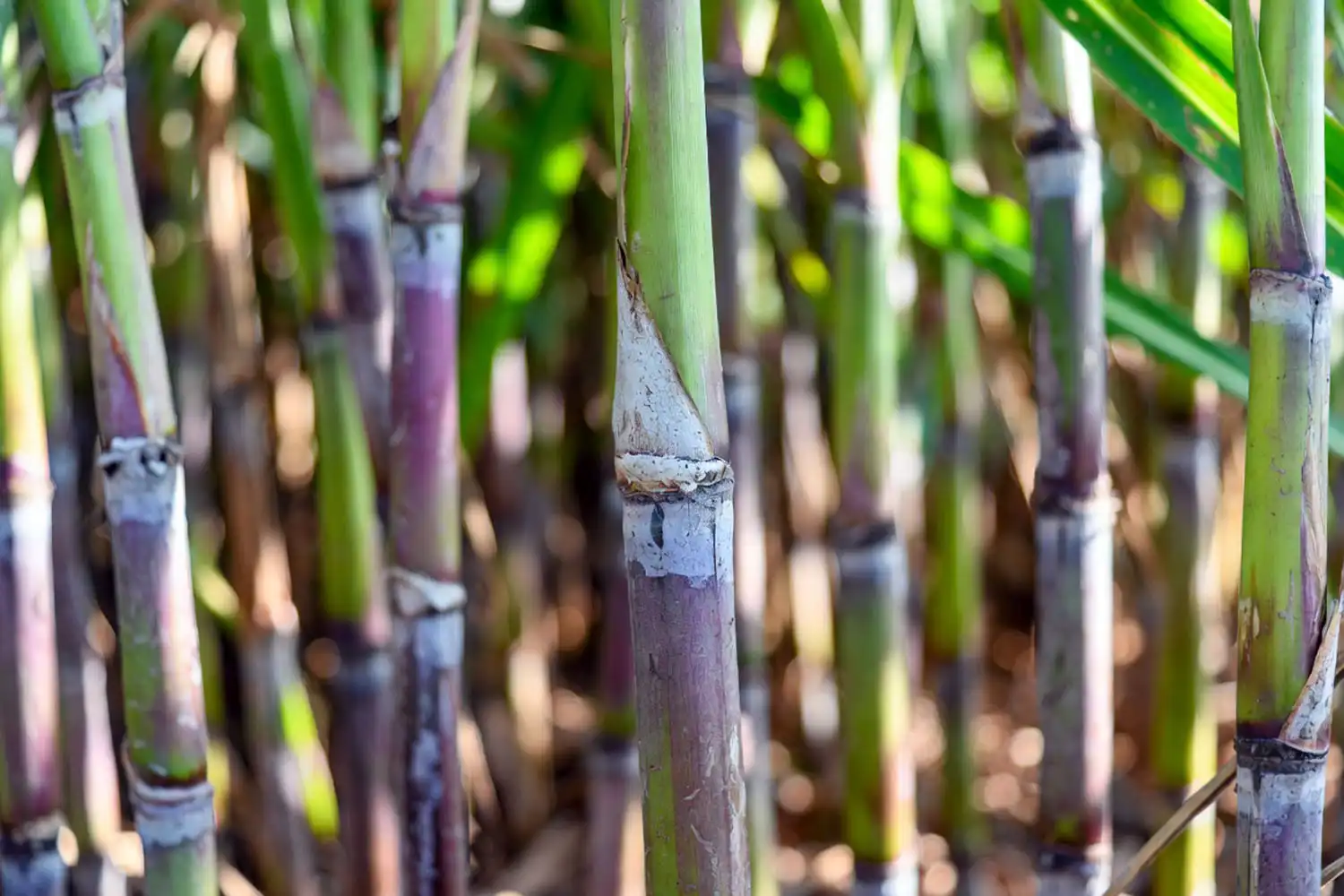
Walk into any mature sugarcane field and you will notice a chalky white film on the stalks. That natural wax coating on sugarcane stalks is not dirt. It is a protective layer the plant builds on purpose, and it tells me a lot about how the crop is doing.
The natural wax coating on sugarcane stalks is a thin layer of epicuticular wax. It guards the plant from water loss, UV damage, insects, and disease. It also carries commercial value as a source of policosanol used in supplements, polishes, and cosmetics.
What the Natural Wax Coating on Sugarcane Stalks Actually Is
The wax is a layer of long-chain organic compounds the plant secretes onto the outer surface of its stalks. Scientists call it epicuticular wax. It sits on top of the cuticle, which is the waxy skin covering the rind. The bloom you see is the visible buildup of these compounds, mostly fatty alcohols, fatty acids, and aldehydes.
On mature sugarcane plants (Saccharum officinarum), the bloom is heaviest on younger internodes near the top of the stalk. Older sections often lose some of their bloom from rain, wind, and field handling.
Know more: Sugarcane Juice Taste Like
Why Sugarcane Builds This Wax Layer
Sugarcane builds the wax because it has to. The coating is a survival tool that works around the clock, and each function does real work for the crop.
Water Loss Control
The wax seals in moisture. Sugarcane grows fast and holds a huge volume of water inside the stalk. Without the wax barrier, that water would evaporate through the rind during hot, dry weather. The coating cuts transpiration losses from the stalk surface and keeps the cane filling out.
UV and Heat Protection
The white bloom reflects sunlight. In peak summer heat, that reflection lowers the stalk surface temperature and protects the inner tissue from UV damage. Cane in full sun usually carries a thicker bloom than shaded cane in the same field.
Pest and Disease Defense
The wax makes the stalk slippery and chemically unfriendly to insects. It slows stalk borers, aphids, and certain fungal spores. The slick surface also reduces the chance of disease spores anchoring and germinating on the rind.
Read more: Sugar Made From Sugarcane
What the Wax Is Made Of
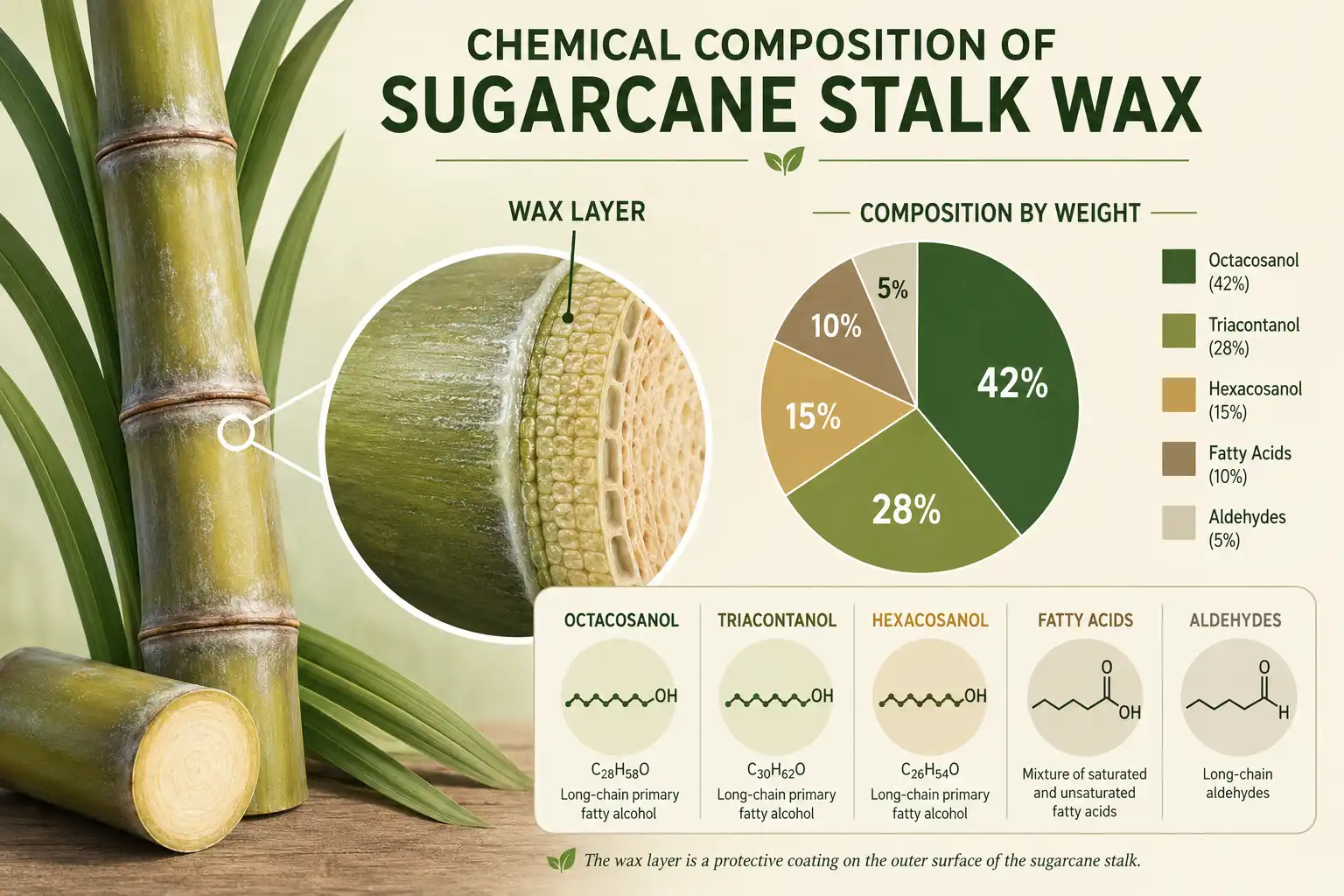
The wax is mostly long-chain fatty alcohols, with octacosanol and triacontanol making up the largest share. You will also find fatty acids, aldehydes, esters, and small amounts of sterols. The mix that matters most for commercial use is policosanol, the group name for these long-chain primary aliphatic alcohols.
This is the same family of compounds processors extract from cachaza, the filter mud byproduct of sugar mills, to sell as a dietary supplement.
Where the Wax Sits on the Stalk
The heaviest wax sits on the internodes just below the leaf collar, where the cane is still actively growing. Move down toward older sections and the bloom thins out. Cane that has gone through wind, rain, and machine handling almost always shows scuffed wax on the lower internodes. That is normal and does not signal a problem.
How Weather and Field Conditions Change the Wax
Weather has a direct effect on how much wax shows. Hot, dry conditions push the plant to build a thicker coating. Wet, humid weather can wash some of it off and slow the rebuild. Mechanical handling, dust storms, and heavy late-season rains also strip the bloom.
That is why fresh harvest samples often look duller than cane still standing. It is also why a sensible irrigation schedule for cane matters. Overwatering can soften the bloom and raise disease pressure on the rind.
Does the Wax Coating Affect Sugar Yield
The wax itself does not store sugar, but it protects the plant that does. A healthy bloom means the stalk is holding water and growing on schedule. When the wax layer is intact, the cane resists drought stress, keeps its juice volume, and reaches harvest weight on time.
At the mill, the wax does become a small issue. It can interfere with juice clarification if too much carries through. Most modern sugar mills pull it out during the filter mud stage, and that is where commercial wax extraction begins.
Wax on Harvested Cane
Harvested cane should still show some bloom on the upper sections. If the wax is completely gone before harvest readiness, that often points to severe weather stress, heavy aphid pressure, or late-season disease. Those signs are usually visible in the canopy before you even look at the stalk closely.
Commercial Value of Sugarcane Wax
The wax has real market value. After juice extraction, the leftover filter mud holds most of the wax that came in on the stalks. Processors refine that wax for use in cosmetics, polishes, coatings, and pharmaceutical products. It is often compared to carnauba wax because it shares a similar high melting point and hardness.
The policosanol fraction has been studied for years for its potential effects on cholesterol levels. Research through the USDA Agricultural Research Service lists sugarcane wax among the richest natural sources of these long-chain alcohols.
How to Read the Wax in the Field
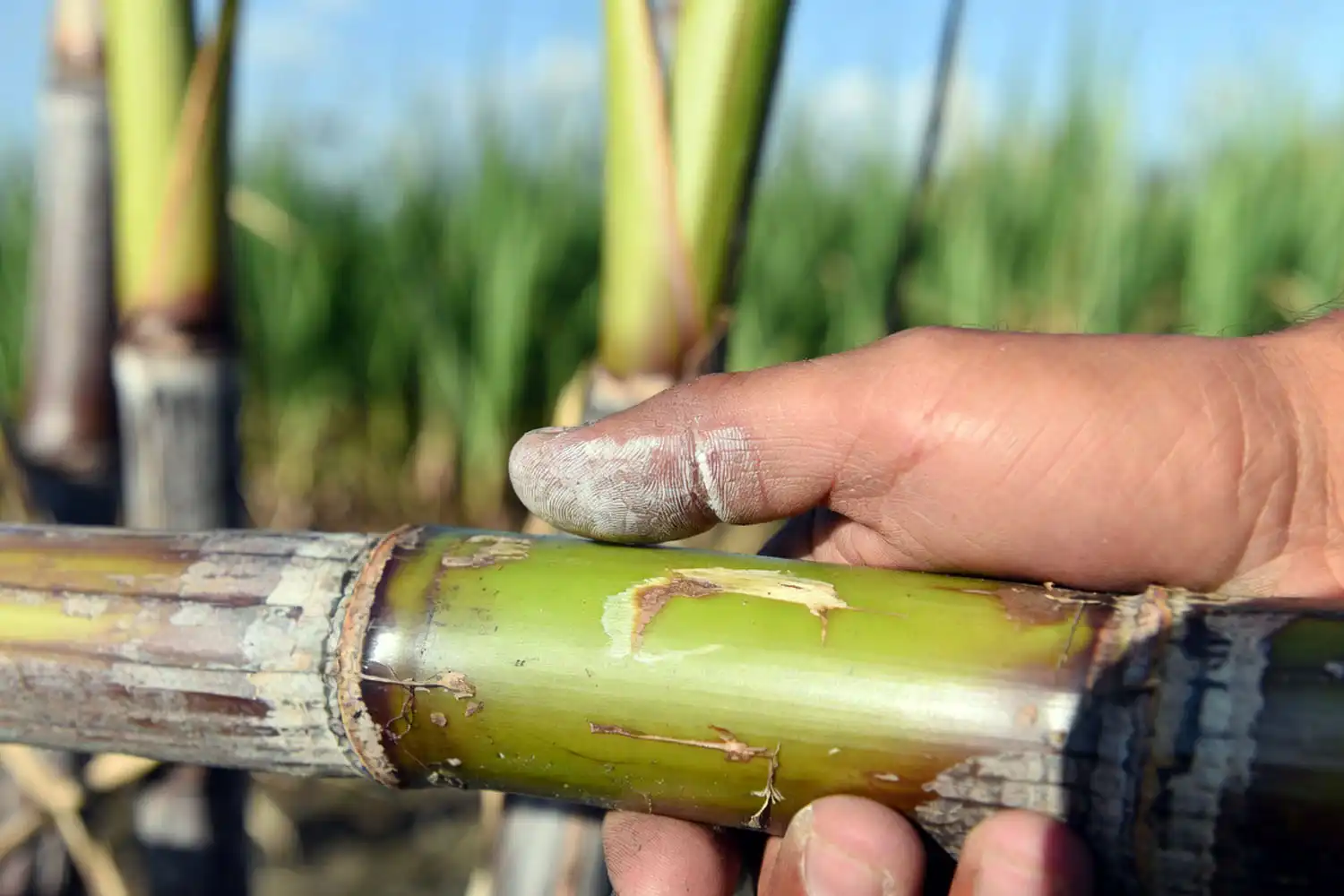
Healthy cane should show a clear, even bloom on the upper internodes from mid-season through harvest. The color of the bloom is whitish to pale gray, never yellow and never brown. Streaks, blotches, or dark patches under the wax often mean disease pressure or pest activity underneath.
Run your thumb across an upper internode. The bloom should leave a clean white smudge on your skin. That is a fast field check on almost every walk-through.
Mistakes Farmers Make With the Wax Coating
The most common mistake is ignoring it. The bloom is a visual report card on plant stress, and most growers walk right past it. The second mistake is washing cane samples before checking them, which removes the wax and hides the real condition of the rind underneath.
Some growers also assume a heavy bloom always means a healthy crop. Not always true. A very thick bloom can also show up under drought stress as the plant tries to lock in water. Read it against the rest of the field signs.
Don’t Confuse Wax With Mealybug Damage
The pink sugarcane mealybug also leaves a white powdery residue on stalks, and beginners mix the two. Mealybug residue is patchy, fluffy, and concentrated under leaf sheaths. The natural wax is smooth, even, and covers the whole internode. Peel back a leaf sheath and find clumps of insects? That is not wax. That is a problem.
Bottom Line
The wax coating is the easiest plant signal to read in a cane field, and most growers do not look at it. Walk your rows in the late afternoon when the sun catches the bloom. Even, white wax on the upper internodes tells you the plant is healthy and protected. Patchy or missing bloom tells you to look closer. Spend two minutes a week on this and you will catch problems long before they cost you yield.