How Do They Make Seedless Grapes? The Science, Simply Explained
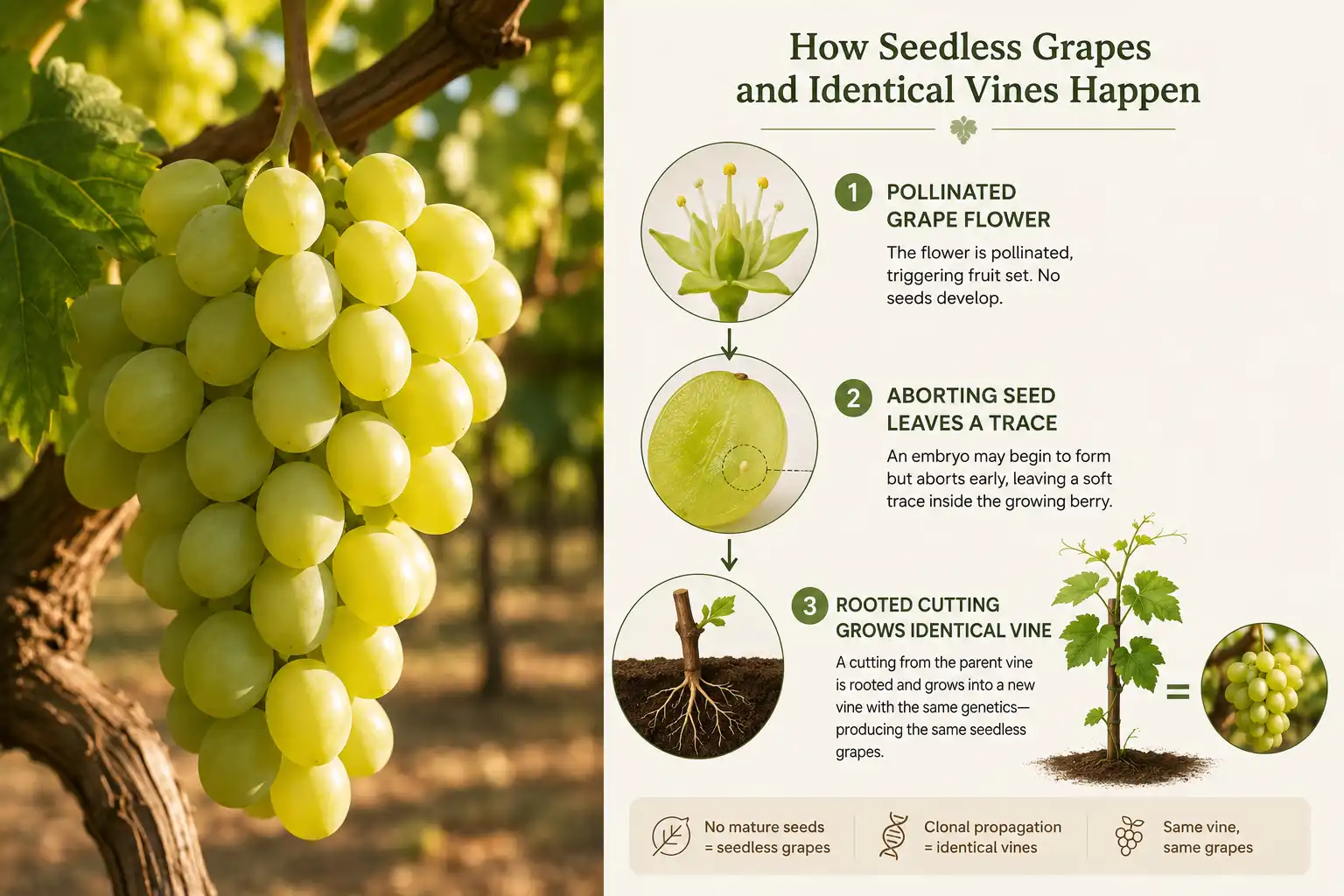
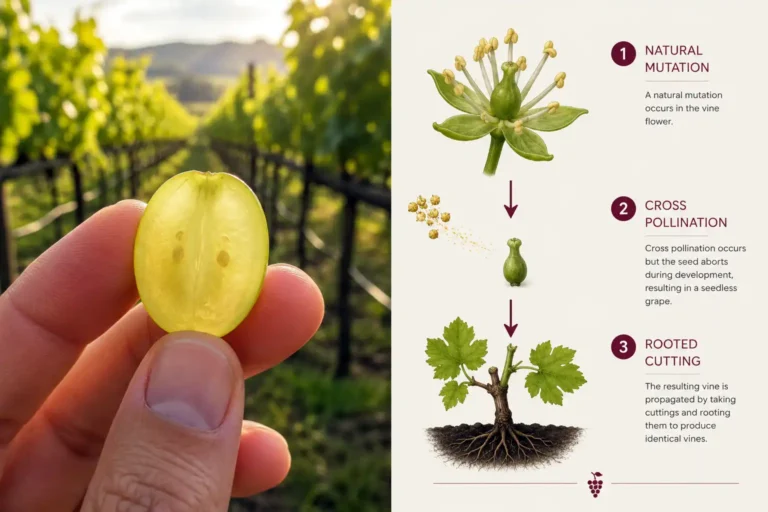
Seedless grapes come from a natural mutation in the vine, not from a lab. So how do they make seedless grapes at scale? Growers find that mutation, then copy the vine with cuttings. Every grape you buy is a clone of an older plant.
They make seedless grapes through a natural mutation called stenospermocarpy. The flower still gets pollinated, but the seed aborts early and never hardens. Growers then copy the vine from cuttings, never from seed, so every plant stays identical.
How Do They Make Seedless Grapes?
They make seedless grapes by finding a vine that naturally sets fruit without hard seeds. Then they clone that vine over and over. The seedless trait shows up as a rare mutation in the wild. Once a grower spots a vine with that trait, they stop using seeds and start taking cuttings. That way, every new plant carries the same seedless quirk.
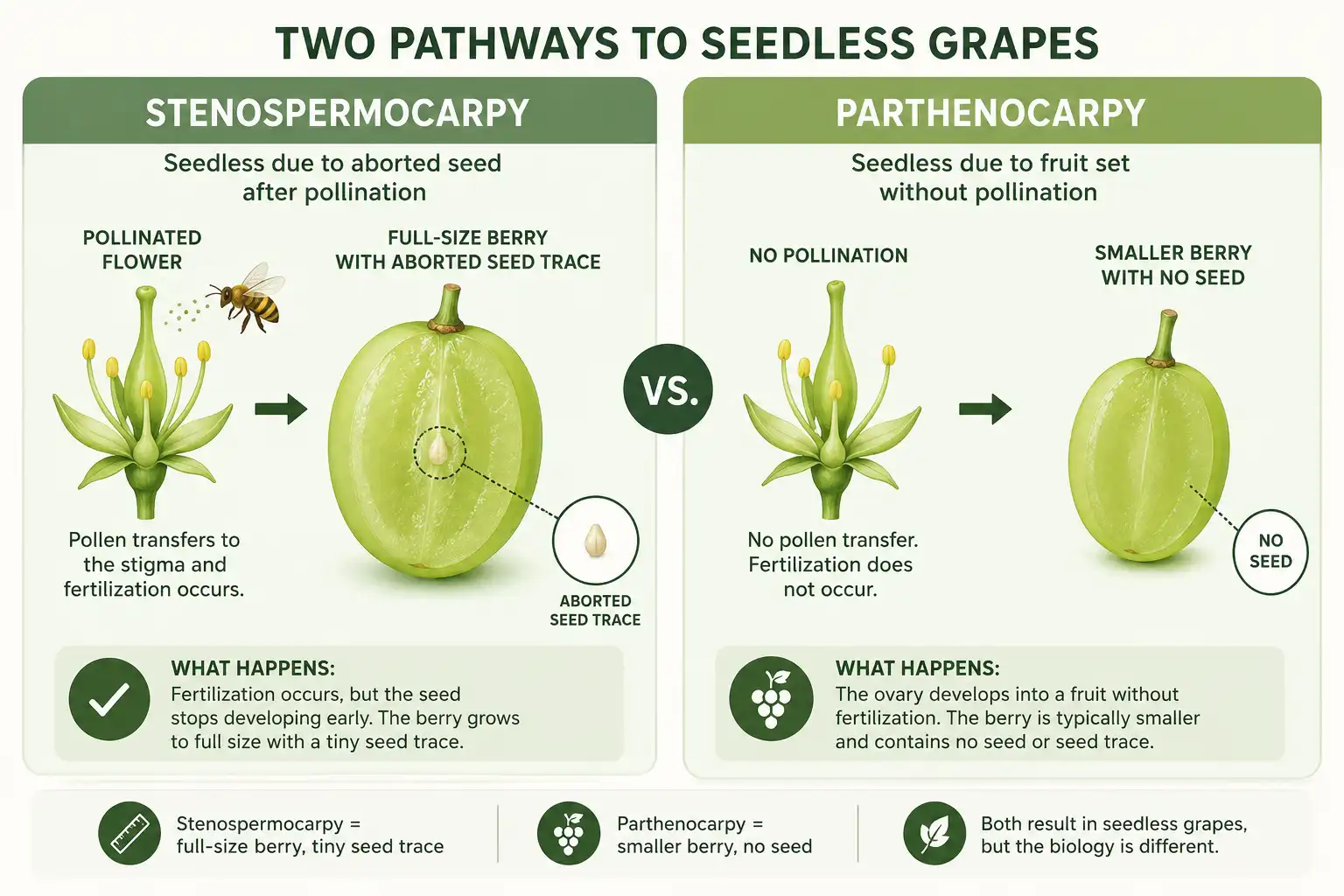
Two natural events drive seedlessness in grapes. Both happen inside the flower. Familiar examples include Thompson Seedless and the seedless Cotton Candy variety. Growers raise both the same way, with no lab work. The science behind those two events comes next.
What Is Stenospermocarpy?
Stenospermocarpy is when a grape flower gets pollinated and fertilized normally. Then the young embryo dies within two to four weeks, so the seed coat never hardens. You still bite into a soft trace where the seed started, though you rarely notice it. This route gives us most table grapes, including Thompson Seedless and Flame Seedless. Because pollination still triggers fruit set, the berries reach nearly full size.
What Is Parthenocarpy?
Parthenocarpy is when the berry grows with no pollination and no fertilization at all, so a seed never even starts. These grapes carry no soft trace inside. The trade-off is size, since seeds normally release the growth hormones that swell a berry. Without that boost, parthenocarpic grapes stay small. Black Corinth, the grape dried into Zante currants, is the classic example.
How Do Growers Propagate Seedless Grape Vines?
Growers propagate seedless vines from cuttings, never from seed, because a seedless vine cannot pass its trait through seed. A short hardwood cutting from a proven vine roots into a new plant that matches its parent exactly.
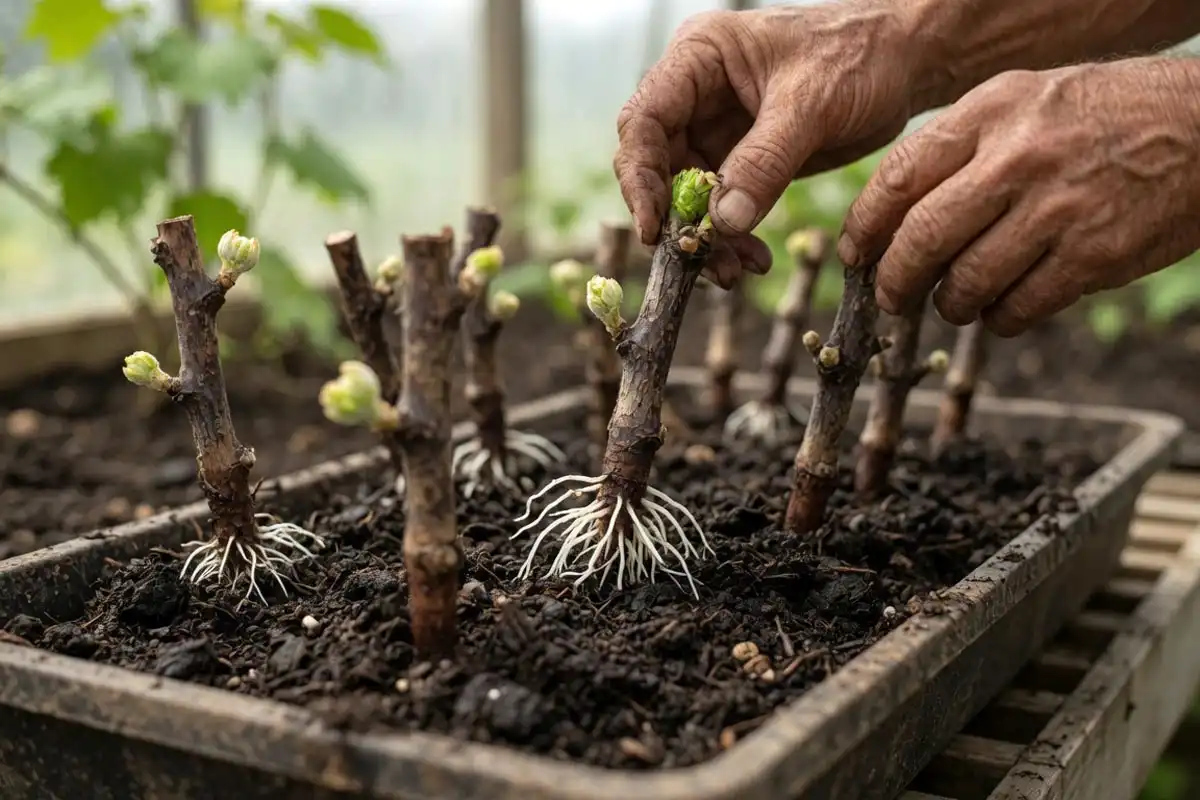
Most growers dip the cutting in rooting hormone, then press it into moist soil or a propagation bed. Starting new vines from cuttings keeps every Thompson Seedless block true to type, and the trade does it worldwide. Growers also graft many vines onto tough rootstock that resists phylloxera and nematodes.
How Are New Seedless Grape Varieties Bred?
Breeders create new seedless varieties by crossing two parent vines, then saving the embryo before it dies. The method is called embryo rescue. Just before that tiny embryo aborts, a breeder lifts it out and grows it in tissue culture.
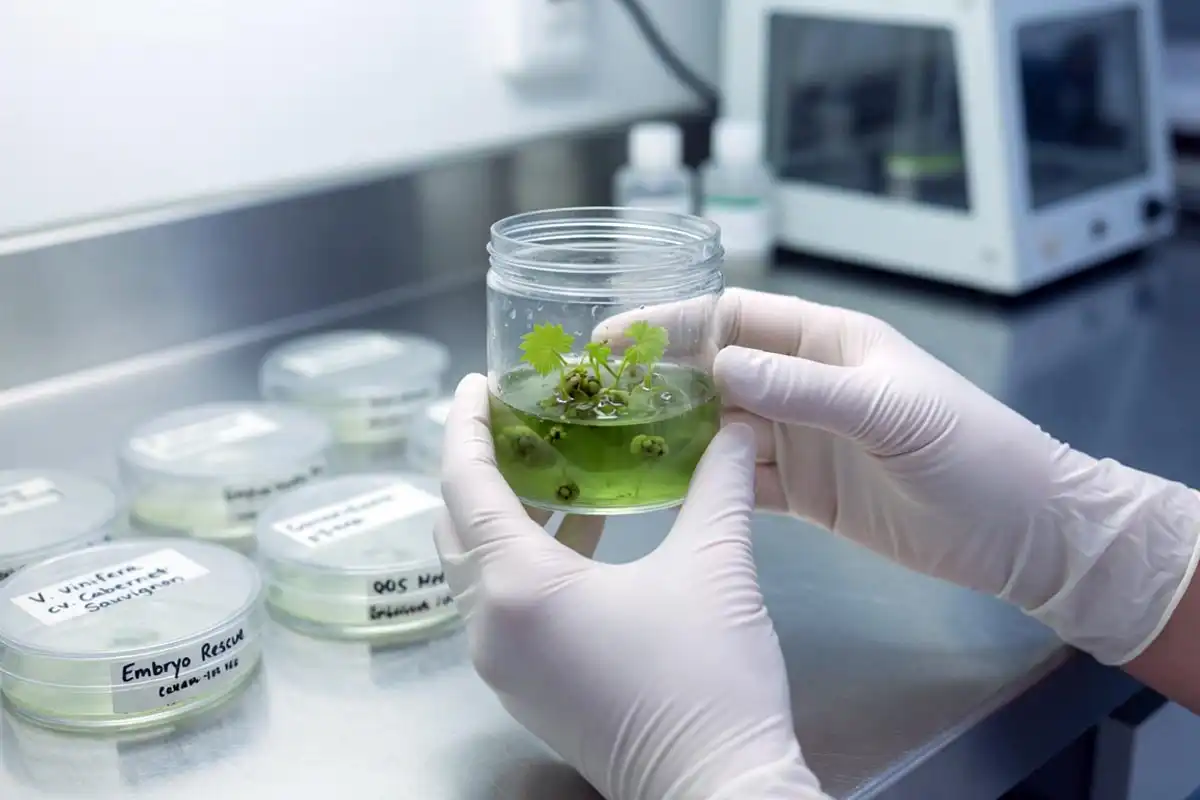
The seedling stays in culture until it can survive on its own. That step lets breeders raise a seedless offspring that would never make it in the field. International Fruit Genetics uses this method, and it is how Cotton Candy grapes get bred for their flavor. USDA-ARS and several university programs run the same kind of work. None of it changes the grape’s genes in a lab.
Are Seedless Grapes GMO?
No, seedless grapes are not GMO. No genetically modified grapes reach the market anywhere as of 2026. Seedlessness predates modern biotech by centuries, and Thompson Seedless traces back to the 1800s in California. The seedless trait is a natural mutation that breeders select for and then multiply. Shoppers raise the same worry about flavored types. So people question the GMO status of Autumn Crisp grapes for the same reason. Conventional breeding did all the work, not gene splicing.
Why Are Store Seedless Grapes So Big?
Store seedless grapes grow big because growers spray gibberellic acid, a natural plant hormone, to enlarge the berries. A seeded grape gets its growth signal from the developing seed. A seedless berry lacks that signal, so gibberellic acid fills the gap and bulks up the fruit. The spray also loosens tight clusters, which lets air move through. It does not cause seedlessness, though. The newer ‘Melissa’ grape sizes up on its own and skips the spray.
Can You Grow Seedless Grapes From Seed?
You usually cannot grow seedless grapes from seed. A seedless vine rarely makes a viable seed, and any seedling will not come true. The soft seed traces inside stenospermocarpic grapes almost never sprout. Even when one does, the seedling turns into a genetic mix of its parents and often grows seeded fruit. Planting grapevines from seed is a fun experiment, yet it never copies the parent. For a known seedless variety, a rooted cutting is the only reliable route.
What This Means for Your Vines
Seedless grapes are a natural mutation that growers lock in by cloning, not a lab creation. The seed either aborts early through stenospermocarpy or never forms through parthenocarpy. Want a specific seedless grape on your place? Buy a rooted vine, or take a cutting from a proven plant. Skip the seed packet. That is how growers keep every cluster seedless, season after season.