Where Do Oats Come From? Origin, Top Growers, and How They’re Made
The oats in your morning bowl started as a wild grass in the Near East. From there they traveled to a few cool-climate farm regions. Here is the full story, from the plant to the field to your kitchen.
Oats come from Avena sativa, a cool-season cereal grass. Early farmers domesticated it in Bronze Age Europe from a wild Near East ancestor. Today most oats grow in Russia, Canada, northern Europe, and the northern United States.
What Plant Do Oats Come From?
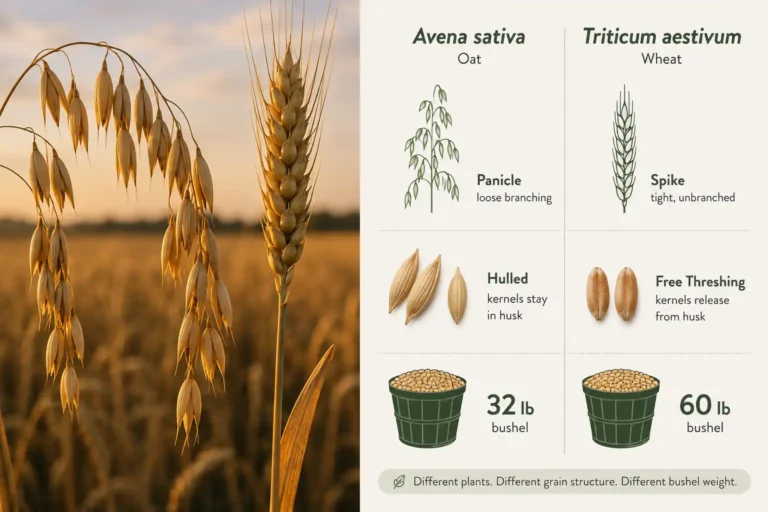
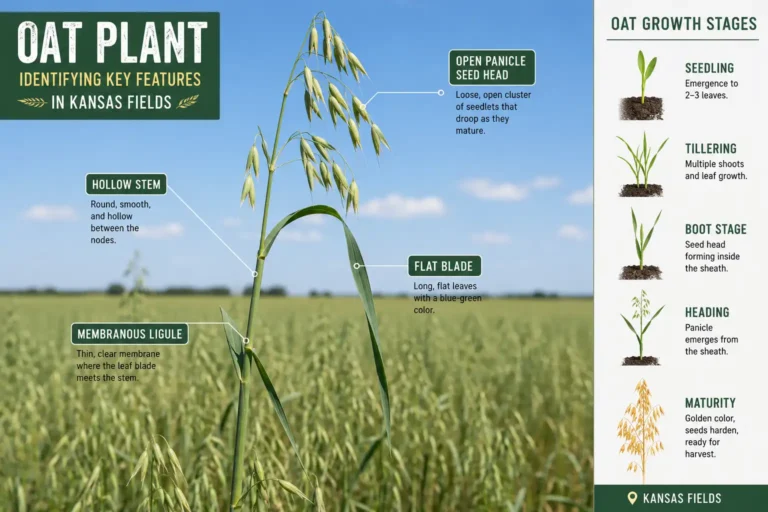
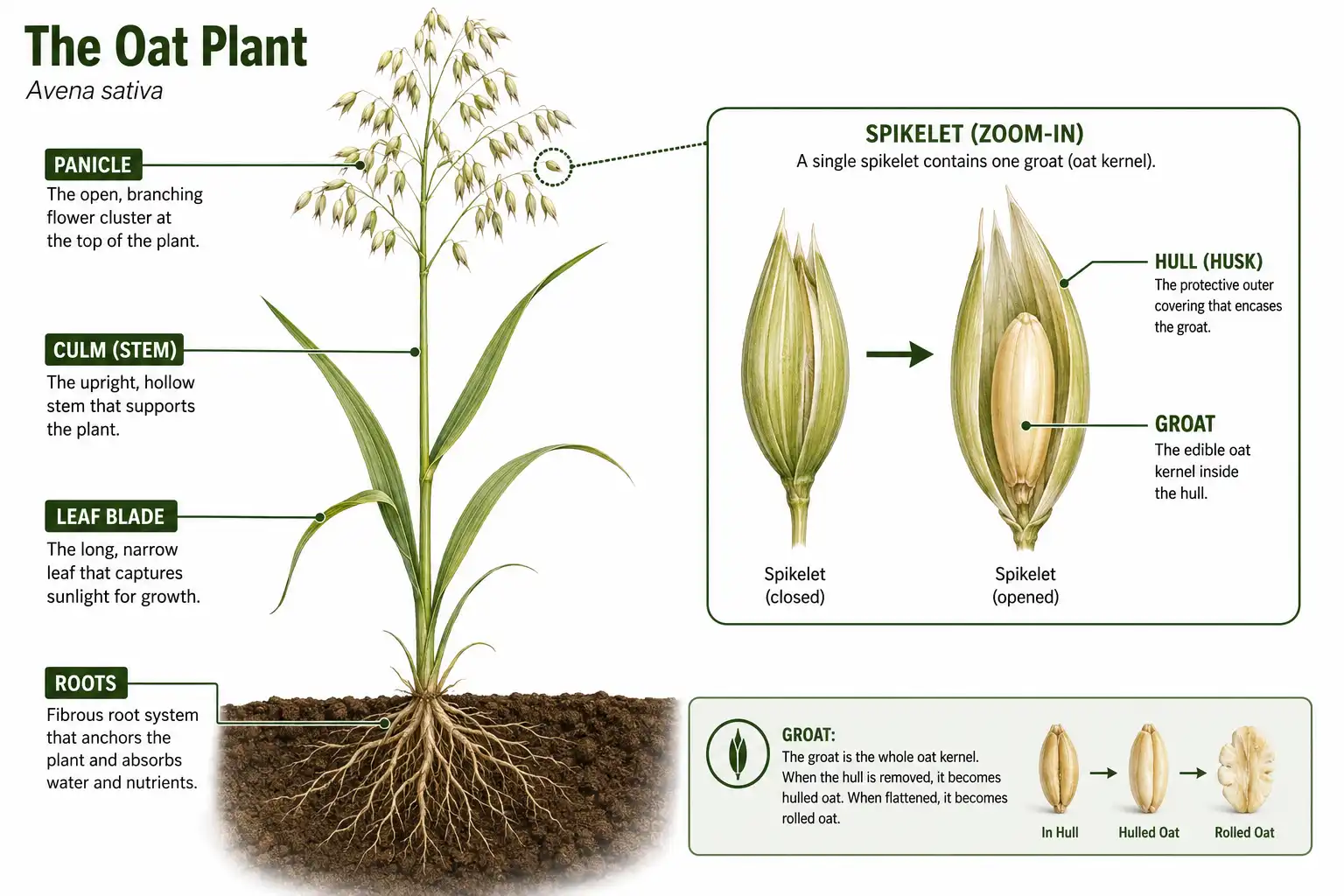
The oat plant is Avena sativa, a cool-season cereal grass in the family Poaceae. It is a close relative of wheat, barley, and rye. The plant grows as an annual. It sends up thin stems, called culms, that reach 2 to 4 feet tall.
The seed head is the part that matters. Oats carry their grain on a loose, open panicle, not a tight spike like wheat. Each little grain sits inside a papery hull. Once you strip that hull off, you get the groat. The groat is the whole oat kernel you actually eat.
Oats like cool, moist weather. That trait shaped their whole history, and it still decides where farmers grow them. Oats work best as an early-spring crop or a fall cover. For the details on getting a stand up, our guide covers planting oats in a separate guide.
Where Did Oats Originally Come From?
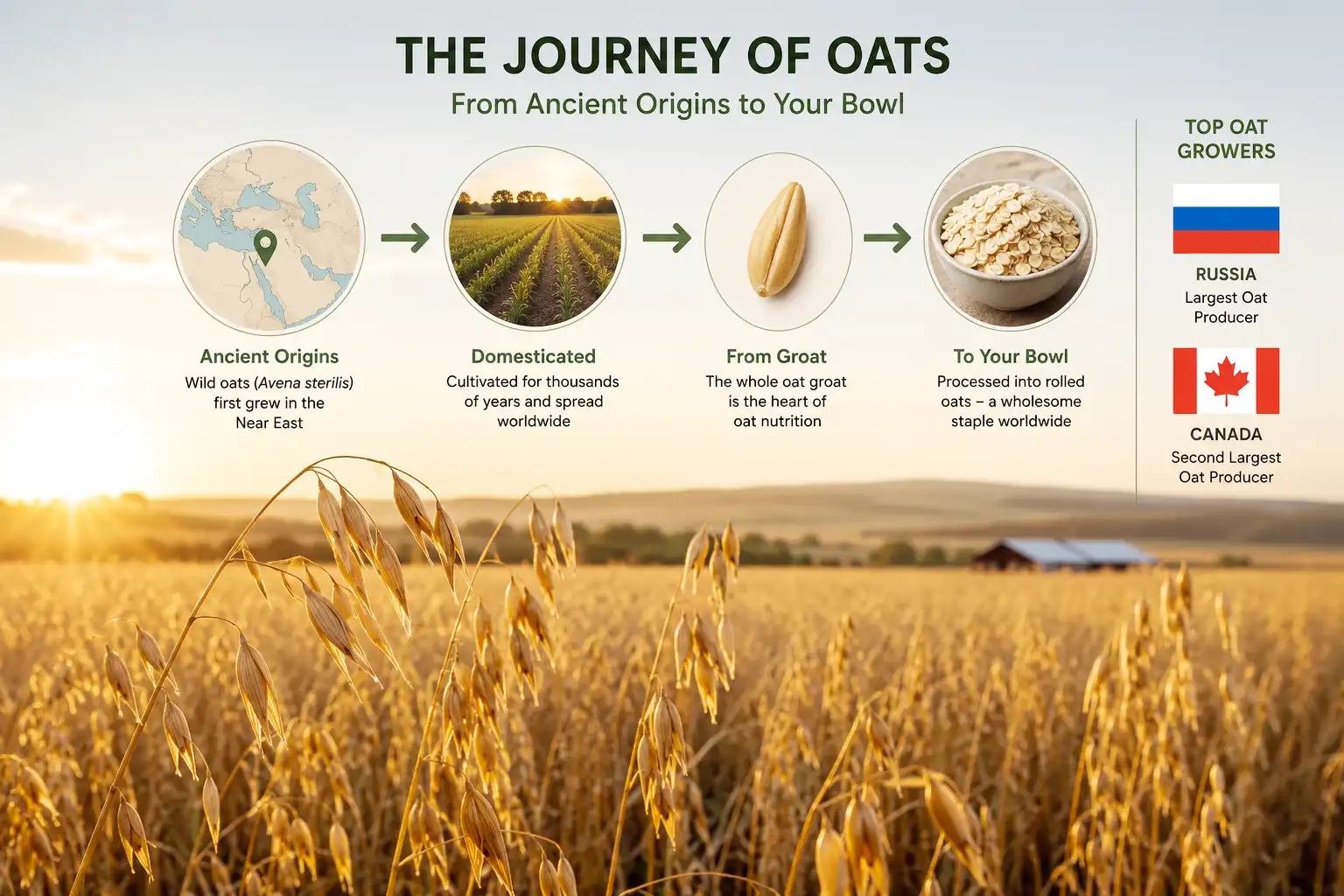
Oats first came from the Fertile Crescent, the Near East region that also gave us wheat and barley. The wild ancestor is Avena sterilis, a hexaploid wild oat. Its native range covered modern Turkey, Iraq, Iran, and Syria. Archaeologists have found wild oats there dating back thousands of years.
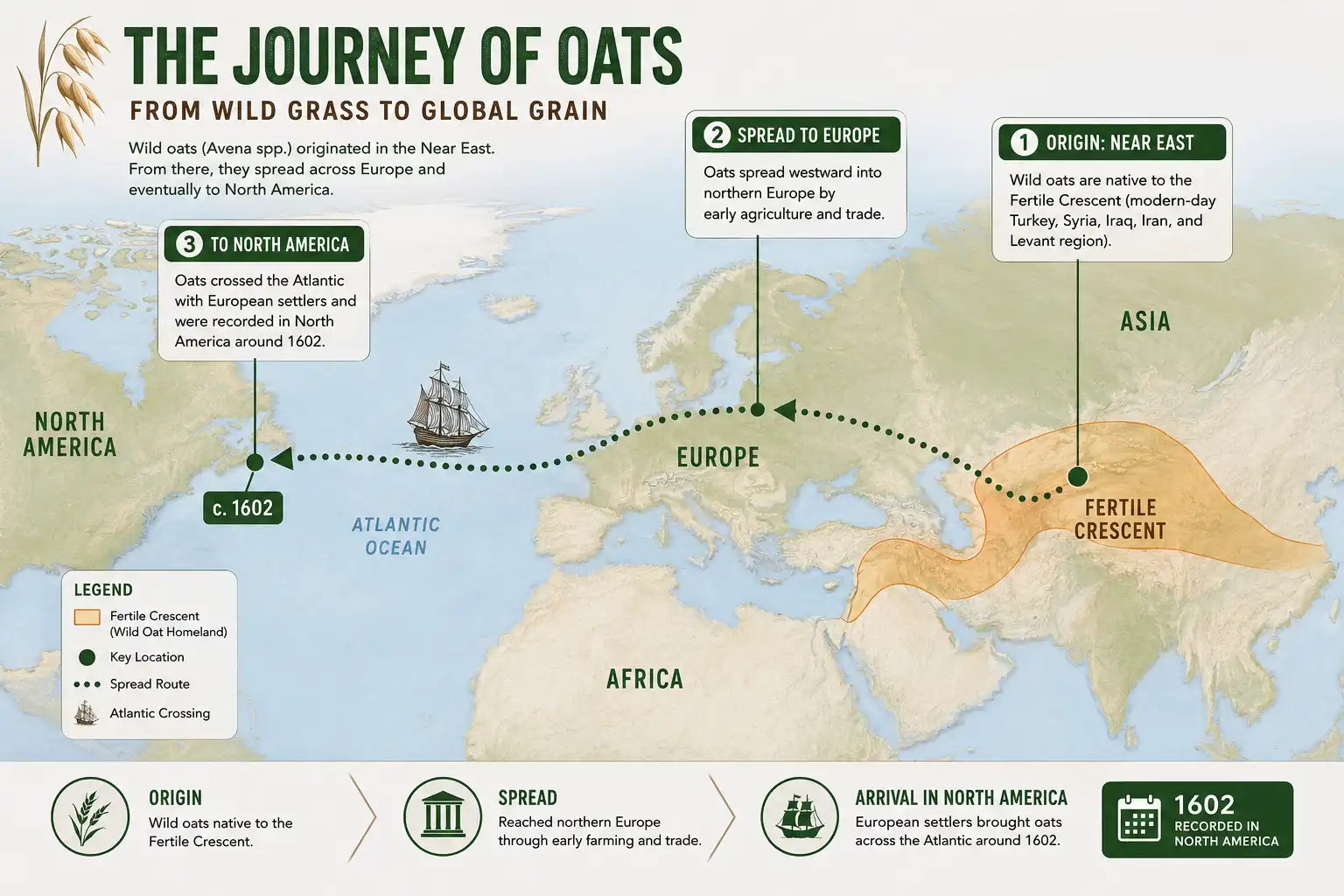
Here is the odd part. Oats did not start as a crop people wanted. They came along as a weed. As early farmers carried wheat and barley west, wild oats grew up in those fields as a tag-along. Botanists call this a secondary crop. Rye has the same backstory.
So why did oats stick around? Because they thrived where the main crops struggled. As farming moved into the cooler, wetter climate of northern Europe, wheat and barley had a harder time. Oats did not. Farmers there began saving and sowing oat seed on purpose. That shift happened in Bronze Age Europe, roughly 3,000 years ago. So oats are a much younger crop than wheat. If you have ever wondered how oats stack up against wheat, that late start explains a lot.
European settlers carried oats to North America around 1602. The crop spread fast, because the northern colonies had the cool, damp weather oats favor.
Where Are Oats Grown in the World Today?
Today, most of the world’s oats grow in Russia, Canada, northern Europe, and Australia. Russia is the single largest producer. Canada comes in second, and it is the world’s biggest oat exporter by a wide margin.
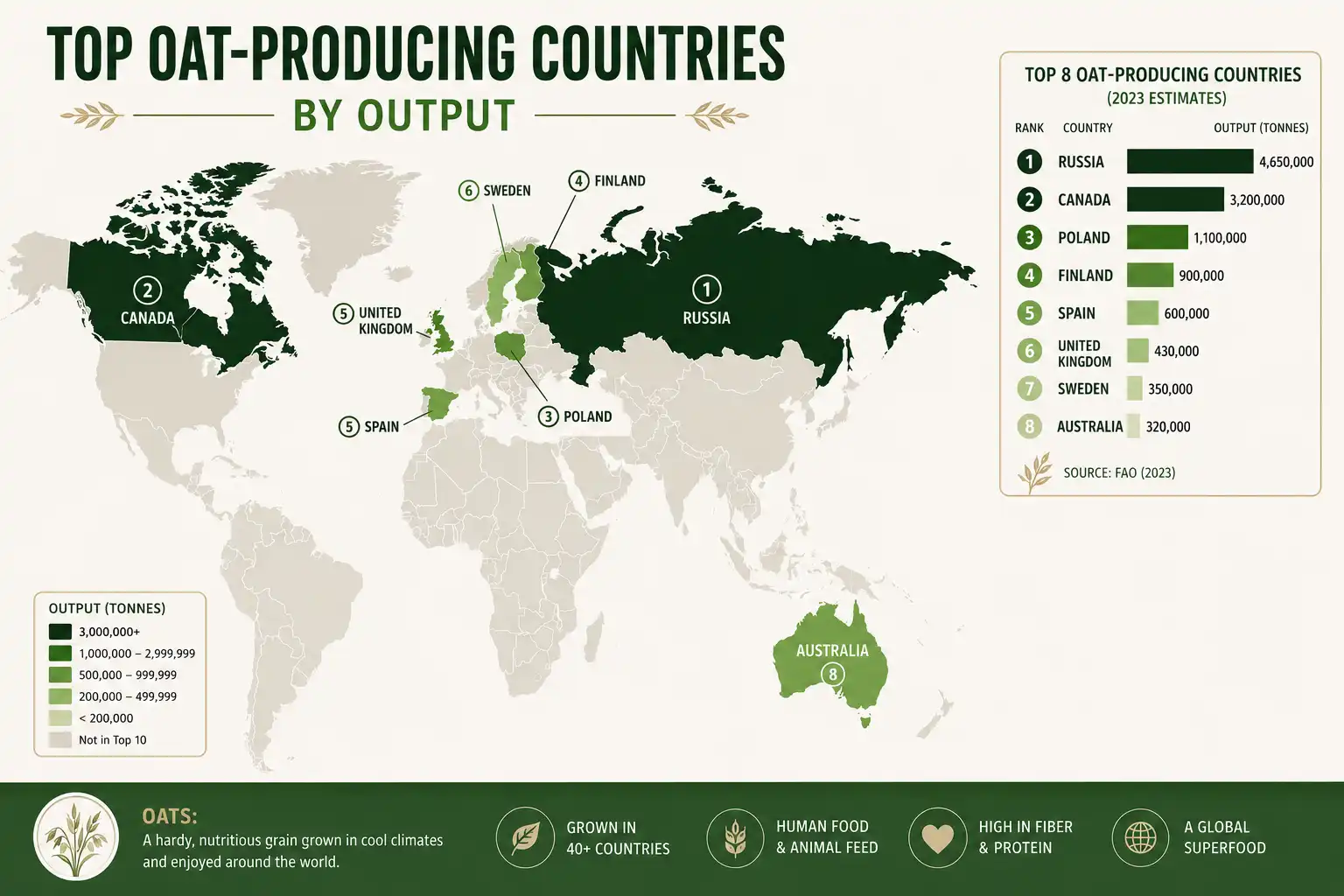
Europe as a whole grows more oats than any other region. Poland, Finland, Spain, the United Kingdom, and Sweden all raise a solid share. In the Southern Hemisphere, Australia is the standout, with big oat regions in New South Wales and Victoria.
The pattern is easy to explain. Oats want cool temperatures and steady moisture. So the crop clusters in the northern latitudes and in temperate zones. You will not find much oat production in hot, dry regions. The plant simply does not handle heat well.
Where Are Oats Grown in the United States?
In the United States, oats grow mostly across the northern states. North Dakota and Minnesota lead in planted acres. Minnesota often tops the list for grain production. Iowa, Wisconsin, and South Dakota round out the main oat belt. Texas also grows winter oats, mostly for grazing.
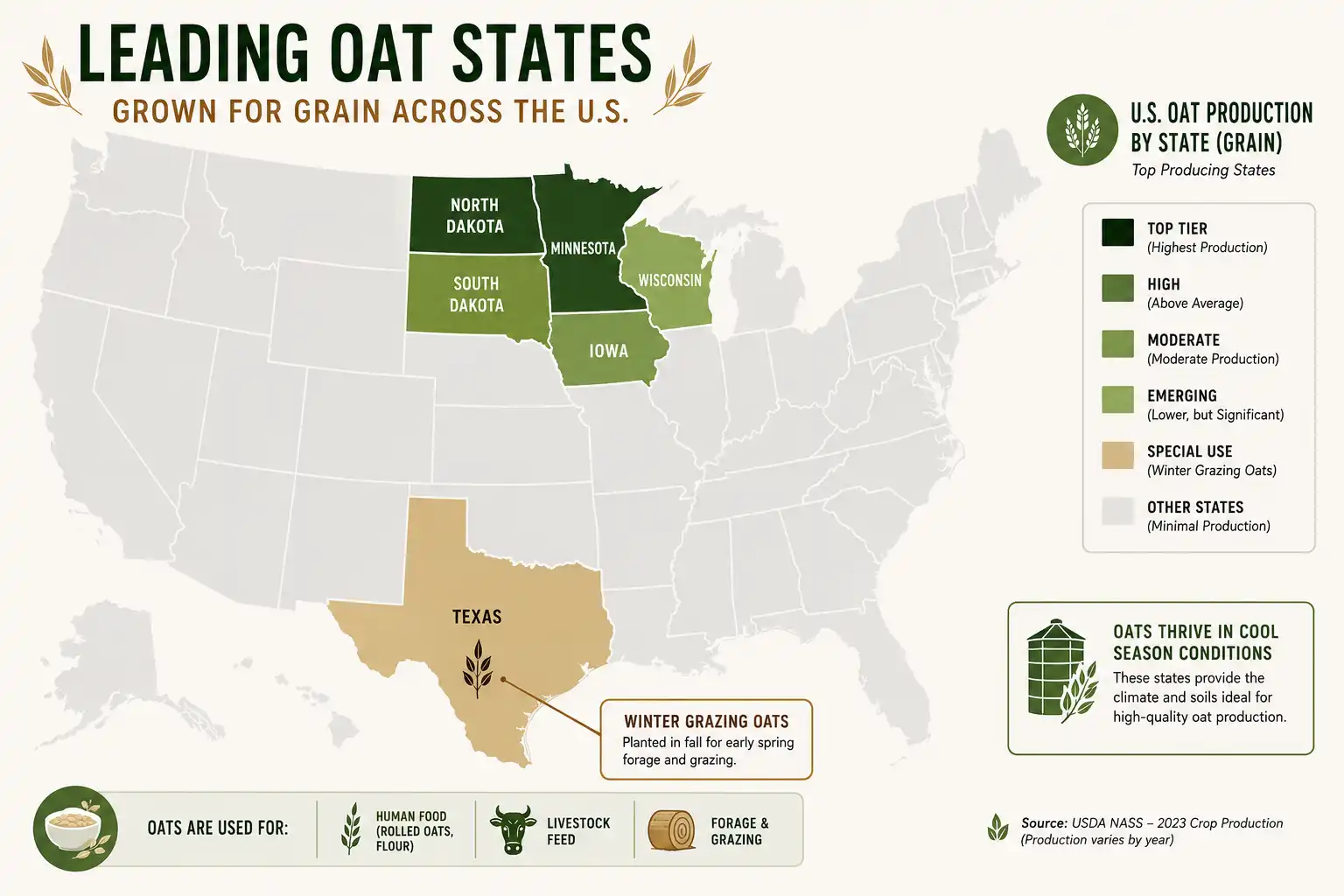
US oat acreage has dropped hard over the past century. Farmers seeded about 2.37 million acres of oats in 2025, according to USDA figures. That was among the lowest totals on record. Total production came in near 69.6 million bushels. For scale, a bushel of oats weighs far less than a bushel of corn or wheat. So the totals add up differently than you might expect.
Here is a detail most people miss. Most of the oat acres planted in this country never reach a grain harvest. Farmers grow a big share of them for forage, hay, and cover. Oats also work as a nurse crop for alfalfa and clover. Spring oats go from seed to a cuttable stand in a hurry. That is part of why they earn a spot in the rotation, and it ties into how quickly oats grow once the soil warms.
Why Do the Oats in Your Cereal Bowl Come From Canada?
The oats in most American cereal and oatmeal come from Canada. US farms grow mostly feed-grade oats, not the milling oats that food companies want. So American oat mills import the bulk of their grain from Canadian growers.
The numbers tell it plainly. The US food industry uses roughly 80 million bushels of milling oats a year. Almost all of that crosses the border from Canada. Prairie provinces like Manitoba and Saskatchewan ship oats south by rail and truck to US mills. Your overnight oats, your granola, and your box of Cheerios likely started on a Canadian farm.
This did not used to be true. A century ago, the US grew plenty of its own oats. But federal farm programs pushed acreage toward corn and soybeans. Oat acres fell year after year. Canada filled the gap, and it still does.
How Do Oats Get From the Field to Your Bowl?
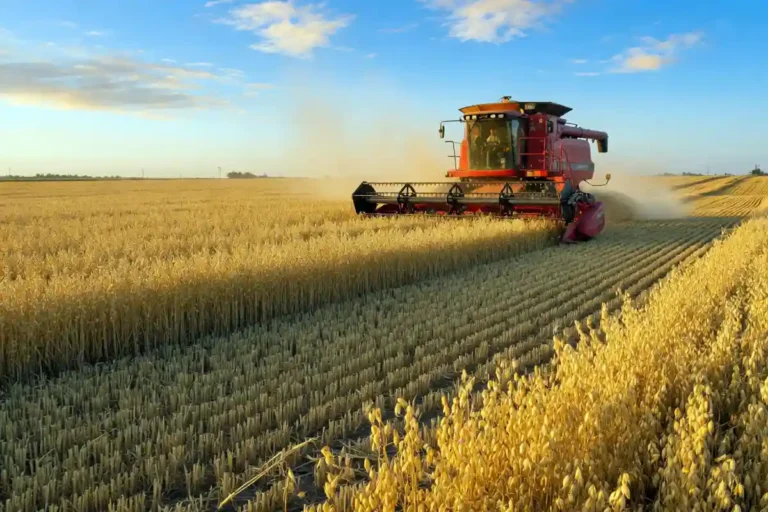
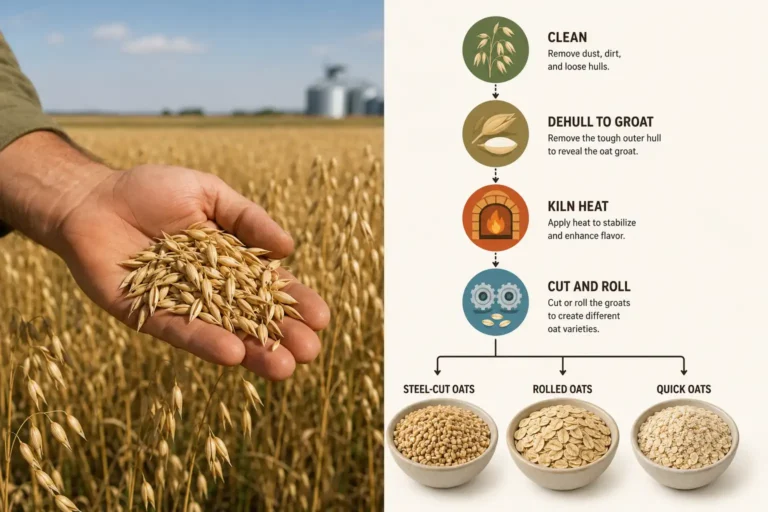
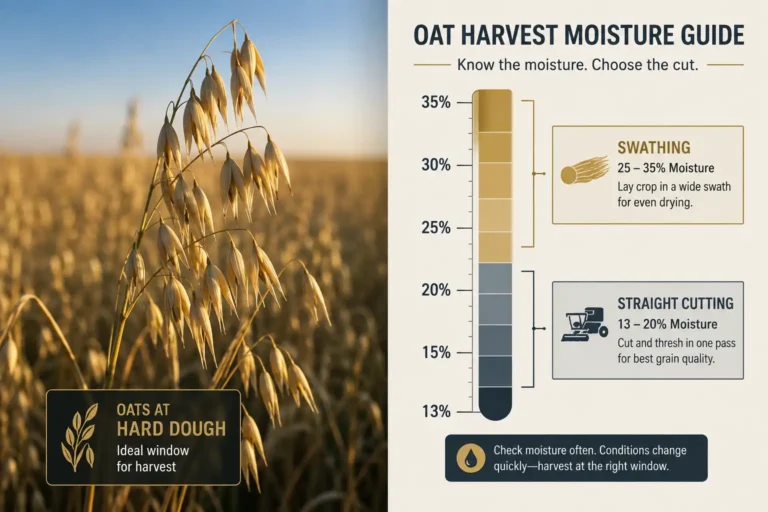
Oats get from the field to your bowl through a few clear steps: harvest, cleaning, dehulling, and then rolling, cutting, or grinding. First comes the harvest. A combine cuts the crop and threshes the grain from the panicle. our guide covers the finer points of harvesting oats separately, but the basics match other small grains.
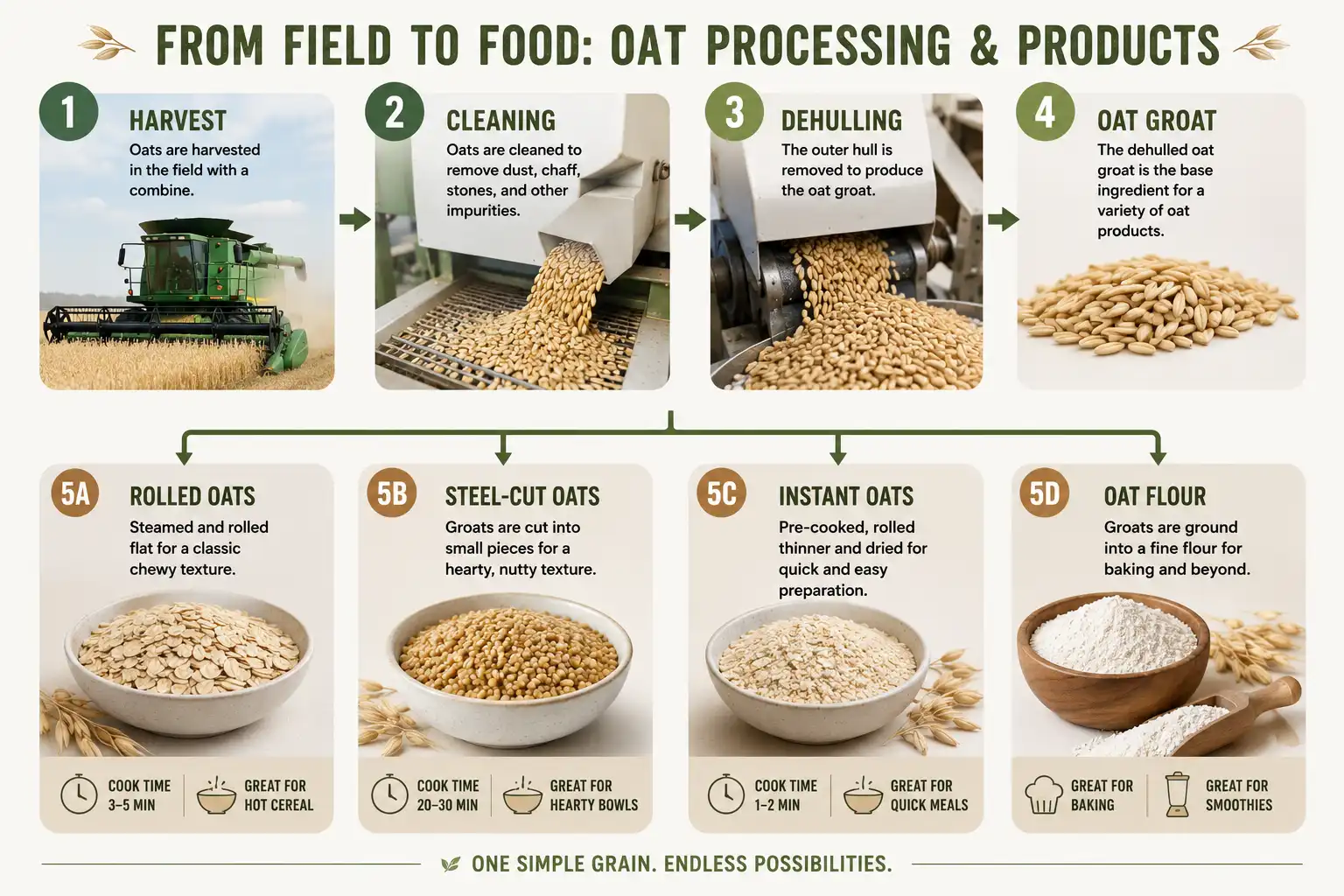
Next, machines clean the grain and strip off the hull. That leaves the groat, the whole oat kernel. From there, the groat takes one of a few paths:
- Rolled oats: steamed groats pressed flat between rollers. These are your old-fashioned oats.
- Steel-cut oats: groats chopped into a few pieces with steel blades. They cook slower and stay chewy.
- Instant oats: groats pre-cooked, dried, then rolled thin so they cook fast.
- Oat flour: groats ground into a fine powder for baking.
One thing worth knowing. Rolling does not strip the oat. Even instant oats keep the bran and germ. So oats stay a whole grain through most of this processing. That is a big reason they hold their fiber and nutrition.
Final Words
Oats come from a tough little grass that started as a weed and ended up feeding the world. The wild plant traces to the Near East. The crop we know took shape in cool, damp northern Europe. Today Russia and Canada lead production, and most of the milling oats Americans eat cross the border from Canada.
If you grow oats yourself, remember what the plant wants: cool weather and steady moisture. Match that, and oats will pay you back, whether you cut them for grain, hay, or cover. That is the recommended approach in this region, and it has worked season after season.