How to Store Oats Long Term So They Stay Fresh for Years
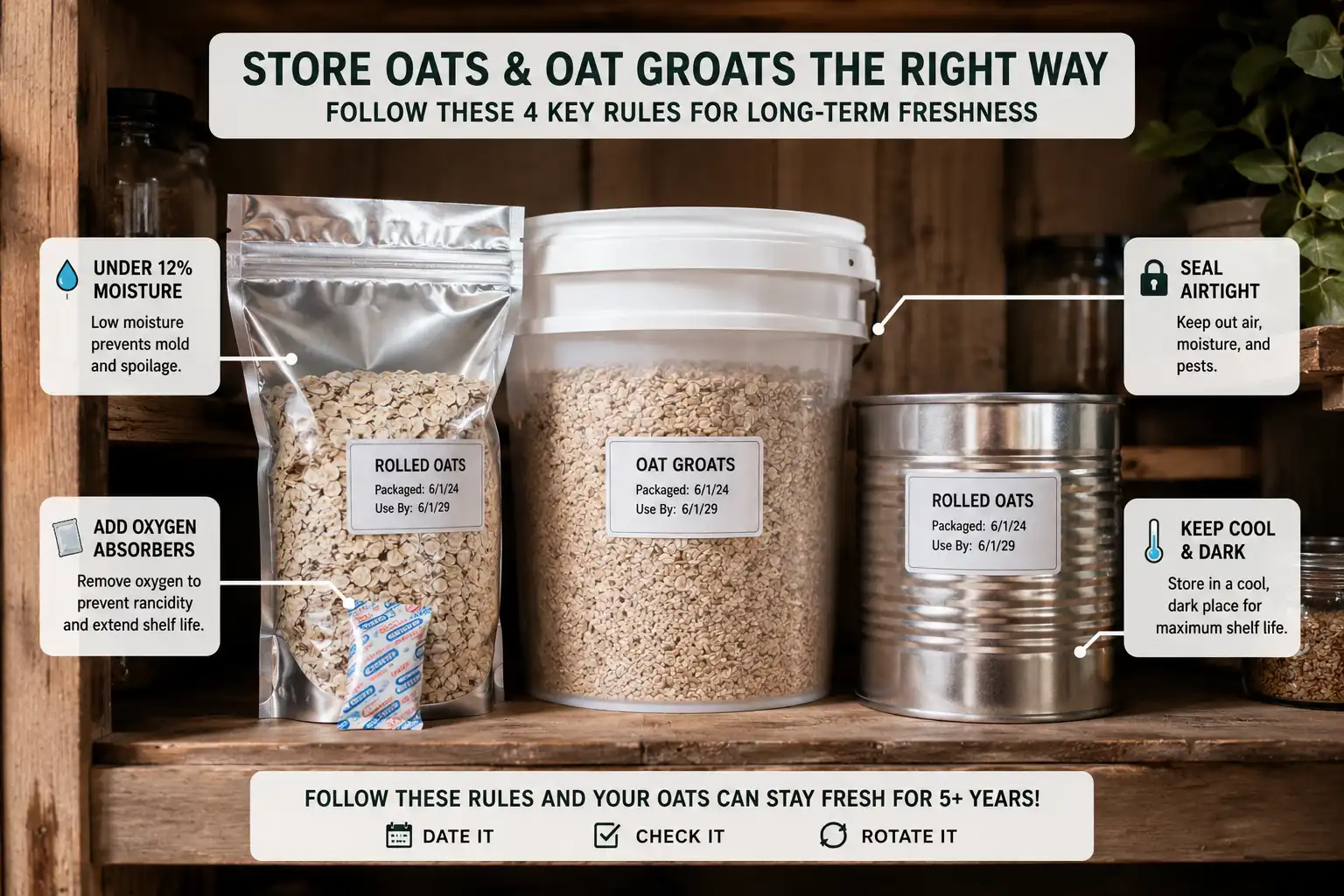
Oats keep for years if you store them right. Store them wrong and they turn rancid, moldy, or buggy. Learning how to store oats long term comes down to four things. Dry grain, no air, cool temps, and pest control.
Store oats long term in three steps. Dry them below 12% moisture. Then seal them in Mylar bags with oxygen absorbers inside food-grade buckets, and keep them cool and dark. Rolled oats last 25 to 30 years.
What Makes Oats Go Bad in Storage?
Four things spoil stored oats: oxygen, moisture, heat, and insects. Each one works a little differently, so you fight them a little differently.
Oats carry natural oil in the germ. When that oil meets oxygen and heat, it goes rancid and tastes bitter. So air and warmth are the first two enemies. Moisture is the third. Above roughly 12% moisture, oats start to respire and mold takes hold. Past 15%, mold grows fast. The fourth enemy is bugs. Weevils, beetles, and moths eat the grain, leave waste behind, and pull in mold. Control all four and oats stay good for a very long time.
How Long Do Oats Last in Long-Term Storage?
In the pantry, oats stay good for 12 to 24 months. Sealed against oxygen in Mylar, they last 25 to 30 years. The difference is air.
An open canister or the paper bag from the store gives you a year or two at best. A tight jar buys more. Once you pull the oxygen out and keep the grain cool and dry, you jump to decades. The type of oat matters too, and cover that next.
Which Oats Store the Longest?
Whole oat groats store the longest, then rolled and instant oats, with steel-cut oats the shortest. It all comes back to that germ oil.
Groats are the whole kernel with the bran still wrapped around them. That intact bran shields the oil, so groats keep for years even before you seal them. Rolled and instant oats get steamed during processing, which stabilizes the oil, so they hold well too. Steel-cut oats are chopped, not steamed, so more oil surface sits exposed. They turn rancid soonest. All of them last decades with the oxygen removed. Still, if you keep steel-cut oats, rotate through them faster for the best flavor.
What Moisture Level Is Safe for Storing Oats?
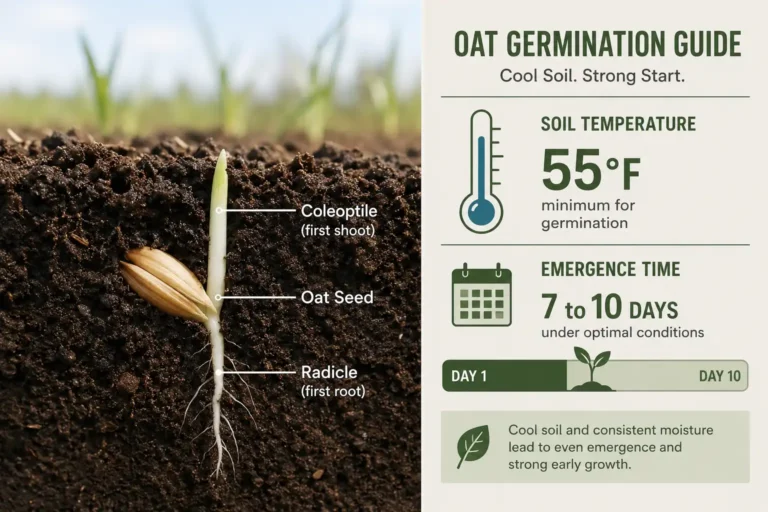
Keep stored oats below 12% moisture. For multi-year storage, dry them closer to 10 or 11%. Wetter than that invites mold and shortens shelf life fast.
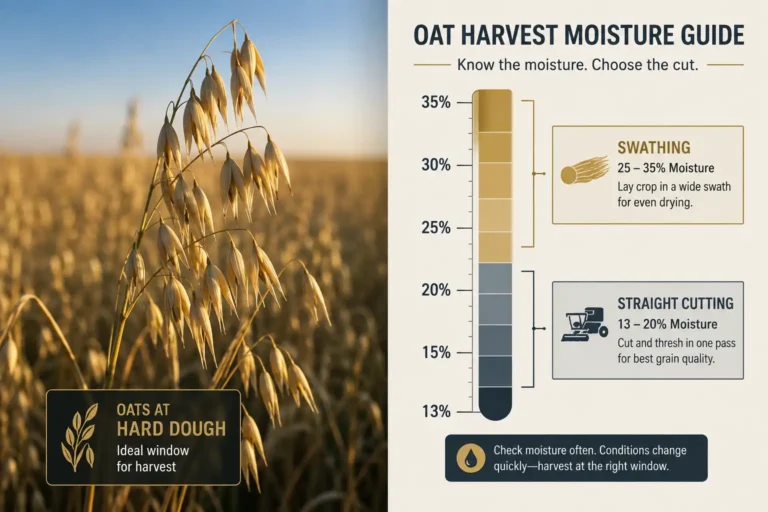
Extension guidance across the grain-growing states lines up here. Above 12%, grain respires and molds start. Food-grade oats top out around 12.5% before fungi become a real risk. Straight off the combine, oats usually run 13 to 14%. Oats should be dried down before going into any sealed container. A dependable grain moisture tester takes the guesswork out of it. One note for seed oats: dry them at no more than 110°F, or you kill the germ.
How to Store Oats Long Term Step by Step
To store oats long term, dry them, clean them, and kill any insect eggs. Then pull the oxygen out and keep them cool and dark. Here is the exact process for pantry oats.
- Start with clean, dry oats at 12% moisture or less.
- Freeze the oats for 3 to 7 days to kill any insect eggs riding along from the field or mill.
- Let the frozen oats warm back to room temperature before sealing, so no condensation gets trapped inside.
- Set a food-grade Mylar bag (5 to 7 mil) inside a sturdy bucket to hold its shape while you fill it.
- Drop in an oxygen absorber sized to the bag. A 5-gallon bag needs about 2,000 cc; a one-gallon bag needs around 300 cc.
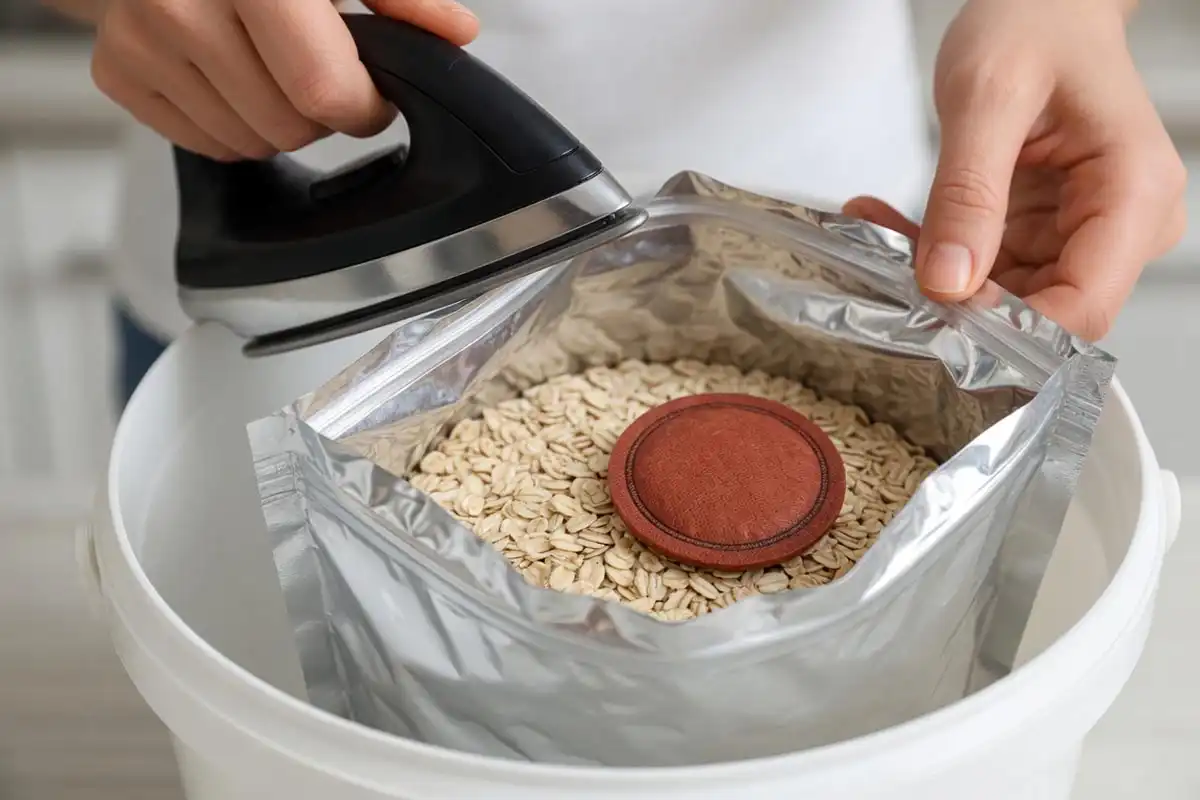
- Press out the extra air and seal the Mylar with a hot iron or an impulse sealer.
- Snap the bucket lid on, then label it with the contents and the date.
After that, store the bucket off the floor in a cool, dark, dry spot. Rotate the oldest buckets first. That way nothing sits forgotten in the back.
What Are the Best Containers for Storing Oats?
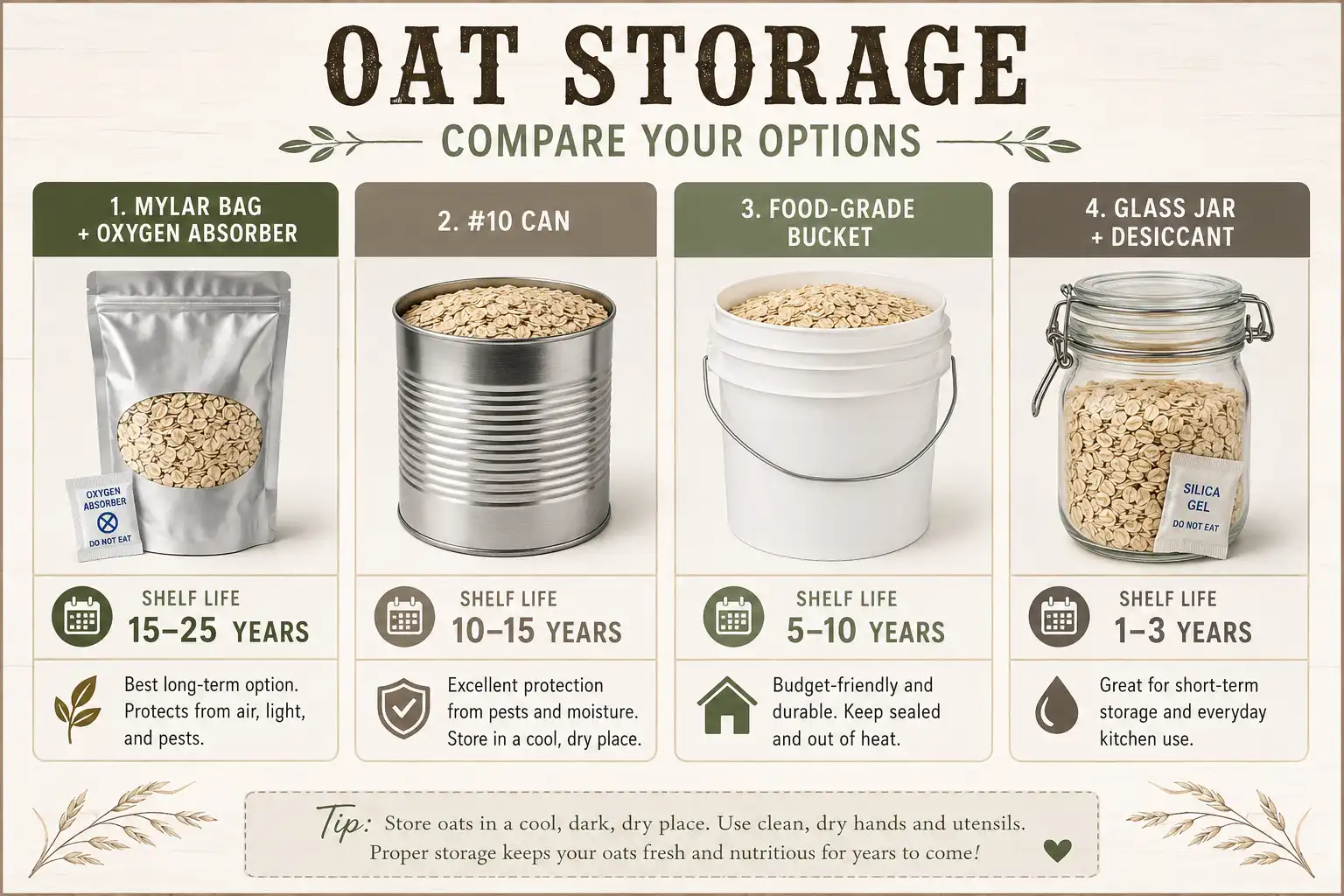
The best long-term container is a Mylar bag with an oxygen absorber, tucked inside a food-grade bucket. That combo blocks light, air, moisture, and most pests at once.
You have a few good options. Mylar plus an oxygen absorber inside a bucket is a top pick for decades of storage. A #10 can works great if you have a can sealer. A food-grade bucket with a gamma lid is handy. Still, plastic breathes a little over the years, and rodents can chew it. A Mylar bag can be nested inside for the long haul. Glass jars with a desiccant packet suit smaller pantry amounts, just keep them out of the light. Skip thin plastic bags and the original paper packaging for anything long term. One more habit worth keeping: store containers off a concrete floor, since concrete wicks moisture right into them.
How Do You Keep Bugs Out of Stored Oats?
Freeze oats before storage to kill eggs, pull the oxygen out, keep the grain cool, and inspect it often. Insect eggs usually hitch a ride in from the field or the mill, so you treat every batch as if it has them.
A 3 to 7 day stint in the freezer kills those eggs. Oxygen-free storage then smothers anything that survives. Temperature does heavy lifting too. Insects breed hardest at 70 to 90°F, slow down below 60°F, and go dormant below 50°F. For an extra layer, food-grade diatomaceous earth mixed through the oats dehydrates any crawling bugs and stays safe in food. Use a light dusting for a bucket, or 1 to 2 pounds per ton for bulk grain.
Know your enemy, too. The common oat pests are the granary weevil, rice weevil, Indian meal moth, and lesser grain borer. The sawtoothed grain beetle shows up in stored oats more than in wheat or barley. Watch for webbing across the top, clumped kernels, and a sour smell. For a bucket of bulk grain, dry ice is another way to push out oxygen. Set about a quarter pound in the bottom, then add the oats. Rest the lid on loosely for five or six hours while it turns to gas. Then seal it tight.
How Do You Store Harvested Oats in a Grain Bin?
Store harvested oats in a clean, dry bin at 12% moisture or less, then run aeration to keep the grain cool and even. This is where most on-farm storage stands or falls.
Clean the bin before you fill it, and treat the walls and floor if you fought pests last season. Bring the oats in dry, drying down from that 13 to 14% harvest moisture if you need to. Then aerate to hold the grain within about 15°F of the average outside air. That keeps moisture from drifting to the top center and crusting the surface. Cool grain is safe grain, so the target is keeping it below 60°F through the warm months on the Great Plains. Inspect monthly with a grain probe. Hot spots and top crusting are your early warning. Remember that allowable storage time drops by roughly half for every 10°F the grain warms, so heat is not your friend. Never mix new oats with old.
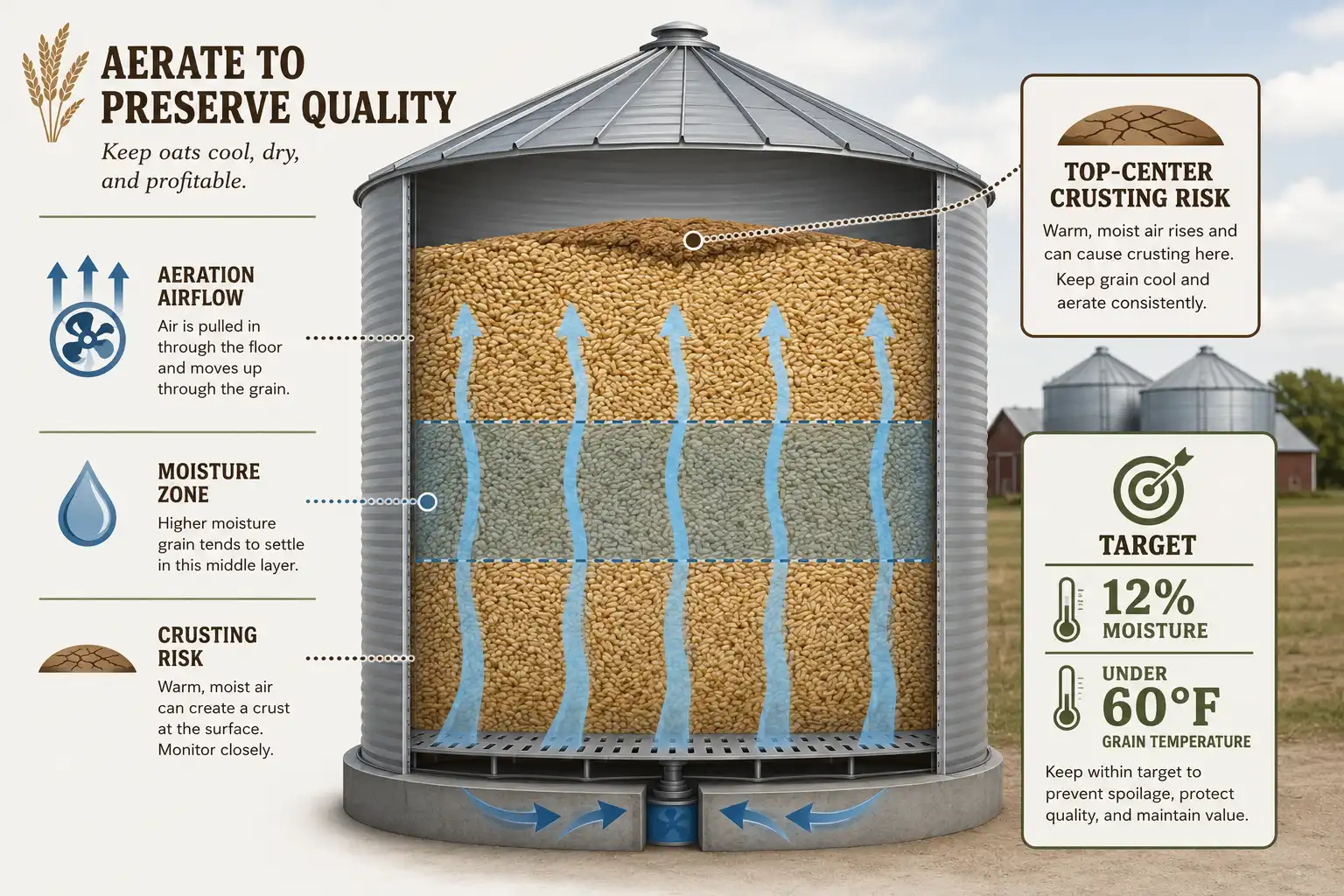
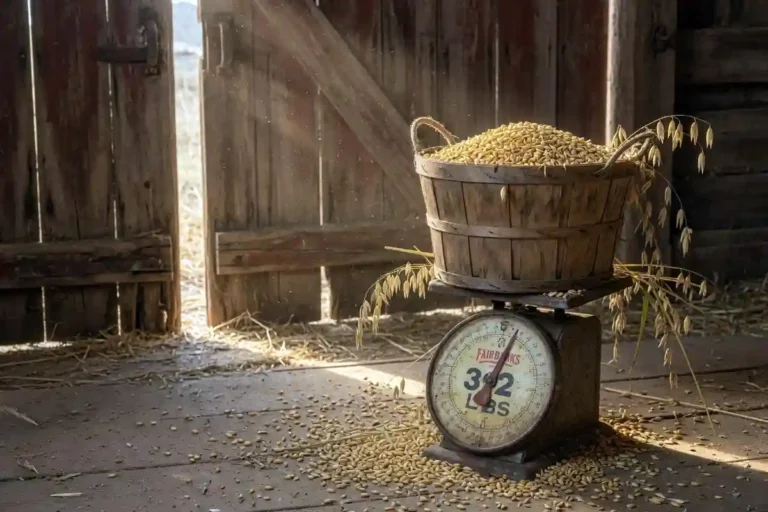
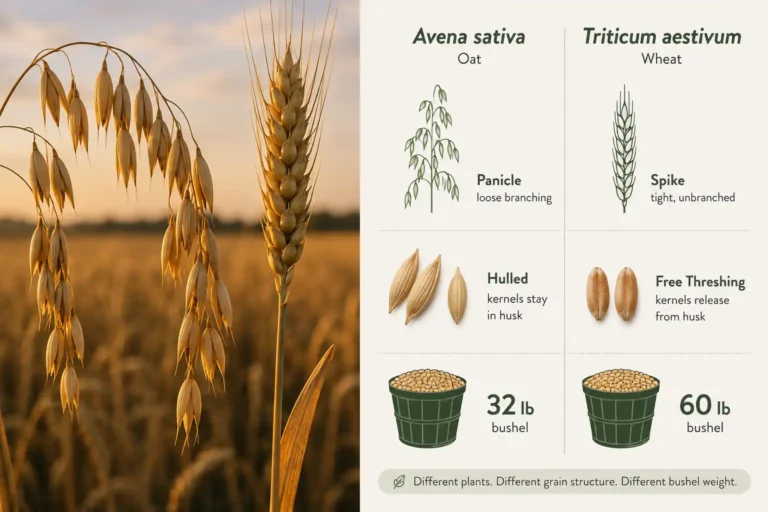
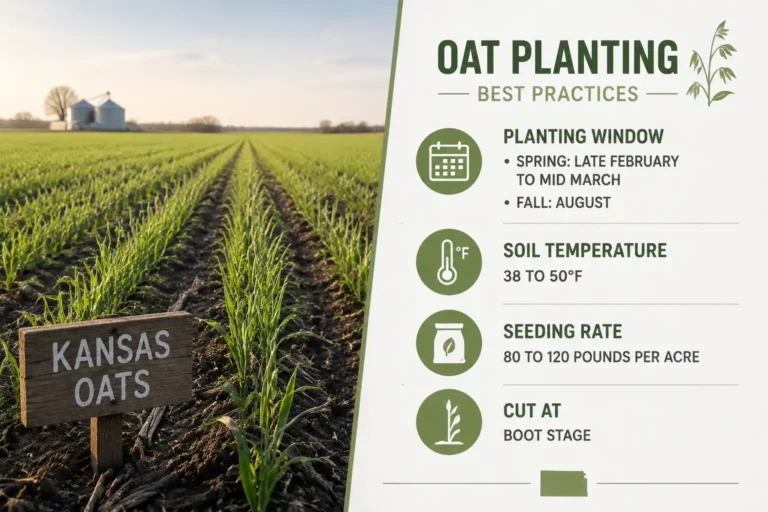
Getting the crop into the bin dry starts with timing the oat harvest and bringing in the crop cleanly. Careful handling right after harvest sets the grain up to keep. The same cool, dry, airtight rules it helps to use for storing other crops apply to oats. If you are sizing bins or buckets, it helps to know what a bushel of oats weighs.
How Do You Know When Stored Oats Have Gone Bad?
Bad oats smell sour, rancid, or musty, and may clump, feel greasy, or show webbing and live bugs. Your nose is the fastest test you own.
A bitter, paint-like, or oily smell means the germ oil has oxidized. A musty or sour smell points to mold or trapped moisture. Clumps, a stringy texture, or webbing across the surface signal pests or dampness. Rancid oats taste bad but rarely make you sick, so you can toss them without worry. Moldy oats are different, because mold can carry toxins, so never eat those. When in doubt, throw it out.
Final Words
Dry, oxygen-free, cool, and pest-free. Hit those four and oats will outlast most of what sits in your pantry. Keep groats for the longest holds, rolled oats for everyday eating, and rotate steel-cut faster. On the farm side, moisture control and steady aeration do the real work. Nail the basics up front and you rarely lose a single bucket.