What Does a Bushel of Oats Weigh? The 32-Pound Standard Explained
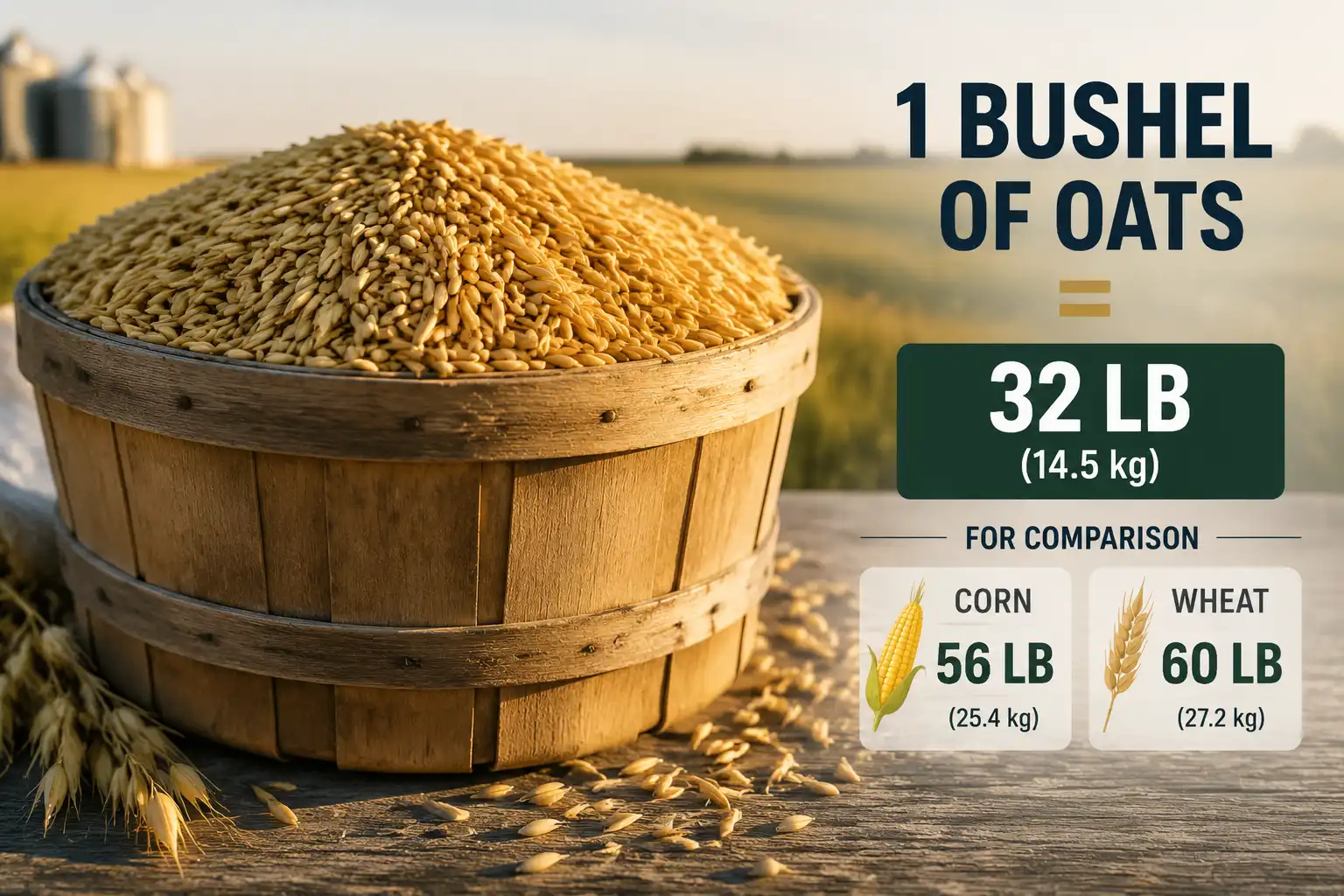
A bushel of oats weighs 32 pounds by the U.S. standard. That number sets how grain elevators count and pay for your crop. Actual density, moisture, and USDA grade all shift what shows up on the scale.
A bushel of oats weighs 32 pounds, or about 14.5 kilograms, under the USDA standard. Elevators divide your total load weight by 32 to count bushels. Test weight and moisture then set grade and price, not the bushel count.
What Does a Bushel of Oats Weigh?
A bushel of oats weighs 32 pounds. That figure is fixed by long-standing U.S. trade convention, and Canada uses the same number. It is not a measurement of any single basket. Instead, it is the weight elevators use to turn your total scale reading into bushels.
Here is the simple math. You haul a load in, it crosses the scale, and the buyer divides the net pounds by 32. So 6,400 pounds of clean oats counts as 200 bushels. The USDA set 32 pounds generations ago, and modern varieties often run heavier than that baseline.
Why Does a Bushel of Oats Weigh Less Than Corn or Wheat?
A bushel of oats weighs less because oat kernels are light and hull-covered. They pack loosely and hold air. Corn and wheat kernels are dense and sit tight together. That density gap is the whole story behind the different bushel weights.
Every major grain got its own standard weight for trade. Oats came in at the bottom because the hull adds bulk without much mass. A bushel of corn tips the scale at 56 pounds. That number is broken down in a separate piece on corn bushel weights. Soybeans and wheat both sit at 60 pounds, and the soybean bushel figure works the exact same way.
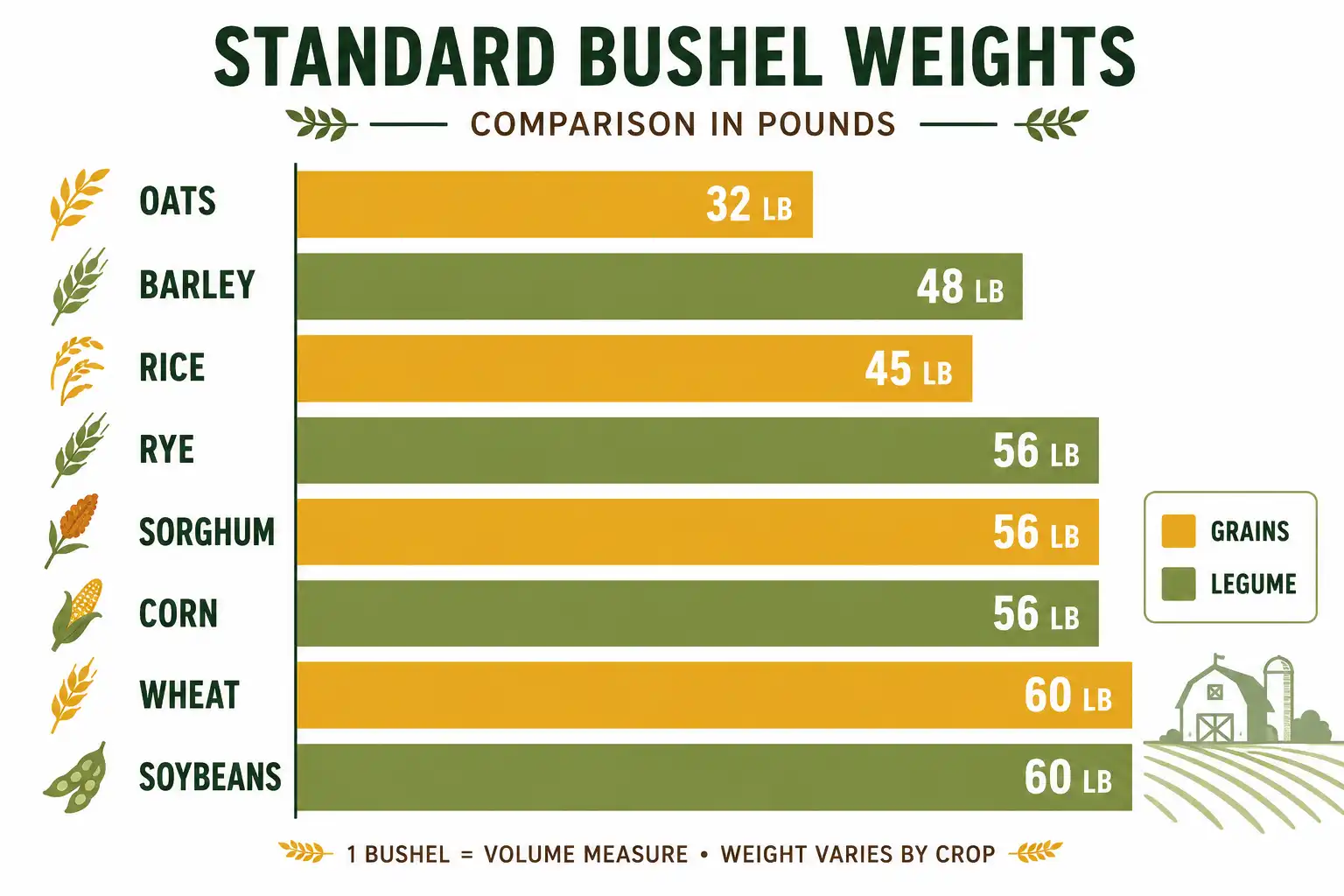
Here is the quick reference table worth keeping taped inside a grain records binder.
| Grain | Standard bushel weight (lb) |
|---|---|
| Oats | 32 |
| Rice | 45 |
| Barley | 48 |
| Rye | 56 |
| Sorghum | 56 |
| Corn | 56 |
| Wheat | 60 |
| Soybeans | 60 |
Standard Bushel Weight vs. Test Weight: What Is the Difference?
The standard bushel weight is a fixed 32 pounds used to count bushels. Test weight is the actual measured density of your load. Both matter, but they do two different jobs. Mixing them up costs farmers money at the scale, so keep them straight.
Standard weight handles the accounting. The elevator weighs the whole load, divides by 32, and pays you on that bushel count. This holds true even when your grain runs denser or lighter than average. Soybeans convert the same way, always at 60.
Test weight is a quality reading. Graders fill a standard quart kettle, weigh it, and scale the result up to pounds per bushel. Higher test weight means plumper, denser kernels with less hull and fewer broken pieces. So a load can test at 38 pounds per bushel and still sell in 32-pound bushels. The high test weight earns you a clean grade and packs more grain into the same bin.
What Test Weight Do You Need for Each USDA Oat Grade?
U.S. No. 1 oats need at least 36 pounds per bushel test weight, and the minimum drops through each lower grade. The Agricultural Marketing Service sets these limits under the federal oat standards. Test weight is one of the main factors that decides where your load lands.
Here is what the grades require:
- U.S. No. 1 oats: minimum 36.0 pounds per bushel
- U.S. No. 2 oats: minimum 33.0 pounds per bushel
- U.S. No. 3 oats: minimum 30.0 pounds per bushel
- U.S. No. 4 oats: minimum 27.0 pounds per bushel
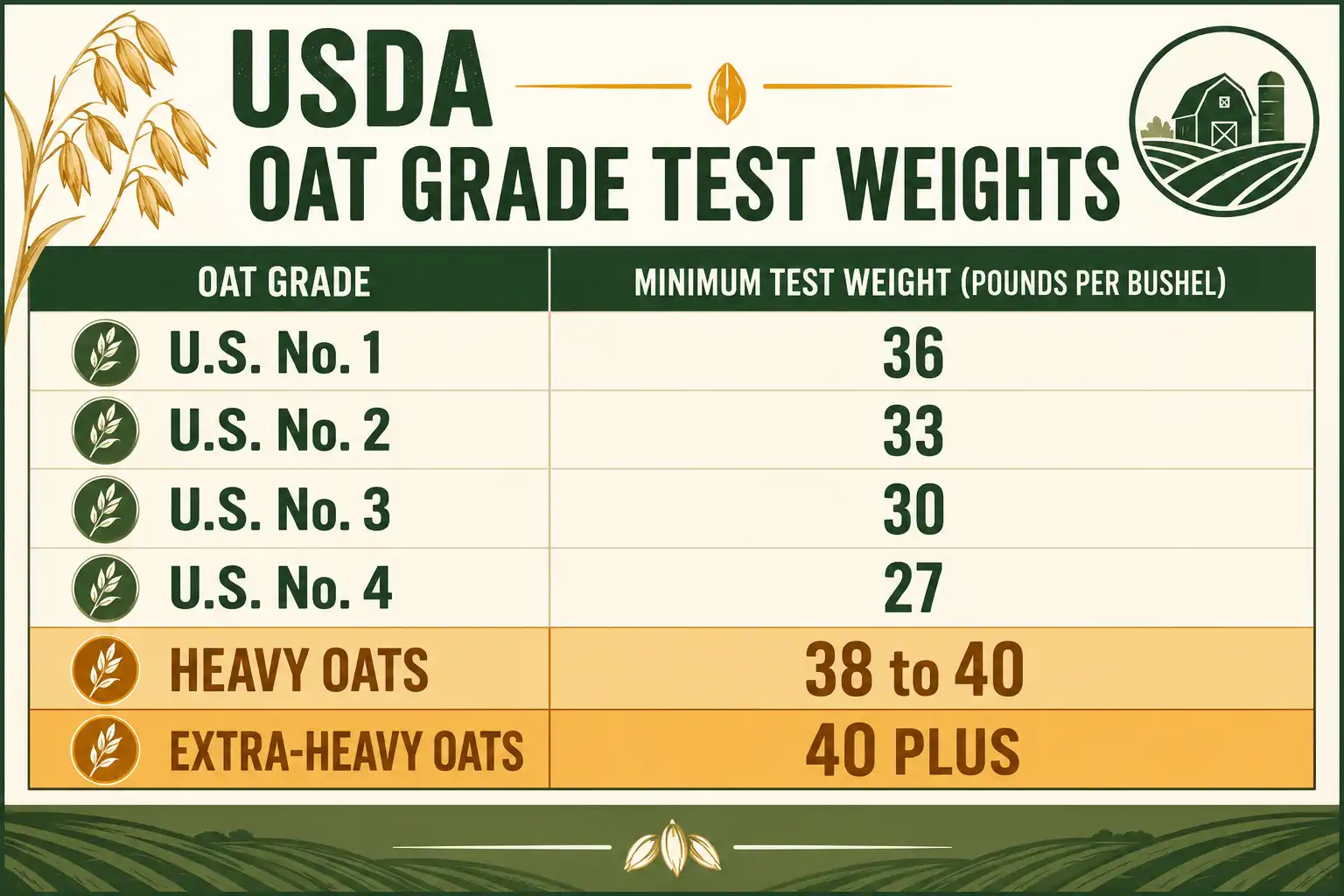
Two special grades reward heavy grain. Heavy oats test between 38 and 40 pounds per bushel. Extra-heavy oats test at 40 pounds or more. Oats grown across the Corn Belt often beat the 32-pound baseline by 3 to 6 pounds. Modern varieties and good management drive that.
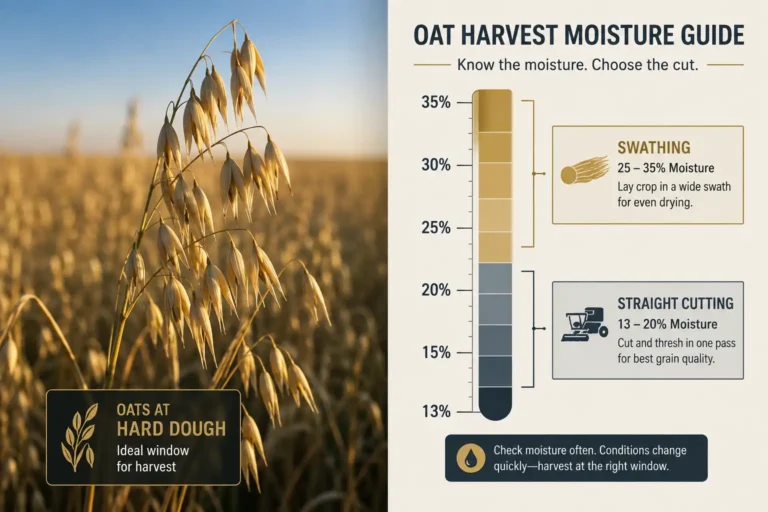
Grade ties straight back to maturity and drying. Green or immature oats test light and often grade down. That is why timing the oat harvest matters so much for the number you get paid on.
How Does Moisture Change What Your Oats Weigh?
Wet oats weigh more on the scale but get docked, so moisture pads the weight without adding real value. Every load carries some water, and buyers price against a standard moisture level. Above that line, they trim your payment to cover shrink and drying.
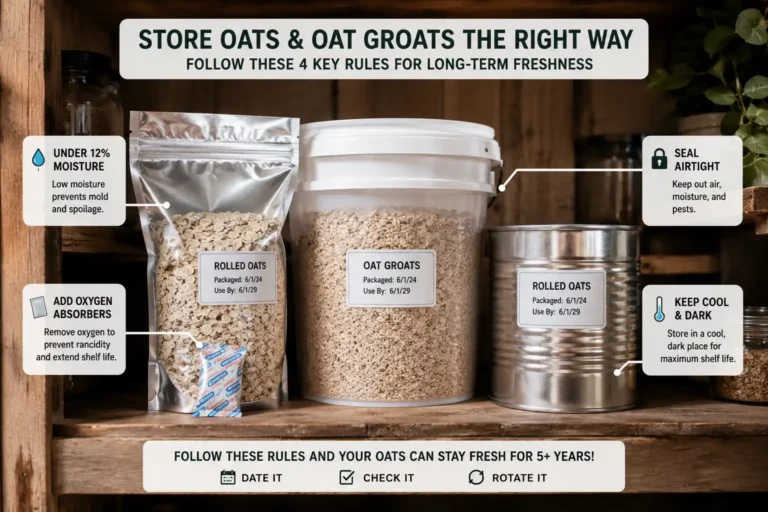
Aim to bin oats around 12 to 13 percent moisture for safe storage. Most elevators start docking near 14 percent. Grain hotter or wetter than that can heat and spoil in the bin. This should be checked before the auger is ever pulled. Keep a handheld grain moisture reader in the truck for spot checks in the field.
Seeding rate feeds into this too, because thin or lodged stands often mean lighter grain. Are you still working out how much oat seed to drill per acre? A solid stand sets you up for better test weight down the road.
Bushel of Oats Conversions You Will Actually Use
One short ton of oats equals 62.5 bushels at the 32-pound standard. These are the numbers to reach for when truing up records or talking price with a buyer. Keep them handy and the math on any load stays quick.
- 1 bushel of oats: 32 pounds (about 14.5 kilograms)
- 100 pounds of oats: 3.125 bushels
- 1 short ton (2,000 pounds): 62.5 bushels
- 1 metric tonne (2,204.6 pounds): about 68.9 bushels
- Bushel volume: 2,150.42 cubic inches, or roughly 1.24 cubic feet
Price gets quoted per bushel, so that 32-pound unit anchors every cash bid you see. When your local elevator posts a number, it pays for 32-pound bushels. That number never covers a fixed volume of grain.
What the 32-Pound Standard Means for Your Oat Crop
The 32-pound bushel is the yardstick for counting and pricing every load sold. Your bushel count comes from total weight divided by 32, plain and simple. Test weight and moisture do not change that count. But they set your grade, your discounts, and how much clean grain fits the bin.
So push for dense, well-dried oats. A stand that finishes strong and dries down right will beat the 32-pound baseline, grade high, and store clean. Do you run oats against wheat in your rotation? The same weight logic applies to both, covered in this look at oats versus wheat.