How Many Pounds of Oats Per Acre? 7 Proven Rates by Use

Oat growers plant 50 to 100 pounds per acre, with the exact rate tied to purpose, planting date, and seeding method. This guide breaks down seeding rates for grain, forage, hay, and cover crops, the math behind a precise rate, and practical field adjustments that protect yield and stand quality.
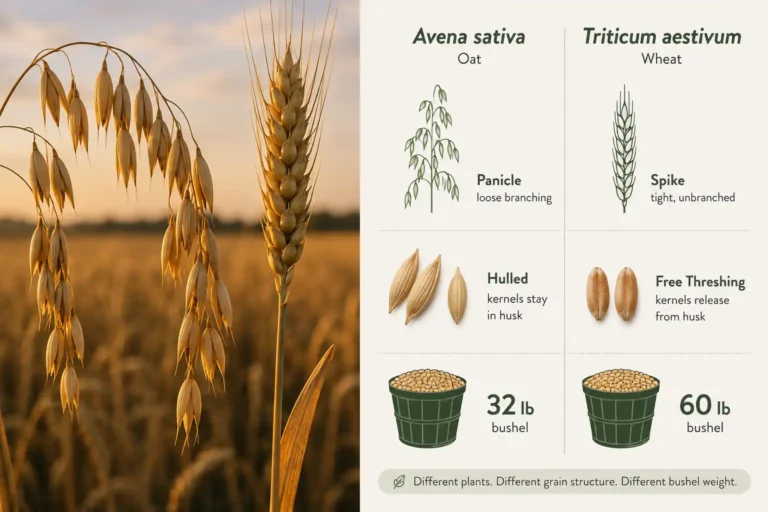
Most oat growers plant 64 to 96 pounds of seed per acre (2 to 3 bushels) for grain, 75 to 100 pounds for hay or forage, and 40 to 60 pounds for a cover crop. One bushel of oats weighs 32 pounds by federal grade.
What Is the Standard Oat Seeding Rate?
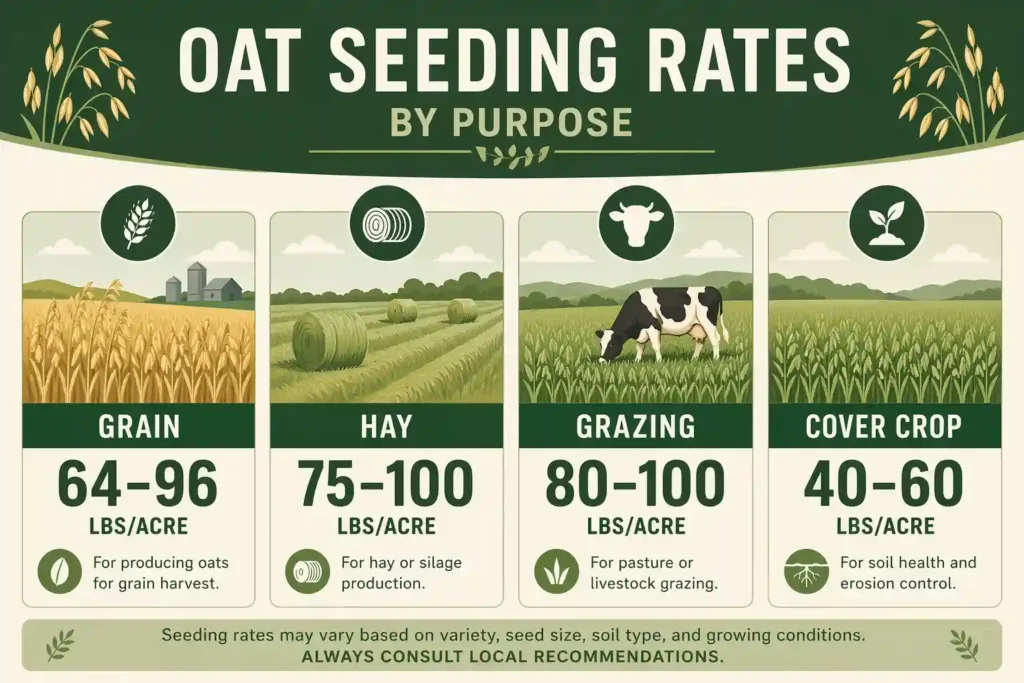
The standard seeding rate for oats runs 64 to 96 pounds per acre for grain production. That works out to 2 to 3 bushels per acre, since one oat bushel weighs 32 pounds by grade standard. Growers aiming for hay, forage, grazing, or cover crops land higher or lower than that grain range.
Oat seed counts sit between 12,000 and 17,000 seeds per pound, so the same weight delivers different plant populations depending on variety and lot. Keep a planting notebook tracking seeds per pound on every bag, because that number drives your final rate.
Read more: 4 Stages to Cut Oats for Hay
Pounds of Oats Per Acre by Purpose
- Grain: 64 to 96 lbs/acre (2 to 3 bushels)
- Hay: 75 to 100 lbs/acre
- Pasture or grazing: 80 to 100 lbs/acre drilled (Oklahoma State Extension)
- Cover crop (drilled): 40 to 60 lbs/acre
- Cover crop (broadcast): 60 to 80 lbs/acre
- Aerial seeding: about 75 lbs/acre of pure live seed
- Oats with forage brassicas: 96 lbs/acre oats plus 4 to 6 lbs turnips
Target plant populations sit near 22 to 29 plants per square foot, or 1.0 to 1.3 million plants per acre, for grain production. Forage and cover rates lean higher for faster ground cover and weed suppression.
When Planting Date Shifts Your Rate
Spring oats reward early planting with stronger tillering. A University of Minnesota Extension guideline lifts the seeding rate 1 percent for each day past the optimum spring date.
If your rate is 90 lbs/acre and you seed 10 days late, add about 9 lbs/acre to keep head counts on track. Fall-planted oats for cover or late forage run at the full 60 to 90 lb range because tiller count drops with short day length.
Pair timing decisions with a planting date calendar so the seed drop lines up with a soil temperature near 40°F.
Know more: 5 Steps to Plant Oats
Where Region and Soil Change the Number
Regional moisture and soil type shift seeding rates inside the published range. Kansas State Extension guidance pushes eastern Kansas and irrigated fields toward the upper end of the 50 to 75 lb forage range, while dryland western fields lean low to stretch moisture.
Heavy, crust-prone ground calls for a slightly heavier rate because seedling mortality climbs. Light sandy soil with solid moisture carries a lower rate efficiently. A quick soil testing result before planting also helps me set nitrogen rates alongside the seed rate.
How to Calculate Your Exact Oat Seeding Rate
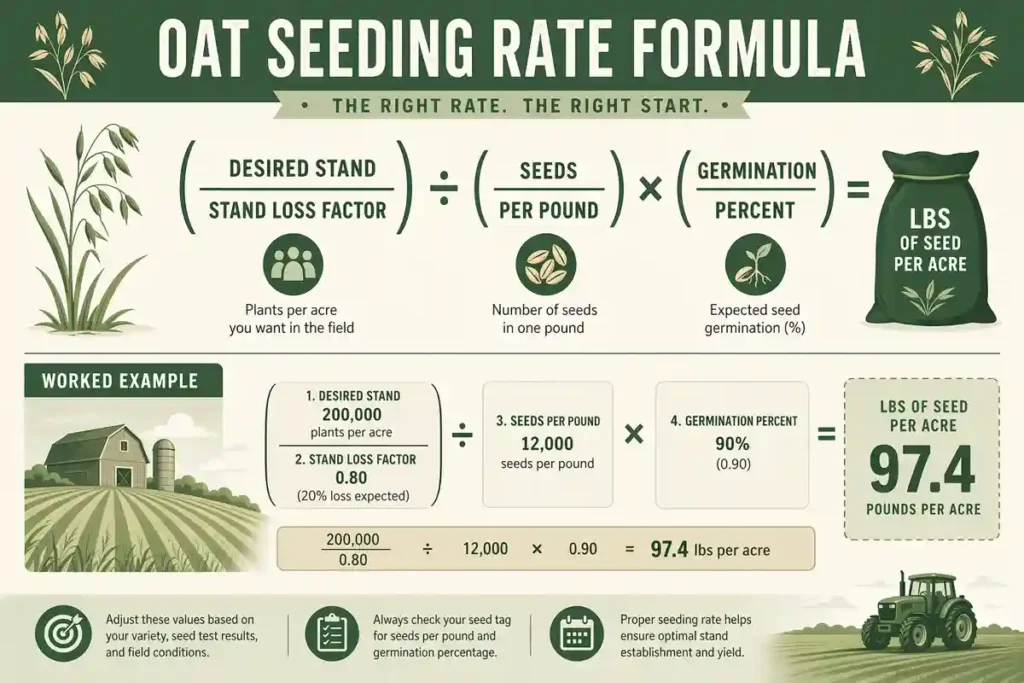
The extension formula produces a precise number based on your seed lot. Run the math once per lot before calibrating the drill.
Formula: Seeding rate (lbs/acre) = [desired stand ÷ (1 − stand loss)] ÷ [seeds per pound × % germination]
Step-by-Step Calculation
- Set a desired final stand. Use 1.25 million plants per acre for grain.
- Estimate stand loss. Typical field loss runs 10 to 20 percent.
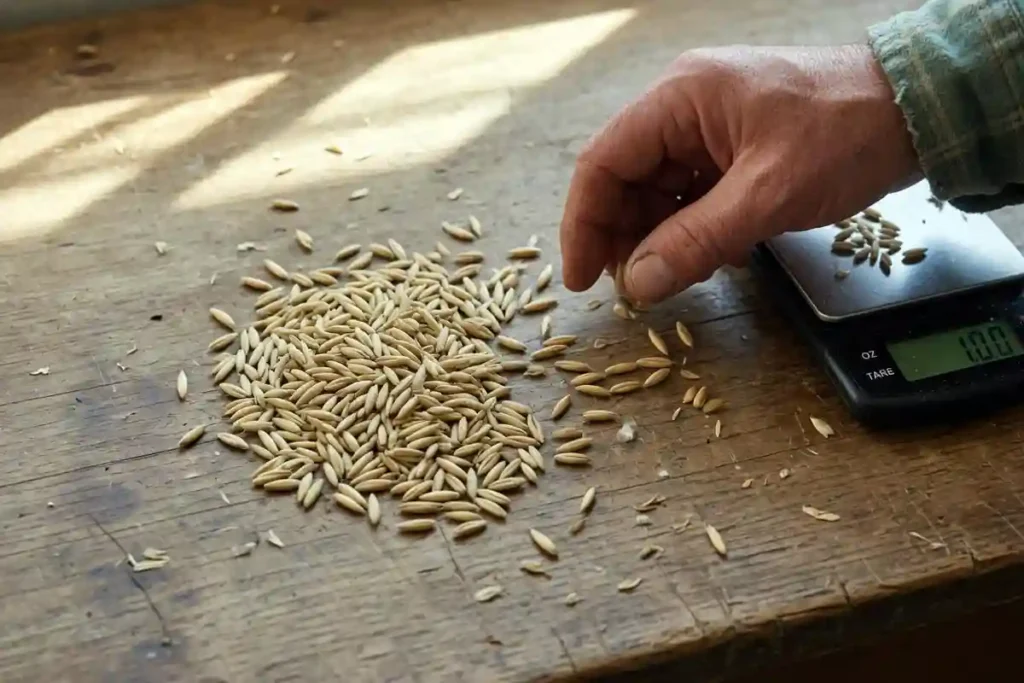
- Find seeds per pound. The seed dealer can supply this, or weigh one ounce, count seeds, and multiply by 16.
- Read the germination rate. Most lots test 92 to 95 percent.
- Plug in the numbers. For a 1.25M target, 10% loss, 15,000 seeds/lb, and 95% germination: (1,250,000 ÷ 0.90) ÷ (15,000 × 0.95) = 97.4 lbs/acre.
- Calibrate the drill to deliver that weight across a measured strip before full-field planting.
Iowa State Extension research finds that bushel-based planning loses accuracy because test weights vary from the 32-lb grade. Seeds-per-acre planning hits target populations with less waste.
Drilling vs Broadcasting
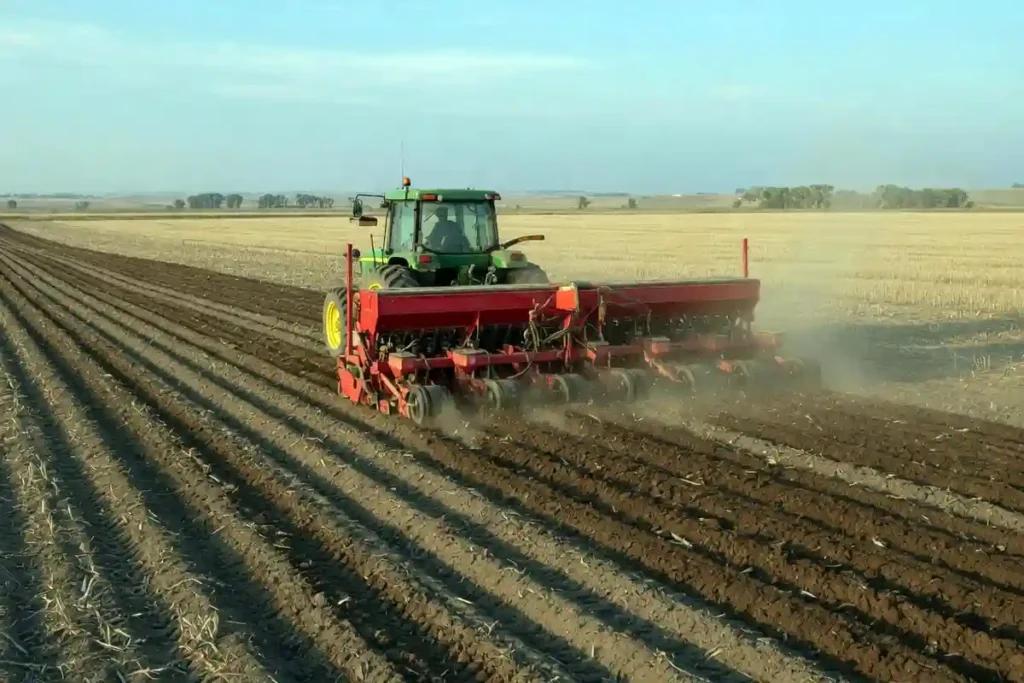
A grain drill places seed at a consistent 1 to 2 inch depth with tight seed-to-soil contact. Broadcast seeding scatters seed on the surface, so stand losses run higher. Bump broadcast rates 20 to 25 percent above drill rates, and run a light harrow or culti-packer to cover the seed.
For fields headed into a cover crop rotationdrill at 50 lbs/acre to cut seed cost without giving up ground coverage.
Troubleshooting Thin or Thick Oat Stands
Thin stands often trace back to cold soil, shallow moisture, or poor seed-soil contact. Thick stands cause lodging and disease pressure.
- Thin stand (below 18 plants/sq ft): Check for germination slip, planting depth over 2 inches, or a dry seedbed. A light nitrogen topdress at tillering recovers head count.
- Thick stand (above 32 plants/sq ft): Expect lodging on high-fertility fields. Reduce nitrogen and consider a plant growth regulator.
- Patchy emergence: Usually signals uneven seeding depth or crust. An early rotary hoe breaks crust without damaging seedlings.
A closed oat canopy suppresses weeds early, so pairing the right rate with sound weed control practices pays off in fewer escape weeds.
Mistakes to Avoid with Oat Seeding Rates
- Planning in bushels only. Test weights range from 32 to 48 lbs/bu, which changes seed count per bag.
- Ignoring germination percentage. A 10 point germination drop turns a 90 lb rate into an effective 81 lb delivery.
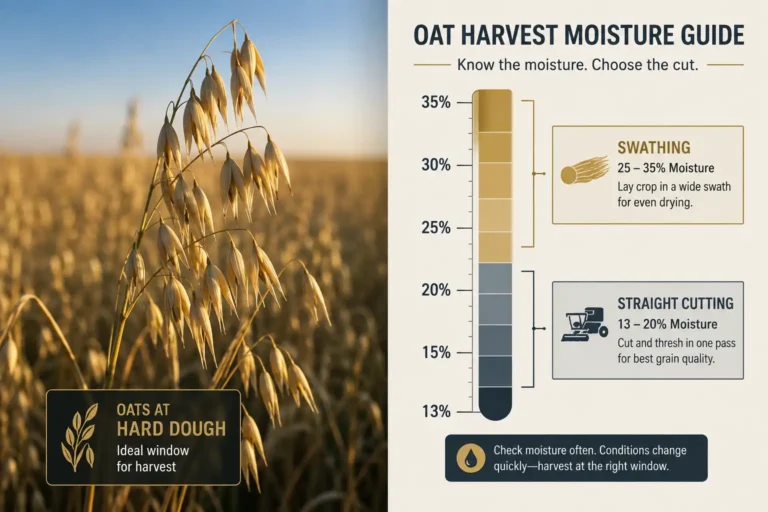
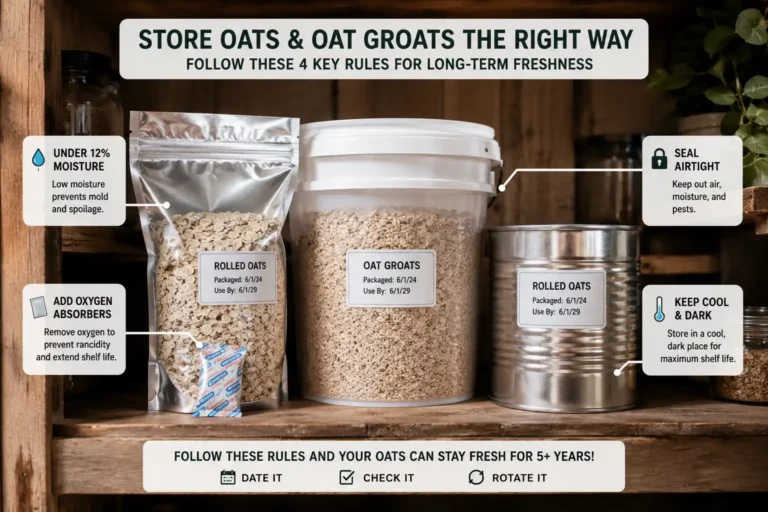
- Using last year’s seed without a germ test. Stored oats lose viability when moisture rises above 14 percent.
- Skipping drill calibration. Meter wear shifts output by 5 to 10 percent on older equipment.
- Broadcasting without incorporation. Surface seed loses 30 percent or more to birds and drying.
A solid rotation protects next year’s stand as well. Follow a tight rotation schedule to break up oat disease carryover.
Safety and Stewardship Notes
Oats grown for forage after failed corn or sorghum accumulate nitrates above safe levels for cattle. The USDA NRCS oat cover crop fact sheet recommends caution when overseeding oats into soybeans, because late canopy shades out oat seedlings.
Test forage through a county extension office before grazing or haying. Store harvested oats below 14 percent moisture to prevent mold and heat buildup. Wear dust protection when handling dry oat straw, since oat dust triggers respiratory irritation.
FAQs about Pounds of Oats Per Acre
How many bushels of oats per acre should I plant?
Can I broadcast oats instead of drilling them?
What is the cover crop seeding rate for oats?
How does germination rate affect pounds per acre?
When is the best time to plant oats for grain?
Conclusion
Oat seeding rates run from 40 pounds per acre for a light cover crop up to 100 pounds per acre for thick forage stands, with 64 to 96 pounds covering most grain fields. The right number depends on your target stand, seed lot germination, planting date, and seeding method. Run the extension formula before calibrating the drill, and adjust upward for late planting or broadcast delivery. A little math at the seed shed saves bushels at harvest.