How Deep to Plant Wheat: Depth Chart by Soil and Moisture
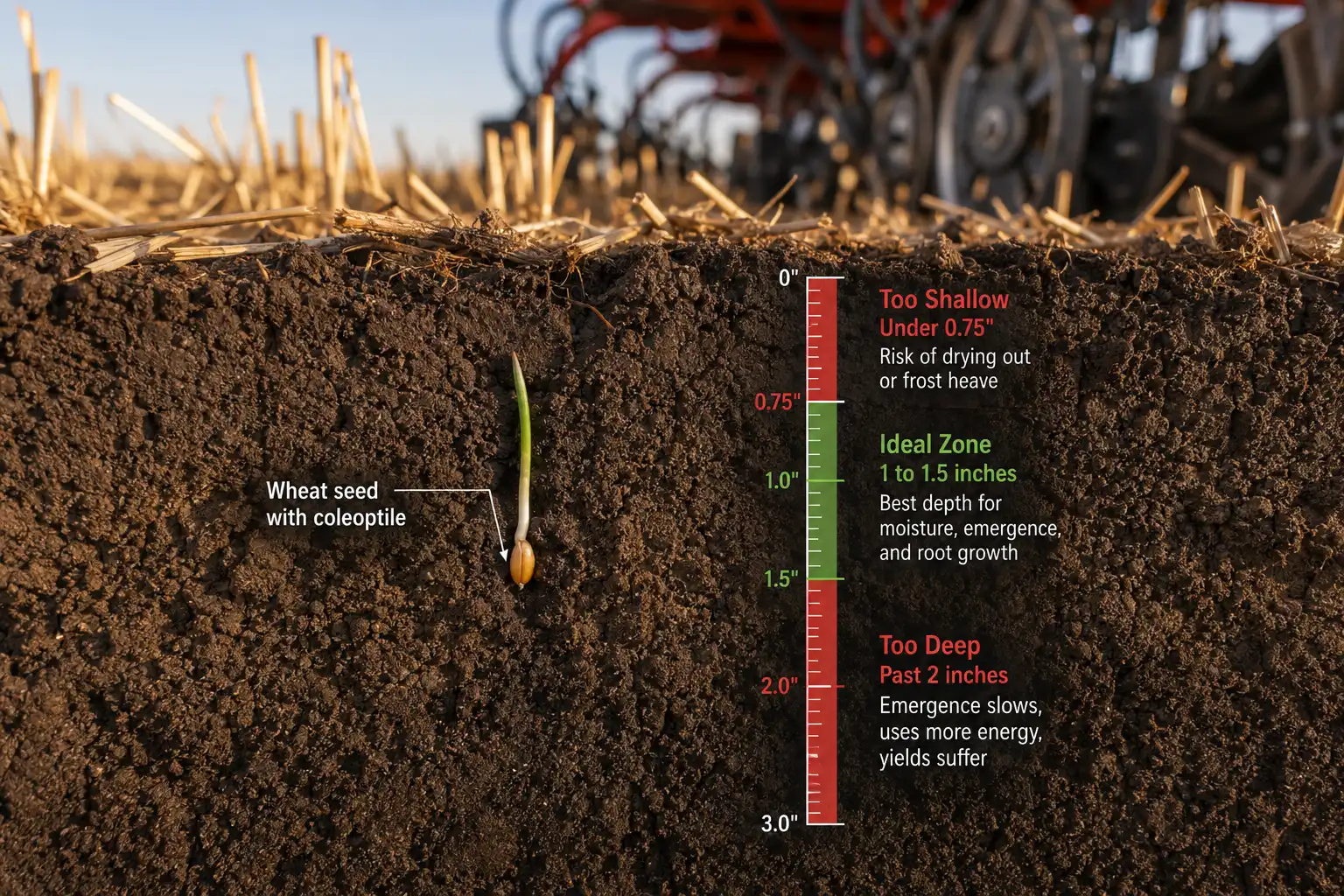
Seeding depth decides whether your wheat comes up even or comes up ragged. Knowing how deep to plant wheat matters more than most inputs you buy that fall. The right setting shifts with soil moisture, soil temperature, and the variety sitting in your drill box.
How deep to plant wheat comes down to moisture. Target 1 to 1.5 inches in moist soil. Drop to 0.75 inch in hot soil. Go 2 inches only to reach moisture with a long-coleoptile variety.
How Deep to Plant Wheat in Different Field Conditions
Set the drill at 1 to 1.5 inches whenever the top 2 inches hold moisture. That range gives you the fastest emergence and the best crown depth. Conditions change the number, though. Here is what to run against:
| Field condition | Target depth | Reason |
|---|---|---|
| Moisture in top 2 inches, soil under 70°F | 1 to 1.5 in | Quick emergence, good crown depth |
| Soil above 80°F at seed depth | 0.75 to 1 in | Heat cuts coleoptile length hard |
| Dry topsoil, moisture at about 2 in | 1.5 to 2 in | Only with a long-coleoptile variety |
| Moisture deeper than 2.5 in | 0.75 to 1 in, wait on rain | Seed stays viable until it rains |
| Heavy no-till residue | 1 to 1.5 in of soil above seed | Residue fools the gauge wheels |
| Sandy ground | 1.5 to 2 in | Sand loses surface moisture fast |
| Silty ground after a hard rain | 1 to 1.25 in | Crusting blocks a short coleoptile |
| Spring wheat, cool moist seedbed | 1 to 1.5 in | Almost no subcrown stretch to spare |
Two inches is the practical ceiling for winter wheat. Cross it only when the variety carries a long coleoptile and the moisture is truly there.
Also learn: Guide to Grow Wheat From Seed
Why Does Coleoptile Length Set Your Maximum Depth?
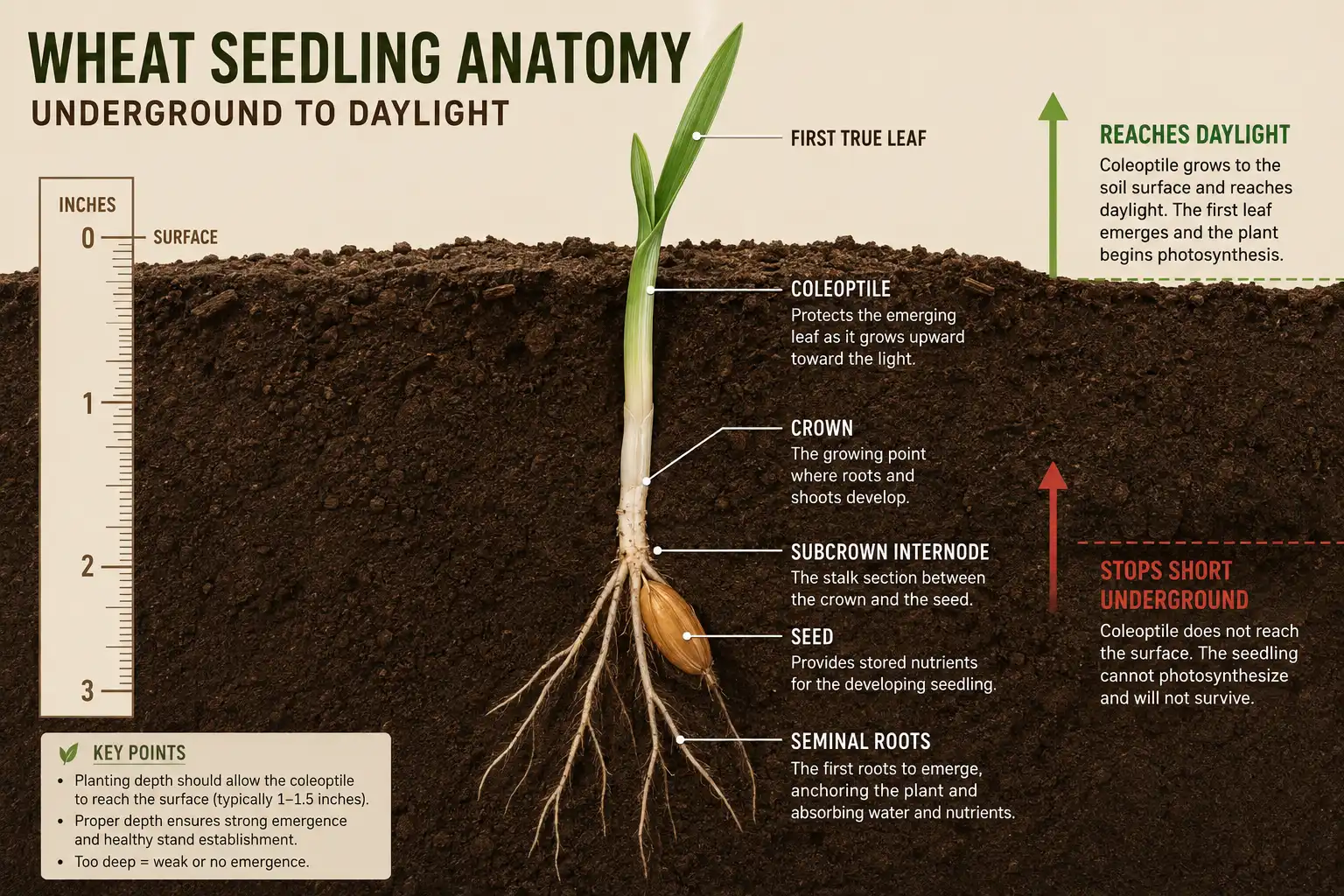
The coleoptile is a stiff sheath that shields the shoot and pushes it to daylight. Once that sheath breaks the surface, it stops growing. Then the first true leaf unrolls through it. So K-State Research and Extension states the rule plainly. Never plant deeper than your variety’s coleoptile length.
Bury the seed past that limit and the sheath quits underground. The first leaf then unrolls below the soil, crumples, and the seedling dies without ever showing. You do not get a thin stand. You get bare ground.
Semi-dwarf hard red winter wheat carries the Rht dwarfing genes, which shorten the plant and the coleoptile together. Taller older varieties usually stretch farther, though exceptions run both ways. K-State publishes coleoptile ratings each year through the Wheat Rx program. Their controlled tests put the long and medium-long groups at roughly 2 3/8 to 2 3/4 inches. Check your variety’s rating before you drill western ground, because that number is your ceiling.
How Does Soil Temperature Shorten the Coleoptile?
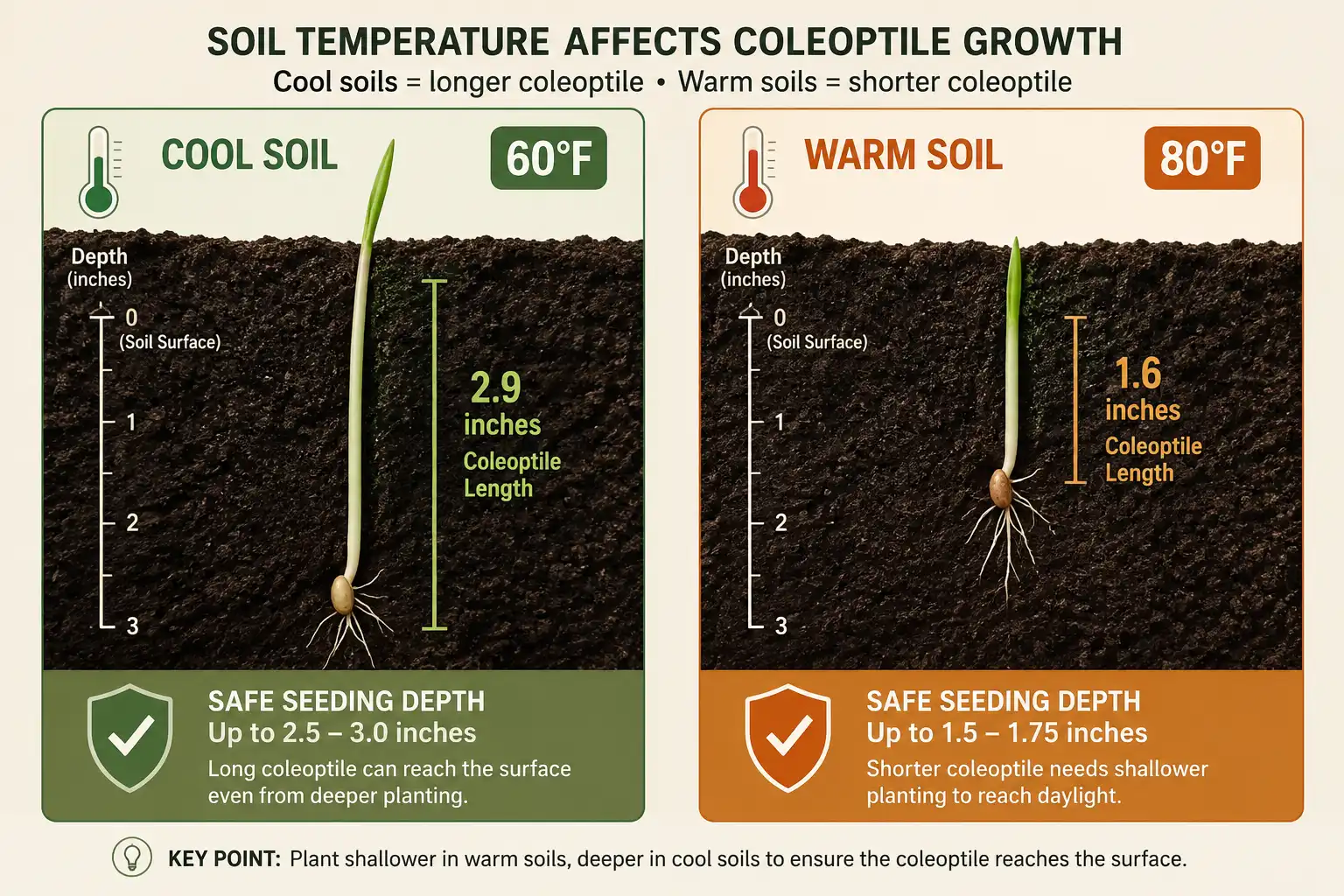
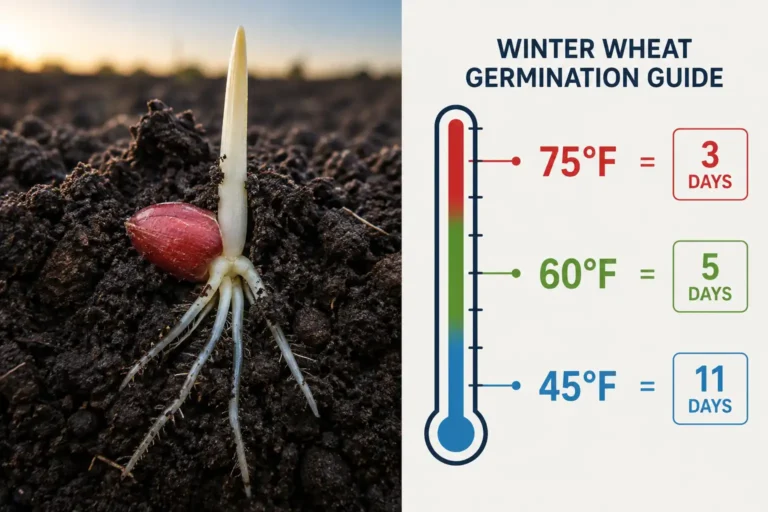
Hot soil shrinks the coleoptile, sometimes by as much as 60 percent. K-State measurements show the size of that hit. A variety with a 2 7/8-inch coleoptile at 60°F drops to about 1 5/8 inches at 80°F. Some varieties refuse to germinate at all above 85°F.
That changes your math on early planting. Drill for fall grazing in early September and the seedbed may still run 85 to 90°F. So pull the drill up to 0.75 to 1 inch even when the surface feels dry. Take the reading at drill depth with a soil thermometer for seedbed checks. Surface readings run several degrees warmer on a sunny afternoon.
How Deep Should Spring Wheat Go Compared to Winter Wheat?
Spring wheat tolerates slightly deeper placement but has a firmer floor. SDSU Extension puts the spring wheat range at 1 to 2 inches. Their guidance warns against going under 1 inch or past 3 inches. Winter wheat sits shallower because crown position drives winter survival.
| Winter wheat | Spring wheat | |
|---|---|---|
| Target depth | 1 to 1.5 in | 1 to 2 in |
| Absolute floor | 0.75 in | 1 in |
| Absolute ceiling | 2 in | 3 in |
| Top risk if shallow | Crown near surface, winterkill and heaving | Poor seed-to-soil contact, patchy stand |
| Top risk if deep | Coleoptile quits before daylight | Little subcrown stretch, weak emergence |
Spring wheat shows almost no hypocotyl elongation. So the seed cannot bail you out from a deep setting. Winter wheat gets a small assist from the subcrown internode, which lifts the crown closer to the surface. Even so, that stretch has a limit. It also costs seed energy every fraction of an inch it travels.
Timing pairs with depth here. Your window for planting winter wheat sets the seedbed temperature you drill into. That temperature then sets your safe depth. The same holds for spring wheat planting time in cold northern seedbeds.
How Does Soil Moisture Change Your Depth Setting?
Moisture position sets your depth more than any other single factor. Wheat seed needs water equal to 35 to 45 percent of its dry weight before germination starts. So the seed has to land in a moisture band, not near one.
Dig before you drill. Pull a shovel slice in three spots per field and find where the moist line sits. If moisture starts at 1.5 inches, drill to 1.5 inches. If it starts at 3 inches, do not chase it. A soil moisture meter speeds this up across a big field. Still, the shovel tells the truth about texture and firmness.
When Does Dusting In Beat Reaching for Deep Moisture?
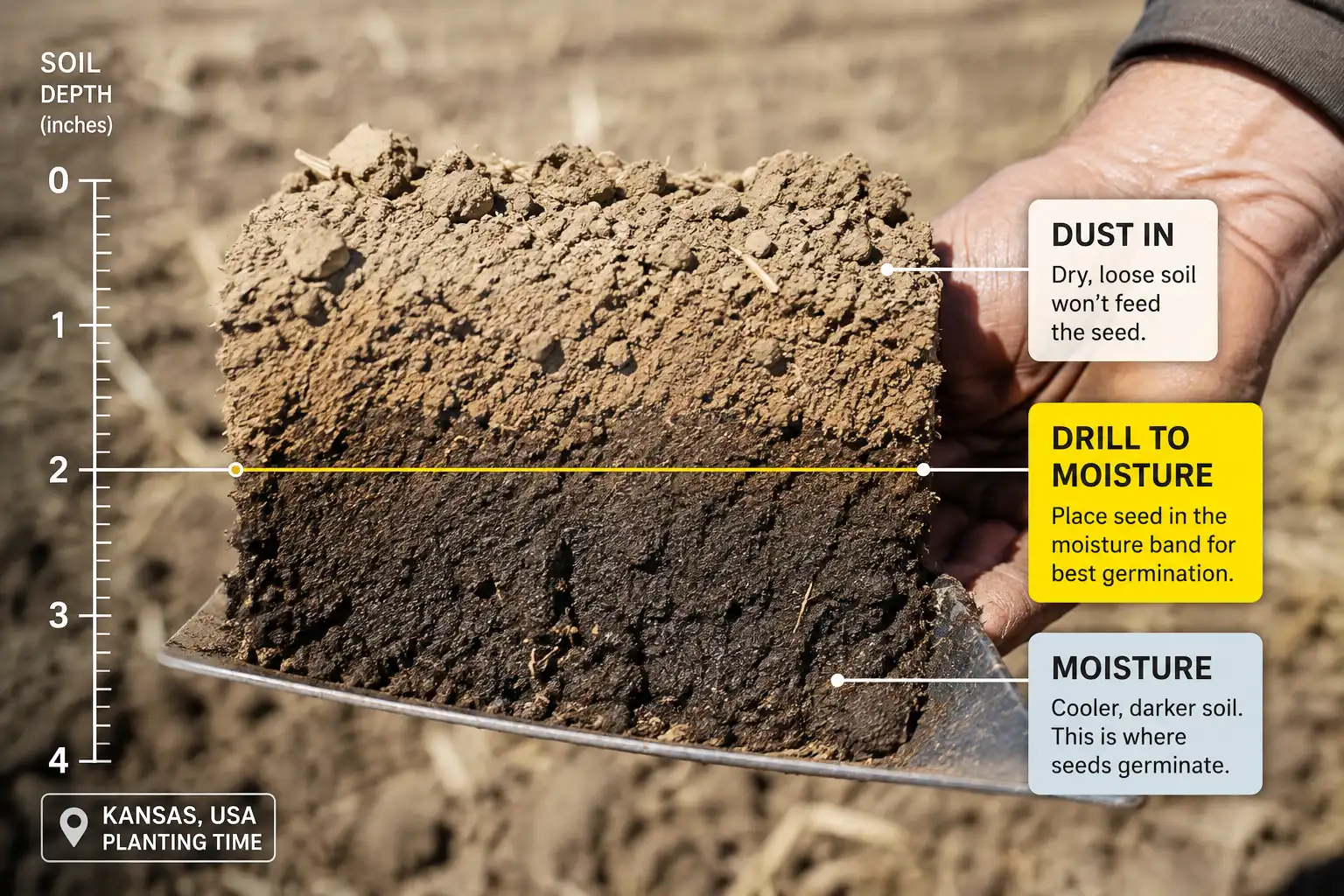
Dust in when moisture sits deeper than about 1.5 inches. Oklahoma State University Extension recommends placing seed at 3/4 to 1 inch and waiting on rain. That beats burying seed to reach a deep moisture line. Emergence usually comes back more uniform, too.
The reason is simple. Dry seed stays viable and waits. Once germination starts, the seedling has to keep water or it dies. That point arrives roughly four to five days in. So the real risk of dusting in is a light shower that wakes the seed without finishing the job.
Two field notes apply here. Never set under 0.5 inch, because that depth leaves seed exposed and crowns too high. Also watch for crusting after a pounding rain, since a short coleoptile cannot punch through a sealed surface. Standing stubble softens that impact, which is one more reason no-till versus tilled ground changes how you plant.
What Happens When Wheat Goes In Too Deep?
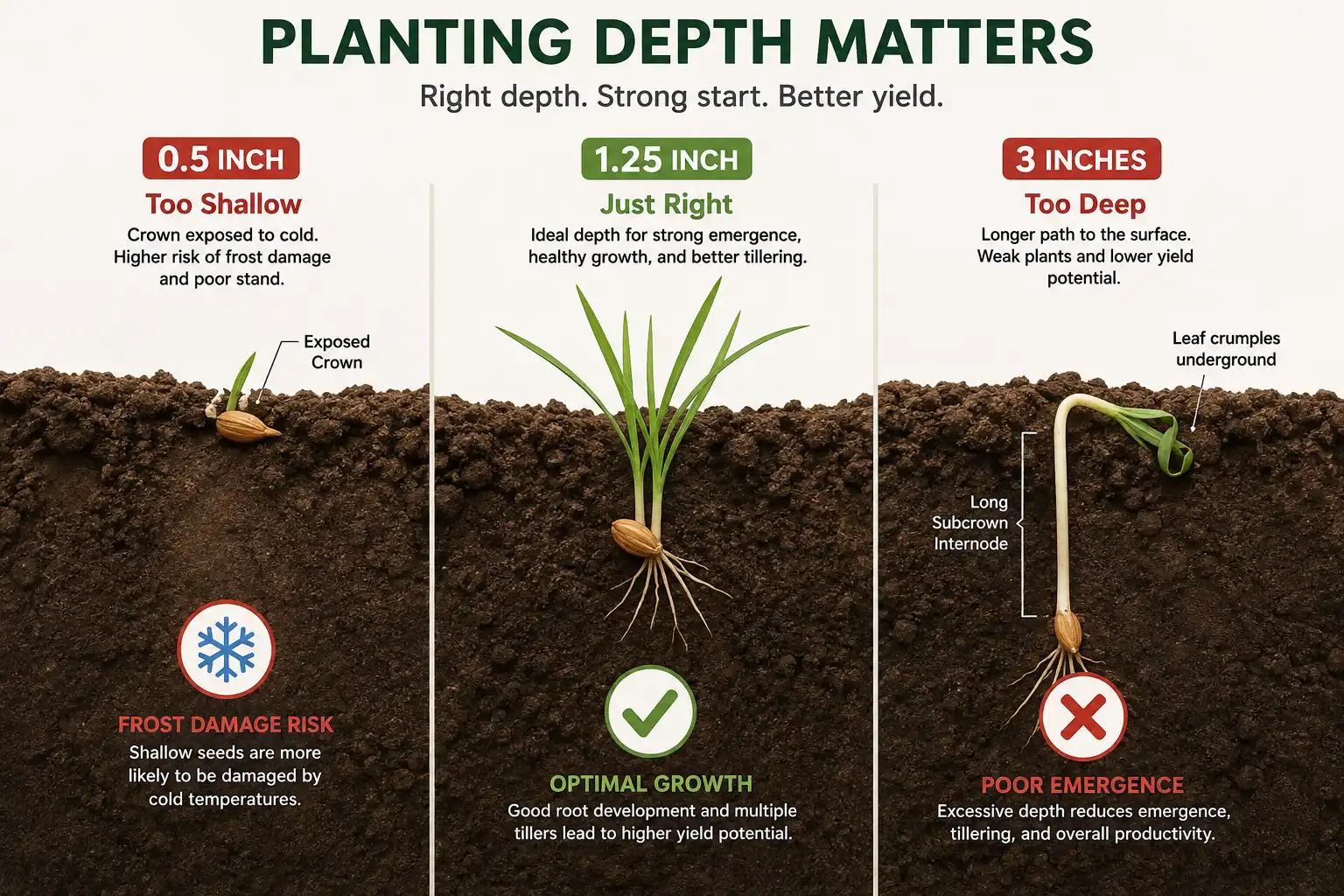
Deep seed emerges late, thin, and weak. Every extra half inch adds days to emergence. It also burns stored seed energy that should have built tillers. University of Kentucky depth trials measured the cost. Yield dropped near 3 bushels per acre once placement hit 3 to 3.5 inches.
Here is the chain of damage:
- Longer subcrown internode. The seed spends reserves stretching that white stem upward instead of building leaf area.
- Fewer seminal roots. Deep placement can cut the seminal root count to about three, which weakens early water uptake.
- Fewer fall tillers. Late emergence shortens the fall growth window, and tiller count sets your head count.
- More disease. That long subcrown internode gives common root rot and Fusarium crown rot more tissue to colonize.
- Uneven stand. Some seeds make it, some quit underground, so the row looks skippy.
Soybeans handle depth differently, because the hypocotyl pulls the cotyledons up. So soybean planting depth tolerates more than wheat does. Never carry a soybean setting over to your grain drill.
What Happens When Wheat Goes In Too Shallow?
Shallow seed sets the crown too close to the surface and invites winterkill. The crown holds the growing point through winter. When it sits under half an inch of soil, cold snaps and freeze-thaw cycles reach it directly.
Frost heaving follows the same pattern. Repeated freezing lifts shallow crowns and tears roots. Then spring green-up shows ragged strips where the stand pulled loose.
Dry-soil failure is the other half. A shallow seed in a drying zone takes on just enough water from a light rain to start germinating. Then it runs out. Seed-to-soil contact also suffers in a rough or cloddy seedbed. On a firm, moist seedbed 1 inch works fine. But on rough ground, push toward 1.25 to 1.5 inches for contact.
How Do You Set and Check Wheat Seeding Depth in the Field?
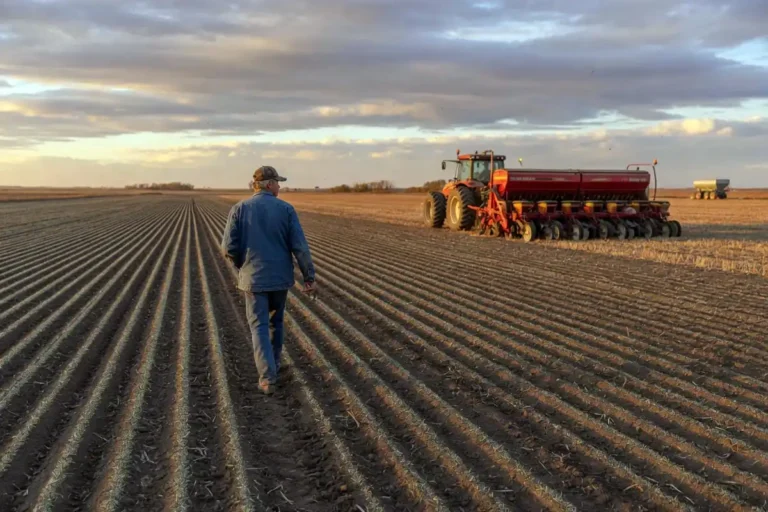
Set depth on real field ground, then verify by digging. Gauge settings on the drill frame mean little once residue, speed, and soil firmness get involved. Work through these steps every season:
- Pick a representative spot. Skip the headland and the end rows, since both run firmer than the field average.
- Run 100 feet at planting speed. Depth changes with speed, so calibrate at the pace you will actually drill.
- Dig across three or more openers. Uncover 10 seeds per opener with a trowel and work slowly so you do not shift them.
- Measure to the soil surface, not the residue top. You need 1 inch of actual soil over the seed, not an inch of straw plus dirt.
- Adjust down pressure and press wheels. Add pressure in firm no-till ground, back it off in loose worked ground.
- Recheck when soil type changes. Sandy knobs and clay flats in one field need different settings.
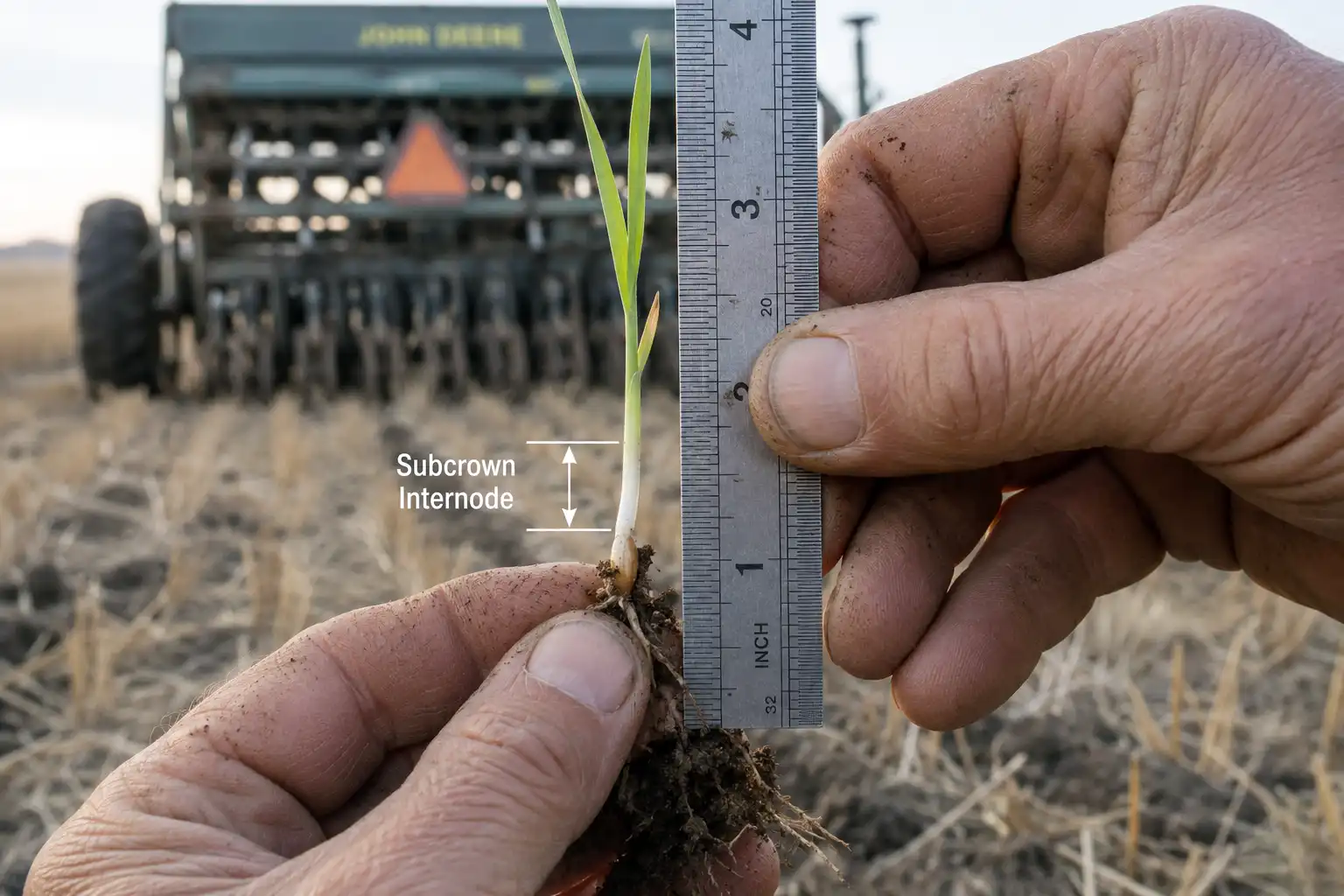
- Confirm after emergence. Dig a seedling and measure the white subcrown internode from seed to crown. That length tells you exactly how deep the seed went.
Speed deserves its own note. Most disc drills lose depth control above 5 to 6 mph. The seed then rides shallower and far more variable. Slowing to 4.5 mph often fixes an emergence problem that looked like a seed quality issue.
How Do Soil Type and Residue Affect Depth?
Texture decides how fast the seed zone dries. Residue decides whether your gauge wheels are telling the truth. Sandy soils drain and dry quickly, so run the deeper end of the range to stay in moisture. Silt loams and clays hold water near the surface. But they crust hard after a beating rain, so stay near 1 to 1.25 inches.
Residue causes more depth errors than texture does. Gauge wheels ride up on straw mats and the opener runs shallow underneath. Uneven combine spread makes it worse, because depth then varies within a single pass. So spread residue evenly at harvest. Then set depth by digging in the heaviest residue strip, not the cleanest one.
Opener style matters in dryland country. Hoe drills and single-disc openers with good down pressure place seed into moisture better than a worn double-disc. Out west, hoe openers reach a moisture band that a disc drill would smear right past.
Should You Raise Seeding Rate When You Plant Deeper?
Yes. Deeper placement lowers emergence percentage, so the same seeding rate leaves you a thinner stand. Bump the rate 10 to 20 percent when you drill past 1.5 inches or into rough, cloddy ground.
K-State seeding rate ranges give you a starting point across the Great Plains:
| Region or system | Seeds per acre |
|---|---|
| Western Kansas dryland | 600,000 to 900,000 |
| Central Kansas | 750,000 to 900,000 |
| Eastern Kansas | 900,000 to 1,125,000 |
| Irrigated | 900,000 to 1,350,000 |
Late planting stacks on top of that. Cool soil slows emergence and cuts fall tillering. So a late crop needs more plants to reach the same head count. Past the calendar already? The tradeoffs in planting winter wheat late apply to your depth call too. Keep the seed shallow enough to emerge fast. Once soil turns cold, speed matters more than chasing moisture.
Bottom Lines
Dig a test hole before planting. Three shovel slices reveal where the moisture line sits, and that depth determines the planting depth. On ground, it usually lands at 1.25 inches. Pull 100 feet, dig 30 seeds, and adjust down pressure until the measurements come back tight.
Two rules carry me through most falls. Never plant deeper than the variety’s coleoptile can reach. And never trust the drill gauge over a shovel and a ruler.