How to Regrow Eggplant for a Second Harvest Before Frost
Most gardeners pull eggplant after the first heavy picking. That wastes a plant with plenty of season left. Eggplant is a short lived perennial, so it will push a second crop. Learning how to regrow eggplant comes down to one cut and one feeding.
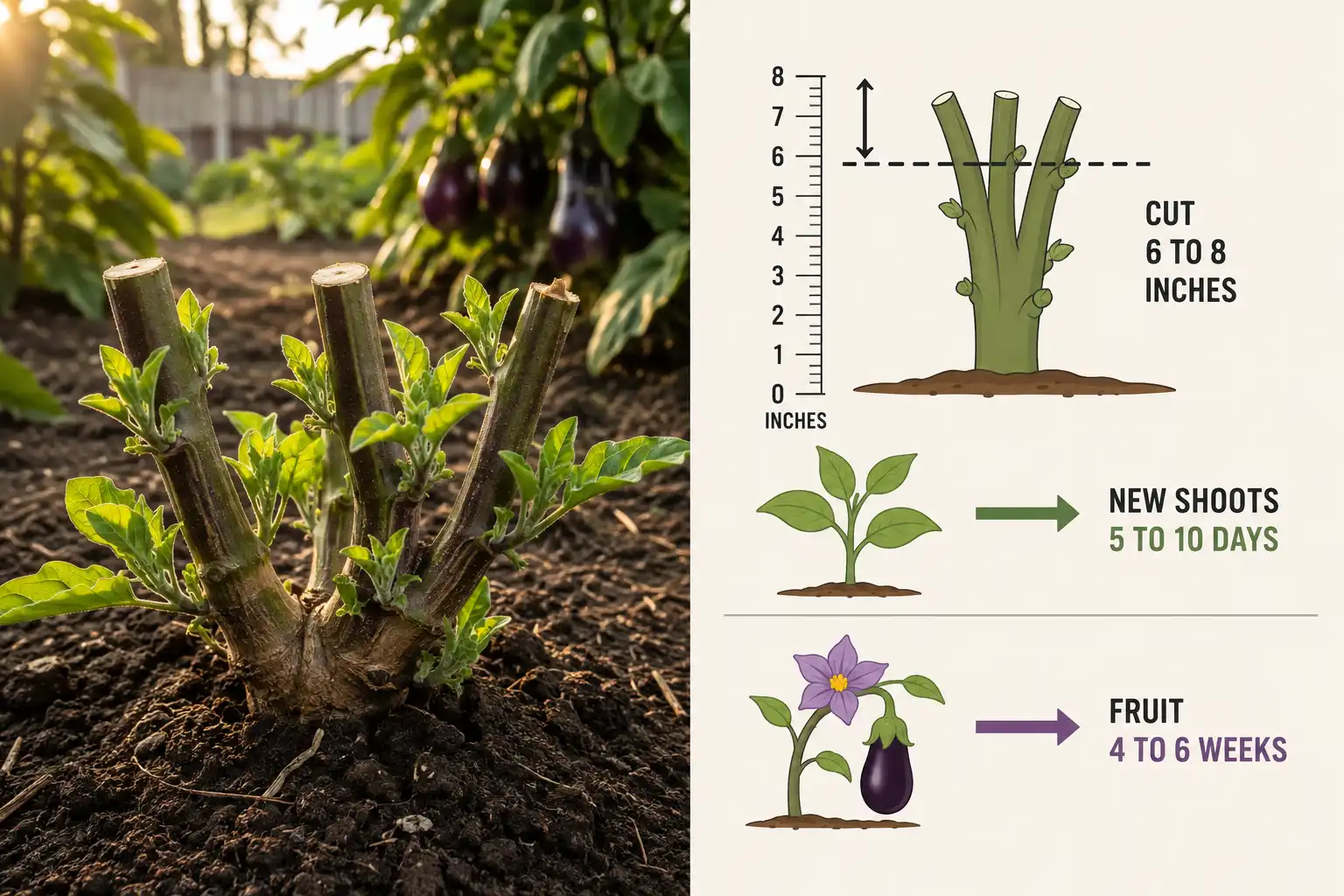
To regrow eggplant, cut the plant back to 6 to 8 inches above the soil. Leave several leaf axils, then feed potassium. New shoots break within a week, and fruit follows in 4 to 6 weeks.
Can Eggplant Regrow After You Harvest It?
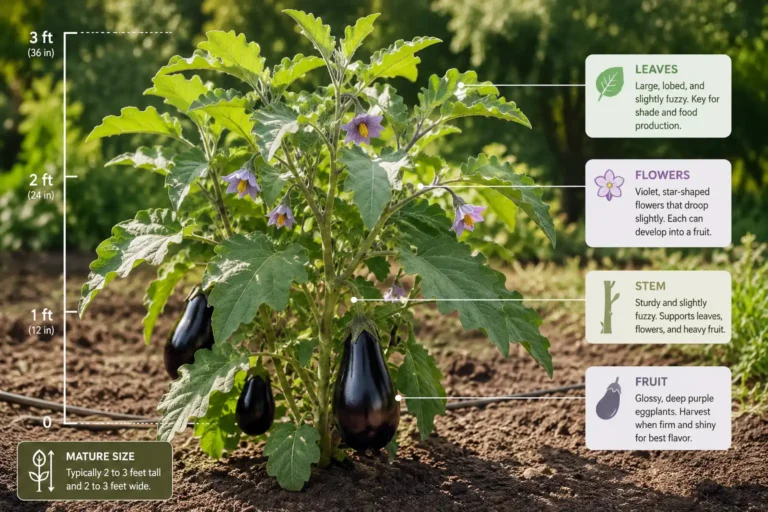
Yes. Eggplant regrows readily because it is not a true annual. Solanum melongena is a short lived perennial from the nightshade family. Once you cut the top off, it pushes new growth from live buds at every leaf axil.
The UF/IFAS Vegetable Production Handbook of Florida says so plainly. Eggplants tend to be short lived perennials, and growers can severely prune or ratoon them and let them regrow. Commercial fields in south Florida run on that behavior.
Cold ends the plant, not age. Michigan State University Extension notes that temperatures below 50°F injure eggplant, and any frost kills it. Fruit set also stalls once nights slide below 60°F.
So the real question is not whether eggplant regrows. The question is whether your season has enough warm weather left to finish a second crop.
How to Regrow Eggplant by Cutting It Back
Cutting the plant back is called ratooning, and it is the fastest method. You keep the established root system, which is already three months ahead of any transplant. The plant rebuilds a canopy in weeks instead of months.
Ratooning works best on plants that have quit. Midsummer heat shuts down flowering on eggplant, and the plant sits there tall, leggy and scarred by flea beetles. Cutting resets it.
Skip the cut if your plant is still setting fruit hard. Let it run.
When to Make the Cut
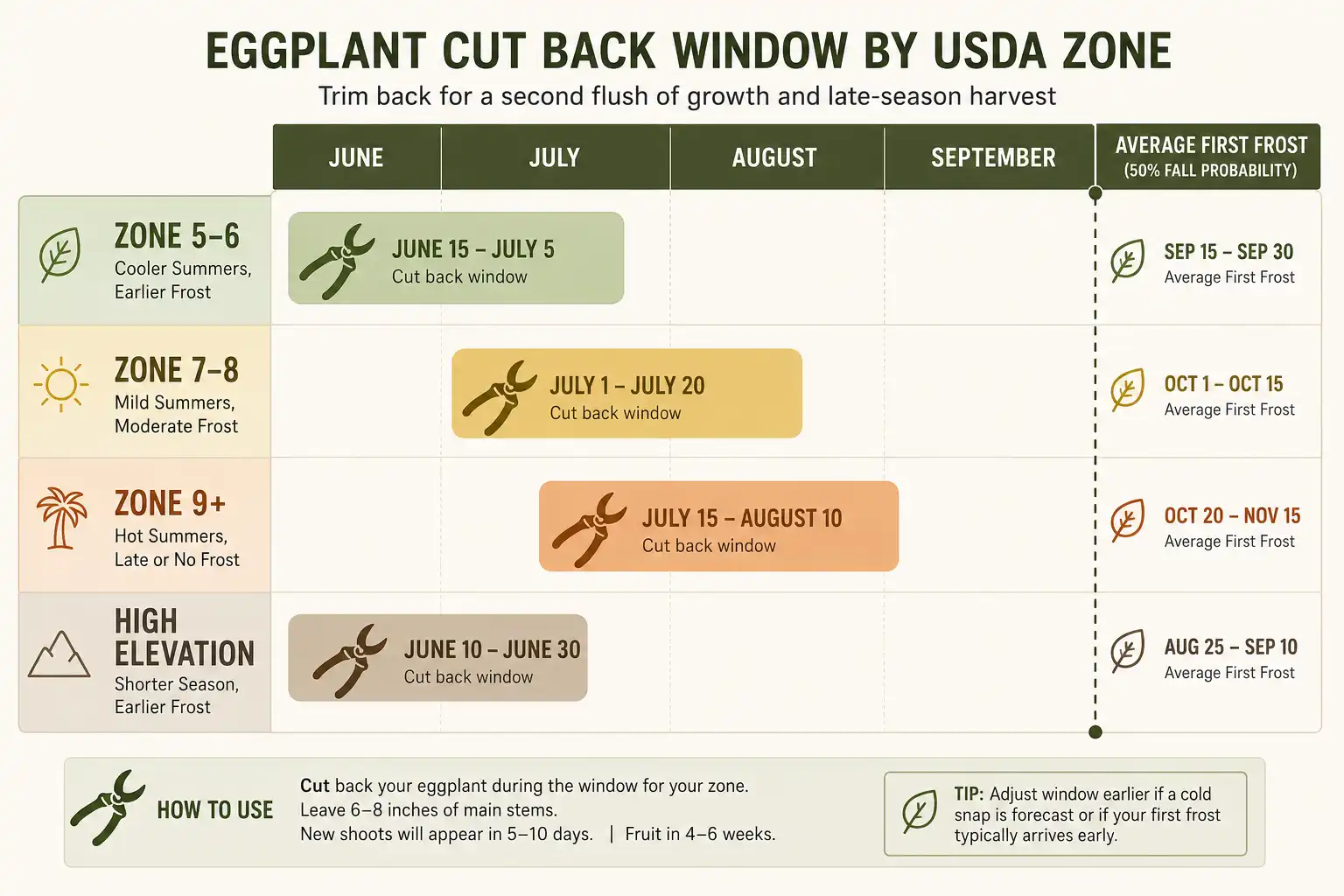
Count backward from your average first frost, then allow 10 to 12 weeks. That covers regrowth, flowering and a real picking window.
- Zone 5 to 6 (Kansas, Nebraska, Iowa): cut by the first week of July
- Zone 7 to 8 (Oklahoma, Arkansas, the Carolinas): cut through mid to late July
- Zone 9 and warmer (Gulf South, Florida, south Texas): cut into August
The average first frost lands around October 15. Working backward, July 5 is the hard deadline. After that it is better to keep picking small fruit off the tired plant. The odds of finishing a second crop get too thin.
Where to Cut the Plant
Cut 6 to 8 inches above the soil line. Clemson Extension gives that exact height for ratooning eggplant, peppers and okra, and it holds up in the field.
Leave several leaf axils below your cut, with leaves still attached. Those leaves keep feeding the roots while new shoots form. Cut lower than that and the plant has no engine left to restart.
Work through it this way:
- Sterilize bypass pruners or loppers with 70% alcohol. Wilt pathogens spread on dirty blades.
- Strip every remaining fruit and flower off the plant. Fruit on the stem suppresses new flowering.
- Cut each main stem just above a node, at a slight angle so water sheds off.
- Keep 3 or 4 leafy axils on the stub.
- Rake up the cut material and haul it off. Do not compost leaves with wilt or leaf spot.
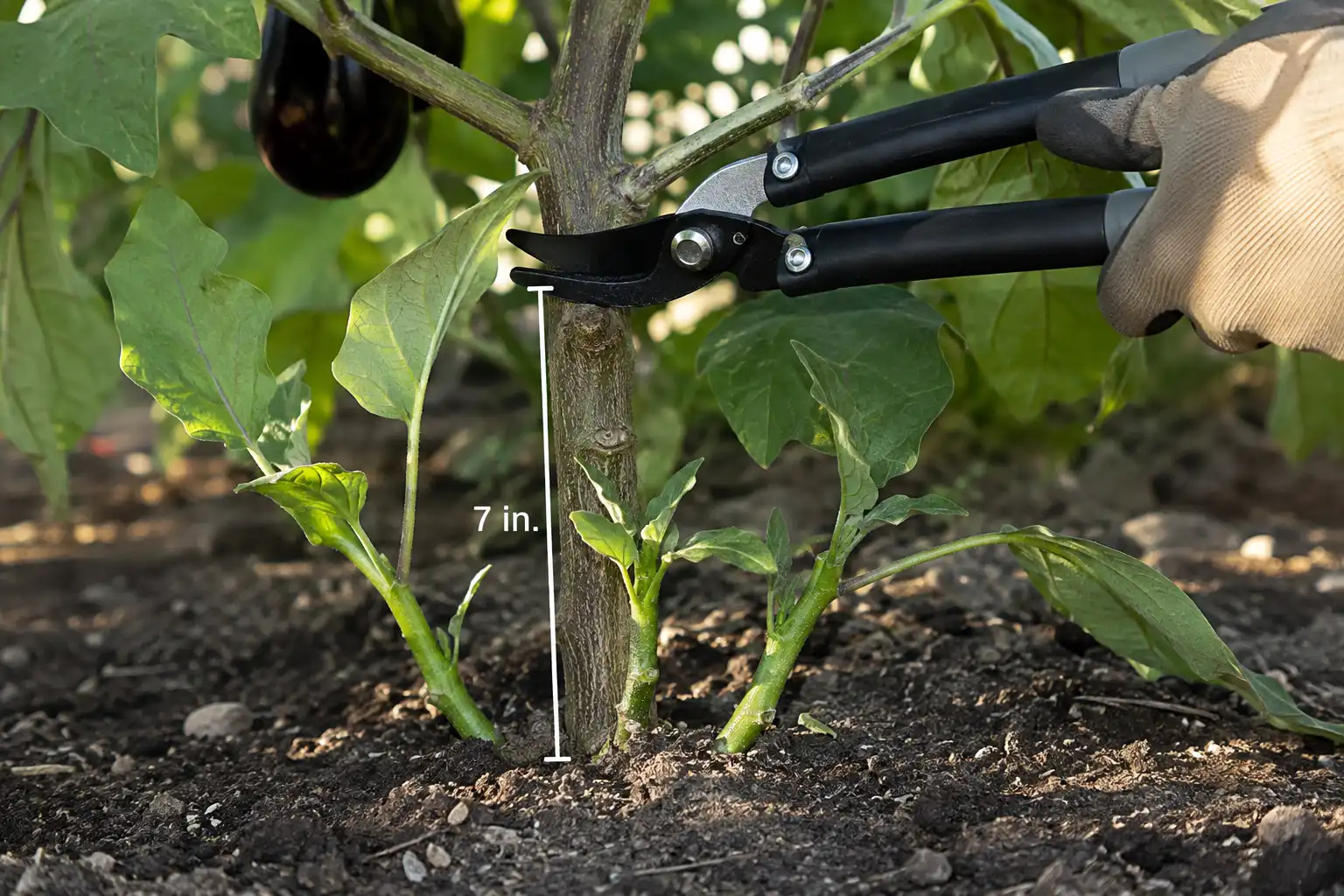
Eggplant stems get woody by midsummer, so hand pruners may bind. Reach for loppers on anything thicker than a pencil.
What to Feed After the Cut
Feed a potassium heavy fertilizer at a 1:2 nitrogen to potassium ratio. Clemson Extension recommends grades like 4-0-8, 5-0-10 or 10-0-20, banded at 2 to 3 pounds per 100 feet of row.
That ratio matters. Nitrogen alone pushes leaves and stalls flowering, which defeats the whole point. Potassium drives bloom set and fruit fill, so the plant converts new growth into eggplant instead of foliage.
Does your soil already test high in phosphorus? Then blend a straight potash source like 0-0-60 with a little urea. That lands near the 1:2 ratio without piling on more P. Pull a sample with a soil testing kit first so you are not guessing at rates.
Band the fertilizer 4 to 6 inches out from the crown, never against the stub. Then water it in the same day.
Watering and Mulch After the Cut
Water immediately and keep it up. A ratooned plant carries a full root system under almost no canopy. So the soil surface dries fast while the roots stay thirsty.
Give it 1 to 1.5 inches per week, more during a July heat run. Drip or soaker hose beats overhead watering, since wet foliage invites Phomopsis and leaf spot.
Pull mulch back to the stub after the cut. Straw or shredded leaves hold moisture and keep soil temperature steady while shoots break.
Dry soil at this stage is the single most common reason a ratoon fails. New shoots abort, and the plant sulks until frost.
How Long Until New Fruit?
Expect fruit 4 to 6 weeks after cutting, which matches what Clemson Extension reports from South Carolina trials. The sequence is predictable.
- Days 5 to 10: shoots break from the leaf axils
- Days 14 to 21: canopy rebuilds, first flower buds appear
- Days 28 to 42: first pickable fruit
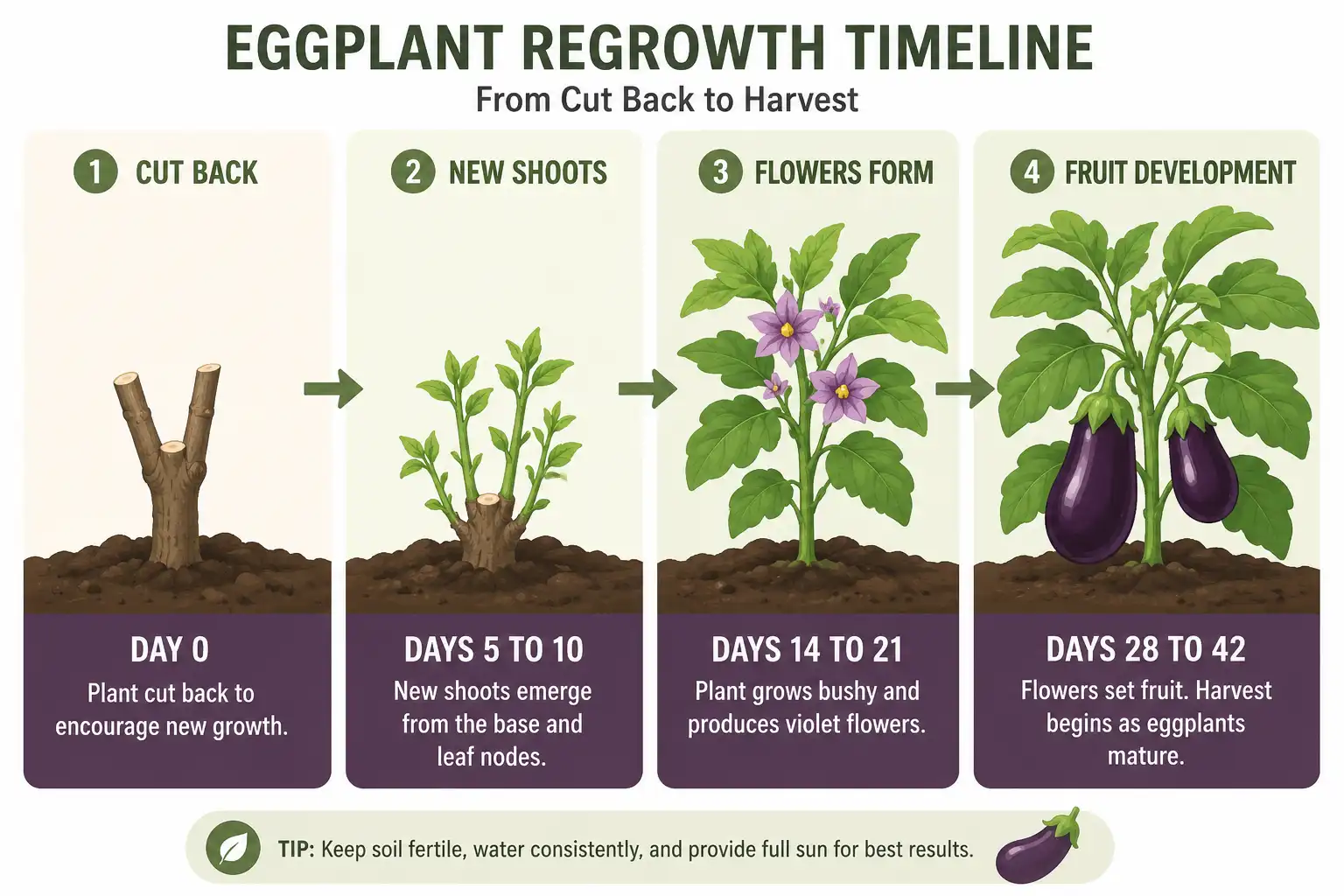
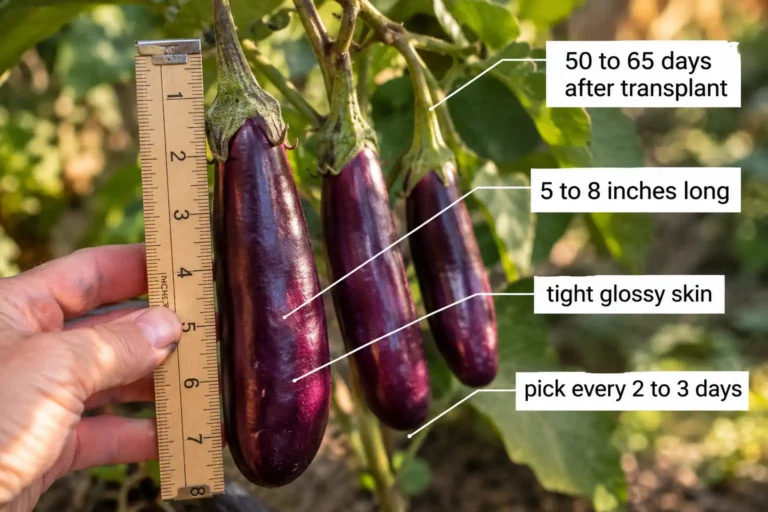
Second flush fruit often runs smaller than the first crop. Quality usually improves, though. Cooler September nights firm up the flesh. Flea beetle pressure also drops off hard by then, so the skins come in cleaner. Check gloss and thumb spring the same way you would judge eggplant at picking time in July.
How to Overwinter Eggplant and Regrow It Next Spring
Overwintering keeps the same plant alive through winter for an earlier crop next season. It only works in pots, so dig and pot any in ground plant you want to save.
Move plants indoors before nights drop below 50°F. Waiting for frost is too late.
Follow this sequence:
- Pick your healthiest plant. Skip anything with wilt symptoms, yellowing lower leaves or stunted growth.
- Treat for spider mites, aphids and whiteflies a week before you move it. Indoor conditions turn a light infestation into an infestation.
- Prune off half to two thirds of the top growth, plus every leaf and fruit.
- Hold it at 50°F to 59°F in a bright spot, such as an unheated sunroom or attached garage with a window.
- Water sparingly. Once every two to three weeks is usually plenty at those temperatures.
- In spring, cut back the woody stems again, repot in fresh mix, then harden it off after your last frost.
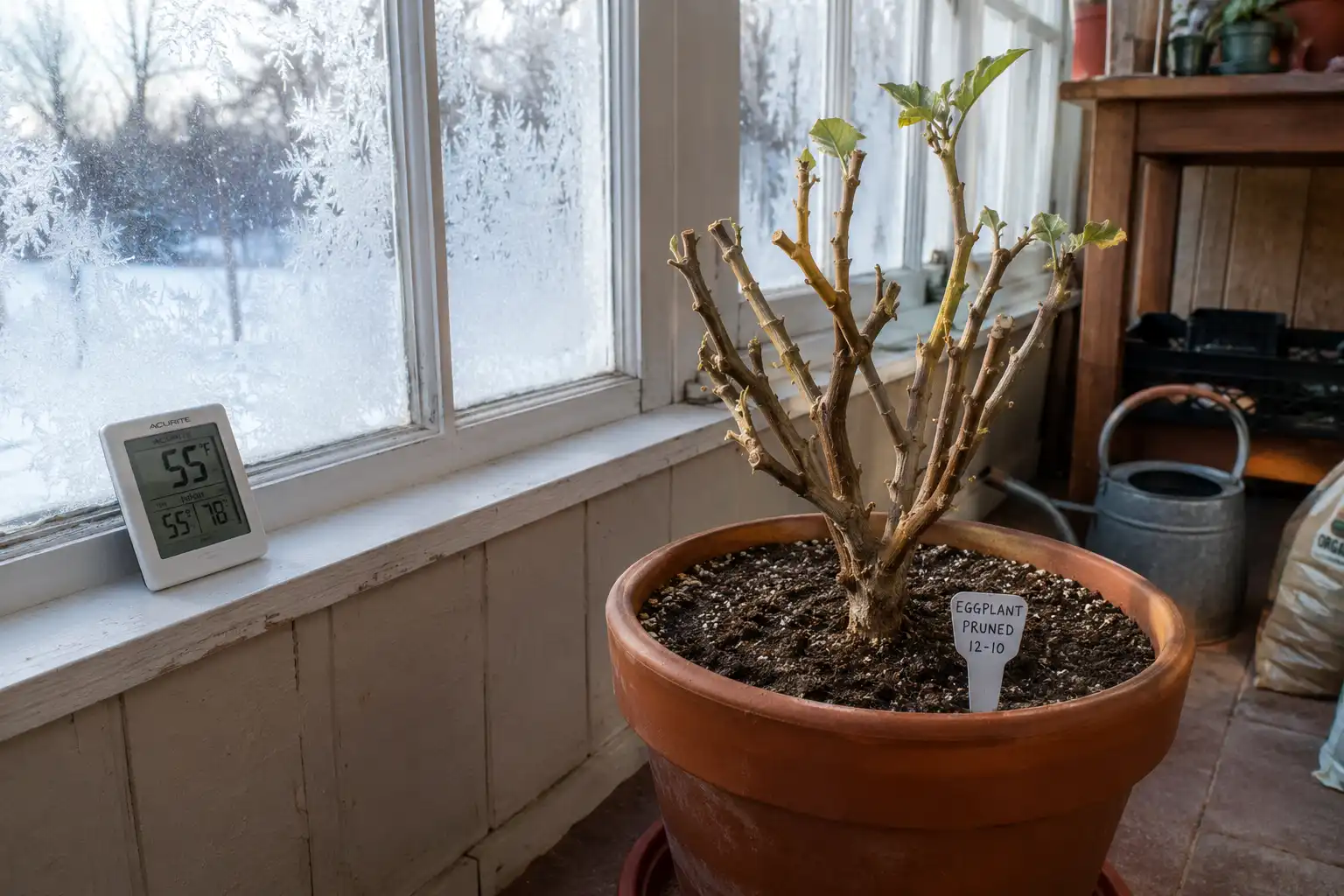
Second season plants fruit earlier but yield roughly 40% less. Vigor drops each year, so two seasons is a fair expectation before you start over. Growers who already keep eggplant growing in containers have the easiest path here. The plant never leaves its pot.
How to Regrow Eggplant from Cuttings
Cuttings work, but they root slower than tomato cuttings and need more heat. Use this method to clone a variety you like, not to save time in the field.
Take 4 to 6 inch tip cuttings from firm, semi hardwood stems. Skip any stem carrying flowers or fruit, since that growth roots poorly.
- Cut just below a node with a clean blade
- Strip the lower leaves and cut the remaining leaves in half
- Dip the base in IBA rooting hormone
- Stick into damp perlite or a half peat, half perlite mix
- Hold 70°F to 80°F under a humidity dome with bright indirect light
Roots take 3 to 5 weeks. Bottom heat cuts that down noticeably.
One caution: cuttings inherit whatever the parent carries. Tobacco mosaic virus and Verticillium move right along with the clone, so take wood only from clean plants.
How to Regrow Eggplant from Seed You Saved
Saved seed gives you a new plant rather than a regrown one. It is also the only method that resets the plant clock completely. The catch is fruit maturity.
The eggplant you eat is botanically immature. Seeds inside are white, soft and undeveloped, so they germinate poorly. Sow True Seed states it directly: seed saved from immature or ready to eat fruit will not be viable.
Leave one or two fruits on the plant far past eating stage. Watch for these signs:
- Skin turns dull and loses its gloss
- Purple varieties shift to tan or bronze; white and green types go yellow
- Flesh hardens and the fruit often shrivels
- Fruit separates easily when pulled
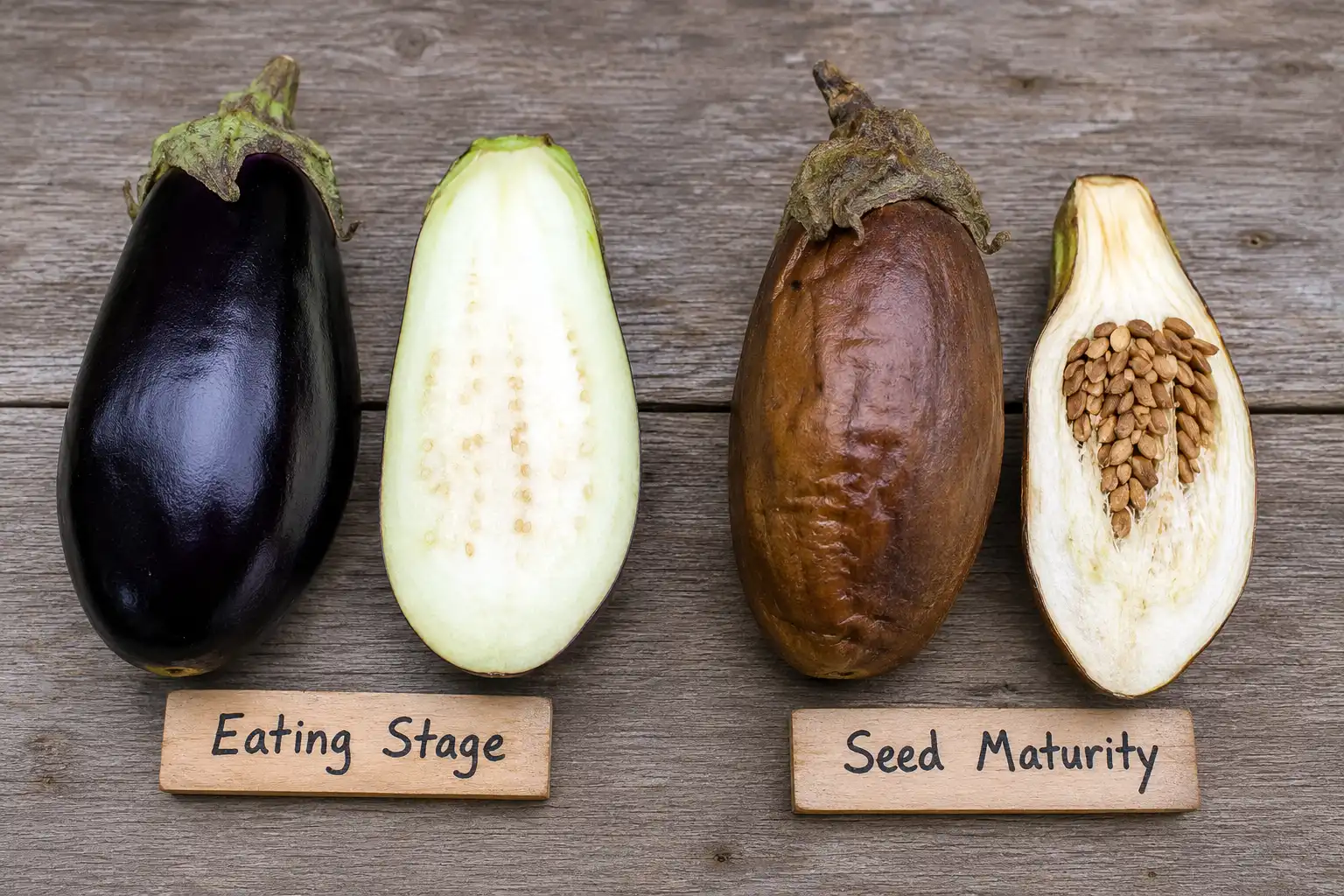
University of Hawaii CTAHR notes that seeds concentrate at the blossom end. Cube the flesh, ferment it in water 2 to 4 days, rinse, then dry the seed thoroughly. Seed Savers Exchange puts viability at 4 to 6 years in cool, dark, dry storage.
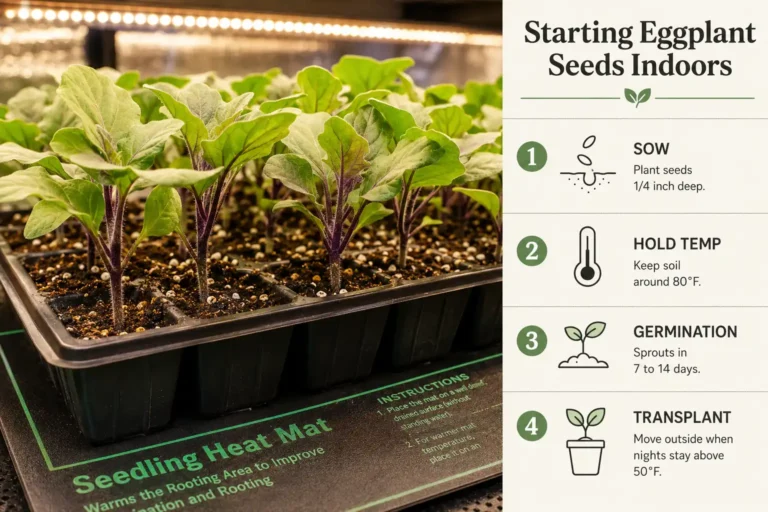
Two rules keep this honest. Hybrids will not come true, so save from open pollinated varieties only. And pull seed from several plants, not one, to avoid inbreeding depression. From there, treat it exactly like starting eggplant from seed with any purchased packet.
Why a Store Bought Eggplant Will Not Regrow
A store bought eggplant will not regrow, no matter how you plant it. The fruit and its green cap hold no meristem tissue. Without growth points, nothing can form roots or shoots. Burying the calyx just rots it.
Three things stack against grocery fruit:
- No node. Eggplant regrows from leaf axils on a stem, and the fruit has none.
- Immature seed. Retail eggplant is picked glossy and young, so the seed inside is undeveloped.
- Hybrid genetics. Most commercial varieties are F1 hybrids, and their offspring segregate into something unpredictable.
Celery, lettuce and green onions regrow from scraps because each keeps a basal growth plate. Eggplant does not work that way. You need a living stem, a rooted plant or true mature seed.
What Stops Eggplant From Regrowing
Six problems account for nearly every failed ratoon. Check this list before you blame the plant.
- Cutting too late. Less than 10 weeks before frost, and the fruit never finishes.
- Cutting too low. Below all the leaf axils, the stub has no leaves to fuel regrowth.
- Wilt disease. Verticillium and Fusarium plants collapse after cutting instead of pushing shoots.
- Nitrogen only fertilizer. You get a tall green plant with no fruit.
- Cool nights. Once nights sit under 60°F, flowers drop without setting.
- Drought stress. New shoots abort within days when the root zone dries out.
Shade is worth a look too. A ratooned plant crowded by taller neighbors starves for light. Remember that eggplant needs full sun to rebuild a canopy that fast. Clear anything shading the stub before you cut.
Where to Make the Cut on Your Plants
Pick your two healthiest plants and ratoon those. Leave the rest alone as insurance until you see shoots break.
Cut at 6 to 8 inches, feed a 1:2 nitrogen to potassium grade, then water hard for two weeks. July cut plants start picking again in late August and run until mid October. That is six or seven extra weeks of eggplant off ground you already prepared, fertilized and watered once.
If frost is under 10 weeks out, skip the cut this year and save your best fruit for seed instead.