
Best Vacuum Sealer for Food Storage: 8 Top Picks for 2026
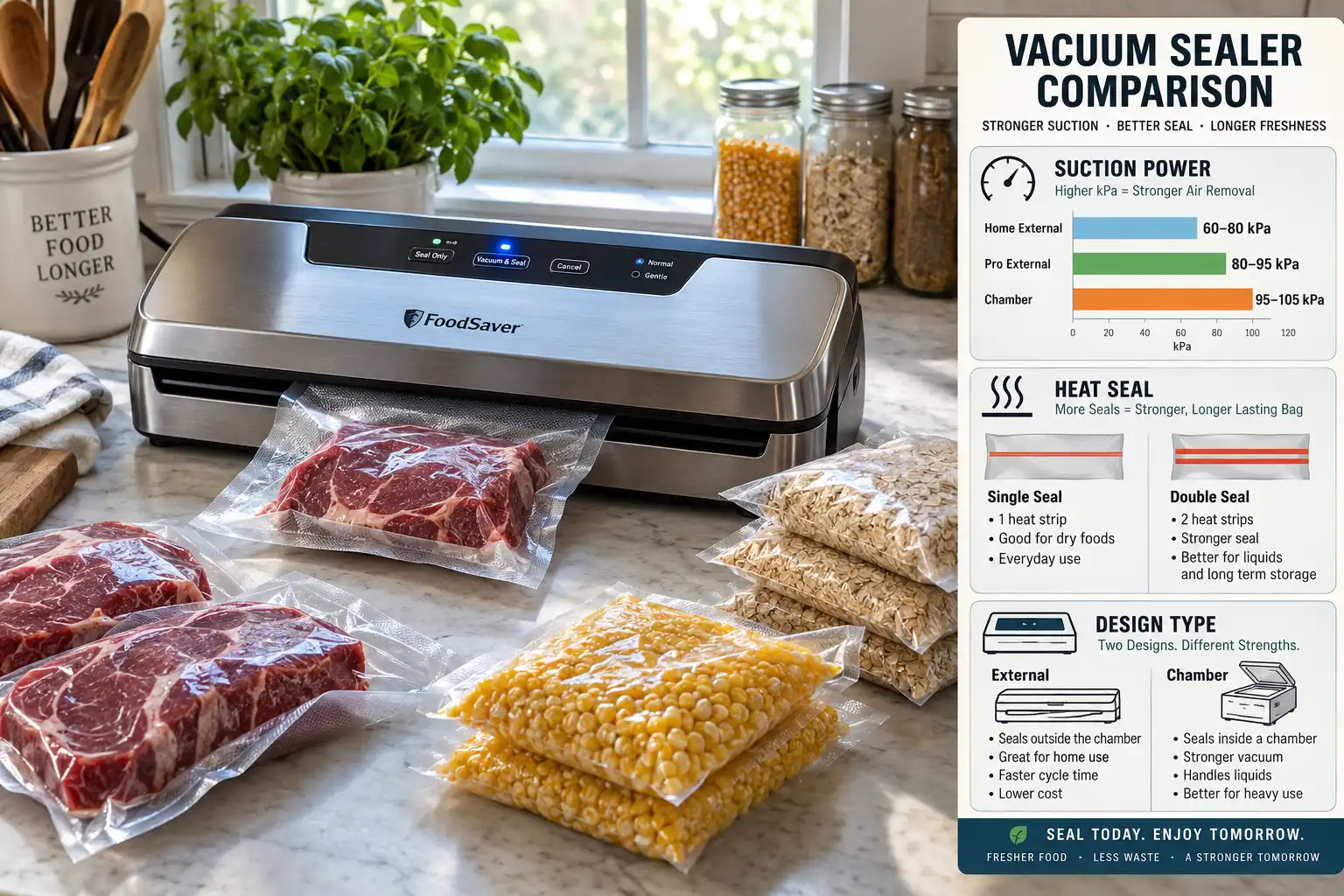
Bulk beef, a big garden harvest, and bins of dried grain all lose quality the same way, through trapped air. So you need the best vacuum sealer for food storage to pull that air out first. The right food vacuum sealer buys you years instead of months.
The best vacuum sealer for food storage is the Anova Precision Vacuum Sealer Pro. It combines one-hand sealing, a double seal, and pulse control. The Nesco VS-12 Deluxe is the value pick, while the Weston Pro-2300 suits bulk meat.
- Best overall: Anova Precision Vacuum Sealer Pro, one-hand operation, moist mode with an automatic double seal, pulse vacuum, built-in roll bay and cutter
- Best value: Nesco VS-12 Deluxe, 130 watt dual pump, dry, moist and double seal modes, gentle pressure setting for soft foods
- Best heavy duty: Weston Pro-2300, 1020 watts, 15 inch seal bar, 5 mm wide seam, double piston pump, stainless housing
Best Vacuum Sealers for Food Storage at a Glance
A best rated vacuum sealer badge tells you little on its own. This table compares suction, seal width, warranty, and weight side by side.
| Model | Best for | Suction rating | Seal width | Weight |
|---|---|---|---|---|
| Anova Precision Vacuum Sealer Pro | Overall home use | About 50 kPa | 11.8 in | 5 lb |
| Nesco VS-12 Deluxe | Value | 130 watt dual pump | 11.8 in | 6 lb |
| Weston Pro-2300 | Bulk meat and game | 28 in Hg | 15 in | 22.6 lb |
| Vesta Precision Chamber Sealer | Soups and marinades | 360 watt chamber | 12 in | 21.6 lb |
| FoodSaver FM2100 | Simple everyday sealing | 120 watts | 11.8 in | 6.6 lb |
| Raywok Mason Jar Kit | Jars and dry goods | Cordless pump | Jars only | 1 lb |
| Zwilling Fresh & Save | Reusable storage | Cordless pump | Bags and container | 2.5 lb |
| Gasbye VS5166 | Strongest suction | 95 kPa dual pump | 12 in | 6.5 lb |
The 8 Best Vacuum Sealers for Food Storage: Reviews
1. Anova Precision Vacuum Sealer Pro
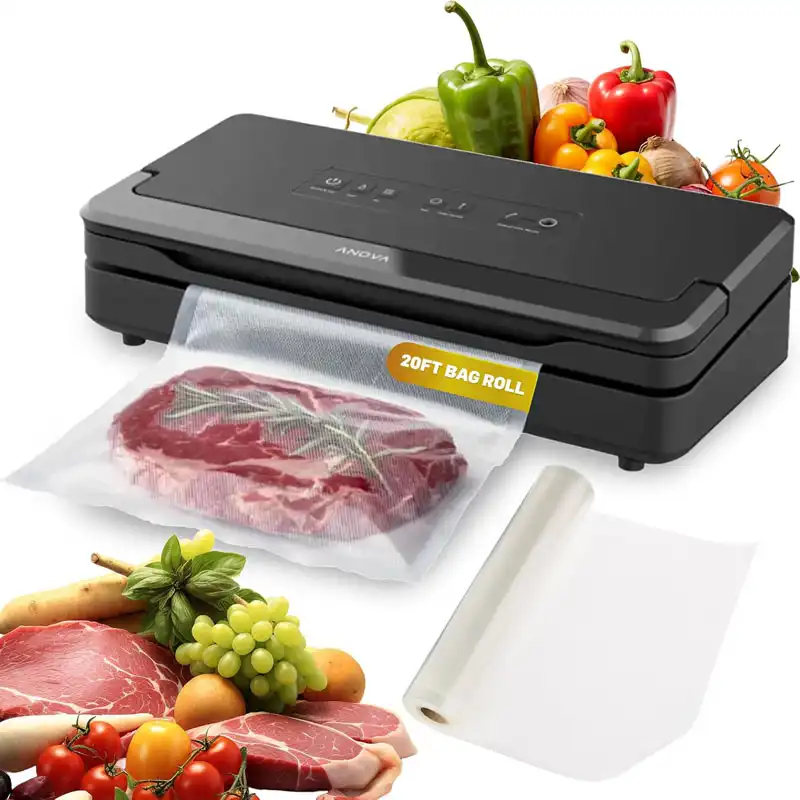
Anova Culinary designs its gear in San Francisco for the sous vide crowd. This Pro model is the bigger sibling to their minimalist sealer. Everything runs one-handed, so you clamp, vacuum, and seal without setting the meat down.
Specifications:
- 120 watts, 11.8 inch seal width
- Six modes including pulse and external pulse
- Hidden 19 foot roll bay with sliding cutter
- Warranty listed as 2 to 5 years, so confirm it
Quality: no other unit this size pairs one-hand use, a double seal, pulse control, and a jar port. Reliability is the tradeoff, since close to half of owners flag weak suction or early failure. Register the warranty the day it arrives.
2. Nesco VS-12 Deluxe Vacuum Sealer
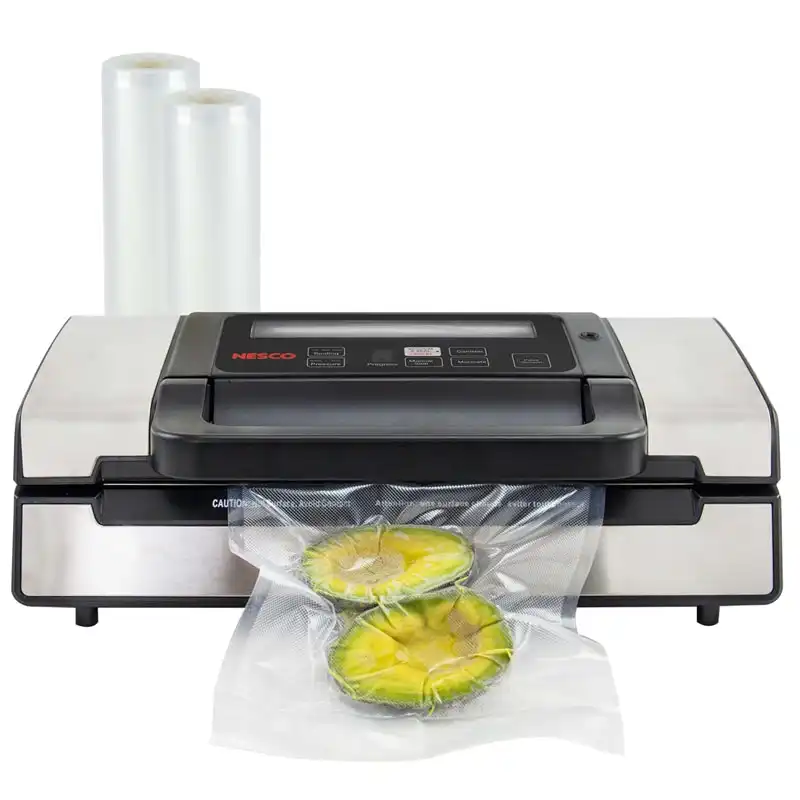
NESCO has built home preservation gear for decades, from dehydrators to roaster ovens. The VS-12 runs a 130 watt double pump, which pulls harder than most single-pump units at this level. You get dry, moist, and double seal settings, plus a gentle pressure option for bread and berries.
Specifications:
- 130 watts, bags up to 11.8 inches
- Dry, moist, and double seal modes
- Normal or gentle vacuum pressure
- One year limited warranty only
Quality: solid mid-range build, and two starter rolls come in the box. Some owners run these hard for three years, while others report failure inside a few months. Best value if you seal weekly rather than daily.
3. Weston Pro-2300 Stainless Steel Vacuum Sealer
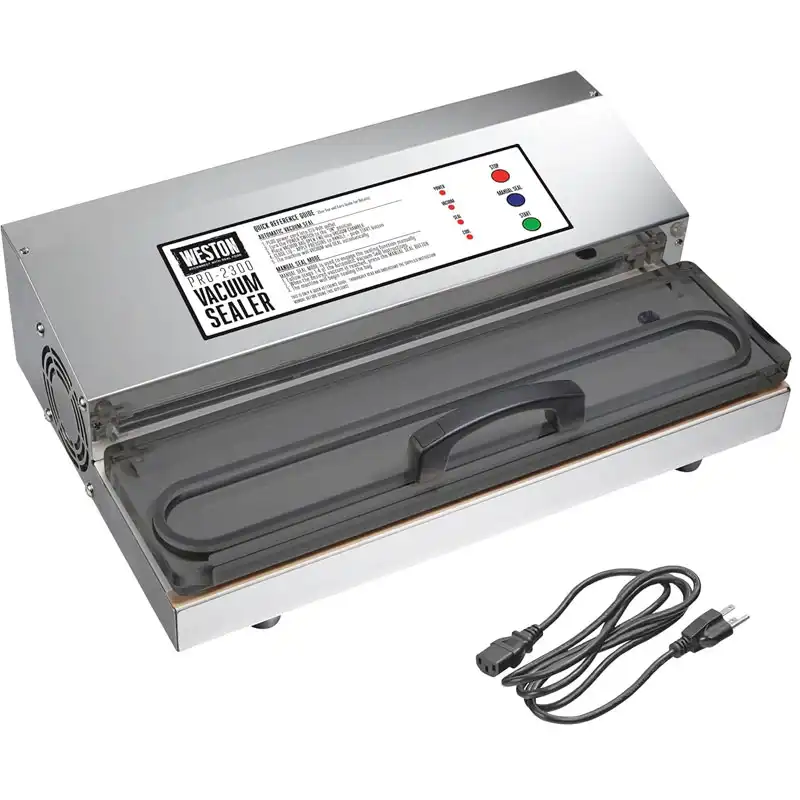
Weston builds gear for hunters and market growers, and the Pro-2300 is their commercial grade unit. A 1020 watt fan cooled motor and double piston pump pull up to 28 inches of mercury. The 15 inch bar takes a whole brisket or two racks of ribs.
Specifications:
- 1020 watts, 120V AC
- Double piston pump, 28 inches Hg
- 15 inch seal bar, 5 mm wide
- Stainless steel housing, tinted lid
Quality: commercial grade, and it acts like it. Fan cooling means no waiting between bags, and one owner sealed 90 packages in under an hour. This is what it helps to run for a whole beef or a fall of venison.
4. Vesta Precision Chamber Vacuum Sealer
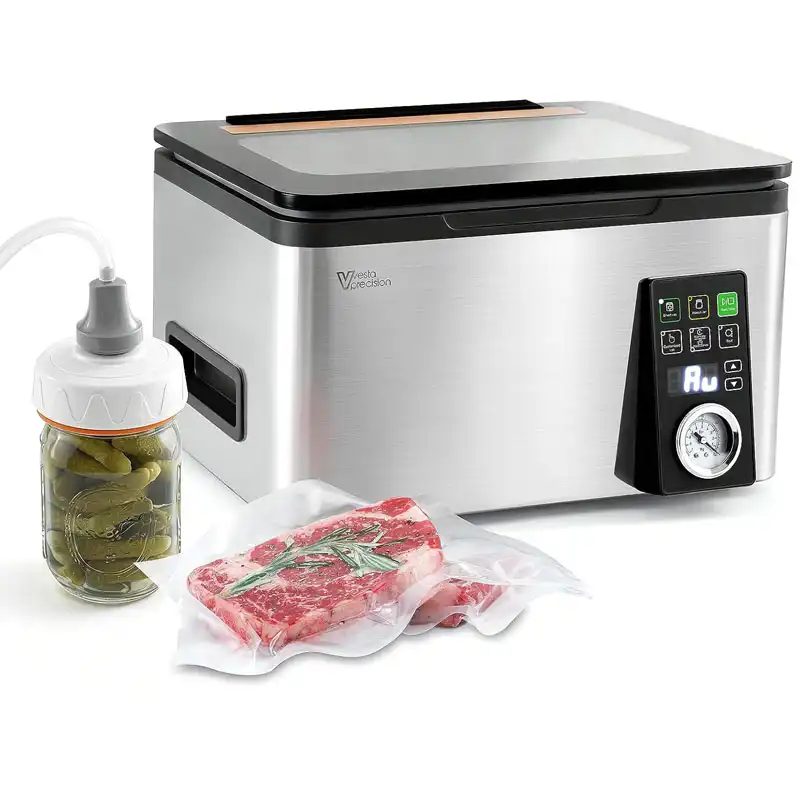
Vesta Precision builds chamber sealers for home and light commercial kitchens, and the V513 is their compact model. Chamber sealing drops pressure around the whole bag, so soup, brine, and marinade seal without spilling. SmartVac control reads food volume and sets the cycle for you.
Specifications:
- 360 watts, 12 inch seal bar
- 5.6 quart chamber, washable seal bar
- Stainless body, soft close glass lid
- Two year warranty with US support
Quality: built like shop equipment, and it runs quieter than industrial packers. Owners rate sealing 92 percent positive and cleanup easy. Buy this only if you seal wet food often.
5. FoodSaver FM2100 Vacuum Sealer Machine
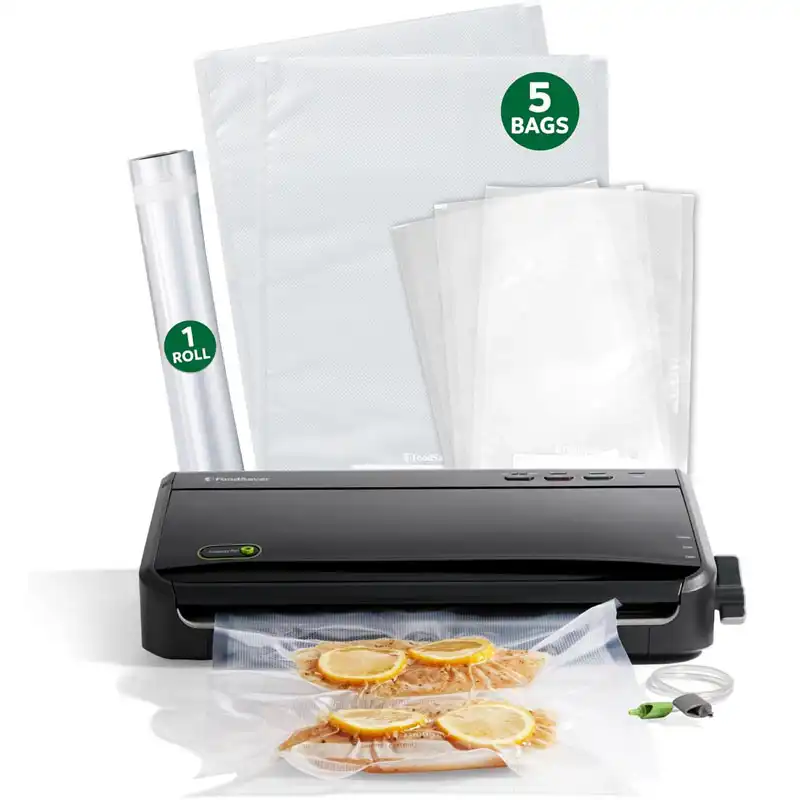
FoodSaver has sold home sealers since the 1990s and set the standard for textured bags. The FM2100 keeps things plain: dual heat sealing strips, automatic bag detection, and separate dry or moist settings. A removable drip tray handles the mess.
Specifications:
- 120 watts, 11.8 inch seal width
- Dual heat sealing strips
- Built-in roll cutter and storage
- Five year limited manufacturer warranty
Quality: easy to run, uneven over time. It fits light, occasional sealing of dry goods and portioned meat. Owners who kept older FoodSaver units say those outlast this one, so keep your receipt for the five year warranty.
6. Raywok Mason Jar Vacuum Sealer Kit
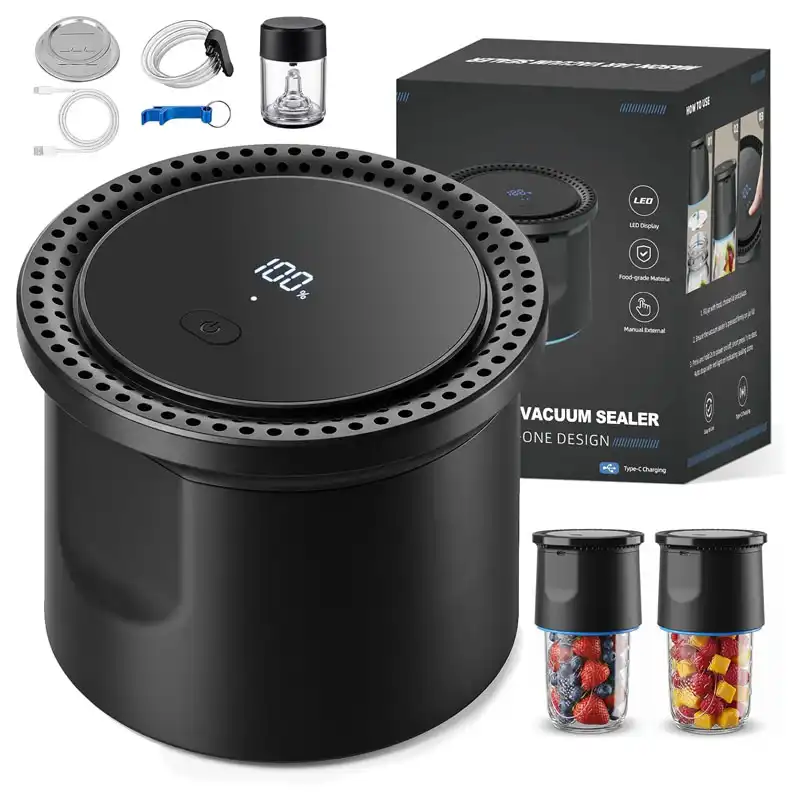
This is a cordless jar pump, not a bag machine. It seats on wide mouth and regular mouth Mason jars with no adapter to swap. Air pulls out in about 20 seconds. The ABS body is roughly the size of a large mug.
Specifications:
- Rechargeable battery, one-touch operation
- Fits 2.68 and 3.27 inch mouths
- ABS body, 16 ounces
- Lifetime warranty from the brand
Quality: simple and dependable for one job. Keep jars going for coffee, cornmeal, and spice blends. Jar sealing is not canning, though, so keep using a water bath or pressure canner for canning sweet corn safely.
7. Zwilling Fresh & Save Vacuum Sealer
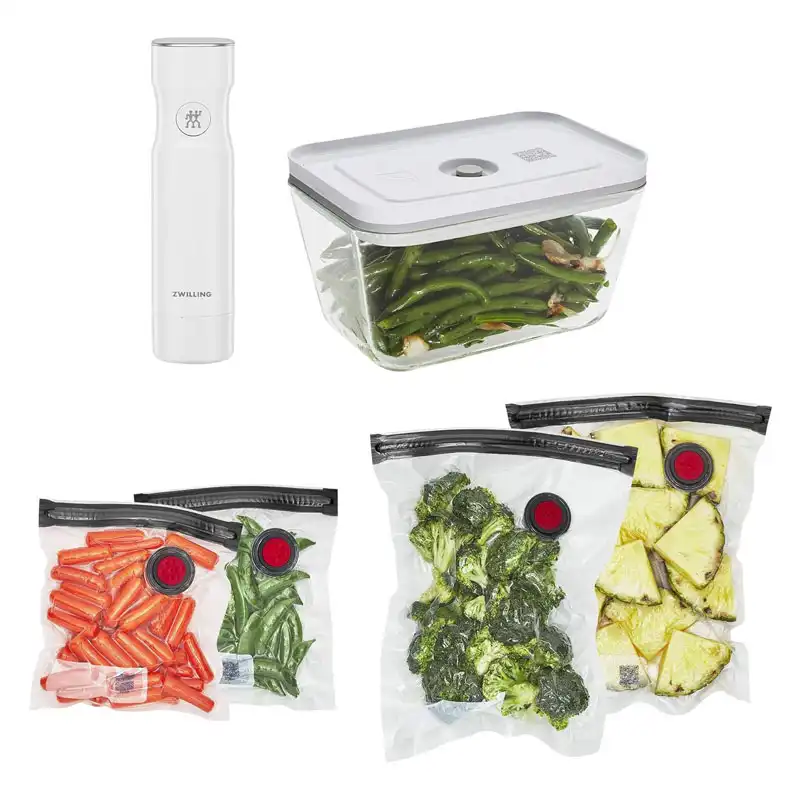
ZWILLING is a German knife maker, and this set trades throwaway bags for reusable gear. You get a borosilicate glass container, four zip bags with silicone valves, and a rechargeable pump. Dock the pump on a valve, press once, and it stops on its own.
Specifications:
- Rechargeable one-button pump
- Borosilicate glass container, silicone valves
- Bags are dishwasher and freezer safe
- Six piece set, 2.5 pounds
Quality: handsome and handy, but reliability varies. Some owners report a cracked lid or a pump that quits holding charge. Test every piece the week it lands.
8. Gasbye 95kPa Precision Vacuum Sealer Machine
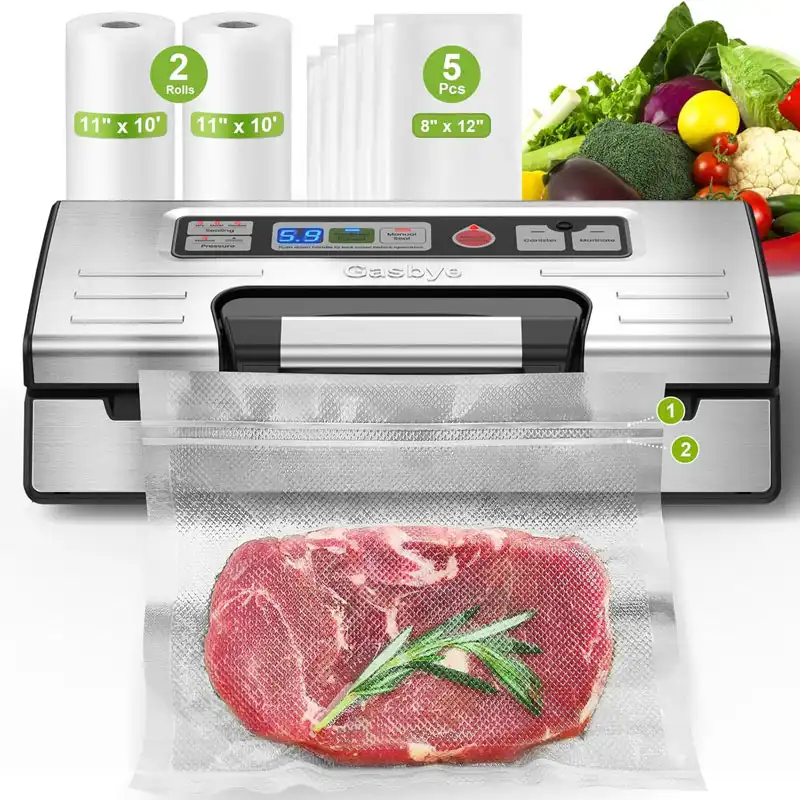
The Gasbye VS5166 is the 2025 update, and its spec sheet reads better than units above it. A 130 watt dual pump hits 95 kPa, double strips seal wet and dry, and the drip tray lifts out. The stainless body carries a 12 inch seal width.
Specifications:
- 130 watts, 95 kPa dual pump
- 12 inch seal width, double heat seal
- Stainless steel body, 6.5 pounds
- Five year coverage, spare parts available
Quality: best owner evidence here, above 90 percent positive on suction, sealing, build, and value. Spare gaskets matter more than most specs, since a worn gasket kills most sealers first.
How to Choose the Best Vacuum Sealer for Food Storage
Suction gets the attention in every top rated food sealer list. Seal quality is what keeps a bag closed at 0°F for two years. Work through these seven factors before you pick a food storage vacuum sealer.
Suction Power (kPa and Wattage)
kPa measures how hard the pump pulls air from the bag, and wattage tells you what drives it. Most home units land between 60 and 80 kPa. Gasbye rates its VS5166 at 95 kPa, while the Anova Pro sits near 50 kPa. More suction power helps on roasts and whole grain, but high kPa crushes berries and bread. So a pulse button matters more than a headline number.
Single vs Double Heat Seal Strip
A double heat seal strip lays two parallel seams instead of one. One weak spot then cannot open the whole bag. That extra seam earns its keep on thick bags and damp seal lines. Nesco offers it as a selectable mode, and Anova double seals in moist mode. FoodSaver builds dual strips into the FM2100, while Weston instead uses one extra wide 5 mm bar. Both approaches hold up for years.
External vs Chamber Vacuum Sealer
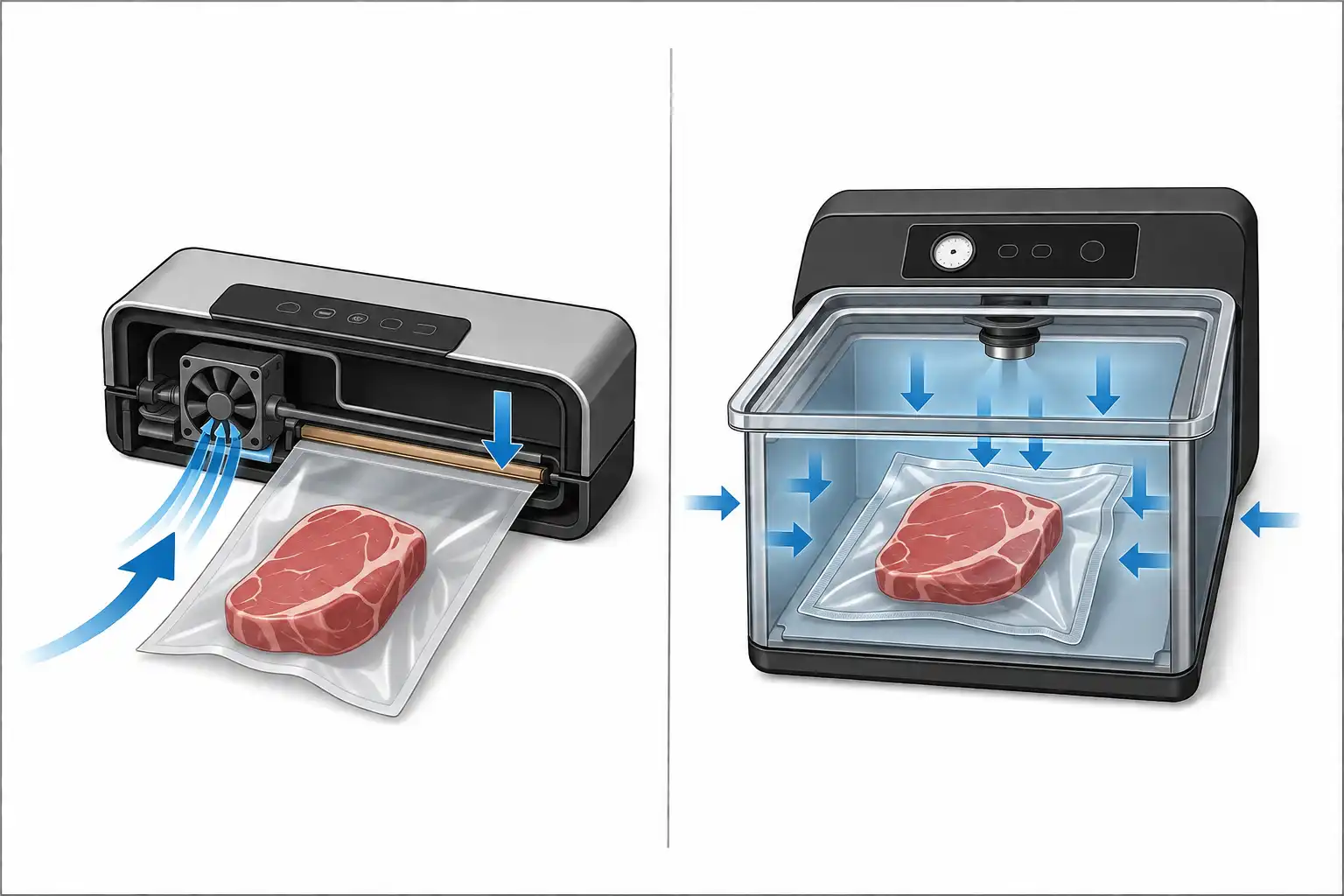
An external sealer pulls air out through the open end of the bag. A chamber sealer drops pressure inside a sealed box instead. The chamber vs external vacuum sealer call decides how a machine handles liquid. Chamber units seal soup, brine, and marinade without pulling juice into the pump. They also run cheaper smooth bags. External units cost and weigh less. For bulk meat, bone-in cuts, or marinated items, a chamber machine is the upgrade worth making. The Vesta Precision Chamber Vacuum Sealer fits a farm kitchen, while VacMaster builds units for processing rooms.
Modes: Dry, Moist, and Pulse
Three modes cover almost every job here.
- Dry: grain, flour, rolled oats, saved seed
- Moist: marinated cuts, brined pork, anything with juice
- Pulse: berries, salad greens, sliced tomatoes, bread
Skip any unit that lacks all three. A gentle pressure setting does similar work to pulse on the Nesco.
Drip Tray, Built-in Cutter, and Roll Storage
A removable drip tray is the part you thank yourself for after packing venison. It catches juice the pump pulls forward, then lifts out for the sink. A built-in roll bay and cutter let you size bags to the cut, which saves material and counter space.
Bag Compatibility and Ongoing Cost
External sealers need textured or embossed bags, because the channels give trapped air a path out. Chamber sealers run smooth bags at lower cost. Generic commercial grade rolls fit most units, including FoodSaver and Weston machines. Bags are the running cost of any food vacuum bag machine, so check compatibility first. The foam gasket fails before anything else, so favor brands that sell replacements. An accessory port also runs a mason jar vacuum sealer attachment. A vacuum sealer for sous vide needs bags rated for hot water, since sous vide runs long and warm.
Size, Weight, and Warranty
Measure your counter before you buy. The Weston Pro-2300 runs about 20 by 13 by 6 inches and weighs nearly 23 pounds. That size lives out in the open, while compact units tuck into a cabinet between harvests. Gasbye and FoodSaver both list five years, but Nesco gives the VS-12 only one.
How Vacuum Sealing Keeps Food Fresh
Vacuum sealing works by pulling out oxygen. Most spoilage bacteria and molds are aerobic, so they need that oxygen to multiply. Take it away and their growth slows to a crawl. The same seal blocks the air contact that causes freezer burn, which USDA FSIS calls grayish brown leathery spots. Less air also slows oxidation of fat, so pork and ground beef hold flavor longer. The National Center for Home Food Preservation treats vacuum packaging as a packaging method, not a preservation method. Cold still does the real work. A sealer cannot fix a poor start either, so careful handling right after harvest sets the quality ceiling.
What You Can and Can’t Vacuum Seal
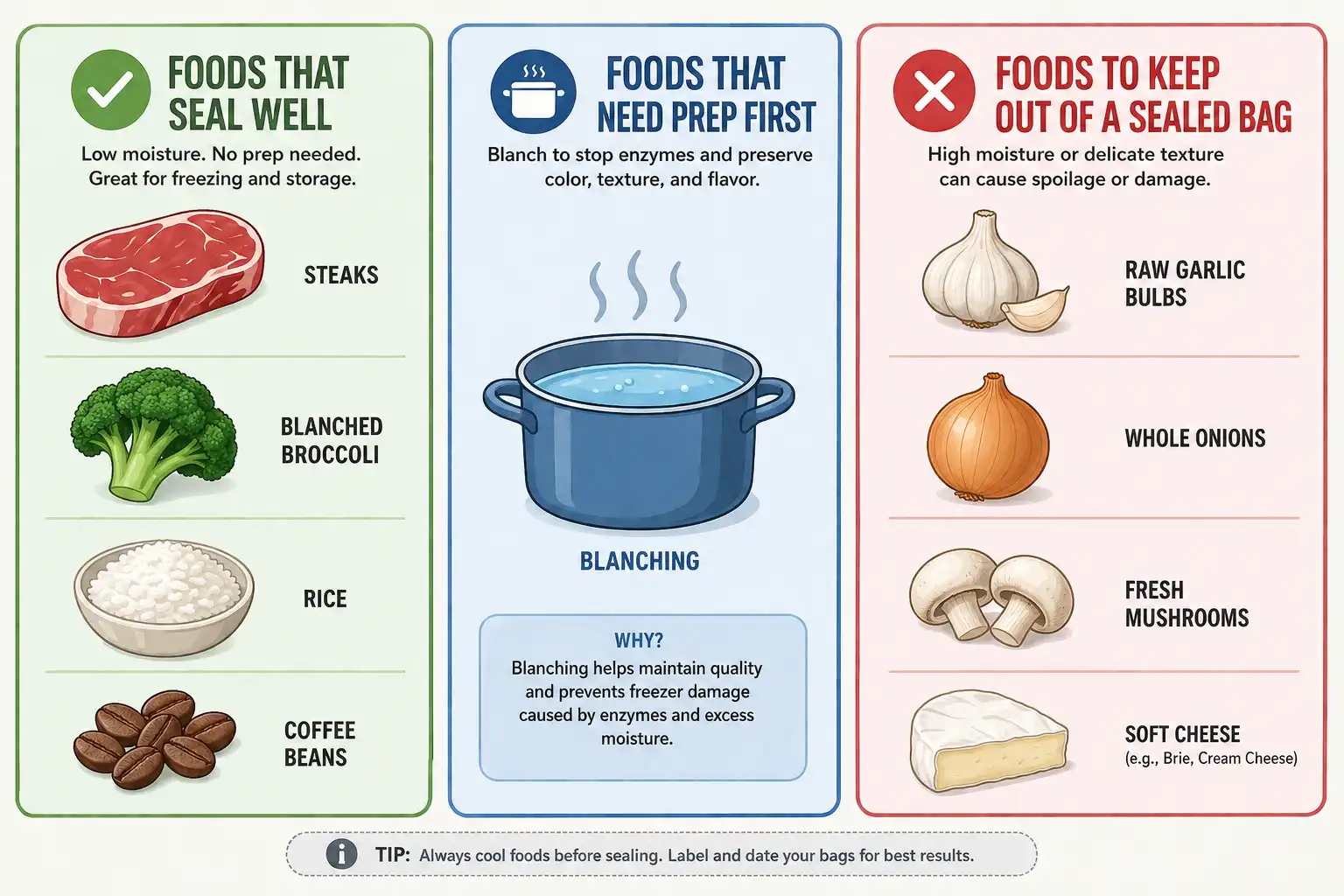
Some foods get worse in a sealed bag, not better. Keep these out:
- Raw garlic and raw onions
- Fresh mushrooms
- Soft and unpasteurized cheeses
- Raw cole crops, unblanched
A low oxygen bag suits Clostridium botulinum, the organism behind botulism. It leaves no smell and no off color. Some strains grow near 37°F, so the refrigerator is not a free pass.
Cole crops need one extra step. Broccoli, cauliflower, cabbage, and Brussels sprouts give off gas after cutting, which puffs the bag and splits the seam. Blanching stops it. University of Missouri Extension calls for a 3 minute water blanch, then an ice bath and a full drain.
One rule catches people out. Open the bag before you thaw fish or seafood. A sealed bag stays low in oxygen right through thawing, and that is when toxin forming bacteria get moving.
How Long Does Vacuum-Sealed Food Last?
Vacuum sealed food holds quality roughly 3 to 5 times longer than food in plastic containers or ordinary bags. The freezer is where that gap shows most. Frozen raw meat runs 1 to 3 years sealed, against 6 to 12 months loose.
| Food | Sealed in fridge at 40°F | Sealed in freezer at 0°F | Sealed in pantry |
|---|---|---|---|
| Beef and pork steaks, roasts | 1 to 2 weeks | 1 to 3 years | Not safe |
| Ground meat and sausage | 2 to 3 days | 1 to 2 years | Not safe |
| Chicken and turkey | 2 to 3 days | 1 to 2 years | Not safe |
| Fish and seafood | 1 to 2 days | 1 to 2 years | Not safe |
| Hard cheese | 4 to 8 months | 6 to 8 months, crumbly | Not safe |
| Berries and cut fruit | 1 to 2 weeks | 1 to 2 years | Not safe |
| Blanched vegetables | 1 to 2 weeks | 9 to 14 months | Not safe |
| White rice and pasta | Not needed | 2 to 3 years | 1 to 2 years |
| Flour and rolled oats | Not needed | Up to 3 years | 1 to 2 years |
| Coffee beans and shelled nuts | 6 to 12 months | 1 to 2 years | 6 to 12 months |
| Dried beans and saved seed | Not needed | 3 to 5 years | 1 to 2 years |
Those ranges are what you are really buying with the best vacuum sealer for food storage. They describe quality, not safety. Food held steady at 0°F stays safe indefinitely, per USDA FSIS, though texture and flavor slide past the windows above. Vacuum sealing does not kill bacteria either, so perishables need refrigeration or freezing. A sealed package should not sit at room temperature past two hours, per NC State Extension. Dry goods behave differently, which is where sealed bags beat every other option for bulk crop storage.
How to Use a Vacuum Sealer on the Farm
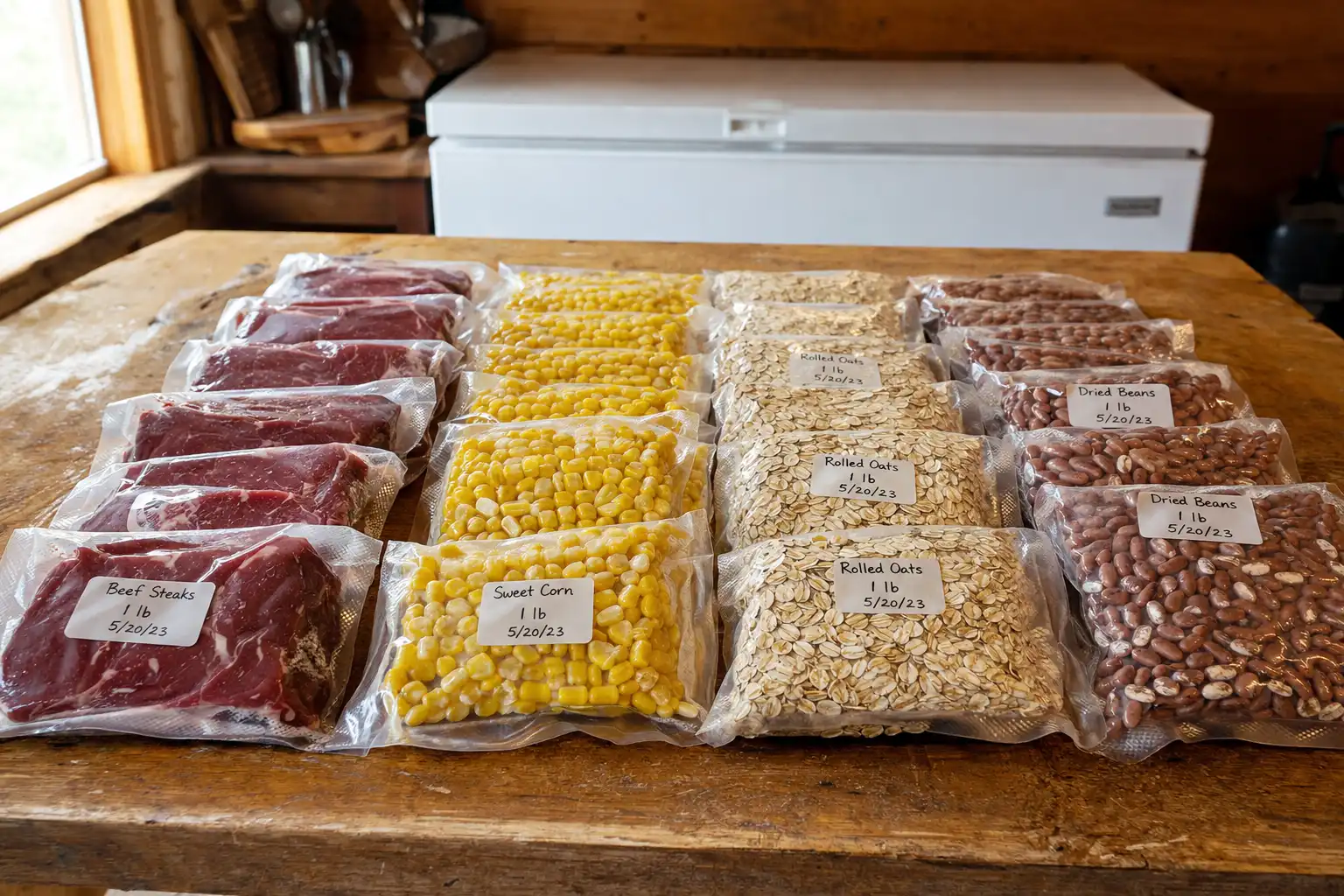
Here is the order to work in after processing day or a big harvest.
- Seal the same day. Beef and pork go into bags the day they come back from the locker.
- Portion before you seal. Break the order into meal size cuts first.
- Label every bag. Write the cut and the date, then freeze it flat on a sheet pan.
- Keep garden bags small. One or two pounds each, so you thaw only what supper needs.
- Dry grain first. Sealed bags stop pantry moths cold, but they trap moisture just as well.
- Protect saved seed. Small bags with a silica pack, kept cool and dark.
That routine is what keeps oats fresh in long term storage through summer. It matters again for drying corn for seed you plan to plant.
Tips for Better Seals
Most failed seals come down to heat, moisture, or a sharp bone.
- Cool cooked food fully. Steam ruins a seam fast.
- Slush soups first. Freeze stock thick, then seal the block.
- Pat produce dry. Surface water wicks into the seal line.
- Wrap sharp bones. Plastic wrap stops punctures.
- Pre-freeze meat 1 to 2 hours. Cleaner seam, drier drip tray.
- Leave 3 inches of headspace. The bag needs slack to clamp right.
- Check bags after a day frozen. A loose bag means a failed seam.
Wipe the seal bar between runs, since any vacuum sealer for food works better on a clean, dry strip. For grain and seed, check grain moisture first, because trapped moisture ruins a whole bag.
FAQs on Vacuum Sealer
Are vacuum sealers worth it for food storage?
What is the best food vacuum sealer?
How long does vacuum-sealed food last in the freezer, fridge, and pantry?
What foods should you not vacuum seal?
What's the difference between an external and a chamber vacuum sealer?
Do vacuum sealers prevent freezer burn?
Can you reuse vacuum sealer bags?
Do you need special bags?
Bottom Line on Picking a Food Vacuum Sealer
The Anova Precision Vacuum Sealer Pro is the best vacuum sealer for most farm kitchens. It brings one-hand sealing, a double seal, and pulse control in one box. Pick the Nesco VS-12 Deluxe if you seal a few bags a week and want the lower cost. Step up to the Weston Pro-2300 if you pack a whole beef or run venison every fall. Buy a chamber unit only if you seal liquid often.
Thanks for reading this buying guide, good luck.