Can Sugarcane Grow in Cold Climates? What Works Up North
Sugarcane is a tropical grass built for heat and long summers. That raises a fair question for northern growers: can sugarcane grow in cold climates, or does frost end the crop fast?
Sugarcane can grow in cold climates only as a summer annual, not as a commercial crop. Frost kills it, and northern seasons run too short for full sugar. Still, warm parts of Pennsylvania can raise small novelty cane.
Can Sugarcane Grow in Cold Climates?
Sugarcane can grow in cold climates, but only as a warm-season annual, and never as a true sugar crop. It is a tropical grass, so frost stops it quickly. Even Gulf growers fight winter freezes every year. Farther north, the season simply runs out before the cane matures.
Ground sits in USDA zone 6a, close to what much of Pennsylvania sees. Sugarcane will not survive cold winters in northern growing regions. Still, a determined gardener can raise short stalks in a single summer. You just treat the crop like a tomato, not like winter wheat.
Learn more: Sugarcane Origin, History, and Spread
What Temperatures Does Sugarcane Need?
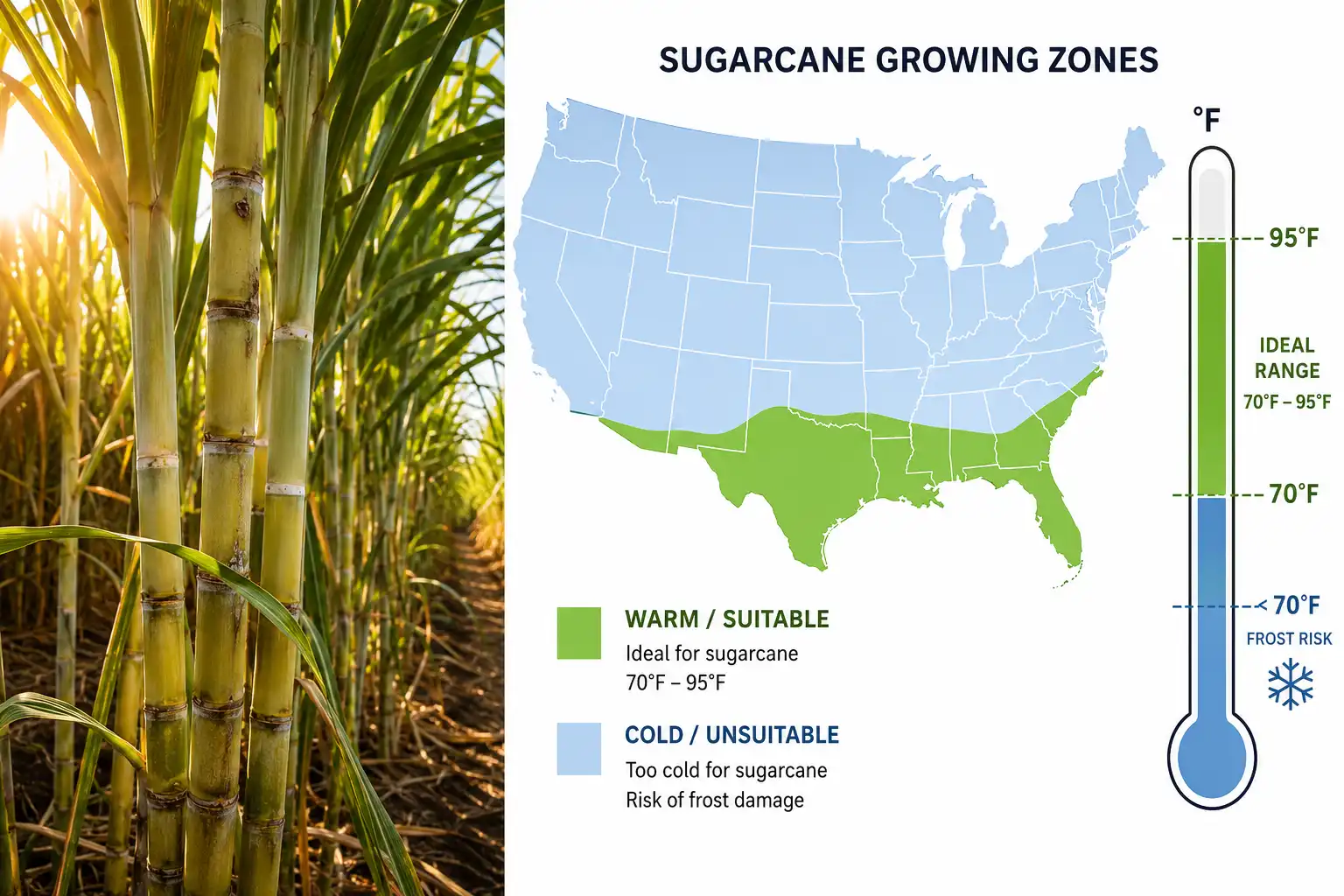
Sugarcane grows best when daily temperatures hold between about 72°F and 86°F. Active growth needs a minimum near 68°F, and fresh setts sprout fastest up in the 90°F range. Below 60°F, the crop crawls. Near 50°F it basically stalls, because the leaves stop working.
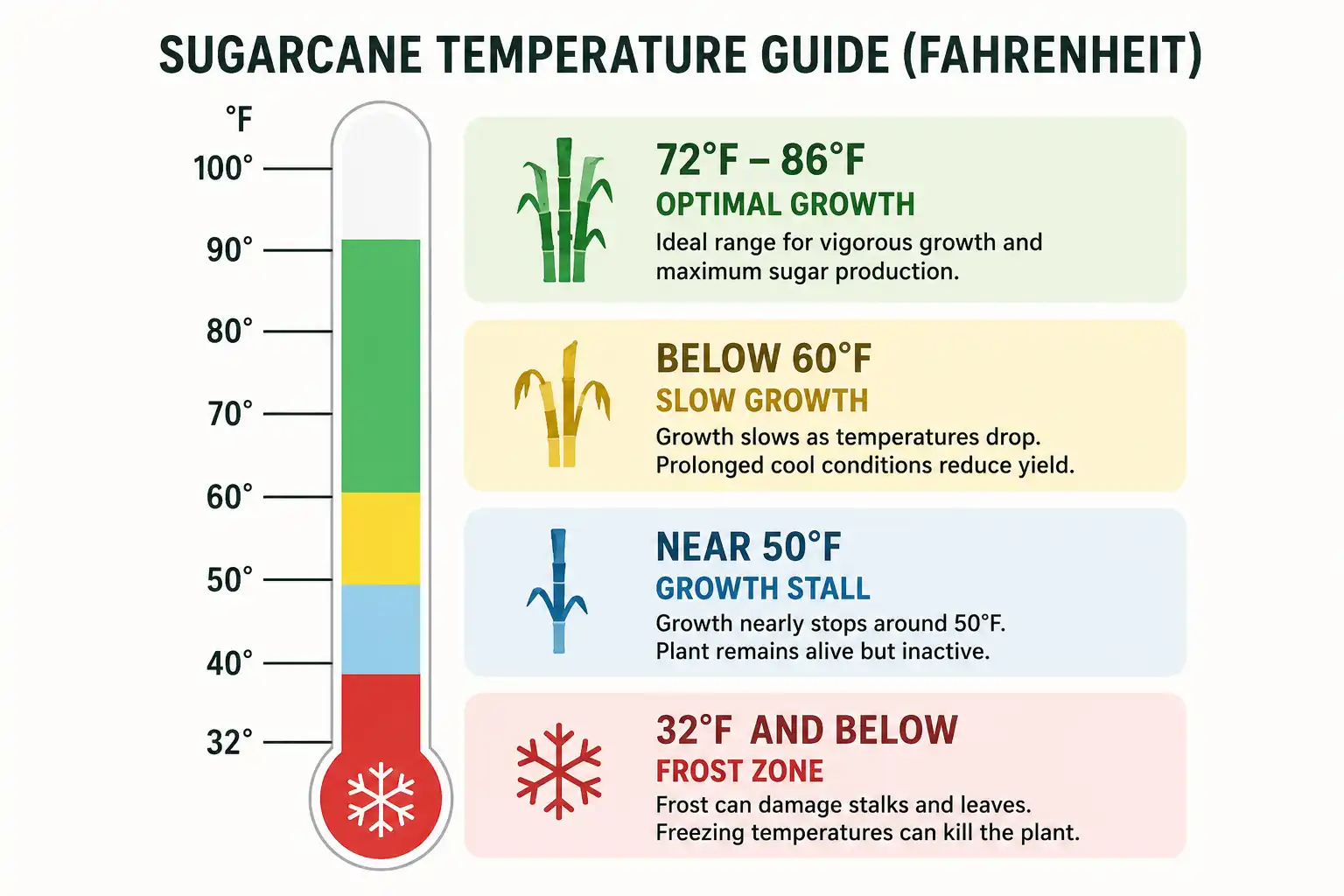
Sugarcane, or Saccharum officinarum, evolved in the tropics, not in chilly weather. Warm nights matter as much as warm days. So a cool northern summer, even a long one, still gives you thin cane with low sugar.
What Cold Weather Does to a Cane Crop
Cold hits sugarcane in two ways: it halts growth, and it wrecks the harvest. A light frost near 32°F browns the leaves and kills the growing tips. A hard freeze around 25°F or lower splits the stalks and starts breaking down the sugar stored inside.
Louisiana growers know this pattern well. They run a short season, about nine months, then rush to cut most of the crop before the coldest weeks. That freeze pressure is exactly why the sugar belt stops near the Gulf.
Time is the second problem, and it bites harder up north. Sugarcane needs a long, warm stretch to build sugar. A full crop wants nine months at the very least, and often far more. The length of the sugarcane growing season runs longer than most northern summers. That gap is the real limit for cold-region growers.
What USDA Zones Can Grow Sugarcane?
Sugarcane grows commercially only in USDA zones 9 through 11. Those are the warmest corners of the country: south Florida, southern Louisiana, southeast Texas, and Hawaii. Cold tolerance runs out around 20°F, so anything colder puts the crop at real risk.
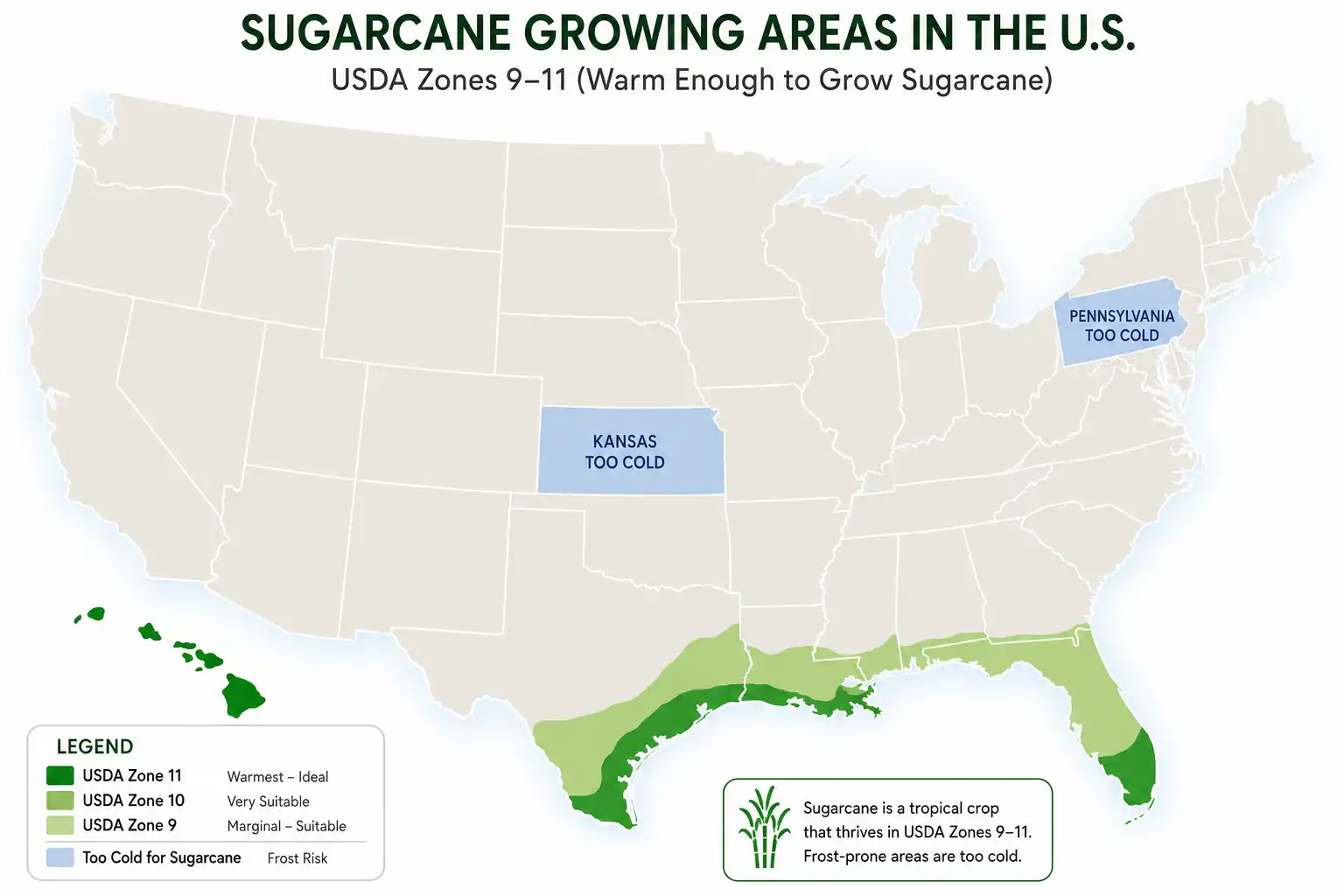
Most of the United States sits well below that mark. To see where the crop earns its keep, look at the warm-weather regions where cane is grown across the US. Every one of those spots shares long summers and mild winters.
Pennsylvania and Kansas both land in zones 5 through 7. That is three to four full zones colder than sugarcane wants. No amount of rich soil closes that gap out in the field.
Can Sugarcane Grow in Pennsylvania?
Sugarcane cannot grow as a crop in Pennsylvania, though a gardener can raise it as a one-summer novelty. The state runs from zone 5a in the Poconos to zone 7b near Philadelphia. Winters there stay far too cold for cane to survive in the ground.
Season length is the next hurdle. Philadelphia gets the longest stretch, near 200 to 230 frost-free days. Most of the state gets closer to 150 to 180. So even the warmest PA county falls short of what sugarcane wants.
Here is the realistic split for Pennsylvania growers:
- Commercial cane: not possible, in any part of the state.
- Backyard cane: workable in zones 6b and 7 as a summer annual, with steady effort.
You will get short, chewable stalks and a little juice by fall. You will not get tall Gulf-style cane or high sugar. Because frost sets the deadline, let Penn State Extension frost dates drive your planting and cutting calendar.
How to Grow Sugarcane in a Cold Climate
Growing sugarcane in a cold climate means beating the calendar. You start early, push the season on both ends, then cut before the first frost. Here is the method that gives a northern grower a real shot.
Start Setts Indoors Early
Start your seed cane, called setts, indoors six to eight weeks before your last frost. Warmth drives sprouting, so keep the soil near 80°F to 90°F. This front-loads growth before the outdoor ground is ready. For timing, match your sugarcane planting window to your local last-frost date.
Grow in Large Containers
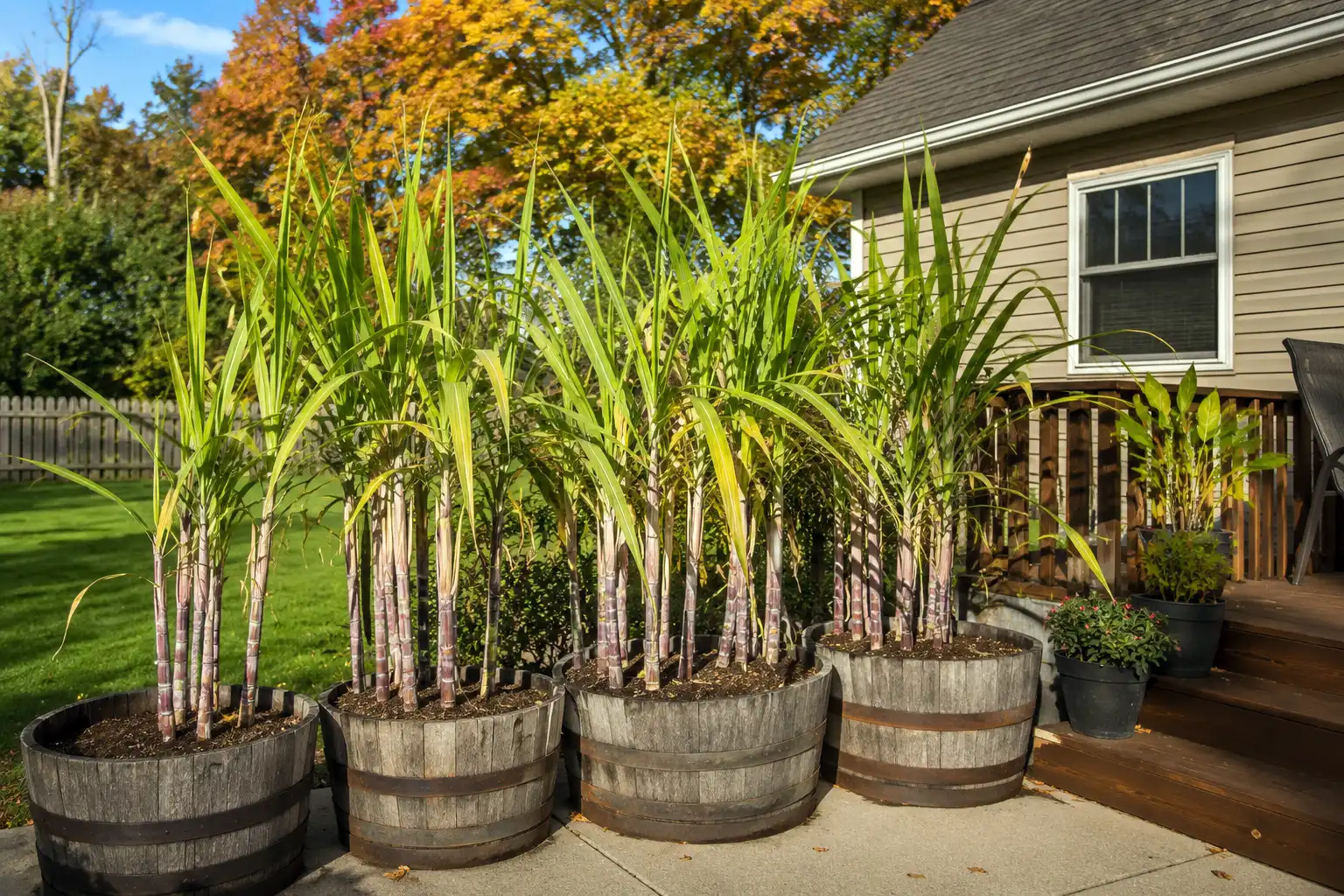
Plant setts in half barrels or 15-gallon pots when your season is very short. Containers let you move cane indoors during cold snaps and again at season’s end. They also warm up faster than open ground in spring. The steps for a healthy sugarcane plant carry straight over to pots.
Use Season Extension
Row covers, low tunnels, and a small greenhouse all add warm days. Even black plastic mulch warms the root zone early. These tools push growth through the cool shoulder weeks of spring and fall. Every extra warm week means more sugar in the stalk.
Cut Before the First Frost
Harvest every stalk before the first hard frost arrives. Frost browns the leaves fast, then starts ruining the sugar inside. So watch the forecast closely from late September on. The same signs that show sugarcane is ready to cut still apply, even on short northern stalks.
Overwinter the Roots Indoors
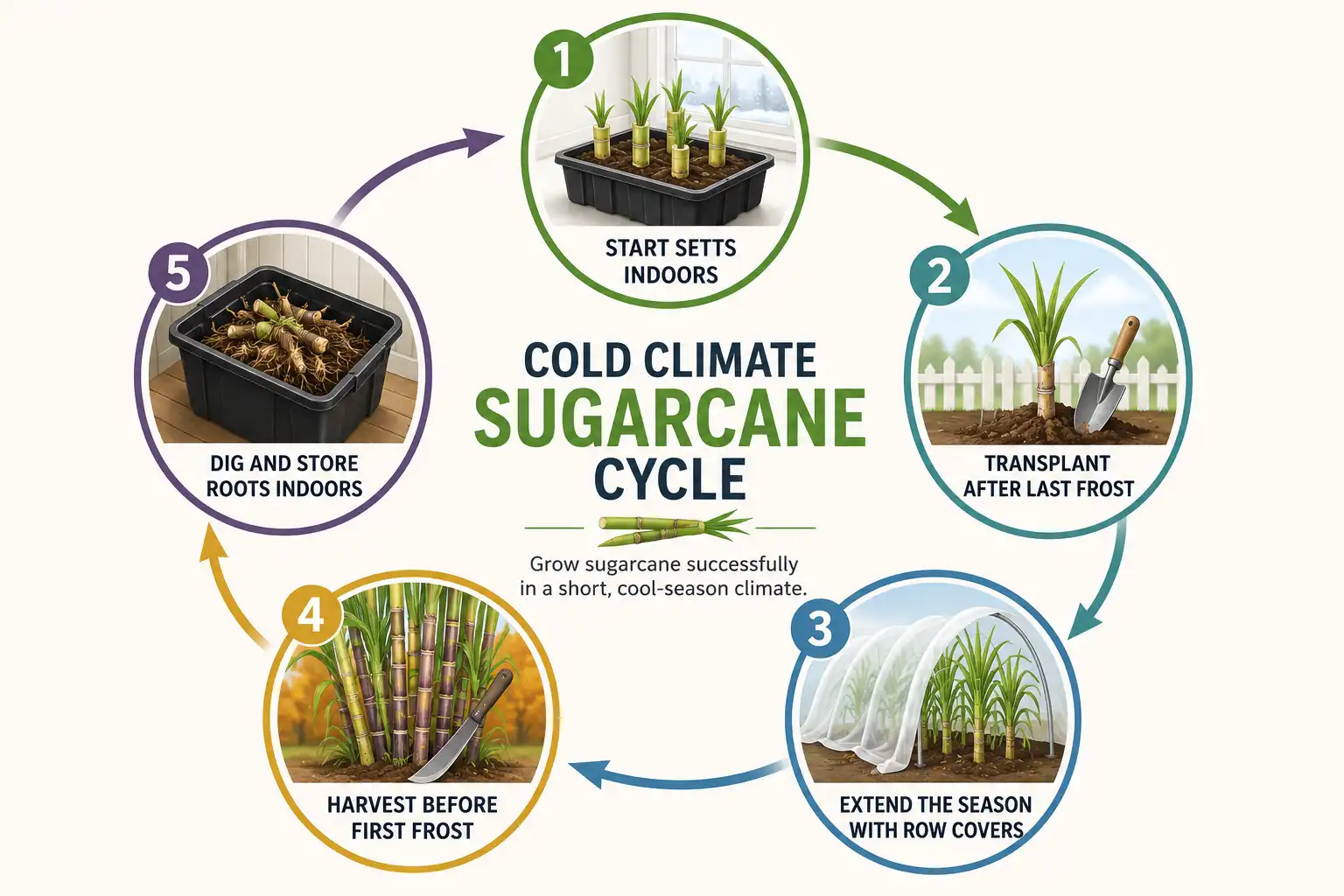
Dig the rhizomes after harvest, then store them somewhere cool but frost-free. A basement or an insulated garage works fine. Replant them once the soil warms next spring. This saves you from buying fresh seed cane every year.
Are There Cold-Hardy Sugarcane Options?
A few sugarcane types handle cold better, yet none turn Pennsylvania into cane country. Old heirloom ribbon canes take a little more chill than modern commercial hybrids. Researchers have also crossed sugarcane with Miscanthus, a hardy grass, to create hybrids called miscanes.
Those miscanes have survived winters as far north as Arkansas in trials. They photosynthesize down near 50°F, which stretches the growing range. Still, breeders made them for biofuel and sugar research, not for backyard planting. You cannot buy them like tomato seedlings yet.
For a home grower, the honest move stays simple. Pick any healthy seed cane, grow it hard through summer, then accept short stalks. The variety matters far less than your frost dates and your start time.
Final Verdict
Sugarcane is a heat crop, plain and simple. In zone 6a, it should never be planted as a field crop, and the same holds true farther north. The winters kill it, and the season quits before real sugar shows up.
That said, a backyard grower can have fun with it. Start early, use containers, cut before frost, then store the roots inside. You get chewable cane and a bit of juice, which is a fair reward for one summer of work. Just keep your goals honest, and let the sugar belt handle the commercial crop.