How Long Does Sorghum Take to Grow? 9 Key Stages
Sorghum takes 90 to 120 days to grow from planting to harvest, depending on variety, weather, and soil temperature. This guide walks you through each growth stage, the average timing across regions, the field signs that tell you the crop is ready, and the common problems that slow it down.
Grain sorghum reaches harvest in 90 to 120 days. Forage sorghum is ready to cut in 60 to 90 days. Sweet sorghum needs 110 to 130 days. Warm soil at 65°F at the 2-inch depth, full sun, and steady moisture through head fill keep the timeline on track.
What Affects How Long Sorghum Takes to Grow
Three factors set the calendar: variety, heat, and water. Grain sorghum hybrids carry a maturity rating in days, usually 95, 105, or 115. Early hybrids finish in about 95 days under good heat. Full-season hybrids run 115 to 120 days but yield more grain. For background on the crop and its uses, see this overview of sorghum basics.
Sorghum is a heat-loving grass. It uses growing degree days (GDDs) base 50°F. Most grain hybrids need 2,200 to 2,500 GDDs from planting to black layer, according to Kansas State University agronomy data.
Sorghum Growth Stages and Days to Each
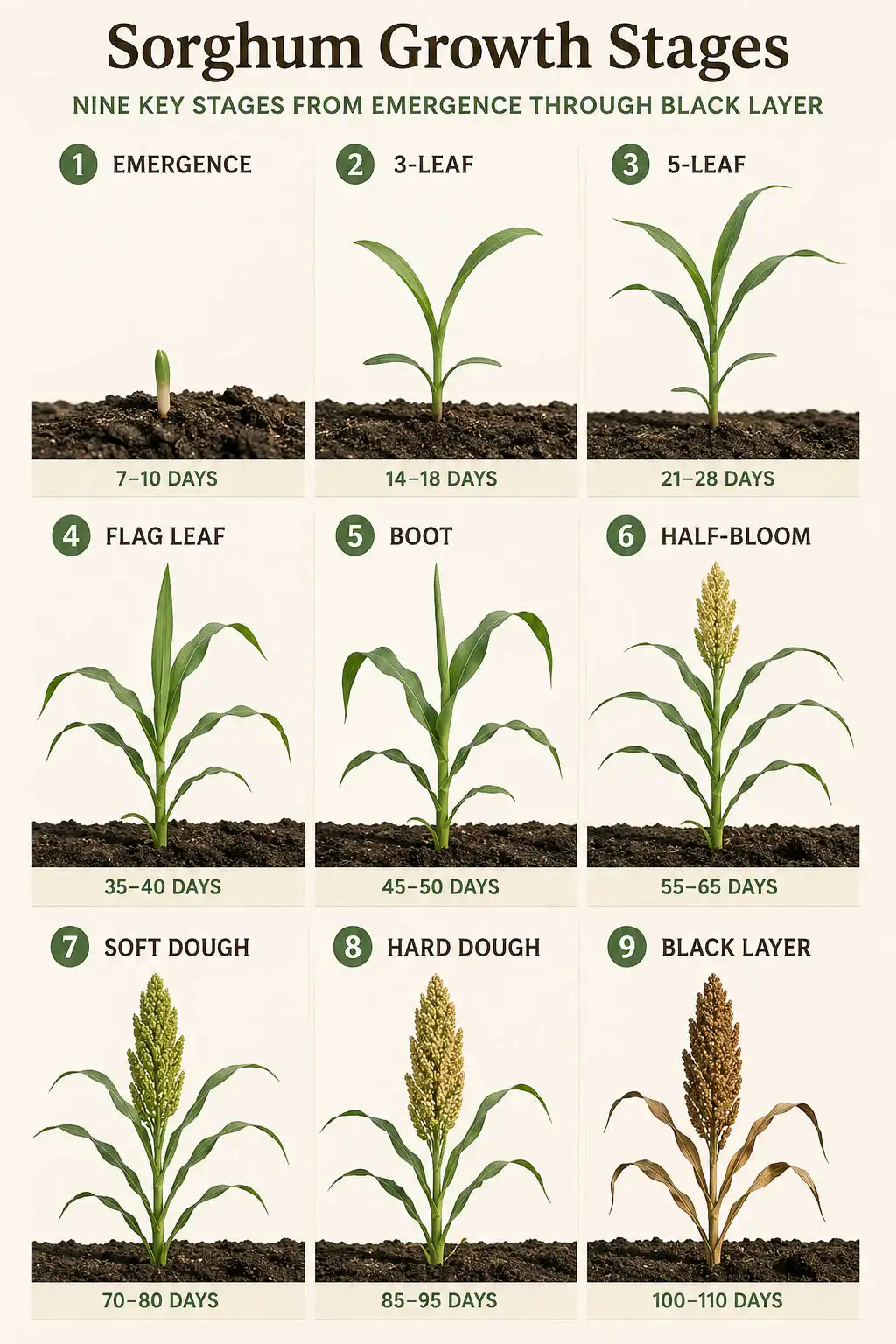
Sorghum moves through nine clear stages. Days listed below are typical for a 105-day grain hybrid in the central Plains.
| Growth Stage | Days After Planting |
|---|---|
| Emergence (GS0) | 5–10 |
| 3-leaf (GS1) | 15–20 |
| 5-leaf (GS2) | 25–35 |
| Flag leaf (GS4) | 45–55 |
| Boot (GS5) | 55–65 |
| Half-bloom (GS6) | 65–75 |
| Soft dough (GS7) | 80–90 |
| Hard dough (GS8) | 90–100 |
| Black layer (GS9) | 95–110 |
| Harvest at 13–14% moisture | 110–130 |
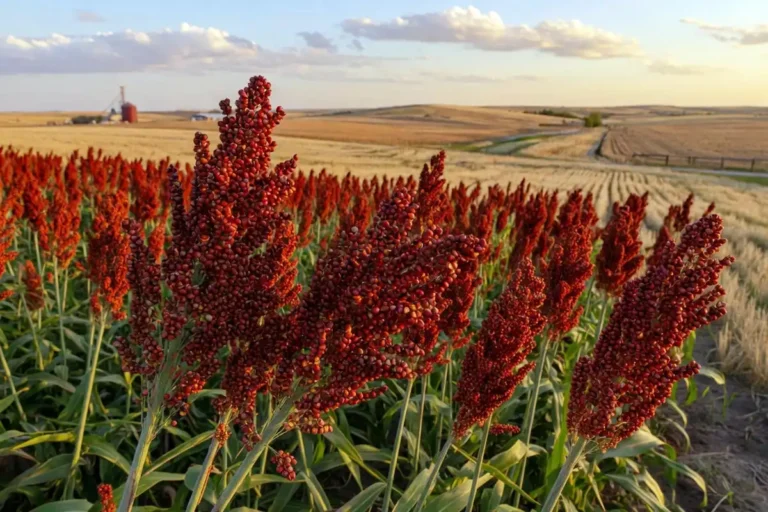
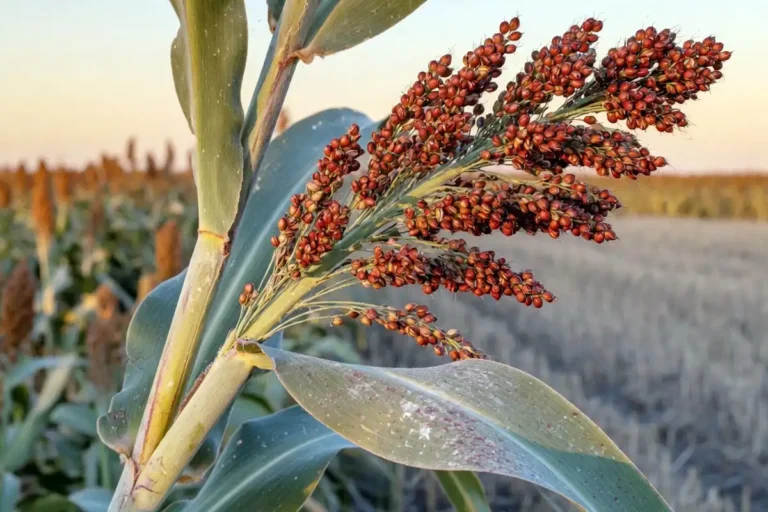
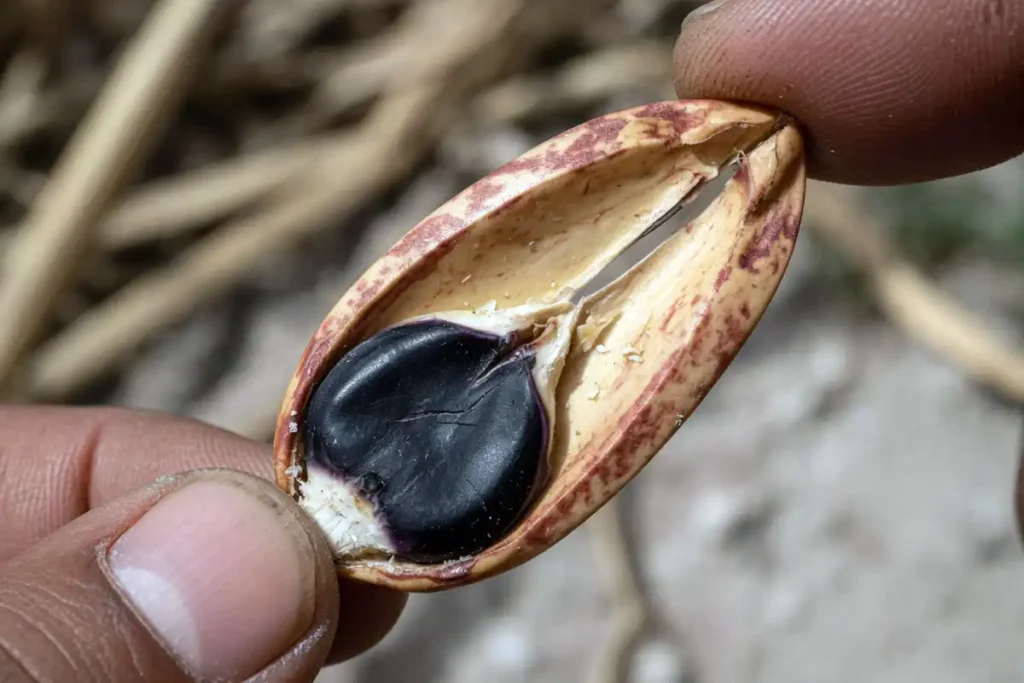
The black layer at the base of the kernel is the field sign that grain fill is finished. After that, the crop only loses moisture, not yield.
Days to Maturity by Sorghum Type
Sorghum is not one crop. Each type has its own timeline.
- Grain sorghum (milo): 90 to 120 days to harvest.
- Forage sorghum: 60 to 90 days to first cut, often taken at soft dough for silage.
- Sweet sorghum: 110 to 130 days, harvested for syrup at late dough.
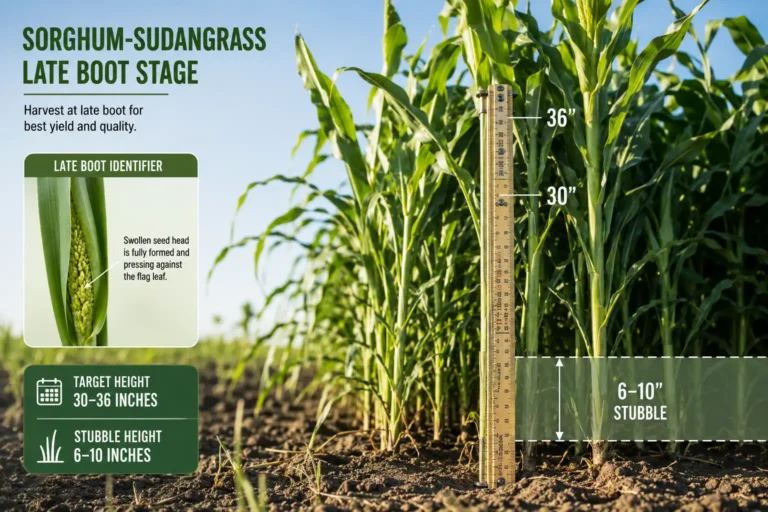
- Sorghum-sudangrass: 45 to 60 days to first cut, with regrowth every 30 to 40 days.
If you grow these for livestock, this guide on cutting sudan grass for hay covers the timing in detail.
When to Plant Sorghum for an On-Time Harvest
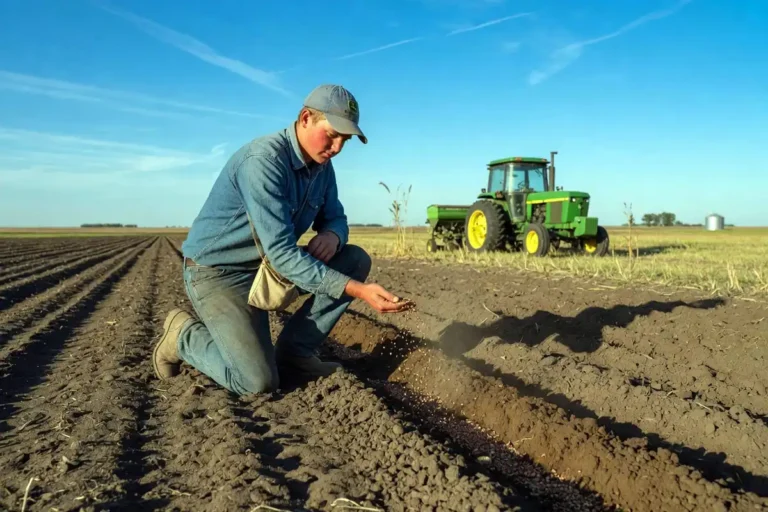
Plant when soil reaches 60 to 65°F at the 2-inch depth, and night air stays above 50°F. In Kansas, that lands between May 15 and June 10. Texas growers go in March and April. North Dakota plants in late May. The right time to plant shifts the whole calendar by 4 to 6 weeks across regions.
Late planting after July 1 risks frost before black layer in northern fields. Early planting into 55°F soil slows emergence and invites seedling disease.
How Region and Weather Shape the Growing Time
Southern Plains (Texas, Oklahoma, Georgia) finish grain sorghum in 90 to 100 days because heat units pile up faster.
Central Plains (Kansas, Nebraska, Missouri) average 100 to 115 days.
Northern fringe (South Dakota, Minnesota) need early hybrids and 110 to 120 days. A cool July adds a week. A dry August during grain fill shortens the head but rarely speeds black layer.
How to Keep Sorghum on Schedule
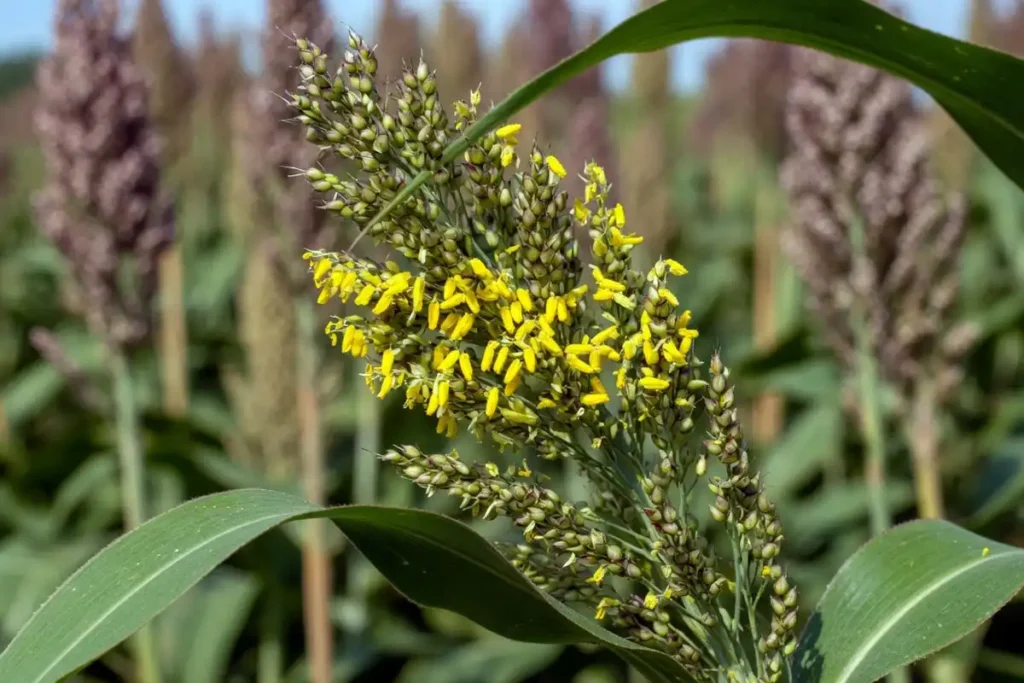
A few habits keep the crop on track for a 100 to 110 day finish:
- Wait for 65°F soil before planting sorghum seed.
- Apply nitrogen at 1 to 1.2 pounds per bushel of yield goal.
- Control weeds in the first 30 days. Sorghum competes poorly when small.
- Scout for sugarcane aphid weekly from boot through soft dough.
- Hold soil moisture from boot through flowering. This window sets kernel count.
Half-bloom is the most water-sensitive stage. Stress here costs more yield than any other point. For a wider look at fertility and irrigation, this guide on growing sorghum covers the full cycle.
Problems That Delay Sorghum Maturity
Cool soil at planting pushes emergence from 7 days to 14 or more.
Drought at boot and flowering shrinks the head and adds 5 to 10 days to maturity.
Sugarcane aphid feeding during grain fill stalls black layer and stains the panicle with honeydew.
Iron chlorosis on high-pH soils yellows leaves and slows growth in the first 4 weeks.
Hail or wind that snaps stalks before boot triggers tillering, which extends the harvest window by 2 to 3 weeks.
Mistakes That Stretch the Timeline
- Planting into cold soil. Wait the extra week. You will not gain it back.
- Choosing a 115-day hybrid in a 100-day frost zone. Match maturity to local frost dates.
- Skipping a soil test. Low phosphorus delays heading by days.
- Over-seeding. Thick stands compete with each other and finish unevenly.
Safety Notes for Sorghum Growers
Young sorghum, sudangrass, and frosted forage carry prussic acid (hydrogen cyanide). Do not graze stands under 18 to 24 inches. Wait at least 7 days after a killing frost before grazing or green-chopping. Test ensiled forage if drought stress was heavy. <a href=”https://extension.okstate.edu/”>Oklahoma State University Extension</a> has clear guidance on prussic acid testing for livestock producers.
Always wear eye protection when running a combine through dry sorghum. The dust is fine and settles fast.
How Tall Sorghum Gets and What It Tells You
Height tracks maturity. Most grain hybrids reach 4 to 5 feet by boot stage. Forage types push 8 to 12 feet at soft dough. For expected height by type, see how tall sorghum gets.
FAQs
How long does sorghum take to germinate?
Can sorghum grow in 90 days?
How long after planting does sorghum head out?
When is sorghum ready to harvest?
Does sorghum grow back after cutting?
Conclusion
Sorghum is a heat-driven crop with a clear calendar. Plant into warm soil, match the hybrid to your frost date, and the field will run from emergence to black layer in 90 to 120 days. Watch the boot-to-flower window, scout for aphids, and the timeline holds. Do those few things well, and the crop almost runs itself.