How Is Rice Harvested? A Farmer’s Guide From Paddy to Grain Bin
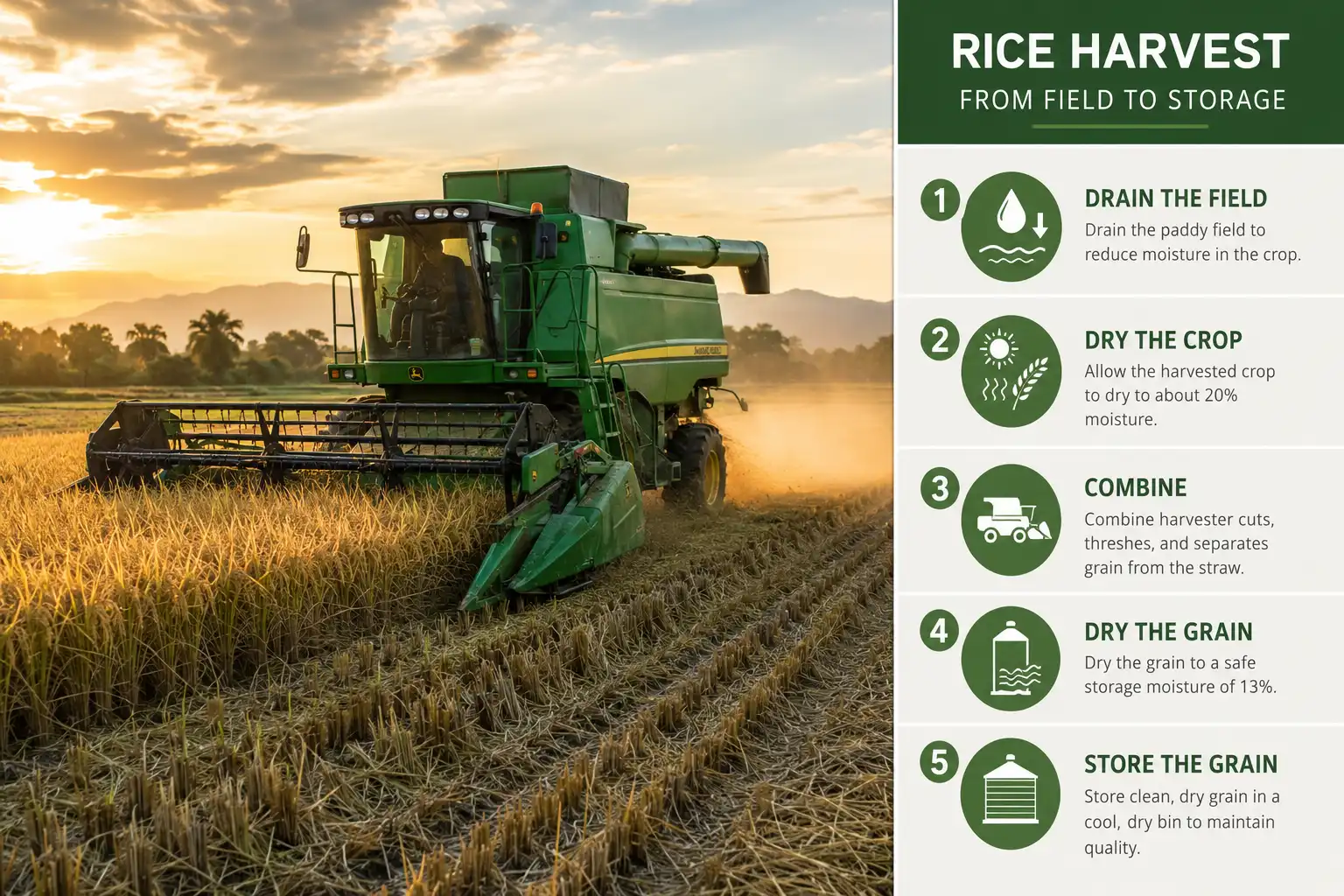
Rice harvest looks nothing like combining wheat or beans on dry ground. So how is rice harvested, from a flooded paddy to a full grain bin? It comes down to timing, moisture, and a machine set up for soft fields.
Rice is harvested with a combine once grain moisture drops to about 20%. Growers drain the flooded field first, let the crop dry down, then the combine cuts, threshes, and cleans the grain in one pass.
When Is Rice Ready to Harvest?
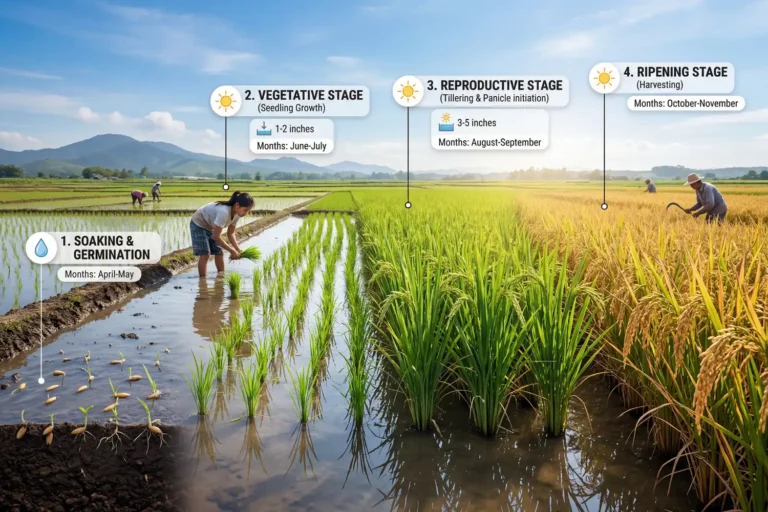
Rice is ready when about 80 to 85% of the grains on the panicle turn straw colored. At that point, moisture sits near 20%. That window usually lands 28 to 40 days after the field hits 50% heading.
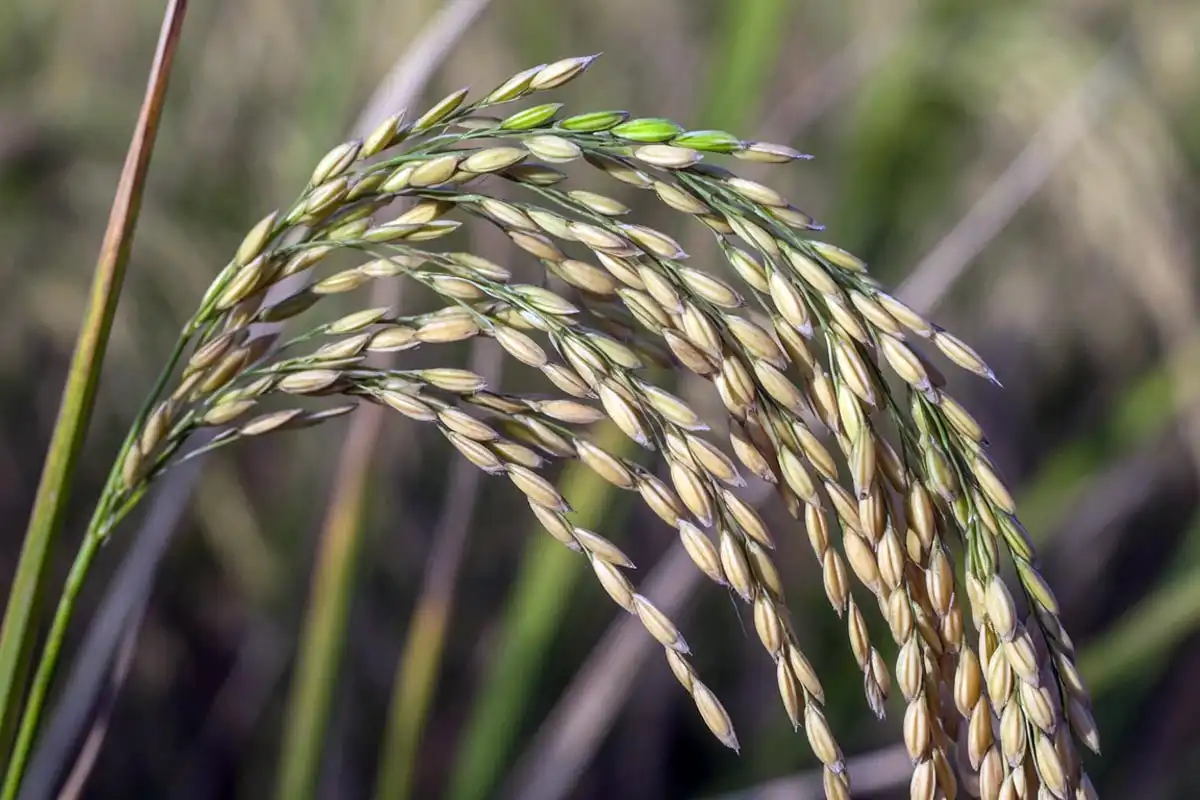
Long-grain types tend to reach it a few days ahead of medium grains. In the South, that often means late August into September. Exactly how long rice takes to mature shifts with heat and planting date. So it helps to use grain checks over the calendar. For the full season timeline, see the basics of growing a rice crop.
Watch the panicle, not just the days. The upper grains ripen first, while the bottom of the head lags. Once the top is hard and the lower grains firm to a hard dough, you are close.
What Moisture Should Rice Be at Harvest?
Aim to cut rice at roughly 20% grain moisture. Research from the University of Arkansas puts the sweet spot near 19 to 21% for long grain. Medium grain runs a bit higher, around 22 to 24%. That whole range protects head rice yield, the share of unbroken kernels after milling.
Moisture drives your paycheck here. Cut too wet, above about 22%, and you get green kernels plus a bigger drying bill. Let it dry too far, below 15%, and the kernels fissure and crack, so head rice yield drops. A rain or heavy dew on low-moisture grain makes that cracking worse.
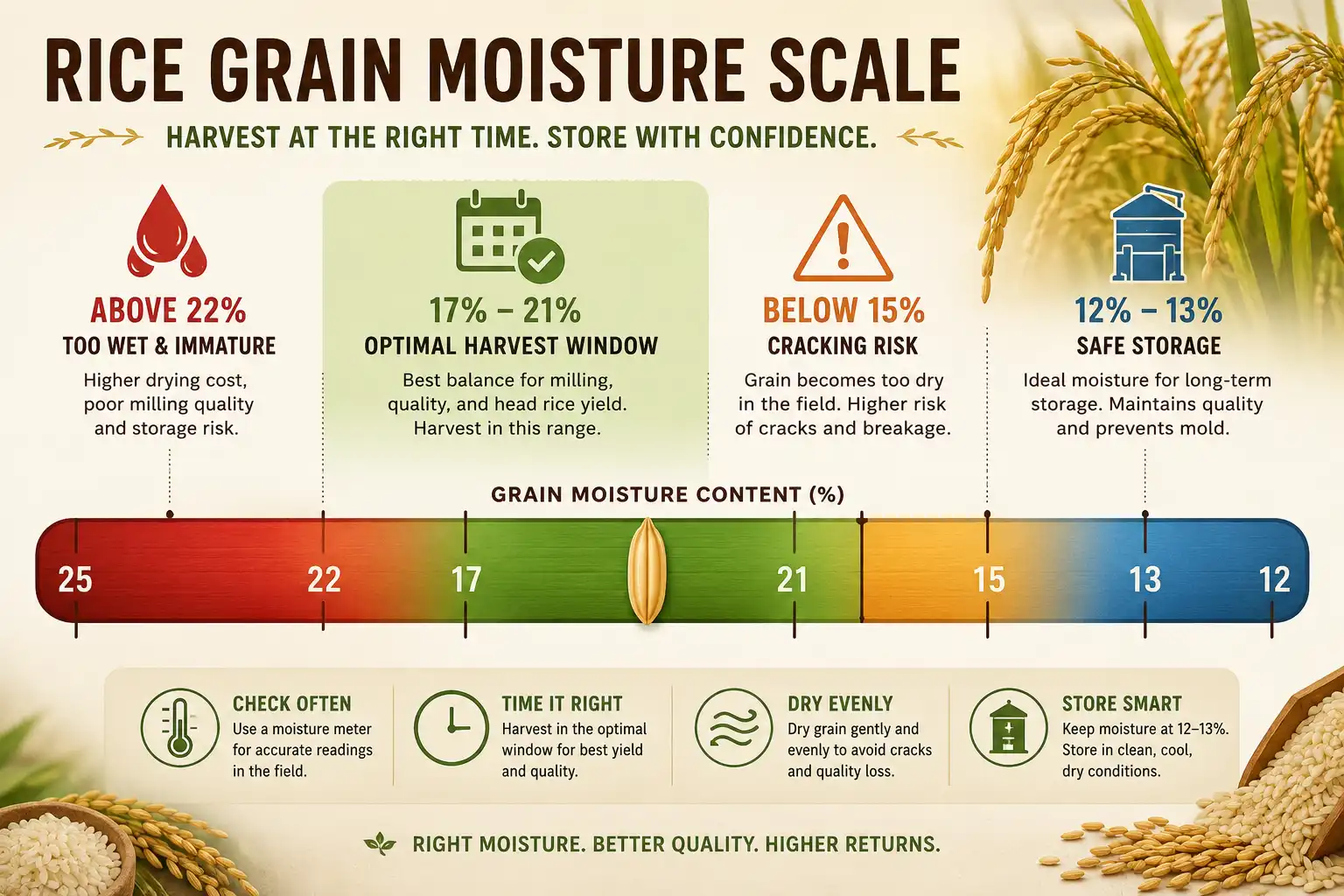
Check the crop, not your gut. Pull samples and read them with a reliable grain moisture tester every day as harvest nears. For paddy-specific steps, here is how moisture gets checked in the paddy. In hot weather, moisture can fall a full point per day, so daily reads matter.
Do You Drain the Field Before Harvesting Rice?
Yes. You drain the paddy well before the combine rolls, so the ground firms up and the grain can finish drying. Standing water and a heavy combine simply do not mix.
Timing the drain is its own call. The common Arkansas guideline is 25 days after 50% heading for long grain, and 30 days for medium grain. Soil type matters too. On loam, many growers drain when about two-thirds of the panicles turn straw colored. Heavy clay calls for closer to one-third or one-half. Drain too early and you risk yield and quality. Drain too late and you fight muddy ruts and stuck equipment. It also helps to know why the paddy stays flooded all season before you pull the water.
How Is Rice Harvested by Machine?
Most rice is harvested with a combine that cuts, threshes, separates, and cleans in a single pass. The same machine that runs corn or beans handles rice. It usually wears tracks or dual flotation tires, since paddy ground stays soft.
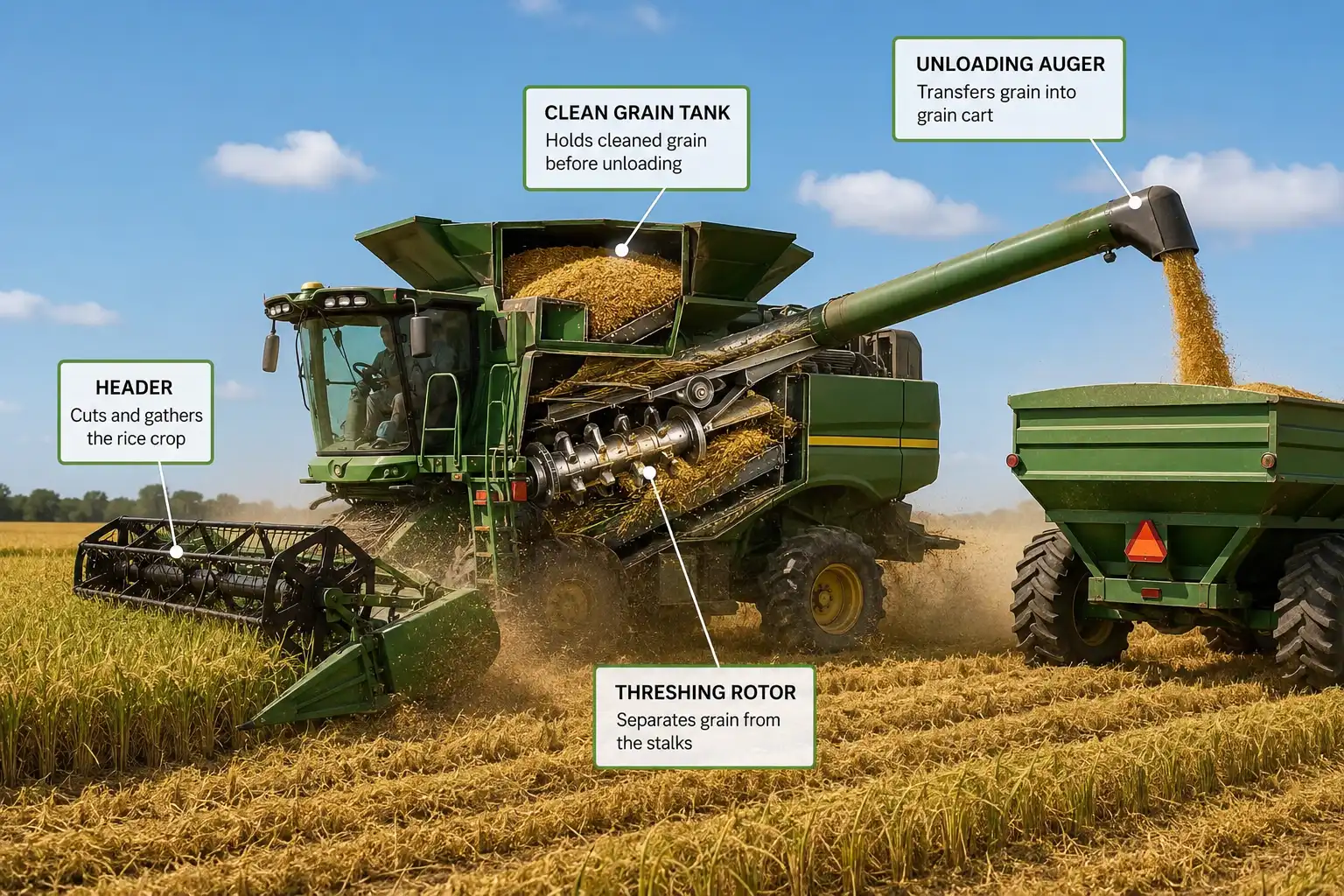
Here is the flow, front to back:
- The header cuts the standing stalks low and feeds them in.
- The threshing rotor knocks the grain loose from the panicle.
- Straw and chaff separate out and drop back onto the field.
- Clean rough rice falls through the sieves as the fan blows off the light trash.
- Grain augers up into the tank, then unloads on the go into a cart or truck.
Run the combine after surface moisture burns off. Wet leaves and dew slow threshing and hurt grain quality. Ground speed should also be kept steady. Pushing too fast in soft spots leaves grain behind or bogs the machine.
Can You Still Harvest Rice by Hand?
Yes, and much of the world’s rice still comes off by hand. On small plots, workers cut the stalks low with a sickle and bundle them. Then they thresh the grain by beating the bundles against a rack or feeding a pedal thresher. After that, they winnow the grain to blow off the chaff.
Hand harvest costs more labor and time, and losses climb if the timing slips. Still, it works well where fields are small or too wet for machines. Groups like the IRRI document these methods for smallholders across Asia and Africa.
What Happens to Rice After It Is Harvested?
Right after harvest, the rough rice, also called paddy, still holds around 18 to 22% moisture. So you have to dry it fast. You bring it down to about 12 to 13% for safe storage. Wet grain heats, molds, and can grow aflatoxin, which is a serious health hazard.
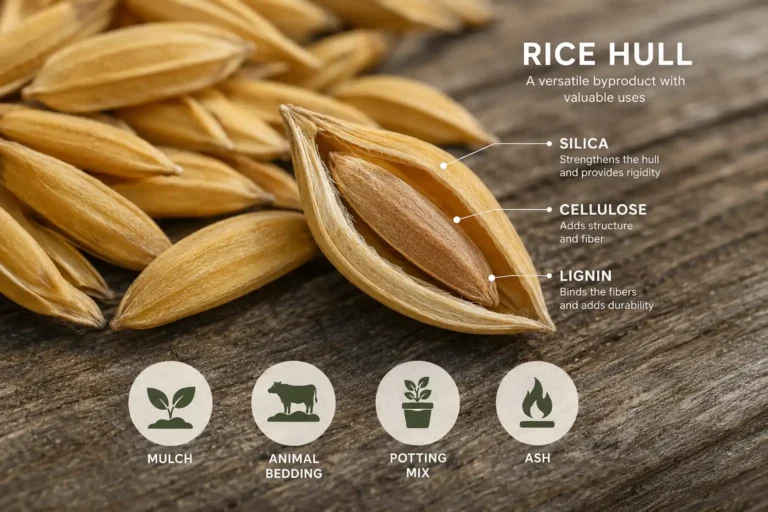
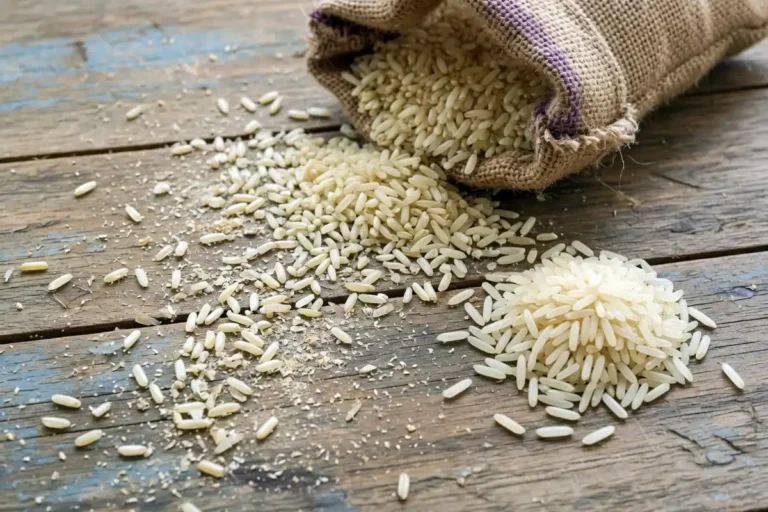
Most US operations dry rice with in-bin fans that push natural or slightly warmed air. Bigger volumes go through column dryers. Once it is dry, handling grain properly after harvest keeps quality high in the bin. From there, milling removes the hull to make brown rice, then strips the bran layer for white rice.
Common Rice Harvest Mistakes to Avoid
The biggest harvest losses come from moisture and timing, not the machine itself. Watch for these:
- Cutting too wet: more immature kernels and a higher drying cost.
- Letting it dry below 15%: cracked kernels and lower milling yield.
- Rewetting from rain or dew on dry grain: fissures and breakage.
- Draining too late: muddy ruts, stuck combines, and lodged rice.
- Waiting too long: birds, rats, and stink bugs take their share.
A quick word on yield. US fields commonly run 7,000 to 8,500 pounds of rough rice per acre. A bushel of rough rice weighs 45 pounds. Clean, whole grain at the right moisture is what pays, so protect quality first.
Bottom Lines on Rice Harvest Process
Still, run a combine and pull moisture readings every fall on corn, beans, and wheat. Rice rewards the same discipline. Drain on time, watch the panicle, cut near 20% moisture, then dry it down quick. Get that right and the bin fills with sound, whole kernels.