How Is Brown Sugar Made From Sugarcane: From Cane to Crystal
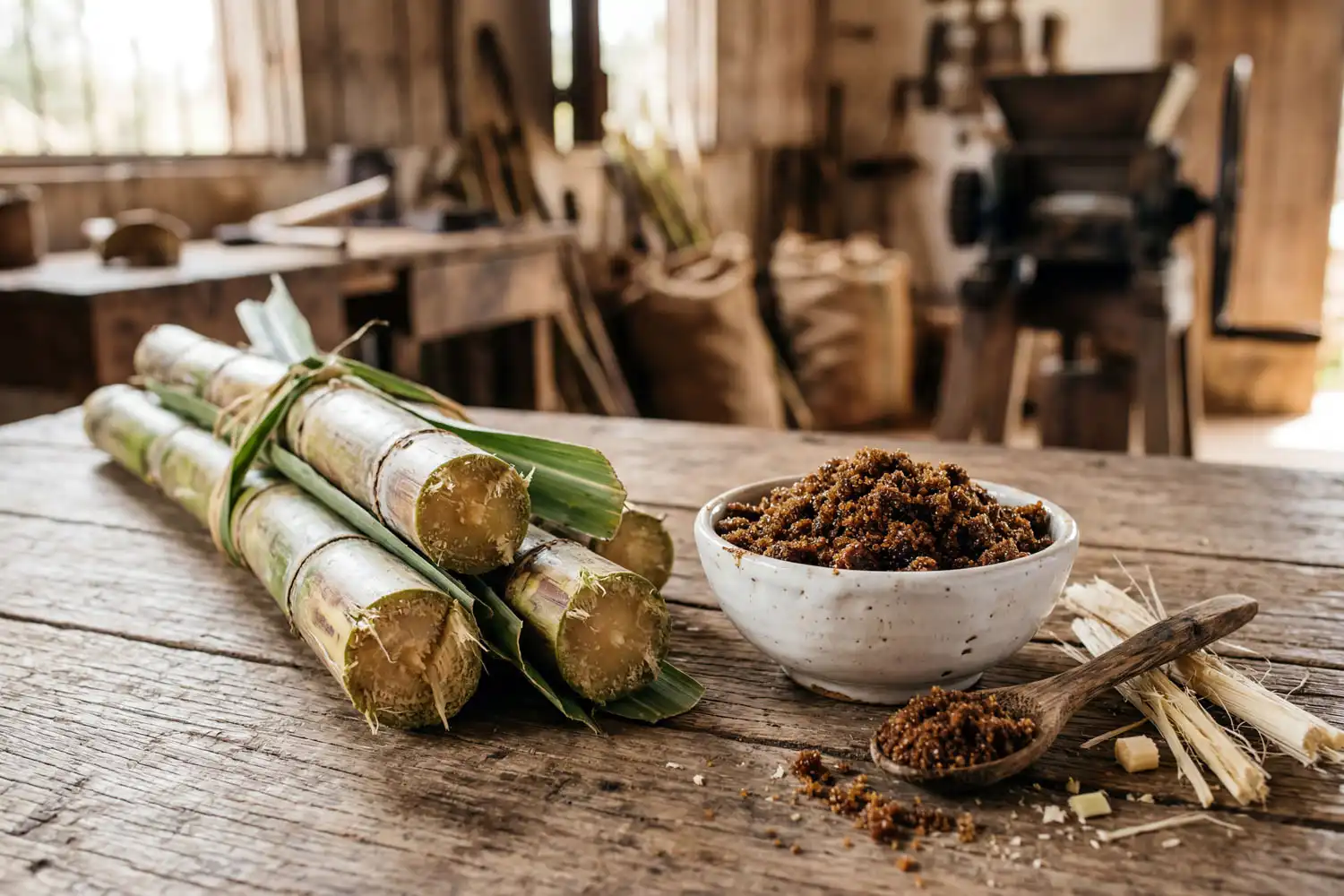
Brown sugar starts in a sugarcane field, not a factory. The dark color and soft texture come from molasses, which is either left in during the first boil or added back to refined sugar. Here is how brown sugar is made from sugarcane, step by step.
Brown sugar is made by crushing sugarcane, extracting the juice, clarifying it, boiling it down, and crystallizing it with molasses still coating the crystals. Commercial producers refine white sugar first, then blend cane molasses back in to set color and flavor.
What Brown Sugar Really Is
Brown sugar is sucrose crystals coated in molasses. The molasses sets the color, holds moisture, and carries the deeper caramel flavor. Two production paths reach the same shelf product. One keeps molasses from start to finish. The other strips it out and adds it back.
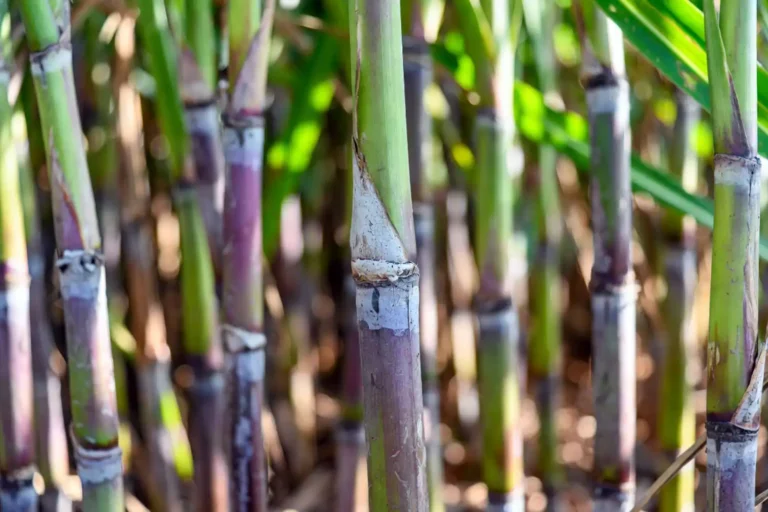
The sugarcane crop, botanically Saccharum officinarum, stores sucrose in its tall jointed stalks. One acre of mature cane in Louisiana or Florida produces several tons of raw juice each season. Brown sugar is one of many finished products pulled from that juice.
How Brown Sugar Is Made From Sugarcane
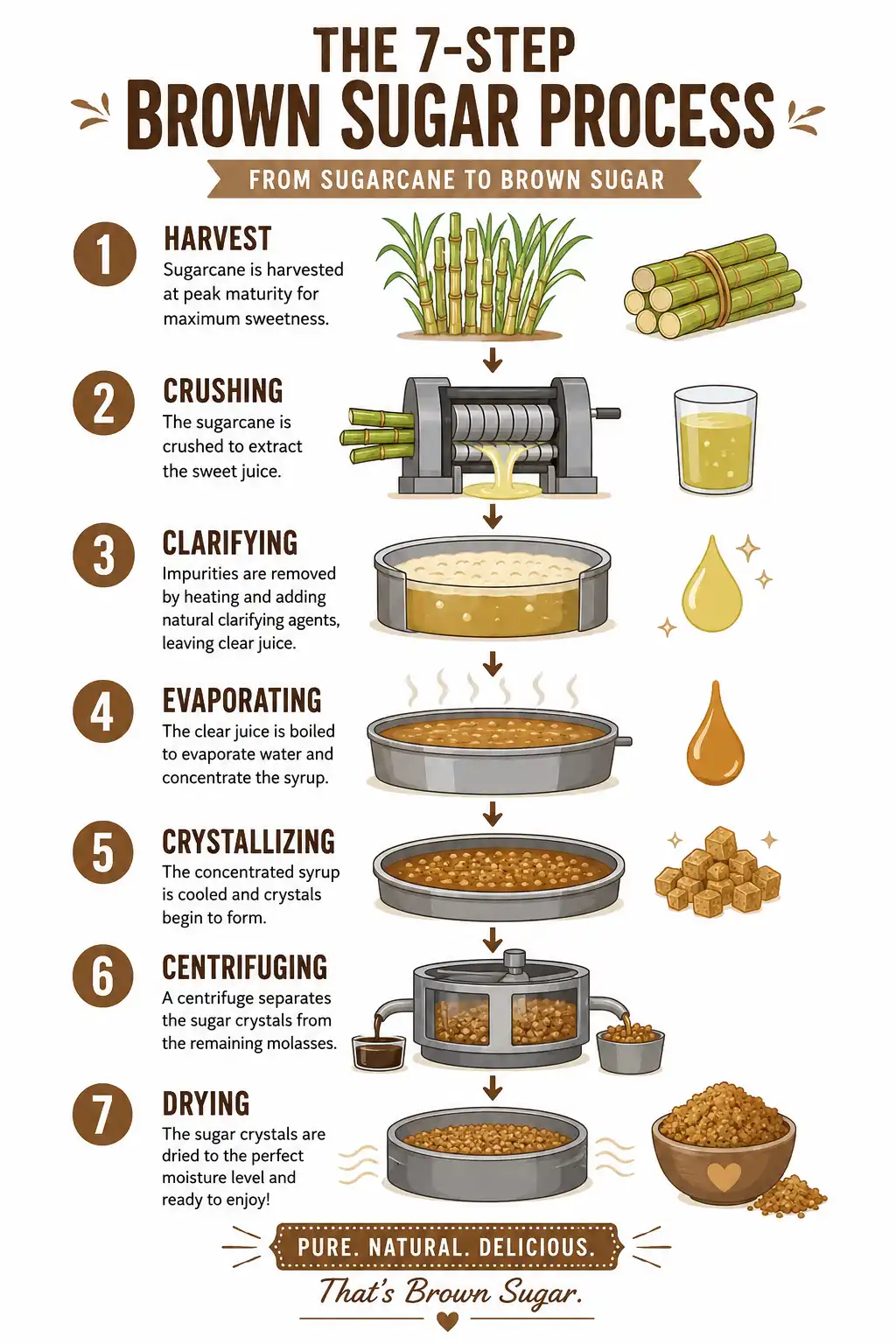
Brown sugar is made from sugarcane through harvest, juice extraction, clarification, evaporation, crystallization, centrifuging, and either retaining or reintroducing molasses. Every step shapes the color, taste, and grain size of the finished sugar.
Step 1: Harvesting Mature Cane
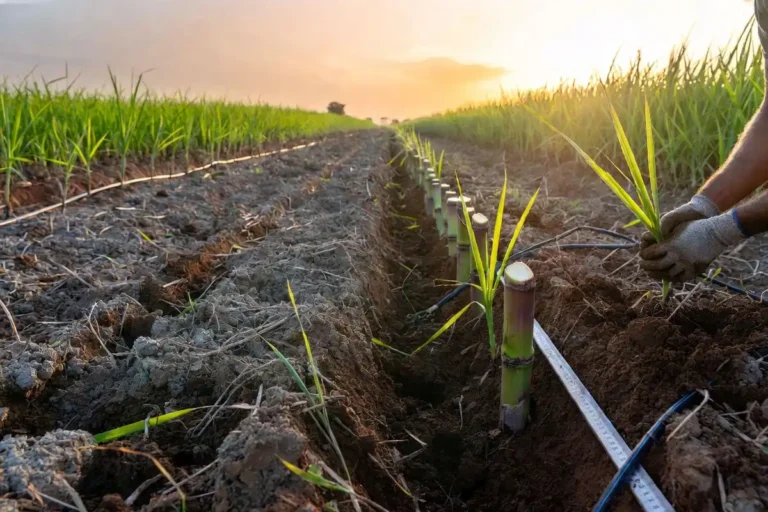
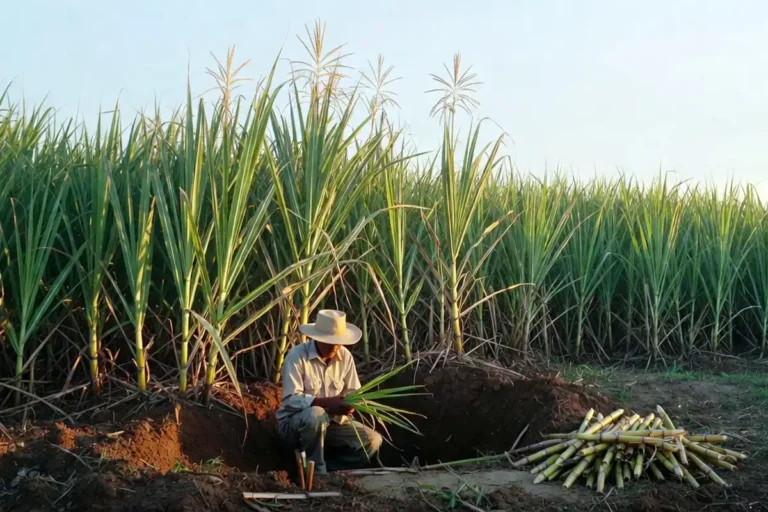
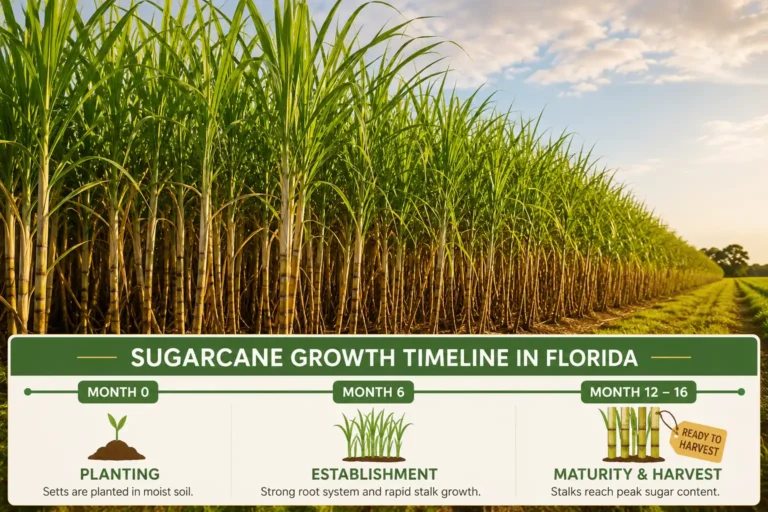
Cane is cut when sucrose content peaks, usually 10 to 14 months after planting. In the United States, that window falls between October and March across the Gulf states. Field crews test stalks with a refractometer for Brix readings before harvest begins. Crews use mechanical harvesters that cut, chop, and load in one pass. For a closer look at field readiness, see our guide on when sugarcane is ready for cutting.
Step 2: Crushing and Juice Extraction
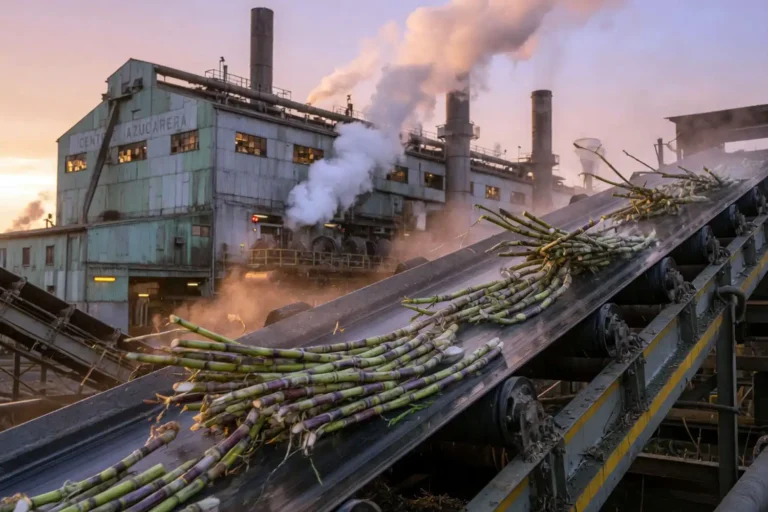
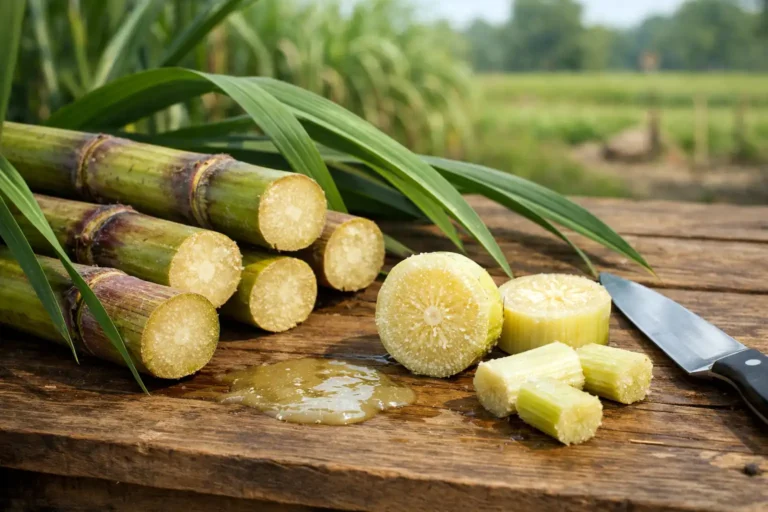
Cut stalks move to the mill within 24 hours. Any delay drops sugar yield because enzymes break down sucrose fast after cutting. Mills use heavy roller sets to crush the cane and squeeze juice from the stalks. The fibrous leftover, called bagasse, is burned as boiler fuel to power the entire mill.
One ton of cane yields roughly 200 to 240 pounds of finished sugar after full processing.
Step 3: Clarifying the Juice
Raw cane juice is dark green and full of plant solids, wax, and field dirt. Producers add lime, then heat the juice to around 200°F. Impurities clump and settle to the bottom. Clean juice on top moves forward. The settled mud returns to fields as fertilizer.
This step protects flavor. Skipping it leaves grassy off-notes in the finished sugar.
Step 4: Evaporating Water
Clarified juice is about 85 percent water. Multi-effect evaporators boil the juice under vacuum so it never scorches. Water leaves as steam. What stays behind is a thick brown syrup at roughly 65 percent solids. This syrup is the foundation of every cane sugar product, including brown sugar.
Step 5: Crystallization
Syrup enters a vacuum pan and boils further. Operators seed it with tiny sugar crystals to start crystal growth. As more water leaves, the crystals grow inside the pan. The mixture of crystals and remaining molasses is called massecuite.
This is where brown sugar splits from white. For natural brown sugar, the molasses stays in the pan. For refined white sugar, the molasses gets washed off in the next step.
Step 6: Centrifuging
The massecuite spins in a high-speed centrifuge. Centrifugal force pulls molasses away from the crystals through a fine screen. For traditional brown sugar, the spin is short, leaving a coating of molasses on each crystal. For white sugar, the spin is long and includes a water wash that strips the molasses fully.
The molasses pulled off here is either sold as blackstrap or saved for blending into commercial brown sugar later.
Step 7: Drying and Packaging
Wet crystals dry in a rotary dryer, pass through size screens, and move to packaging. Natural brown sugar holds 6 to 10 percent molasses by weight. Light brown sugar runs closer to 3.5 percent. Dark brown sugar can reach 6.5 percent or higher.
Natural Brown Sugar vs Commercial Brown Sugar
Two production methods both finish as brown sugar, but the path changes the product. Natural brown sugar is made in a single boil and keeps the original cane molasses. Commercial brown sugar is fully refined white sugar with molasses sprayed back on at the end.
Natural brown sugar carries the cane’s original mineral profile, including small amounts of iron, calcium, and potassium. Commercial brown sugar has a more uniform color and longer shelf life but loses most trace minerals during refining.
Names like muscovado, demerara, and turbinado fall on the natural side. Muscovado is the darkest and stickiest, with the highest molasses load. Demerara has large amber crystals. Turbinado is a partially refined raw cane sugar with a light tan color.
Light Brown Sugar vs Dark Brown Sugar
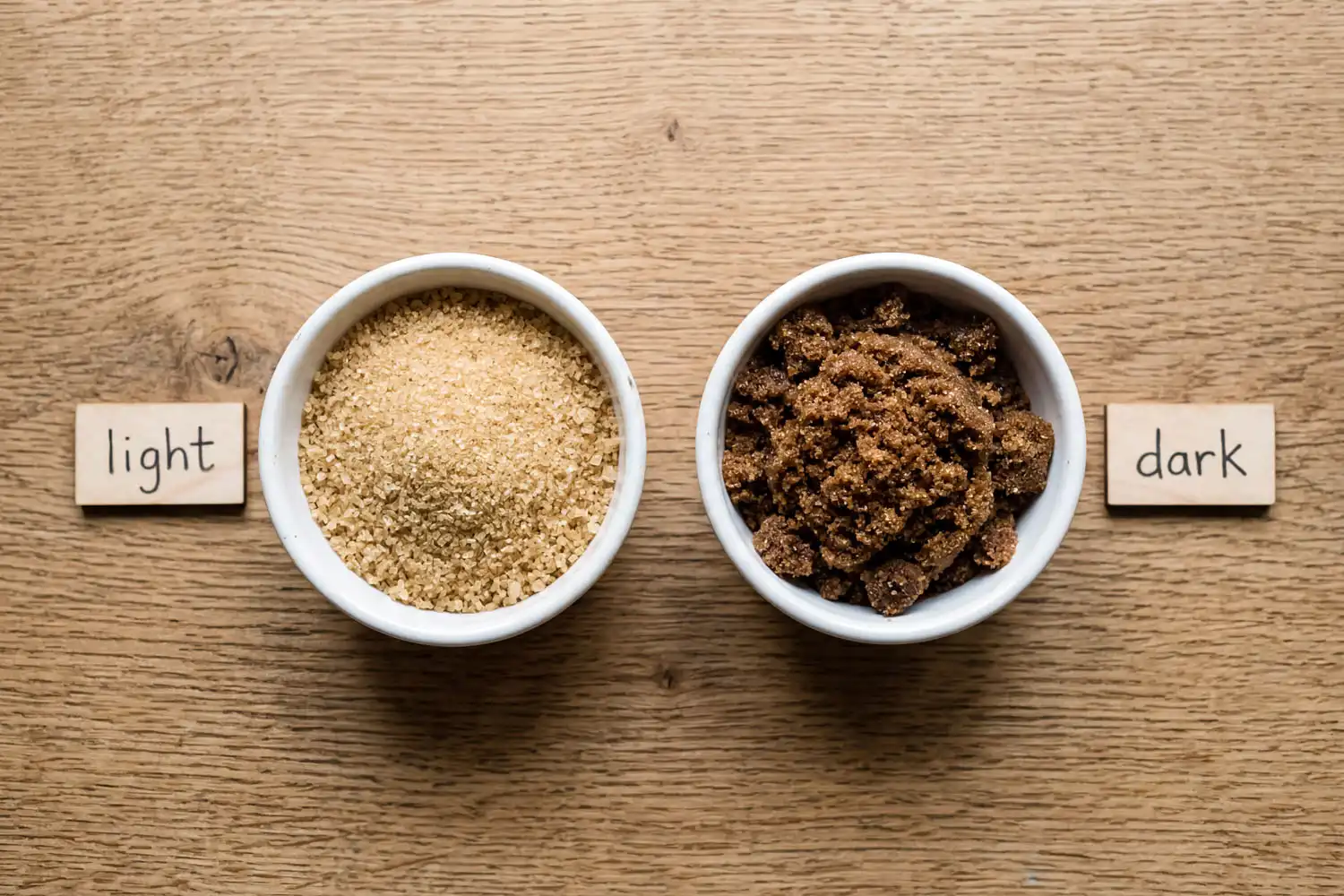
The difference between light and dark brown sugar is the molasses level. Light brown sugar carries about 3.5 percent molasses. Dark brown sugar carries 6.5 percent or higher. Dark holds more moisture, a richer flavor, and a stronger caramel finish.
For baking, light brown sugar suits cookies and cakes where balanced sweetness matters. Dark brown sugar works better in barbecue rubs, gingerbread, baked beans, and recipes built around deep flavor.
Why Brown Sugar Is Brown
Brown sugar is brown because of molasses. Molasses carries caramelized compounds, minerals, and Maillard reaction products formed during boiling. These dark compounds coat each white sucrose crystal and shift the color from clear white to amber, tan, or deep brown.
Strip the molasses and you have plain white sugar. Add it back and the brown returns.
Quality Factors That Shape the Final Product
Several variables decide how good the brown sugar turns out. Cane variety changes the juice’s sugar content and mineral mix. Soil and weather during the growing season affect Brix readings at harvest. Time between cutting and milling controls sucrose loss. Boiling temperature and duration set crystal size. Molasses retention level fixes color and moisture.
Water management matters too. Cane grown under steady moisture, covered in these notes on irrigation timing for cane fields, produces juice with steadier sugar content from year to year. Healthy cane also resists pre-harvest stalk rot, which protects sucrose levels right up to cutting day. You can find more on full-season practice in the piece on growing sugarcane properly.
Producers in Louisiana and Florida follow USDA and FDA labeling standards before brown sugar reaches retail shelves. The USDA Economic Research Service publishes yearly data on US cane and beet sugar output for anyone tracking the market.
Sugarcane vs Sugar Beet Brown Sugar
Brown sugar from sugarcane is the traditional product and the one most consumers expect. Sugar beets can also be processed into brown sugar, but raw beet molasses has a harsh flavor, so beet-based brown sugar is almost always refined white beet sugar with cane molasses added back. This is broken down further in this comparison of sugar beets and cane.
Bottom Line
The climate is wrong for it. But the principle of turning raw plant juice into a finished sweetener is close in spirit to what we do with sorghum syrup out here on the Great Plains. Boil, skim, crystallize, control the moisture, and you have a real product.
If you want to truly understand brown sugar, watch a cane mill running in south Louisiana during grinding season. The smell of boiling cane juice tells you exactly where that bag of brown sugar in your pantry started.