Can You Plant Marigolds With Tomatoes? 4 Key Facts Every Grower Needs
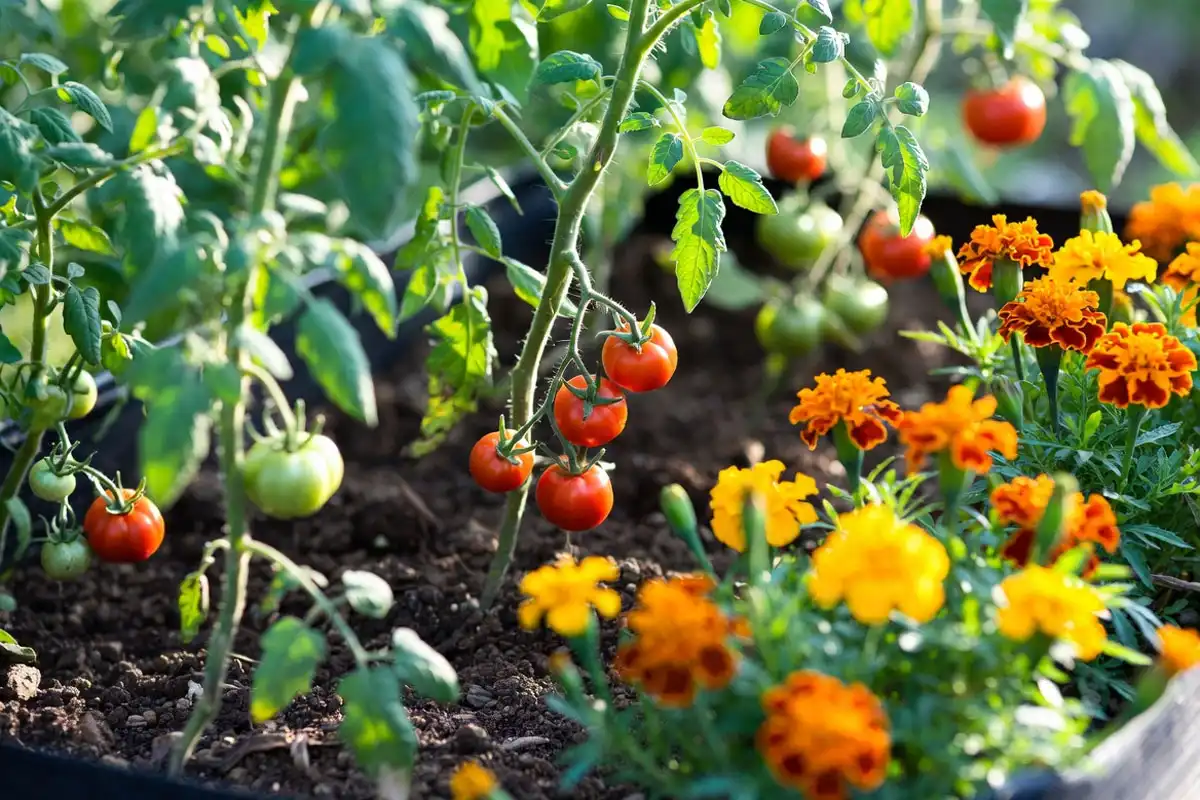
You can plant marigolds with tomatoes, and they grow well together while providing real pest-control benefits when positioned correctly. Farmers and home growers have used this pairing for decades to reduce root-knot nematode pressure and deter aphids without chemical sprays. This guide covers which marigold varieties to choose, where to place them in your bed, when to plant each one, and what spacing and care decisions produce the strongest results through harvest.
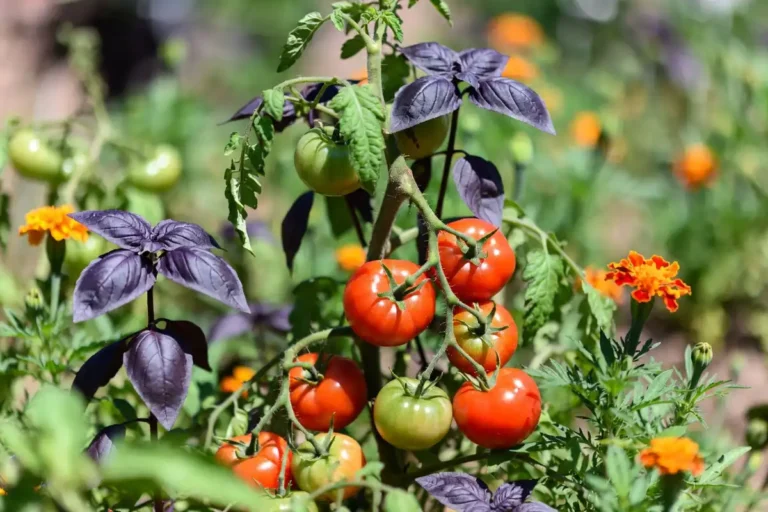
To plant marigolds with tomatoes, choose French marigolds (Tagetes patula) because they work best, and their roots release compounds that suppress soil nematodes. Plant them 12 to 18 inches from tomato stems, at the bed border and between rows. Start marigolds at the same time as your tomatoes so both crops establish together and root-zone protection develops early in the season.
Why Do Farmers Plant Marigolds Next to Tomatoes?
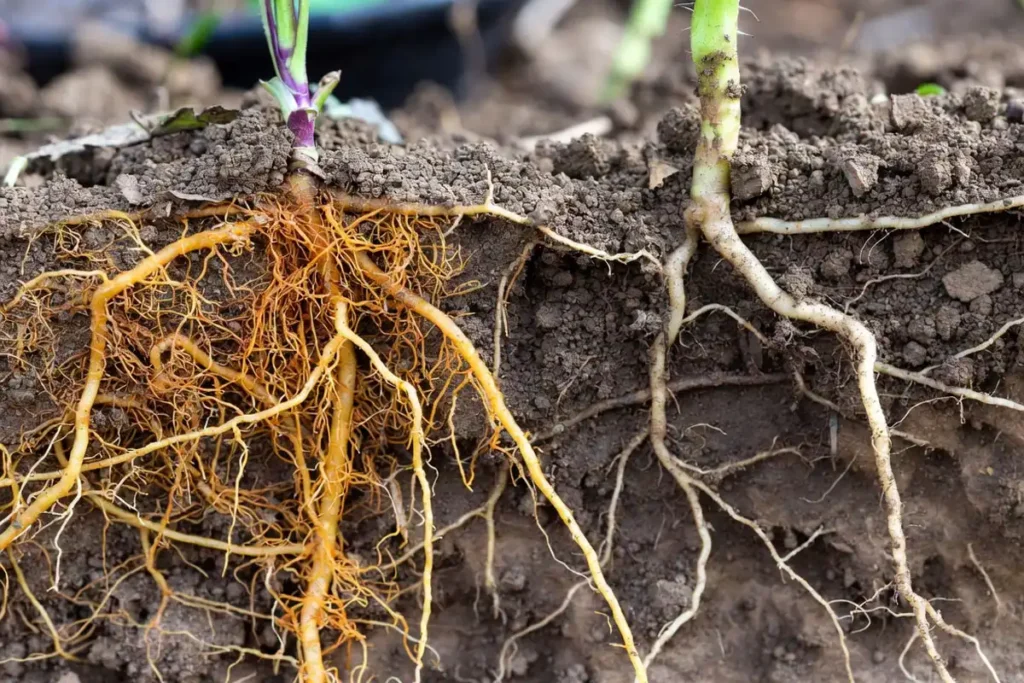
Marigolds serve three functions in a tomato bed: nematode suppression, aphid deterrence, and pollinator attraction.
French marigolds (Tagetes patula) produce a root compound called alpha-terthienyl. This compound is toxic to root-knot nematodes (Meloidogyne spp.) in the surrounding soil. Root-knot nematodes reduce tomato yield by attacking the root system and blocking nutrient uptake.
Above ground, the marigold scent deters aphids and whiteflies from settling on nearby tomato foliage. The open flowers also attract hoverflies and parasitic wasps, which feed on or parasitize common tomato pests.
This combination of below-ground and above-ground effects makes marigolds one of the most practical natural pest control options available to tomato growers.
Which Marigold Varieties Work Best With Tomatoes?
Three marigold species grow well alongside tomatoes, but each offers different benefits.
French marigolds (Tagetes patula) provide the strongest nematode suppression. Their roots release the highest concentration of alpha-terthienyl compared to other species. Plants grow 6 to 12 inches tall and fit easily between tomato rows without shading the crop.
African marigolds (Tagetes erecta) grow up to 36 inches tall and attract pollinators effectively. Their nematode control is weaker than French marigolds. In a small bed, the height competes with tomato canopy for light.
Signet marigolds (Tagetes tenuifolia) stay compact and work between rows, but their pest-deterrent effect is mild compared to French marigolds.
For most tomato growers, French marigolds deliver the best combination of size, suppression, and bed fit.
Read more: Water Tomatoes Correctly: Amount, Timing, and Method
When Should You Plant Marigolds With Tomatoes?
Plant marigolds at the same time you transplant tomatoes into the field or bed.
Both plants use the same soil temperature range. Tomatoes go in when soil reaches at least 60°F (16°C). Marigolds establish well at the same temperature.
Starting both together ensures marigolds develop root mass during the same window when nematode pressure builds in the soil. Marigolds planted 4 to 6 weeks after tomatoes are already established provide weaker root-zone protection.
If you start from seed indoors, begin marigold seeds 6 to 8 weeks before your last frost date, the same schedule as tomatoes. This puts both transplants at a comparable size on planting day.
For a full schedule by crop stage, the tomato transplanting guide covers timing decisions from seedling to field.
Where to Position Marigolds in the Tomato Bed
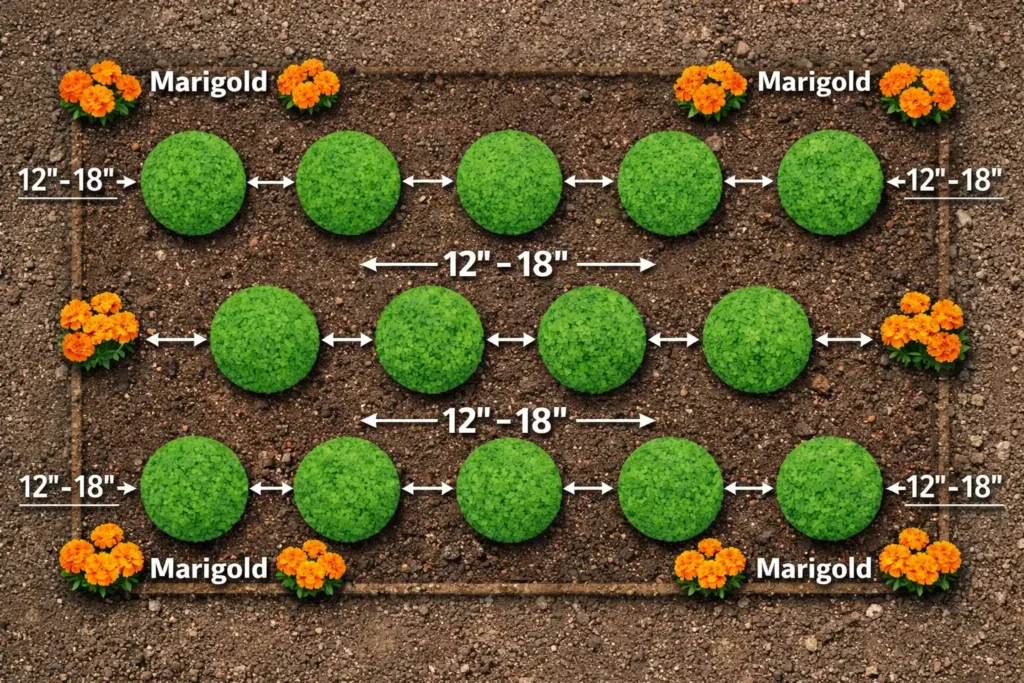
Place marigolds at the row border and between tomato plants, not clustered in one corner.
A border row of French marigolds around the perimeter of the tomato bed creates a nematode barrier in the outer soil zone. Space border plants 6 to 8 inches apart for dense root coverage.
Between rows, plant one marigold between every two tomato plants. This spacing supports root-zone coverage across the full bed without crowding the tomatoes.
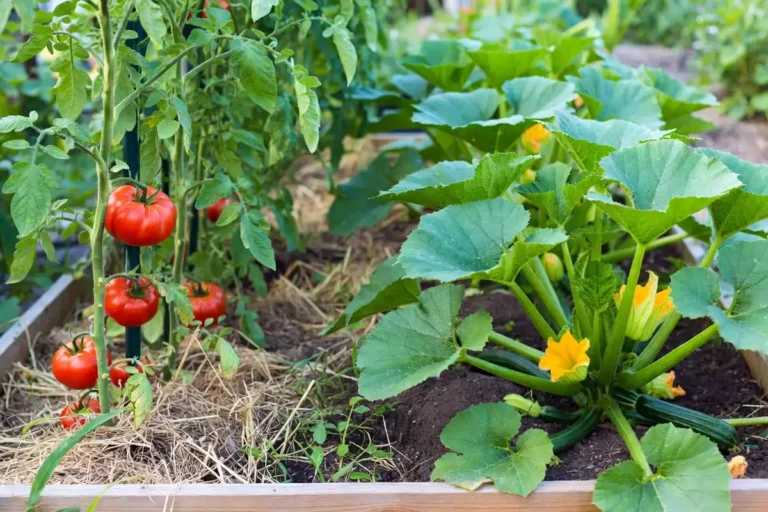
Raised bed growers place one marigold at each corner and one between each tomato plant along the sides. More ideas on what to grow alongside tomatoes in confined spaces are covered in companion planting for raised beds.
Avoid placing marigolds directly under a dense tomato canopy. Poor airflow in shaded spots increases fungal disease risk on both plants.
How to Plant Marigolds With Tomatoes
Follow these steps in order. The sequence matters for root establishment.
1. Prepare the bed before planting both crops. Loosen soil to 8 inches deep and incorporate compost if the soil is low in organic matter.
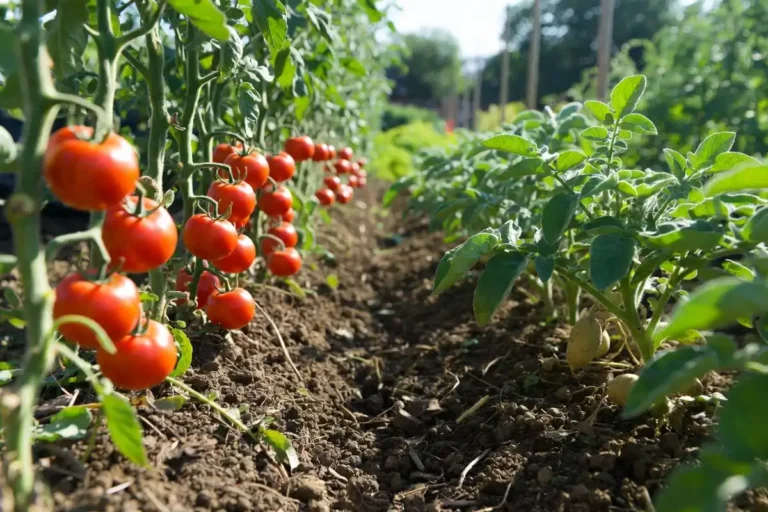
2. Transplant tomatoes at their standard spacing. Determinate varieties need 18 to 24 inches between plants. Indeterminate varieties need 24 to 36 inches. For spacing decisions by crop type, the plant spacing guide covers specific measurements.
3. Mark marigold positions before digging. Place markers at border spots and between-row positions so spacing stays consistent.
4. Dig marigold holes 4 to 6 inches deep at each marked position.
5. Set marigold transplants at the same depth they grew in the container. Planting too deep buries the stem and invites rot.
6. Water both crops together after planting. This settles roots and reduces transplant stress on both plants.
7. Apply 2 to 3 inches of mulch around all plants. Mulch retains moisture, moderates soil temperature, and reduces weed competition between rows.
Do Marigolds Actually Repel Tomato Pests?
Marigolds reduce certain pest populations. They do not eliminate pests entirely.
Root-knot nematode suppression is the most documented benefit. Research shows that dense plantings of French marigolds decrease nematode populations in the surrounding root zone. The effect is strongest when marigolds grow for a full season alongside the tomato crop, not when planted late as a follow-up measure.
Above ground, the marigold scent reduces aphid and whitefly landing rates on nearby foliage. This effect is strongest within 18 inches of the marigold plants. Rows of tomatoes farther from marigolds receive less protection.
Marigolds do not control tomato hornworms, early blight, or bacterial wilt. Those issues require separate management steps. A broader overview of companion plants that deter tomato pests covers additional options that work alongside marigolds.
Common Mistakes When Pairing Marigolds With Tomatoes
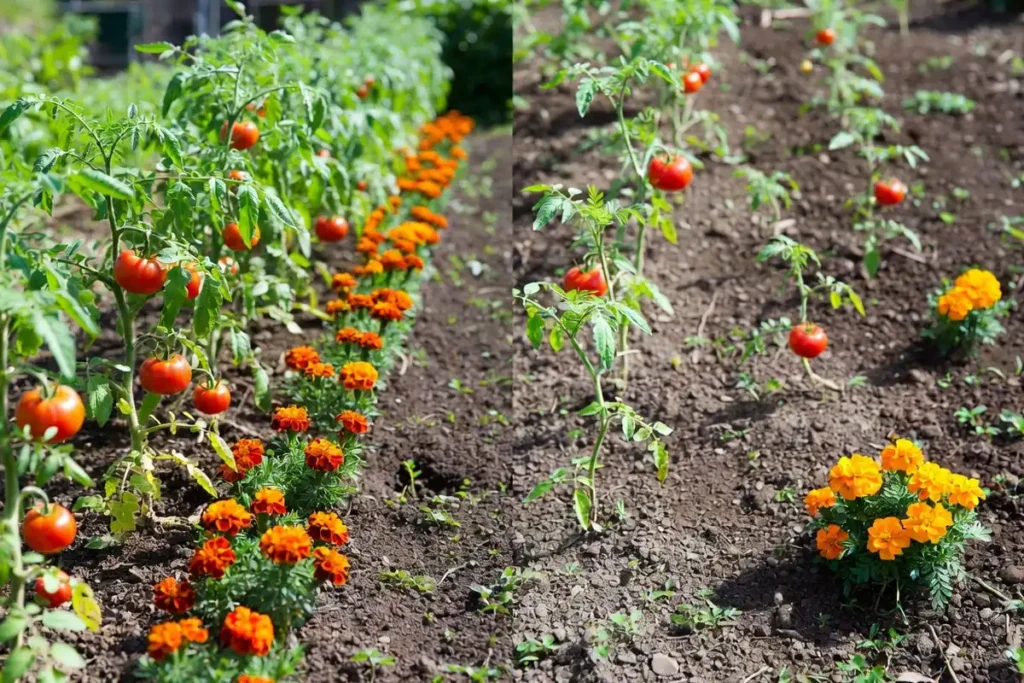
Planting marigolds too late. Marigolds added after tomatoes are established provide weak nematode suppression. Root zones do not overlap enough to build protection.
Choosing the wrong species. African marigolds in a small bed shade tomato seedlings. French marigolds stay compact and avoid that problem.
Using only two or three plants in a large bed. A handful of marigolds at one corner leaves most of the root zone unprotected. Distribute plants throughout the bed for consistent coverage.
Overwatering marigolds. Marigolds need less water than tomatoes. Consistently saturated soil in the marigold root zone increases rot risk. Water based on tomato needs and allow the marigold area to dry slightly between waterings.
Removing marigolds at midsummer. Pulling marigolds early to open space removes the protective root zone before the tomato season ends. Leave them in place through harvest.
Troubleshooting: When the Pairing Is Not Working
Nematode damage still appears on tomato roots. Check planting density. Sparse marigold spacing leaves gaps in root-zone coverage. Increase plant density the following season and start both crops together.
Aphids still present on tomato foliage. Marigolds reduce pressure but do not stop all aphid activity. Remove aphid colonies with a strong water spray directed at the underside of leaves. Check for natural predators before applying any treatment.
Marigolds show yellowing leaves midseason. Yellow leaves on marigolds growing alongside tomatoes often indicate nitrogen competition. Tomatoes are heavy nitrogen feeders and draw nutrients from shared soil. Apply a balanced fertilizer or side-dress with compost at midsummer to support both plants.
Marigolds are wilting despite regular watering. Check soil drainage. Both crops tolerate some drought but do not tolerate waterlogged roots. Improve drainage by incorporating compost or adding raised planting mounds.
Onions offer another companion option worth considering alongside this pairing. The onions and tomatoes planting guide covers whether that combination fits your bed layout.
Conclusion
Marigolds and tomatoes grow well together when planted at the same time, spaced throughout the bed, and matched to the right variety. French marigolds provide the strongest nematode suppression and fit easily into most tomato layouts without shading the crop.
Position them at bed borders and between rows, start them alongside your tomatoes, and keep them in place through harvest. This pairing supports a healthier root zone and reduces some of the pest pressure that cuts into tomato yield.