What Tomatoes Are Indeterminate? Varieties, Growth Habits, and Care
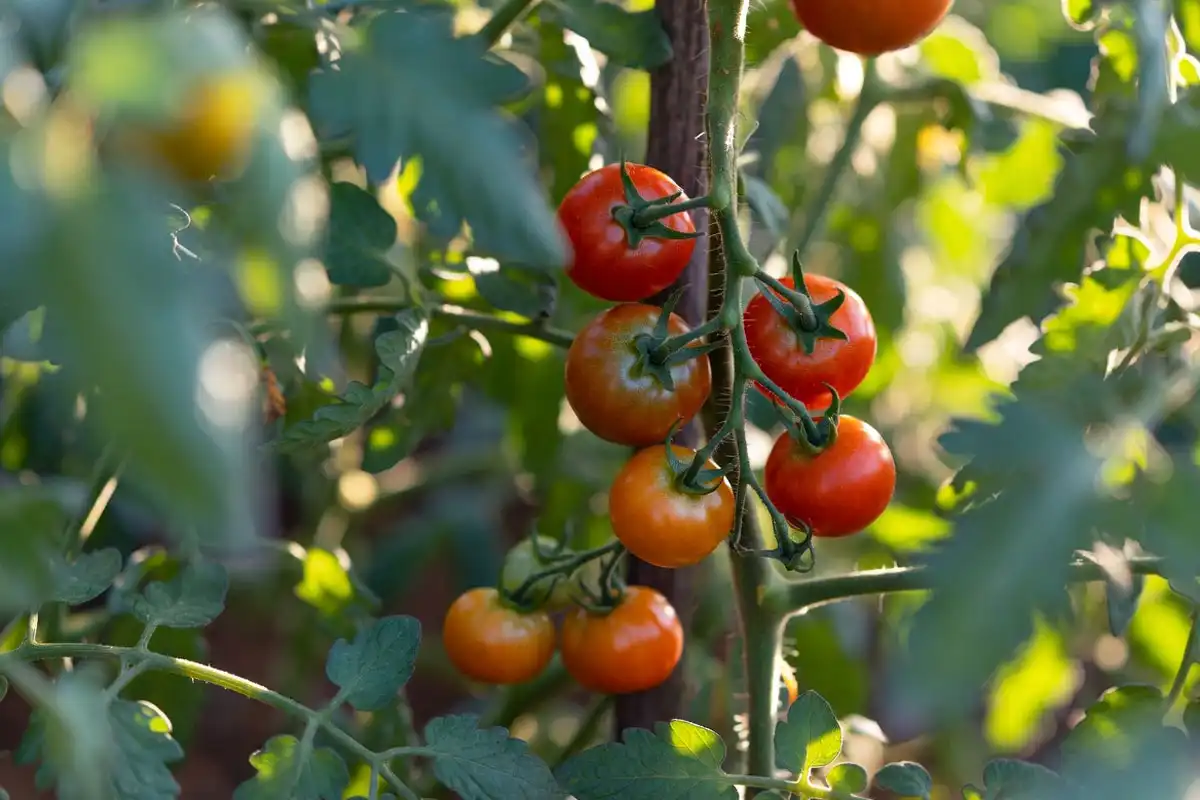
Indeterminate tomatoes grow continuously throughout the season, setting new flowers and fruit from first bloom until frost ends the plant’s life. Unlike determinate varieties, these plants add height and produce fruit at the same time, which changes every management decision you make. This guide covers which varieties are indeterminate, how they differ from determinate types, and the specific steps to support, prune, feed, and harvest them through a full growing season.
Indeterminate tomatoes are varieties that grow, flower, and produce fruit continuously until frost kills the plant. They include Beefsteak, Brandywine, Early Girl, Cherokee Purple, Sungold, and most other cherry and heirloom types. These plants grow 6 to 12 feet tall and need strong vertical support from transplant onward. Regular pruning, consistent watering, and season-adjusted feeding keep them productive from midsummer through fall.
What Are Indeterminate Tomatoes?
Indeterminate tomatoes are a growth classification, not a single variety. The plant produces new stem growth above each flower cluster continuously throughout the season. It does not stop at a fixed height.
A determinate tomato sets a terminal flower at the top of the plant, which signals the stem to stop growing. An indeterminate tomato never produces that terminal flower. The vine keeps extending, setting new fruit clusters as long as temperatures and daylight support it.
This growth pattern affects how you stake, prune, water, and feed these plants from the first week in the ground to the final harvest.
For a full overview of the tomato crop, the tomatoes crop guide covers varieties, growing conditions, and seasonal management in one place.
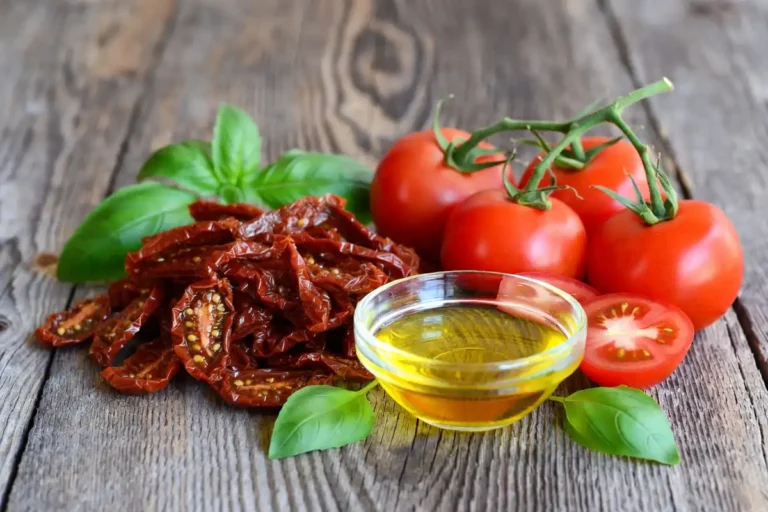
Learn more: Are Sun Dried Tomatoes Healthy? 6 Key Benefits
Indeterminate vs. Determinate Tomatoes: Key Differences
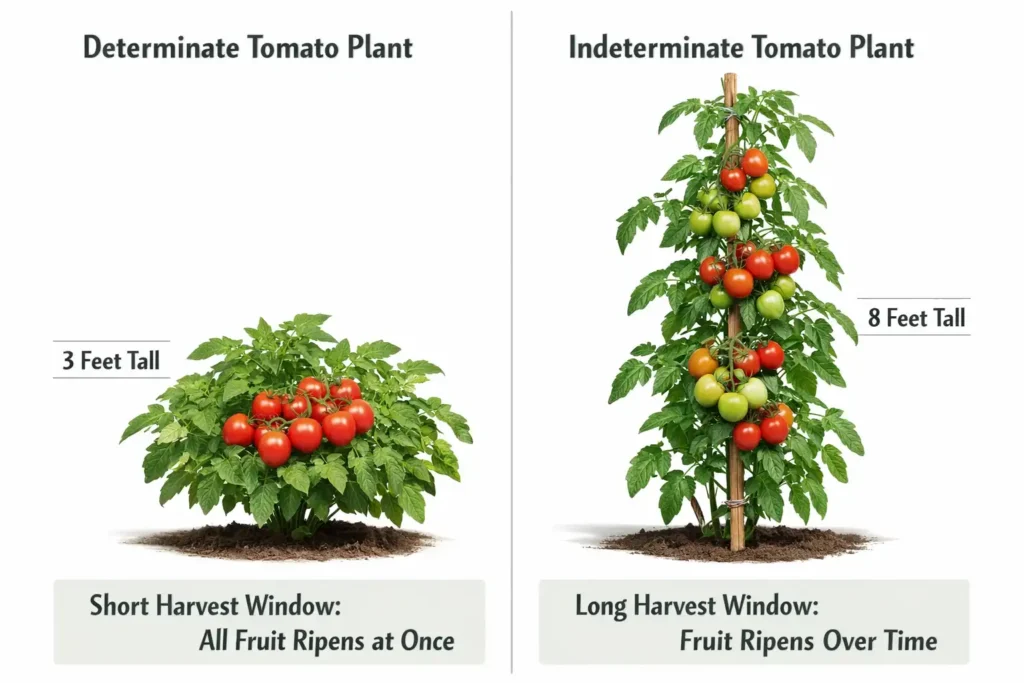
Determinate tomatoes grow to a fixed height, typically 3 to 5 feet, and ripen most of their fruit within a 2 to 4 week window. Home canners and processors favor them for this concentrated harvest.
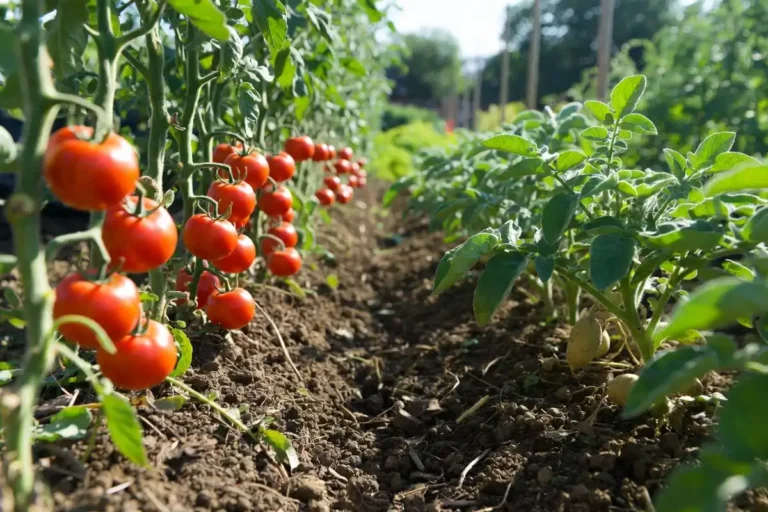
Indeterminate tomatoes grow 6 to 12 feet or taller depending on the variety and season length. They produce fruit across the entire growing season rather than in one burst.
| Feature | Indeterminate | Determinate |
|---|---|---|
| Plant height | 6–12 ft | 3–5 ft |
| Harvest window | Full season | 2–4 weeks |
| Pruning need | High | Low |
| Support need | Tall stake or trellis (5 to 6+ feet) | Short cage or stake |
| Best use | Fresh market, home garden | Canning, processing |
Semi-determinate varieties, like Celebrity, fall between the two. They grow taller than true determinates but stop before indeterminate types do.
Which Tomato Varieties Are Indeterminate?
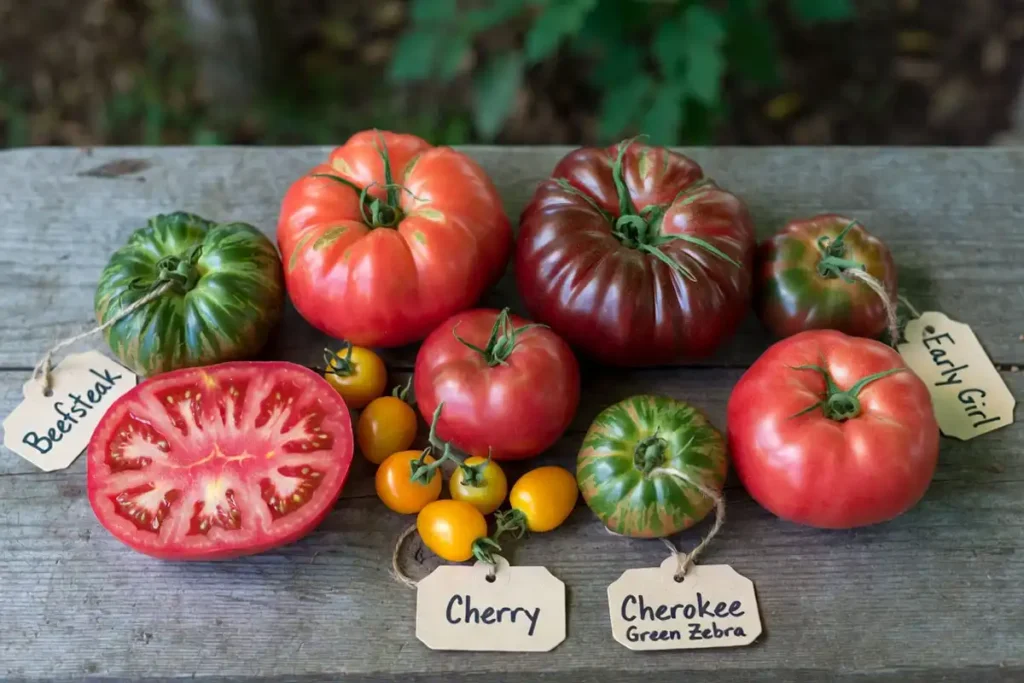
Most heirloom tomatoes and many popular hybrids are indeterminate. The categories below group them by fruit type.
Beefsteak and slicing types include Beefsteak, Big Boy, Better Boy, Brandywine, and Mortgage Lifter. These varieties produce large fruit, often weighing 1 to 2 pounds per tomato.
Cherry and grape types include Sungold, Sweet 100, Black Cherry, and Juliet. Cherry varieties produce fruit in clusters and remain among the highest-yielding indeterminate plants per season.
Heirloom types include Cherokee Purple, Green Zebra, Pineapple, Paul Robeson, and Hillbilly. Most heirlooms are indeterminate because they predate modern breeding for compact growth.
Hybrid types include Early Girl, Jet Star, and Big Beef. Early Girl is one of the most planted indeterminate varieties in home gardens across the U.S. because it produces medium-sized fruit relatively early in the season.
Determinate varieties to know: Roma, Rutgers, and Heinz 1439 are determinate. San Marzano varies by seed line. Check the seed packet or variety description for confirmation before planting.
When Do Indeterminate Tomatoes Stop Growing?
Indeterminate tomatoes stop growing when frost kills the plant or when the grower removes the growing tip. A hard frost at or below 32°F (0°C) ends both growth and fruit development.
In most U.S. growing zones, the productive season runs from spring transplant through the first fall frost. That window spans from September in northern states to November or later in southern states.
Topping the plant involves removing the growing tip 4 to 6 weeks before the expected first frost. This redirects the plant’s energy from setting new flowers into ripening the fruit already on the vine. It is a standard practice for growers who want to maximize usable harvest before cold arrives.
How to Support Indeterminate Tomato Plants
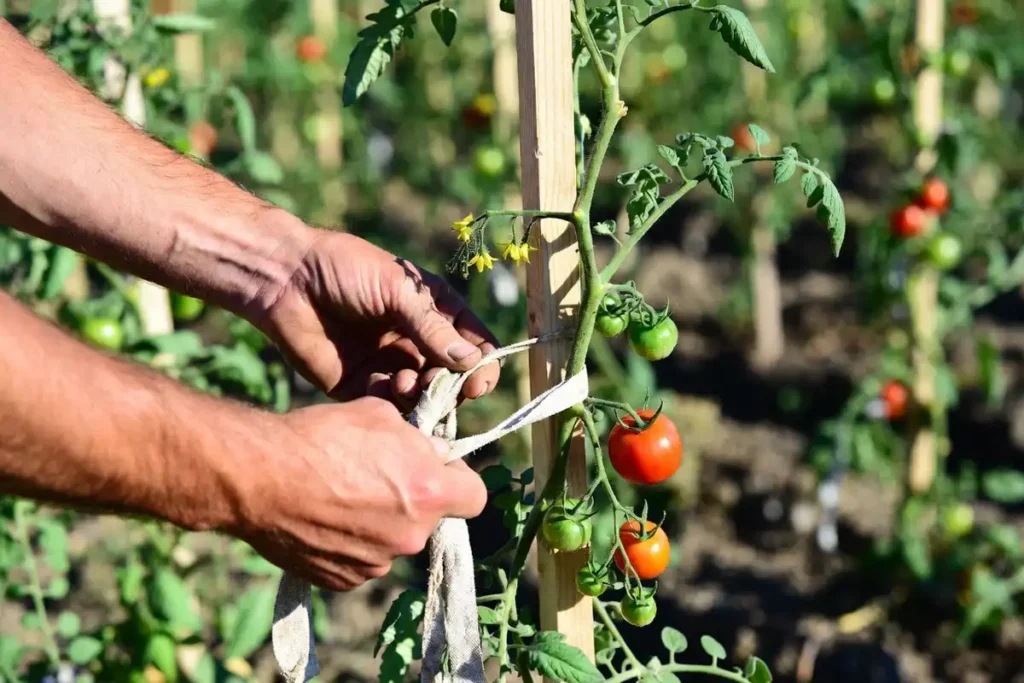
Indeterminate tomatoes need vertical support from the time of transplanting. Without support, stems break under fruit weight and foliage contacts the soil, which increases fungal disease pressure significantly.
Three support methods work well for indeterminate varieties:
1. Single stake: Drive a 6 to 8 foot wooden or metal stake 12 inches into the ground, positioned 4 inches from the transplant. Tie the main stem to the stake every 8 to 12 inches as it grows using soft cloth ties or tomato clips. Avoid wire or string that cuts into the stem.
2. Florida weave: String horizontal rows of twine between stakes placed every 4 to 5 feet along the row. Add a new row of twine every 8 to 12 inches as plants grow. This method works efficiently for multiple plants in a row and reduces individual staking time.
3. Cattle panel or heavy trellis: A 5 to 6 foot wire panel anchored between fence posts provides strong support for heavy producers like Beefsteak and Brandywine. This setup handles plants that reach 10 feet or more.
Standard tomato cages sold at garden centers are generally too short and too light for full-season indeterminate varieties. A 3-foot wire cage collapses under a mature plant. If you use a cage, choose one that stands at least 5 feet tall with a diameter of 18 inches or wider.
For a closer look at each method and how it affects fruit development, see how staking, trellising, or caging tomatoes influences fruit health.
How to Prune Indeterminate Tomatoes
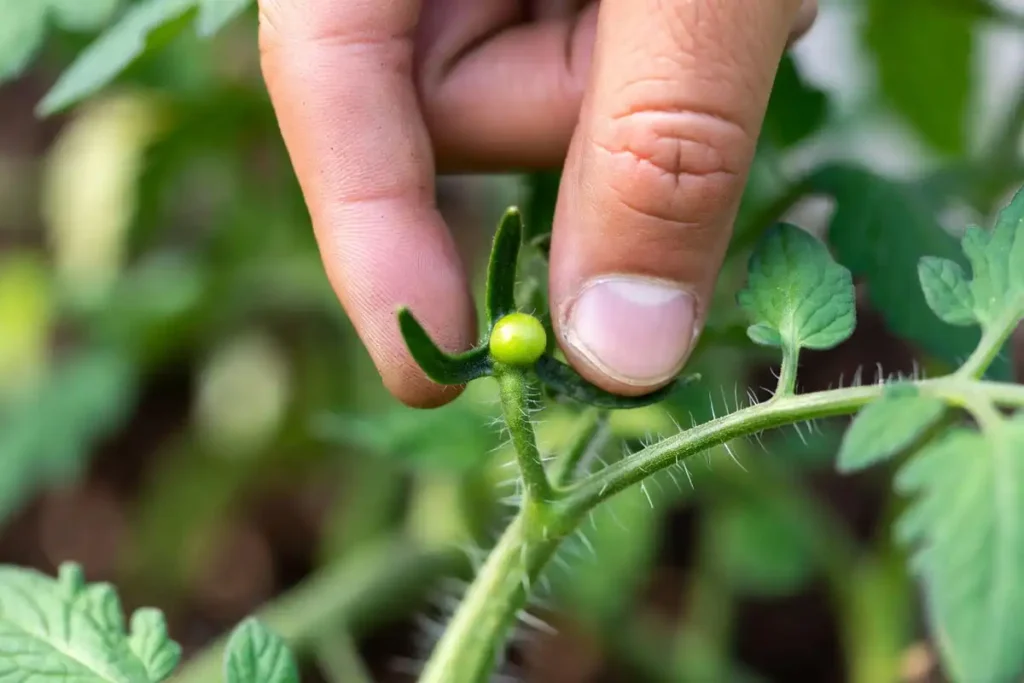
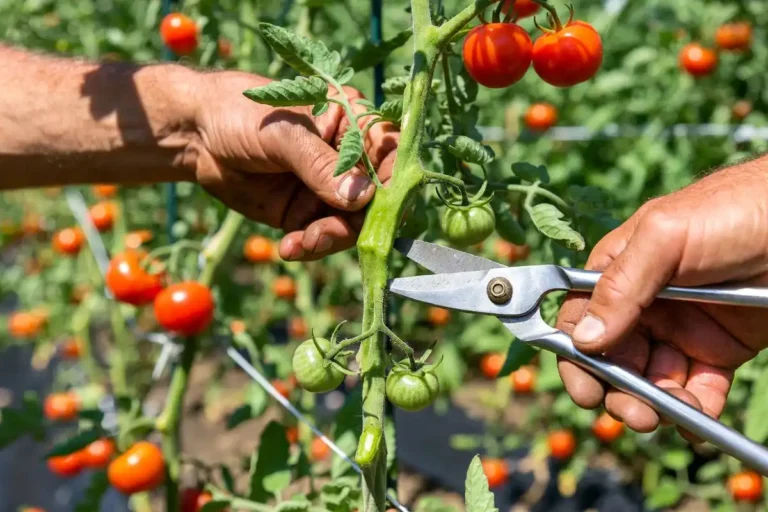
Pruning removes suckers. A sucker is a shoot that grows in the 45-degree junction between the main stem and a leaf branch. Left to grow, suckers become full branches, increasing foliage density, moisture retention, and disease risk.
How to identify a sucker: Look at each junction where a branch meets the main stem. The small shoot emerging from that angle is the sucker.
How to remove it: Pinch the sucker off by hand when it measures under 2 inches long. Use clean pruning shears for suckers longer than 2 inches. Wipe the blades with isopropyl alcohol between plants to avoid spreading bacterial or fungal pathogens.
How many stems to keep: Most growers train indeterminate tomatoes to 1 or 2 main stems. A single stem produces earlier fruit. Two stems increase total yield while still maintaining enough airflow to reduce disease pressure.
Pruning schedule: Prune weekly throughout the growing season. Morning pruning gives cut surfaces time to dry before evening, which reduces infection risk at the wound site.
Avoid heavy pruning in hot weather. Removing too much foliage at once stresses the plant and can cause sunscald on exposed fruit.
The article on tomato pruning and its effects on yield and disease covers the tradeoffs between single-stem and multi-stem training in detail.
Watering Indeterminate Tomatoes
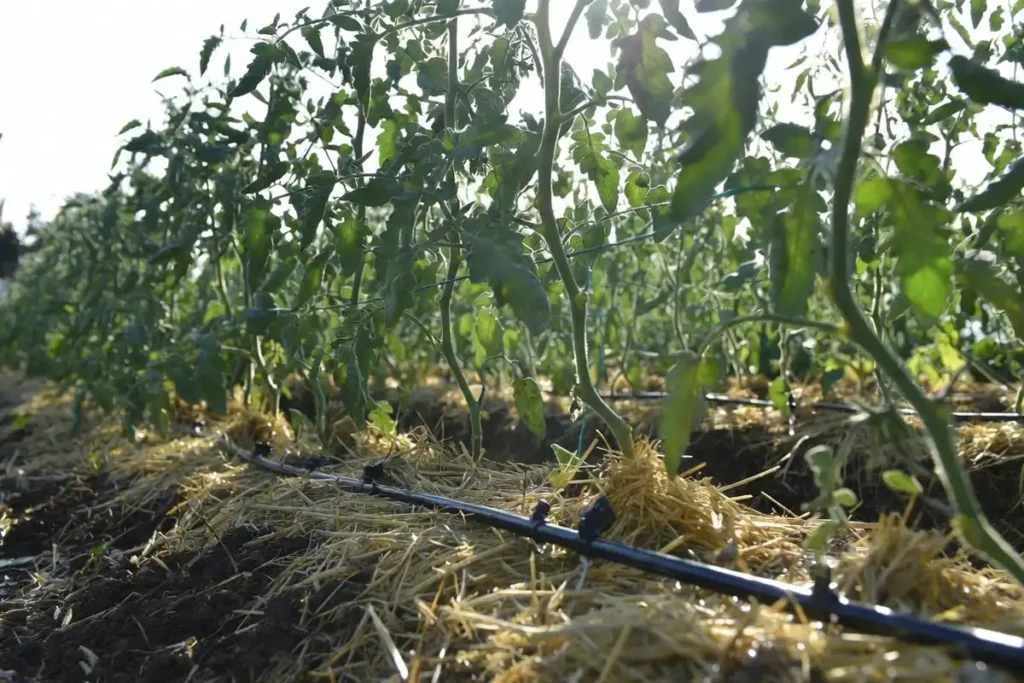
Established indeterminate tomatoes need 1 to 2 inches of water per week, delivered consistently. Irregular watering causes two common problems: blossom end rot and fruit cracking.
Blossom end rot appears as a dark, sunken patch on the bottom of the fruit. It results from calcium uptake failure caused by inconsistent soil moisture, not from a calcium shortage in the soil.
Fruit cracking happens when a plant receives heavy water after a dry period. The fruit expands rapidly and the skin splits.
Water at the base of the plant, not overhead. Wet foliage promotes early blight, Septoria leaf spot, and other fungal diseases that reduce yield and plant lifespan.
Drip irrigation delivers water directly to the root zone and keeps foliage dry throughout the season. Mulching the soil surface with 2 to 3 inches of straw or wood chips reduces evaporation, stabilizes soil temperature, and slows weed germination.
For timing guidance across the full growing season, see when tomatoes need the most water by growth stage.
Feeding Indeterminate Tomatoes
Indeterminate tomatoes feed across a long season, and their nutrient needs shift at different growth stages.
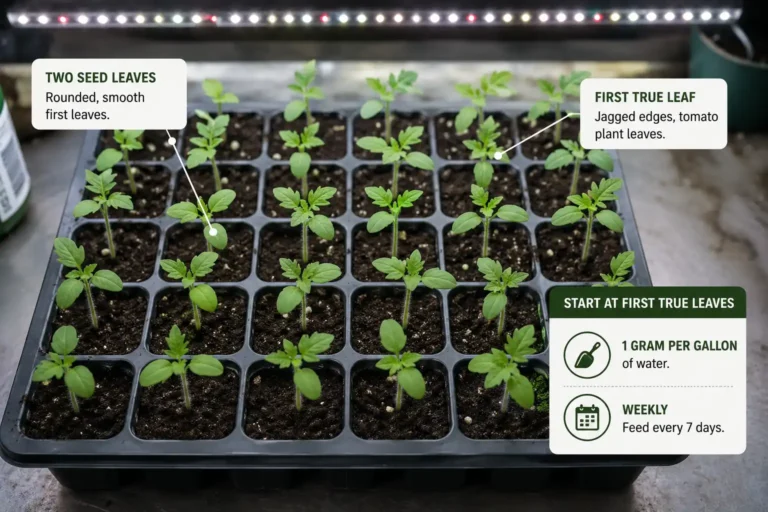
Before flowering: The plant uses nitrogen to build stems and leaves. Apply a balanced fertilizer (10-10-10 or similar) at transplant and again 3 to 4 weeks later.
After first flowers open: Reduce nitrogen and increase phosphorus and potassium. High nitrogen at this stage channels energy into leaf growth instead of fruit development. Switch to a fertilizer with a lower first number, such as 5-10-10.
Through the season: Side-dress with compost or apply a diluted liquid fertilizer every 3 to 4 weeks. Apply fertilizer to moist soil, not dry ground, and keep it away from the main stem to avoid root burn.
How Many Tomatoes Does an Indeterminate Plant Produce?
Indeterminate tomatoes produce fruit continuously, so total yield depends on variety, season length, and growing conditions. Cherry tomato varieties like Sungold and Sweet 100 produce hundreds of small fruits per plant across a full season. Beefsteak and large-fruited varieties produce fewer fruits per plant but each fruit weighs substantially more, often 1 to 2 pounds.
For yield expectations broken down by variety type and growing conditions, see how many tomatoes you can expect per plant.
Common Mistakes to Avoid
Planting without support in place: Set your stake or trellis at transplant time, not after the plant is established. Driving stakes into the ground around a mature plant damages the root system.
Skipping pruning: Dense, unpruned indeterminate plants trap humidity inside the canopy. This accelerates fungal disease and reduces airflow around developing fruit.
Letting watering lapse: Large swings between wet and dry soil conditions stress the plant repeatedly. Blossom end rot and fruit cracking follow irregular irrigation patterns.
Using undersized cages: A standard garden-center cage does not hold a full-season indeterminate plant past midsummer. Size the support to the variety before the transplant goes in the ground.
Planting too close: Indeterminate varieties need 24 to 36 inches between plants within a row and 36 to 48 inches between rows. Crowding increases disease pressure and reduces air circulation around each plant.
Waiting too long to top plants: If you wait until two weeks before frost to top the growing tip, the plant does not have enough time to redirect energy into ripening existing fruit. Top 4 to 6 weeks before the expected first frost date for your area.
Transplanting Indeterminate Tomatoes
Indeterminate tomatoes go into the ground after the last frost date, once nighttime temperatures stay consistently above 50°F (10°C). Transplanting too early into cold soil slows root establishment and delays the first fruit set.
Plant transplants deep, burying the stem up to the lowest set of leaves. Tomatoes produce roots along buried stems, which improves plant stability and drought tolerance later in the season.
For specific timing by region and step-by-step transplanting guidance, see when to transplant tomatoes.
Conclusion
Indeterminate tomatoes grow, flower, and produce fruit continuously from transplant through the first frost. They include most heirloom varieties and widely planted hybrids like Early Girl, Better Boy, and Sungold. Managing these plants requires strong vertical support, weekly pruning, consistent soil moisture, and stage-appropriate fertilization. Get those four practices right and an indeterminate plant delivers a steady supply of fresh tomatoes from midsummer through fall.