What Do Oats Look Like? Plant, Leaves, Seed Head, and Grain
Oats are a cool-season cereal grass, and knowing what oats look like helps you spot the crop at every stage. The plant shifts fast, from thin green seedlings to a golden field at harvest. Here is how to recognize oats from the ground up, part by part.
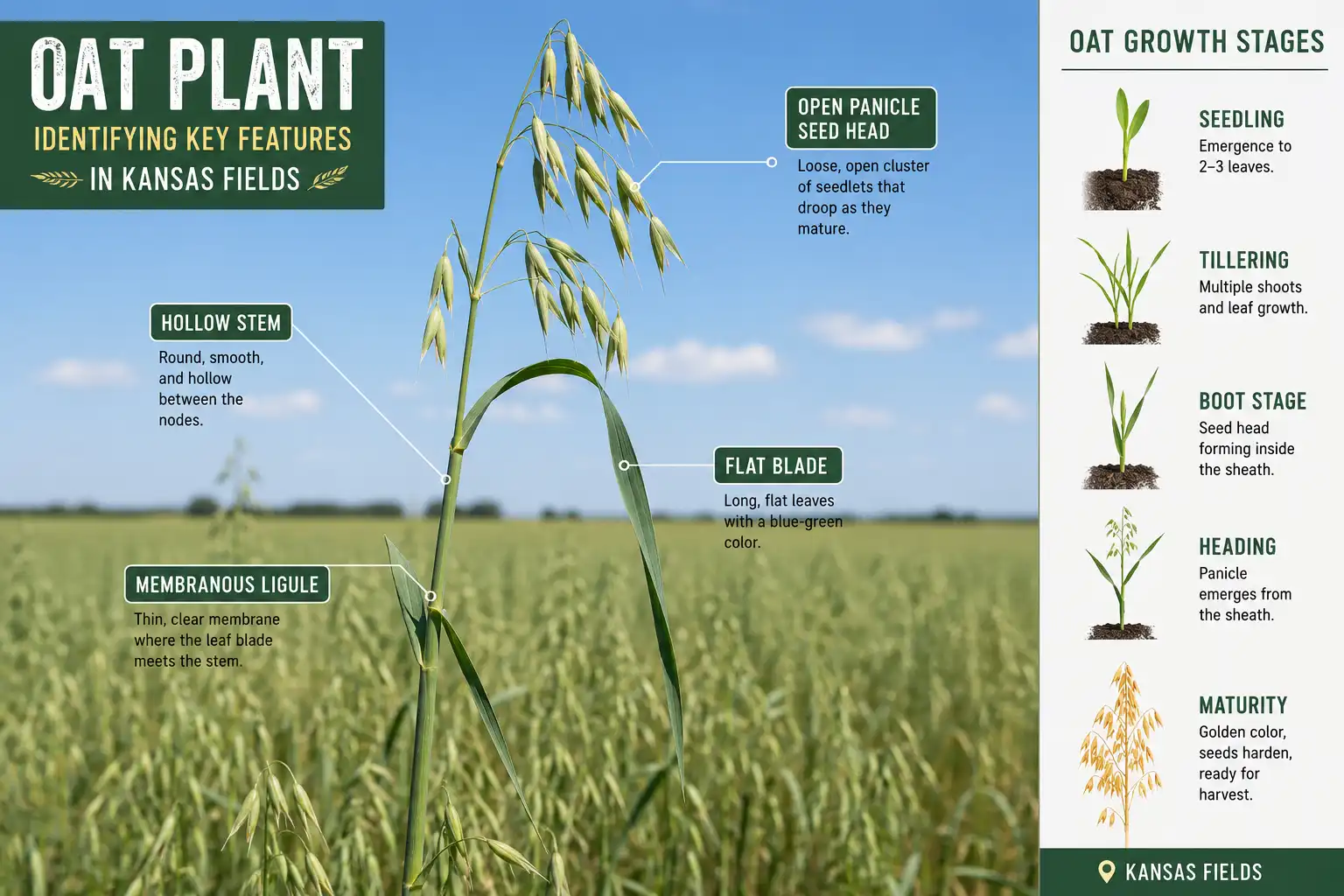
Oats look like a tall grass with hollow, upright stems and flat, blue-green blades. The seed head is an open, branching panicle that droops, not a tight spike. Each grain sits inside a papery hull.
What Do Oats Look Like as a Plant?
Oats look like a clump of upright grass, usually 2 to 4 feet tall, with slender green stems and long, flat leaves. The whole plant reads as a fine, feathery grass until the seed head opens at the top.
Oats (Avena sativa) belong to the grass family, the same broad group as wheat and corn. Each plant grows from a single seed and sends up several stems, called tillers. Most plants carry 3 to 5 tillers. The stems are hollow and round, with swollen joints spaced along their length. Below ground, oats build a dense, fibrous root system that grips the soil and helps hold it in place.
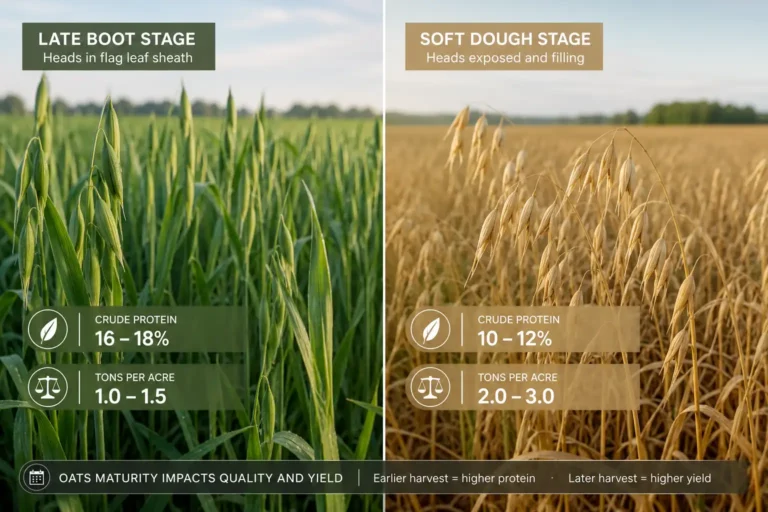
The color starts blue-green during active growth. As the crop matures, it fades to gold and then straw. Oats green up early and finish before the summer heat peaks, since they are a cool-season crop. For the timing side, our guide covers how long the oat crop takes to mature in a separate guide. Planting oats the right way also sets the stand up for a clean, even look.
Also know: Where Oats Come From
What Do Oat Seedlings Look Like?
Oat seedlings look like thin, single blades of grass pushing straight up from the soil, bright green and grass-like. At this stage they resemble young wheat or barley, so you have to look closer to tell them apart.
The first leaf is narrow and rolls open as it grows. Here is a useful trick: oat leaves twist counter-clockwise as they unroll, which is the opposite of wheat. Once the plant has a few leaves, it starts to tiller and thicken into a clump.
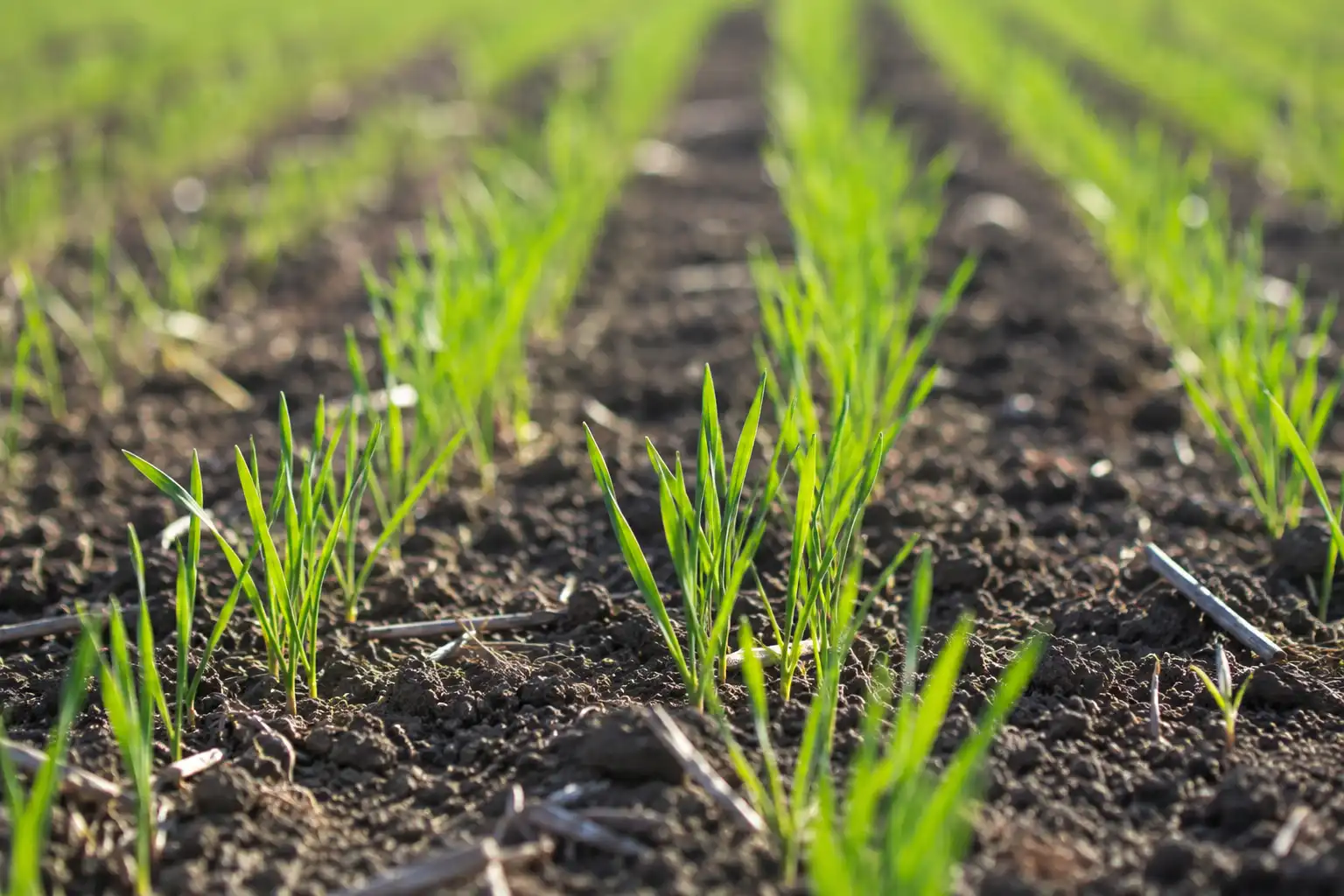
Oats sprout quickly in cool, moist soil. If you planted a stand and want to check your emergence window, see how fast oats sprout under normal spring conditions.
What Do Oat Leaves and Stems Look Like?
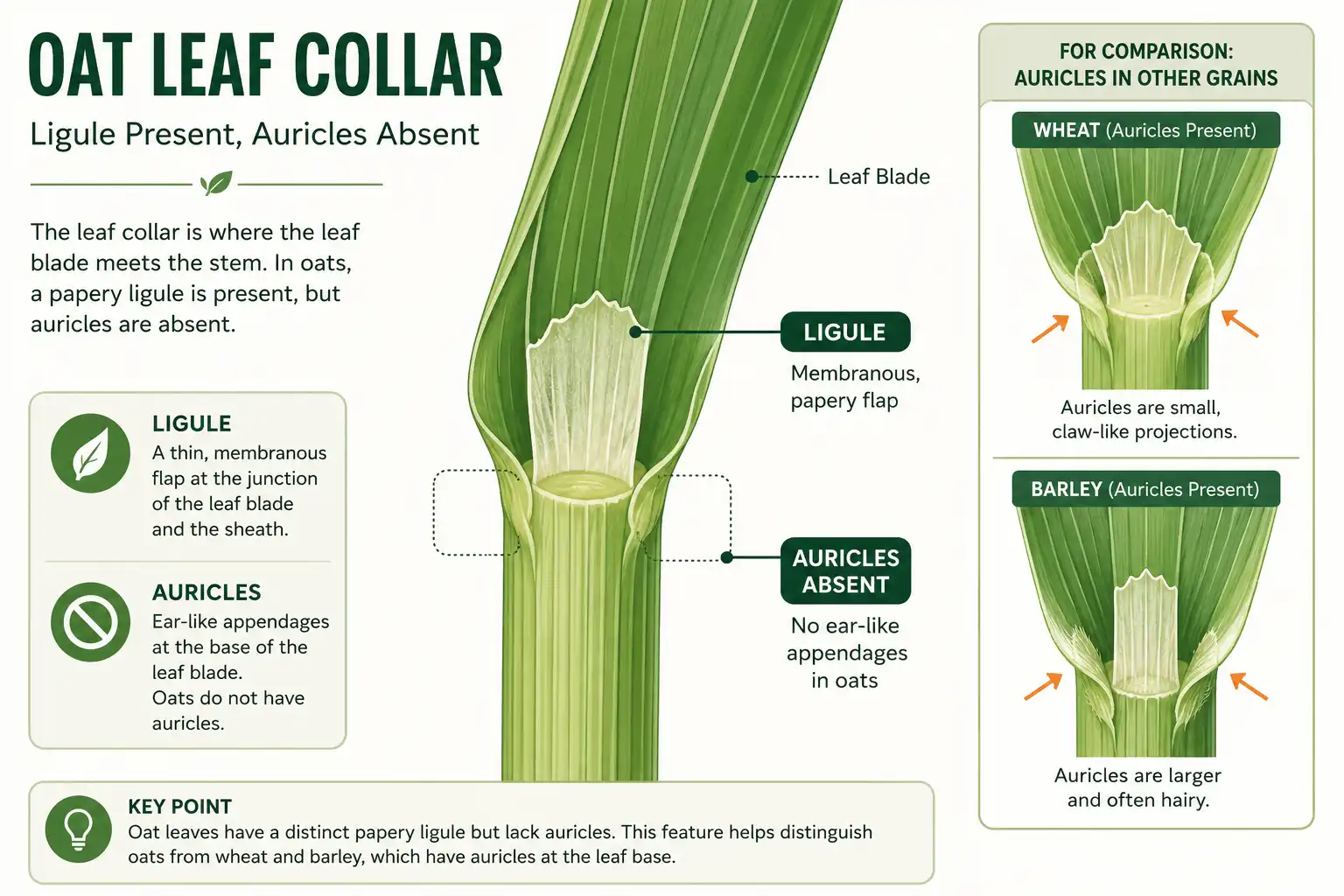
Oat leaves are long, flat blades with a slightly blue-green cast, and the stems are smooth, hollow, and jointed. The spot to check for a firm ID is where the blade meets the stem, called the collar.
At the collar, oats have a membranous ligule, a thin papery flap that stands up where the leaf wraps the stem. Here is the part that matters most: oats have no auricles. Auricles are the small claw-like arms that wrap around the stem on wheat and barley. Oats lack them, so the collar looks smooth and clean.
The leaf sheath is open and slightly flattened, wrapping loosely around the stem. Blades run 5 to 15 inches long and about a quarter to three-quarters of an inch wide. Run your hand along one and it feels a little rough.
What Does an Oat Seed Head Look Like?
An oat seed head looks like an open, loose, branching cluster that hangs and nods, not a tight spike. Botanists call this shape a panicle, and it is the single easiest way to know you are looking at oats.
Think of it as a loose pyramid or an upside-down umbrella. The main stem branches out, and each branch splits again into fine stalks. At the tip of each stalk hangs a spikelet. Every spikelet usually holds 2 or 3 seeds, wrapped in papery husks called glumes. The whole head droops under its own weight, so oats take on that soft, airy look across a field.
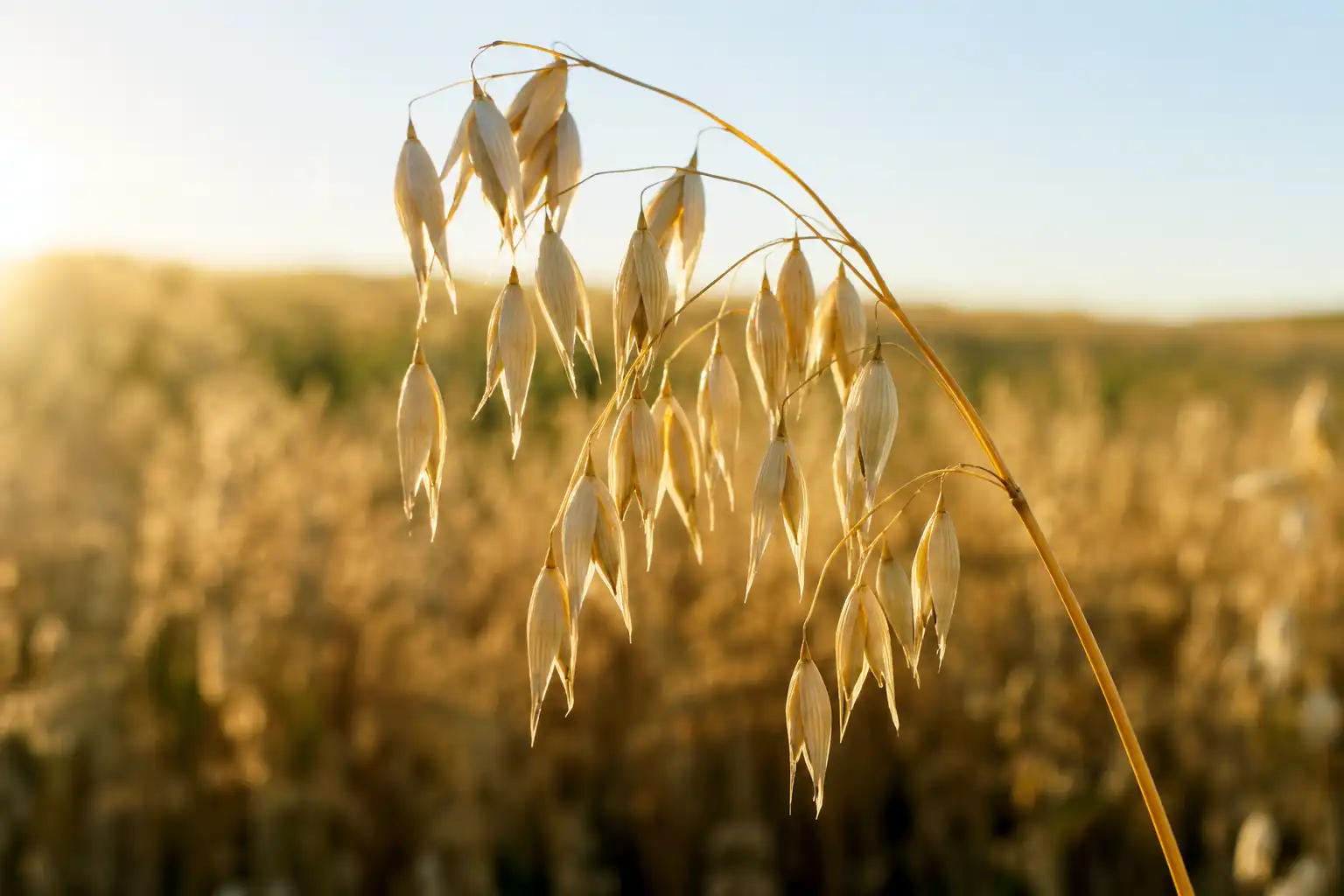
This is where oats part ways with wheat and barley for good. Those two carry a dense, upright spike. Oats carry a spreading, open panicle. Once the head is out, you cannot mistake one for the other.
What Do Oat Grains Look Like?
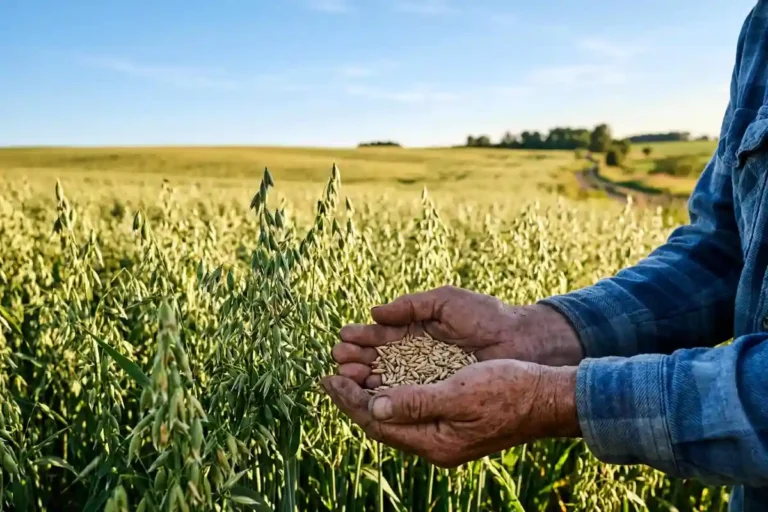
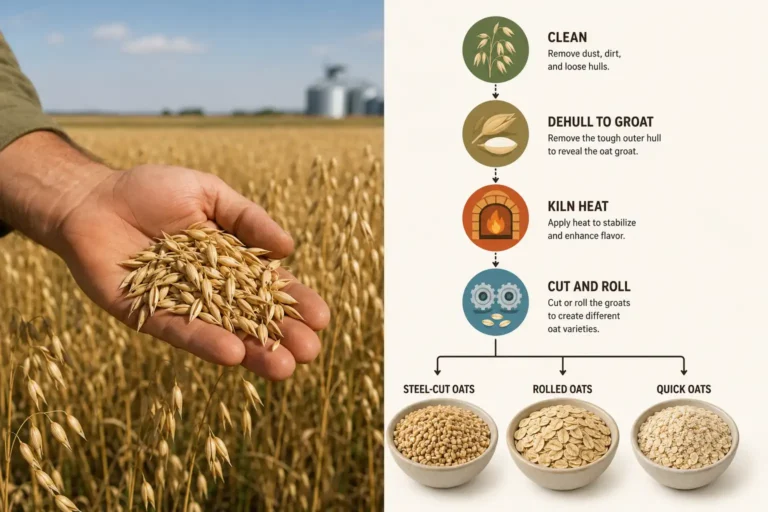
An oat grain looks like a slender, pointed seed wrapped in a papery hull, usually cream, tan, or golden. Inside that hull sits the groat, which is the part that becomes rolled oats and oatmeal.
The grain is flattened, oval, and grooved down one side, roughly a quarter to a third of an inch long. Hull color depends on the variety. Most cultivated oats are white, cream, or yellow, but some run gray, red, or even black. Before the grain hardens, it passes through a soft “milky” stage, where a squeezed kernel leaks a milky liquid.
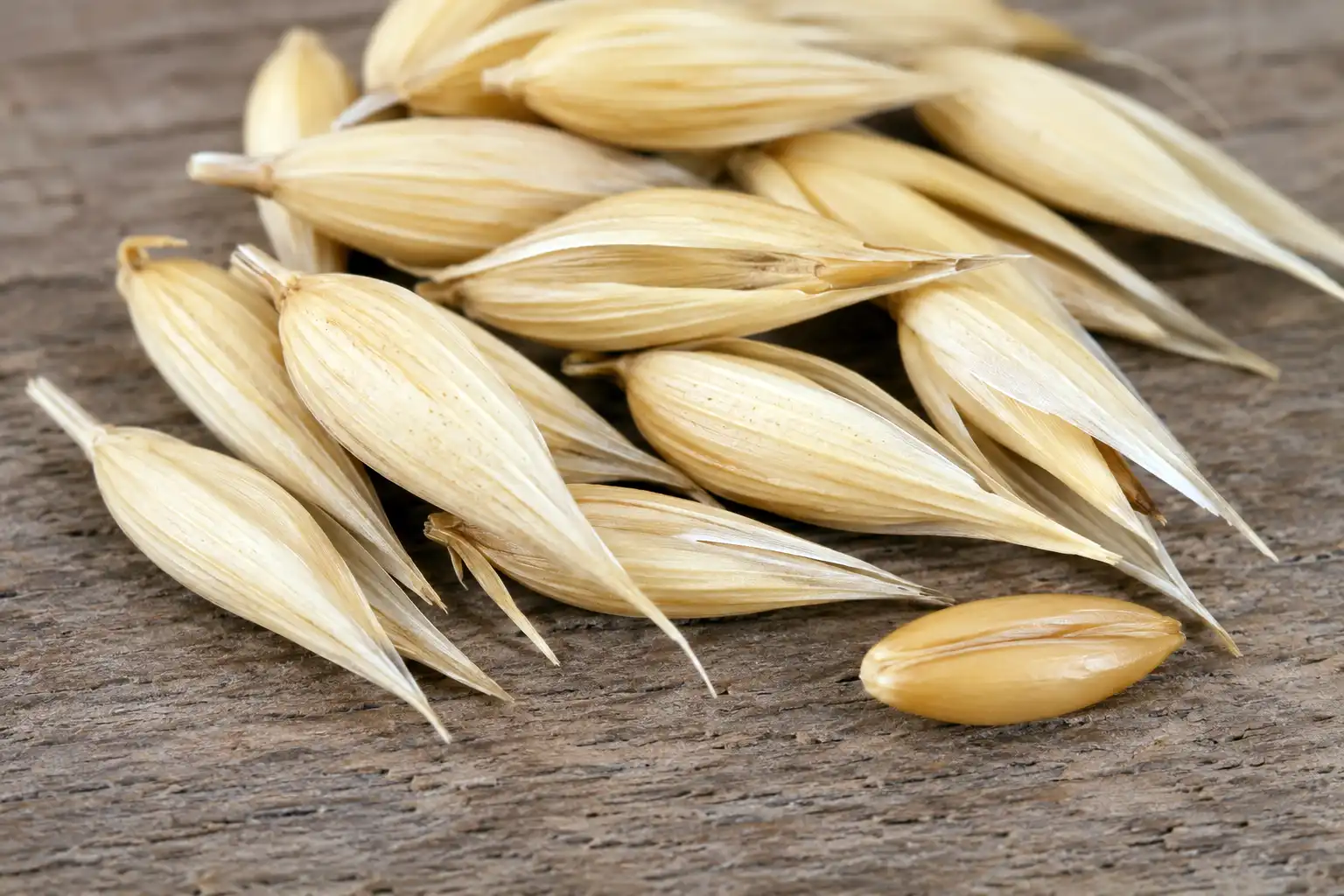
Two forms show up on farms. Common hulled oats keep their husk until they are processed. Naked oats, also called hull-less oats, thresh free of the husk at harvest. If you are weighing a load or sizing a bin, our note on what a bushel of oats runs on the scale gives you the numbers.
What Color Are Oats at Each Growth Stage?
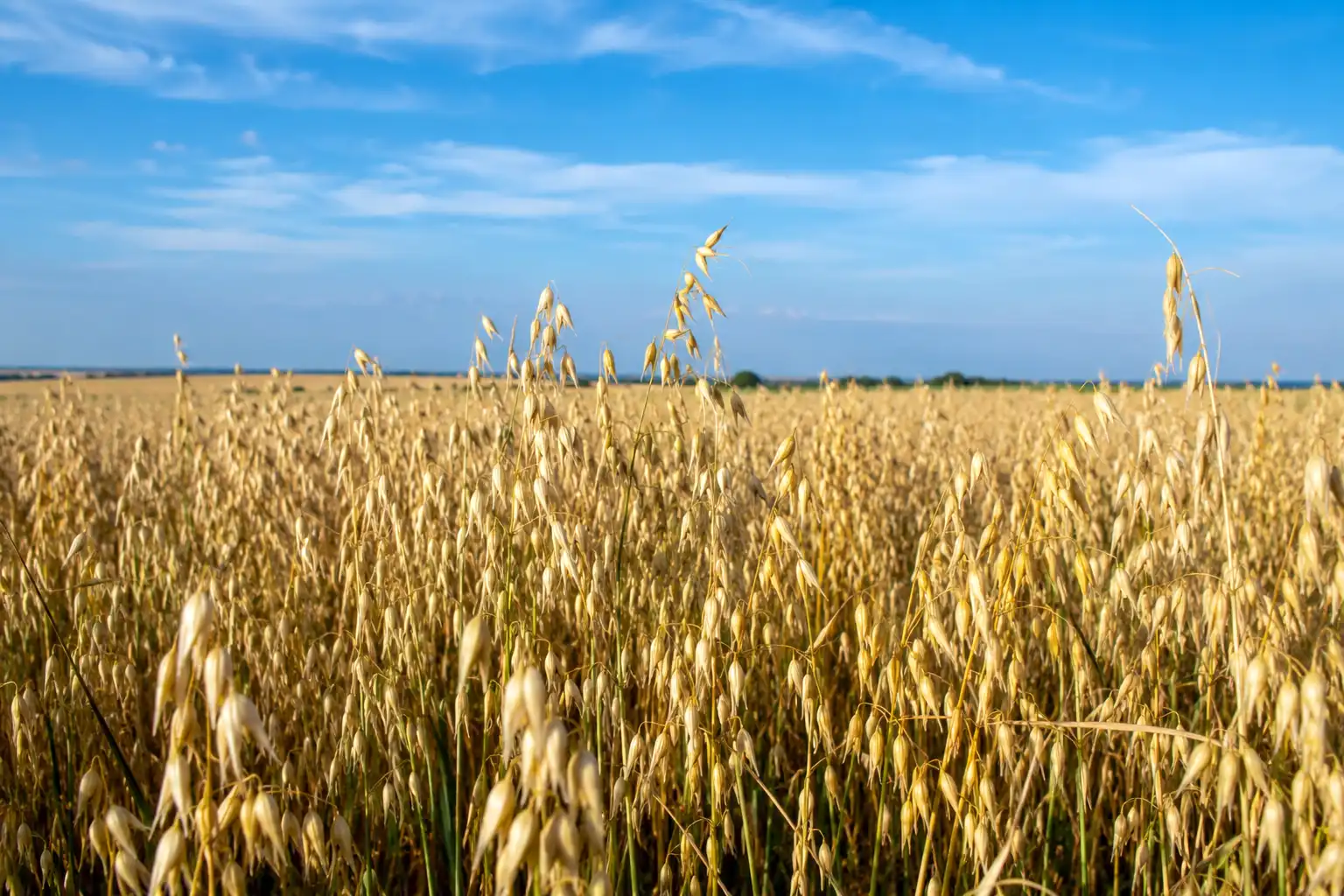
Oats are blue-green while they grow, then turn gold and finally pale straw as they ripen. That color shift is your main signal that the crop is nearing harvest.
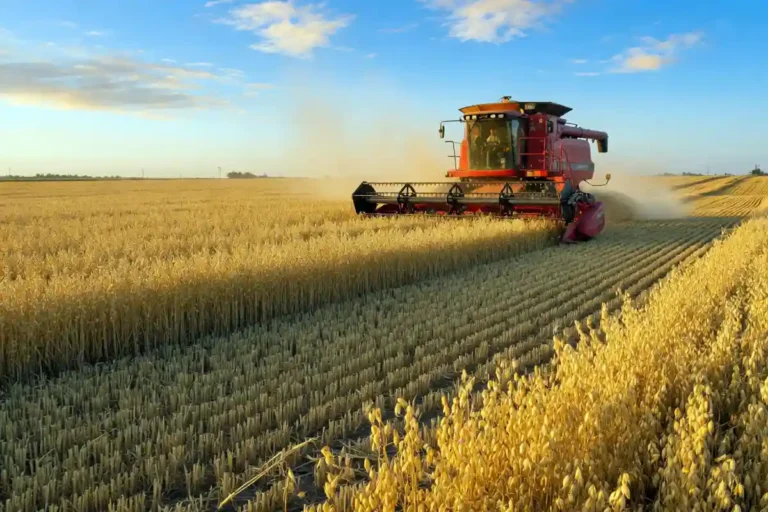
Early on, a healthy oat field looks lush and blue-green. As the seed fills and dries, the color moves up the plant from the bottom, going gold, then tan. By harvest the whole field looks like a sea of straw, and the heads bend over heavy with grain. The plant dries down as grain moisture drops toward 14% or below. When your oats reach that pale golden color and the kernels feel firm, it is close to cutting time. For the full call on when your oats are ready to cutour guide covers the signs in another guide.
How to Tell Oats Apart From Wheat and Barley
You tell oats apart by the seed head and the leaf collar. Oats grow an open, drooping panicle and have no auricles, while wheat and barley grow tight spikes and do carry auricles. Those two checks settle it almost every time.
Here is the quick field comparison:
| Feature | Oats | Wheat | Barley |
|---|---|---|---|
| Seed head | Open, branching panicle that droops | Compact upright spike | Dense upright spike |
| Awns (bristles) | Usually none or short | Short or none | Long, obvious awns |
| Auricles at collar | None | Small | Large, clasping |
| Leaf twist | Counter-clockwise | Clockwise | Variable |
| Color at maturity | Gold to straw | Gold to amber | Gold to tan |
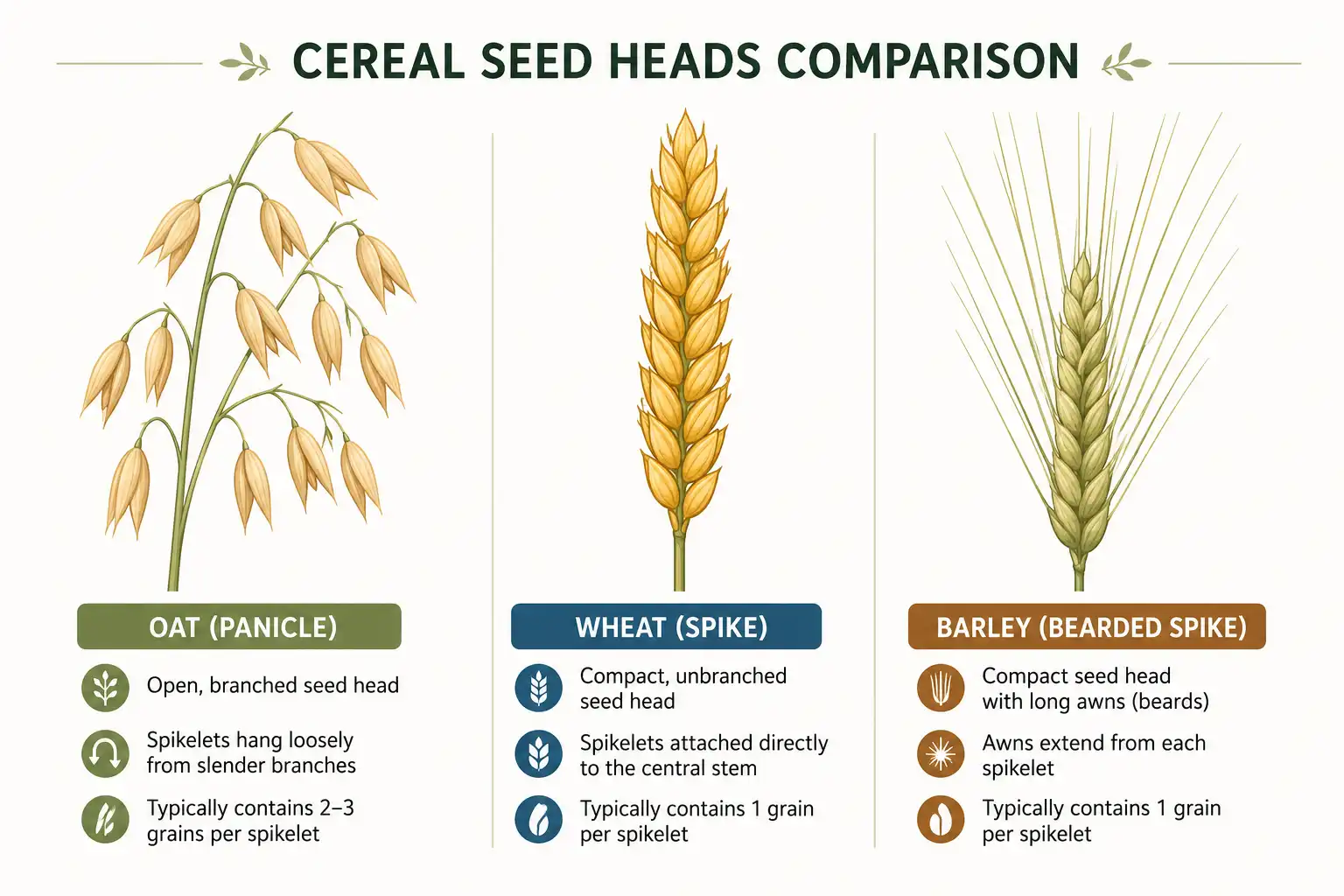
Before the heads come out, the leaf collar is your best tool. No auricles means oats. After heading, the panicle gives it away on sight. If you are deciding which grain fits your ground, check the breakdown of how oats stack up against wheat covers yield, feed value, and season.
Spotting Oats in Your Own Field
Once you know the parts, oats are easy to call. Look for upright blue-green grass, a smooth collar with no auricles, and that loose, drooping panicle up top. When the field turns gold and the heads hang heavy, the grain is close to ready. Those few markers are all that need checking when walking an oat stand.