Are Plum Tomatoes the Same as Roma Tomatoes? 5 Key Differences
Roma tomatoes are a type of plum tomato, but the two terms do not mean the same thing. Plum tomato names a broad category of paste-type tomatoes with meaty flesh, low moisture, and few seeds. Roma is one specific variety within that category. This guide covers what separates Roma from other plum tomatoes, how each variety performs in the garden and kitchen, and when the distinction actually affects your results.
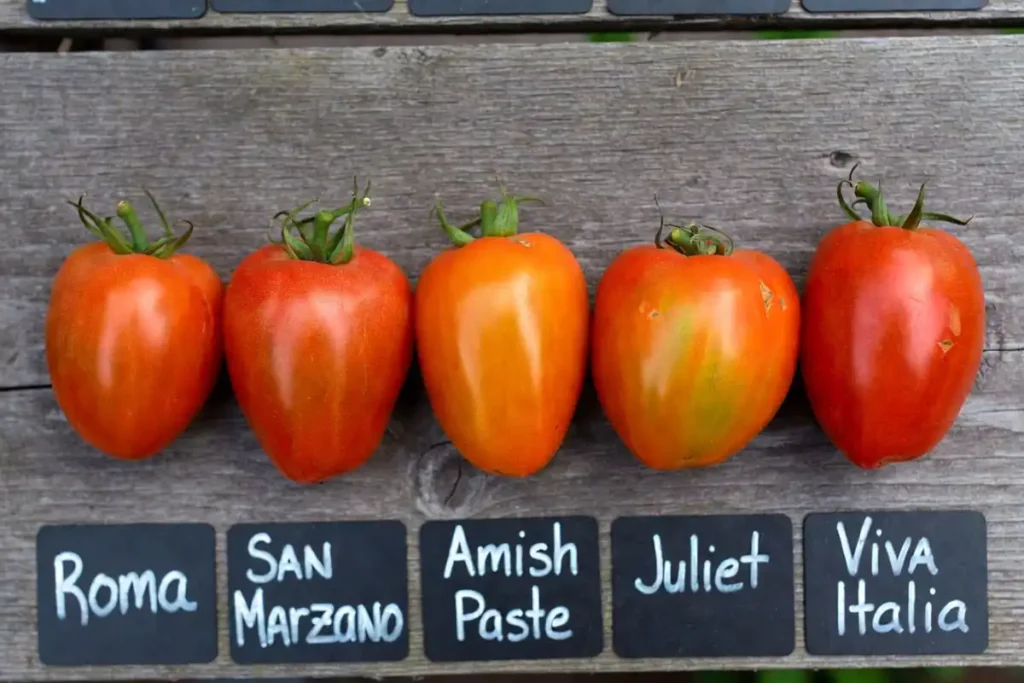
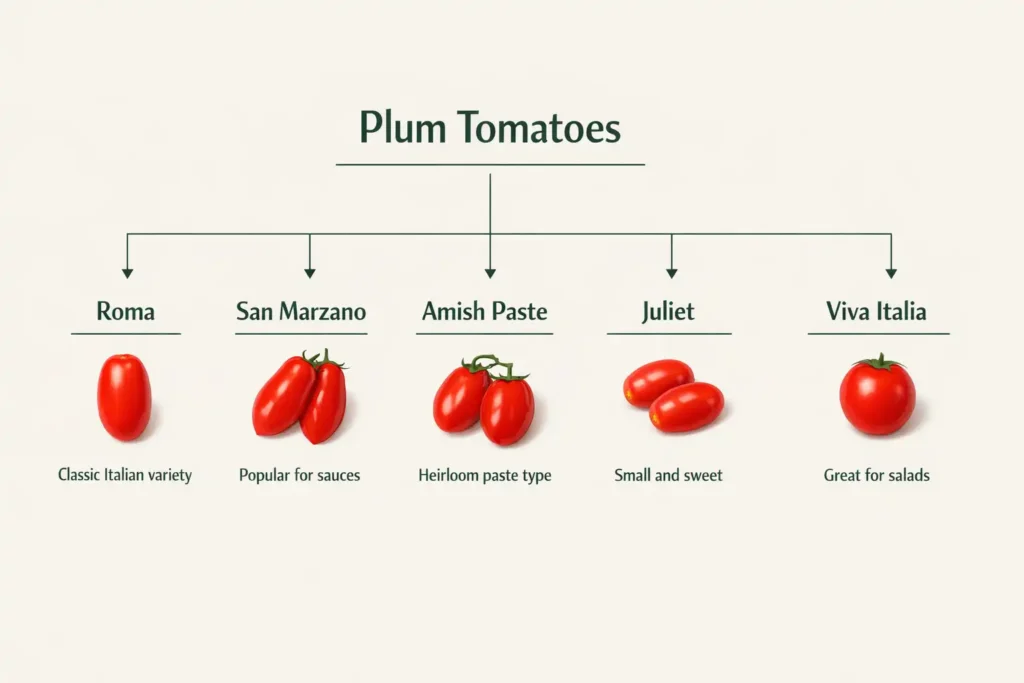
Roma tomatoes are plum tomatoes, but not all plum tomatoes are Roma. “Plum tomato” describes a category that includes Roma, San Marzano, Amish Paste, Juliet, and other paste varieties. Roma is the most widely sold plum tomato in the US. All plum tomatoes share dense flesh, low seed count, and low water content, which makes the whole group well-suited for sauces, canning, and drying.
What Is a Plum Tomato?
A plum tomato is a paste-type tomato that produces oval or cylindrical fruit with thick, meaty walls. The flesh-to-juice ratio runs higher than in slicing or cherry varieties. Plum tomatoes contain smaller seed cavities and less internal water, which gives them a denser texture when cooked.
The category includes several distinct varieties: Roma, San Marzano, Amish Paste, Viva Italia, and Juliet, among others. Each shares the same structural profile but differs in size, flavor depth, and plant habit. You can learn more about how these fit into the broader tomato family on the tomato crop guide at cropfarming.org.
Plum tomatoes grow on both determinate and indeterminate plants, depending on the specific variety.
Learn more: When Is a Good Time to Plant Tomatoes? 7 Timing Rules
What Is a Roma Tomato?
Roma is a specific plum tomato variety developed by the USDA and released commercially in 1955. The plant grows determinate, meaning it sets all its fruit and ripens over a concentrated 2 to 3-week window. Each fruit weighs roughly 2 to 3 ounces and turns deep red at full maturity.
Roma plants produce high yields on a compact, bushy frame. The fruit holds firm during cooking, which makes Roma a reliable choice for paste, sauce, and home canning.
Roma represents the standard plum tomato stocked in most US grocery stores and markets. When a label says “plum tomatoes” without specifying a variety, Roma is almost always what you are buying.
Know more: What Tomatoes Are Indeterminate? Varieties, Growth Habits
Are Roma Tomatoes and Plum Tomatoes the Same Thing?
Roma tomatoes belong to the plum tomato category, but the two terms are not interchangeable.
Think of it this way: all Roma tomatoes are plum tomatoes, but plum tomatoes also include San Marzano, Amish Paste, and Juliet. Each of those varieties differs in size, flavor, and how the plant grows.
Calling a Roma a plum tomato is accurate. Calling every plum tomato a Roma is not.
This distinction matters most when a recipe specifies a particular variety, when you shop for seeds, or when you source canned tomatoes for a specific dish.
Also know: What to Do with Cherry Tomatoes: 9 Smart Methods
How Do the Main Plum Tomato Varieties Compare?
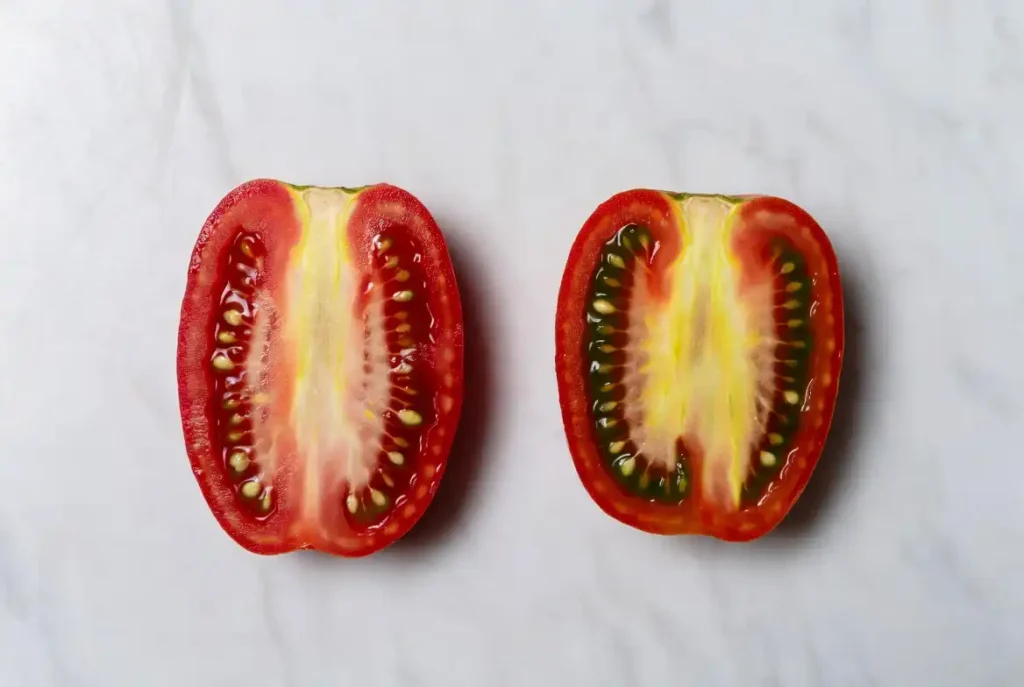
Plum tomato varieties share the same core structure but differ in four measurable ways: plant habit, fruit size, flavor profile, and intended use.
Roma Determinate plant. Fruit is 2 to 3 oz, blunt-tipped, bright red. Mild, slightly acidic flavor. Reliable for sauce and canning. The most common commercial variety.
San Marzano Indeterminate plant. Fruit is 4 to 6 oz, elongated, thinner-skinned. Sweeter and less acidic than Roma. Italian in origin and widely used for pizza sauce. Authentic San Marzano DOP tomatoes carry a certified Protected Designation of Origin seal.
Amish Paste Indeterminate heirloom. Fruit reaches 8 to 10 oz with a broad, strawberry-like shape. Richer, meatier flavor than Roma. Works fresh or cooked.
Juliet Indeterminate hybrid. Small fruit at 1 to 2 oz. Crack-resistant and disease-tolerant. High yield over a long season. Good for roasting or fresh eating as well as sauce.
Viva Italia Determinate hybrid. Similar in size to Roma but with better disease resistance. Firmer flesh and higher sugar content.
These differences directly affect harvest timing, yield per plant, and cooking results.
Which Plum Tomato Should You Grow?
The right variety depends on your goals.
For canning and bulk sauce production, Roma and Viva Italia work well. Both grow determinate, so they ripen together, which suits a single large harvest. If you want guidance on timing your planting, the tomato transplanting schedule covers when to move starts to the field.
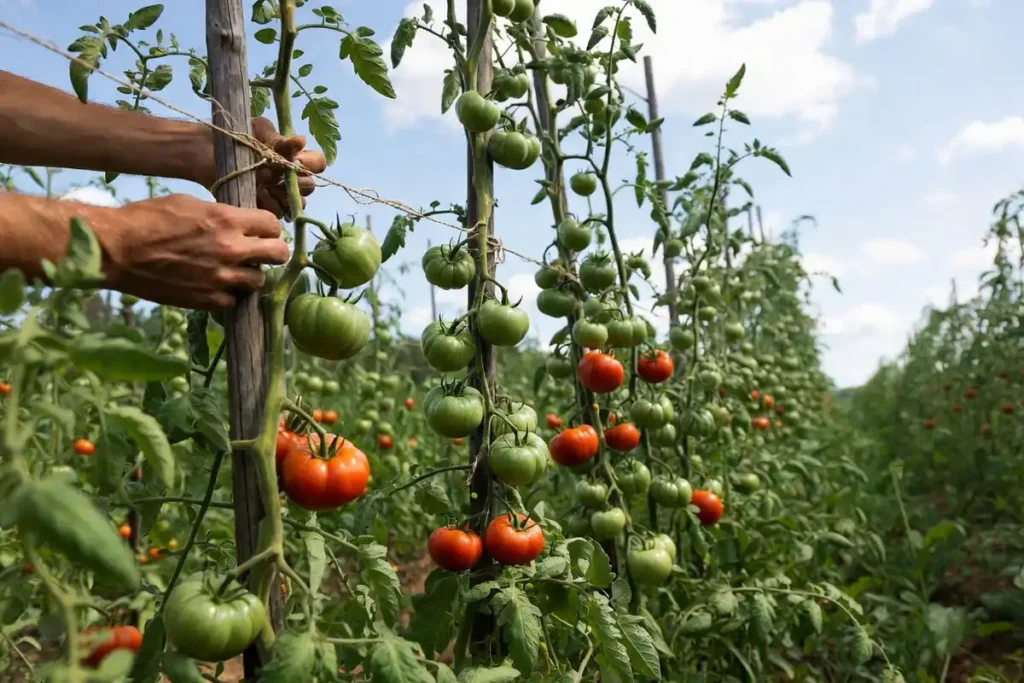
For specialty or authentic Italian recipes, San Marzano produces a noticeably sweeter, less acidic result. The plant needs more space and a longer season since it grows indeterminate. Indeterminate varieties benefit from proper support structures to keep vines off the ground and reduce disease pressure.
For fresh eating alongside sauce use, Juliet or Amish Paste deliver more flavor complexity. Both produce over an extended season.
If you plan to start from seed indoors, the guide on starting tomatoes from seed covers germination timing and transplant preparation.
Can You Substitute Roma for Other Plum Tomatoes?
In most recipes, Roma substitutes for any plum tomato without a significant problem. The texture and density stay close enough for stews, roasted sauces, and basic tomato paste.
For authentic Neapolitan pizza sauce, San Marzano produces a different result because of its lower acidity and higher natural sugar content. Roma works as a substitute in that application, but the sauce delivers a stronger, more acidic flavor.
For fresh eating in salads, any plum tomato produces a drier texture compared to slicing varieties. Beefsteak or heirloom slicers suit fresh applications better.
For a concentrated reduction or sun-dried tomatoes, the higher solids content in San Marzano and Amish Paste produces a richer final product than Roma.
Common Mistakes When Buying or Using Plum Tomatoes

Assuming “plum tomatoes” on a label always means Roma. Most grocery stores do stock Roma under the generic label, but some stock Viva Italia or other varieties. Check the variety name on seed packets and plant tags before purchasing.
Buying canned “San Marzano” without verifying DOP certification. Many canned products use the San Marzano name without carrying the authentic Italian certification. Genuine DOP-certified San Marzano cans display a certification seal and list the region of origin. Products without the seal are a different variety grown elsewhere.
Treating all plum tomatoes as identical for yield planning. Determinate varieties like Roma concentrate their yield in a short window. Indeterminate varieties like San Marzano and Juliet spread production across weeks. Plan your harvest and storage capacity accordingly. The tomato yield per plant guide covers what to expect from different plant types.
Skipping support for indeterminate plum varieties. Roma does not need staking because of its compact, bushy habit. San Marzano, Amish Paste, and Juliet all grow tall and heavy. Without support, vines collapse, fruit touches soil, and disease pressure increases. Pruning indeterminate plum varieties also affects both disease management and yield, which the tomato pruning guide addresses in detail.
Conclusion
Roma tomatoes are plum tomatoes. Plum tomatoes are not all Roma. The category covers multiple varieties, each with different sizes, flavors, plant habits, and ideal uses. For most sauce and canning work, Roma and other plum tomatoes perform close enough to be interchangeable. For specific recipes or specialty dishes, the variety matters. Knowing the difference helps you buy the right tomato at the store, select the right seed for your garden, and get the result you expect in the kitchen.