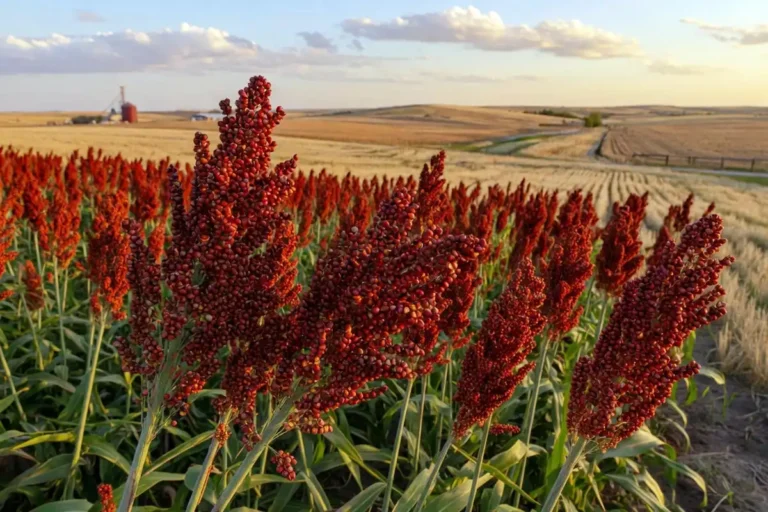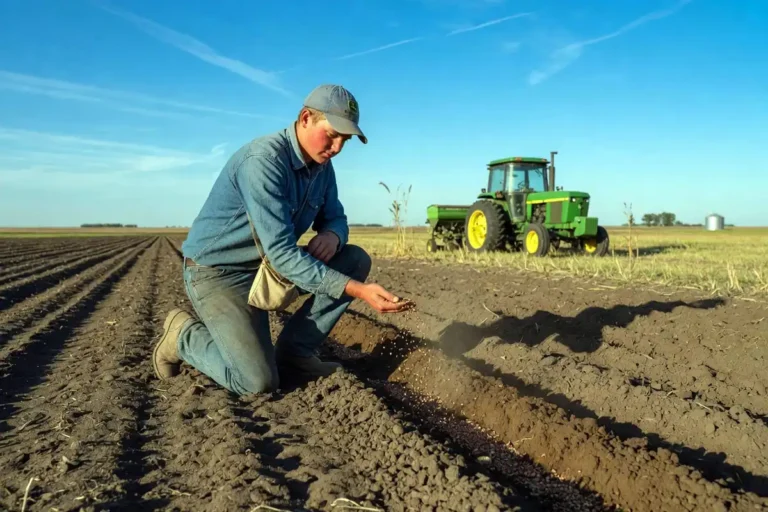
How Tall Does Sorghum Grow? Heights by Variety and Conditions
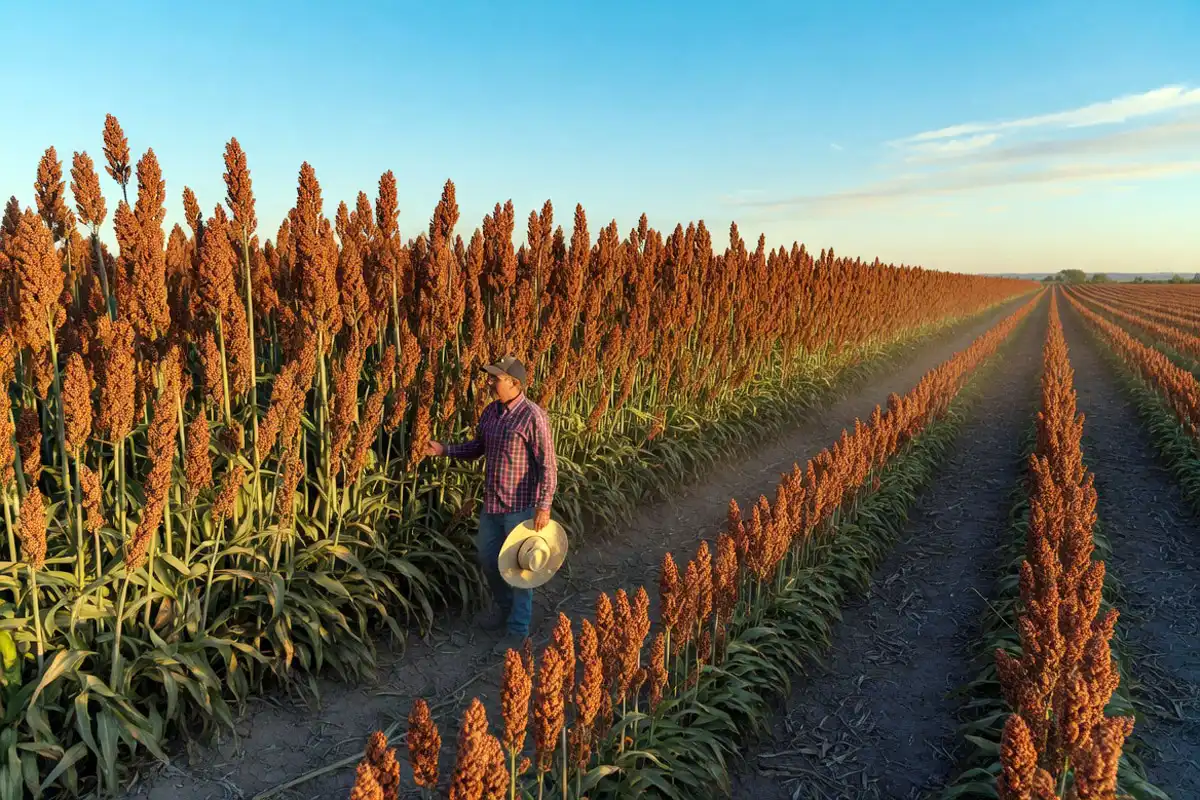
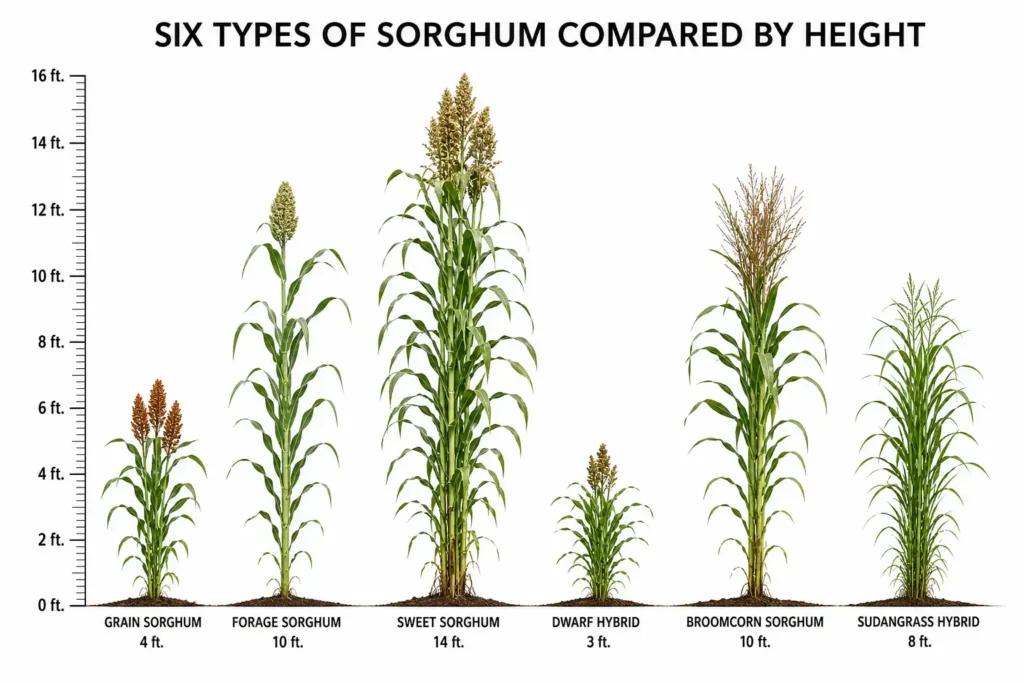
Sorghum grows between 2 and 15 feet tall depending on variety, with grain sorghum averaging 3 to 5 feet and forage types reaching 8 to 12 feet. This guide breaks down sorghum height by type, the conditions that influence final growth, and what causes short or lodged stands.
Sorghum Height at a Glance:
- Grain sorghum (milo): 3 to 5 feet
- Forage sorghum: 6 to 12 feet
- Sweet sorghum: 8 to 15 feet
- Sorghum-sudangrass hybrids: 6 to 10 feet
- Broomcorn: 6 to 12 feet
- Dwarf hybrids: 2 to 3.5 feet
What Determines Sorghum Height?
Sorghum height depends on three things: genetics, environment, and management. Plant breeders use four dwarfing genes (Dw1 through Dw4) to control internode length. A “3-dwarf” hybrid stays short for combine harvest, while a “1-dwarf” type runs much taller. Grow grain sorghum, and most modern hybrids hold under 5 feet on purpose.
The sorghum plant responds strongly to water, heat, and nitrogen. Drought stress shortens internodes. Cool nights slow vertical growth. Tight plant populations also push stalks taller as plants stretch for light.
Sorghum Height by Type
Grain Sorghum (Milo)
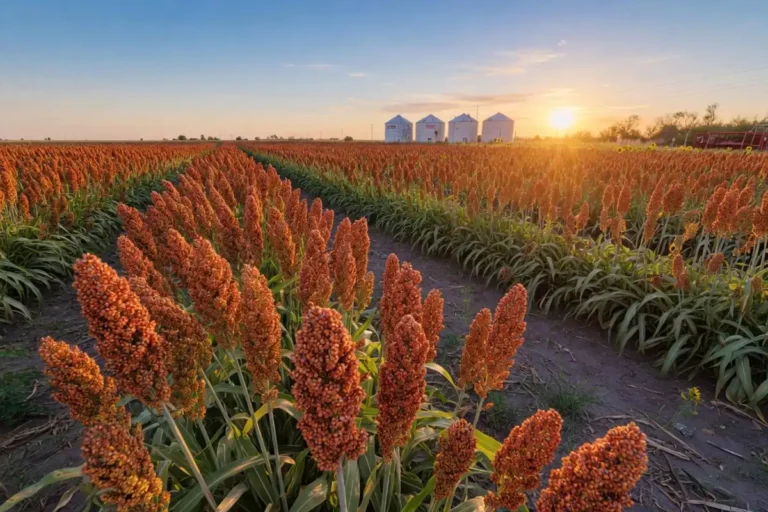
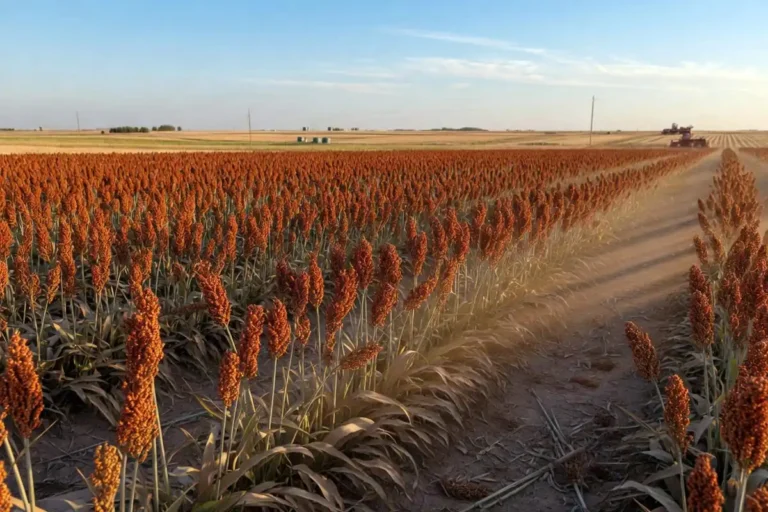
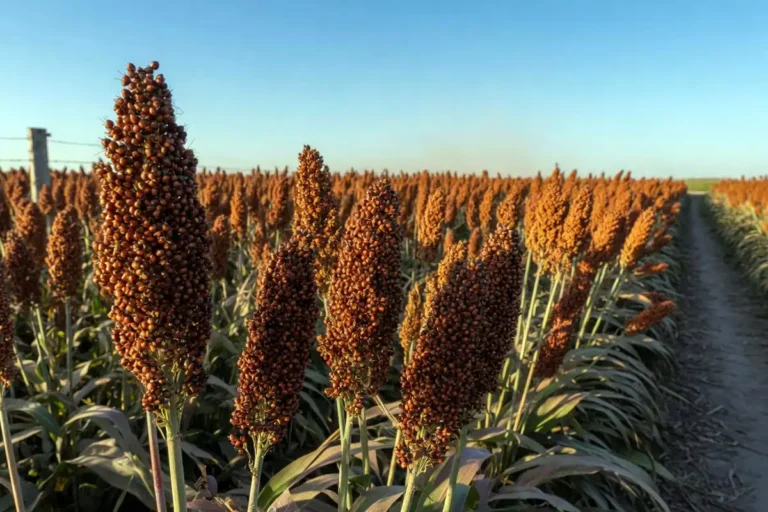
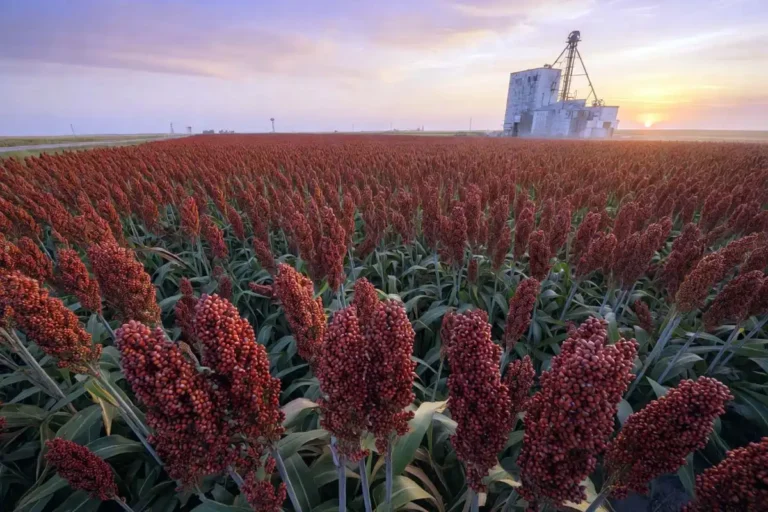
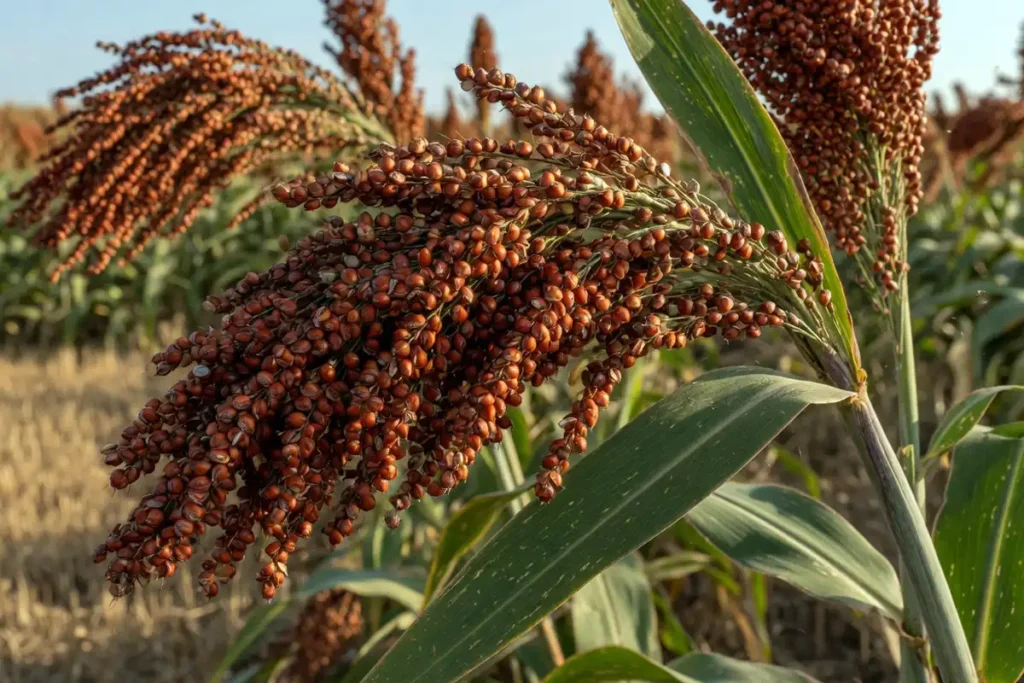
Grain sorghum grows 3 to 5 feet on average. Most U.S. dryland fields run 36 to 48 inches at maturity. According to Kansas State Research and Extension, modern grain hybrids stay short to suit combine headers and resist lodging. The relationship between milo and sorghum is simple: milo is the common name for grain sorghum in the U.S.
Forage Sorghum
Forage sorghum reaches 6 to 12 feet. Producers grow it for silage, green chop, or hay. Taller stalks mean more biomass per acre, often 15 to 25 tons of wet silage.
Sweet Sorghum
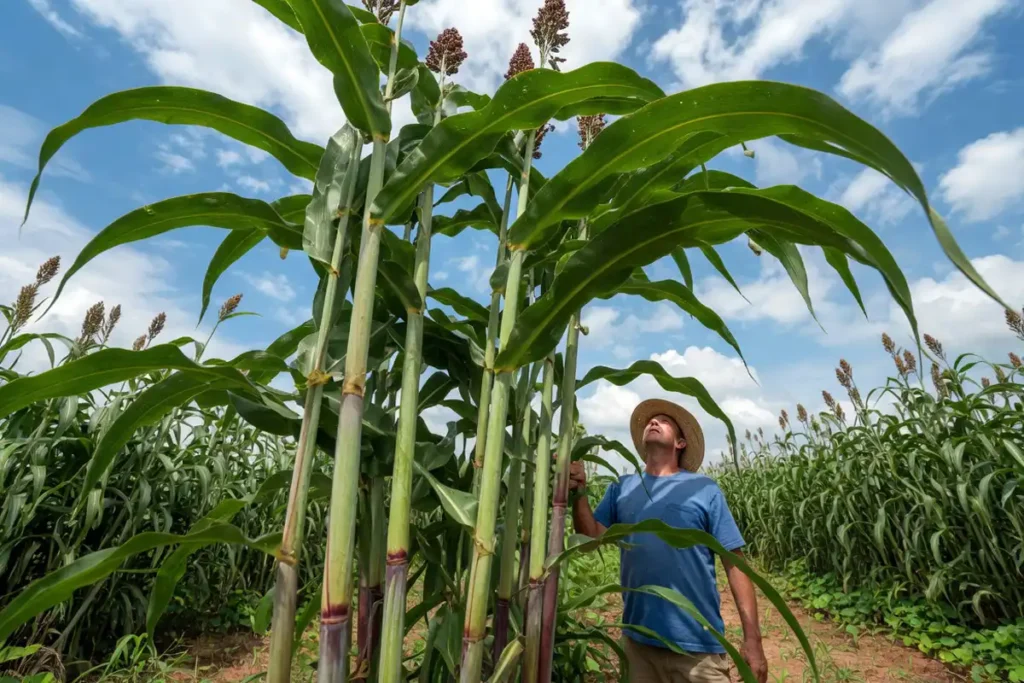
Sweet sorghum grows 8 to 15 feet, with some heritage varieties topping 18 feet under good moisture. The juicy stalks store sugar for syrup and biofuel.
Sorghum-Sudangrass Hybrids
These cross-types reach 6 to 10 feet in a single cutting and regrow after mowing. They suit grazing and haylage. Our guide on covers timingcutting sorghum-sudan for hay.
Broomcorn
Broomcorn grows 6 to 12 feet and produces long fiber panicles used for brooms and crafts.
When Does Sorghum Reach Full Height?
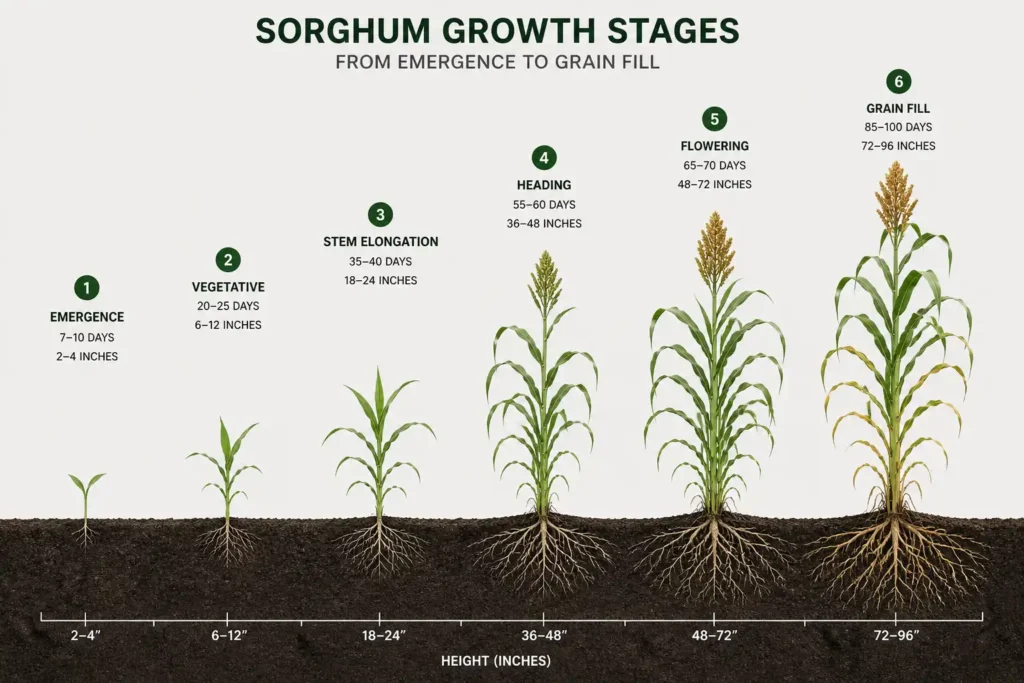
Sorghum hits final height around the boot stage, roughly 55 to 65 days after emergence for grain types. After heading, the plant stops elongating and shifts energy to grain fill. Forage sorghum keeps growing until first frost or first cutting, since flowering happens later or not at all in some hybrids.
Where Sorghum Grows Tallest
Sorghum reaches maximum height in warm, sunny regions with steady moisture. The Southern Plains, Mississippi Delta, and parts of Texas produce the tallest stands. The USDA Natural Resources Conservation Service lists sorghum as a warm-season grass that performs best between 70°F and 95°F. Cool spring soils delay emergence and shorten the final plant.
Latitude also matters. Sorghum is photoperiod-sensitive, so longer days near the equator extend vegetative growth before flowering. That’s why tropical sweet sorghum can stretch 15 feet while the same seed planted in Kansas might top out at 10.
How Growing Conditions Change Sorghum Height
Nitrogen
Nitrogen drives stalk and leaf growth. Sorghum needs about 1.0 to 1.2 pounds of nitrogen per bushel of grain target. Under-fertilized fields stay short and pale. Over-fertilized fields lodge. Our notes on nitrogen fertilizer rates explain how to balance the supply.
Water
Sorghum tolerates drought better than corn but still rewards moisture. Each inch of available water adds roughly 4 to 6 inches of plant height during vegetative growth. Severe drought during the 5-leaf to boot stage cuts final height by 20 to 40 percent.
Plant Population
Higher populations push plants taller and thinner. Dryland grain sorghum runs 30,000 to 60,000 plants per acre. Forage sorghum runs 80,000 to 120,000. Correct plant spacing keeps stalks strong.
Temperature and Sunlight
Sorghum needs soil temperatures above 60°F to germinate and 75°F or warmer for fast vertical growth. Cloudy, cool summers stunt the crop.
Troubleshooting Short or Stunted Sorghum
Short sorghum usually traces back to one of five issues:
- Cool, wet planting: seedlings sit and stall.
- Nitrogen deficiency: yellow lower leaves, slow elongation.
- Iron chlorosis: pale upper leaves on high-pH soil.
- Compaction: roots cannot reach moisture or nutrients.
- Herbicide carryover: atrazine residues from corn can damage stand.
Check soil tests, planting depth (1 to 1.5 inches), and stand counts before blaming variety.
Mistakes to Avoid
- Picking a tall hybrid for a combine that needs a short one
- Planting before soils reach 60°F
- Skipping starter fertilizer on cold ground
- Crowding rows beyond the seed company’s recommendation
- Forcing late-planted forage sorghum that won’t mature before frost
Safety Notes for Tall Sorghum
Tall forage and sudan-type hybrids carry two real risks. Prussic acid can poison livestock when plants are stressed by frost or drought. Never graze sorghum-sudangrass shorter than 18 to 24 inches, and wait 7 to 10 days after a killing frost. Lodging in tall stands creates harvest hazards. Check for stalk rot before combining, and slow ground speed in down corn-style conditions.
FAQs about Sorghum Plant Height and Growth Characteristics
How tall does grain sorghum get?
Why is my sorghum so short?
Does sweet sorghum grow taller than grain sorghum?
How fast does sorghum grow per day?
Will sorghum grow taller in good soil?
Conclusion
Sorghum height ranges from 2-foot dwarf hybrids to 15-foot sweet stalks, and the variety you plant sets the ceiling. Genetics, water, nitrogen, and temperature decide how close you get to that ceiling. Match the type to your goal (grain, silage, hay, or syrup), feed the crop right, and the height takes care of itself.