Does Dry Quinoa Go Bad? Shelf Life, Storage, and Spoilage Signs
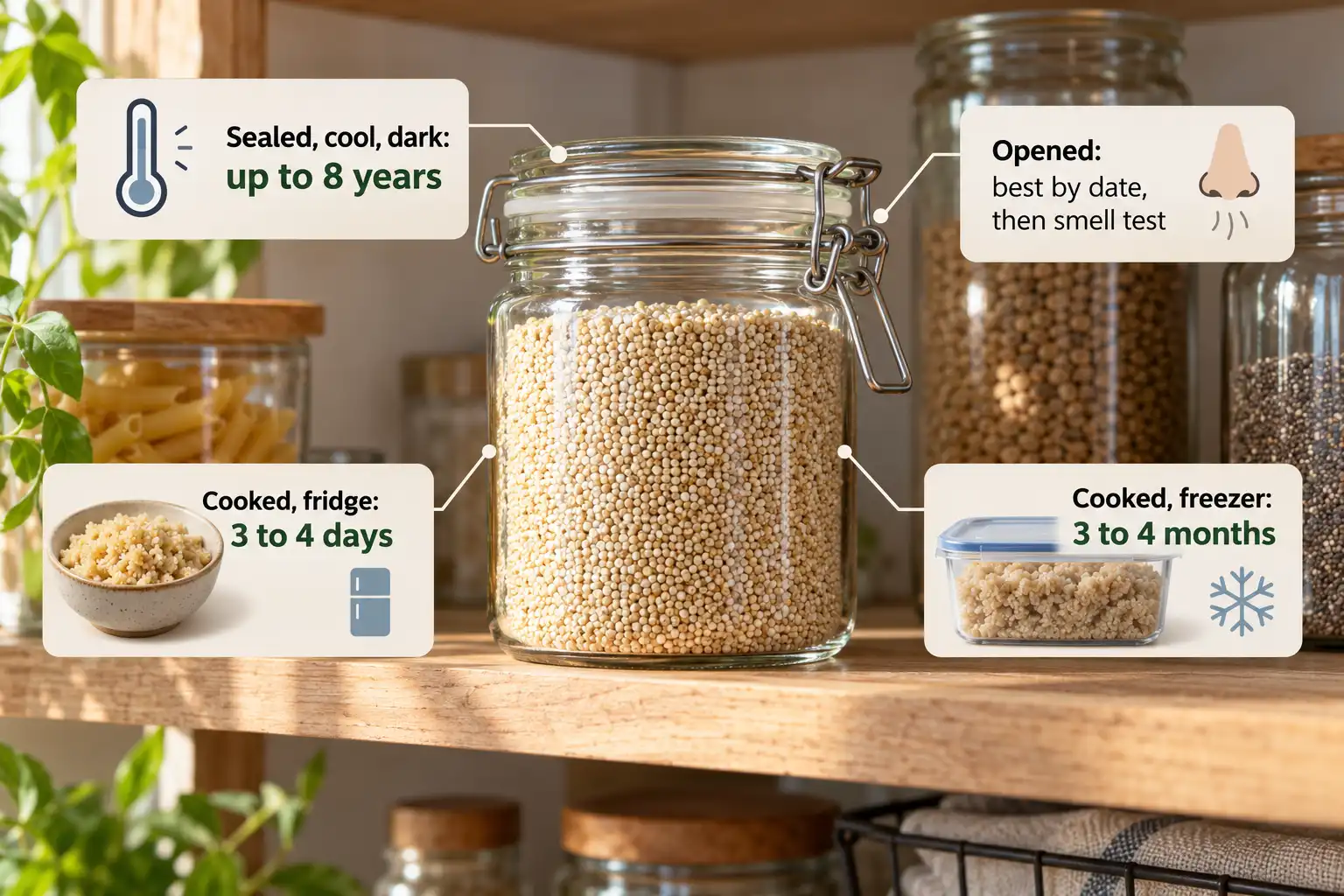
Dry quinoa keeps for years in a pantry, yet it does not last forever. Knowing how dry quinoa goes bad helps you store it well and catch spoilage before it reaches the pot.
Yes, dry quinoa goes bad, but slowly. Sealed airtight and kept cool, dark, and dry, it lasts up to 8 years, according to Texas A&M AgriLife Extension. Heat, air, and moisture turn its oils rancid much sooner.
Why Quinoa Turns Rancid
Dry quinoa goes bad mainly through rancidity, not germs. Its low moisture keeps mold and bacteria in check while the grain stays dry. The weak point is the oil inside each seed.
According to USDA FoodData Central, uncooked quinoa holds 6.07 grams of fat per 100 grams. Of that, 3.29 grams are polyunsaturated fat, the type that oxidizes fastest. Raw white rice, by contrast, carries just 0.66 grams of fat per 100 grams. That gap is why white rice outlasts quinoa on the shelf.
Utah State University Extension notes that quinoa contains more polyunsaturated fat than most grains. Its natural vitamin E, an antioxidant, may slow that oxidation. Still, the same publication points out that research on quinoa shelf life remains limited.
Two other threats also shorten its life:
- Moisture. Damp quinoa grows mold, and water speeds rancidity.
- Insects. Indianmeal moths and grain beetles feed on stored seeds and leave webbing and larvae behind.
How Long Does Quinoa Last in the Pantry?
Dry quinoa keeps peak quality at least through its best-by date, and often well beyond it. Under ideal conditions, it lasts far longer. Texas A&M AgriLife Extension groups quinoa with oats and rye as soft grains. Stored correctly, these grains last up to 8 years. Hard grains such as wheat and corn reach 10 to 12 years, which is why stored wheat outlasts quinoa.
Most kitchens fall short of ideal, however. Temperature sets the pace. Utah State University Extension, citing USDA guidance, lists 50°F as the best storage temperature for cereal grains. A 70°F pantry is still acceptable. The same source reports that every 10.8°F rise in temperature cuts storage life in half.
That rule matters in warm regions. Summer pantries near 81°F are common in homes without steady air conditioning across the Gulf Coast and Desert Southwest. Quinoa stored there ages about twice as fast as quinoa kept at 70°F.
| Storage condition | Expected quality life | What drives it |
|---|---|---|
| Unopened package, cool pantry | At least through the best-by date | Factory seal limits air, but thin bags still admit pests |
| Opened, airtight jar, 70°F or below | Through the best-by date, then judge by smell | Each opening lets in air and humidity |
| Airtight, cool, dark, rarely opened | Up to 8 years (Texas A&M AgriLife) | Little oxygen, light, or heat |
| Near a stove, dishwasher, or in a hot garage | About half the normal life for every 11°F of added heat | Heat speeds oil oxidation |
| Refrigerator or freezer | Longer than pantry storage | Cold slows oxidation, and freezing kills insects |
Can Quinoa Expire?
Quinoa has no true safety expiration date. The date on the package marks peak quality. According to USDA FSIS, manufacturers date foods to show best quality. Except for infant formula, those dates do not indicate safety. FSIS adds that foods showing no signs of spoilage stay wholesome past a “Best if Used By” date.
So quinoa past its date is not automatically bad. Equally, the date offers no protection once the grain turns rancid, damp, or buggy. Quinoa that fails a sensory check goes in the trash, whatever the label says.
How to Tell If Dry Quinoa Has Gone Bad
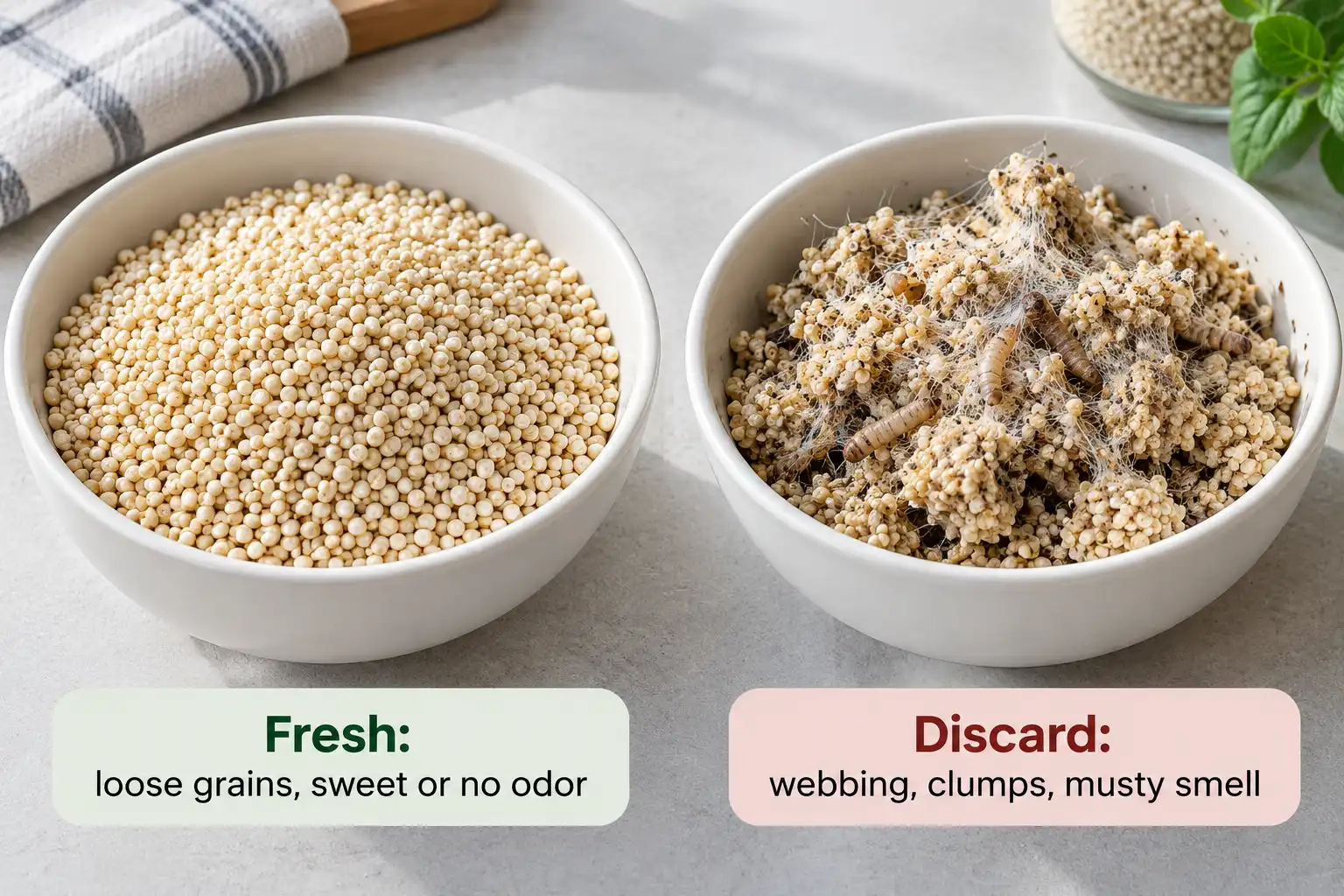
Smell it first, then inspect it under good light. Rancid quinoa rarely announces itself. Bob’s Red Mill notes that dried quinoa often gives off no rancid smell and keeps its texture even after it spoils. For that reason, a careful check matters more than a quick glance.
Texas A&M AgriLife Extension states that good grains smell slightly sweet or have no odor at all. An oily or musty odor signals poor quality.
Run through these five checks:
- Smell. Sniff a handful from the center of the container. Stale, oily, or musty notes mean the oils have oxidized.
- Webbing and insects. Silky threads, larvae, small beetles, or tiny holes in the bag point to pantry pests.
- Clumps. Grains stuck together suggest moisture or insect webbing.
- Color and mold. Dark spots, fuzzy growth, or discolored patches mean moisture got in.
- Taste after cooking. A stale, sharp, or flat flavor confirms rancidity.
Discard quinoa that fails any of these checks. University of Minnesota Extension calls throwing away infested food the best way to clear pantry pests. It also notes that these insects contaminate more food than they eat.
Bitter Taste: Saponin or Rancidity?
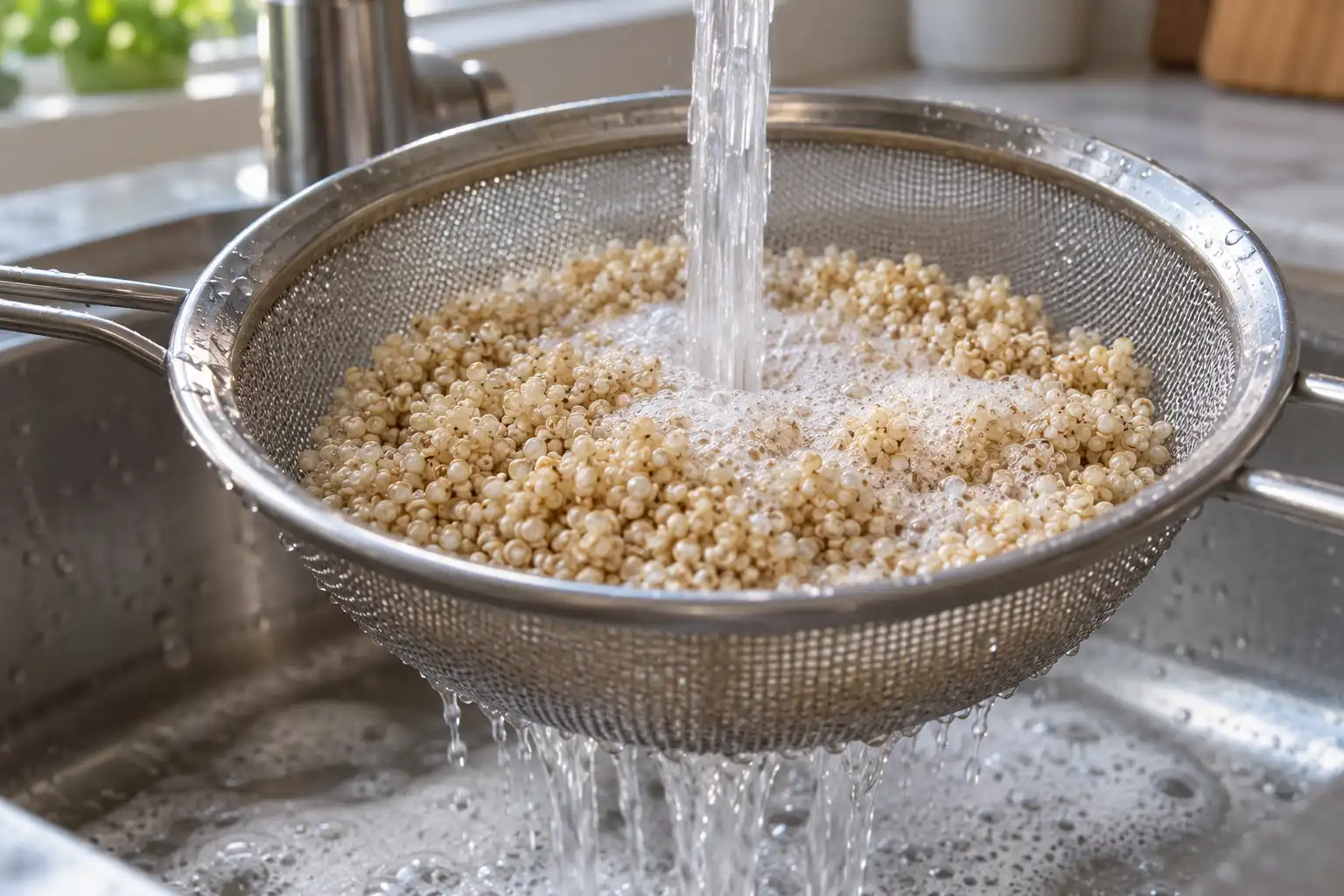
A soapy, bitter taste usually comes from saponin, not spoilage. Utah State University Extension explains that quinoa seeds carry bitter saponin in their outer coat. Manufacturers remove most of it by washing or mechanical polishing, and a home rinse clears the rest.
Saponin foams when you rinse the grain. Rancidity, by contrast, shows up as a stale or oily smell in the dry seed before cooking. To tell them apart, rinse a cup of quinoa in a fine-mesh strainer for about a minute. If the bitterness disappears after cooking, the grain was fine.
Rinse only right before cooking. Wet quinoa put back in storage invites mold.
How to Store Quinoa So It Stays Fresh
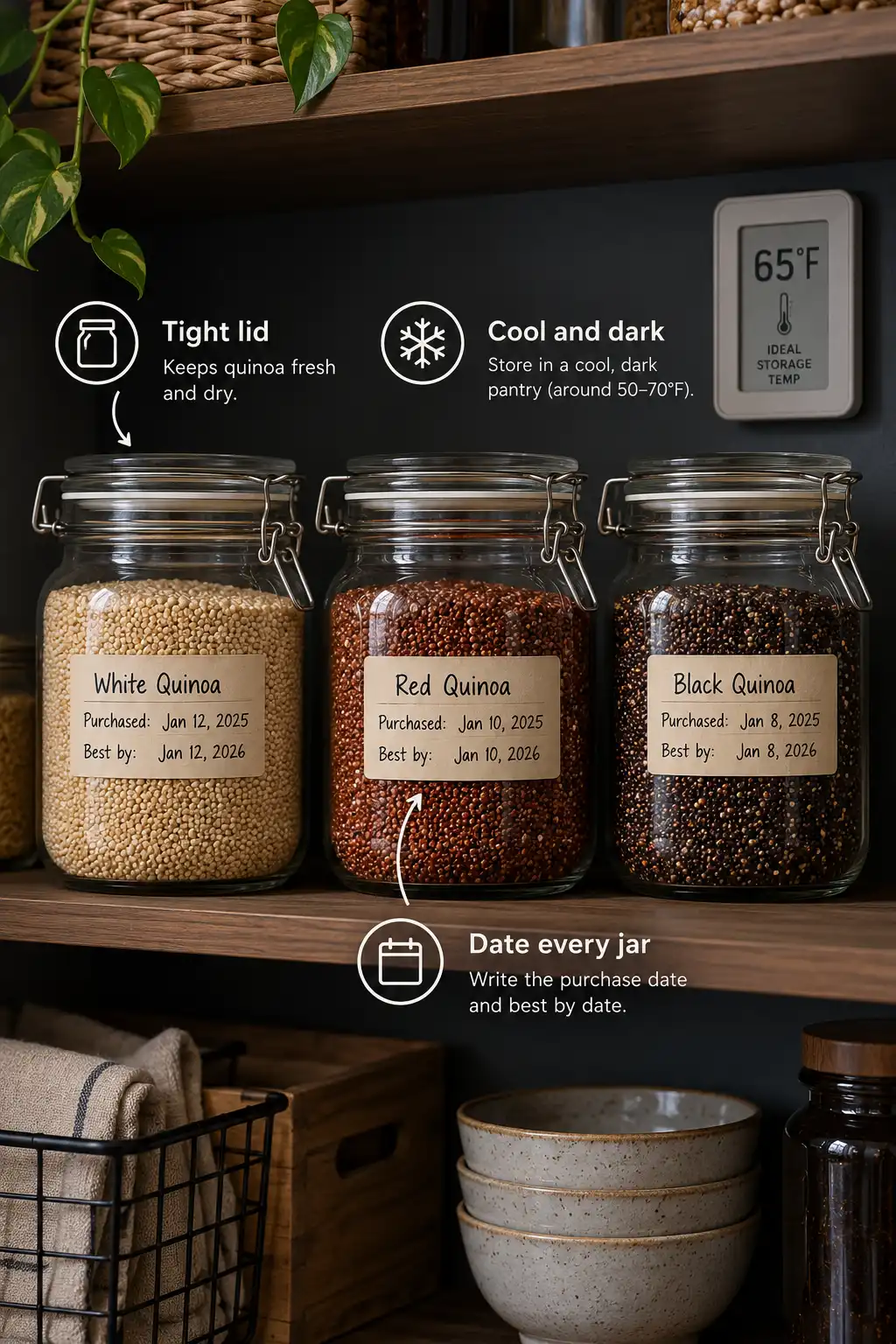
Store dry quinoa in an airtight container in a cool, dark, dry spot. These six steps cover most kitchens:
- Move opened quinoa into glass or metal containers with tight lids. University of Minnesota Extension reports that pantry pests get into unopened paper, thin cardboard, and plastic packages through folds and seams.
- Pick the coolest dark cabinet. Avoid spots above the stove, beside the dishwasher, or near a sunny window.
- Label every container. Write the purchase date and best-by date on tape. Texas A&M AgriLife Extension recommends dating containers to track freshness.
- Freeze doubtful stock. Put older quinoa you are unsure about in the freezer at 0°F for at least four days. University of Minnesota Extension advises this step to kill hidden insects.
- Keep batches separate. Finish old quinoa before opening new, and wash the jar between fills.
- Never store rinsed quinoa. Moisture turns a shelf-stable seed into a mold risk.
Long-Term Storage With Oxygen Absorbers
For storage measured in years, seal quinoa in Mylar bags, food-grade buckets, or #10 cans with oxygen absorbers. Utah State University Extension notes that hermetic containers paired with oxygen absorber packets eliminate food-borne insects. They also help preserve taste and nutrition.
The grain must be dry first. Utah State specifies about 10 percent moisture or less for oxygen-absorber packing. The same source warns that moist products sealed in low-oxygen packaging risk botulism. That is one more reason never to pack rinsed quinoa.
For bulk buys you plan to use within a year or two, vacuum sealing dry goods cuts air exposure with less setup.
Should You Refrigerate or Freeze Dry Quinoa?
You do not need to refrigerate dry quinoa, but cold storage helps in hot, humid kitchens. Bob’s Red Mill suggests freezing dried quinoa in a freezer-safe container to extend its shelf life. Cold slows oil oxidation, and freezing also kills insects.
Watch for condensation, though. Let a cold jar reach room temperature before you open it. Otherwise, moisture beads on the grains.
How Long Does Quinoa Last in the Fridge?
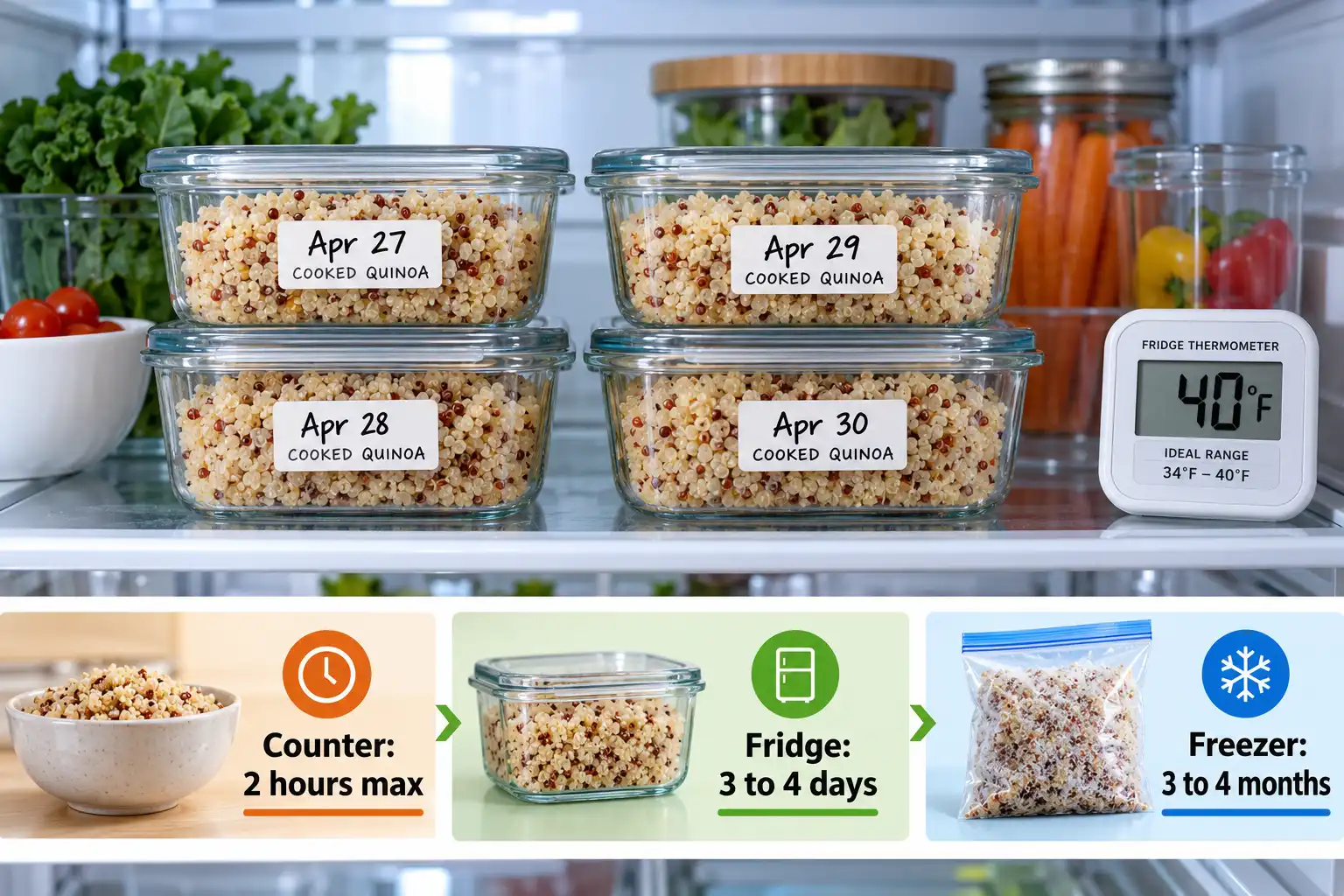
Cooked quinoa lasts 3 to 4 days in the refrigerator. That window comes from USDA FSIS guidance for cooked leftovers. Dry, uncooked quinoa follows the pantry rules above.
| Where cooked quinoa sits | Time limit | Source |
|---|---|---|
| Room temperature | 2 hours (1 hour above 90°F) | USDA FSIS |
| Refrigerator at 40°F or below | 3 to 4 days | USDA FSIS |
| Freezer at 0°F | 3 to 4 months for best quality | USDA FSIS |
FSIS also recommends a few habits that help leftovers reach the full window:
- Spread hot quinoa in shallow containers so it cools fast.
- Seal containers airtight to keep out bacteria and fridge odors.
- Reheat leftovers to 165°F, measured with a food thermometer.
Frozen quinoa stays safe indefinitely, according to FSIS. Even so, it loses moisture and flavor after a few months.
Bob’s Red Mill notes that cooked quinoa hardens and grows mold as it spoils. Toss any batch with mold, a sour smell, or a slimy feel, even before day 4.
How Long Can Quinoa Last in the Fridge in a Salad?
A quinoa salad lasts 3 to 4 days at most, the same FSIS limit for any cooked leftover. Mixed ingredients often decline sooner than the grain. Cucumbers turn watery, and cooked chicken or soft cheese follows its own short clock. So the dish usually goes off before the quinoa does.
Do Steel Cut Oats Go Bad?
Yes, steel cut oats go bad the same way quinoa does: their oils turn rancid over time. USDA FoodData Central lists whole oats at 6.9 grams of fat per 100 grams, slightly more than quinoa. Quinoa, however, holds more polyunsaturated fat, at 3.29 grams versus 2.54 grams in oats.
Processing helps oats last. Millers heat-treat, or kiln, oat groats to deactivate lipase, the enzyme that breaks down oat oil. Utah State University Extension describes steel cut oats as groats run through steel blades. Rolled oats, by contrast, are steamed and flattened. The oat milling process covers each step from hull to bowl.
Texas A&M AgriLife Extension groups oats with quinoa as soft grains that keep up to 8 years in proper storage. After opening, Bob’s Red Mill says hot cereals and rolled oats keep best refrigerated or frozen. Discard oats that change color, hold moisture, or develop a strange scent. Those are the spoilage signs Bob’s Red Mill lists for oats. Bulk buyers can follow the same steps used for storing oats long term.
| Factor | Dry quinoa | Steel cut oats (whole oat values) |
|---|---|---|
| Total fat per 100 g (USDA FoodData Central) | 6.07 g | 6.9 g |
| Polyunsaturated fat per 100 g | 3.29 g | 2.54 g |
| Processing before sale | Saponin washed or polished off | Groats kilned, then cut with steel blades |
| Storage life, stored correctly (Texas A&M AgriLife) | Up to 8 years | Up to 8 years |
| Cooked, in the fridge (USDA FSIS) | 3 to 4 days | 3 to 4 days |
| First spoilage clue | Faint stale or musty smell | Color change, moisture, or strange scent |
Frequently Asked Questions
Can you eat quinoa past its best-by date?
Yes, if it passes a smell and visual check. USDA FSIS treats best-by dates as quality markers, so quinoa with no off odor, webbing, clumps, or mold remains fine to cook after the date passes.
Does quinoa expire after opening?
Opened quinoa loses quality faster than sealed quinoa, but it does not hit a sudden safety deadline. Each opening lets in air and humidity, so move it to an airtight jar and use it within the printed best-by date.
Does uncooked quinoa need to be refrigerated?
No, uncooked quinoa stays shelf-stable in a cool, dark pantry. Refrigerating or freezing it still pays off in hot, humid kitchens, because cold slows the oil oxidation that makes quinoa rancid.
How long can cooked quinoa sit out?
Cooked quinoa sits out safely for no more than 2 hours, or 1 hour above 90°F, per USDA FSIS. After that, discard it, because bacteria multiply quickly between 40°F and 140°F.
Can bugs get into a sealed bag of quinoa?
Yes, pantry pests chew into or crawl through folds and seams of unopened paper, thin cardboard, and plastic packages, according to University of Minnesota Extension. Glass or metal containers with tight lids keep them out.
The Practical Takeaway
Dry quinoa keeps for years when you control heat, air, moisture, and pests. Move opened bags into airtight glass or metal jars, store them in the coolest dark cabinet, and date every container. Smell it before you cook, since rancid quinoa often looks normal. Once cooked, refrigerate it within 2 hours and finish it within 3 to 4 days.