Is Quinoa Good for You? 8 g Protein and 5 g Fiber Per Cup
Quinoa is one of the most nutrient-dense grains on the shelf, but it is still a starchy food with limits. Below, USDA nutrient data and extension research answer whether quinoa is good for you, covering protein, carbs, fiber, iron, gluten, and portion size.
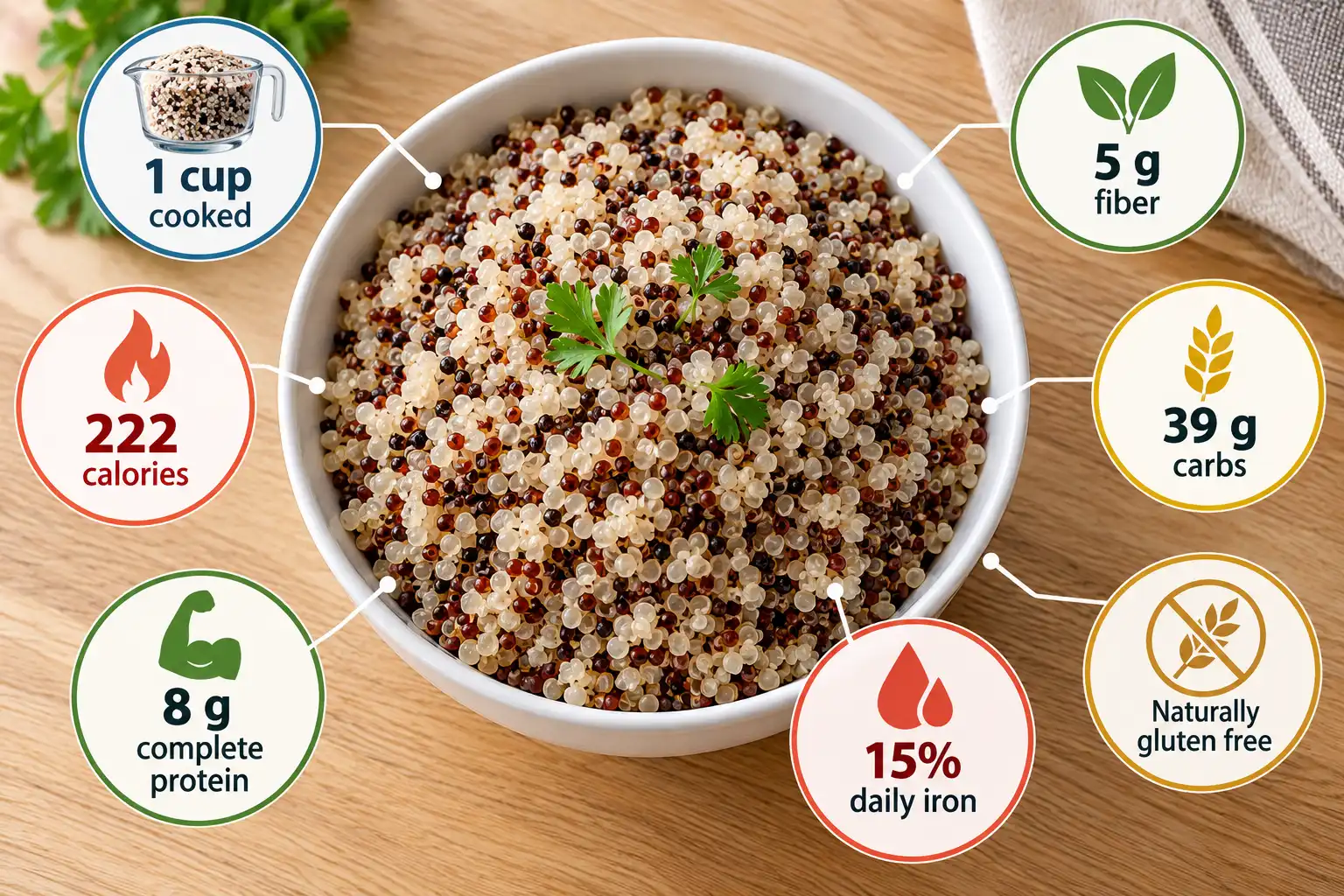
As a gluten-free whole grain with complete protein, quinoa is good for you in most diets. One cooked cup delivers 222 calories, 8 grams of protein, 5 grams of fiber, and 15% of daily iron, per USDA FoodData Central.
What Is Quinoa?
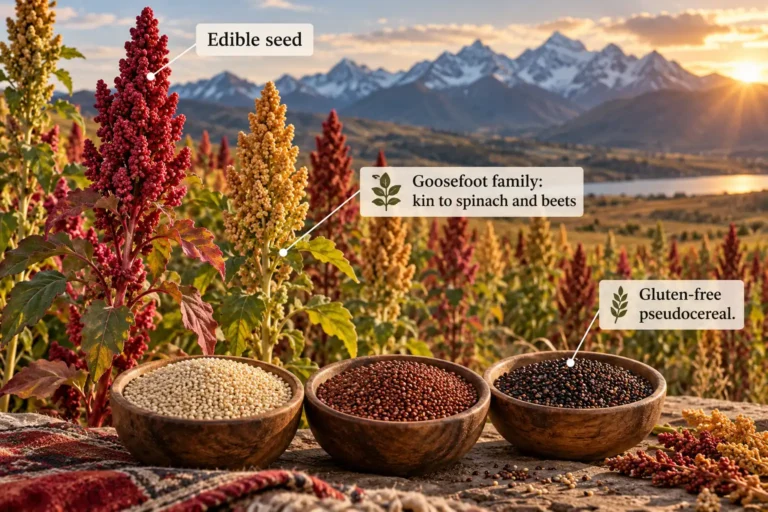
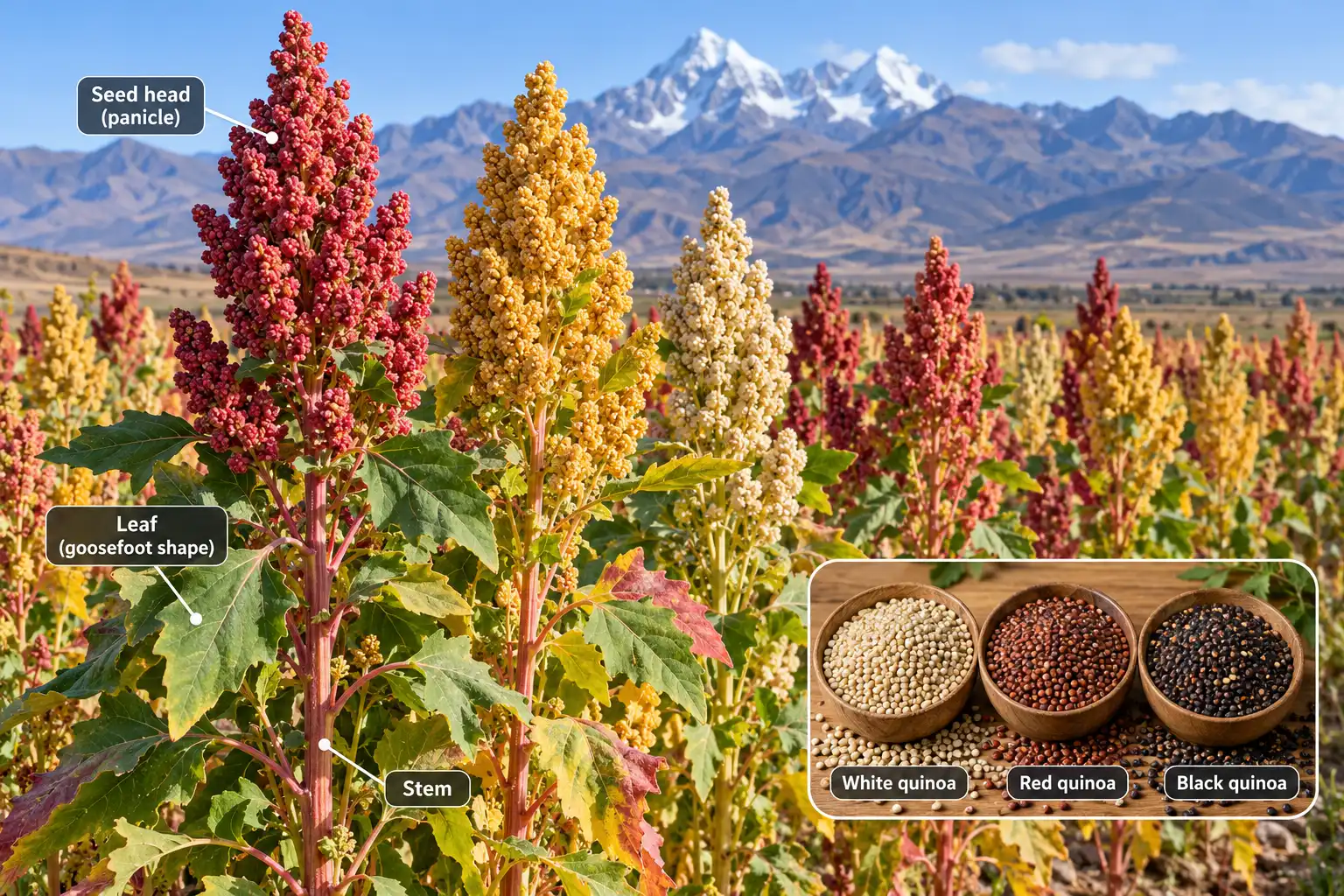
Quinoa is the edible seed of Chenopodium quinoa, a broadleaf plant native to the Andes near Peru and Bolivia. According to NDSU Extension, the Incas called it the “mother grain.” It belongs to the goosefoot group of plants. That makes quinoa a botanical cousin of spinach, chard, and beets, including the sugar beet.
The seeds come in white (also called ivory), red, and black. UF/IFAS Extension notes that white is the type most stores carry.
Is Quinoa a Grain?
Botanically, no. Quinoa is a pseudo-cereal, not a true grain. NDSU Extension explains that people cook and eat it like a grain, and its nutrition is similar. However, it grows on a broadleaf plant instead of a grass. In contrast, oats and other true cereal grains come from the grass family. For meal planning, nutrition educators still count quinoa as a whole grain.
Quinoa Nutrition Facts Per Cup
One cup of cooked quinoa (185 grams) has 222 calories plus a broad mix of minerals. The values below come from USDA FoodData Central for plain quinoa cooked in water. Daily Value (DV) percentages assume a 2,000-calorie diet.
| Nutrient | Amount per cooked cup | % DV |
|---|---|---|
| Calories | 222 | 11% |
| Protein | 8.1 g | 16% |
| Total carbohydrate | 39.4 g | 14% |
| Fiber | 5.2 g | 19% |
| Sugar | 1.6 g | No DV |
| Total fat | 3.6 g | 5% |
| Sodium | 13 mg | 1% |
| Iron | 2.8 mg | 15% |
| Potassium | 318 mg | 7% |
| Magnesium | 118 mg | 28% |
| Phosphorus | 281 mg | 22% |
| Zinc | 2.0 mg | 18% |
| Copper | 0.36 mg | 39% |
| Manganese | 1.2 mg | 51% |
| Folate | 78 mcg | 20% |
Manganese, copper, and magnesium are the standout minerals. Protein and fiber, however, explain most of quinoa’s reputation.
How Many Calories in 1 Cup of Quinoa?
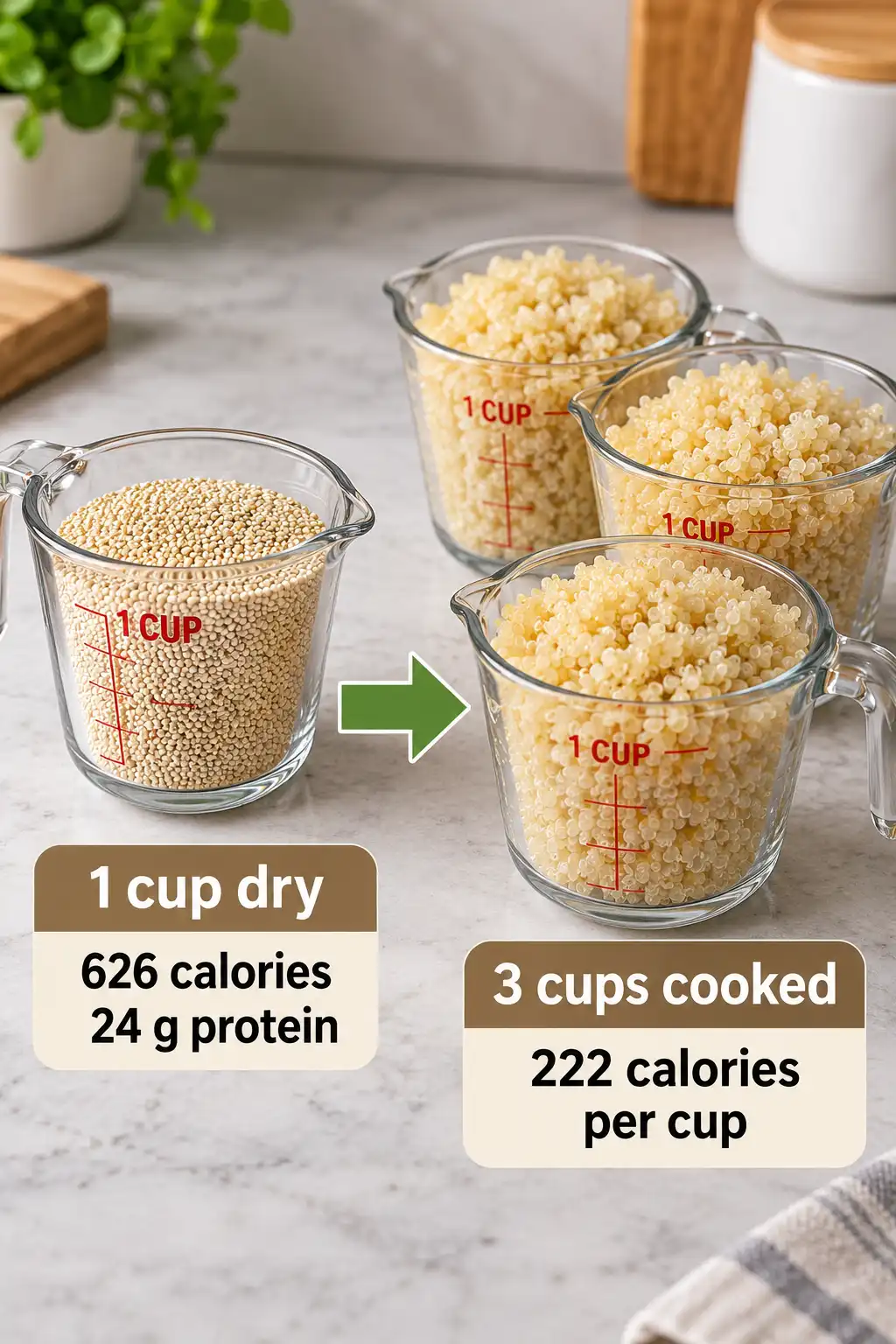
One cup of cooked quinoa has 222 calories, or 120 calories per 100 grams, per USDA FoodData Central. That is close to a cup of cooked white rice at about 205 calories. Dry quinoa, however, is far denser. One cup of uncooked quinoa (170 grams) holds about 626 calories and 24 grams of protein. That dry cup cooks up to roughly 3 cups. So check whether a recipe or label lists dry or cooked amounts before you count.
Does Quinoa Have Protein?
Yes. One cup of cooked quinoa has 8.1 grams of protein, per USDA FoodData Central. That is more than a large egg provides. It also nearly doubles the 4.3 grams in a cup of long-grain white rice, per UF/IFAS Extension.
Is Quinoa a Complete Protein?
Yes. NC State Extension notes that quinoa is a complete protein. That means it supplies all nine essential amino acids your body cannot make on its own. Many plant proteins fall short on at least one. As a result, quinoa makes a strong base for vegetarian and vegan meals.
Quinoa Protein Content vs. Your Daily Needs
Quinoa protein content is high for a grain but modest for a meal. Protein supplies only about 15% of its calories. So one cup covers roughly 16% of the 50-gram Daily Value. To build a high-protein plate, pair quinoa with beans, lentils, eggs, chicken, or tofu.
Is Quinoa a Carb?
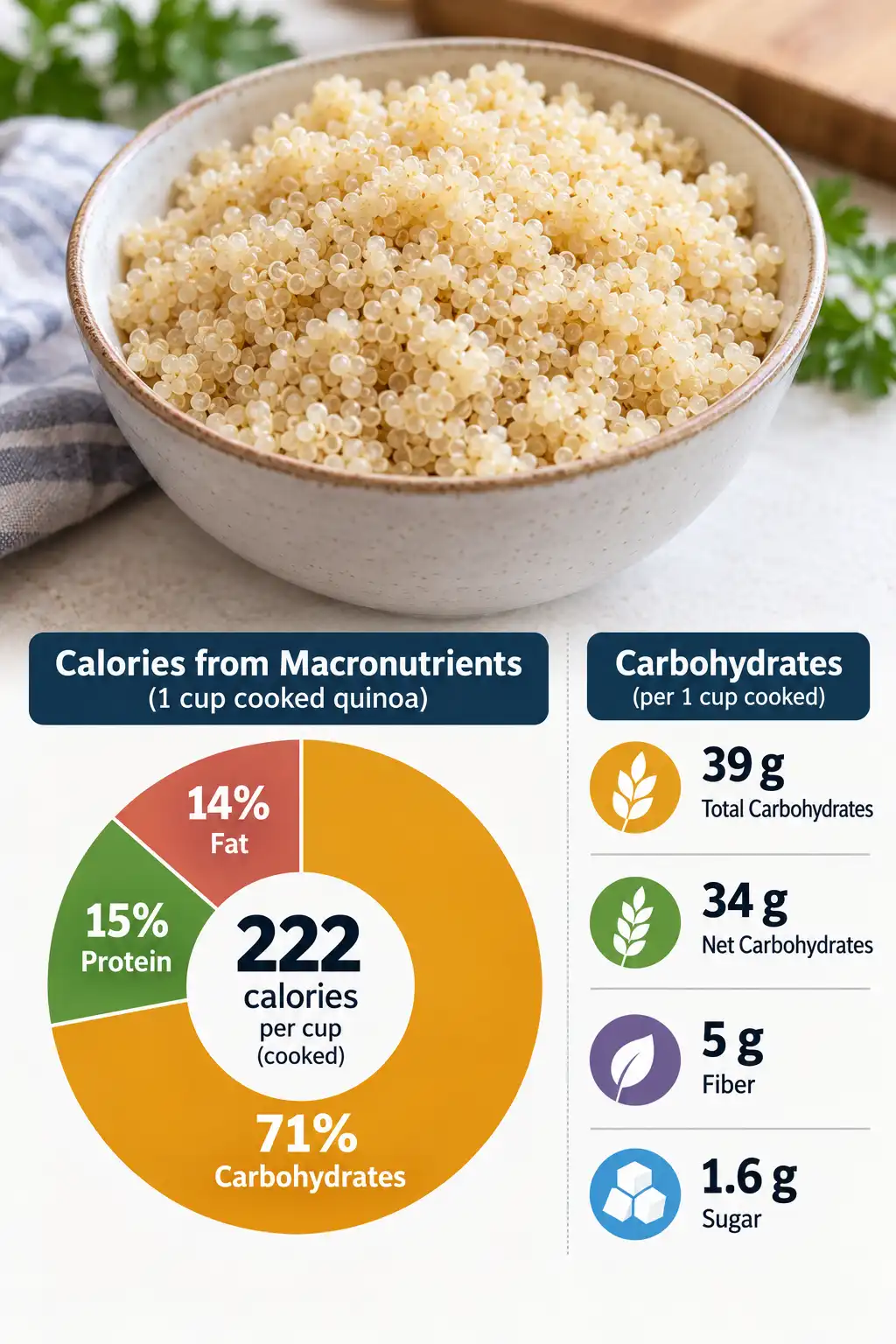
Yes, quinoa is mainly a carbohydrate food. About 71% of its calories come from carbs, 15% from protein, and 14% from fat, based on USDA FoodData Central. Most of that carbohydrate is starch, which your body breaks down into glucose for energy.
How Many Carbs in Quinoa?
One cup of cooked quinoa has 39.4 grams of total carbohydrate. Starch makes up 32.6 grams of that total. Subtract the 5.2 grams of fiber, and you get about 34 grams of net carbs. By weight, 100 grams of cooked quinoa has 21.3 grams of carbs.
Because of that load, quinoa does not fit a strict keto plan. A single cup uses most of a typical keto day’s carb allowance. Still, it fits moderate-carb eating when you measure portions.
Does Quinoa Have Sugar?
Very little. One cooked cup has about 1.6 grams of naturally occurring sugar, per USDA FoodData Central. That is less than half a teaspoon. Plain quinoa also has no added sugar. So any sweetness in flavored quinoa mixes comes from added ingredients.
Does Quinoa Have Fiber?
Yes. One cup of cooked quinoa has 5.2 grams of fiber, about 19% of the Daily Value. UF/IFAS Extension reports that quinoa provides both soluble and insoluble fiber. Together, these help maintain intestinal health. The soluble fiber may also help lower heart disease risk, according to the same publication.
UF/IFAS Extension adds that people with high fiber intakes tend to have lower blood pressure, cholesterol, and blood sugar. For comparison, long-grain white rice has only 0.6 grams of fiber per cup. So swapping rice for quinoa adds about 4.6 grams of fiber to the same meal.
Does Quinoa Contain Iron and Potassium?
Yes, quinoa contains both, though iron is the stronger of the two.
Iron in Quinoa
One cup of cooked quinoa has 2.8 milligrams of iron, about 15% of the Daily Value, per USDA FoodData Central. That is a solid amount for a plant food. Quinoa’s iron is non-heme iron, the plant form. Your body absorbs it better when you eat it with vitamin C foods such as tomatoes, peppers, or citrus.
Potassium in Quinoa
Quinoa has some potassium, but it is not a top source. One cooked cup has 318 milligrams, or about 7% of the Daily Value. For comparison, a medium banana has about 422 milligrams, per USDA FoodData Central.
Other Minerals Worth Noting
Magnesium is where quinoa stands out most. One cooked cup has 118 milligrams, compared with 19 milligrams in white rice, per UF/IFAS Extension. Quinoa also supplies about half your daily manganese and more than a third of your daily copper. In addition, NDSU Extension lists vitamin E and zinc among its useful nutrients.
Is There Gluten in Quinoa?
No. Quinoa is naturally gluten-free. UF/IFAS Extension calls it a useful grain for people with celiac disease, gluten sensitivity, or wheat allergy. Gluten is a protein in wheat, barley, and rye, and quinoa is unrelated to those crops.
However, cross-contact is the main risk. Quinoa can pick up gluten in fields, trucks, mills, or bulk bins shared with wheat, barley, or rye. So if you have celiac disease, buy quinoa labeled “gluten-free.” Under federal labeling rules, that label means the food contains less than 20 parts per million of gluten. Also check seasoned mixes and broths for wheat-based ingredients.
For more gluten-free variety, rice, corn, and sorghum grain are naturally gluten-free too.
Quinoa Benefits: What Is Quinoa Good For?
Quinoa is good for adding complete protein, fiber, and minerals to meals without gluten. Here is where it helps most:
- Plant-based protein: It supplies complete protein for vegetarian and vegan meals.
- Gluten-free meals: It replaces wheat-based grains in celiac and gluten-sensitive diets.
- Digestive health: Its mix of soluble and insoluble fiber supports intestinal health.
- Steadier blood sugar: NC State Extension calls it a healthier grain for type 2 diabetes because of its fiber and protein.
- Heart health: It is naturally low in sodium, with just 13 milligrams per cooked cup.
- Whole grain goals: It counts toward the USDA MyPlate advice to make at least half your grains whole.
NDSU Extension adds that whole grains, as a group, help protect against heart disease, cancer, and other chronic diseases.
Quinoa vs. Rice and Barley
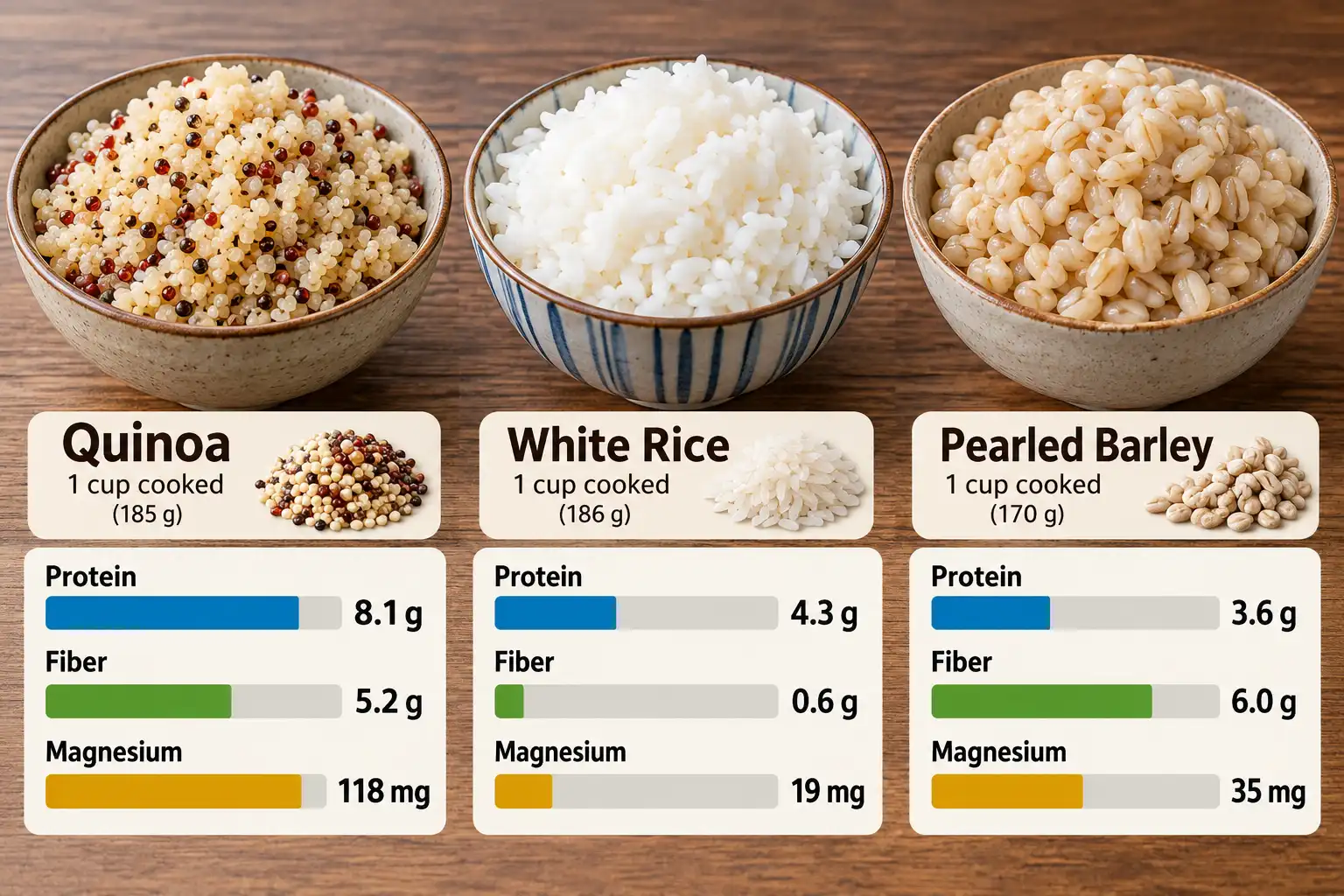
Quinoa beats white rice on protein, fiber, and key minerals per cooked cup. UF/IFAS Extension compared common grains using USDA data:
| Nutrient (1 cup cooked) | Quinoa | Long-grain white rice | Barley |
|---|---|---|---|
| Protein | 8.1 g | 4.3 g | 3.6 g |
| Fiber | 5.2 g | 0.6 g | 6.0 g |
| Magnesium | 118 mg | 19 mg | 35 mg |
| Zinc | 2.0 mg | 0.8 mg | 1.3 mg |
| Calcium | 31 mg | 16 mg | 17 mg |
| Contains gluten | No | No | Yes |
Barley edges out quinoa on fiber. Even so, quinoa leads on protein, magnesium, and zinc, and unlike barley, it contains no gluten. The same fiber and protein trade-offs come up when you weigh wheat against oats as a whole grain.
Downsides: When Quinoa Is Not the Best Fit
Quinoa is safe for most people, but three issues deserve attention.
Carbs and Calories Add Up
One cup carries 222 calories and 39 grams of carbs. USDA MyPlate counts 1/2 cup of cooked grains as a 1-ounce grain equivalent. That means a full cup equals two grain servings. So measure portions if you manage weight or blood sugar.
Oxalate and Kidney Stones
Like its relatives spinach and beets, quinoa contains oxalate. Oxalate binds with calcium to form calcium oxalate, the most common type of kidney stone. If your doctor has put you on a low-oxalate diet, ask how much quinoa fits your plan.
Saponins and Fiber Can Upset Digestion
Quinoa seeds carry a bitter natural coating called saponin. NDSU Extension explains that this coating deters pests while the plant grows. Most brands remove it, but leftover residue leaves a soapy taste. Also, a sudden jump in fiber can cause gas or bloating. Start with 1/2 cup and drink plenty of water.
How to Prepare Quinoa for the Best Taste
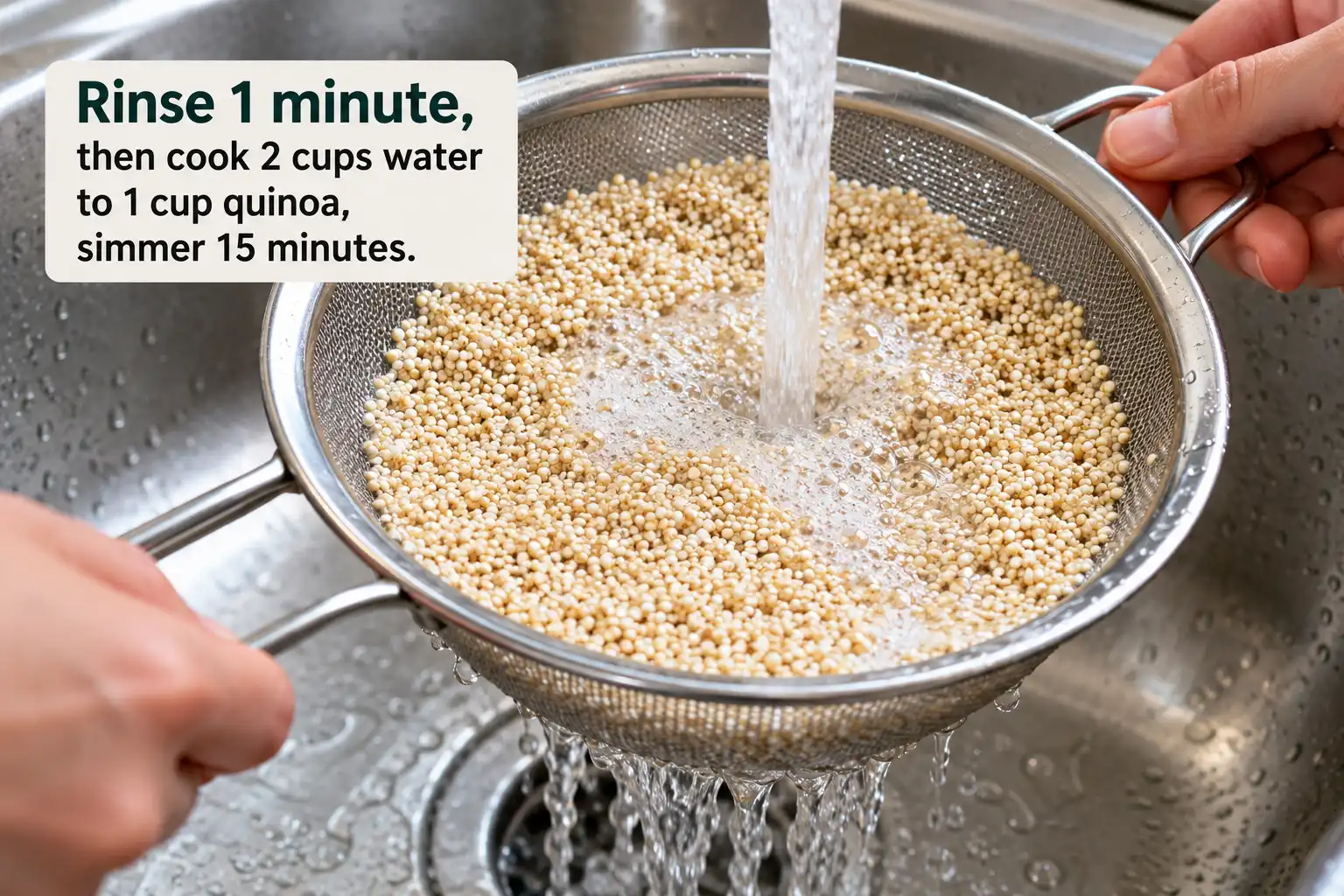
Rinse quinoa first, then cook it at a 2-to-1 liquid ratio. Follow these steps for 1 cup of dry quinoa, which makes about 3 cups cooked:
- Rinse: Place the quinoa in a fine-mesh strainer and run cold water over it for about a minute. NDSU Extension recommends this final rinse even for pre-washed brands.
- Combine: Add 2 cups of water or low-sodium broth, the ratio UF/IFAS Extension uses.
- Simmer: Bring it to a boil, cover, and simmer on low for 15 minutes.
- Rest: Take the pot off the heat and let it sit covered for 10 minutes, as NC State Extension suggests. Then fluff it with a fork.
Choose the color by dish. UF/IFAS Extension notes that red quinoa holds its shape best in cold salads. Black quinoa, by contrast, tastes earthy and slightly sweet. Meanwhile, NC State Extension suggests starting with white quinoa, since lighter seeds taste milder.
Frequently Asked Questions
Is quinoa healthier than rice?
Yes, quinoa is more nutritious than white rice per cooked cup. UF/IFAS Extension data shows it has nearly twice the protein, over eight times the fiber, and about six times the magnesium of long-grain white rice.
Can you eat quinoa every day?
Yes, most people can eat quinoa daily as part of a varied diet. Keep servings to 1/2 to 1 cup cooked, and rotate in other whole grains, especially if you follow a low-oxalate diet.
Is quinoa good for weight loss?
Quinoa can support weight loss when you control portions. Its protein and fiber help you stay full, but one cooked cup still carries 222 calories, so measure servings rather than eating from the pot.
Is quinoa good for people with diabetes?
Quinoa is a better grain choice than refined grains for most people with type 2 diabetes. Still, one cooked cup has about 39 grams of carbs, so count it in your meal plan and pair it with protein.
Which color of quinoa is healthiest?
White, red, and black quinoa share a similar core profile of protein, fiber, and minerals. Pick by use: red holds its shape in salads, black adds an earthy sweetness, and white has the mildest flavor.
What the Research Supports
Quinoa is a nutrient-dense, gluten-free whole grain with complete protein, solid fiber, and standout magnesium and manganese. Treat it as a carb serving, not your main protein source. Rinse it, keep portions to 1/2 to 1 cup cooked, and pair it with beans or lean protein for a balanced plate.