Seed Potato 101: How to Choose, Store, Cut, and Plant Them Right
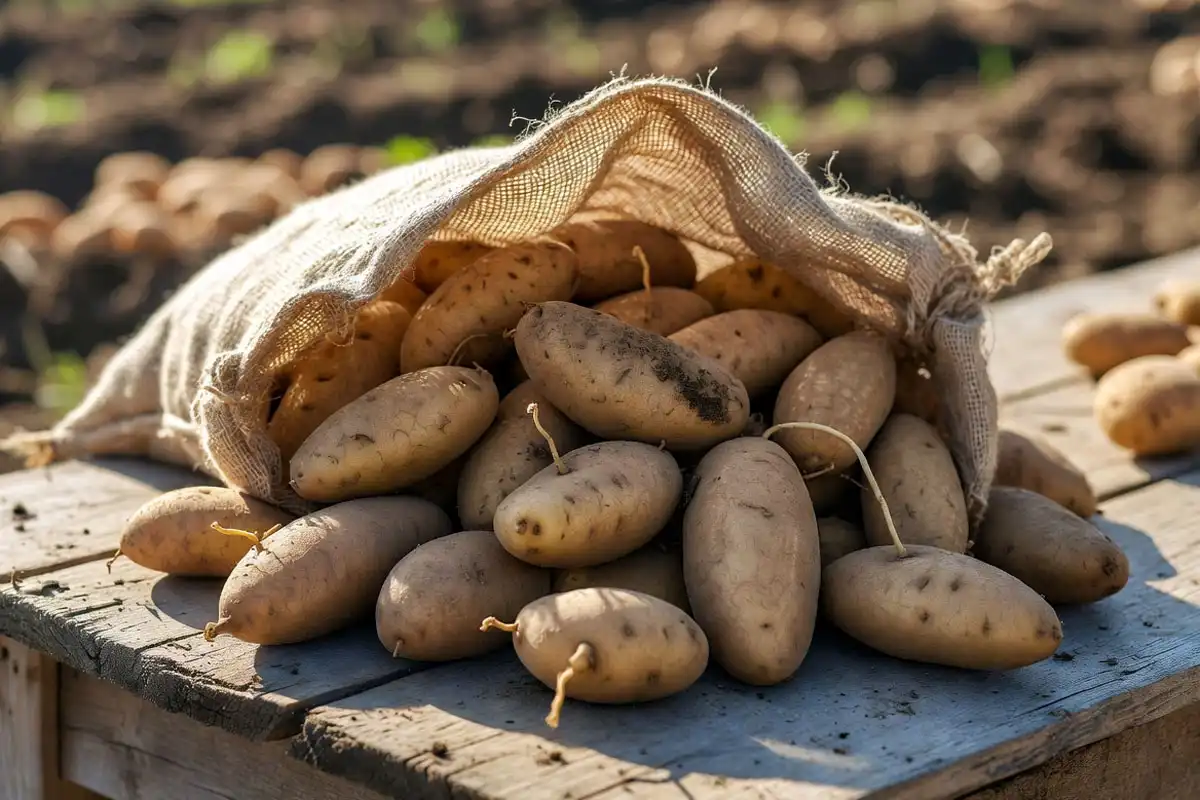
A seed potato is a potato tuber grown and handled for planting because its eyes sprout into a new potato plant. This guide explains how seed potatoes differ from grocery potatoes, how to choose healthy tubers, and how to store, cut, and plant them for a steady stand. It also covers chitting, spacing, hilling, and the common problems that cause seed pieces to rot or fail to emerge. Use it as a start-to-finish reference whether you grow a few rows or a full field.
Seed potatoes are small, healthy potato tubers (or cut seed pieces) used for planting. Each piece carries one or more eyes that sprout into stems and roots. Growers pick certified seed potatoes to reduce viruses and rot. Plant them in cool, workable soil, then hill soil over stems to protect forming tubers.
What is a seed potato?
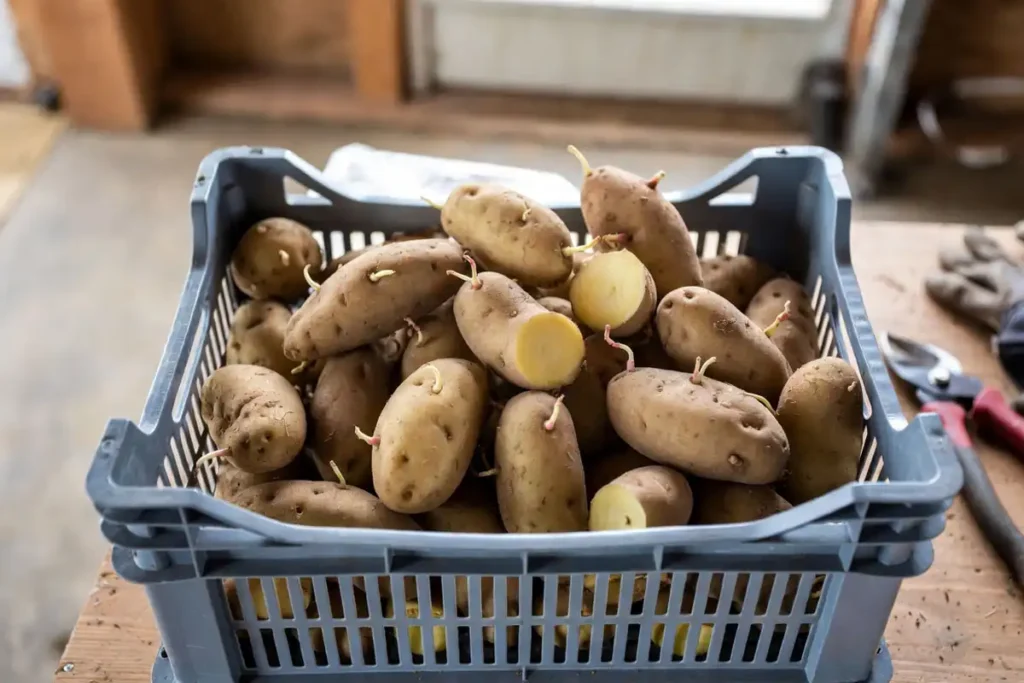
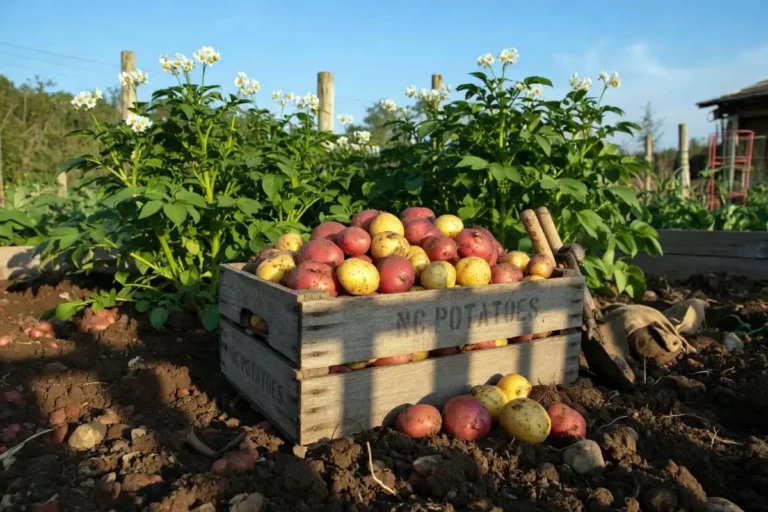
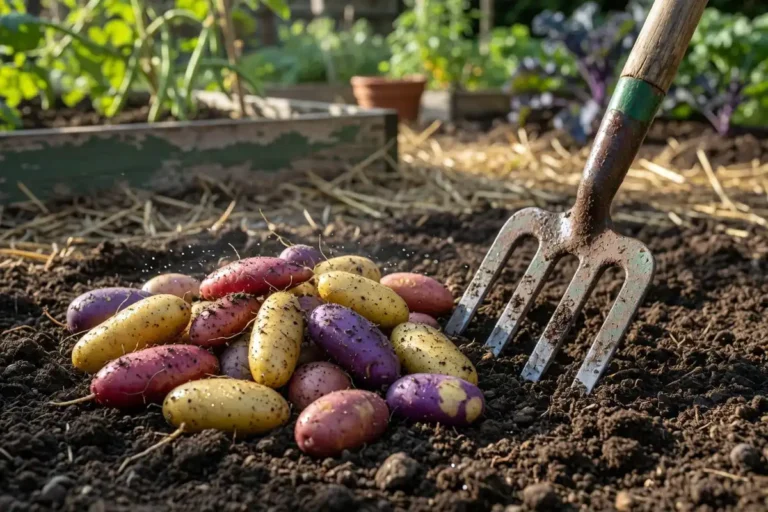
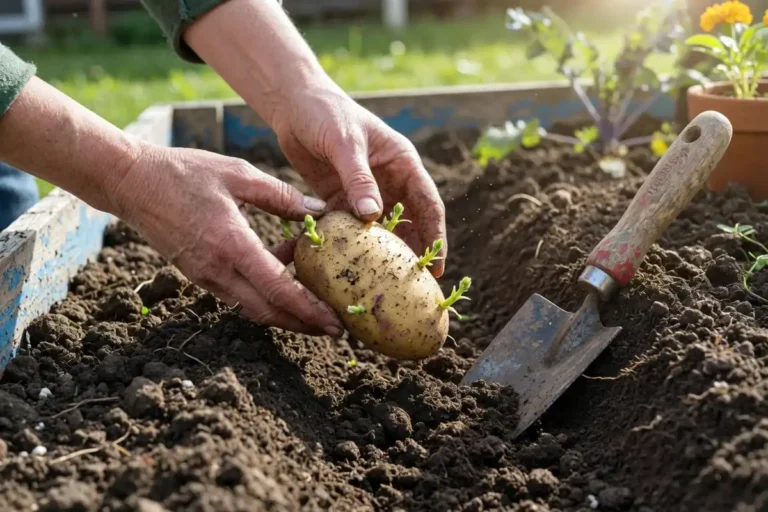
A seed potato is a living potato tuber used as planting material. It contains stored energy and dormant buds called eyes. When you plant it, those eyes sprout and form stems, roots, and stolons that later produce new tubers.
Growers also call seed potatoes seed tubers. When a grower cuts a large tuber into sections for planting, each section is a seed piece.
How is a seed potato different from a grocery potato?
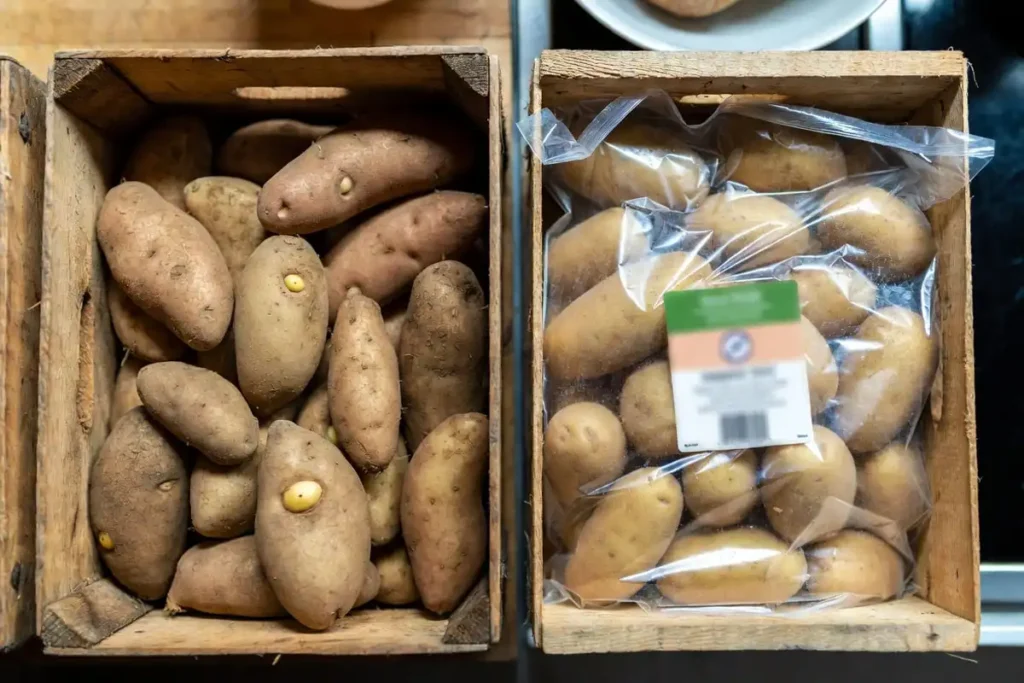
Seed potatoes are grown and handled to produce strong plants, while grocery potatoes are grown for eating. That difference matters for two reasons.
Seed potatoes focus on plant health. Reputable suppliers sell seed lots with known variety identity and lower disease risk.
Grocery potatoes carry unknown risk. Store potatoes can carry viruses and bacterial problems without clear symptoms, and some are treated to reduce sprouting. Those factors can cause weak emergence or spread disease into clean ground.
If your goal is a dependable potato stand, seed potatoes give you more control.
Seed potato vs true potato seed: what is the difference?
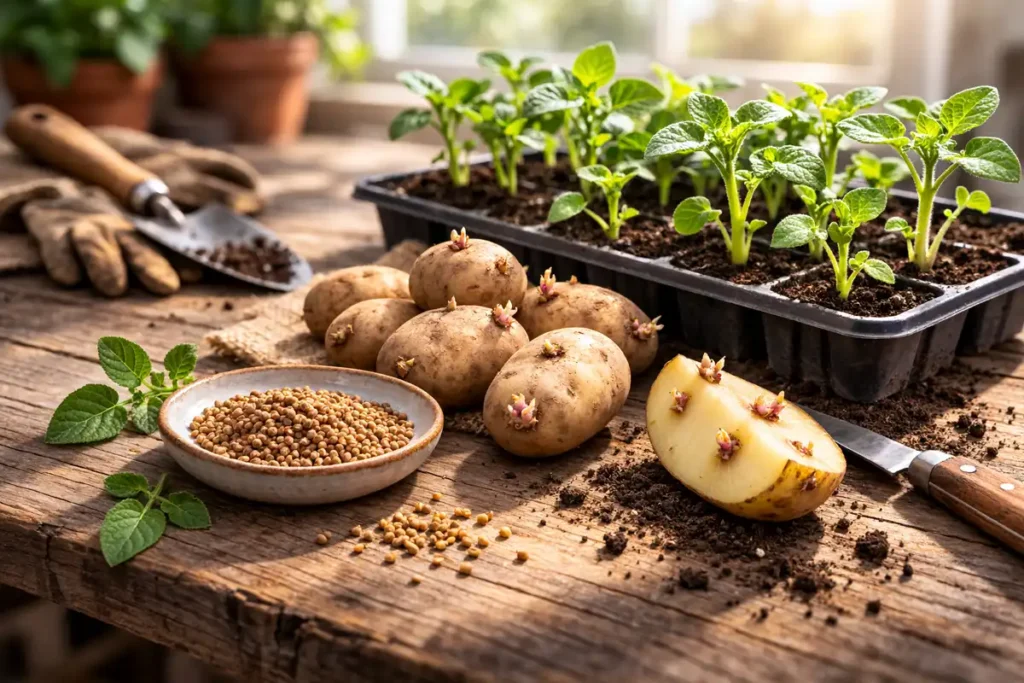
Seed potatoes are tubers. True potato seed is the tiny botanical seed found inside potato berries.
True potato seed produces seedlings that do not match the parent variety in a predictable way. Breeders use it to develop new varieties. Most growers use seed tubers because they reproduce the variety reliably.
Read next: How to Plant Peas and Potatoes Together
Why do certified seed potatoes matter?
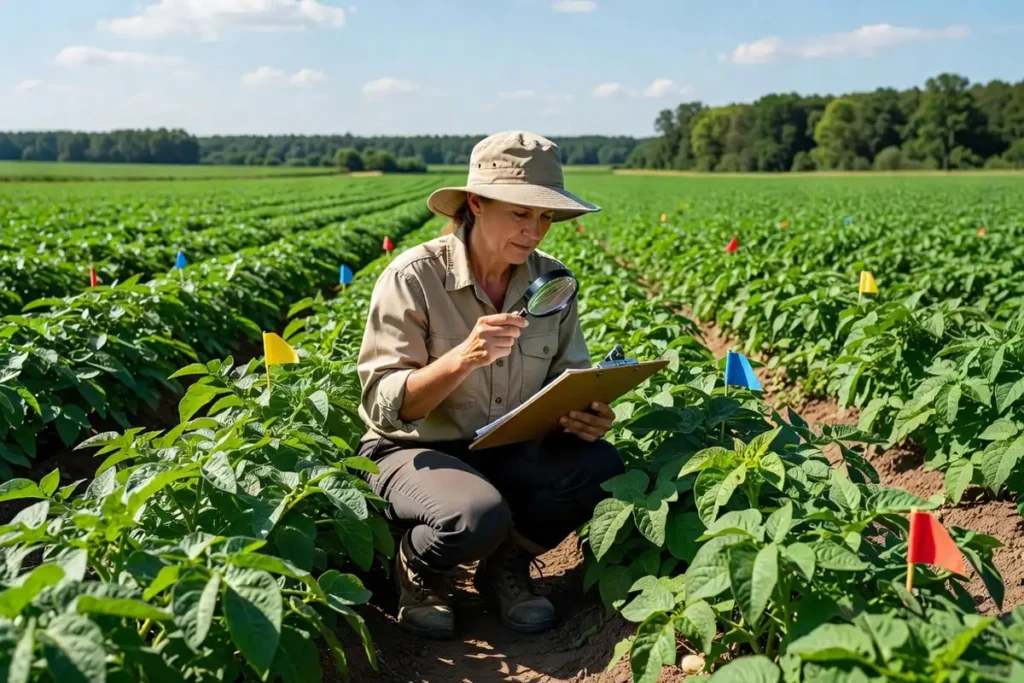
Certified seed potatoes reduce disease pressure at the start of the season. Potatoes spread several important diseases through infected planting material, including viruses that reduce vigor and yield.
Certification programs vary by region, but the purpose stays the same: seed growers follow inspections and standards that keep seed lots cleaner than saved tubers from a typical eating crop. Utah State University Extension notes that buying certified seed helps reduce the chance of introducing disease into the garden. You can read their peer-reviewed fact sheet for the full context.
Read more: Details about Indeterminate Potatoes
When do you buy and plant seed potatoes?
Buy seed potatoes a few weeks before planting. That window gives you time to sort, warm, and pre-sprout if you use chitting.
Planting time depends on soil conditions, not the calendar page.
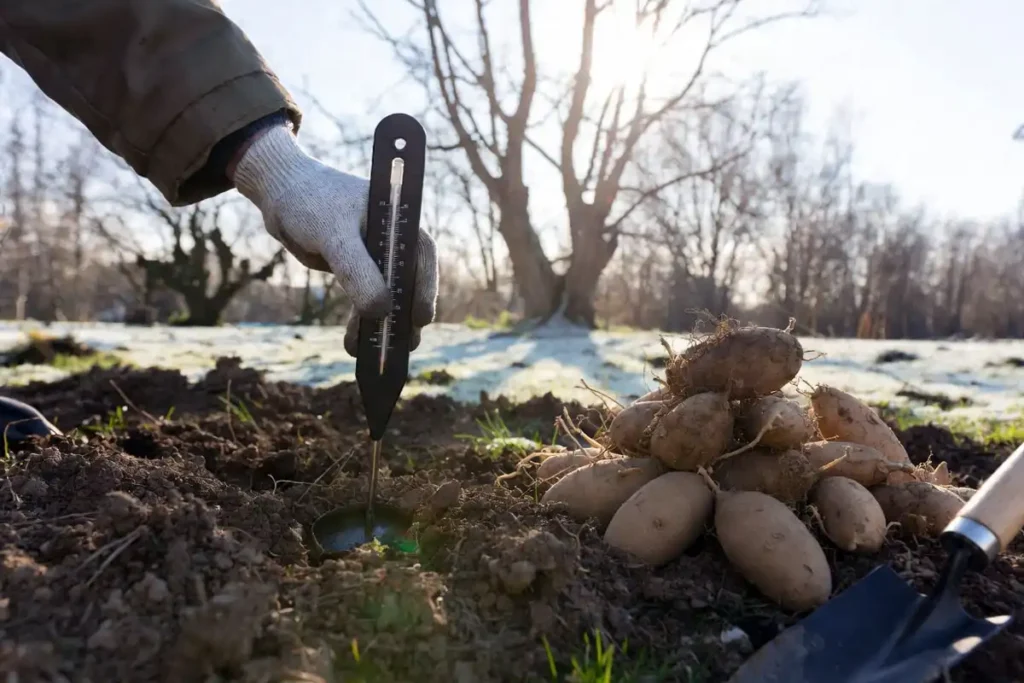
Plant when soil warms and drains well. University of Maryland Extension lists a minimum soil temperature of 45°F for planting and gives a spring planting window by location.
Utah State University Extension states potatoes are planted when soils reach at least 50°F, and it also gives a timing rule of 2 to 3 weeks before the last frost in many climates.
For a practical way to line up local timing, use this seasonal crop planting calendar and match it with local frost dates and soil temperature.
Where do seed potatoes come from?
Seed potatoes come from specialized growers and seed distributors. They multiply clean seed stocks over several generations, store tubers under controlled conditions, and sell graded lots by variety and size.
For most growers, the easiest sources are:
- Certified seed distributors and seed catalogs
- Local garden centers that carry labeled seed potato bags or boxes
- Farm suppliers who stock certified lots for field production
Avoid unknown tubers from bins and roadside piles when you plan to grow potatoes on the same land again.
Where should you plant seed potatoes in the field or garden?
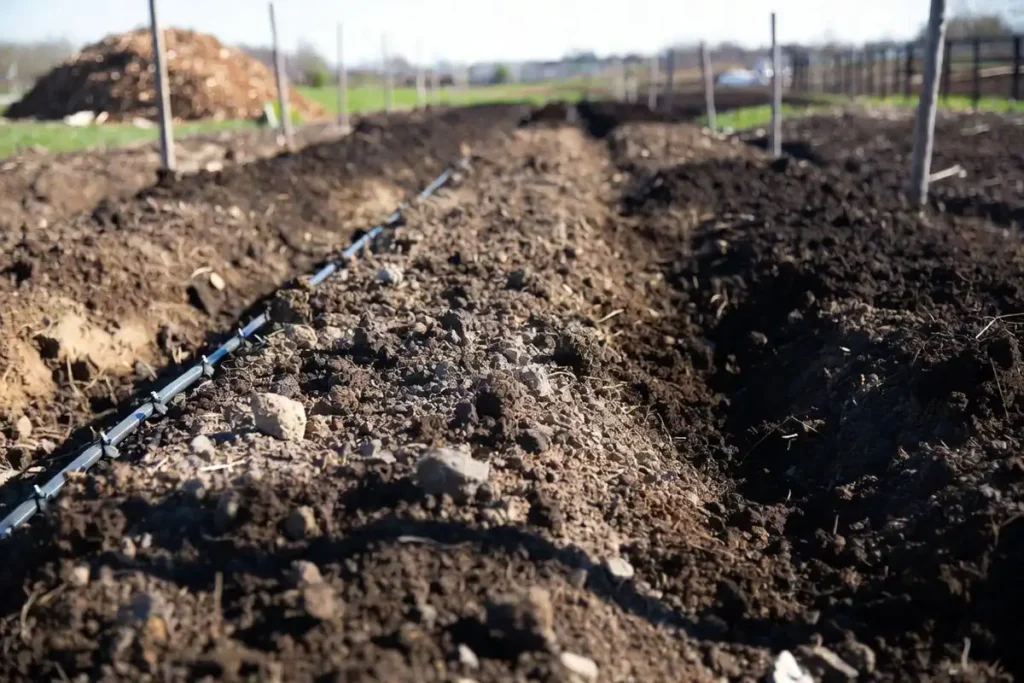
Plant seed potatoes in full sun and well-drained soil. Potatoes form tubers underground, so soil structure and drainage matter as much as fertility.
Rotation reduces disease carryover. Keep potatoes out of ground that recently grew tomatoes, peppers, eggplant, or potatoes. If you want a framework you can reuse each season, start with this simple crop rotation plan.
How do you choose good seed potatoes?
Good seed potatoes feel firm, look clean, and match the variety label.
Use this checklist at pickup time:
1) Variety and maturity fit: Choose an early, mid, or late variety that fits your season length and your end use (fresh eating, storage, or processing).
2) Firm tubers with no wet rot: Skip soft tubers, slimy areas, or strong rot odor.
3) Limited shrivel: A little surface wrinkling happens in storage, but heavy shrivel signals lost vigor.
4) Eyes and sprouts look sturdy: Short, thick sprouts signal good handling. Long, pale, thread-like sprouts break during planting.
5) Certification or reputable source: A certified lot or a trusted distributor lowers the odds of planting disease.
How do you store seed potatoes before planting?
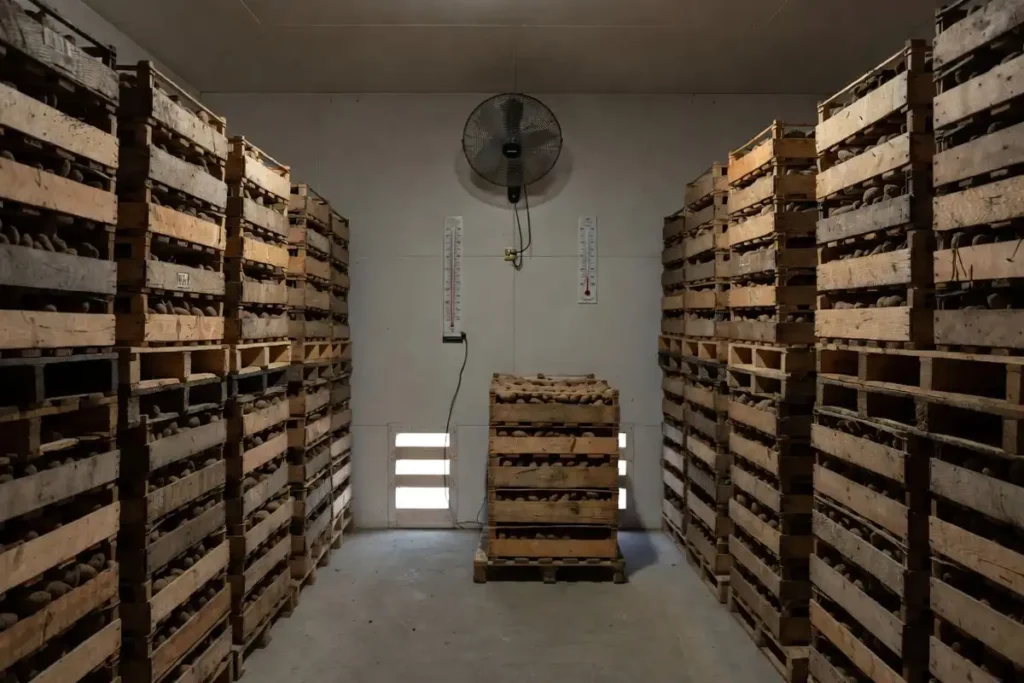
Store seed potatoes cool, dark, and ventilated. The goal is to prevent freezing, stop greening, and slow sprout growth until you are ready.
Utah State University Extension lists storage temperatures of 40 to 45°F for cured potatoes, which also reflects the cool conditions that help keep tubers stable in storage.
For short-term holding before planting:
- Keep them out of sunlight to prevent greening.
- Use breathable crates or slatted boxes, not sealed plastic.
- Keep them away from onions and fruit that produce ethylene, which can affect sprouting behavior.
Do you need to chit seed potatoes before planting?
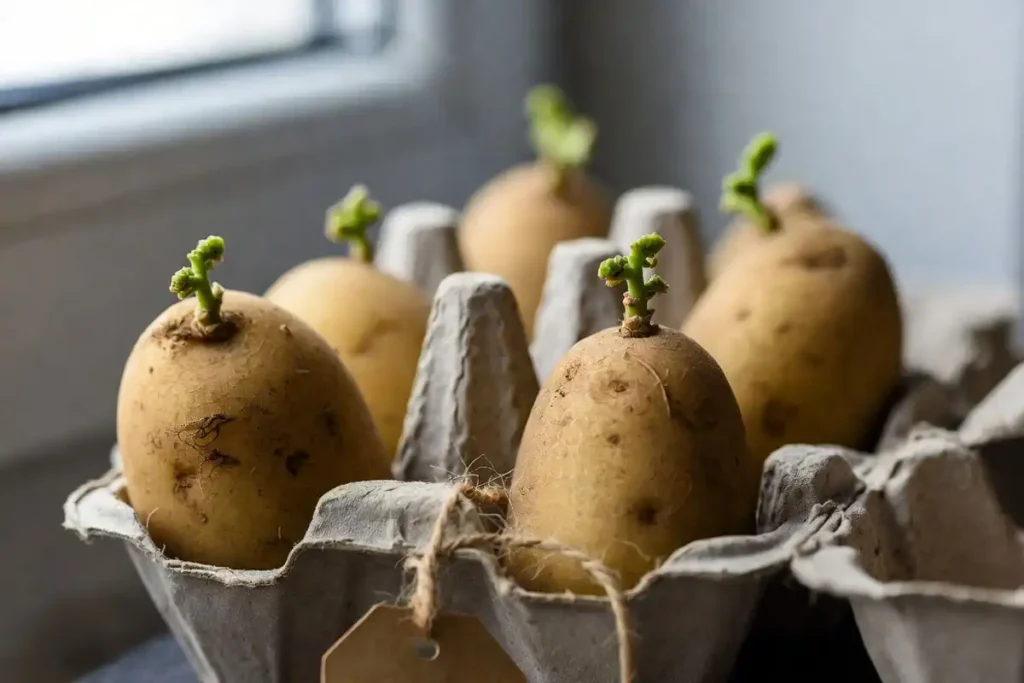
Chitting is optional, but it can speed emergence in cool springs. Chitting means you pre-sprout seed potatoes in a bright, cool place before planting.
Chitting helps most when:
- Your spring soil warms slowly.
- You grow early potatoes and want earlier harvest.
- Your season is short and you need fast canopy.
A practical chitting setup uses shallow trays or egg cartons in indirect light. Rotate trays every few days so sprouts grow evenly. Aim for short, sturdy sprouts that stay attached during planting.
When does it pay to cut seed potatoes?
Cutting seed potatoes pays when tubers are larger than a typical “single planting unit.” Cutting stretches your seed supply and keeps plant spacing consistent.
University of Maryland Extension recommends planting 1½ to 2 oz seed pieces with 1 to 3 buds (eyes), or planting small tubers whole.
Utah State University Extension also notes a minimum of 2 ounces per seed piece with one or more eyes.
Seed potato cutting rules that protect emergence
Cut size drives vigor. Small seed pieces start slow because they carry less stored energy.
Eyes drive stems. Each viable eye can produce at least one stem. Too many stems can create more small tubers, while fewer stems often produce fewer but larger tubers. Variety and spacing change that balance.
Knife hygiene reduces spread. Clean blades reduce disease transfer from one tuber to another.
How long should cut seed pieces heal before planting?
Cut seed pieces need time for the cut surface to dry and form a protective layer. That healing process reduces seed piece rot after planting.
University of Maine Cooperative Extension notes that warming seed potatoes to 50 to 55°F before handling helps reduce bruising, and that storing cut seed at 50 to 55°F with good air flow for a minimum of three days supports wound healing. (Their guide also includes a clear safety warning about treated seed.)
For home gardens, you can also heal cut pieces spread out in a single layer with moving air. Avoid piling fresh-cut pieces in a bucket. A pile traps moisture and invites decay.
Do seed potatoes need seed treatments?
Some growers use seed treatments to reduce seed piece decay and early disease, especially in cool, wet soils. Home growers often skip treatments and focus on clean seed, proper healing, and good drainage.
If you use any treatment product:
- Follow the label for rate, handling, and re-entry guidance.
- Keep treated seed out of the food chain.
- Store treated seed separately from eating potatoes.
If you want to keep inputs low, your first line of defense stays the same: certified seed, healed cuts, and well-drained soil.
How do you plant seed potatoes?
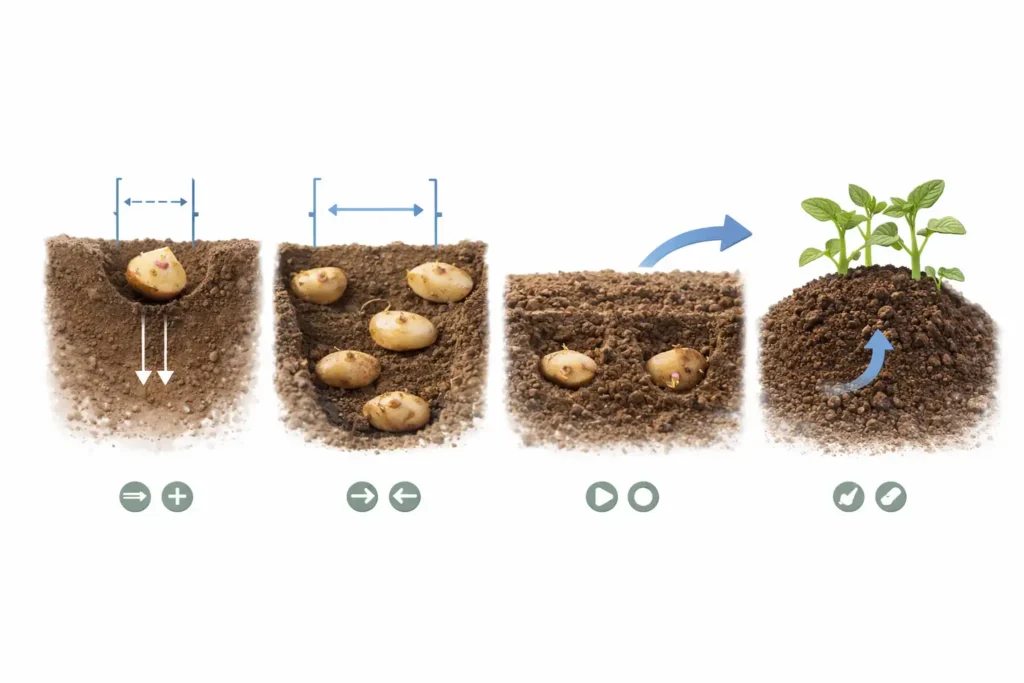
This workflow covers prep to early-season care. Use it as your baseline.
1) Pick a clean site and rotation slot
Choose ground that has not grown potatoes or other nightshades in recent seasons. Rotation reduces disease carryover and volunteer pressure.
2) Check soil drainage and structure
Potatoes suffer in waterlogged soil. Build raised beds or ridges if your field holds water after rains.
3) Test soil and set fertility
A soil test guides pH and nutrient decisions. Use our guide on how to run a soil test for farming if you need a straightforward process.
For long-term improvement, focus on organic matter and balanced nutrition. This article on building soil fertility naturally lays out practical steps.
4) Warm and sort seed potatoes
Bring seed potatoes out of cold storage to a cool room before cutting or planting. That reduces condensation and bruising during handling.
Sort out:
- Soft tubers
- Wet rot
- Severe shrivel
- Broken sprouts
5) Cut and heal seed pieces if needed
Cut large tubers into planting pieces with viable eyes, then heal the cut faces with airflow for several days.
6) Plant at the right depth and spacing
Depth and spacing change with soil type and your harvest goal.
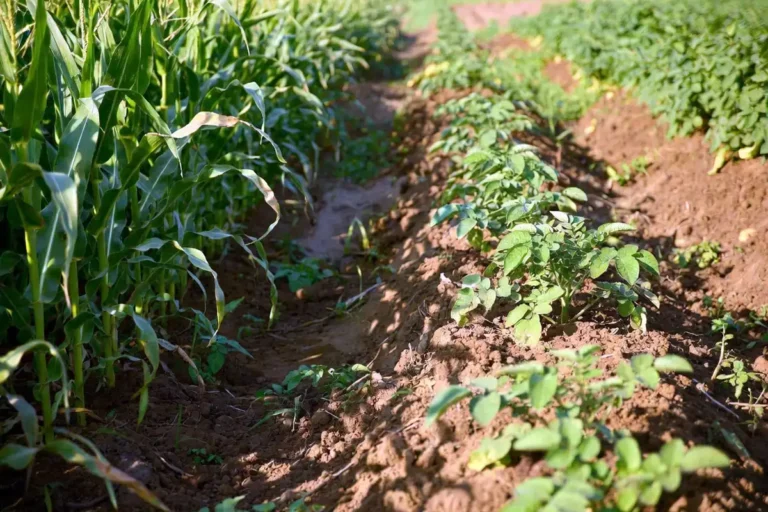
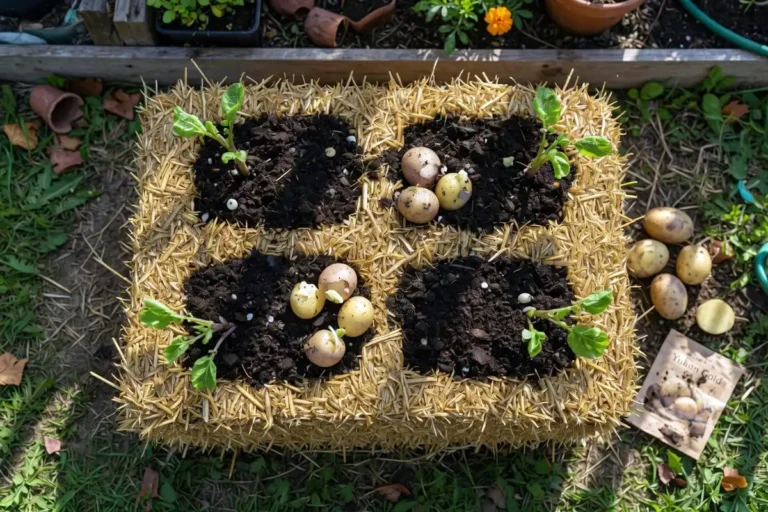
Utah State University Extension lists these common field and garden targets: 4 to 6 inches deep, 10 to 12 inches apart in the row, and 30 to 36 inches between rows.
University of Maryland Extension lists a similar range and notes 3 to 5 inches deep as a common planting depth in furrows, with spacing adjusted for new potatoes versus storage potatoes.
Practical adjustments:
- Plant shallower in heavy, wet soils.
- Plant deeper in light, sandy soils that dry fast.
- Space closer for smaller tubers.
- Space wider if you want larger tubers and you have the room.
7) Hill soil to protect forming tubers
Hilling covers developing tubers so they stay out of sunlight. It also supports better drainage along the row.
Utah State University Extension notes that hilling is commonly done within about four weeks of planting.
8) Water for steady growth, not swings
Potatoes respond best to consistent moisture. Utah State University Extension lists 1 to 2 inches of water per week as a general target in the growing season.
If you want to dial irrigation in by soil type, weather, and growth stage, use this guide on calculating crop water needs.
9) Scout early for pests and diseases
Early scouting catches stand loss fast. Look for missing plants, blackened stems near the soil line, and wilting.
If you need help narrowing down symptoms, start with this overview of common crop diseases.
Solutions that improve stand and yield
These fixes raise success rates across most climates.
- Use clean seed. Certified seed potatoes lower disease risk at the start.
- Plant into workable soil. Cold, saturated soil increases seed piece rot.
- Heal cut seed well. Dry, healed cuts reduce decay after planting.
- Hill on time. Covered tubers stay white and safe for storage.
- Keep moisture steady. Big wet-dry swings increase cracking and misshapen tubers.
- Avoid excess nitrogen. Too much early nitrogen pushes vines at the expense of tuber set.
Troubleshooting: why seed potatoes fail and how to fix it
Use this quick diagnosis section when emergence looks uneven.
Seed pieces rot before sprouting
Rot before sprouting often comes from cold, wet soil or unhealed cuts. Replant into better-drained soil, plant later when soil warms, and heal cut surfaces longer with airflow.
Sprouts form, then plants stall
Stalling often points to cold soil, compacted ground, or low oxygen in waterlogged beds. Improve drainage, avoid traffic on wet rows, and plant on ridges.
Long white sprouts break during planting
Broken sprouts come from warm, dark storage. Store cooler and darker, or switch to controlled chitting with light so sprouts stay short and sturdy.
Plants emerge, then collapse at the base
Stem collapse can signal blackleg or other seed-borne issues. Pull and destroy affected plants, avoid saving seed from the crop, and tighten rotation.
Strong tops but few tubers
Excess nitrogen and heat reduce tuber set. Balance fertility, keep moisture steady, and use mulch or hilling to moderate soil heat.
Green tubers at harvest
Greening happens when tubers see sunlight. Hill more soil over the row and avoid shallow planting in loose beds.
Avoid these common mistakes with seed potatoes
- Planting grocery potatoes and expecting uniform results
- Cutting seed pieces too small
- Cutting seed weeks before planting and letting pieces dehydrate
- Planting into cold, saturated ground
- Skipping hilling and ending up with green tubers
- Saving seed year after year on the same ground and stacking disease pressure
Safety notes for handling seed potatoes
Cutting and treating seed potatoes are routine farm jobs, but they still deserve care.
- Cut with a stable surface and a sharp knife, and keep your free hand behind the blade path.
- Wash hands after handling seed, especially if you used any dust or treatment product.
- Keep treated seed separate from eating potatoes and animal feed.
- Store potatoes in the dark to prevent greening and to keep tubers out of reach of children and pets.
Final takeaways
Seed potatoes are tubers grown and handled for planting, not eating. Healthy seed, proper healing after cutting, and planting into warm, well-drained soil drive most of the success.
If you treat seed potatoes like a living start, not like a pantry item, you get a cleaner stand, fewer gaps, and a better harvest.