When to Plant Sorghum: Best Dates by Region and Soil Temp
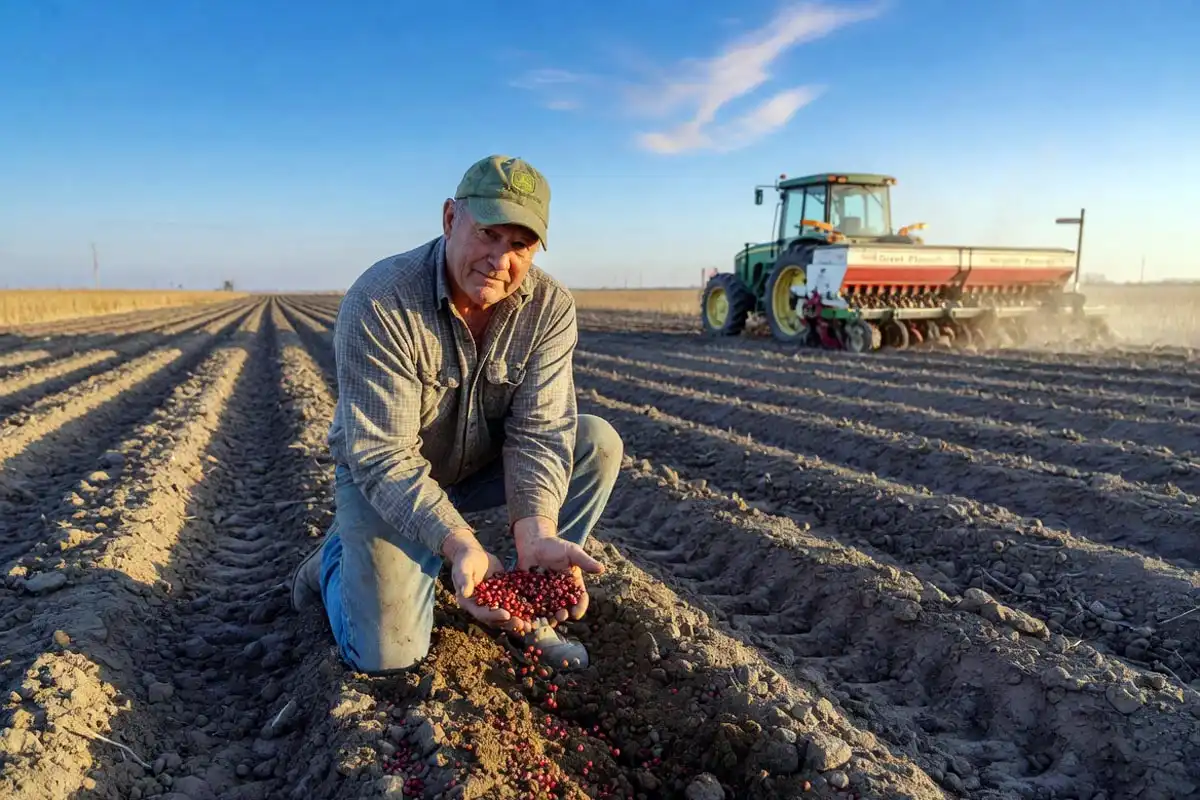
The best time to plant sorghum is when soil temperature at 2 inches holds 60 to 65°F and frost risk has passed. This guide walks through timing windows, regional dates, soil checks, and seeding steps so you get even emergence and reliable yields on grain or forage acres.
Plant sorghum after the last frost when 2-inch soil temperatures reach 60°F for grain sorghum and 65°F for sorghum-sudangrass. In most of the U.S. Sorghum Belt, that window runs from late April through mid-June, depending on latitude and elevation.
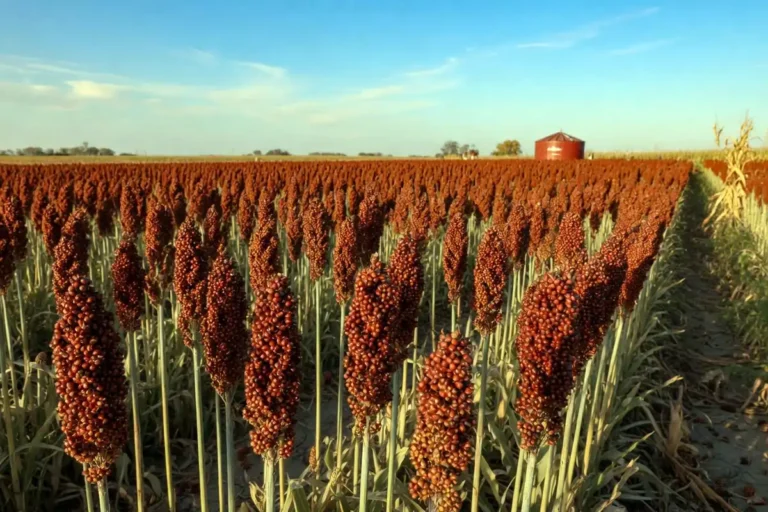
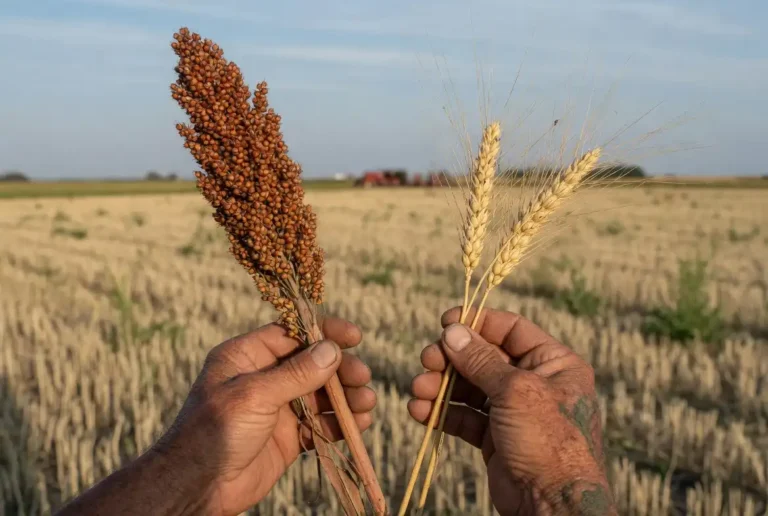
Before get into specific dates, it helps to know what sorghum actually is and how it differs from corn. Sorghum is a warm-season grass that handles heat and drought better than most cereals, which is why it helps to use it across drier ground. A simple soil test before planting tells you what the field needs to support a strong stand.
What Is the Right Soil Temperature for Sorghum?
Sorghum germinates when 2-inch soil temperature reaches 60°F and rises over the following days. Cold soil rots seed and stunts seedlings. Texas A&M AgriLife Extension recommends planting once soil temperatures hit 60°F at a 2-inch depth and the forecast stays warm.
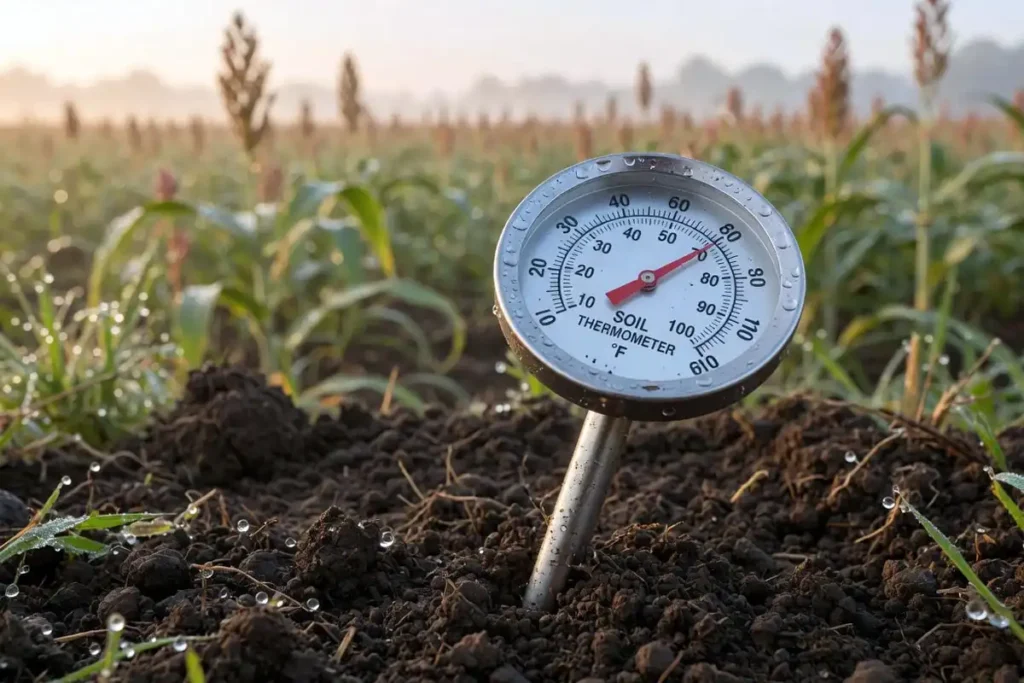
Check soil temperature in the morning, not the afternoon, because morning readings reflect overnight cooling. If readings hold steady for three straight mornings, the field is ready.
When to Plant Sorghum by Region
Planting windows shift with latitude, elevation, and frost dates. Use these ranges as a starting point and confirm with your local extension office.
- Texas Gulf Coast and South Texas: Late February to early April
- Texas Panhandle and Oklahoma: Late April to early June
- Kansas and Nebraska: May 10 to June 15
- Colorado High Plains: May 20 to June 20
- Missouri and Arkansas: May 1 to June 10
- Mid-South (TN, MS, AL): April 15 to May 30
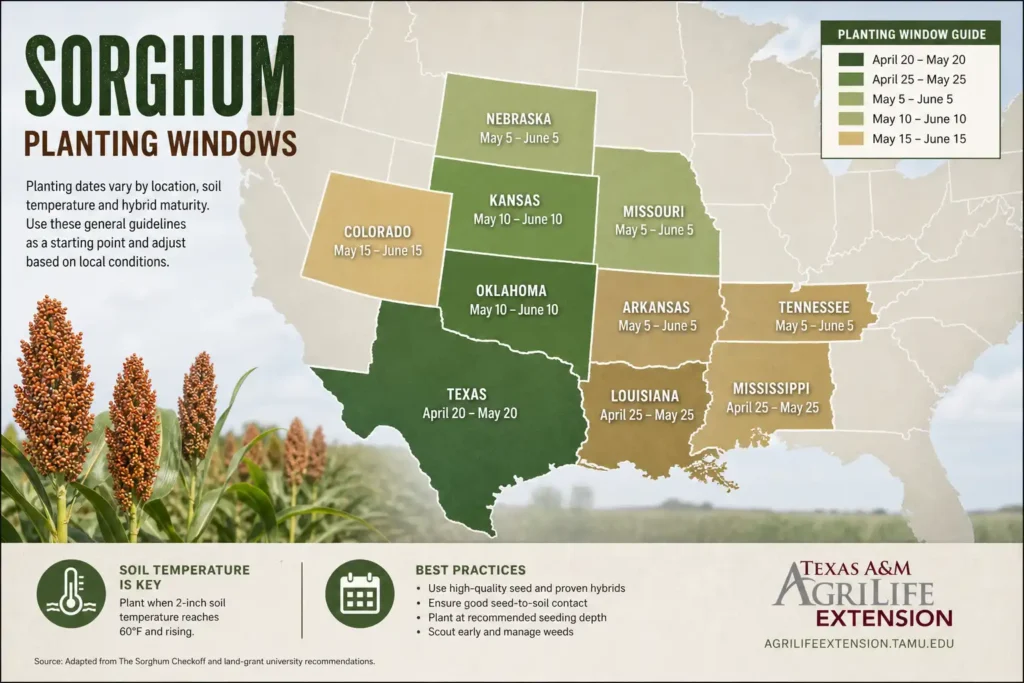
Earlier planting captures more rainfall and finishes before fall frost. Later planting risks shorter grain fill but avoids cool-soil emergence problems. The crop planting calendar page covers timing for other crops you may rotate with sorghum.
When to Plant Forage Sorghum and Sorghum-Sudangrass
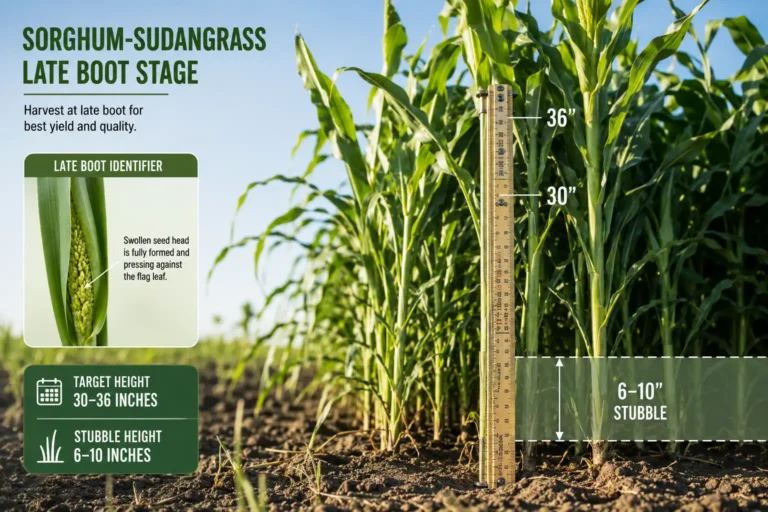
Forage types need warmer soil than grain sorghum. Wait for 65°F at 2 inches before drilling sorghum-sudangrass. K-State Research and Extension reports optimal sorghum planting from May 1 to June 20 across most Kansas counties, with forage windows on the later end.
Once the crop is up and growing, our guide on when to cut sorghum-sudan grass for hay covers harvest timing and prussic acid safety.
How to Plant Sorghum: Step-by-Step
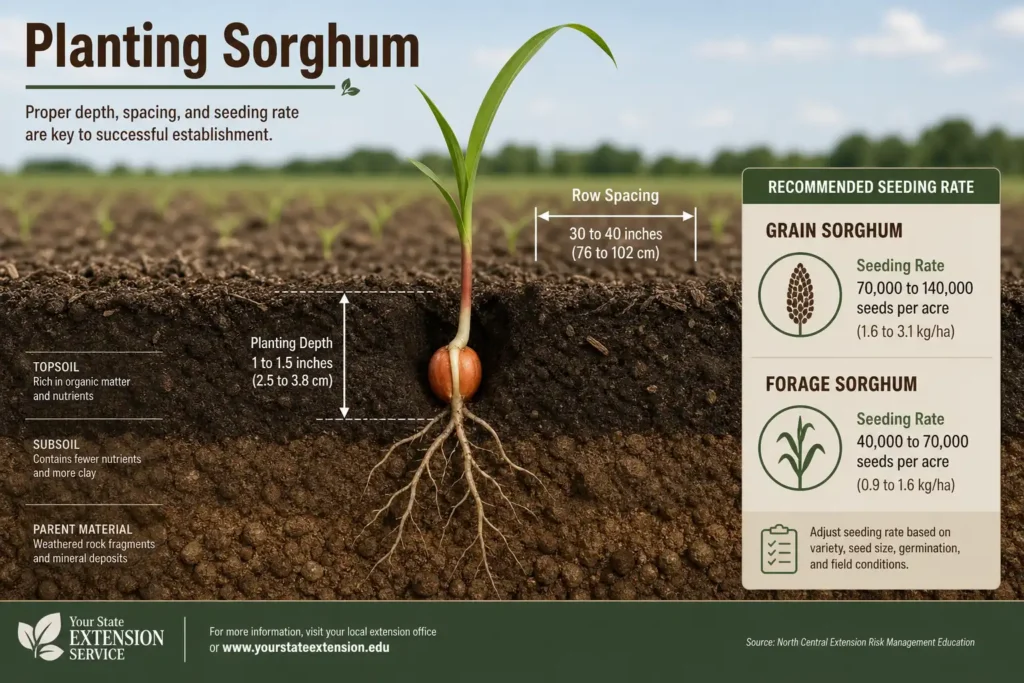
Follow this workflow from prep to emergence:
- Test soil pH. Sorghum performs best at 6.0 to 7.5. Lime acidic ground the previous fall.
- Prepare a firm seedbed. Loose seedbeds dry out and bury seed too deep.
- Confirm soil temperature. Read 2-inch soil temp for three mornings before planting.
- Set seeding depth. Plant 1 to 1.5 inches deep in moisture, never deeper than 2 inches.
- Set row spacing. Use 15 to 30 inch rows for grain sorghum and 7 to 15 inch rows for forage.
- Set seeding rate. Drop 50,000 to 90,000 seeds per acre for grain sorghum on dryland; raise to 100,000 to 120,000 under irrigation.
- Apply starter fertilizer. Use a 2×2 placement to avoid seed burn.
- Check stand at 7 to 14 days. Replant gaps if stand drops below 35,000 plants per acre.
Where Sorghum Grows Best
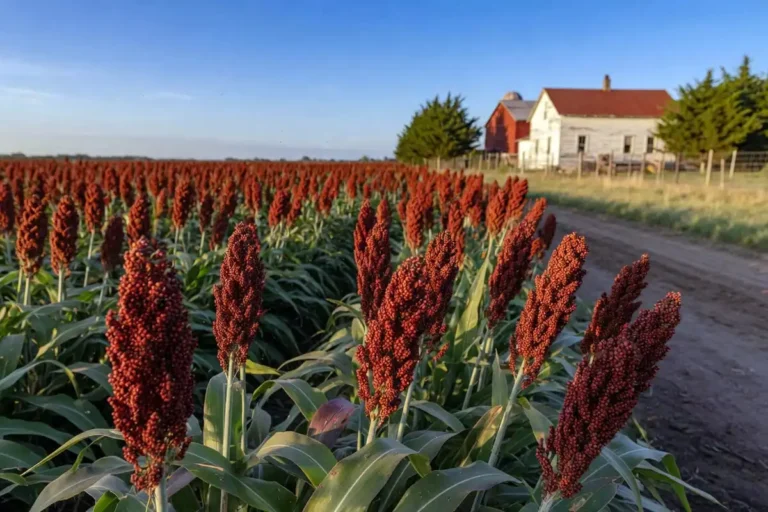
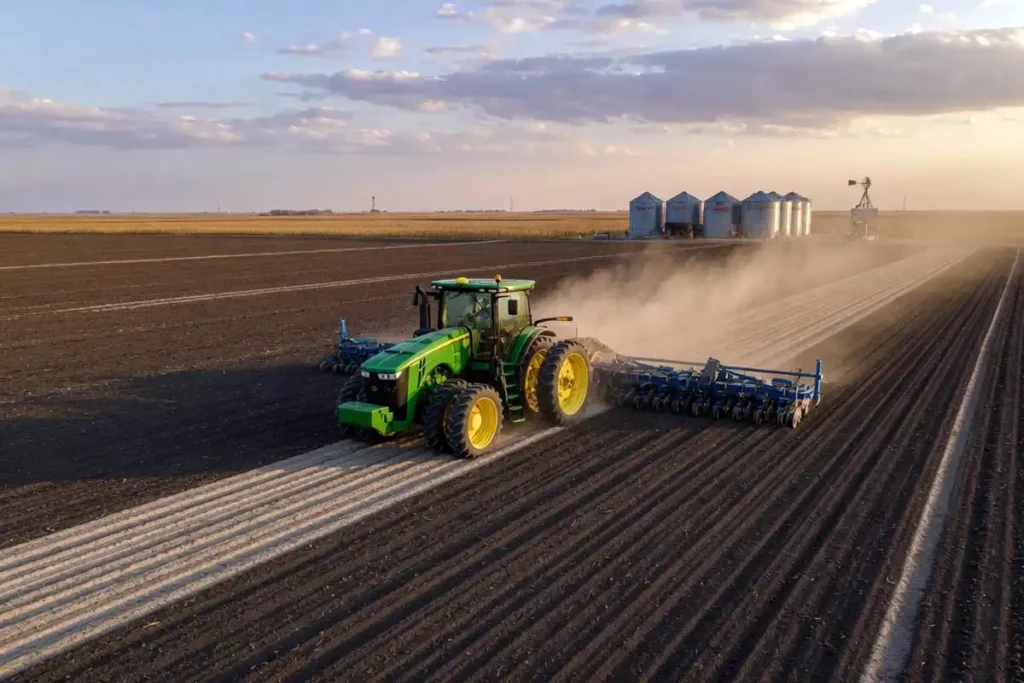
Sorghum thrives in regions with hot summers and limited rainfall. Kansas, Texas, Nebraska, Colorado, and Oklahoma produce most U.S. grain sorghum. The crop tolerates sandy loam to clay loam soils and resists drought once roots reach 18 inches deep.
Sorghum prefers full sun and fields with good drainage. Avoid waterlogged spots, which slow emergence and invite root rot. If you’re sorting out crop names, our page on milo and sorghum clears that up.
Common Mistakes to Avoid
- Planting too early in cold soil. Below 60°F, seed sits and rots.
- Seeding too deep. Deeper than 2 inches blocks emergence on crusted soils.
- Skipping soil moisture checks. Plant into moisture, not dust.
- Overcrowding dryland fields. High populations on dry ground cause stalk lodging and small heads.
- Ignoring residual herbicides. Some atrazine and pre-plant chemistries injure sorghum if labels are missed.
Troubleshooting Poor Stands
If emergence is uneven, check three things first. Dig up seed at 7 days. Firm, swollen seed with a white root tip means germination is on track. Mushy or moldy seed points to cold or wet soil. Soil crusting after rain blocks shoots, so a light rotary hoe can break the crust and rescue the stand.
Iron chlorosis on calcareous soils shows as yellow striping. Check field history before planting and choose tolerant hybrids. For dry conditions, our notes on calculating water needs for crops help size irrigation runs.
Safety Notes
Young sorghum and sorghum-sudangrass contain prussic acid (cyanogenic compounds). Never graze livestock on plants under 18 inches tall or on frost-damaged regrowth. Wait 7 to 14 days after a killing frost before grazing or feeding fresh forage. Always read herbicide labels before application and wear PPE.
FAQs about Sorghum Planting time
Can I plant sorghum after wheat harvest?
How long does sorghum take to mature?
Does sorghum need a lot of water?
Can sorghum be planted in cool climates?
What temperature kills sorghum?
Conclusion
Plant sorghum once 2-inch soil temperatures hold 60°F for grain types and 65°F for forage types, with the frost window closed for good. Match your planting date to your region, set seeding depth at 1 to 1.5 inches, and check your stand within two weeks. Get those basics right, and sorghum rewards you with a tough, dependable crop.