When to Plant Tomatoes in Washington State for a Full Harvest
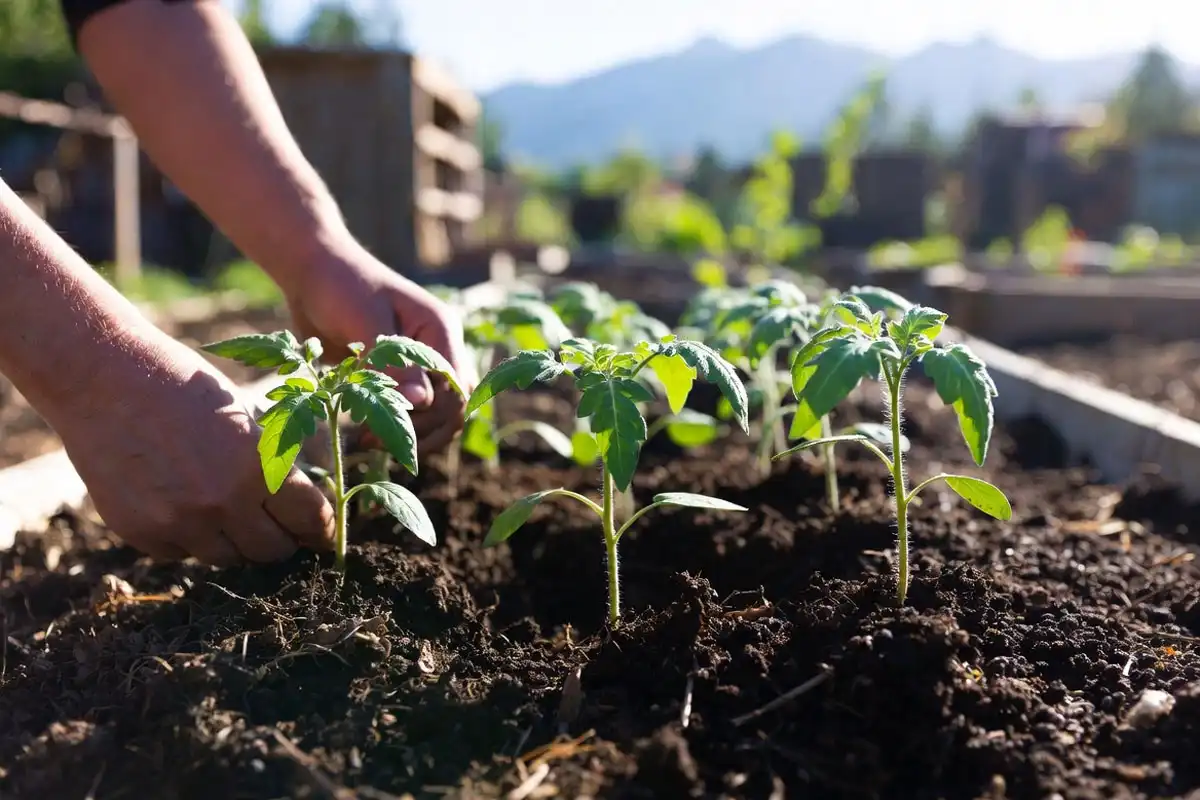
Tomatoes grow best in Washington State when transplanted outdoors between late April and early June, depending on your region and local frost dates. This guide covers planting windows by region, soil preparation, transplant steps, variety selection, common problems, and seasonal mistakes to avoid, so you finish the season with a reliable harvest.
In western Washington (Seattle, Tacoma, Olympia), transplant tomatoes outdoors from late April to early May after the last frost passes and air temperatures exceed 65°F. In eastern Washington (Spokane, Bellingham highlands, inland areas), transplant from mid-May to early June once nighttime temperatures stay above 50°F. Start seeds indoors 6 to 8 weeks before your target transplant date. Never set transplants into soil that stays below 60°F.
What Affects Tomato Planting Timing in Washington State
Washington divides into two distinct growing climates separated by the Cascade Mountains.
Western Washington runs milder along the coast and Puget Sound lowlands. The region sits in USDA Hardiness Zones 8a to 9b. Last frost dates fall between mid-March and mid-April near sea level. Soil warms earlier than people expect, and the coastal marine influence keeps temperatures from dropping as sharply as inland areas.
Eastern Washington runs colder in spring despite being drier and sunnier in summer. Zones 5b to 7b cover most of the region. Spokane’s last frost falls in late April to early May. Higher elevations push that date into late May. Spring cold snaps arrive later and more severely than in the western lowlands.
Per WSU Extension (FS145E, 2014), the statewide transplant window falls “after the last frost date in May or June” with the growing season running May through October. That guidance applies broadly, but coastal western Washington growers with frost-free dates in March and April can safely move up to late April.
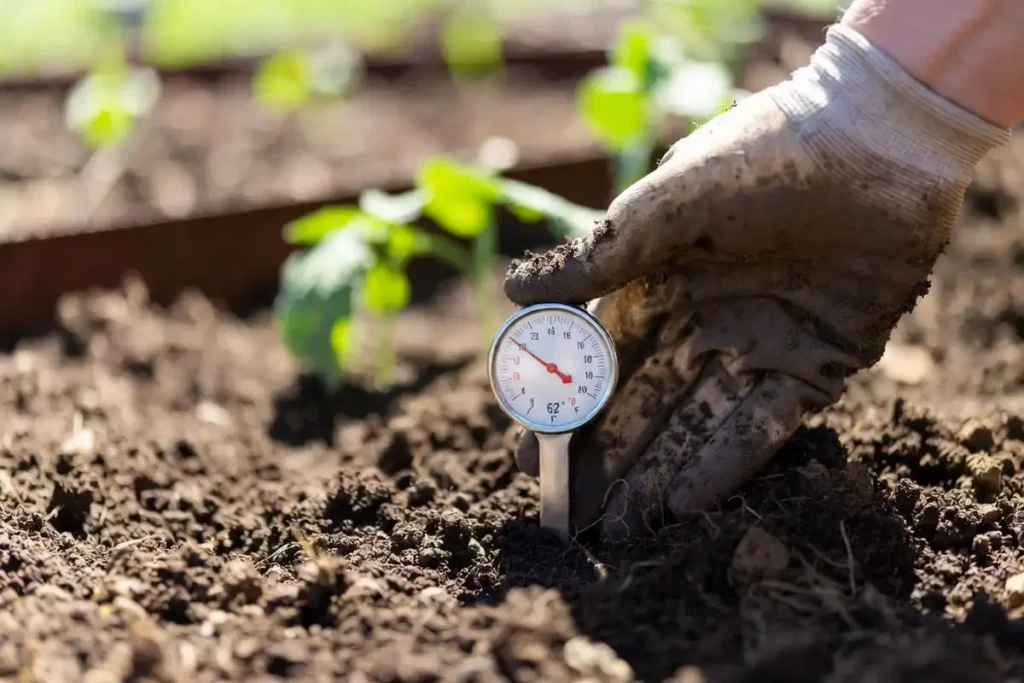
Soil temperature and air temperature both matter. Tomato roots function poorly below 60°F. WSU Extension specifically advises waiting until air temperatures exceed 65°F before transplanting outdoors.
Read more: Complete regional guide about planting tomatoes in California and planting tomatoes in Kansas.
When to Start Tomato Seeds Indoors in Washington
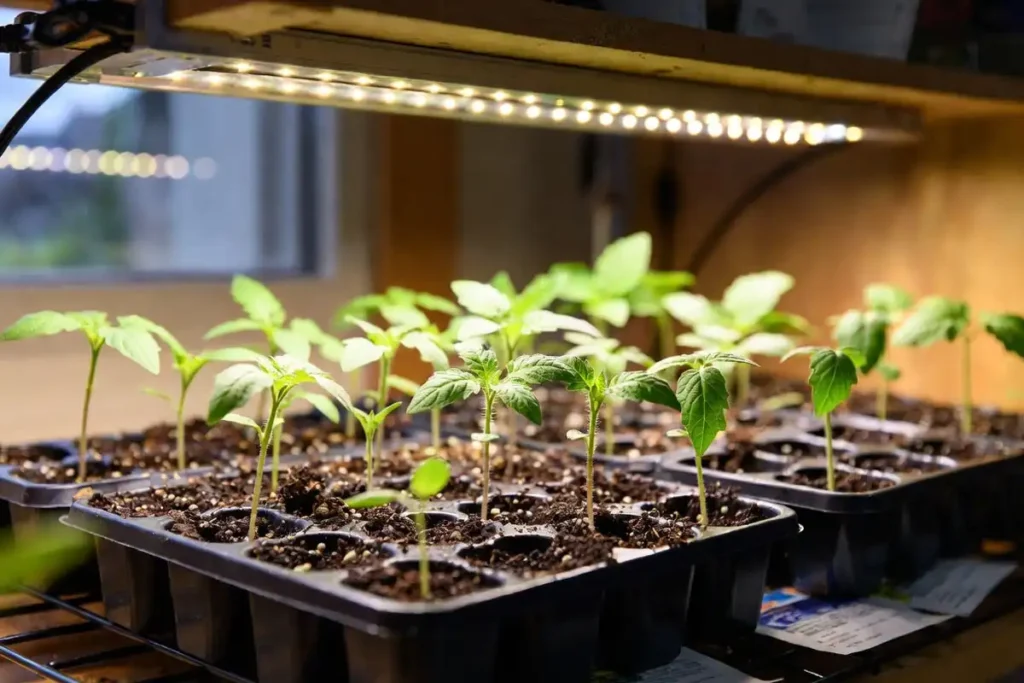
Start tomato seeds indoors 6 to 8 weeks before your planned outdoor transplant date.
For western Washington coastal areas targeting late April transplants, start seeds in late February to early March. For eastern Washington targeting mid-May to early June, start seeds in late March to mid-April.
Seeds germinate best at 70°F to 80°F (per WSU Extension FS145E). Use a seedling heat mat if your home runs below 68°F. Germination takes 5 to 10 days under correct conditions.
Seedling development timeline:
- Week 1-2: Seeds germinate; provide 14 to 16 hours of light daily.
- Week 3-4: First true leaves appear; thin to one plant per cell.
- Week 5-6: Transplant seedlings into 4-inch pots; feed with half-strength balanced fertilizer.
- Week 7-8: Begin hardening off transplants by setting plants outdoors in a sheltered spot 1 to 2 hours daily, increasing exposure each day over 7 to 12 days.
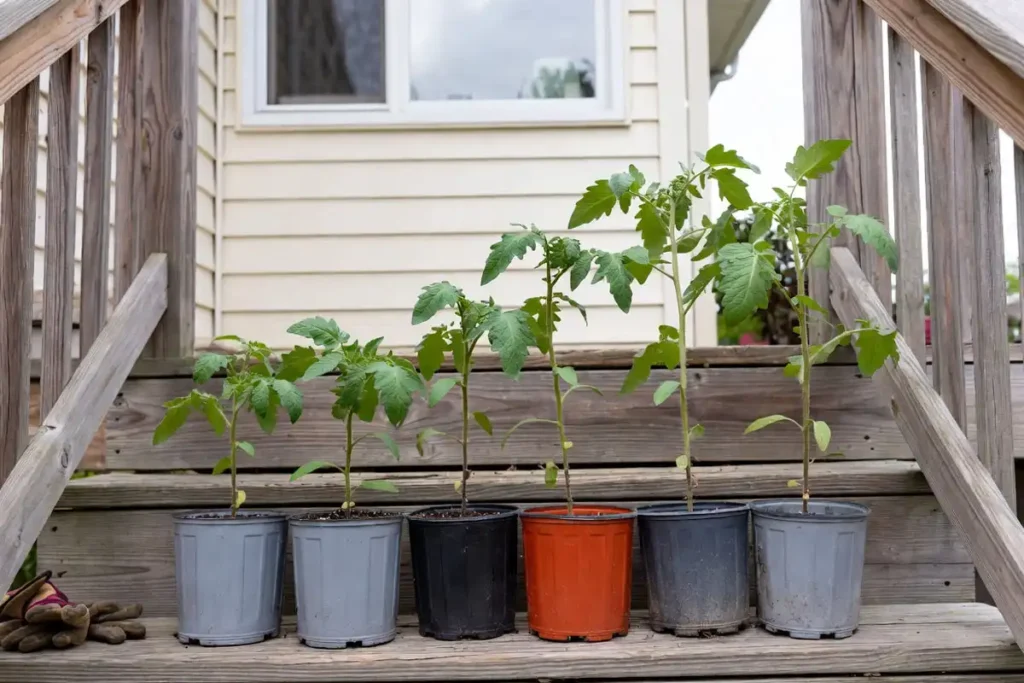
WSU Extension notes that if temperatures drop below 50°F during hardening off, bring transplants back indoors that night.
Washington State Planting Calendar by Region
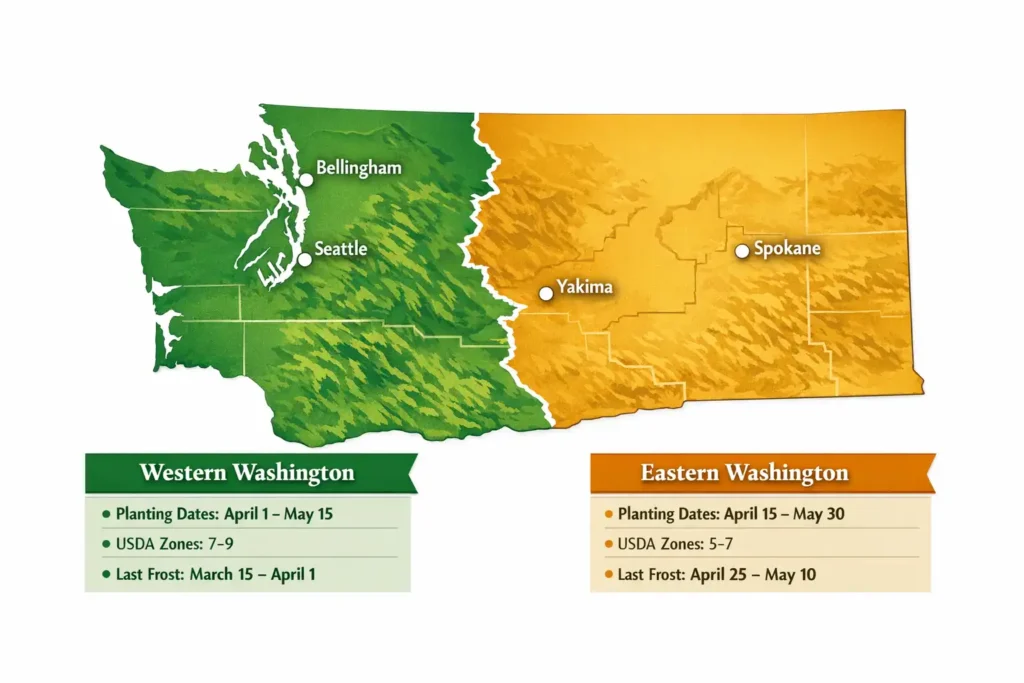
| Region | Zone | Last Frost | Transplant Outdoors |
|---|---|---|---|
| Seattle / Tacoma | 8b–9a | Mid-March to early April | Late April to early May |
| Olympia / Chehalis | 8a–8b | Early to mid-April | Early to mid-May |
| Vancouver / Portland border | 8b | Mid-March | Late April to early May |
| Bellingham | 8a | Mid-April | Early to mid-May |
| Spokane | 6a–6b | Late April to early May | Mid to late May |
| Yakima Valley | 6b–7a | Early to mid-April | Early to mid-May |
| Tri-Cities (Kennewick, Richland, Pasco) | 7a–7b | Early April | Early May |
| Walla Walla | 7a | Early April | Early to mid-May |
| Higher elevations (east side) | 5b–6a | Mid to late May | Early to mid-June |
These windows reflect average conditions. Always check the 10-day forecast before transplanting. A late cold snap can set plants back two weeks.
How to Prepare Soil Before Planting
Tomatoes produce best in well-drained soil with a pH between 6.0 and 6.5, per WSU Extension (FS145E). Washington soils vary by region. West of the Cascades, soils tend toward clay and often fall naturally within the correct pH range or slightly below. East of the Cascades, soils often run above ideal pH and benefit from sulfur amendments.
Soil preparation steps:
- Test soil pH and nutrient levels using a soil testing service at least 2 weeks before planting.
- Add lime (calcium carbonate) if pH falls below 6.0; add elemental sulfur if pH exceeds 6.5, following manufacturer rate recommendations.
- Work 3 to 4 inches of finished compost into the top 10 to 12 inches of soil.
- Incorporate a balanced fertilizer at label-recommended rates. WSU Extension recommends approximately 1.5 to 2 ounces of nitrogen per 10 linear feet of planting bed.
- Mix amendments into soil immediately before planting.
Avoid adding fresh manure at transplant time. It releases excess nitrogen and pushes leafy growth at the expense of fruit.
How to Transplant Tomatoes in Washington State
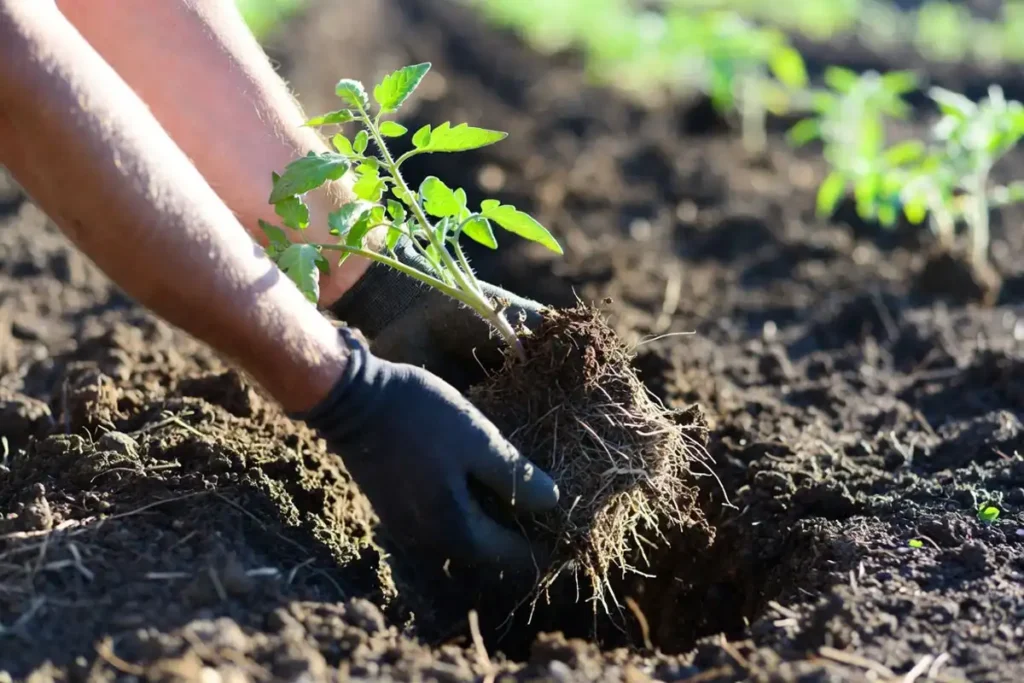
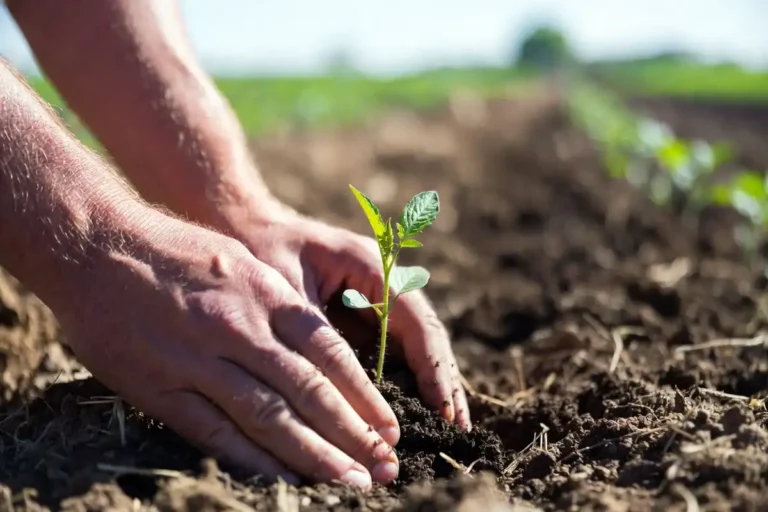
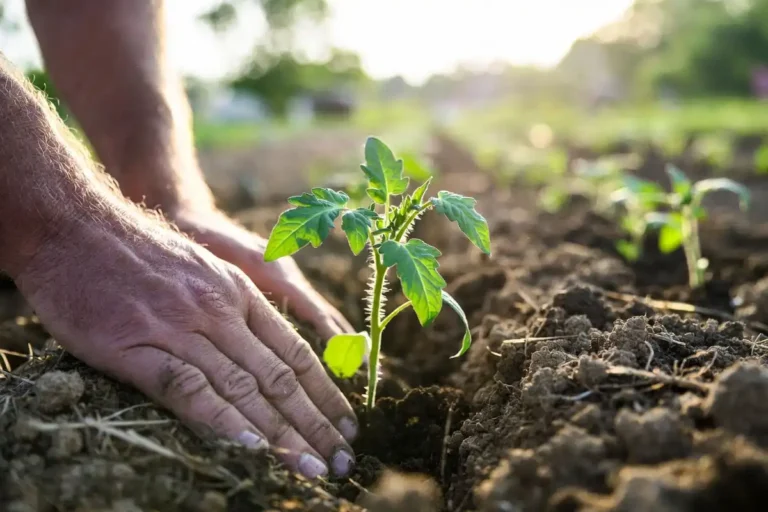
Correct transplanting reduces shock and gives roots a strong start. WSU Extension (FS145E) recommends burying as much of the stem as possible, as the buried stem produces additional roots and builds a more vigorous plant.
Steps:
- Water transplants thoroughly the morning before planting.
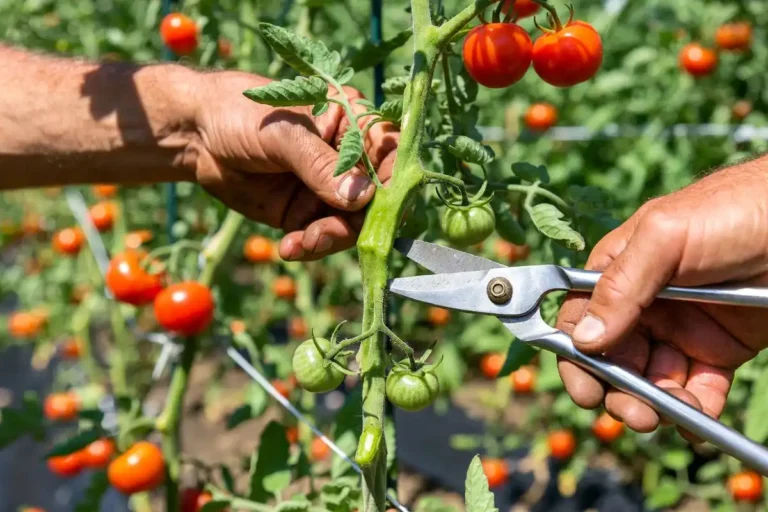
- Remove leaves from the lower two-thirds of the stem.
- Dig a trench 3 inches deep and lay the transplant on its side in the trench.
- Cover with soil and gently pat in place without compacting.
- Space plants 18 inches apart (approximately 4 square feet per plant).
- Water deeply immediately after planting to settle soil around the roots.
- Install stakes, cages, or trellises at transplant time. Inserting supports after transplanting damages roots.
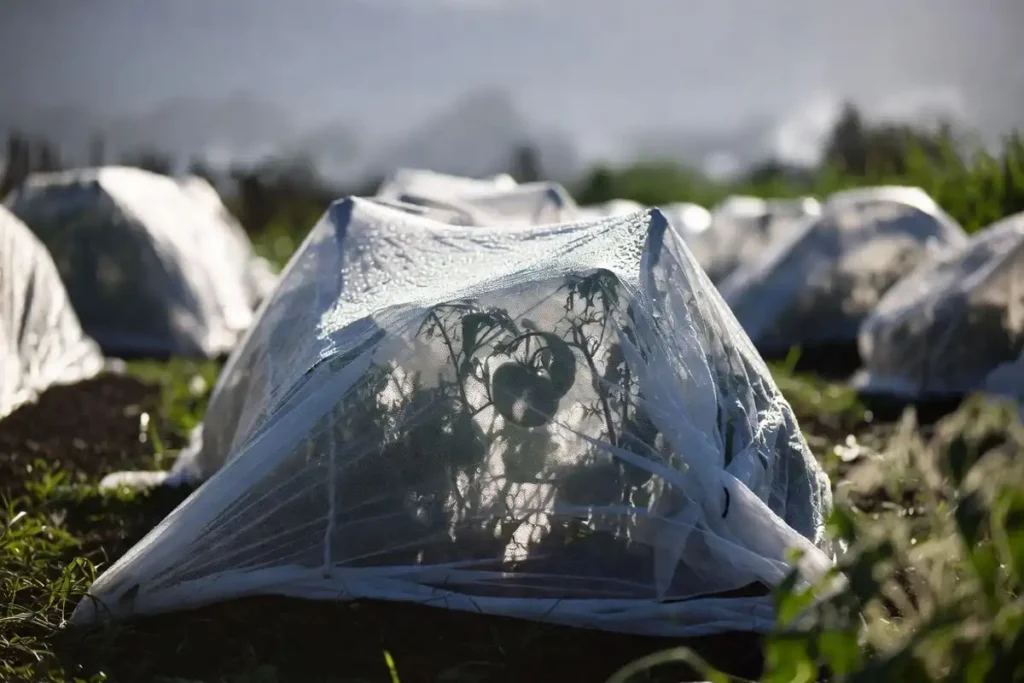
If nighttime temperatures dip below 50°F after transplanting, protect plants with floating row covers or wall-o-waters. These tools raise the temperature around the plant by several degrees and allow earlier planting in marginal conditions.
Best Tomato Varieties for Washington State
WSU Extension advises choosing varieties with less than 75 days to maturity for western Washington and high-elevation eastern Washington areas where summer temperatures run cooler. Longer-season varieties suit the warmer eastern valleys.
Western Washington (cool, short season):
- Siletz: Determinate; sets fruit in cool temperatures; matures in 52 days.
- Stupice: Indeterminate; Czech heirloom; cold-tolerant; matures in 52 to 65 days.
- Legend: OSU-developed; late blight resistant; matures in 68 days.
- Glacier: Sets fruit below 55°F; matures in 55 days.
Eastern Washington (warmer, longer season):
- Early Girl: Indeterminate; matures in 52 to 62 days; consistent producer.
- Celebrity: Determinate; disease-resistant (VFNT); matures in 70 days.
- Roma: Determinate; paste type; matures in 76 days.
- Columbian, Rowpac, Roza: WSU-recommended curly top virus-resistant varieties suited to eastern Washington conditions.
WSU Extension recommends selecting varieties labeled VFNT, indicating resistance to Verticillium wilt, Fusarium wilt, nematodes, and tobacco mosaic virus.
Watering Tomatoes After Transplanting
Tomatoes need consistent moisture throughout the season. WSU Extension recommends approximately 1 inch of water per week during peak tomato growth.
First 2 weeks after transplant: Water at the base daily or every other day to help roots establish. Keep water off foliage.
After establishment: Water deeply once or twice per week, delivering 1 inch per session and penetrating 8 to 10 inches into soil.
A drip irrigation system keeps foliage dry and reduces foliar disease pressure, which is significant in western Washington’s humid conditions. Overhead sprinklers increase blight risk.
Apply 2 to 3 inches of straw or wood chip mulch around the base to retain moisture, regulate soil temperature, and reduce weeds.
Common Problems and How to Fix Them
Why Are Blossoms Dropping Without Setting Fruit?
Blossom drop occurs when nighttime temperatures fall below 55°F or when temperatures during fruit set run too low. Western Washington frequently triggers this in May and early June.
Plant cold-tolerant varieties such as Siletz or Stupice. Use row cover on cold nights to raise temperatures around blossoms by several degrees.
WSU Extension also notes that catfacing (scarring and puckering at the blossom end) results from low temperatures during fruit set and affects early fruit more than later-season fruit.
Why Are Your Transplants Wilting After Planting?
Wilting in the first week usually indicates transplant shock. Plants need 5 to 7 days to adjust after moving outdoors permanently.
Water immediately and shade plants for 2 to 3 days. If wilting continues past day 7 with moist soil, inspect roots for brown, mushy tissue indicating root rot from cold, waterlogged conditions.
Late Blight in Western Washington
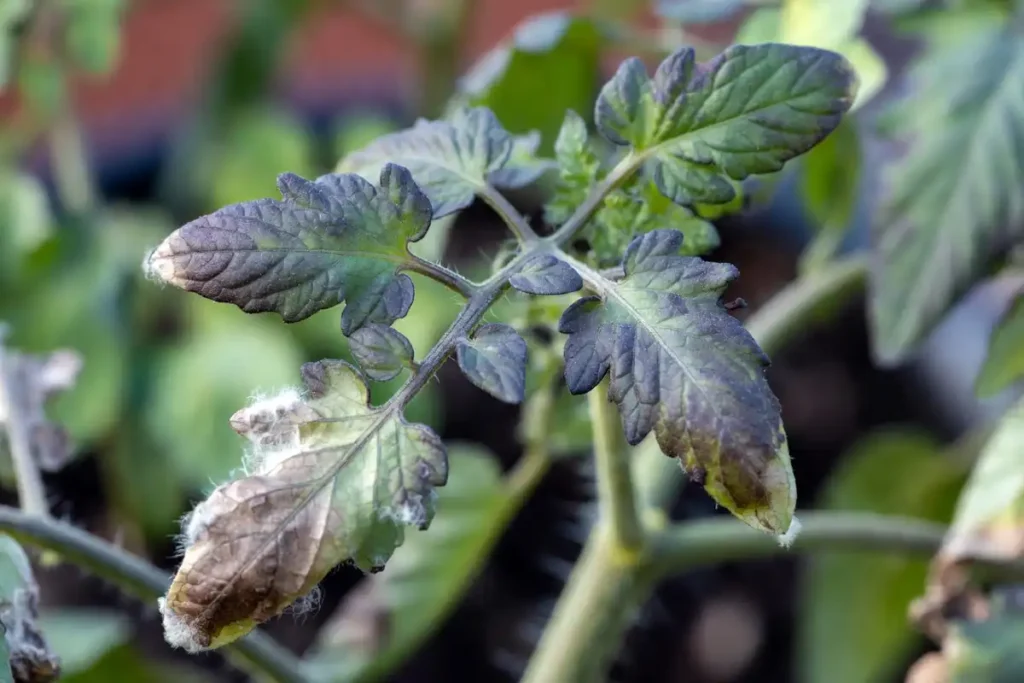
Late blight spreads rapidly in western Washington’s wet summers. WSU Extension (FS145E) describes symptoms as gray-green areas on leaves, stems, and fruit that become dark wrinkled blotches.
Remove infected plant parts immediately and do not compost them. Space plants to improve air circulation. Avoid overhead watering. Plant resistant varieties such as Legend to reduce risk.
Blossom-End Rot
Blossom-end rot produces a black, leathery lesion on the fruit end. WSU Extension links the cause to low calcium, infrequent watering, or uneven watering.
Water consistently. Mulch plants to maintain even soil moisture. If soil testing shows low calcium, apply lime or dolomite lime 2 to 4 months before the next planting season.
Mistakes to Avoid When Planting Tomatoes in Washington
Planting too early in cold soil. Cool soil below 60°F slows root development and increases disease risk. WSU Extension states to wait until air temperatures exceed 65°F.
Skipping hardening off. Transplants moved directly from indoors to full outdoor conditions suffer severe shock. Harden off for at least 7 to 12 days per WSU Extension guidance.
Overhead watering. Wet foliage promotes late blight, white mold, and anthracnose. Water at the base only.
Planting in shade. Tomatoes need at least 6 hours of direct sunlight daily, per WSU Extension. Shaded plants produce less fruit and show higher disease pressure.
Crowding plants. Poor air circulation traps moisture and accelerates fungal disease. Space plants at approximately 4 square feet each.
Composting diseased plant material. WSU Extension cautions that composting does not kill many disease-causing organisms. Remove diseased material from the property entirely.
Safety Notes
Handle pesticides and fungicides according to label directions. WSU Extension states clearly: “Apply them only to plants, animals, or sites as listed on the label.” Wear gloves, eye protection, and closed-toe shoes when mixing or applying any chemical product.
Wash hands thoroughly after handling transplants, soil amendments, or garden chemicals before touching food.
When to Expect Your First Harvest
WSU Extension (FS145E) notes that tomatoes generally ripen about one month after fruit begins to show, with days to harvest ranging from 65 to 80 days depending on variety.
Western Washington growers using early-maturing varieties harvest ripe tomatoes from late July to mid-August. Later varieties ripen from August through September.
Eastern Washington growers harvesting early varieties see ripe fruit by mid to late July, with late varieties continuing through September.
Pick fruit when it reaches mature color but retains some firmness. Tomatoes picked after color begins to change continue ripening off the vine at 68°F to 77°F. Do not refrigerate; cold destroys flavor and texture.
Learn more about knowing when crops are ready to harvest by checking firmness, color development, and ease of separation from the stem.
Conclusion
Tomatoes succeed in Washington State when planting timing matches your region’s actual conditions. Western coastal areas transplant from late April to early May. Eastern and inland areas wait until mid-May to early June. Match variety maturity to your frost-free window, bury the stem deep at transplanting, keep water off foliage, and protect plants from late cold snaps with row cover. Follow these steps and your plants produce reliably from midsummer through the first fall frost.