How to Harvest Sorghum: Timing, Steps, and Storage Tips
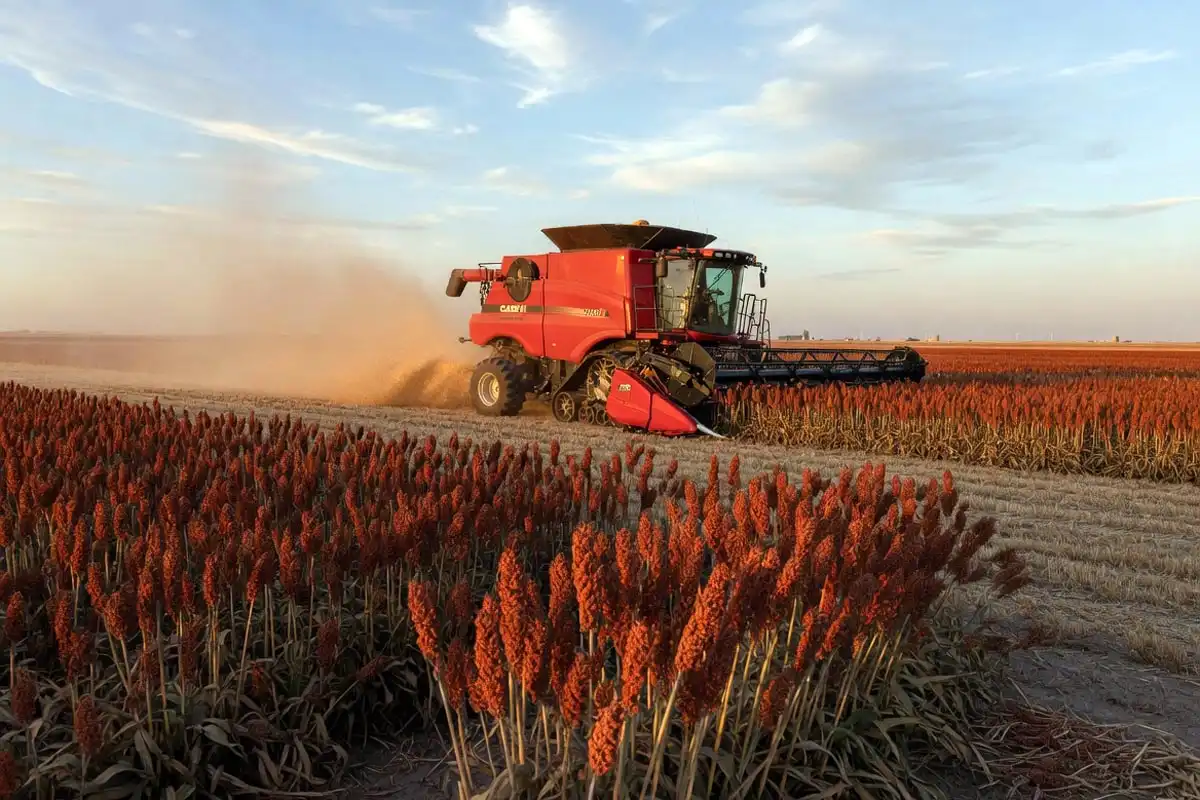
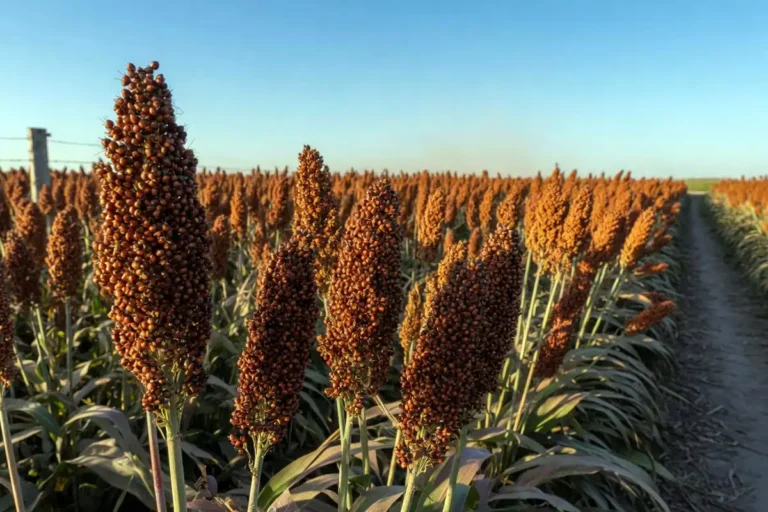
Sorghum is ready to harvest when grain reaches physiological maturity, marked by a black layer at the kernel base and seed moisture near 20 to 25 percent. This guide covers the timing signs, harvest steps, combine settings, drying methods, safe storage, and common mistakes Kansas growers run into each fall.
Harvest grain sorghum after the black layer forms and moisture drops to 20–25%. Combine with a row-crop or grain header, set cylinder speed near 600–700 RPM, dry grain to 13–14% for safe storage, and clean the bin before loading. Frost or a labeled desiccant speeds late-season dry-down in cool falls.
It tolerates heat, holds yield in dry years, and finishes after the corn comes off. Getting the harvest right is what protects all that work. For background on the crop itself, see our notes on growing grain sorghum and on planting milo.
What Does Harvesting Sorghum Mean?
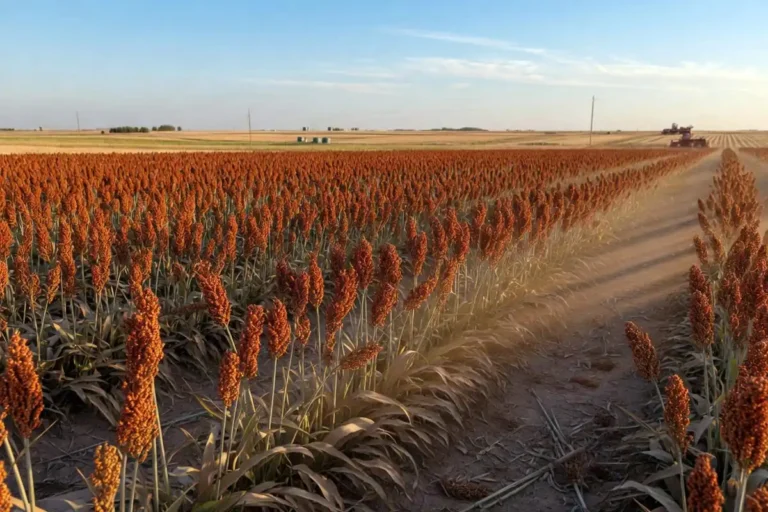
Harvesting sorghum means cutting and threshing mature grain heads from standing stalks, then separating seed from chaff and stems. A combine does the work in one pass. Forage and sweet sorghum follow different timing and equipment, so this guide focuses on grain sorghum.
When Is Sorghum Ready to Harvest?
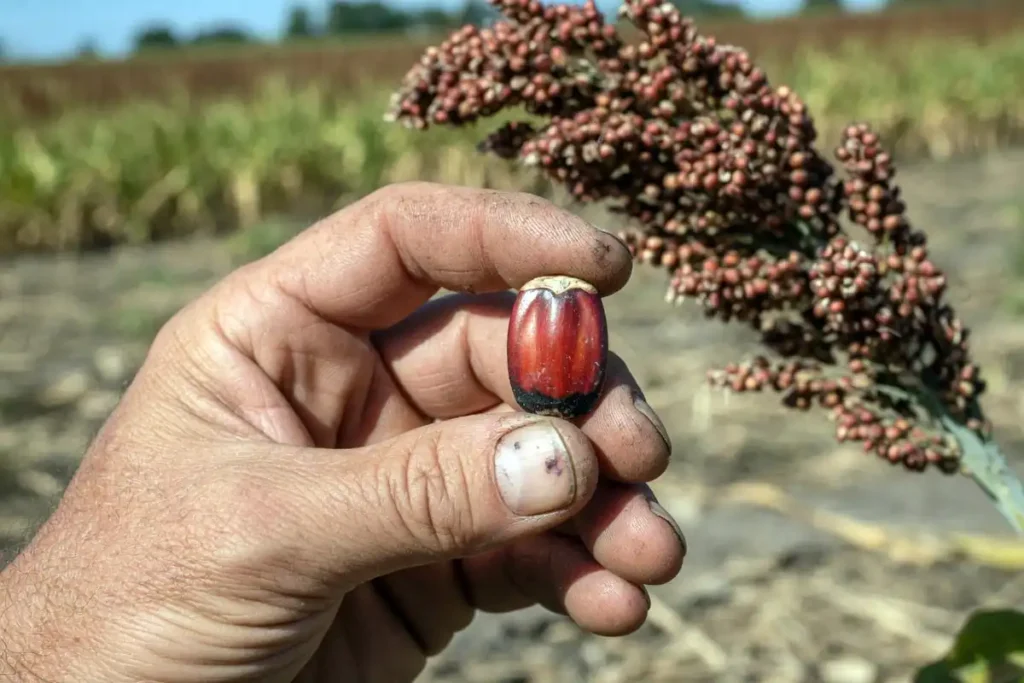
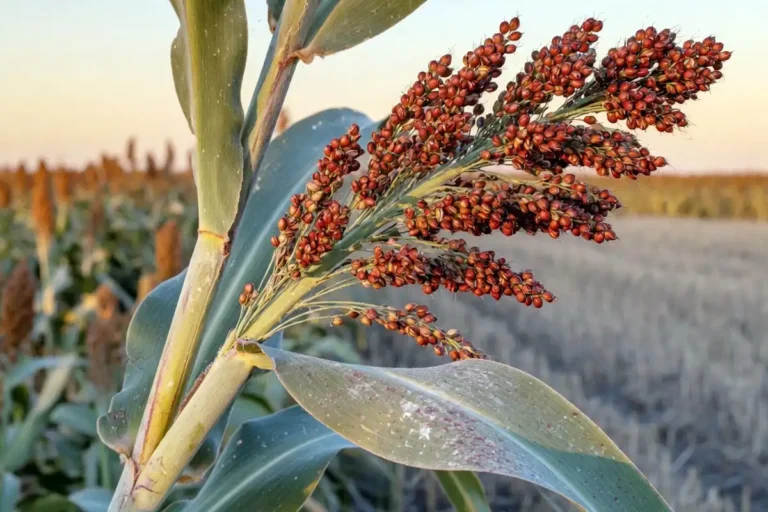
Grain sorghum reaches physiological maturity 95 to 120 days after planting, depending on hybrid and heat units. Per Kansas State Research and Extension, the black layer at the seed base signals the kernel has stopped filling. Three field checks confirm readiness:
- Black layer test. Pull a kernel from the middle of the head. A dark spot at the attachment point means the seed is mature.
- Moisture reading. Use a grain moisture meter to test heads from several rows. Combine when moisture sits between 20 and 25 percent.
- Thumbnail check. A mature kernel resists denting under your nail.
Once the black layer forms, dry-down in the field takes another 2 to 4 weeks. For broader maturity cues, our notes on knowing when crops are ready to harvest line up with these signs.
Where Harvest Conditions Matter
Field conditions affect machine performance and grain quality. Dry mornings work better than dew-soaked heads. Lodged sorghum, weedy patches, and uneven stands slow the combine and raise loss. Walk the field a day before harvest. Note wet spots, downed rows, and weed pressure so you can adjust ground speed in those zones.
How to Harvest Sorghum: Step by Step
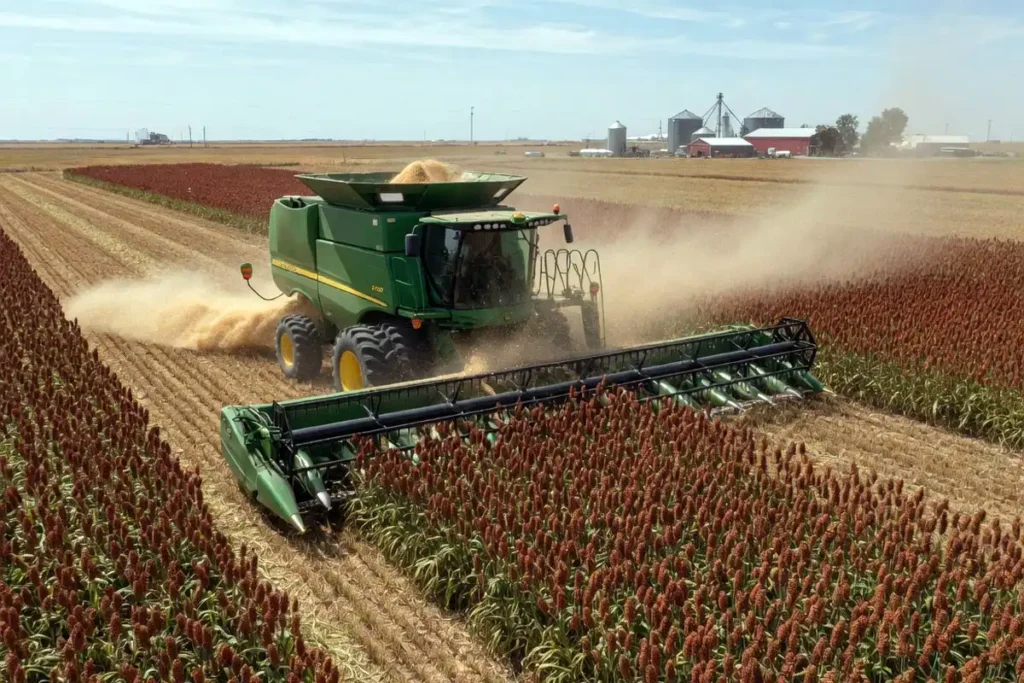
A clean, well-tuned combine does most of the work. Follow this sequence to keep loss under 3 percent.
- Scout the field. Check black layer, moisture, and standability across several spots, not one corner.
- Clean the combine. Sweep out corn, soybean, or wheat residue from headers, augers, and the grain tank. Cross-mixed grain costs you at the elevator.
- Set the header height. Cut just below the lowest seed head, around 6 to 12 inches under the panicle. Higher cuts reduce green stalk in the threshing chamber.
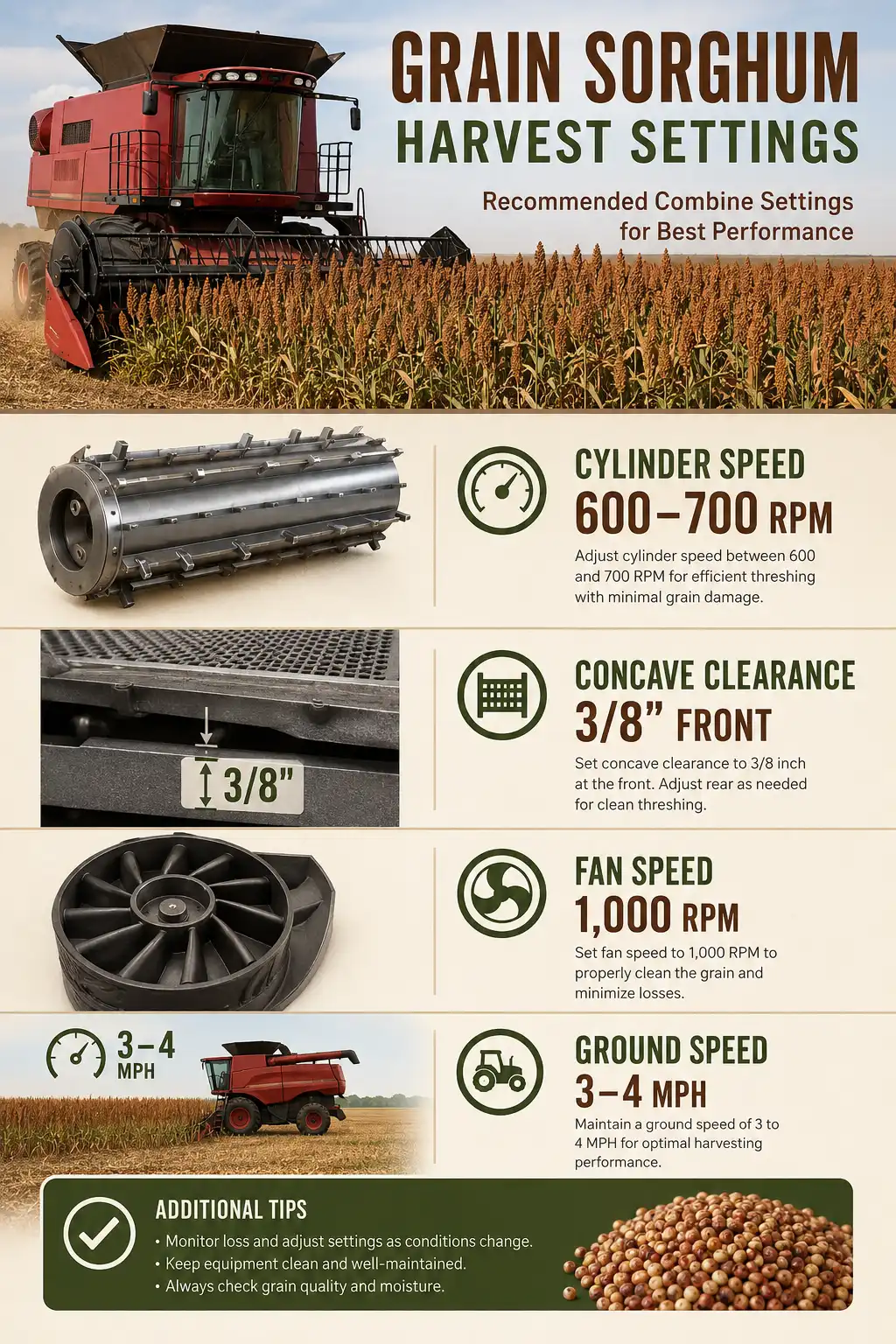
- Adjust cylinder speed. Start at 600–700 RPM. Faster speeds crack kernels; slower speeds leave grain in the head.
- Set concave clearance. Begin with a 3/8-inch gap at the front and 1/4 inch at the rear. Tighten only if you see whole heads in the residue.
- Run fan speed at 950–1,100 RPM. Drop the fan if light kernels blow over; raise it if chaff builds in the tank.
- Drive 3.0 to 4.0 mph. Slow down in lodged zones. Watch the loss monitor on each pass.
- Check the tank often. Pull a sample every load. Look for cracked seed, foreign material, and unthreshed heads.
- Unload to a clean truck or wagon. Move grain to the dryer or bin the same day.
Drying Sorghum After Harvest
Sorghum stores safely at 13 to 14 percent moisture. Higher levels invite mold and insect activity. Run a low-temperature batch or continuous-flow dryer at 140 to 180°F for grain headed to feed markets. Drop the temperature for seed sorghum to protect germination. Cool the grain to within 10°F of outside air before final storage.
For a deeper read on cooling and conditioning, see this post-harvest handling guide.
Storing Sorghum the Right Way
Clean bins before harvest. Sweep, vacuum, and treat empty bins with a labeled residual insecticide if past pests showed up. Aerate the grain mass through fall to hold temperature near 30 to 40°F in the northern Plains. Check stored sorghum every two weeks for hot spots, insect activity, and crusting. This broader crop storage methods covers bin prep in more detail.
Mistakes to Avoid
- Harvesting too early. Grain above 25 percent moisture costs more to dry and risks heat damage.
- Harvesting too late. Birds, lodging, weather, and head molds all rise after week three of dry-down.
- Skipping the combine cleanout. Mixed grain kills your premium at the elevator.
- Running the cylinder too fast. Cracked kernels lower test weight and grade.
- Storing wet grain. Moisture above 14 percent leads to spoilage within 30 days at warm temperatures.
Safety Notes
Combine work brings real risk. The Texas A&M AgriLife Extension and farm safety programs across the Plains track grain handling injuries every year. Follow these basics:
- Shut off the engine, set the brake, and remove the key before unplugging the header.
- Never enter a bin with flowing grain. Use a lifeline and a second person outside.
- Wear hearing protection and a dust mask. Sorghum dust irritates lungs.
- Keep a fire extinguisher in the cab. Dry chaff ignites fast on hot bearings.
- Watch overhead power lines when raising the unloading auger.
Troubleshooting Common Problems
Heads pass through unthreshed. Tighten the concave clearance or speed up the cylinder by 50 RPM at a time.
Cracked kernels in the tank. Slow the cylinder, open the concave, and lower fan speed.
Grain blowing over the sieves. Cut fan speed by 100 RPM and check sieve openings for green leaf trash.
Combine plugging in green stalks. Wait for a killing frost or apply a labeled pre-harvest desiccant per the product label.
Low test weight at the elevator. Likely from frost-damaged or immature kernels. Adjust harvest timing next year and consider an earlier hybrid.
FAQs on Harvest Sorghum
What moisture is best for combining sorghum?
How long after a frost can you harvest sorghum?
Can you harvest sorghum with a corn header?
What is the average sorghum yield per acre?
Conclusion
Sorghum harvest comes down to reading the kernel, dialing in the combine, and protecting grain after it leaves the field. Watch the black layer, test moisture before you roll, and keep cylinder and fan speeds matched to the crop. Clean equipment, dry grain to 14 percent, and check the bin every two weeks through winter.