What Is Sorghum? Every Farmer Should Know
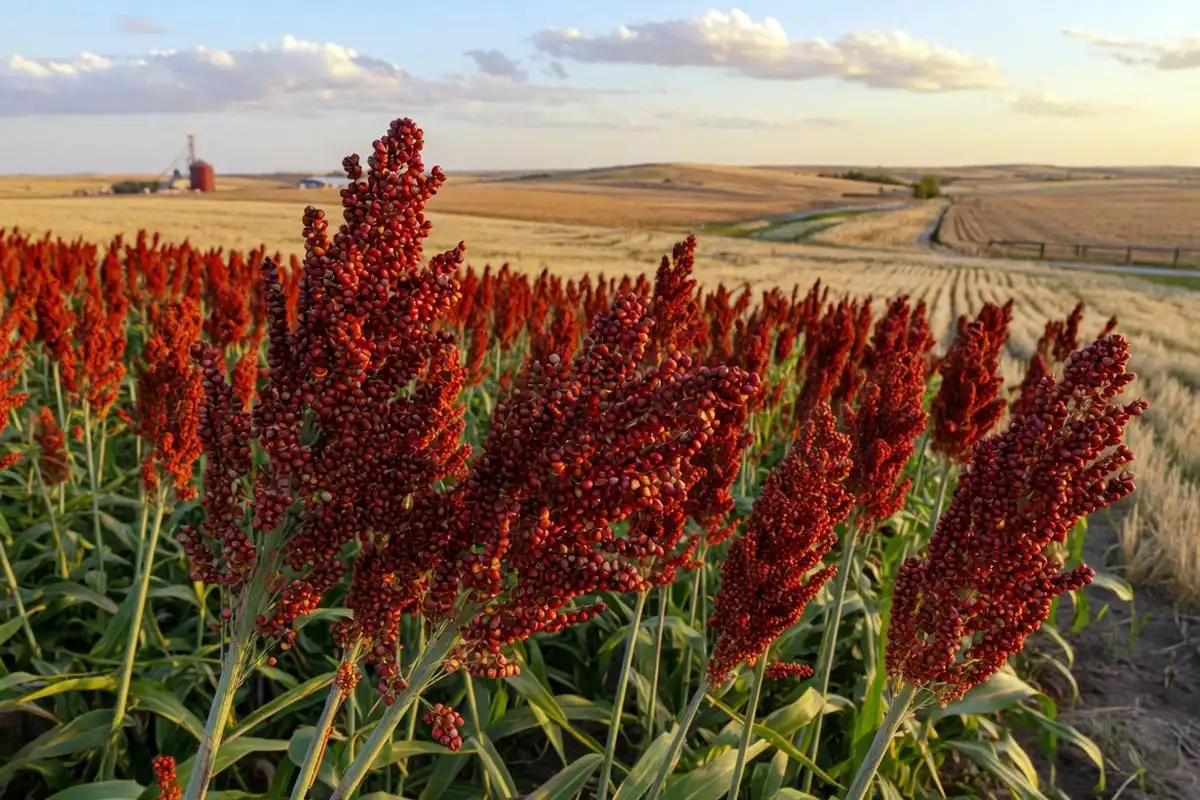
Sorghum is a tall, heat-loving cereal grass grown for grain, forage, syrup, and biomass. This guide covers what sorghum is, where it grows, the main types, how farmers plant and harvest it, key uses on the farm, and the practical mistakes to avoid in the field.
Sorghum (Sorghum bicolor) is a warm-season cereal crop in the grass family. It produces grain heads on tall stalks, tolerates heat and dry soils, and ranks as the world’s fifth most-produced cereal grain.
Contents
What Is Sorghum?
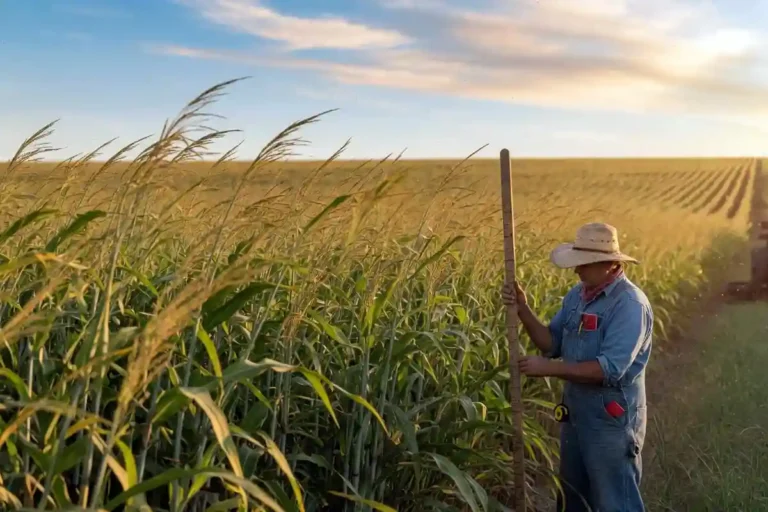
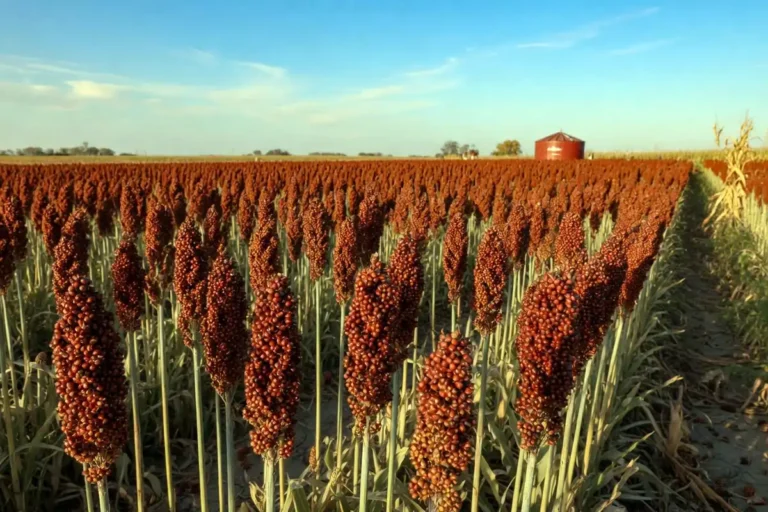
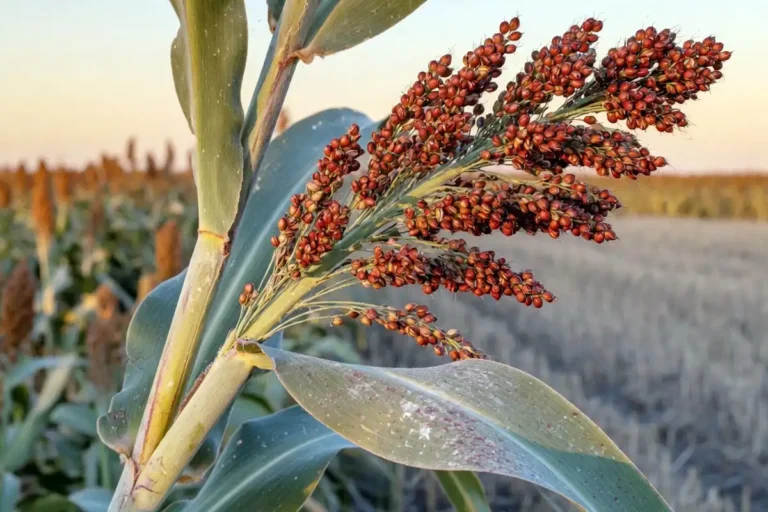
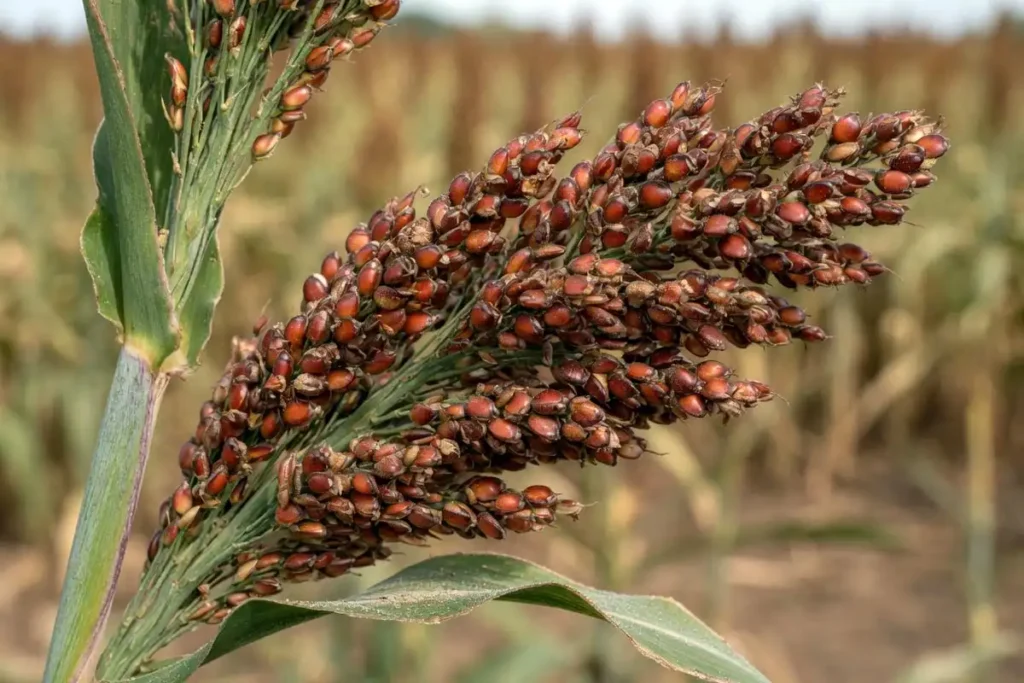
Sorghum is an annual grass that produces a dense seed head called a panicle. Each panicle holds hundreds of small, round kernels in shades of red, white, bronze, or tan. The plant grows 2 to 15 feet tall depending on the variety. Farmers use it for grain, livestock feed, hay, silage, syrup, and ethanol.
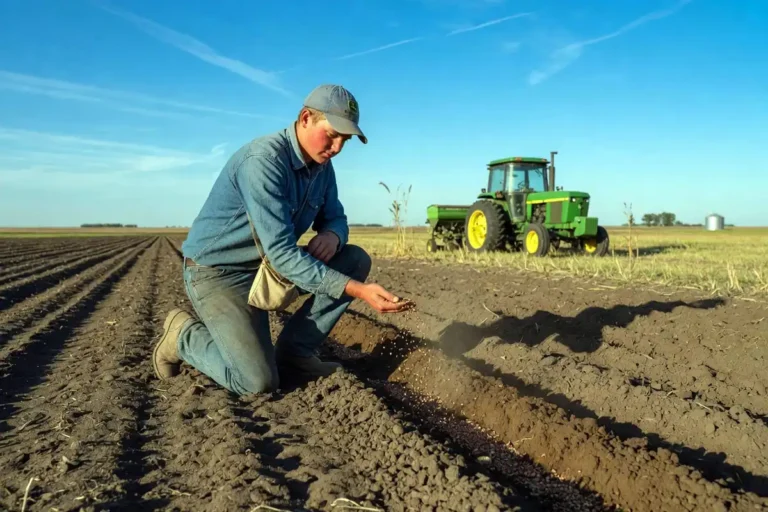
The crop traces back to Africa, where growers domesticated it more than 5,000 years ago. Today it feeds people and livestock across dry regions worldwide. On my Kansas operation, sorghum sits in rotation with wheat and soybeans because it handles our hot, dry summers when corn struggles.
Types of Sorghum
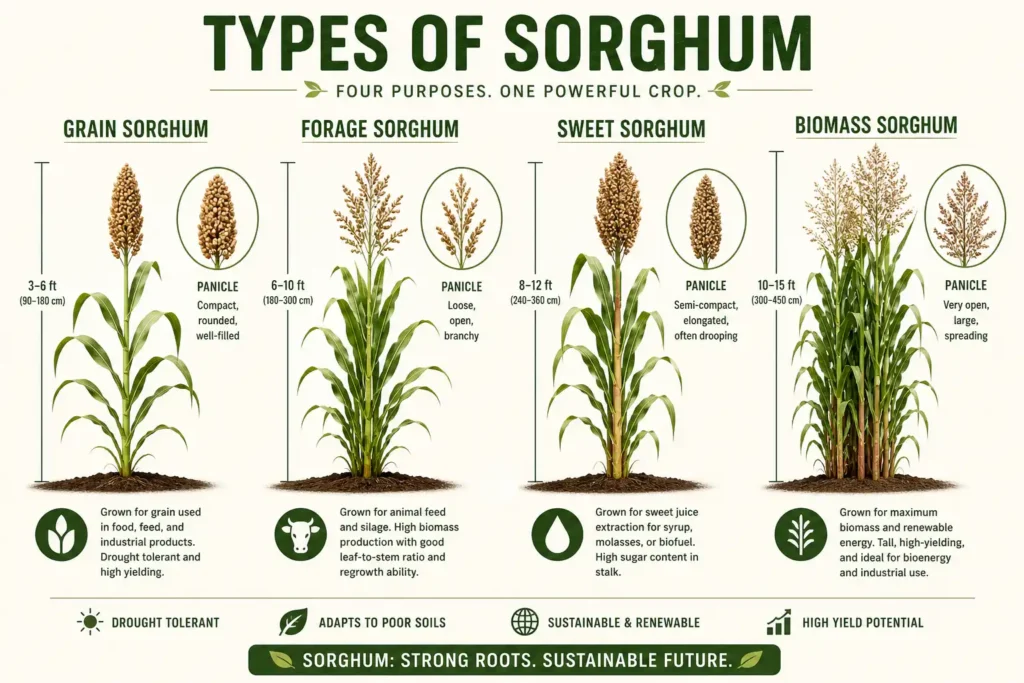
Sorghum splits into four working categories on the farm:
- Grain sorghum (milo): Short stalks, large grain heads, used for human food and livestock feed.
- Forage sorghum: Tall, leafy plants grown for silage and green chop.
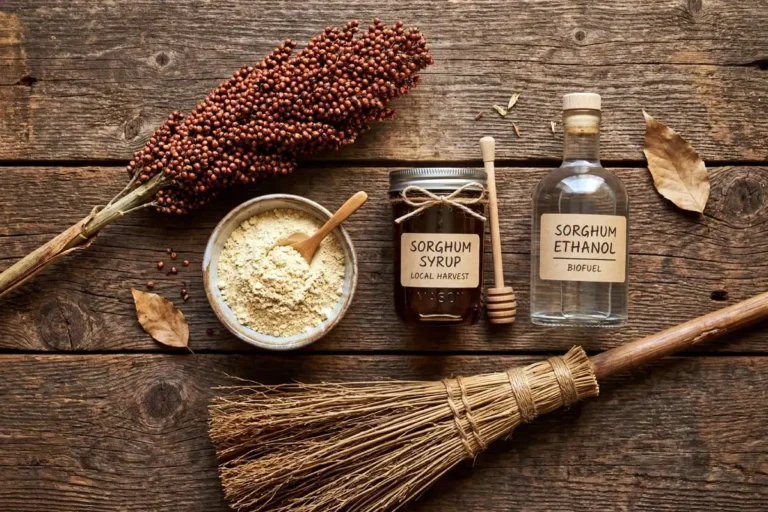
- Sweet sorghum: High-sugar stalks pressed for syrup or fermented for ethanol.
- Biomass and broomcorn: Biomass types fuel bioenergy plants; broomcorn produces stiff brush fibers.
Sorghum-sudangrass hybrids are popular for summer hay and grazing. If you cut hybrid hay yourself, timing your sorghum-sudangrass cut controls prussic acid risk and feed quality.
Where Does Sorghum Grow?
Sorghum grows best in warm, semi-arid climates. The plant tolerates soil temperatures down to 60°F at planting and thrives between 80°F and 95°F during the growing season.
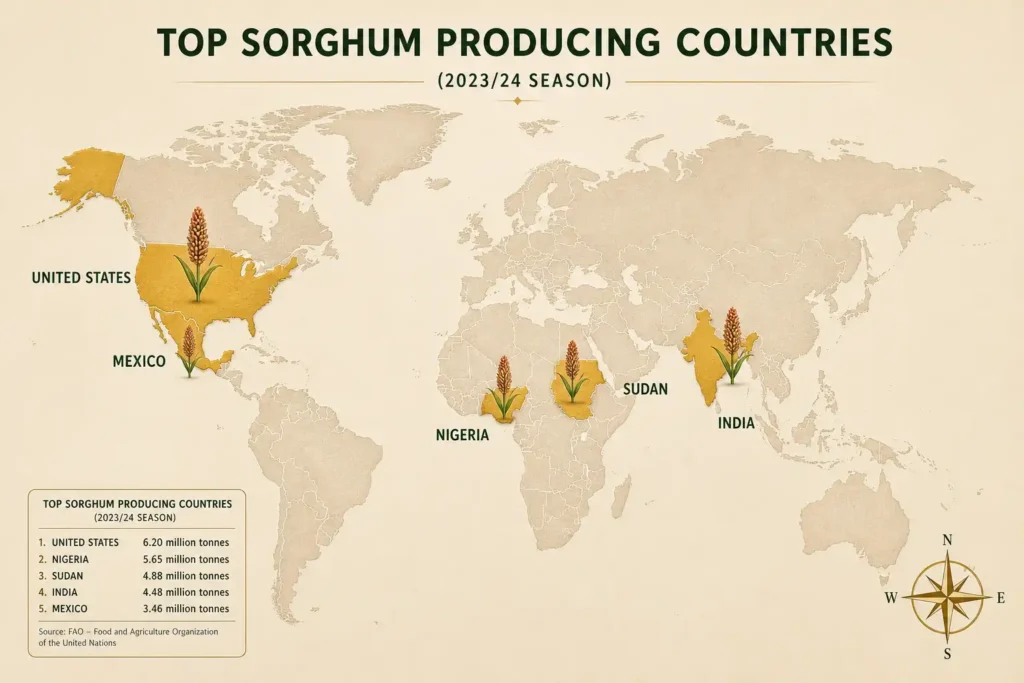
The United States produces around 9 to 10 million metric tons each year, and Kansas, Texas, Oklahoma, Colorado, and Nebraska lead the country. Worldwide, top growers include the United States, Nigeria, Sudan, India, and Mexico, per USDA Foreign Agricultural Service data.
Sorghum tolerates a soil pH between 5.5 and 8.5, handles short droughts, and survives on as little as 16 to 20 inches of annual rainfall.
When Is Sorghum Planted and Harvested?
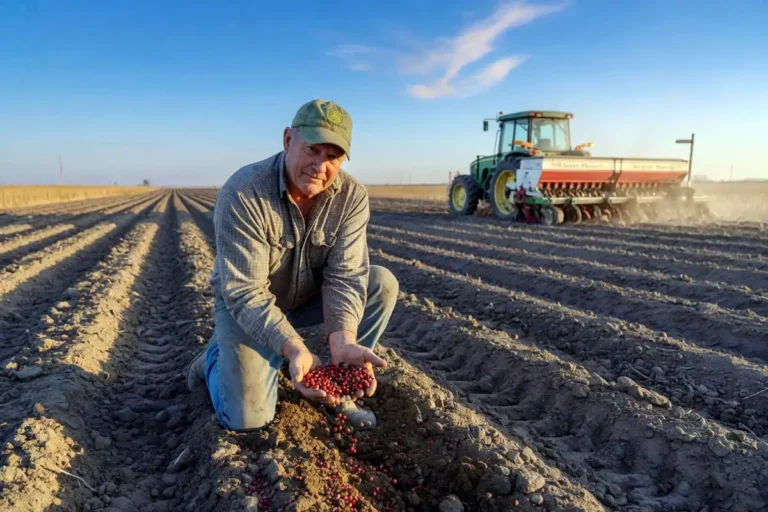
Farmers plant grain sorghum once soil temperatures hit 60°F to 65°F at a 2-inch depth. In Kansas, that lands between mid-May and mid-June. Forage and sweet sorghum follow the same window.
Harvest runs from late August through October, depending on hybrid maturity. Grain heads dry down on the plant, and seeds reach physiological maturity at about 30% moisture. Combine harvest happens at 14% to 18% grain moisture for safe storage.
A clear crop planting calendar helps you line up sorghum dates with your corn, wheat, and soybean schedule.
How Farmers Grow Sorghum (Step-by-Step)
- Test the soil. Pull samples 6 to 8 inches deep. Sorghum responds to balanced N-P-K and a pH near 6.0 to 7.5.
- Prepare the seedbed. Use clean tillage or no-till residue management. Aim for firm, moist soil at planting depth.
- Pick the hybrid. Match maturity (early, medium, full) to your frost-free days. Choose seed treatments for sugarcane aphid and chinch bug pressure.
- Plant. Drill at 1 to 1.5 inches deep in 15 to 30-inch rows. Target 50,000 to 100,000 plants per acre based on rainfall.
- Fertilize. Apply nitrogen at roughly 1 to 1.2 pounds per bushel of expected yield, plus phosphorus and potassium per soil test.
- Control weeds. Pre-emergence herbicides handle pigweed and grasses. Cultivate or spot-spray escapes early.
- Scout pests. Watch for sugarcane aphids, midge, headworms, and chinch bugs from boot stage through grain fill.
- Harvest. Combine when grain hits 14% to 18% moisture. Dry to 13% for safe long-term storage.
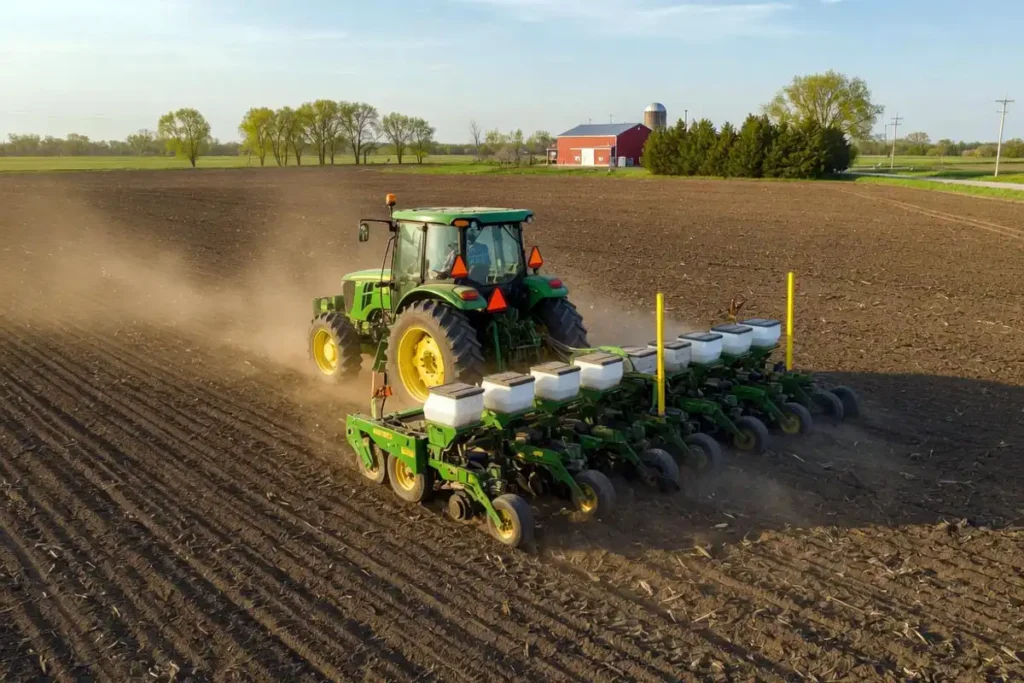
Strong soil fertility practices raise yields year over year, especially in continuous sorghum fields.
Uses of Sorghum
Sorghum earns its keep in five main markets:
- Livestock feed: About 30% of U.S. grain sorghum feeds cattle, hogs, and poultry.
- Human food: Gluten-free flour, popped grain, porridge, and beer in Africa, Asia, and Latin America.
- Ethanol: Roughly 30% to 40% of U.S. grain sorghum goes to ethanol plants.
- Forage and hay: Silage, green chop, and sorghum-sudan hay feed dairy and beef herds.
- Syrup and biomass: Sweet sorghum yields sorghum syrup; biomass types fuel bioenergy.
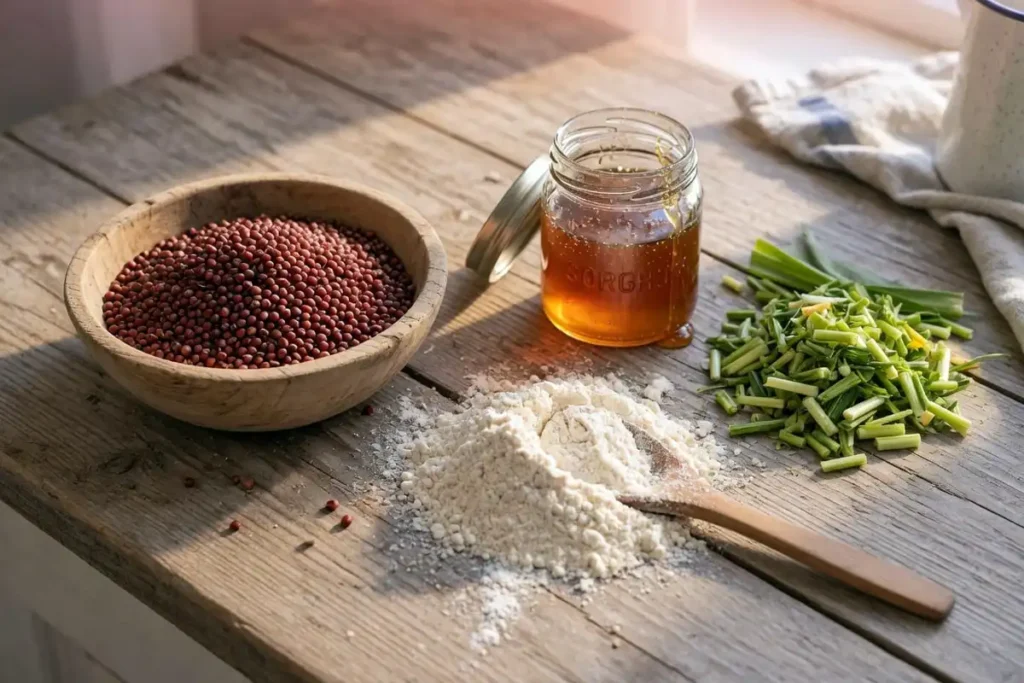
Pairing sorghum with a smart crop rotation plan breaks disease cycles and improves the next wheat or soybean crop.
Common Problems and Troubleshooting
- Poor stand: Cold, crusted soils or deep planting cut emergence. Replant if stand drops below 30,000 plants per acre.
- Sugarcane aphids: Sticky leaves and sooty mold signal heavy pressure. Treat at threshold per K-State Research and Extension guidance.
- Lodging: Late-season stalk rot weakens stems. Harvest lodged fields first.
- Bird damage: Sparrows and blackbirds hit grain heads near maturity. Bird-resistant hybrids cut losses.
Mistakes to Avoid
- Planting into 55°F soil chills seed and invites seedling disease.
- Stacking nitrogen above the yield goal wastes money and raises lodging.
- Ignoring prussic acid in young or frosted sorghum-sudan harms grazing cattle.
- Combining wet grain (above 18%) leads to storage mold and dock at the elevator.
Safety Notes
Young sorghum and sorghum-sudan plants under 24 inches contain prussic acid (cyanide), which can poison livestock. Wait until plants reach 18 to 24 inches for grazing, and avoid frosted regrowth for at least 7 to 10 days. Store grain dry to prevent mycotoxin growth, and check bins weekly with proven grain storage methods.
FAQs

Is sorghum the same as milo?
Is sorghum gluten-free?
How much water does sorghum need?
Can I plant sorghum after wheat?
How tall does sorghum grow?
Conclusion
Sorghum earns a spot on dryland farms because it produces grain, forage, and feed when corn and other cereals burn up. Match the type to your goal, plant into warm soil, manage aphids and weeds early, and harvest at the right moisture. Done right, this tough grass pays year after year.