Where Does Sorghum Come From? Origin, History, and Top Producers
Sorghum comes from northeastern Africa, where farmers domesticated it from wild grasses around 5,000 to 8,000 years ago. This guide covers the crop’s origin, its spread across continents, modern production regions, and how it reached fields in Kansas, Texas, and the rest of the world.
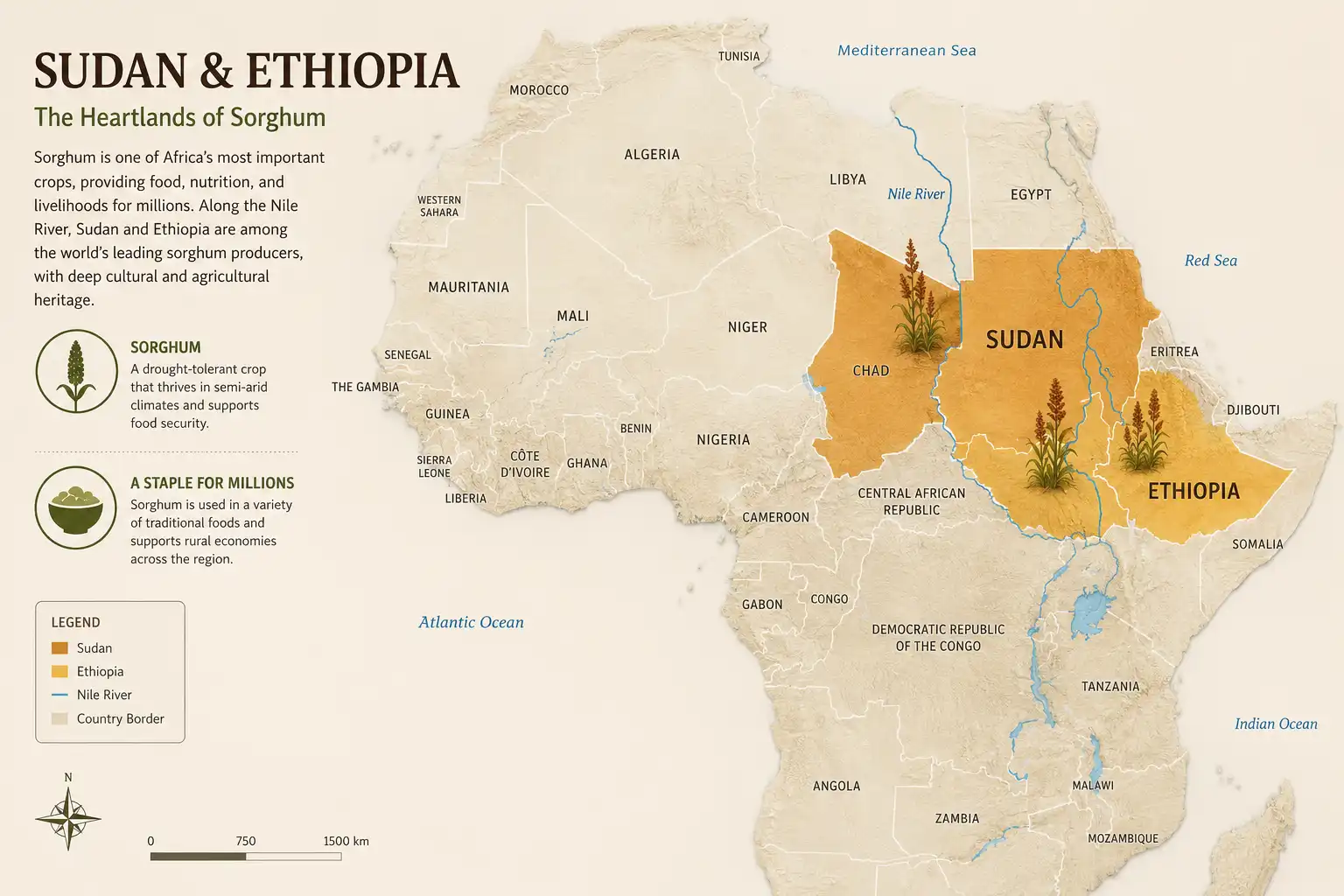
Sorghum (Sorghum bicolor) originated in northeastern Africa, likely in the region covering modern Ethiopia and Sudan. Farmers domesticated it from wild grass species 5,000 to 8,000 years ago. The crop later spread to India, China, the Middle East, and the Americas through trade and migration.
What Is Sorghum?
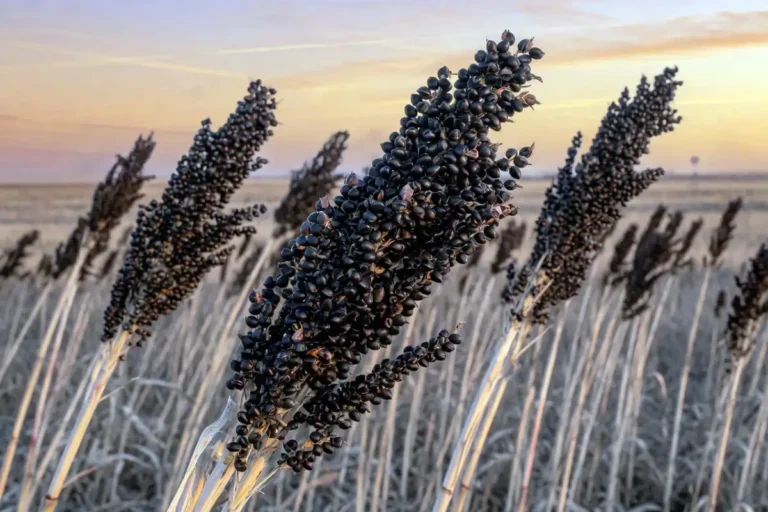
Sorghum is a cereal grass in the Poaceae family, grown for grain, forage, syrup, and biofuel. Botanists classify it as Sorghum bicolor. The plant reaches 3 to 15 feet tall and produces a dense seed head called a panicle. Farmers grow four main types: grain sorghum, also called milo, forage sorghum, sweet sorghum, and broomcorn.
Where Did Sorghum Originate?
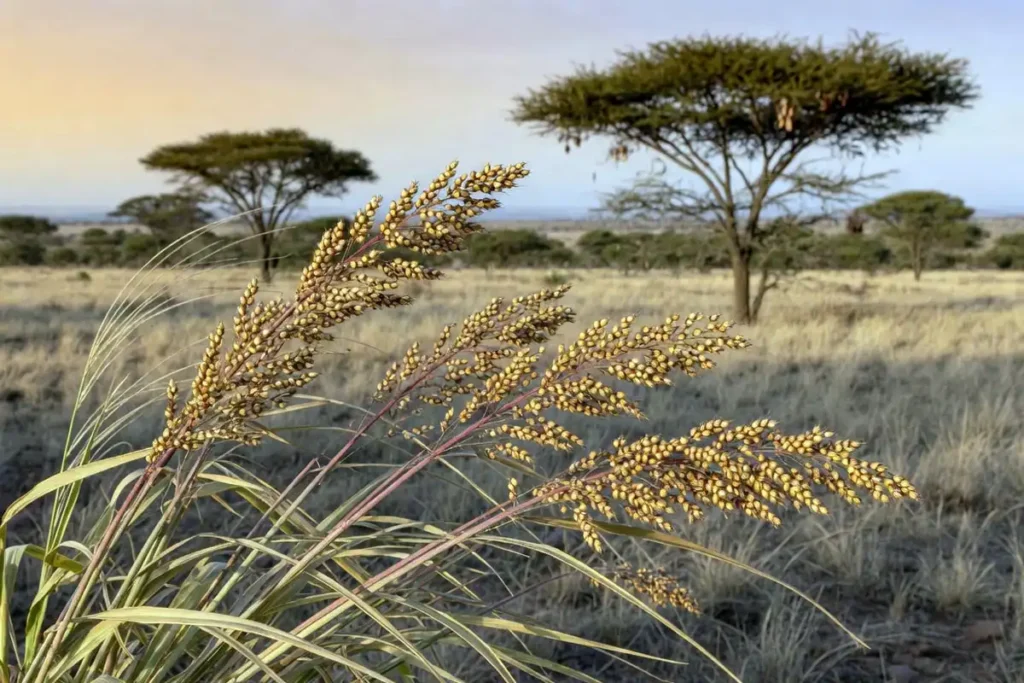
Sorghum originated in northeastern Africa. Archaeologists trace the crop to the region between modern Ethiopia and Sudan. Wild Sorghum bicolor subsp. verticilliflorum still grows across the African savanna, supporting this origin theory.
According to records from the USDA Germplasm Resources Information Network, the genus Sorghum contains roughly 25 species, with most native to Africa and Australia. Genetic studies of modern cultivars all point back to African ancestors.
When Was Sorghum Domesticated?
Farmers domesticated sorghum between 5,000 and 8,000 years ago. Archaeological evidence from sites in Sudan suggests early cultivation along the Nile River. The Kassala and Butana regions hold some of the oldest sorghum remains found by researchers. By 4,000 BC, domesticated forms were already moving north into Egypt.
How Did Sorghum Spread Across the World?
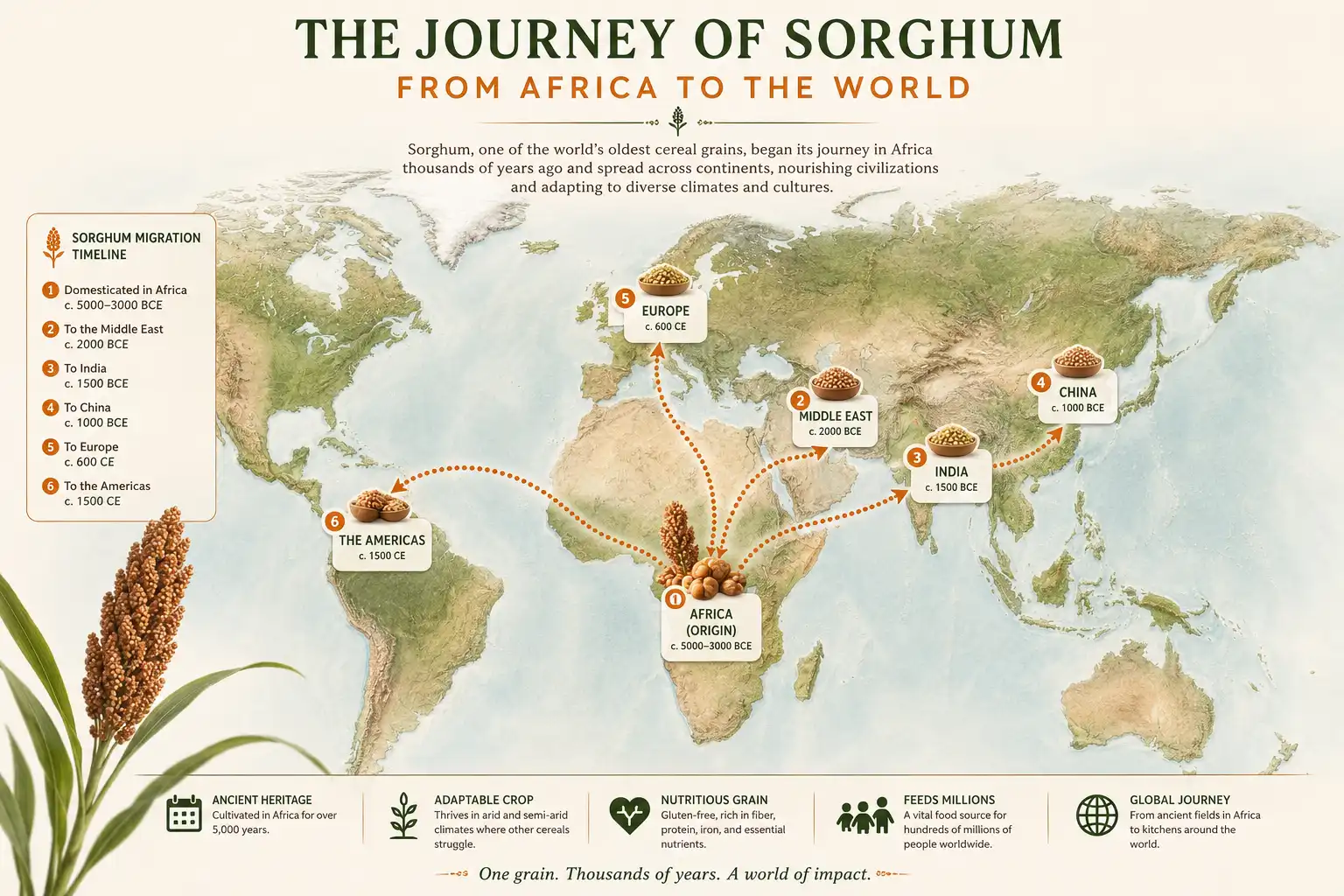
Sorghum spread along ancient trade routes from Africa into Asia, the Mediterranean, and later the Americas. The path generally followed this order:
- Africa to India: Around 1,500 to 1,000 BC, by sea trade across the Arabian Sea.
- India to China: By the first century AD, through Silk Road traders.
- Middle East and Mediterranean: Through Egyptian and Arab trade networks.
- The Americas: In the 1600s and 1700s, carried by enslaved Africans and European traders.
Each region adapted local landraces to its climate, which is why you find white-grain types in West Africa, red types in India, and tan grain hybrids across the US Plains.
Where Is Sorghum Grown Today?
Sorghum grows on six continents. Top producers include the United States, Nigeria, Sudan, Ethiopia, India, Mexico, China, Argentina, and Australia. The crop covers roughly 40 million hectares globally each year, according to FAO data.
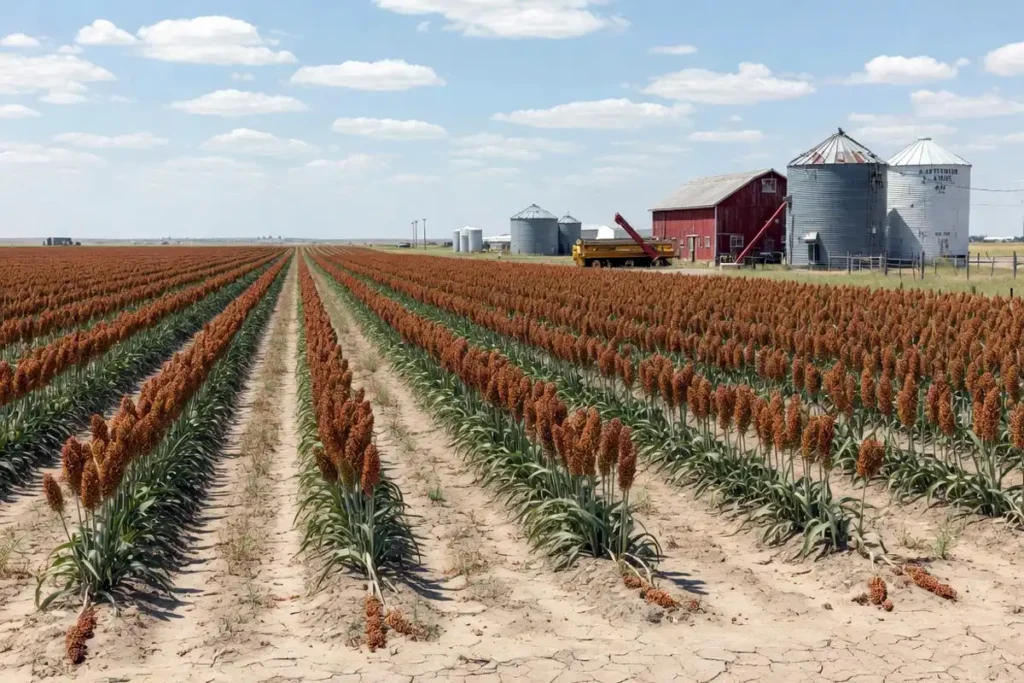
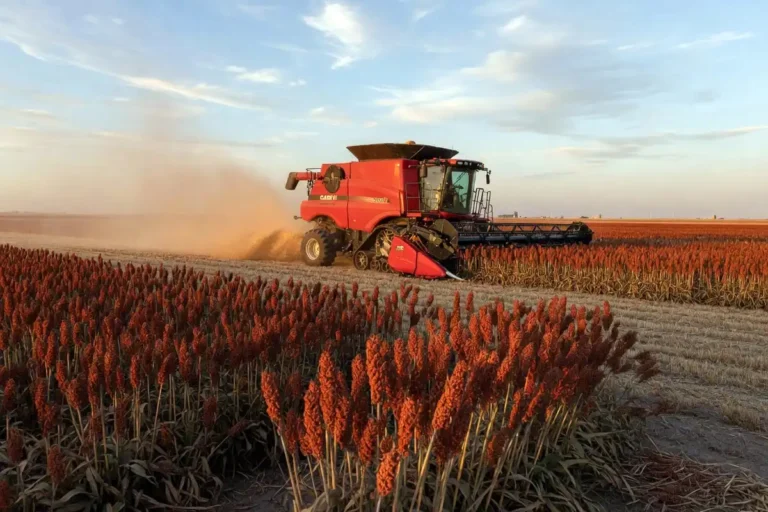
In the United States, sorghum thrives across the southern Great Plains. Kansas leads US production, followed by Texas, Oklahoma, Colorado, Nebraska, and South Dakota. The Kansas State University Department of Agronomy reports that Kansas alone accounts for more than 40% of the nation’s sorghum acres in most years. Sorghum handles dry summers better than corn, which is why many growers plant milo on lighter soils.
Why Does Sorghum Grow Well in Hot, Dry Regions?
Sorghum tolerates drought, heat, and poor soils better than most cereals. The plant uses C4 photosynthesis, which improves water-use efficiency. Deep roots reach moisture below 4 feet. Waxy leaves cut water loss. These traits made sorghum a staple in semi-arid Africa, and the same traits help it produce grain in Kansas during dry years when corn struggles. Farmers who grow sorghum on dryland acres often see a steady yield even in drought.
How Did Sorghum Reach the United States?
Sorghum reached the United States through several waves:
- 1700s: African captives carried grain sorghum seed to the southern colonies.
- 1725: Benjamin Franklin recorded broomcorn, a sorghum relative, in his agricultural notes.
- 1850s: Sweet sorghum arrived from China and France for syrup production.
- Late 1800s: Grain types from Africa and India formed the genetic base for modern hybrid milo.
Public breeders in Kansas and Texas later crossed these African and Indian lines to develop the short, high-yield hybrids planted today.
What Types of Sorghum Do Farmers Grow?
Farmers grow four main types, all from the same African ancestor:
- Grain sorghum (milo): Used for livestock feed, ethanol, and food. (Read more on whether milo and sorghum are the same crop.)
- Forage sorghum: Cut for hay and silage.
- Sweet sorghum: Pressed for syrup and biofuel.
- Broomcorn: Used for brooms and crafts.
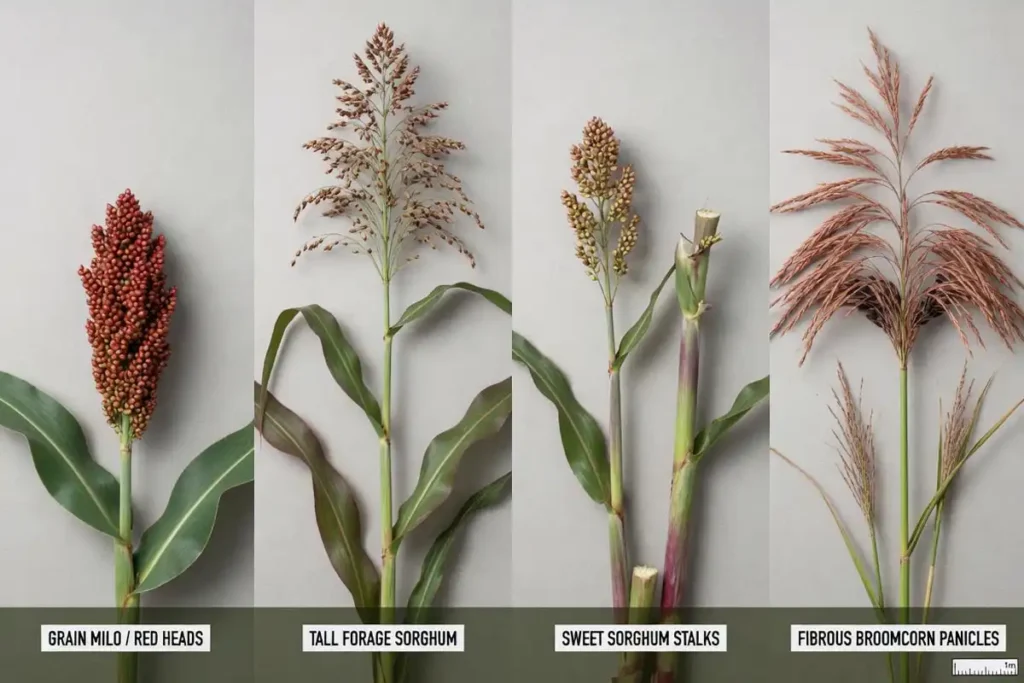
How Sorghum Looks and Grows
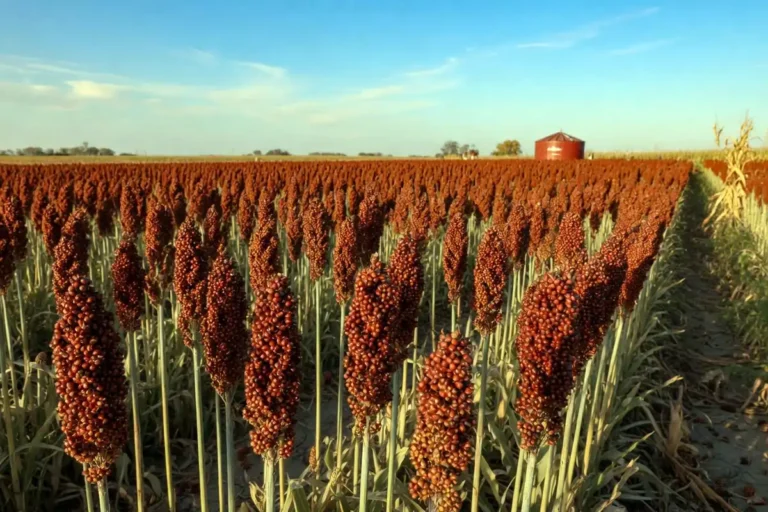
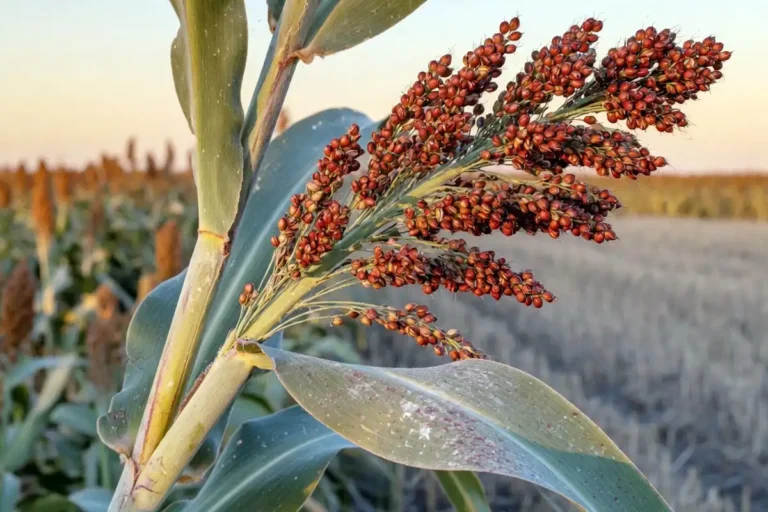
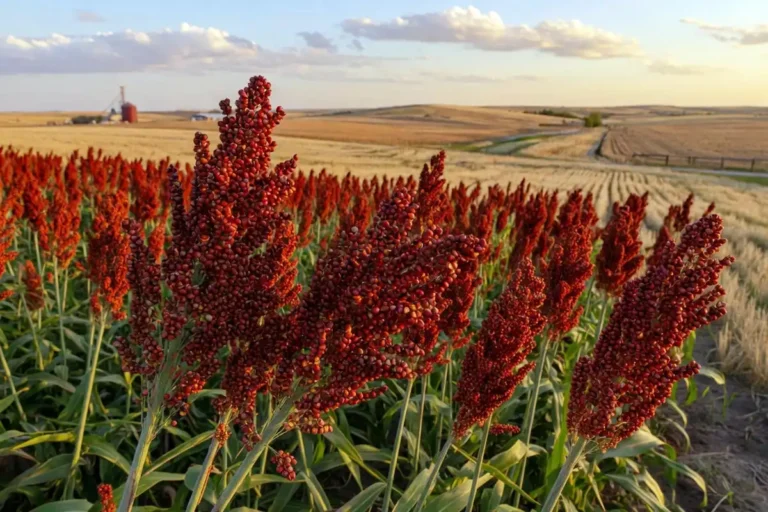
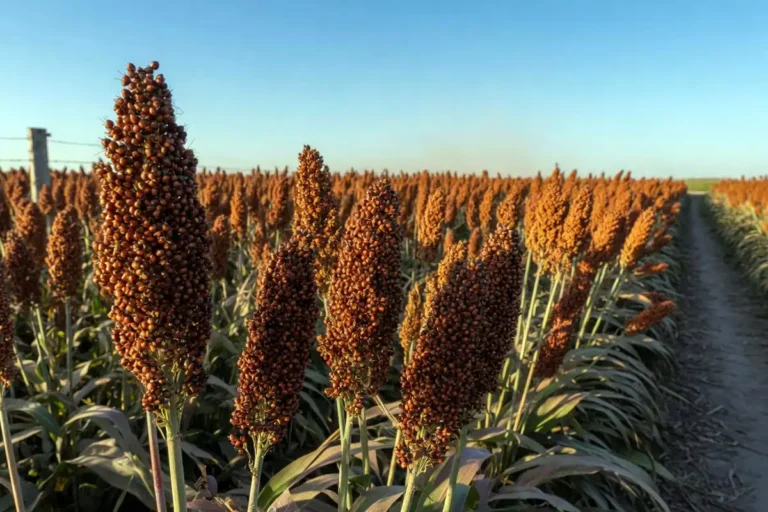
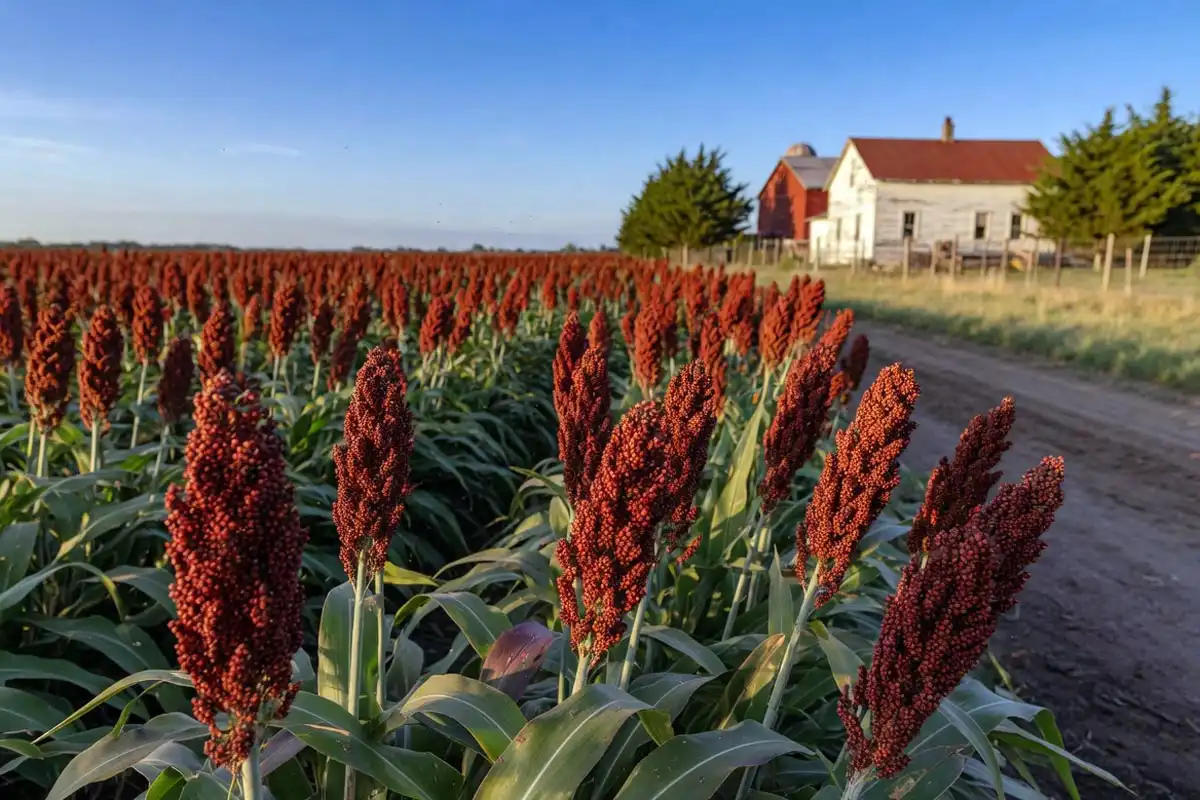
A young sorghum plant looks similar to corn early in the season but produces a tight grain head instead of an ear. Heads turn red, bronze, white, or tan when ripe. Most hybrids reach maturity in 90 to 120 days.
Common Misconceptions About Sorghum’s Origin
A few myths come up often:
- “Sorghum came from China or India.” Both regions adopted the crop early, but neither is the origin. Genetic and archaeological data confirm African origin.
- “Sorghum is a type of wheat.” It is not. Sorghum and wheat belong to different genera and grow under different conditions.
- “Sorghum is native to the Americas.” No. The crop arrived through the transatlantic trade and slavery era.
Frequently Asked Questions
Is sorghum native to America?
Which country produces the most sorghum?
How old is sorghum as a crop?
Did sorghum come before or after corn?
Is sorghum a grain or a grass?
Final Thoughts
Sorghum traces its roots to the savannas of northeastern Africa, where farmers shaped it from wild grasses thousands of years ago. From those early fields along the Nile, the crop traveled across continents and now grows on millions of acres worldwide. Knowing where sorghum comes from helps me appreciate why it handles Kansas summers so well, and why it remains a steady choice for farmers working dry ground.