When to Plant Peanuts: 7 Key Signs for Perfect Timing
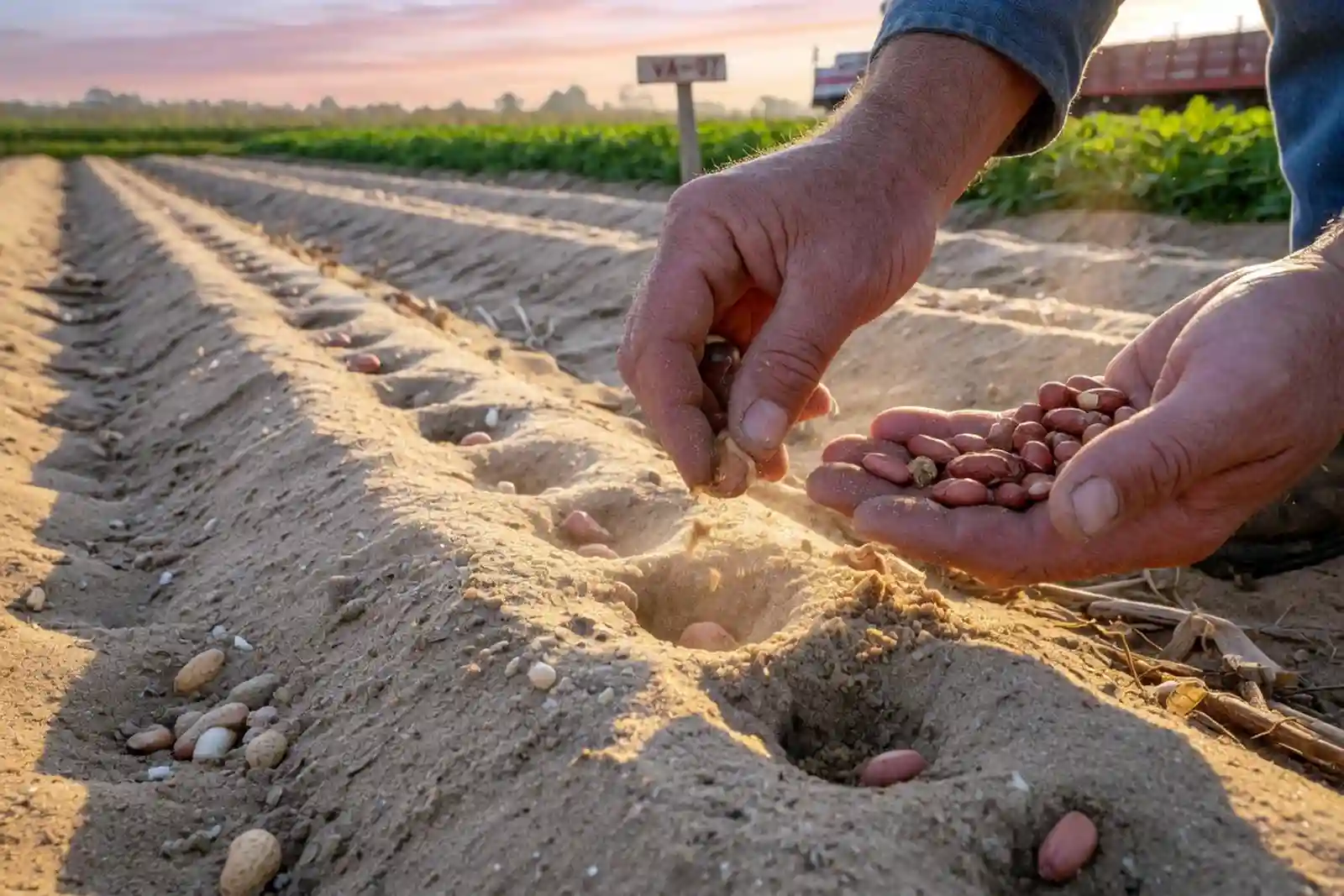
Peanuts go in the ground when soil temperature holds at 65°F at a 4-inch depth and frost danger has passed, usually late April through mid-May across the U.S. peanut belt. This guide walks through planting windows, soil checks, regional timing, step-by-step planting, and the common errors that cut yield.
Plant peanuts when 4-inch soil temperature reaches a steady 65°F, night air stays above 60°F, and the last spring frost has passed. In Georgia, Alabama, Florida, and Texas, that window typically falls between late April and mid-May.
For the wider season layout keep a crop planting calendar handy so peanut timing lines up with rotation needs.
What Peanuts Need Before Planting
Peanuts (Arachis hypogaea) are warm-season legumes that pod underground. They need 120 to 160 frost-free days, sandy loam soil, and steady warmth from planting through harvest. Cold, wet ground stalls germination and invites seed rot, so soil readiness drives every planting decision.
The four main market types differ in maturity:
- Runner: 130 to 150 days (most U.S. acres, mainly Georgia)
- Virginia: 140 to 150 days (large kernels, North Carolina)
- Spanish: 120 to 130 days (early type, Oklahoma and Texas)
- Valencia: 120 to 130 days (sweet, three to four kernels per pod)
When to Plant Peanuts
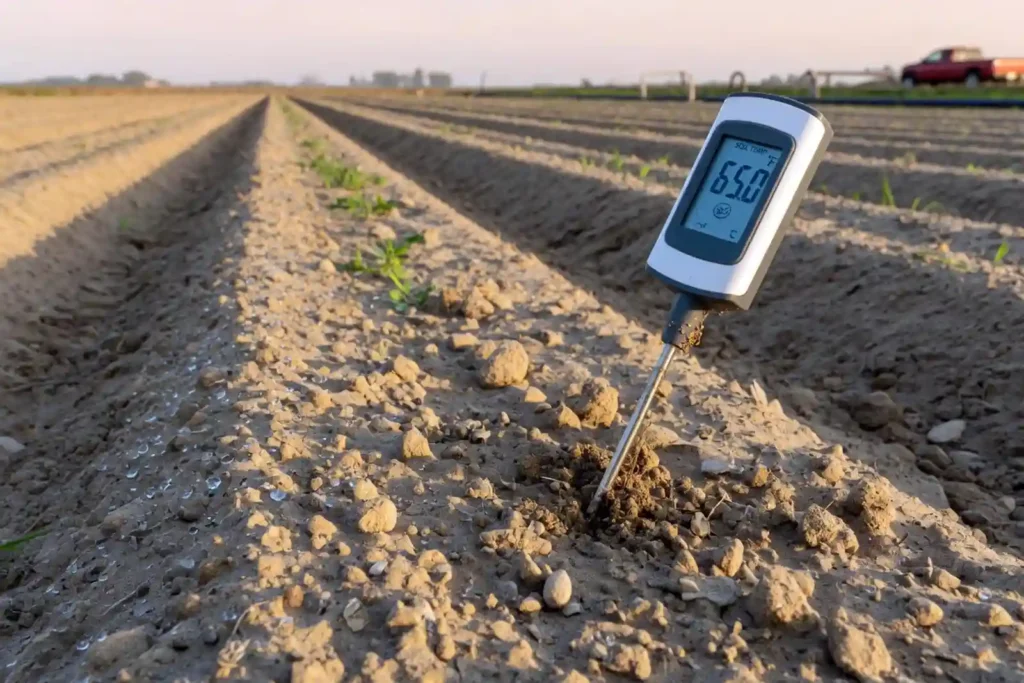
Plant peanuts after the last frost when soil temperature at a 4-inch depth reads 65°F for three straight days and the 5-day forecast stays warm. Soil thermometers cost under $20 and remove the guesswork. A reliable soil testing routine also confirms pH and calcium levels before seeds drop.
Soil Temperature Rule
Cold soil under 60°F slows germination and pushes seedlings into stress. Warm soil at 68°F to 77°F gets peanuts up in 7 to 10 days. The University of Georgia recommends a minimum 65°F soil temperature at planting depth for steady stand establishment, per UGA Extension peanut production guidance.
Air Temperature Rule
Night air should hold above 60°F for at least a week. A late frost will kill emerged seedlings in one night. Check the 10-day forecast before any seed touches dirt.
Where Peanuts Grow Best
Peanuts grow well in sandy or sandy loam soils with pH 5.8 to 6.2 and good drainage. The U.S. peanut belt runs across Georgia, Alabama, Florida, South Carolina, North Carolina, Texas, Oklahoma, Mississippi, and parts of Virginia. Georgia alone produces about half the national crop, according to USDA NASS data. For natural range and growing zones, see where peanuts grow naturally.
Regional Planting Calendar for Peanuts
Timing shifts with latitude. Use these windows as a starting point and confirm with local soil readings:
| Region | Planting Window |
|---|---|
| South Georgia, North Florida | April 20 to May 20 |
| Alabama, South Carolina | April 25 to May 25 |
| North Carolina, Virginia | May 1 to June 1 |
| West Texas, Oklahoma | May 1 to May 25 |
| South Texas Coastal Bend | March 25 to April 25 |
UF/IFAS guidance on Florida peanut planting dates is available through UF/IFAS Extension publications.
How to Plant Peanuts Step by Step
Follow this workflow once soil hits 65°F:
- Test soil pH. Target 5.8 to 6.2. Apply lime in the fall if pH falls below 5.5.
- Prepare a firm seedbed. Disc and harrow to a fine tilth, but keep soil firm beneath the seed zone.
- Inoculate seed. Coat seed with Bradyrhizobium inoculant. Fresh inoculant fixes nitrogen and lifts yields by 200 to 400 pounds per acre.
- Set planting depth. Drop seed 1.5 to 2 inches deep in moist soil, 2 to 2.5 inches in dry sand.
- Space rows correctly. Use 30 to 36-inch rows with 4 to 6 seeds per foot, or twin rows on 36-inch beds for runner types.
- Apply gypsum at bloom. Calcium reaches the pegging zone and fills out kernels, especially on Virginia types.
- Press the seed. A press wheel improves seed-to-soil contact and germination speed.
- Scout for emergence. Check fields at day 7. Replant gaps if stand drops below 4 plants per foot.
Common Problems After Planting
Patchy emergence: caused by cold soil, dry seedbed, or planting too deep. Wait for a 65°F reading and irrigate light if topsoil is dusty.
Seed rot: linked to wet, cool soil. Treated seed and warm planting windows reduce loss.
Crusting after rain: hard crust traps seedlings. A rotary hoe at the cracking stage breaks the crust without damaging plants.
Thrips damage: shows as silvery, crinkled leaves. Phorate at planting or foliar treatment at first true leaf controls early thrips pressure.
Mistakes to Avoid When Planting Peanuts
- Planting before soil hits 65°F to chase a calendar date
- Skipping fresh inoculant on first-time peanut ground
- Setting seed shallower than 1.5 inches in sandy soil
- Following peanuts with peanuts on the same field
- Ignoring calcium needs on Virginia and large-seeded types
- Using bin-run seed without a germination test
A solid rotation plan with corn, cotton, or grass sod between peanut crops cuts disease pressure and lifts yields.
Safety Notes for Peanut Planting
Handle treated seed with gloves and wash hands before eating. Keep treated seed away from livestock and food storage. Calibrate planters carefully so seed treatments stay on the seed, not airborne. Store inoculant in a cool, shaded place since heat above 90°F kills the live bacteria.
FAQs on Peanut Planting Timing
Can you plant peanuts in March?
How long do peanuts take to grow after planting?
Do peanuts need full sun to grow well?
Can peanuts survive a light frost?
How many seeds per acre for peanuts?
Conclusion
Peanuts reward growers who plant by soil temperature, not the calendar. A 65°F reading at 4 inches, dry-weather forecast, fresh inoculant, and sandy loam ground at pH 5.8 to 6.2 set up a strong stand. Watch your region’s window, scout early, and the crop will carry itself through pegging and pod fill.