Do Peanuts Grow on Trees? 7 Facts About Where They Form
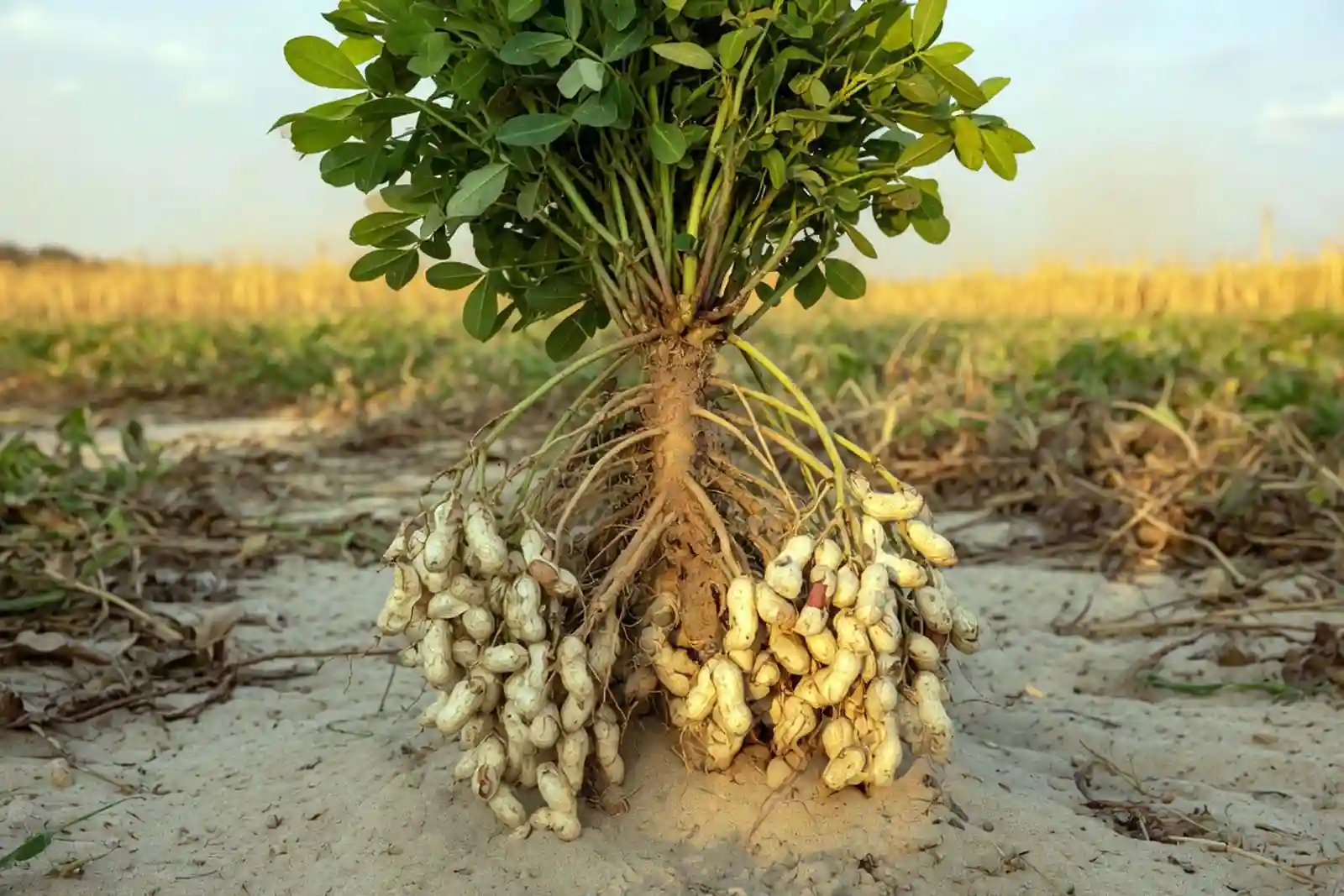
No, peanuts do not grow on trees. Peanuts grow underground on a small leafy plant that looks more like a bean bush than a tree. This guide explains where peanuts actually form, how the plant pushes pods into the soil, and the reasons so many people get this wrong.
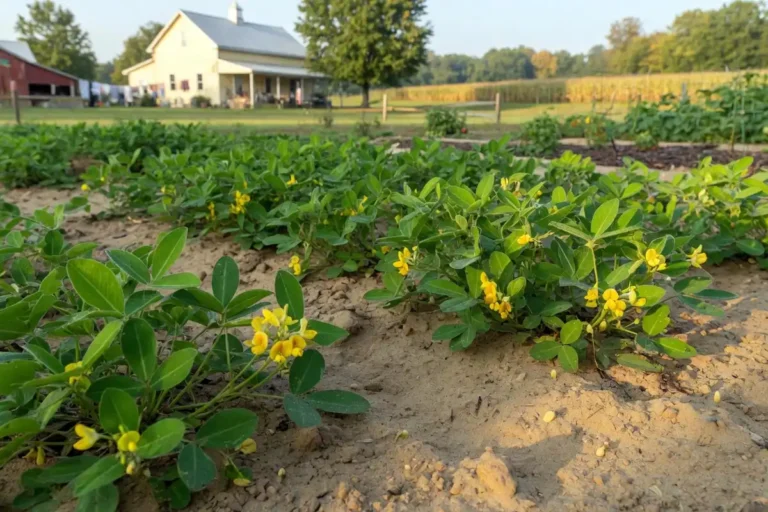
Peanuts do not grow on trees. They grow on a low, bushy legume plant called Arachis hypogaea, and the pods develop underground. The plant flowers above the soil, then sends a stalk called a peg down into the ground where the peanut shells form and ripen.
What Is a Peanut?
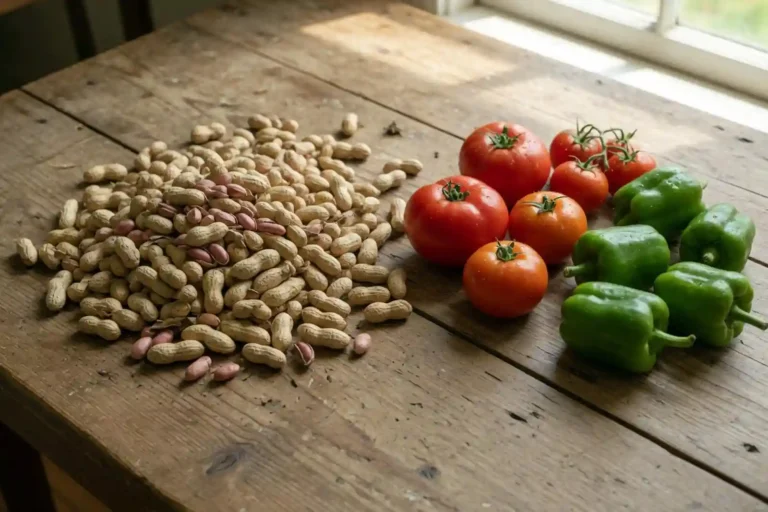
A peanut is a legume, not a true nut. The peanut belongs to the same plant family as beans, peas, lentils, and clover. Botanists group all of these in the family Fabaceae.

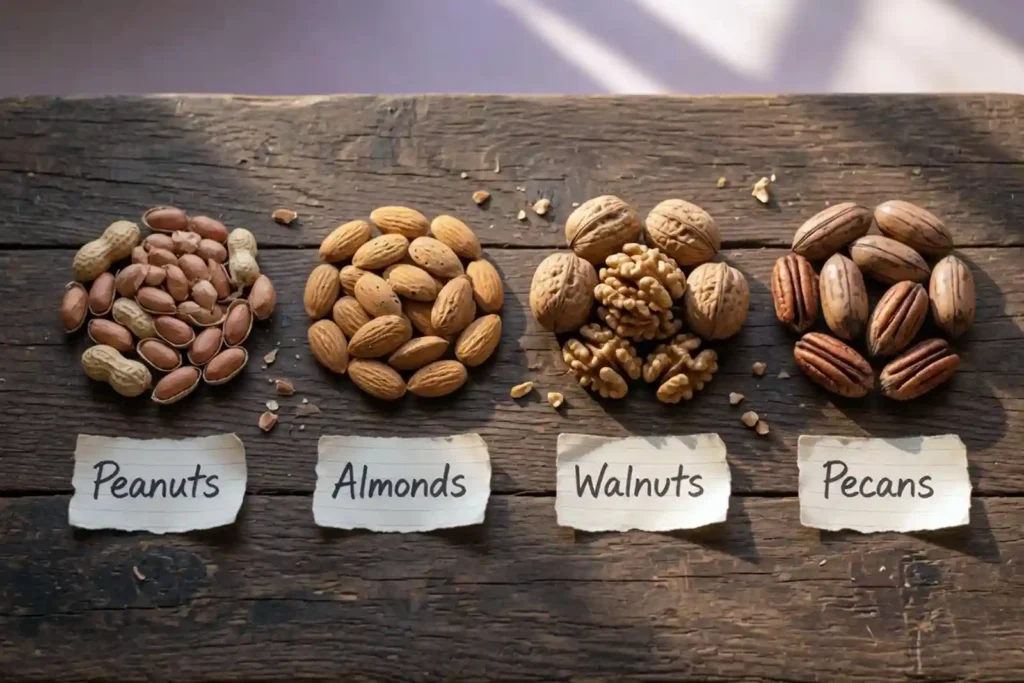
True nuts like almonds, walnuts, pecans, and cashews grow on trees. Peanuts grow on a small annual plant about 18 to 24 inches tall. The “nut” in the name comes from the hard shell, not the plant type.
Our guide on covers the climate band where this crop thriveswhere peanuts grow naturally, and the same warm sandy regions support both wild and farmed plants.
Also know: Tree Nuts the Same as Peanuts? 7 Key Facts
Where Do Peanuts Grow on the Plant?
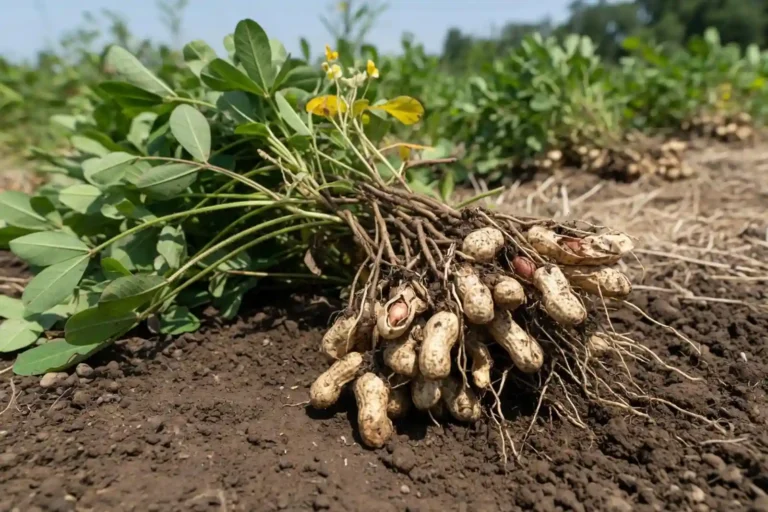
Peanuts grow below the soil surface, attached to thin underground stalks called pegs. The flowers open above ground, but after pollination, the flower stalk bends down, pushes into the soil, and the peanut pod forms a few inches deep.
This process is called geocarpy, which means “fruit in the earth.” Few crops do this. The peanut is the most familiar one a farmer or gardener will see.
How Does the Peanut Plant Grow Pods Underground?
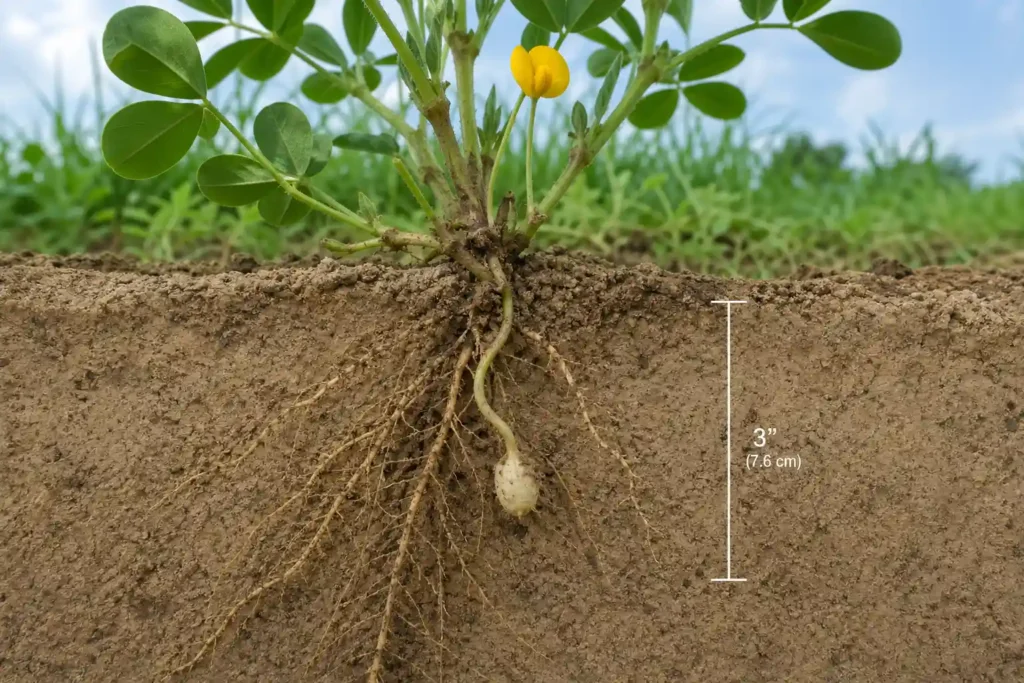
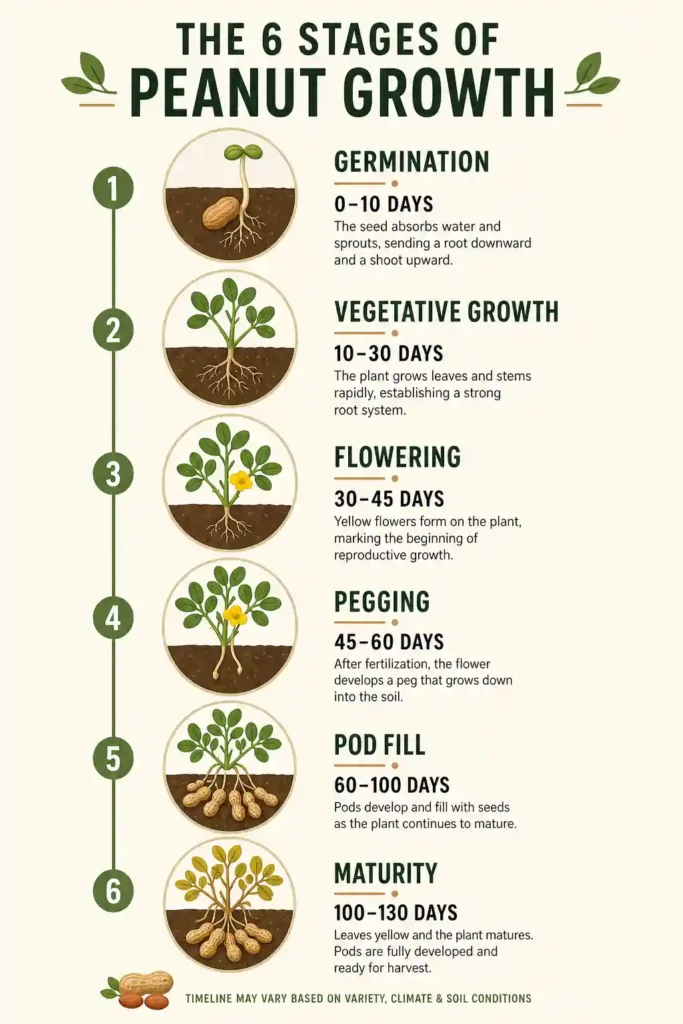
Peanut pods form through a six-stage process:
- Germination: The seed sprouts within 7 to 10 days after planting.
- Vegetative growth: The plant produces leaves and a low bushy canopy.
- Flowering: Small yellow flowers open about 30 to 40 days after planting.
- Pegging: After the flower is pollinated, a thin peg grows downward and pushes into the soil.
- Pod fill: The pod swells underground as kernels (the peanuts) develop inside.
- Maturity: Pods harden in 120 to 150 days, depending on the variety.
A single plant produces 25 to 50 pods on average. Each pod holds 1 to 4 kernels.
Why Do People Think Peanuts Grow on Trees?
Three reasons drive this confusion:
- The name: The word “peanut” ends in “nut,” and most people associate nuts with tree branches.
- Allergy labels: Food labels group peanuts with tree nuts, even though the two are biologically separate.
- Snack aisle placement: Stores stack peanuts beside almonds, cashews, and walnuts, all of which do grow on trees.
Peanut allergies and tree-nut allergies are different medical conditions. The two share shelf space, not biology, and the shared shelf space keeps the myth alive.
Peanuts vs Tree Nuts: The Real Difference
| Crop | Plant Type | Where the Nut Forms | Family |
|---|---|---|---|
| Peanut | Annual legume bush | Underground | Fabaceae |
| Almond | Tree (15-30 ft) | On tree branches | Rosaceae |
| Walnut | Tree (50-80 ft) | On tree branches | Juglandaceae |
| Pecan | Tree (70-100 ft) | On tree branches | Juglandaceae |
| Cashew | Tree (30-40 ft) | On tree fruit (cashew apple) | Anacardiaceae |
Tree nuts ripen in the air on woody perennials. Peanuts ripen in the soil on a soft annual plant.
What Does a Peanut Plant Look Like?
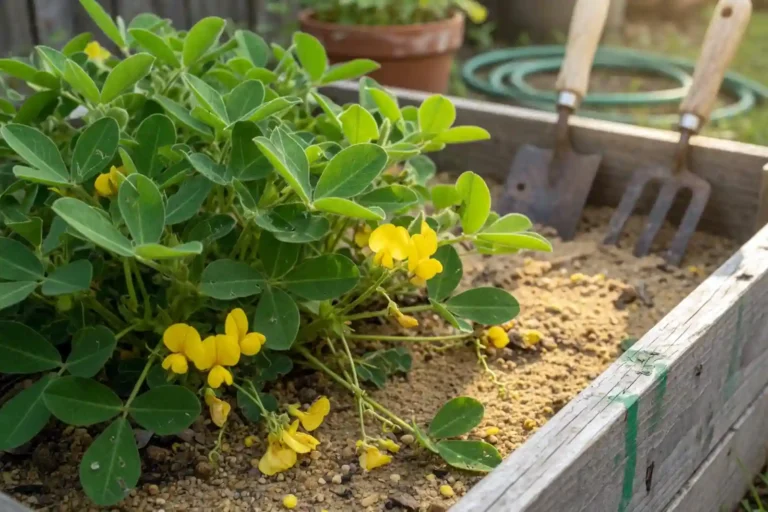
A mature peanut plant stands about 18 to 24 inches tall with a low, spreading habit. The leaves are oval and grow in groups of four, similar to a clover. Yellow pea-shaped flowers open near the base of the plant.
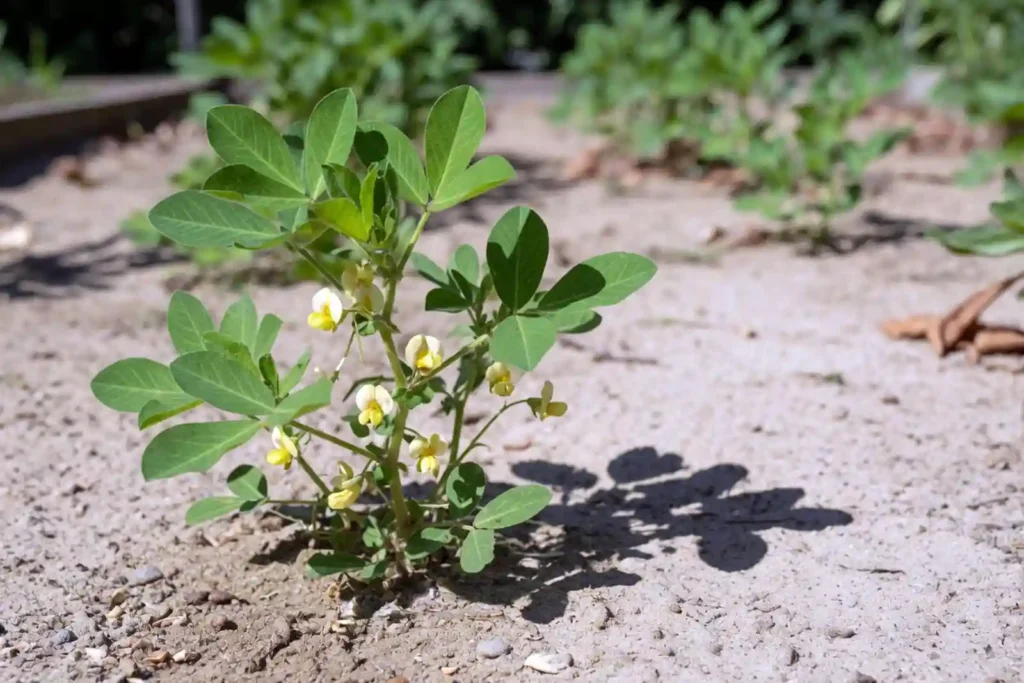
You will not see pods hanging from the plant. The pods sit 1 to 3 inches deep in the soil. Farmers harvest by lifting the entire plant out of the ground with an inverter, then pulling the pods loose after the plant dries in the field.
For a sense of scale and harvest weight, Our article on covers the trade and yield numberspeanut bushel weight.
How Long Does a Peanut Plant Take to Produce Peanuts?
A peanut plant takes 120 to 150 days from planting to harvest. Runner-type peanuts, the most common U.S. variety, mature in about 140 days, according to NC State Extension’s peanut portal. Spanish types finish faster at 120 days. Virginia types take the longest, around 150 days.
The plant needs warm soil (at least 65°F) for germination and a long frost-free season. Cold weather stops pegging and ruins the crop.
Can You Grow Peanuts at Home?
Yes, peanuts grow well in a backyard garden if you have a long warm season and sandy soil. Plant raw, unroasted peanut seeds 1 to 2 inches deep after the last frost. Space seeds 6 inches apart in rows 24 to 30 inches wide.
Keep the soil loose so pegs can push down easily. Add gypsum or calcium during pegging to help pods fill out. Harvest when leaves yellow and pods feel firm.
The University of Georgia Peanut Extension program explains the geocarpy process in more detail for new growers.
Common Mistakes About How Peanuts Grow
Avoid these myths:
- Believing peanuts hang from branches like almonds or pecans.
- Thinking peanuts are true nuts (they are legumes).
- Assuming peanuts grow on vines like beans (they grow on bushes with underground pods).
- Picturing one peanut per pod (most pods hold 2 kernels).
- Treating peanut allergies and tree-nut allergies as the same condition.
Frequently Asked Questions
Are peanuts a nut, fruit, or vegetable?
Do peanuts grow above or below the ground?
What plant family do peanuts belong to?
Are peanut allergies the same as tree nut allergies?
Why are peanuts called nuts if they are not?
Conclusion
Peanuts do not grow on trees. They grow on a small annual legume plant, and the pods develop underground through a process called pegging. The peanut sits closer to a bean than to a walnut or pecan on the family tree. If you spot a low bushy plant with yellow flowers in a sandy field, that is where your next jar of peanut butter starts, hidden a few inches below the soil.